
Castle tees won twice on Tour in 2026, and Wyndham Clark's reason was one line: it's always the same height
GolfWRX has named castle tees one of five equipment concepts that caught on in 2026. The collar is the whole idea: it stops the tee at a fixed depth, so the ball starts at the same height on every swing. The principle is worth more than the plastic.
By Tom Whitaker · Staff Writer
Pride
Pride Professional Tee System (ProLength Plus)
ifrothgolf earns a commission on purchases made through these links, at no extra cost to you. It never changes what I recommend. Full disclosure.
Wyndham Clark closed with a 60 at the CJ Cup Byron Nelson in May and won by three. Aaron Rai won the PGA Championship at Aronimink a week earlier. In September, GolfWRX put the thing both of them were teeing the ball on into its list of five equipment concepts that caught on during 2026, alongside the Spider putter and offset wedges. It was a castle tee. The plastic kind, with the step in it.
Clark's explanation was not complicated. "I was at home practicing with it, and the reason I did that is it's always the same height," he said. "So every time I put it in, it's the same height. I'm trying to look for consistency with my driver."
That is the whole trend, and it is worth separating from the object before anyone goes shopping. The castle tee is one implementation of a fixed, repeatable tee height. It is not the only one, and it is not even the best one for most club golfers.
What a castle tee actually is
It is a moulded plastic tee with a raised collar partway up the shank. You push it into the ground and the collar hits the turf and stops, so the tee can only go in so far. The ball sits at one height because the tee is physically incapable of sitting at a different one. There is no clever material, no reduced-friction crown, nothing that makes the ball go further. The collar is the product.
Castle tees are a shelf commodity. Every pro shop has a rack of them, no particular brand's version is worth hunting down, and they cost about what any bag of plastic tees costs. What is genuinely interesting is not that two Tour winners bought a bag of them. It is what that says about the variable they were trying to delete.
Tee height changes three things, and only one of them is obvious
The obvious one is where the ball meets the face. A driver face is not flat: it has curvature in both directions, and the centre of gravity sits behind a specific point on it. Move the ball up or down relative to that point and you have changed your strike, which changes launch and spin, without changing anything about your swing.
The second is angle of attack. Tee the ball higher and you will, without deciding to, swing up on it a little more, because the low point of the swing is being negotiated around a ball that is somewhere new. The third is the interaction between those two, which is why the numbers move around more than people expect.
None of this is worth a swing change. It is worth a fraction of a shot over a round, and anyone selling it as more than that is selling you something. But it costs nothing, it takes no practice, and it is one of the very few variables in a driver swing that is entirely under your control before you start the club back. Clark is a Tour winner with a fitted driver and a coach, and he still bothered.
The version of this we would actually buy
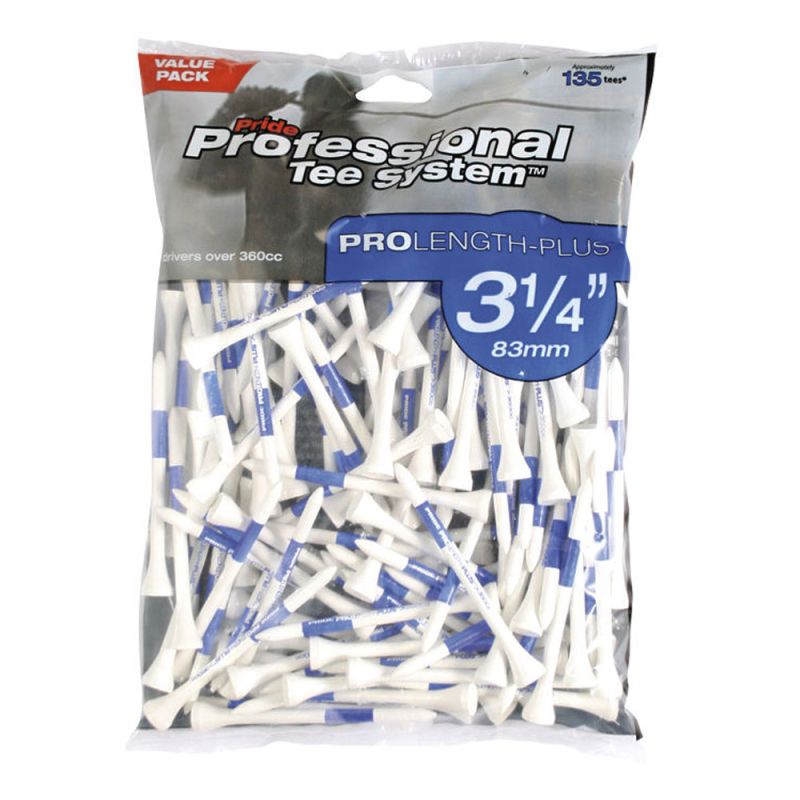
A castle tee fixes the depth. A fixed-length tee fixes the height directly, which is the same answer arrived at from the other end, and it is what the Pride Professional Tee System has been doing for years at $10 a pack. The ProLength Plus tees are colour-coded by length and carry a painted line: you pick your colour, you tee to the line, and the decision is made before your hand goes into your pocket. They are real hardwood rather than plastic, which matters at clubs that have quietly gone cold on plastic tees, and they will eventually snap, which is what wooden tees do.
The PTS range runs from short tees for irons up to the long ones a deep-faced modern driver needs. That is the part people skip. One height across the bag is not the goal. One height per club is.
The hundred-pack is where the variable comes back in
Bulk tees are excellent value and we have recommended them repeatedly, including in the five most underpriced things in golf. The catch is in the product name: a bamboo bulk pack at $10 for a hundred is sold in mixed heights, which is exactly right for a bag that has to tee up everything from a driver to a 9-iron on a par three, and exactly wrong if you reach in blind on the first tee and pull whatever comes out.
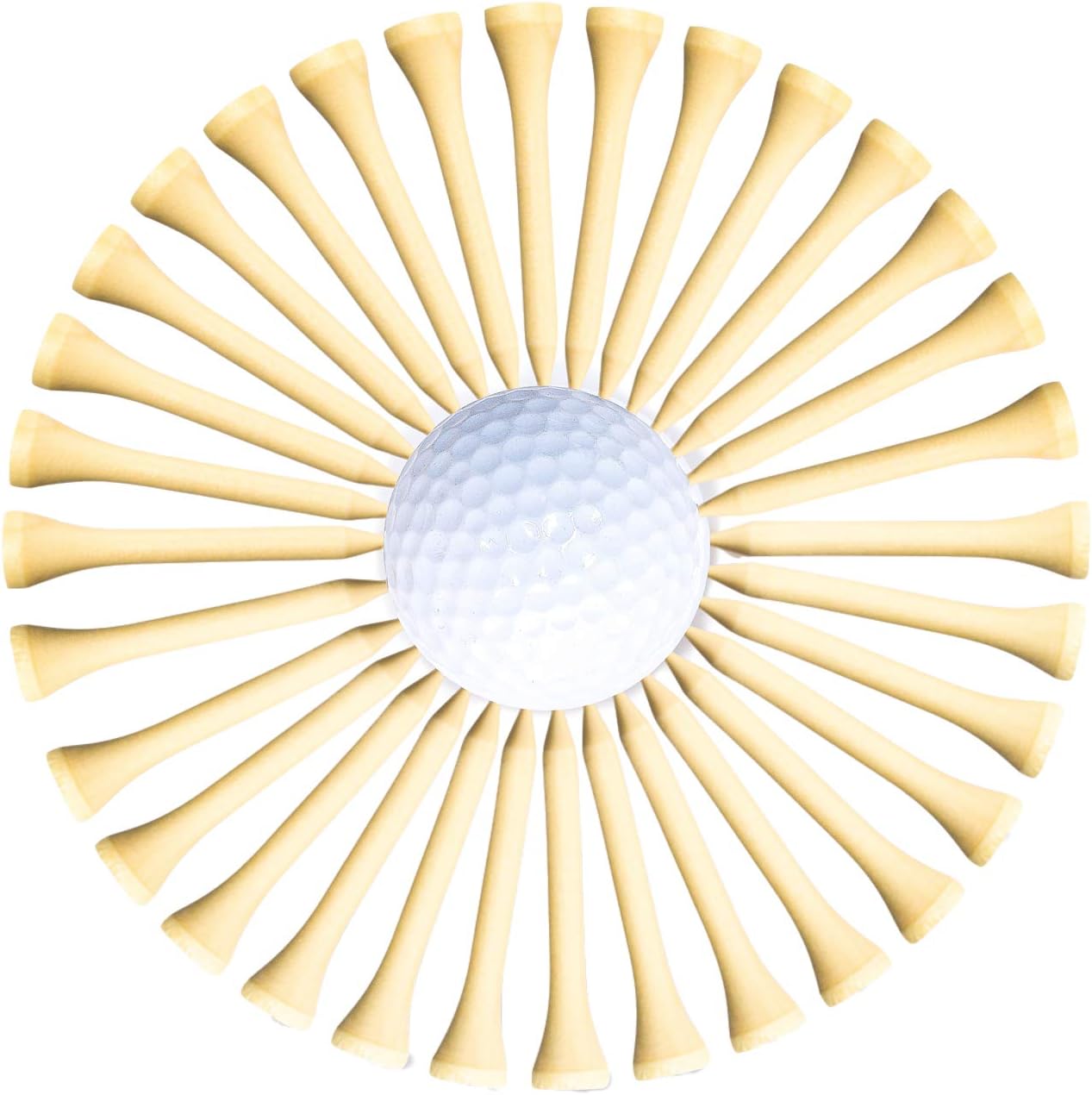
The fix is free and takes five minutes. Sort the pack once, put one length in the driver pocket and the rest somewhere else. You have just bought the castle tee's entire benefit for nothing, and you still have ninety-odd tees.
Indoors, it is the noisiest uncontrolled variable in the session
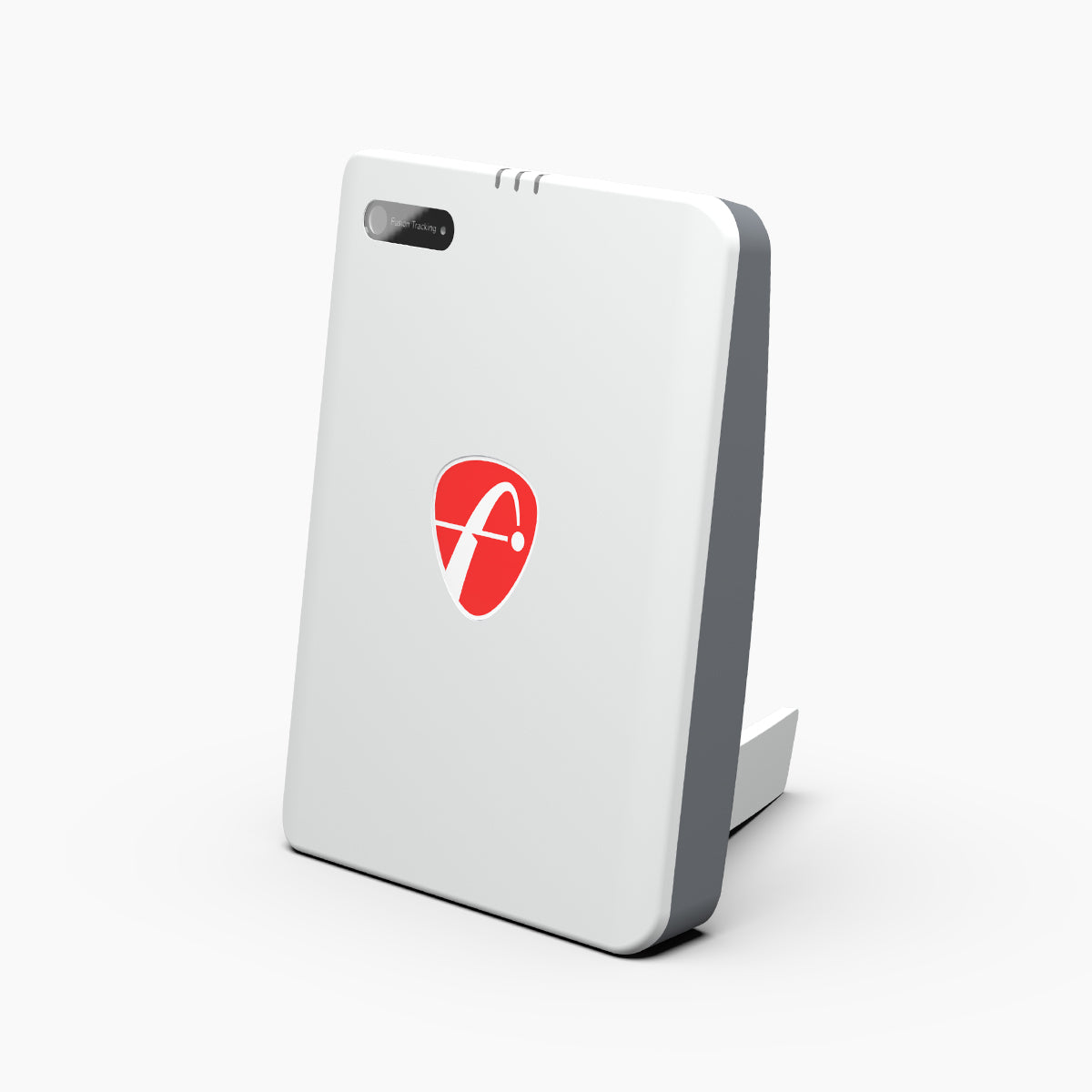
This is where a wandering tee height stops being a fraction of a shot and starts costing money. A radar unit like the FlightScope Mevo Gen2 at $1,500, the successor to the discontinued Mevo+, reports angle of attack among its shot parameters, and angle of attack is precisely the number that moves when the ball keeps starting at a different height. Spend an evening chasing a launch condition up and down while the tee height drifts underneath you and you will conclude something about your swing that is really something about your hand.
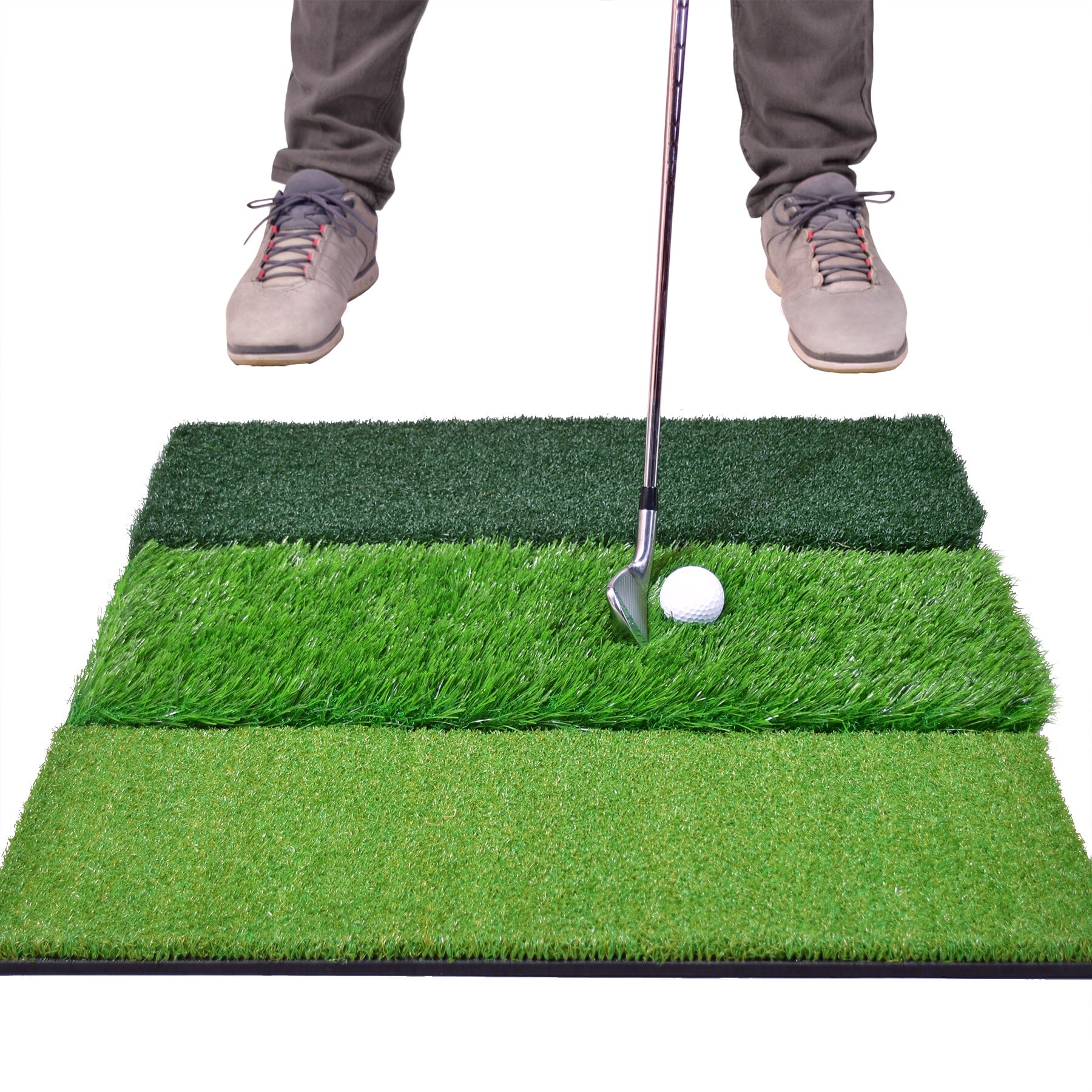
The irony is that most home bays solve this by accident. A mat with a tee strip, like the FORB Tri-Turf at $50, gives you a rubber tee in a fixed hole, which is a fixed-height system whether you asked for one or not. That is good for the consistency of your practice and worth knowing about when you take those numbers outside: if the rubber tee sits at a height you never use on grass, your indoor driver data is internally consistent and externally misleading. Match the two before you trust the transfer.
The right height is set by the head, not by a rule
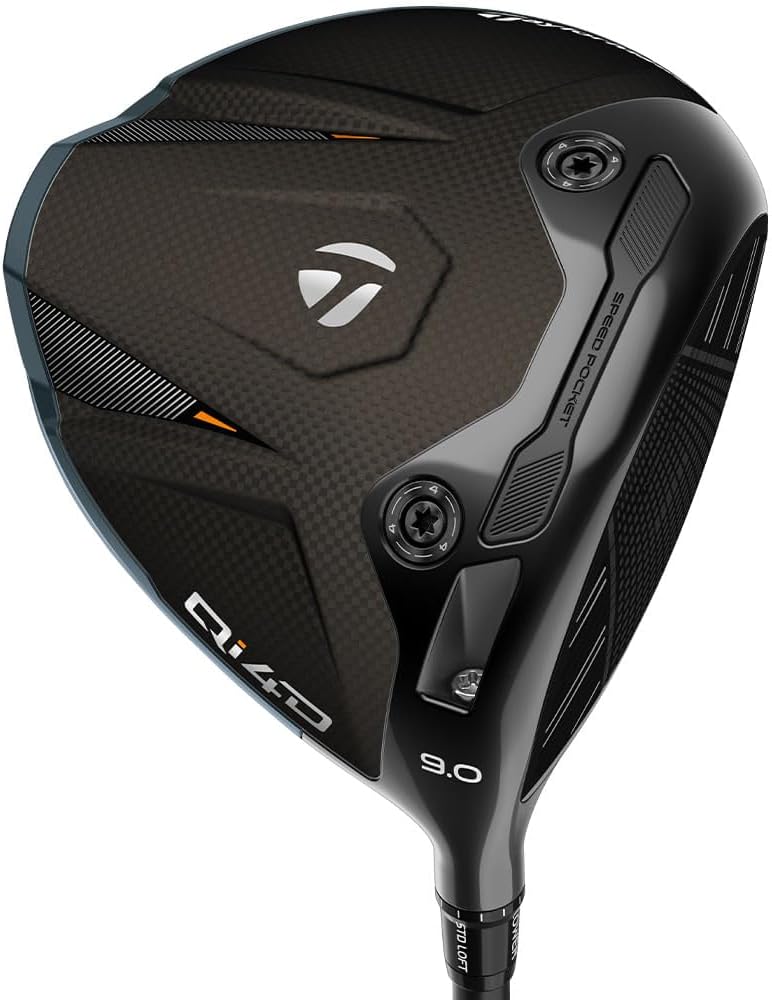
The long-standing fitting convention for a large driver is that roughly half the ball should sit above the crown at address, and with a deep-faced 460cc head like the TaylorMade Qi4D at $700 that is a genuinely tall tee. Drop down to a mini driver, a 3-wood off a peg or a long iron on a par three and the correct height falls away sharply, which is the reason a single-height castle tee is a slightly blunter instrument than it first appears.
So the useful version of the tour trend is not "buy the tee Clark uses". It is: decide the height once per club you tee up, then buy whatever forces you to repeat it. A colour, a painted line, a collar, a sorted pocket. They all work.
Who should not bother
If you play a handful of times a year, skip it entirely. If your driver misses are dominated by face angle rather than strike height, which is most golfers above about 18, there are five bigger things to fix and this is not in the top five. And if you already tee the ball to the same spot without thinking about it, you have solved the problem and a bag of plastic will not improve on it.
It is also worth saying that plastic castle tees are easy to lose and not every course loves them. Wooden fixed-length tees do the same job, biodegrade, and cost about the same. The idea is free. The hardware barely charges for it.
Products mentioned in this article
Pride
Pride Professional Tee System (ProLength Plus)
Colour-coded by length, so the height is decided before you reach into the pocket
Generic
Bamboo Golf Tees Bulk Pack (100, Mixed Heights)
The bulk pack to keep, once you stop grabbing a random height out of it
FlightScope
FlightScope Mevo Gen2 Launch Monitor
Reports angle of attack, which is the number a wandering tee height quietly corrupts
FORB
FORB Tri-Turf Golf Hitting Mat
Its rubber tee strip is a fixed-height system whether you wanted one or not
ifrothgolf earns a commission on purchases made through these links, at no extra cost to you. It never changes what I recommend. Full disclosure.
Frequently asked
- What is a castle tee?
- A castle tee is a plastic golf tee with a raised collar partway up the shank. When you push it into the ground the collar meets the turf and stops it, so the tee can only sink to one depth and the ball always starts at the same height. It offers no distance benefit; the collar is the entire feature. Any fixed-length tee achieves the same thing from the other end, which is why colour-coded systems such as the Pride Professional Tee System work just as well.
- Why did Tour players start using castle tees in 2026?
- GolfWRX named castle tees one of five equipment concepts that caught on in 2026, noting that two winners used them: Wyndham Clark, who won the CJ Cup Byron Nelson, and Aaron Rai, who won the PGA Championship. Clark said he practised with one at home because it is always the same height, and that he was looking for consistency with his driver.
- Does tee height actually change how far you hit a driver?
- It changes where the ball strikes the face, which changes launch angle and spin, and it nudges your angle of attack because the low point of the swing is negotiated around the ball. The effect is real but modest, worth a fraction of a shot over a round rather than a meaningful distance gain. Its bigger value is consistency: it removes a variable you control completely before the swing starts.
- How high should you tee a driver?
- The long-standing fitting convention for a large-headed driver is that about half the ball sits above the crown at address, which with a deep-faced 460cc head means a tall tee. The correct height drops away for a mini driver, a fairway wood off a tee or a long iron, so the goal is one repeatable height per club you tee up rather than a single height across the bag.
Read next
Explained
The five most underpriced things in golf
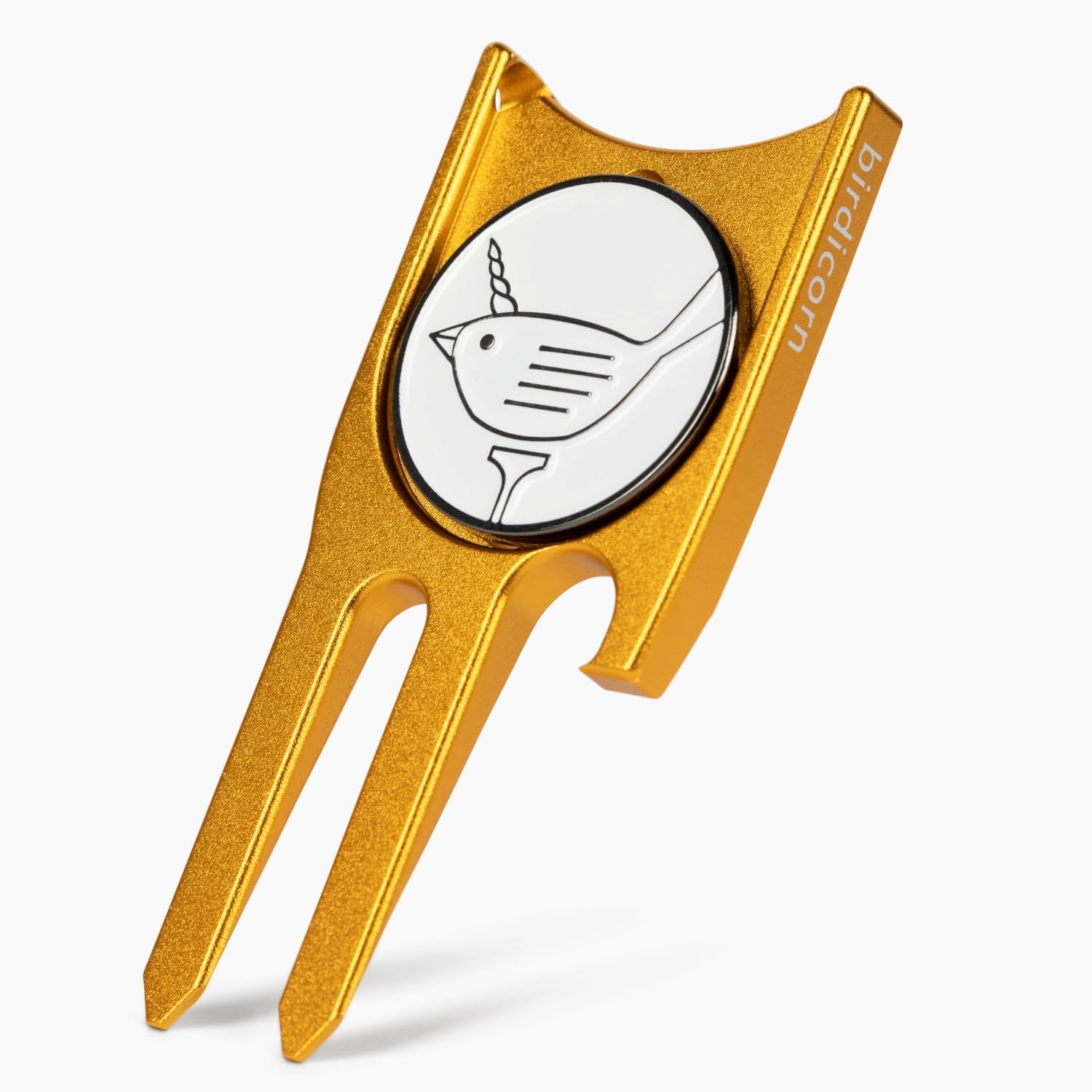
Golf is famous for charging you three figures for a fractional gain. So here's the inversion: the five pieces of kit that cost less than a nice lunch and protect the most expensive technology in your bag. Tees, a towel, a brush, a divot tool and a pouch — the best value-per-stroke money in the game.
Explained
5 tiny upgrades that never leave a golfer's bag — unlike most of what you buy
No swing promises, no subscriptions — just 5 small, cheap bits of kit that each solve one genuine on-course annoyance so well they stay in the bag for years. The list, and exactly what each one fixes.
Explained
Six golf gadgets that quietly make the round better
No launch monitors, no swing sensors, no subscriptions. Just six small things that make a Saturday morning less annoying, one of which exists purely for the laugh.