
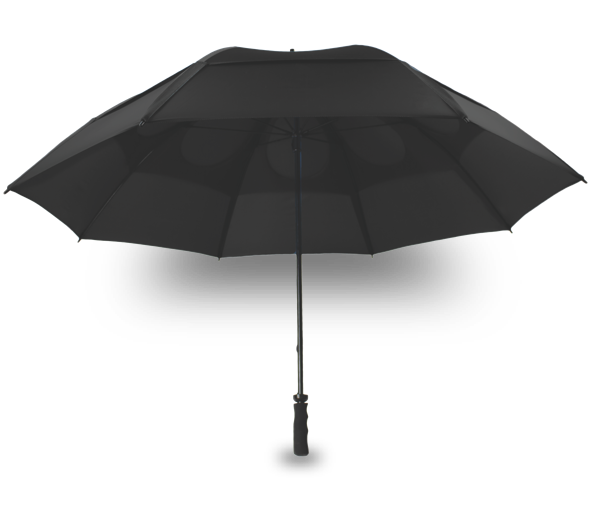
A single-canopy-sized but double-canopy-engineered 62 inch golf umbrella. The twin-layer top lets wind pass through a gap between the canopies rather than building up pressure underneath, which is the whole reason it stays the right way round when lesser umbrellas surrender. Fibreglass shaft, rubber grip, and a genuinely useful lifetime warranty.
Best Golf Umbrellas 2026
Stay dry when the heavens open
Most golfers should just buy the GustBuster Pro Gold and stop thinking about umbrellas. Its patented vented double canopy bleeds gusts through the gap between layers instead of catching them like a sail, and it's wind-tested to 55+ mph without inverting — which is the entire job a golf umbrella exists to do. At $50 with a lifetime warranty, it ends the yearly cycle of binning flipped-out cheapies.
The real decision is wind resistance versus coverage. A vented double canopy is non-negotiable if you play anywhere exposed; a single-canopy umbrella is lighter and cheaper but far more likely to surrender on a squally day. Span matters too — a 62–68 inch canopy shelters you and the bag and still fits a trolley holder, while the dual-canopy heavyweights add the most cover at the cost of weight and folded length. Decide whether you want a stick umbrella that lives in the bag or something that packs smaller for travel, because the windproof workhorses are almost always full-length sticks.
We've picked proven windproof workhorses alongside a couple of dual-canopy heavyweights worth the extra. If you only play in light drizzle, a cheaper single-canopy pick is fine — but if you regularly get caught out in proper weather, spend up once on a windproof design, because an umbrella that turns inside-out on the 4th is worse than no umbrella at all.
ifrothgolf earns a commission on purchases made through these links, at no extra cost to you. It never changes what I recommend. Full disclosure.
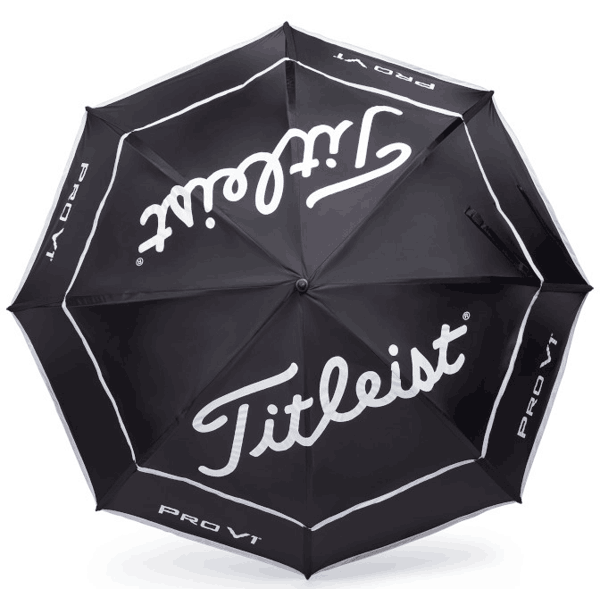
A 68 inch tour-style golf umbrella with a vented double canopy: the top layer overlaps the lower one and lets gusts pass through rather than catching them and flipping the umbrella inside out. It is the same design you see staked into pro bags on wet tournament weeks, with a premium anti-inversion frame, a UV-blocking top and Titleist's own rubberised handle.
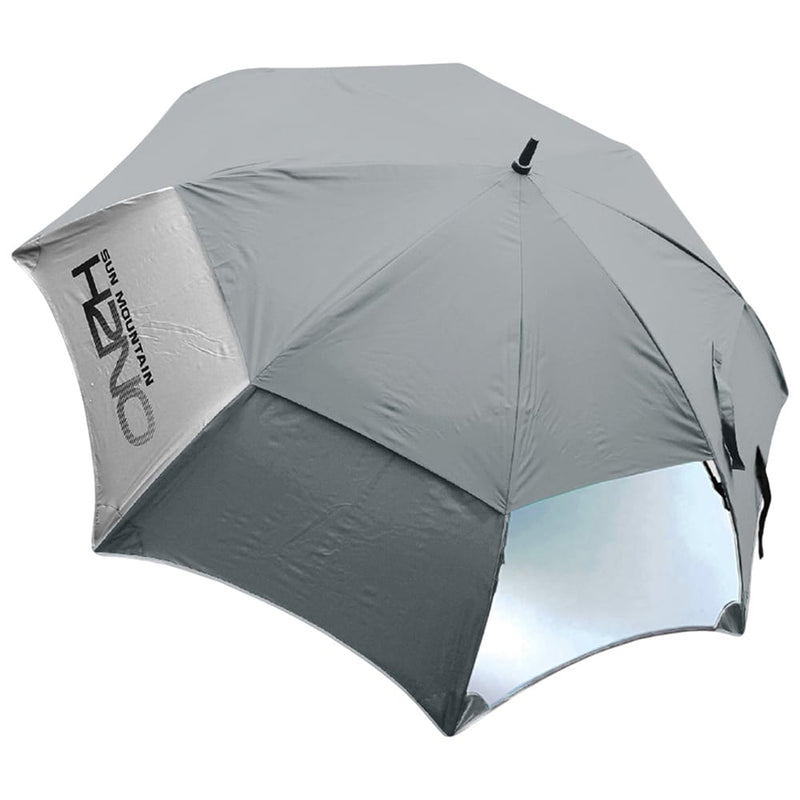
A full-size 68 inch double canopy golf umbrella from Sun Mountain. The headline feature is the Vision window, a clear panel set into the canopy so you can look forward through it rather than tilting the whole thing to see where you are going. It has a fibreglass frame, an SPF50 coating inside, a tipless safety design and an auto-open button.
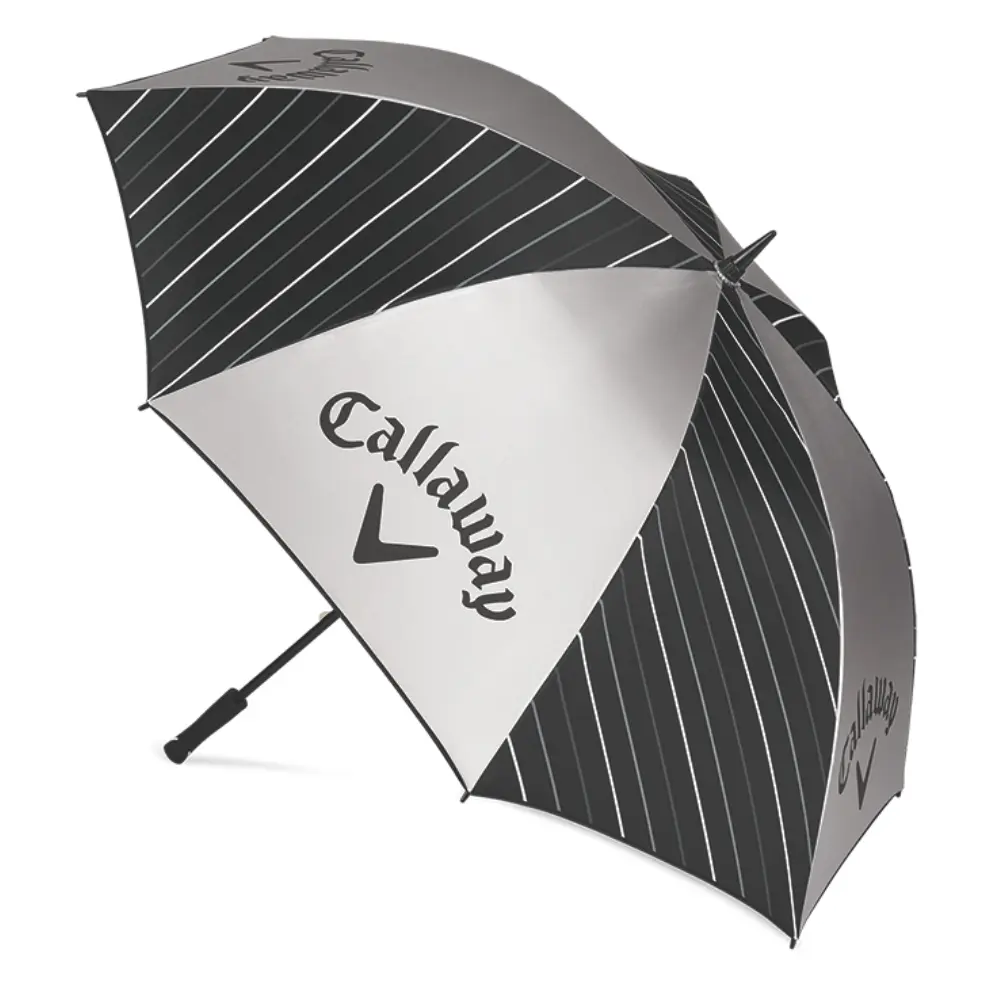
A 64 inch double canopy golf umbrella from Callaway. The canopy is wide enough to keep you and a playing partner dry, the vented two-layer design lets wind escape rather than turning the thing inside out, and a UPF 50 plus coating on the fabric means it doubles as sun cover on bright days. It runs on a fibreglass shaft with a manual open and a soft non-slip handle.
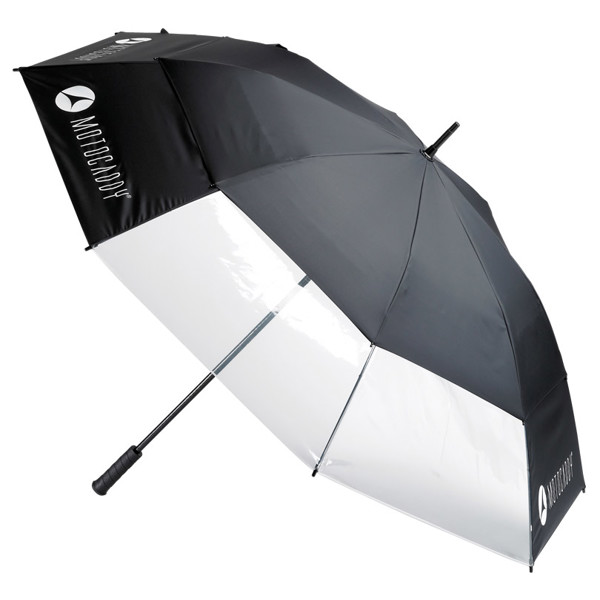
A 64-inch double-canopy golf umbrella from trolley specialist Motocaddy. Its party trick is a pair of clear see-through panels set into the canopy, so you can keep it low over your head and still track your ball flight and read the green. The vented twin-layer canopy lets wind pass through rather than flipping inside out, it auto-opens one-handed, and the handle is shaped to drop straight into a Motocaddy umbrella holder.
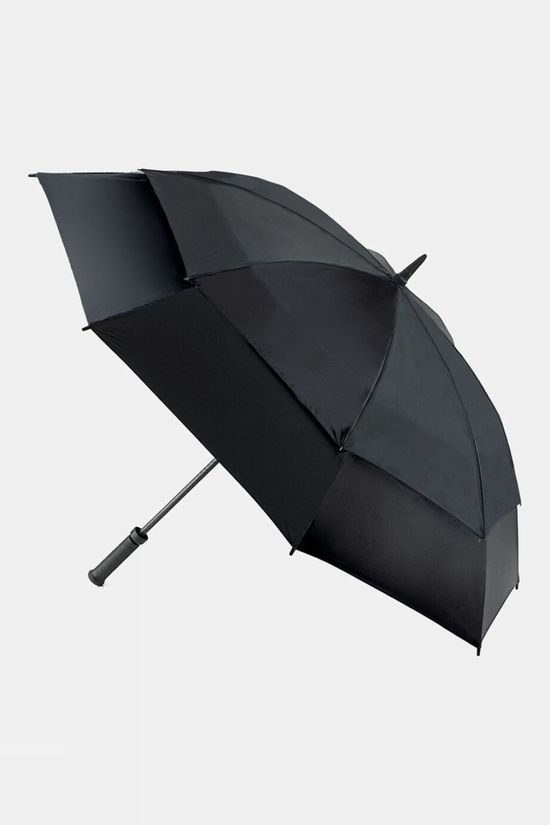
A 131cm twin-canopy umbrella from Fulton, a British maker that holds a Royal Warrant and actually knows umbrellas rather than treating them as a golf-bag afterthought. The double vented canopy lets gusts pass through the gap instead of catching the whole sail, and the full fibreglass frame is both light at around 650g and non-conductive, which is the sensible feature you want when you are the tallest metal-free thing on an exposed fairway.
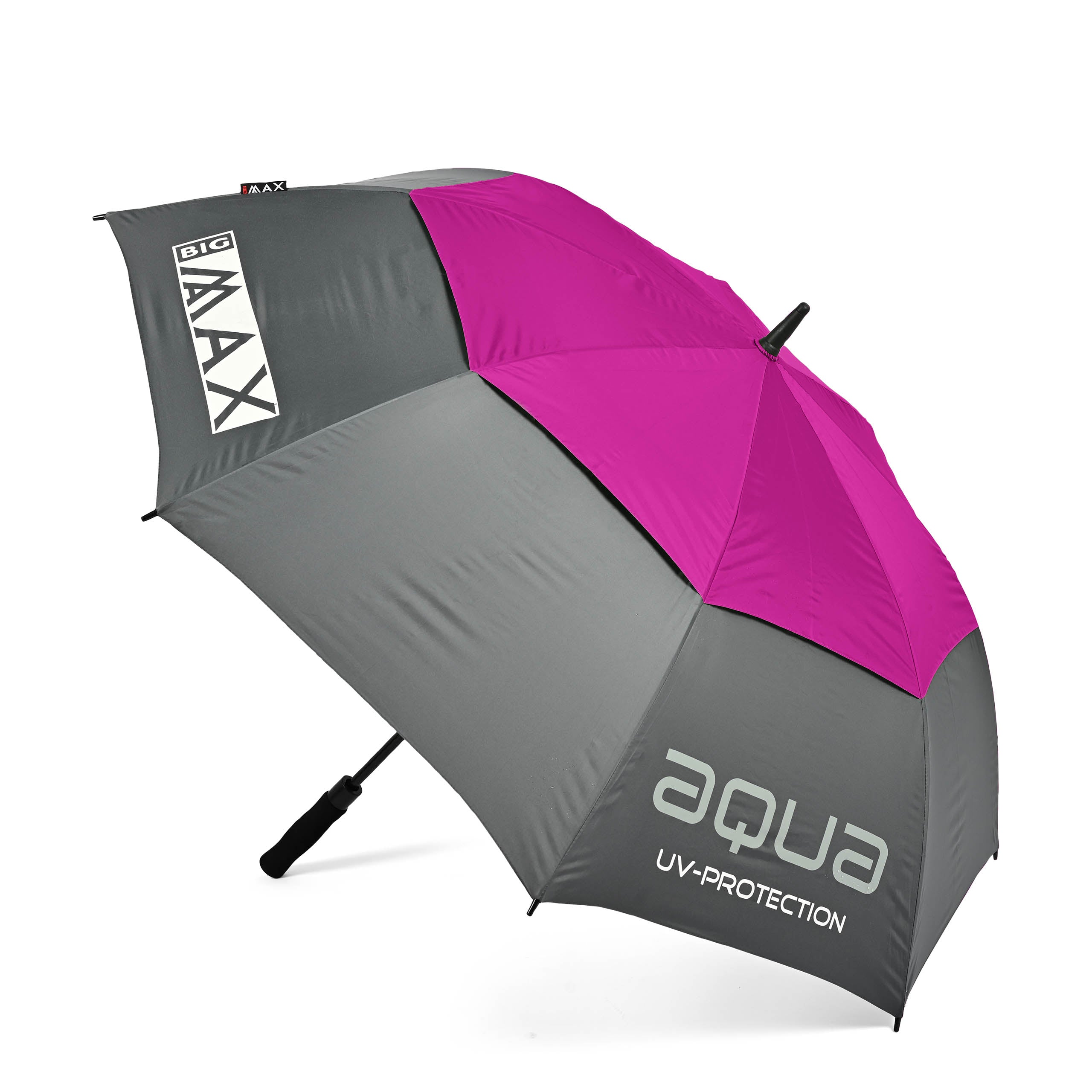
A big 60-to-68-inch twin-layer storm brolly built for blokes who play through proper British wind and rain, not just a passing shower. The vented top canopy is the whole point.
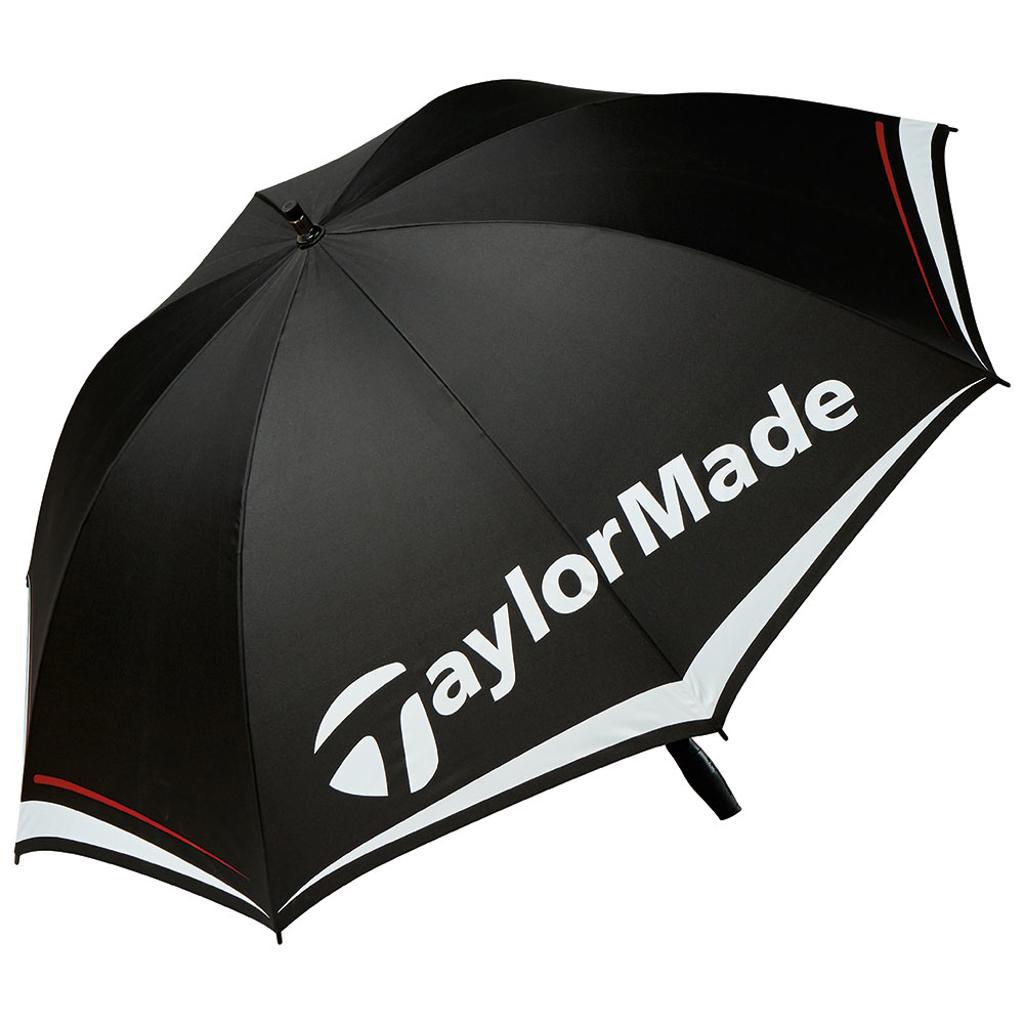
A 60 inch single-canopy golf umbrella from TaylorMade with a 100 percent nylon canopy, a rubber-coated ergonomic sport-grip handle and a manual open action. It is the entry-level brolly in the range, sitting below the bigger double-canopy models, and is sized to shelter you and a stand or cart bag rather than two people.
Frequently asked
- What is the best golf umbrella?
- The GustBuster Pro Gold — its vented double canopy resists inverting in strong wind, which is exactly where cheap umbrellas fail. For the biggest coverage, a dual-canopy heavyweight is worth the extra to shelter both you and the bag.
- Why are golf umbrellas double canopy?
- The vented double canopy lets gusts pass through instead of catching the umbrella like a sail, so it's far less likely to turn inside-out. That windproofing, plus a larger span, is what separates a golf umbrella from a normal one.
- What size golf umbrella do I need?
- A 60–68 inch canopy covers you and your bag comfortably and still fits most trolley holders. Bigger gives more shelter but catches more wind, so prioritise a windproof vented design over sheer size.
- Will a golf umbrella survive strong wind?
- A good one will. The GustBuster Pro Gold is wind-tested to 55+ mph and its fibreglass shaft won't crimp, so it holds its shape where a basic brolly inverts and snaps a rib. The trade-off is weight — proper windproof umbrellas are heavier and bulkier than cheap ones.
- Are golf umbrellas worth the extra money over a normal one?
- If you play in any wind, yes. A normal umbrella is built for rain on a still day and flips at the first gust; a golf umbrella is engineered to survive wind and gives a wider span to cover your bag. Spend up once and it's a multi-season buy rather than a yearly replacement.
Related reading