
Your golf umbrella is probably a toy — here's the real thing
The freebie brolly that inverts on the 3rd is not an umbrella; it's a liability. A genuine storm-proof golf umbrella is a piece of performance equipment, and the difference is measured in ribs, vents and inches of span. With The Open back on the Lancashire coast, this is the week to learn it.
By Ross Hamilton · Staff Writer
 Opinion
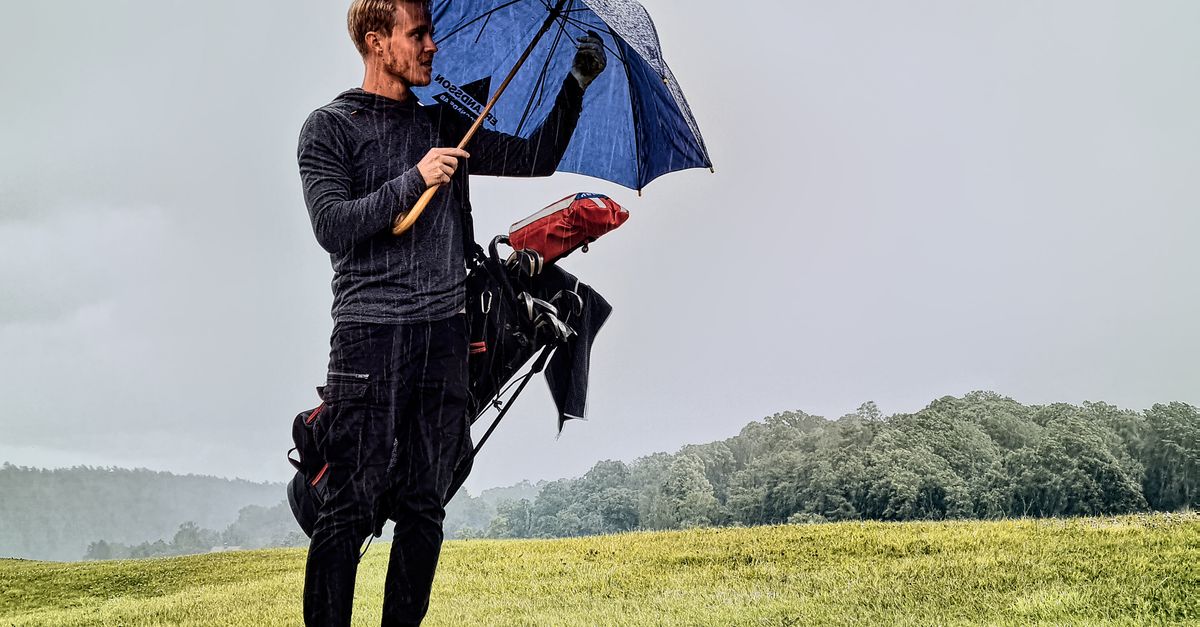
Watch any exposed links course on a windy Saturday and you'll see the same little tragedy play out a dozen times: a golfer wrestling a cheap umbrella that has just turned itself inside out, ribs bent at angles umbrellas aren't supposed to bend at, the owner now wetter than if they'd carried nothing at all. That object was never an umbrella. It was a decoration shaped like one. And with The Open Championship returning to Royal Birkdale on the Lancashire coast this week — where the wind comes off the Irish Sea and treats high-street brollies as confetti — it's worth saying plainly: most golfers own a toy, and a real golf umbrella is a genuine piece of performance equipment.
The reason the distinction matters is that an umbrella is the one piece of kit whose entire job is to fail gracefully in conditions specifically designed to destroy it. A rain jacket just has to be waterproof. An umbrella has to stay open, stay pointed the right way, and stay in one piece while a crosswind does everything in its power to fold it around your head. The engineering that makes that possible is real, it's specific, and it's almost entirely absent from the umbrella your bank gave you.
The single feature that separates real from toy: the vented double canopy
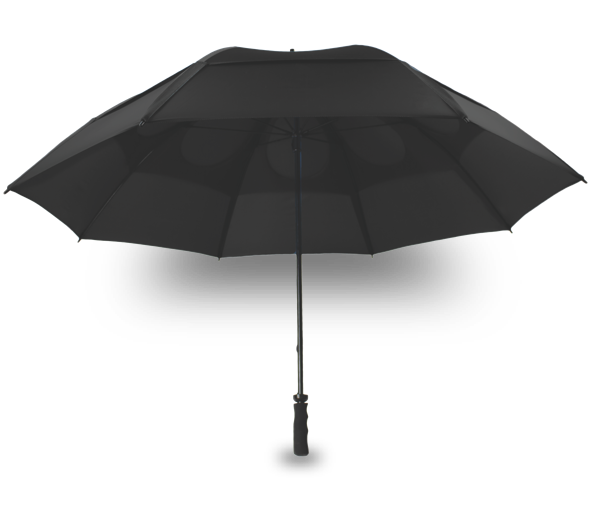
If you learn one thing, learn this. A standard umbrella is a solid dome — a sail. Wind hits it, has nowhere to go, and either lifts you off your feet or inverts the canopy. A vented double canopy solves the problem with physics rather than brute force: the top layer sits slightly above a lower layer, and when a gust hits, air escapes through the gap between them instead of building pressure under the dome. The GustBuster Pro Gold is the umbrella that made this famous — its patented double canopy is the reason it survives gusts that snap ordinary brollies, and it's the benchmark every serious golf umbrella has been measured against since. This isn't marketing. It's the difference between an umbrella that works in wind and one that becomes a projectile.
Ribs: fibreglass, not steel
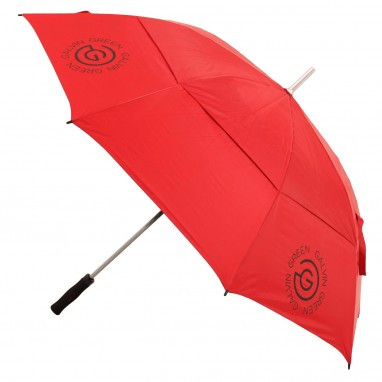
The second tell is the skeleton. Cheap umbrellas use thin steel ribs that bend permanently the first time they're overloaded — and once a rib is bent, the umbrella never sits right again. A proper golf umbrella uses fibreglass ribs, which flex under load and spring back to shape. Fibreglass has a second, quieter virtue that matters on a golf course specifically: it doesn't conduct electricity, and it doesn't rust. The Galvin Green Tromb is the extreme end of this — a Swedish-engineered frame built for the kind of Scandinavian weather that makes a British squall look gentle, storm-tested to a standard no freebie will ever meet. You pay for that overkill, but on a genuinely brutal day it's the difference between an umbrella and an anecdote.
Span and coverage: 60 inches is the floor
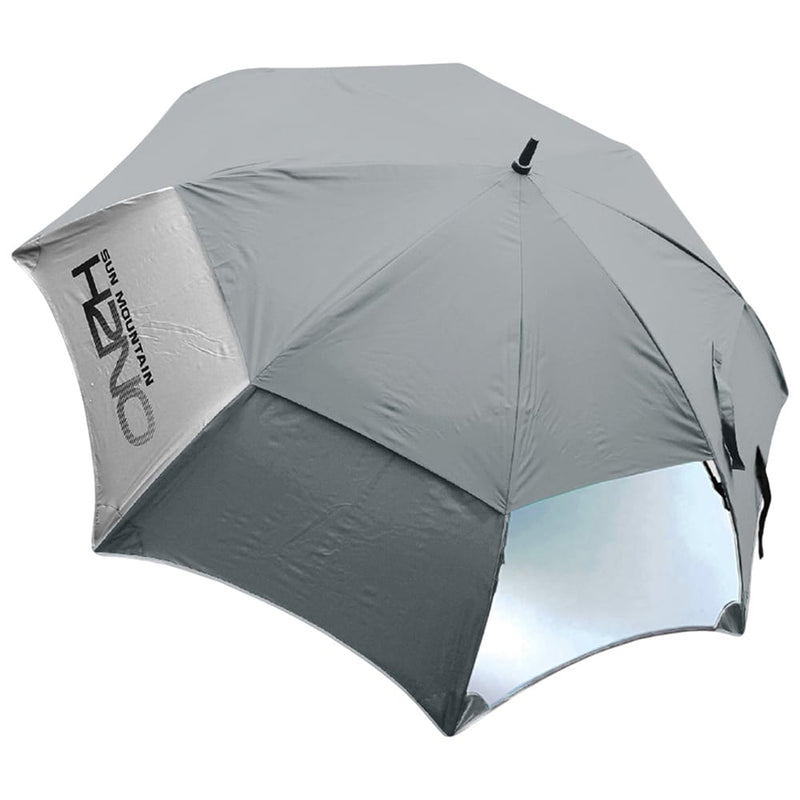
A golf umbrella has more to cover than you — it has to keep you and your bag dry, which is why the span is so much bigger than a commuter's brolly. Sixty inches of arc is roughly the sensible floor; the big storm models push past 68. The Sun Mountain H2NO is the pick that proves you don't need to pay a premium badge tax to get the essentials — vented double canopy, a genuinely large span, and a price that punches well below the marquee names. What the marketing won't tell you is that beyond a certain point, the extra inches are diminishing returns and extra weight to carry; a well-executed 62-inch canopy from a real maker beats a flimsy 68-inch one every time. Span is necessary, not sufficient.
The stuff that quietly matters: grip, weight, and looking the part
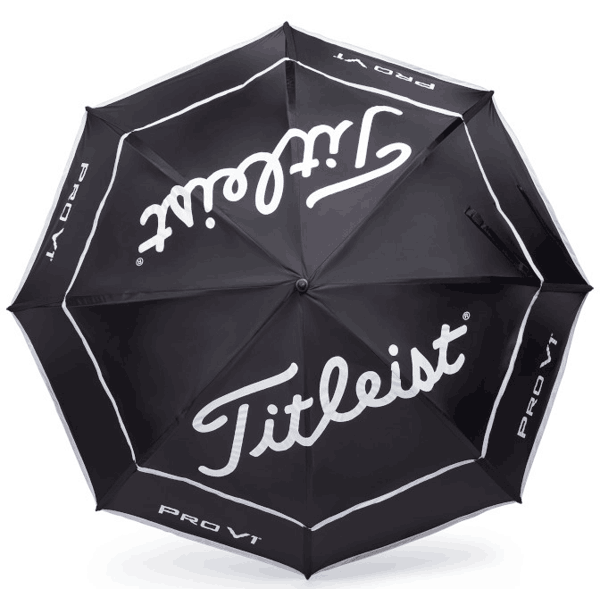
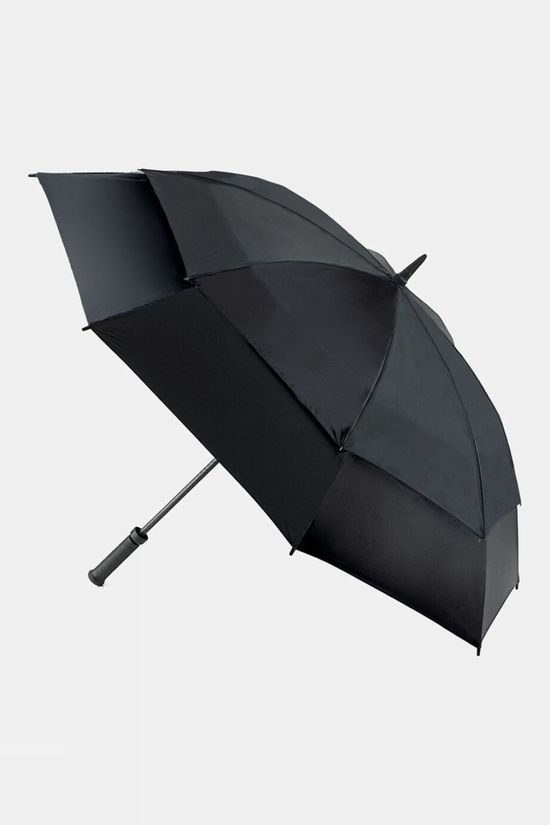
Below the headline specs sit the details that decide whether you actually enjoy carrying the thing. An automatic-open mechanism you can trigger one-handed while holding a trolley. A non-slip grip that doesn't turn to soap when it's wet — which is, of course, the only time you're using it. A weight that doesn't unbalance your bag. The Titleist Tour double canopy is the one that makes the case that a real umbrella can also look like it belongs on a tour bag rather than a bus stop — proper double-canopy engineering underneath the clean livery, so you're not trading function for looks. And for the traditionalists, Fulton's StormShield comes at golf from the other direction entirely: a British umbrella specialist with decades of storm heritage, fibreglass ribs, and — refreshingly — a design built to be repaired rather than thrown away when a rib goes.
Who can get away with the cheap one
Here's the honest counterweight, because not everyone needs to spend real money on this. If you play almost exclusively on calm, tree-lined parkland courses where the wind never really gets up — or if you're a fair-weather golfer who simply walks in when it turns nasty — a decent mid-range umbrella will see you out for years, and a storm-proof monster is overkill you'll resent carrying. The vented double canopy earns its keep in wind; no wind, no need. But if you play anywhere exposed — links, clifftop, moorland, or anywhere the forecast is a genuine variable rather than a formality — the cheap umbrella isn't a saving. It's a purchase you'll make again next season, and the season after that, until you finally buy the real one. The full field is in our best golf umbrellas guide, and more foul-weather kit lives in the accessories hub.
Products mentioned in this article
GustBuster
GustBuster Pro Series Gold 62" Golf Umbrella
The windproof benchmark: a patented double canopy that vents gusts instead of catching them. The one that made the category.
Galvin Green
Galvin Green Tromb 60 Storm Umbrella
The Swedish overkill option — fibreglass frame, storm-tested for the worst links weather money can buy.
Sun Mountain
Sun Mountain H2NO Vision Umbrella
The value pick that gets the essentials right: vented double canopy, big span, no premium badge tax.
Titleist
Titleist Tour Double Canopy Umbrella
Tour-bag looks with genuine double-canopy engineering underneath — form and function in one.
Fulton
Fulton StormShield Golf Umbrella
The umbrella specialist's take on golf: British storm heritage, fibreglass ribs, built to be repaired not binned.
ifrothgolf earns a commission on purchases made through these links, at no extra cost to you. It never changes what I recommend. Full disclosure.
Frequently asked
- What makes a golf umbrella windproof?
- A vented double canopy is the key feature. The canopy is built in two layers with a gap between them, so when a gust hits, air escapes through the vent instead of building pressure under the dome and inverting it. Fibreglass ribs that flex and spring back rather than bending permanently complete the windproofing.
- How big should a golf umbrella be?
- Around 60 inches of arc is the sensible minimum, because a golf umbrella has to cover both you and your bag. Storm models run to 68 inches or more, but a well-built 62-inch canopy from a quality maker will outperform a flimsy larger one. Beyond a point, extra span is just extra weight to carry.
- Why are fibreglass ribs better than steel?
- Fibreglass ribs flex under load and return to shape, where thin steel ribs bend permanently the first time they are overloaded. Fibreglass also does not rust and does not conduct electricity, both of which matter on an exposed golf course in wet weather.
- Do I really need an expensive golf umbrella?
- Not if you play mostly on calm, sheltered parkland courses or you head indoors when the weather turns. In those cases a mid-range umbrella is plenty. If you play anywhere exposed to wind, such as links or clifftop courses, a storm-proof vented model is worth it because a cheap one will simply fail and need replacing.
Read next
Review
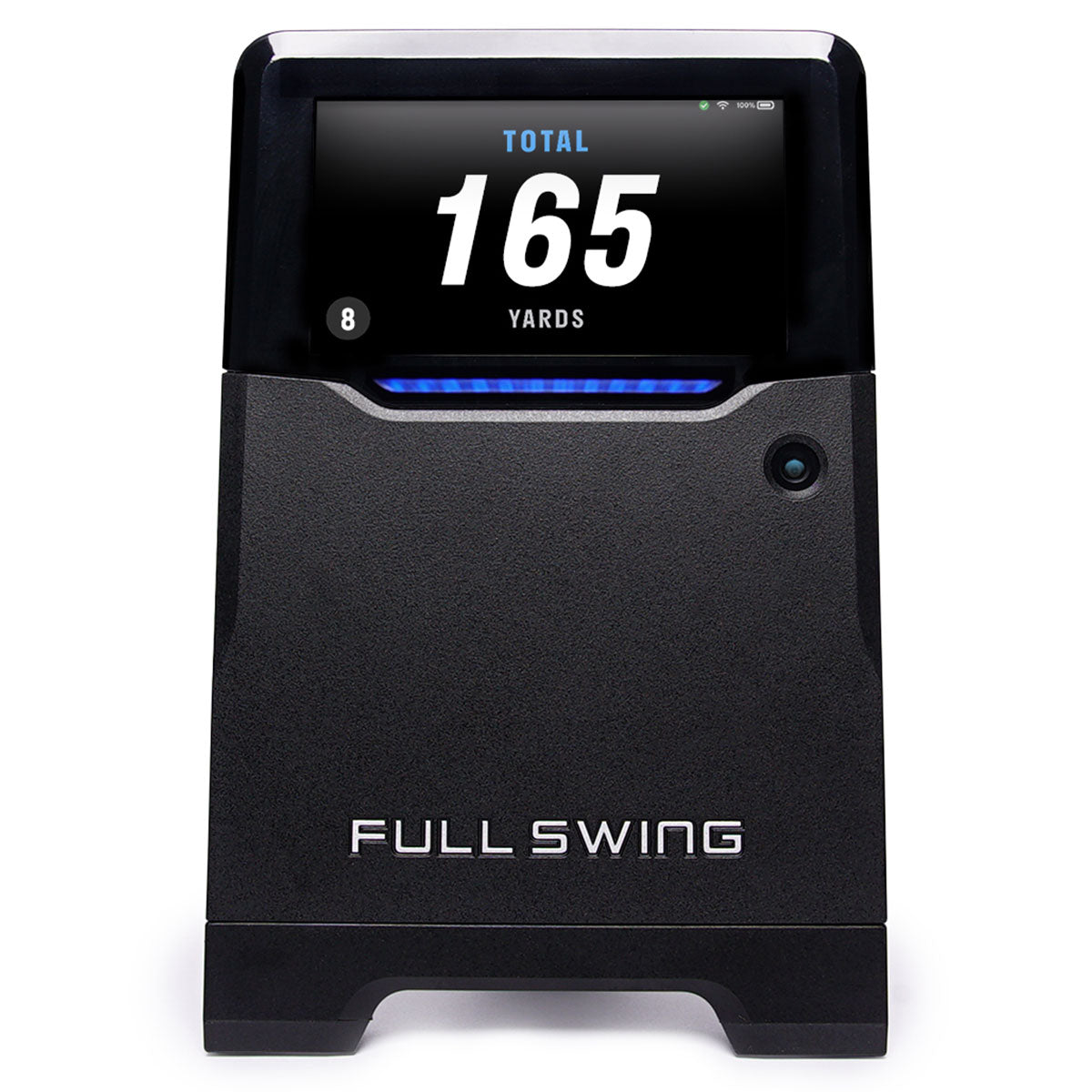
7.9/10Full Swing KIT review: the tape measure decides this, not Tiger
Tour pedigree, TGL on ESPN, and radar good enough to be checked against a Trackman outdoors. It also wants eighteen to twenty feet of room, which rules out most of the garages people buy it for.
Versus
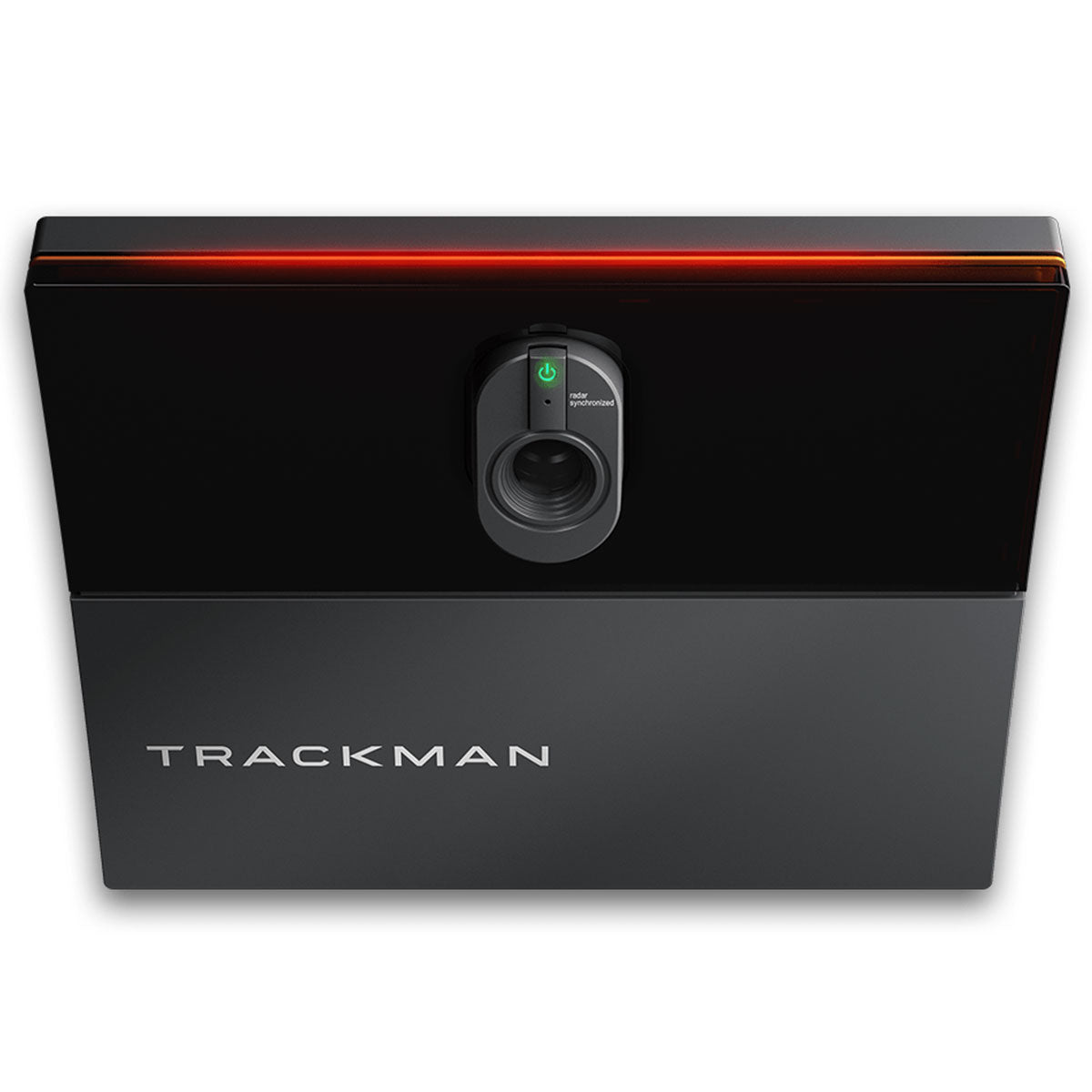
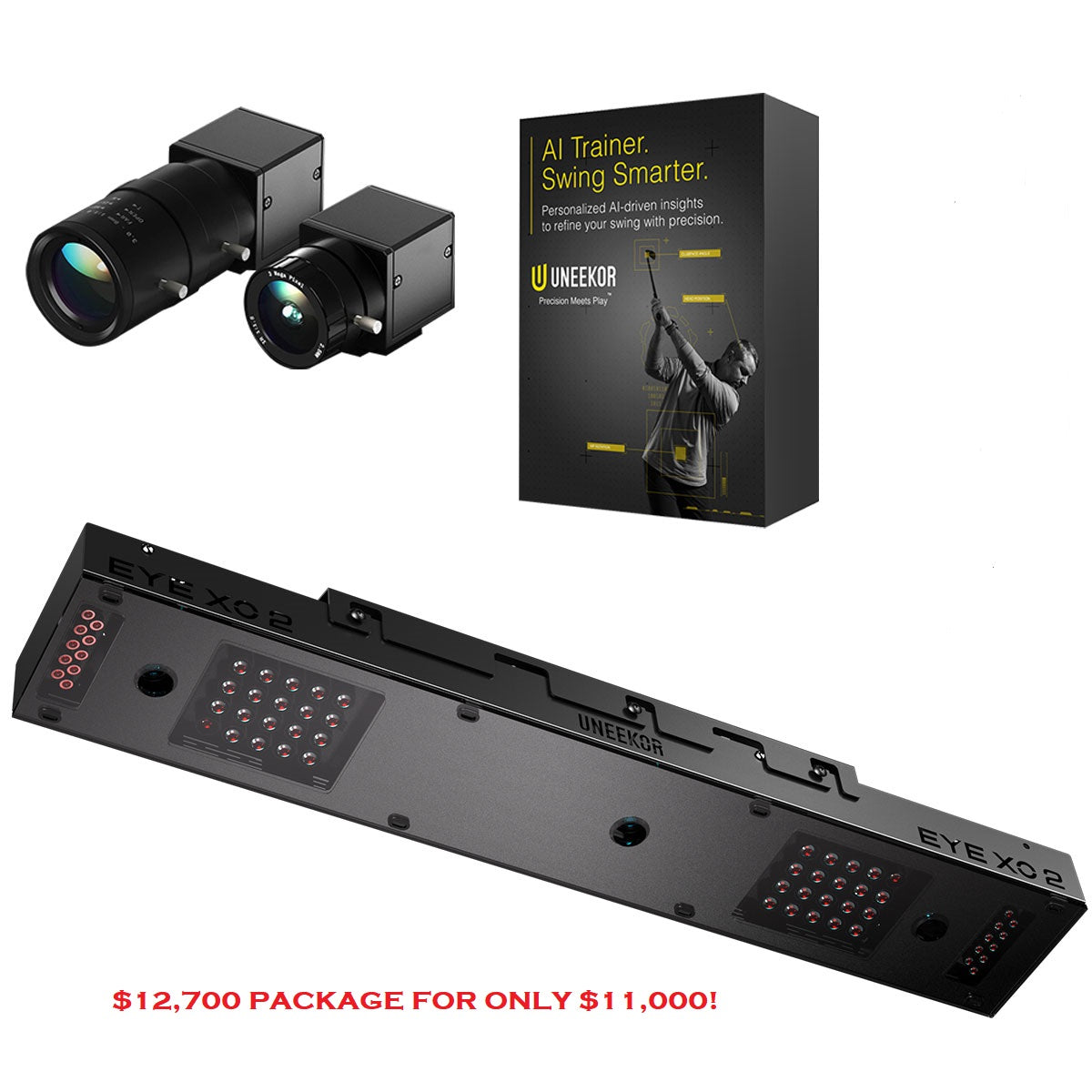
Trackman iO vs Uneekor EYE XO2: the year-one trap
Both mount overhead, both want ten feet of ceiling, and about $3,000 separates them on the shelf. Then Trackman's included first year runs out, and the gap starts growing by $1,100 a year.
Versus
Uneekor EYE XO2 vs Foresight GC3: ceiling or floor?
About $4,000 separates them, but they're not really rivals — one lives in your ceiling forever, the other sits on the floor and travels. The cheaper one is also the one with no subscription.