
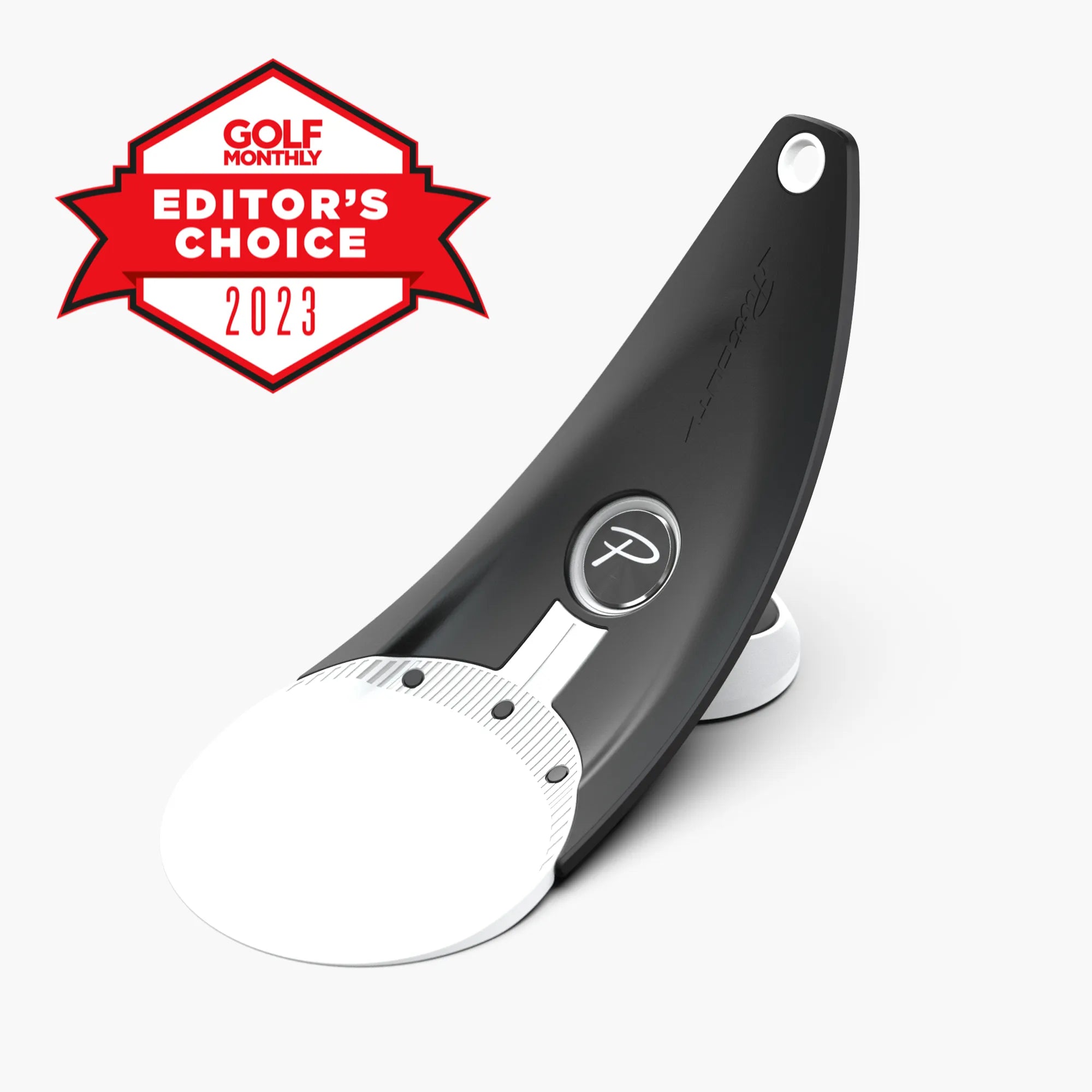
A pocket-sized putting aid: a parabolic ramp with a micro-target that catches dead-perfect putts and rolls everything else back to you. Aimed at anyone who wants to practise short putts at home or on the range without chasing balls all over the carpet.
Best Putting Aids 2026
Hole more from inside ten feet
The PuttOut Pressure Putt Trainer is the one to buy first — it rewards the ideal pace and rejects a putt hit too hard, training the two things that actually drop putts: start line and speed. You hit more putts than any other shot, yet it's the easiest part of the game to practise at home, which is why a small kit pays off faster than almost any other golf spend.
Think of putting aids as covering three jobs, and build a kit that hits all three. A mirror trainer (the PuttOut Mirror) fixes your setup — eyes over the ball, square shoulders, consistent stroke path. A gate or tutor (the PuttOut Gate, the Pelz Putting Tutor) trains a square face and an on-line start. And a pressure trainer or true-rolling mat (the WellPutt or Perfect Practice mats) builds pace control and the nerve to hole the short ones under fatigue. Most golfers only need two or three pieces, not the whole shelf.
The honest caveat: train feel and technique at home, not exact distance, because a carpet or mat rolls faster than most greens — so a six-footer indoors isn't a six-footer on a real surface. Roll a few balls in front of the telly each evening and the start-line-and-pace habits transfer; just don't trust the carpet's speed as gospel.
ifrothgolf earns a commission on purchases made through these links, at no extra cost to you. It never changes what I recommend. Full disclosure.
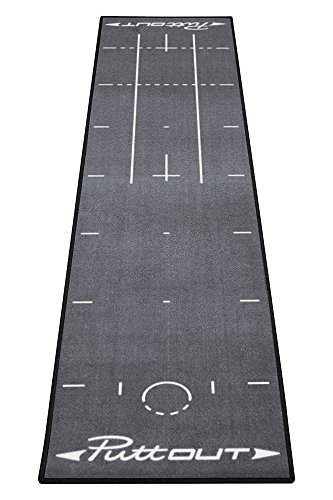
The PuttOut Putting Mat is a roll-up indoor putting mat with printed alignment and distance guides, aimed at golfers who want to grind on short putts at home over winter or before a round.
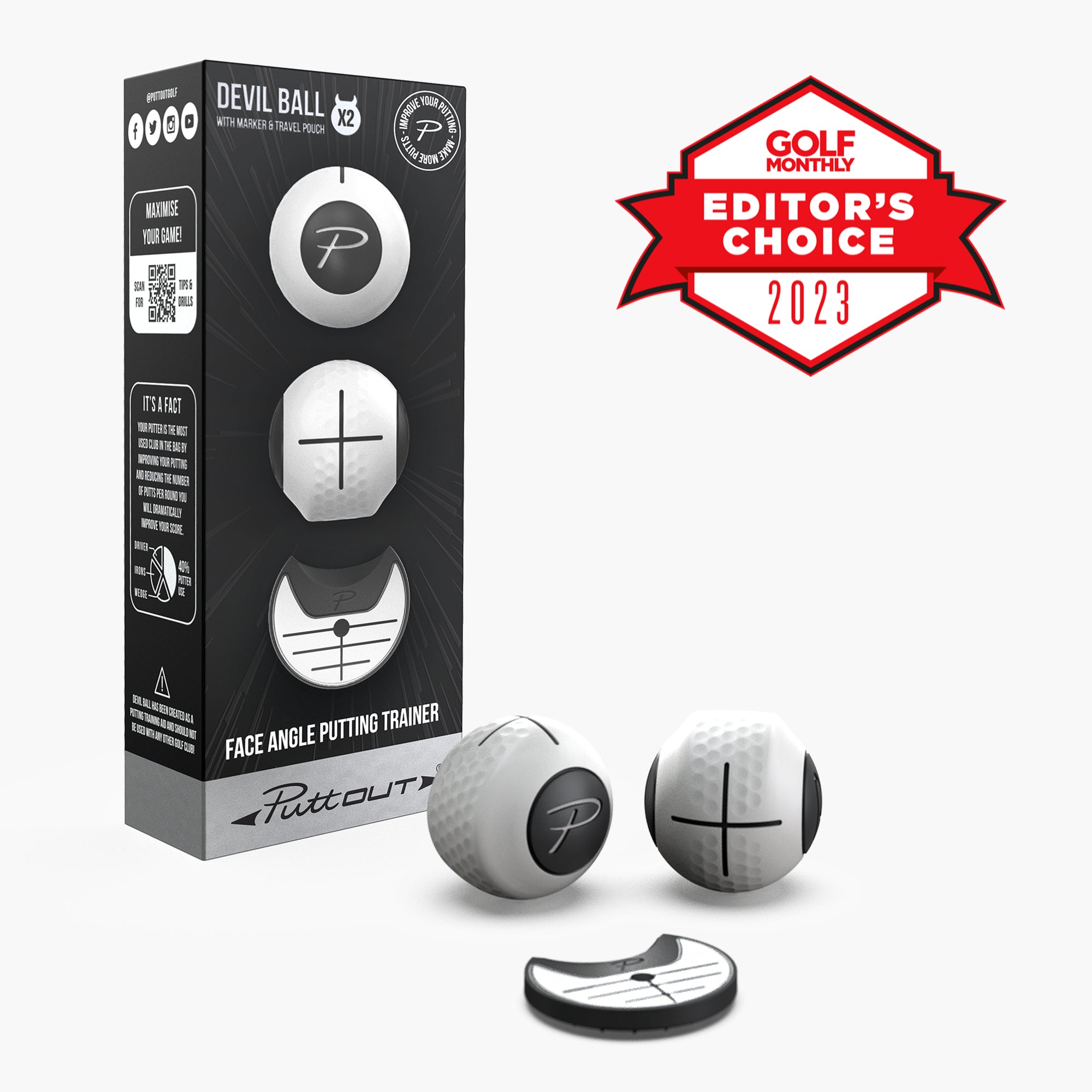
A weighted practice ball with flat edges that exaggerates face angle errors at impact, so a slightly open or closed putter face sends it visibly offline.
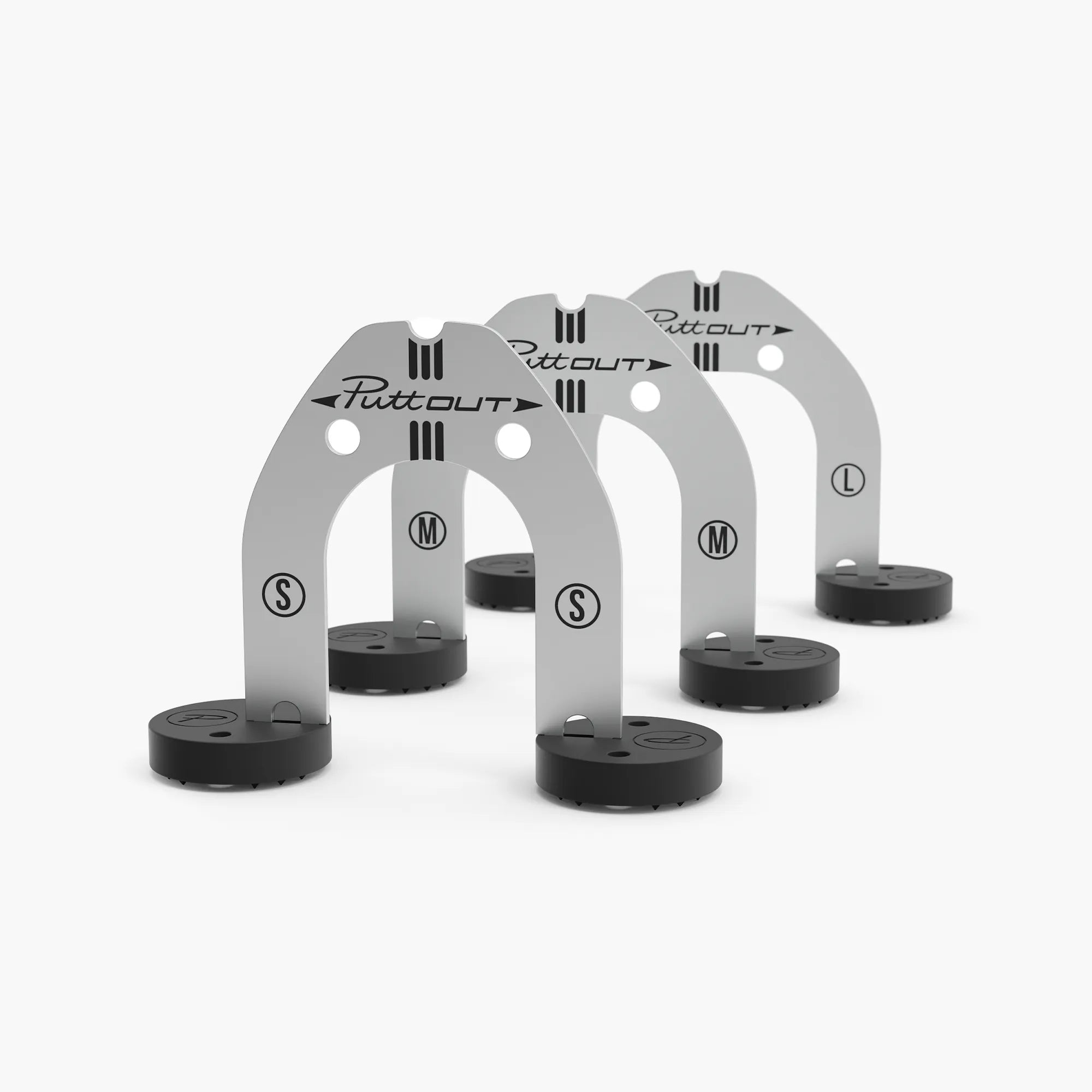
A set of three powder-coated steel putting gates in decreasing widths (70mm, 60mm, 50mm) that you set just in front of the ball. Roll the putt through without clipping the posts and your face was square at impact and your start line was true. Miss the gate and you know exactly what went wrong. They work on a practice green with the feet removed or indoors on a mat with the weighted feet attached, and there is a slot for an alignment stick if you want to build a fuller drill.
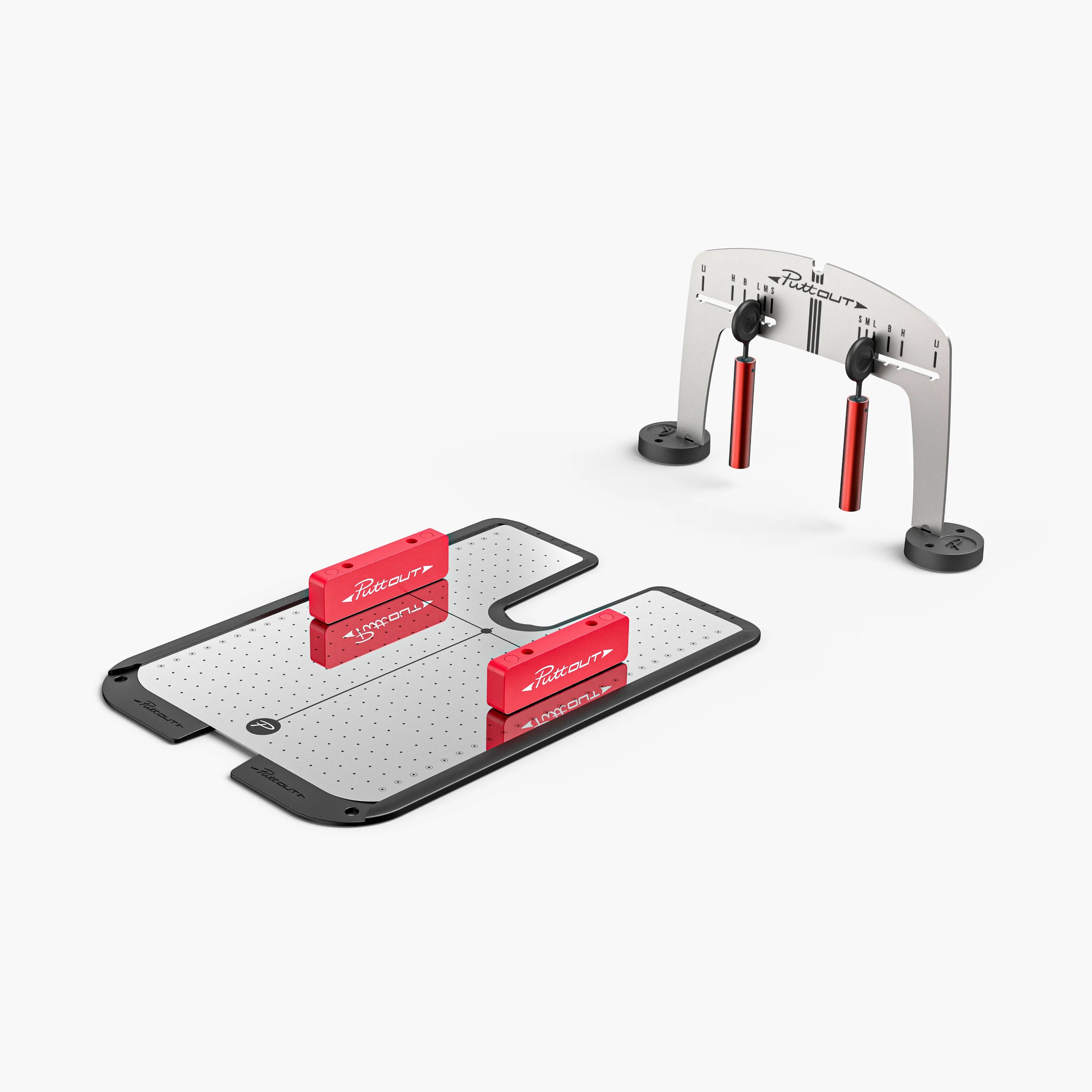
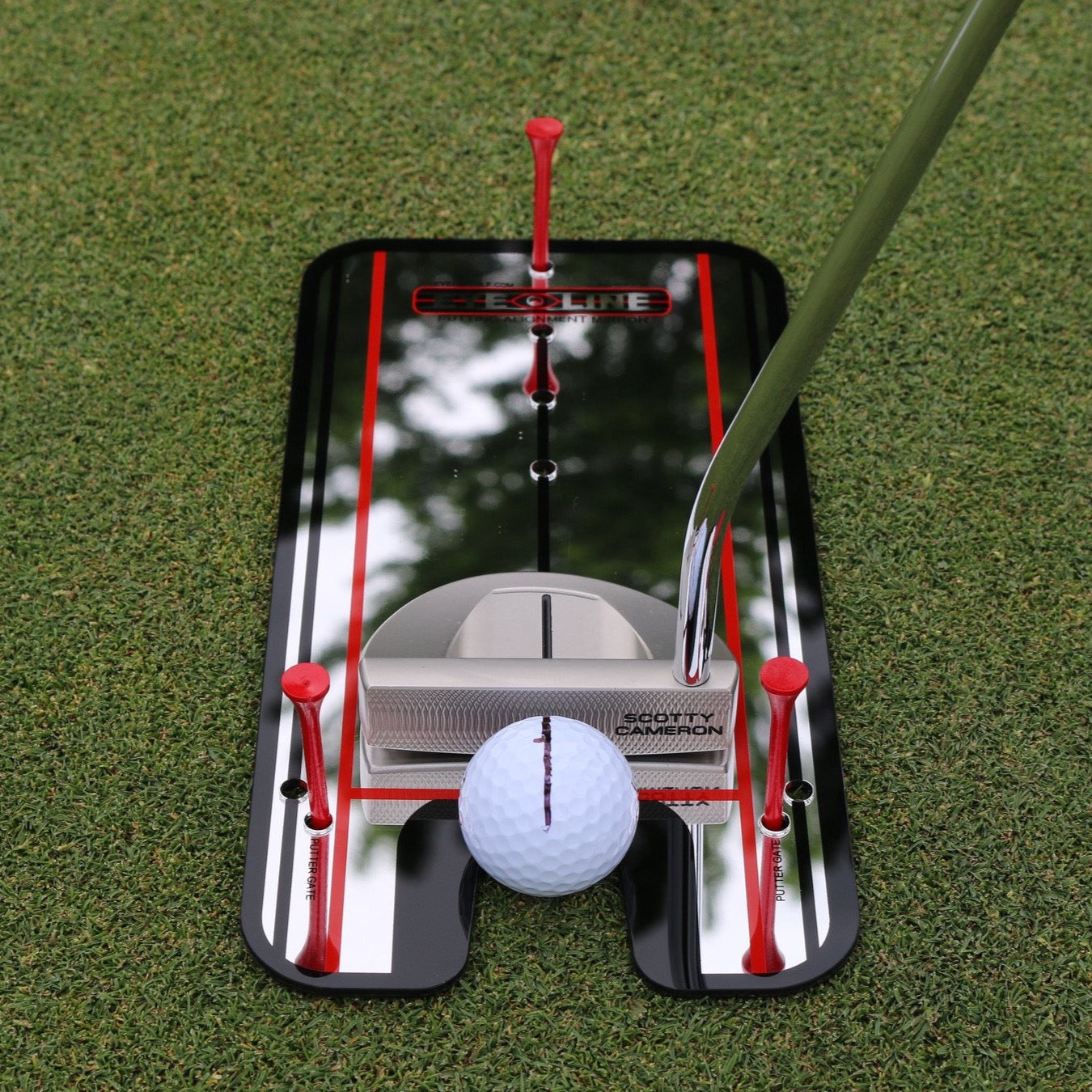
A putting alignment mirror that reflects your eyes and shoulders back at you so you can see whether your setup actually matches what it feels like. PuttOut now sells it as a Mirror and Adjustable Gate Set: the mirror plus two magnetic guides for the stroke path and an adjustable gate with several width presets for start-line, breaking-putt and target work. The mirror also pops out of its rubber case as a 1mm version when you just want the bare essentials.
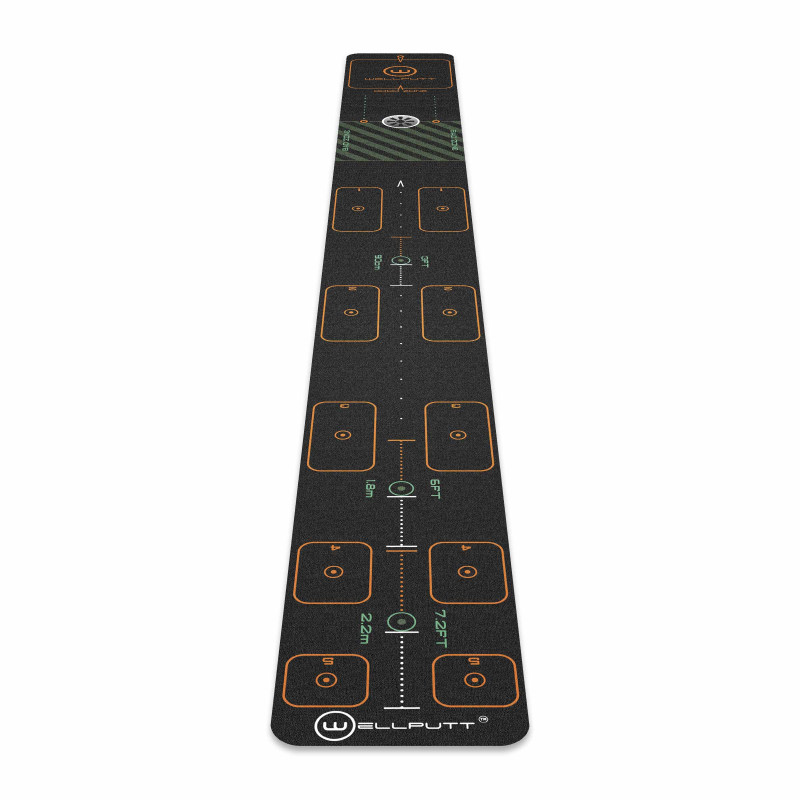
A 3m roll-up putting mat from WellPutt, the entry 10ft First model in their range. The surface is printed with alignment and stroke-length markers and pairs with a free app that walks you through drills built around setup, start line, pace and consistency. It is a structured practice system more than a novelty mat.
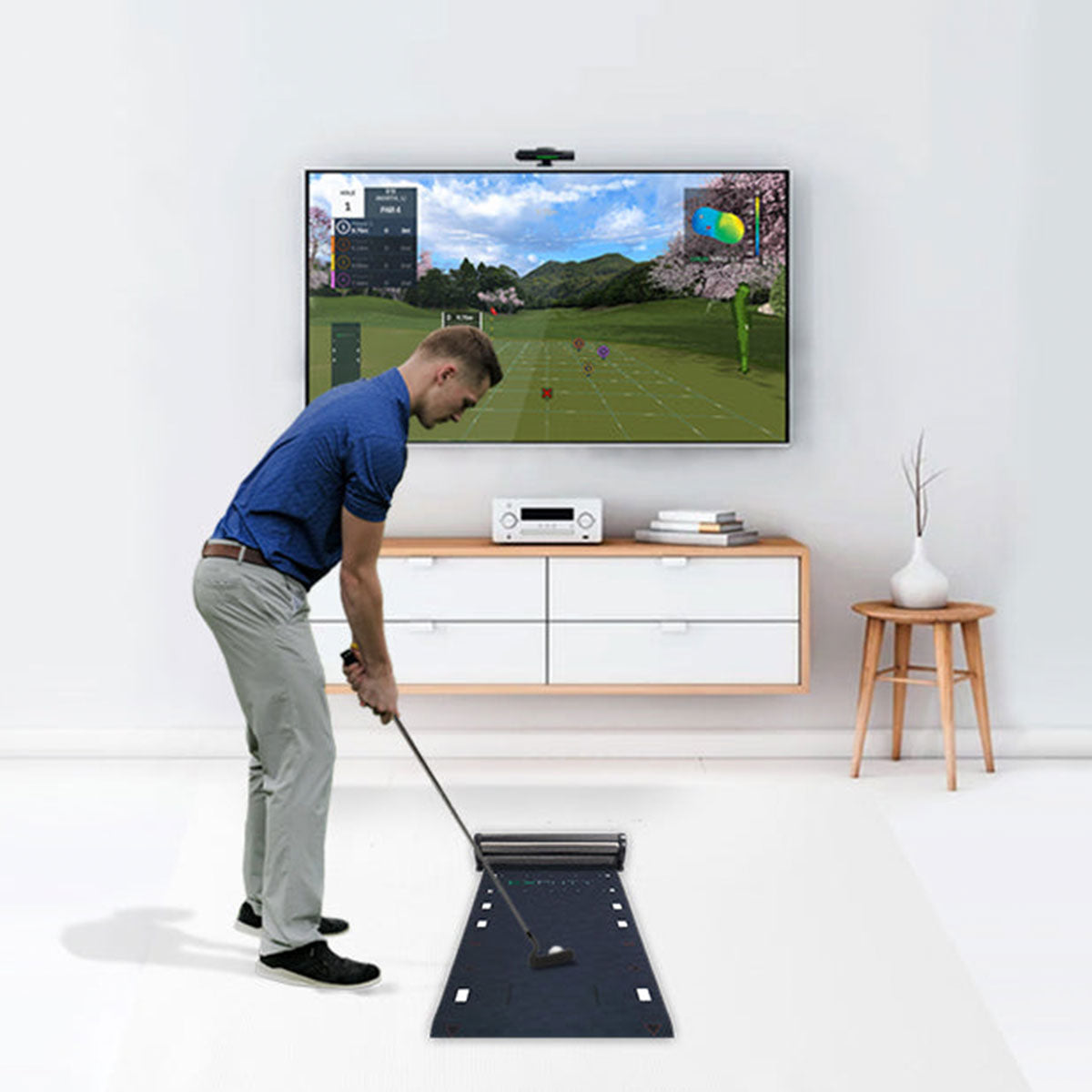
Nearly every home sim under-serves the part of the game that costs you the most shots. Full-swing launch monitors treat putting as an afterthought or skip it entirely, and a felt mat in the hallway teaches you pace on a surface that exists nowhere on earth. The Exputt RG is the cheap fix: an infrared sensor reads ball speed and direction off your actual stroke, then rolls the putt out on a modelled green with real contour, so a putt you pushed on a left-to-right slope misses the way it would outdoors. What you get from it is pace control and green-reading practice at 10pm in February, plus feedback numbers on face angle and speed that a mat can't give you. What you don't get is a substitute for the real thing — modelled break is modelled, and it won't teach you to read grain. As a £370-ish complement to a full-swing setup, though, it plugs the most expensive gap in most sim rooms.
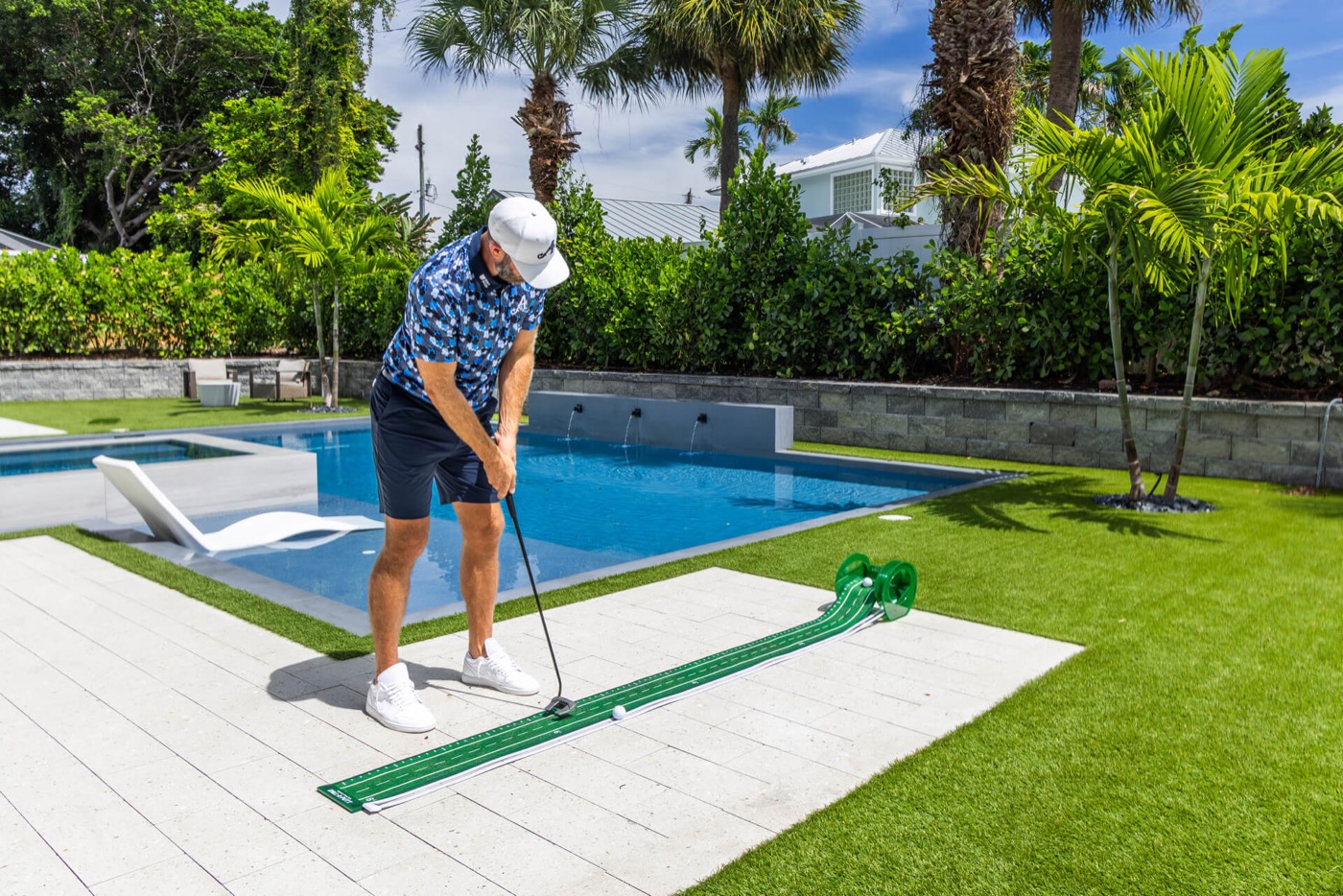
A premium roll-out putting mat with a wooden frame, two hole sizes, alignment "train track" lines and a gravity ball return, fronted by Dustin Johnson. Aimed at golfers who want to grind their short putts at home or in the office.
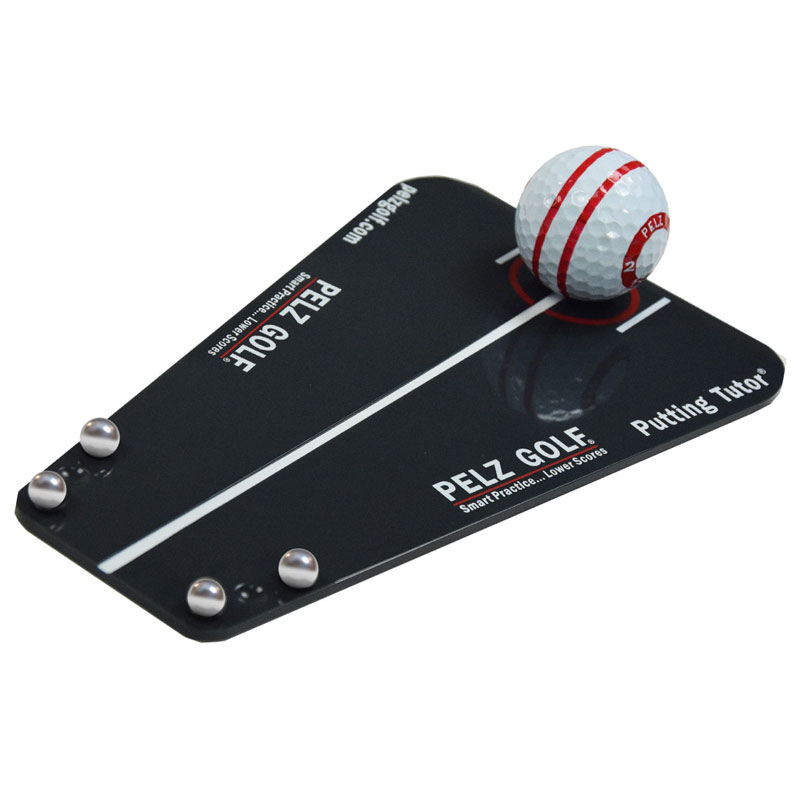
A flat aim-line board you set down a foot or so behind the ball. You place two of the supplied steel marbles to form a narrow gate just ahead of the ball, line up the printed aim line to your target, and putt. If your start line and face angle are square, the ball rolls cleanly through the gate. Push or pull it even slightly and the ball clips a marble, which rattles away and tells you instantly that you missed. The board also has dots for checking your eye position over the ball, and it doubles as a green-reading reference because every putt has to start on a straight line first.
Frequently asked
- What is the best putting aid?
- The PuttOut Pressure Putt Trainer is the best all-rounder — instant feedback on pace and start line in a tiny footprint. Pair it with a mirror trainer for setup and a true-rolling mat for repeatable lengths to cover every putting fundamental.
- Can you really improve your putting at home?
- Yes — putting is the most practisable skill at home. Short, daily, structured reps on start line and pace transfer to the course far better than occasional range sessions. Just train feel and technique, as a carpet rolls faster than a real green.
- What should I practise to hole more putts?
- Two things above all: starting the ball on your intended line, and controlling pace. Nail those and most short putts take care of themselves while three-putts disappear. A square face at impact and a repeatable stroke path underpin both.
- Are putting mats worth it, or is the floor fine?
- A true-rolling mat is worth it for a consistent, repeatable surface and a defined target — bare carpet rolls unevenly and teaches bad pace. Look for a mat that lies flat without curling and rolls reasonably true; just remember most mats run faster than a real green, so treat distances as relative.
- Do putting aids help with the short ones under pressure?
- The good ones do. A pressure trainer like the PuttOut punishes a putt hit too hard and rewards dead-centre pace, so holing it becomes a small confidence rep you can repeat dozens of times an evening. That repetition is exactly what steadies the nerve over a knee-knocker on the course.
Related reading
More on this from the desk
Explained
The best putters on Earth practise with cheap plastic — and you keep buying putters
Walk any tour practice green and it's covered in mirrors, gates, string lines and chalk — a full putting station for less than a dozen premium balls. Meanwhile amateurs respond to missed putts by buying a new putter. Here's how to decode the tour putting station, and which pieces actually move your handicap.
Review
7.5/10Exputt RG review: the putting simulator whose 44-inch mat decides what it can teach
A putting-only simulator that nobody in the gear press takes seriously, aimed at the part of the game that quietly falls apart between October and April. What it measures, what it only pretends to, and the mat dimension that explains both.
Versus
PuttOut vs Perfect Practice: one of these mats has no hole in it, the other has two and a ball return
Both are sold as putting mats and they are not the same product. One has no hole in it. The other has two, and neither of them is the size of a golf hole.