
The best putters on Earth practise with cheap plastic — and you keep buying putters
Walk any tour practice green and it's covered in mirrors, gates, string lines and chalk — a full putting station for less than a dozen premium balls. Meanwhile amateurs respond to missed putts by buying a new putter. Here's how to decode the tour putting station, and which pieces actually move your handicap.
By Jordan Hale · Equipment Writer
 Explained
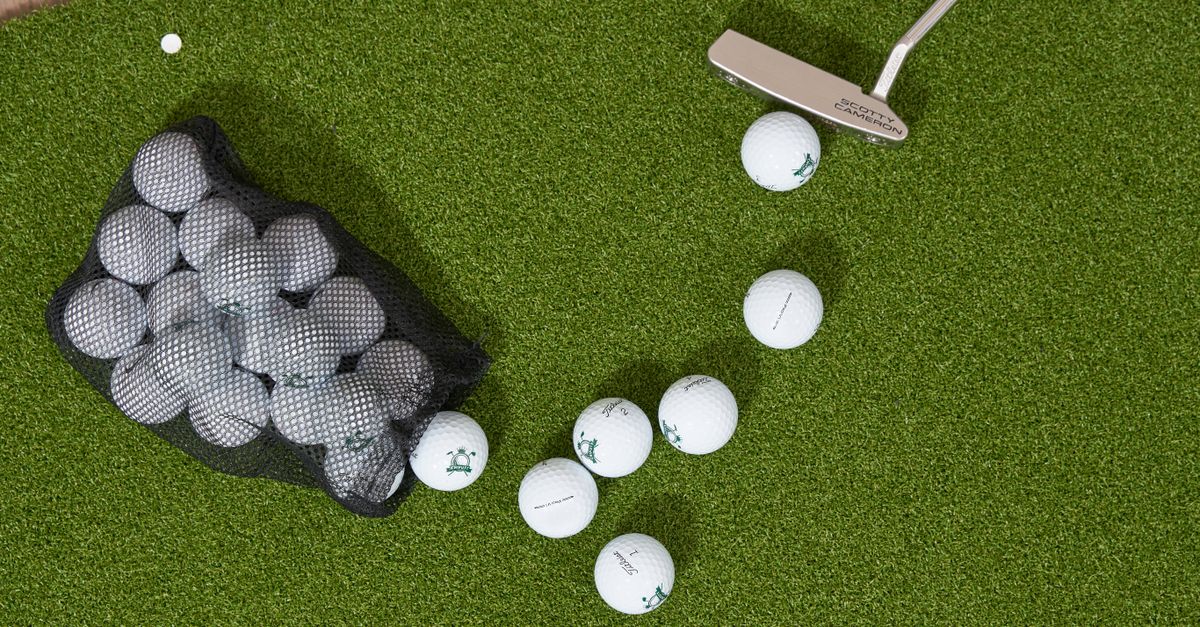
Walk any tour practice green — and in just over a week, when the 154th Open sets up at Royal Birkdale, it will be no different — and you will find the best putters on Earth surrounded by cheap plastic. Mirrors. Metal gates. String stretched between two pegs. Chalk lines. A full tour putting station costs less than a dozen premium golf balls, and these are players putting for millions. Now walk any club car park and watch what amateurs do after a bad putting month: they buy a new putter. The professionals treat putting as a skill you drill with feedback tools; amateurs treat it as an equipment problem. One of these groups holes more putts, and it is not the one with the receipts from the pro shop. Here is what each piece of plastic on that practice green actually does — and the order in which to buy it.
The mirror: proof you're aimed where you think
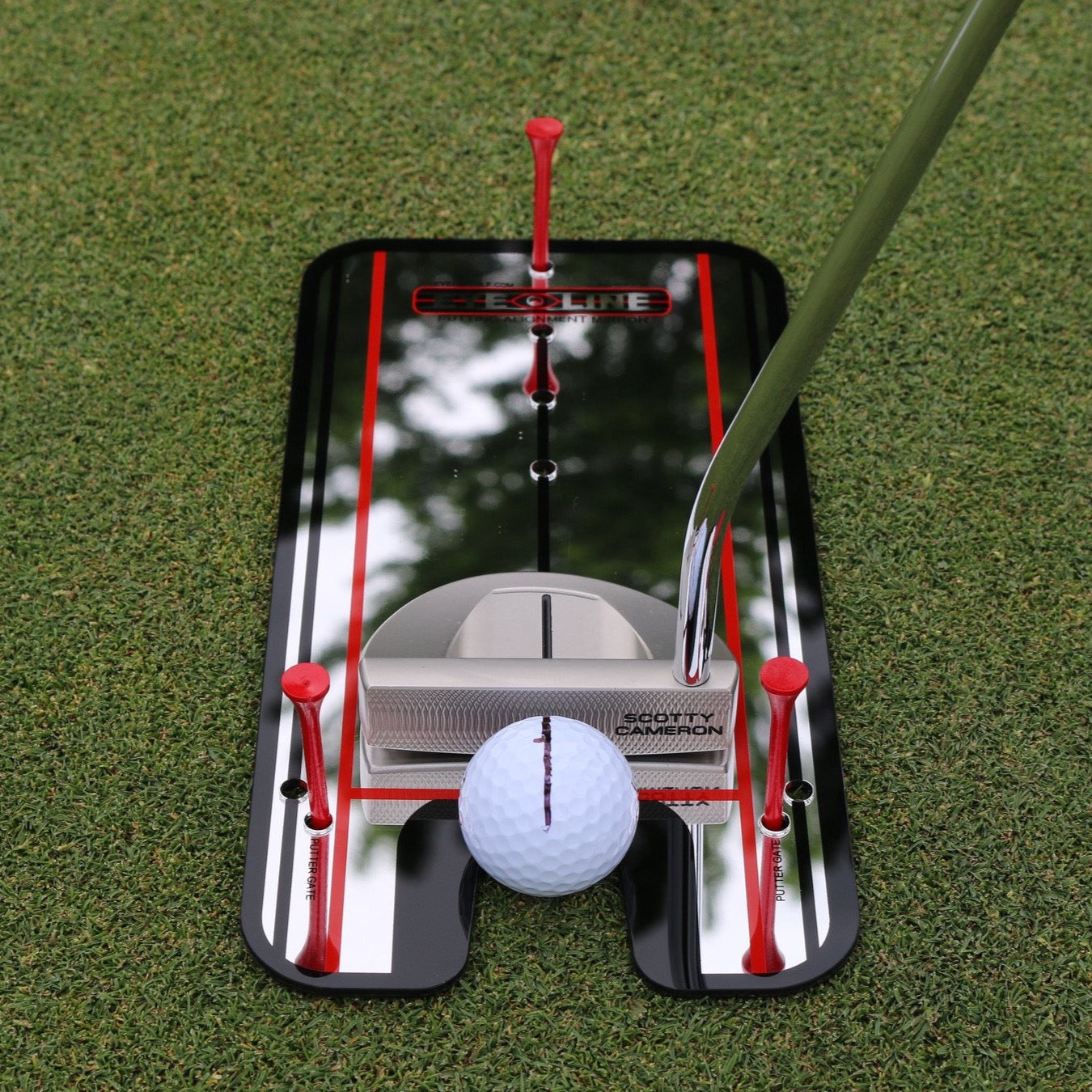
The most common object on any tour green is a putting mirror, and the EyeLine putting mirror is the classic of the genre: a flat, pocketable mirrored plate you putt over. Look down and it shows you, without flattery, whether your eyes are actually over the ball, whether the putter face is square at address, and whether your ball position wanders day to day. That matters because your eye line largely dictates what a straight putt looks like to you — if your eyes drift inside the ball, 'square' starts to look pushed, and you compensate without knowing. Tee slots let you build a gate for centre-face contact, too. It only trains setup, but setup is where most amateur misses are born, which is exactly why the pros check it every single day.
Gates: the skill that actually separates handicaps
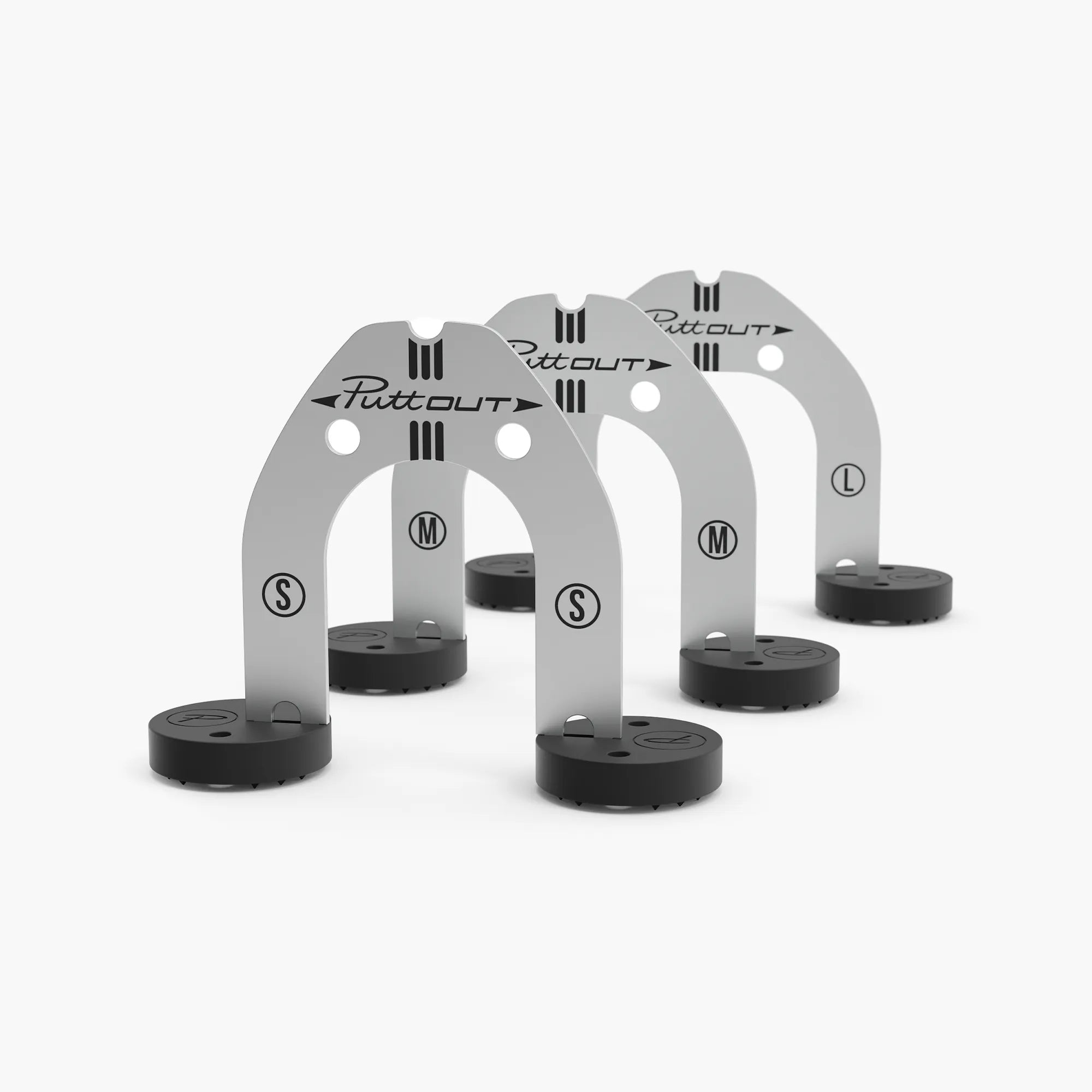
If you buy one thing in this piece, make it a gate. Start line — the ability to roll the ball on the line you chose — is the putting skill that most cleanly separates handicap levels, and it is trainable in a hallway. The PuttOUT Pro Putting Gates are three powder-coated steel gates in narrowing widths, from a forgiving 70mm down to a brutal 50mm that demands your face be within half a degree of square to pass through cleanly. Roll putts through the gate and your start line was true; clip a post and you know instantly. The feedback is ruthless, immediate and impossible to negotiate with, which is precisely what practice needs and what casual putting drills lack. The narrowest gate will demoralise a shaky stroke — work down to it, not from it.
The Pelz Putting Tutor: putting as physics
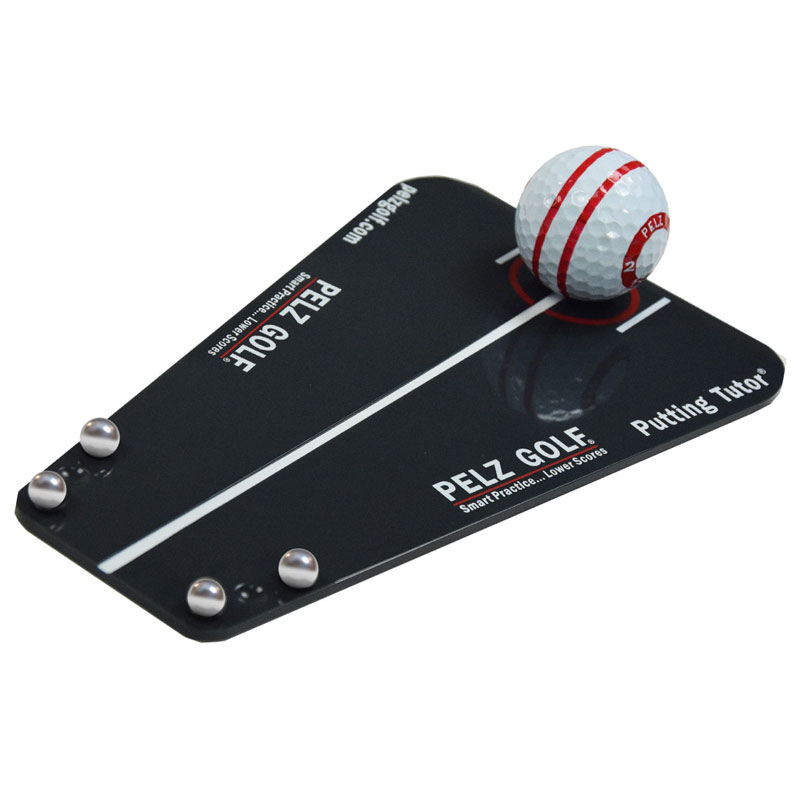
Long before launch monitors, Dave Pelz — the ex-NASA researcher who turned short-game coaching into physics — worked out that putts are decided in the first few inches, and built a tool to test exactly that. The Pelz Putting Tutor is a flat aim-line board with two steel marbles forming a narrow gate just ahead of the ball. Start the putt on line and it rolls cleanly through; push or pull it even slightly and a marble rattles away in accusation. It is pass-or-fail feedback the eye cannot argue with — a mirror tells you your setup looks right, the marbles tell you whether the ball actually left the face on line, which is the bit that decides whether putts drop. Decades on, it still shows up on tour greens, because physics has not changed.
Arc trainers and the ball from hell
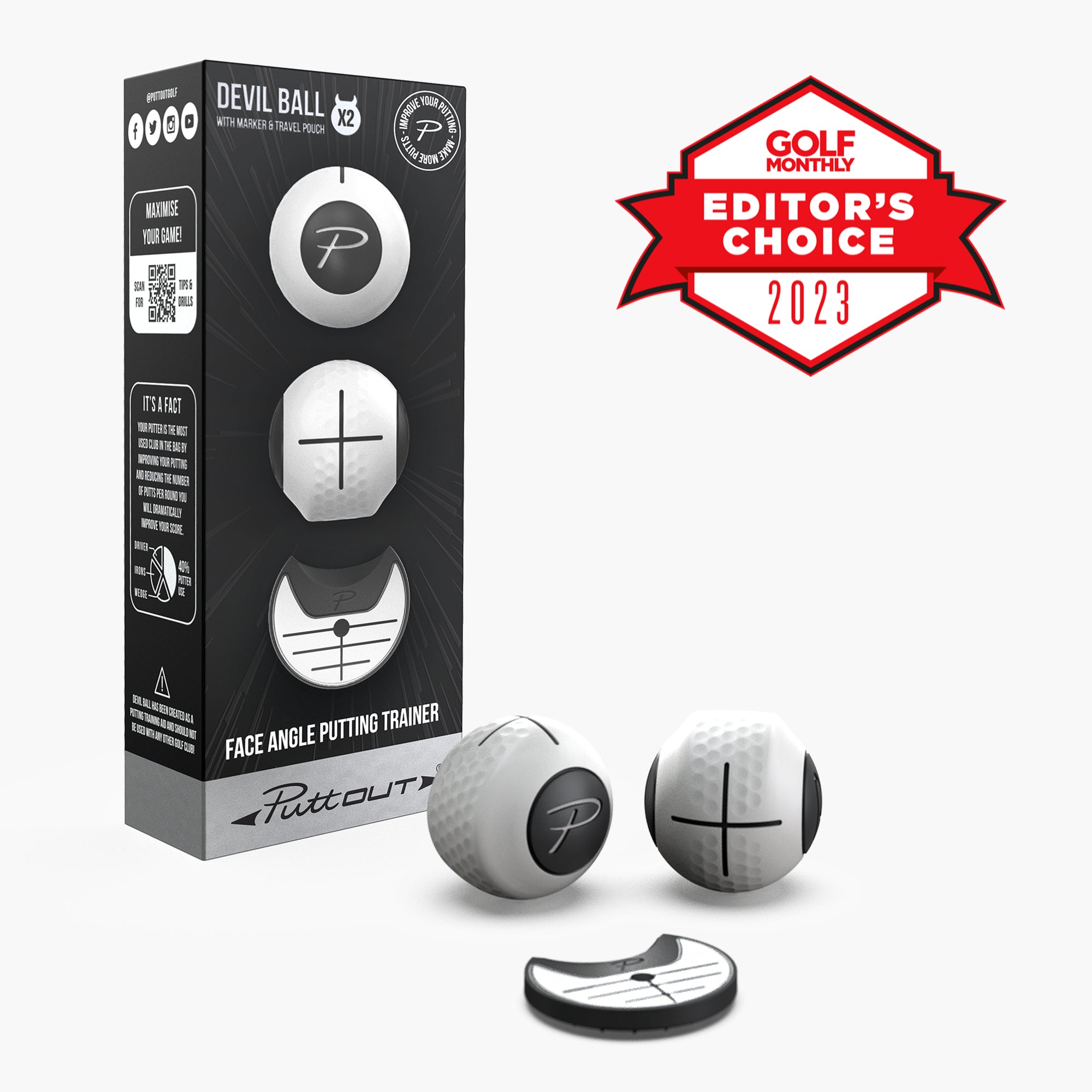
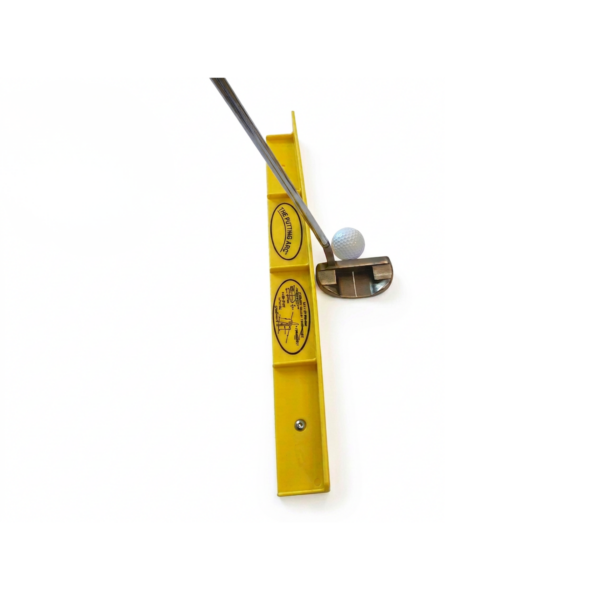
Two more tour-green regulars round out the station. The Putting Arc T3 is a curved guide you stroke along, teaching your hands the gentle inside-square-inside arc that most tour strokes follow — the correction is physical and instant, because the putter head bumps the guide the moment you drag it offline, and feel sticks faster than video ever does. And the PuttOUT Devil Ball is the auditor: a ball with flat edges machined in, so any face angle error at impact sends it wobbling off line like it's had six pints. Three difficulty levels are built in and the hardest is genuinely savage. It diagnoses rather than fixes — pair it with the gates or the mirror — but as a two-minute pre-round honesty test, nothing beats it.
Master start line before green reading
Here is the order of operations most golfers get backwards. Green reading is seductive — it feels like expertise — but a perfect read is worthless if the ball does not start on the line you picked, and the data tools all agree that amateurs leak most of their putting strokes through start line and face control, not misread breaks. So the sequence is: setup first (mirror), start line second (gates, Tutor), stroke shape third (arc, Devil Ball), and green reading last, once the ball reliably goes where you aim it. This is also why a putting aid outranks a putter upgrade for almost everyone: a new putter aimed with the same drifting eye line misses in exactly the same place, just with a nicer headcover. We've laid out the home drills in how to practise putting at home.
Who should buy — and who should skip
Buy the station if you three-putt more than you would like and your practice currently consists of rolling balls at a hole until boredom wins — the mirror-plus-gates pairing costs beer money and attacks the exact skills the tour drills daily. Skip it if you are a single-figure player with a grooved stroke and a coach who already runs your putting practice: you have feedback systems, and another gadget is clutter. Everyone else should put the putter-upgrade money away for a year and spend a tenth of it on plastic. The full ranked list, including mats and speed trainers, lives in our best putting aids guide, with more drills across our training coverage.
Products mentioned in this article
EyeLine Golf
EyeLine Golf Putting Alignment Mirror (Small)
The setup check: shows exactly where your eyes, face and ball really are — the tour green's most common sight.
PuttOUT
PuttOUT Pro Putting Gates
The start-line drill: three narrowing steel gates that train the one skill that separates handicaps.
Pelz Golf
Pelz Putting Tutor
The classic: Dave Pelz's marble-gate board gives pass-or-fail feedback the eye can't argue with.
PuttOUT
PuttOUT Devil Ball Face Angle Trainer (2 Pack)
The stroke auditor: flat-edged balls that wobble off line the instant your face isn't square.
The Putting Arc
The Putting Arc Travel (T3) Stroke Trainer
The path groover: a curved guide that teaches the natural arcing stroke by feel, rep after rep.
ifrothgolf earns a commission on purchases made through these links, at no extra cost to you. It never changes what I recommend. Full disclosure.
Frequently asked
- What putting aids do tour pros actually use?
- The staples on any tour practice green are putting mirrors for eye line and face alignment, start-line gates, string lines, chalk lines and marble-gate boards like the Pelz Putting Tutor, plus arc guides for stroke path. Almost all of it is inexpensive plastic and steel — the pros drill fundamentals with feedback tools rather than relying on equipment changes.
- Should I buy a putting aid or a new putter?
- For almost everyone, the putting aid. Most amateur misses come from setup, aim and start line, and a new putter inherits those faults unchanged. A mirror and a set of gates cost a fraction of a putter and train the actual skills. The exception is a genuinely poor-fitting putter, which a fitting will reveal.
- What is the most important putting skill to practise first?
- Start line — rolling the ball on the line you chose. It separates handicap levels more cleanly than green reading, and it is easy to train with gates or a marble-gate board. Once you reliably start putts on line, green reading and pace work become far more valuable.
- Can you use tour putting aids at home?
- Yes — that is half their appeal. Mirrors, gates, the Pelz Putting Tutor, arc trainers and the Devil Ball all work on a carpet or putting mat indoors, so you can drill setup and start line year-round in a hallway. Ten focused minutes a few times a week beats an hour of aimless rolling on the practice green.
- Who should not bother with putting training aids?
- Single-figure players with a grooved, repeatable stroke and a coach who already structures their putting practice. They already get the feedback these tools provide. For everyone else, the feedback is the missing ingredient, not the putter.
Read next
Review
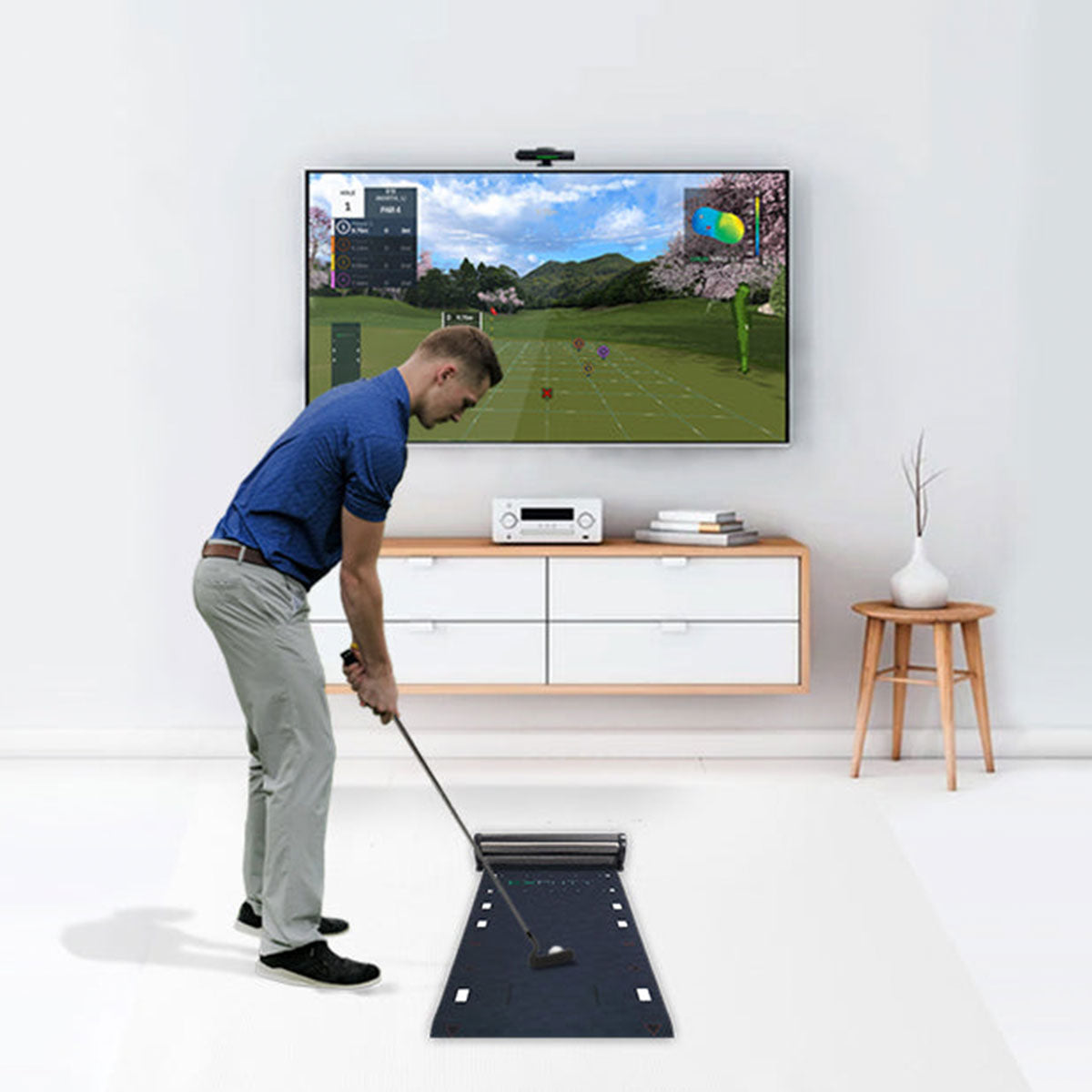
7.5/10Exputt RG review: the putting simulator whose 44-inch mat decides what it can teach
A putting-only simulator that nobody in the gear press takes seriously, aimed at the part of the game that quietly falls apart between October and April. What it measures, what it only pretends to, and the mat dimension that explains both.
Review
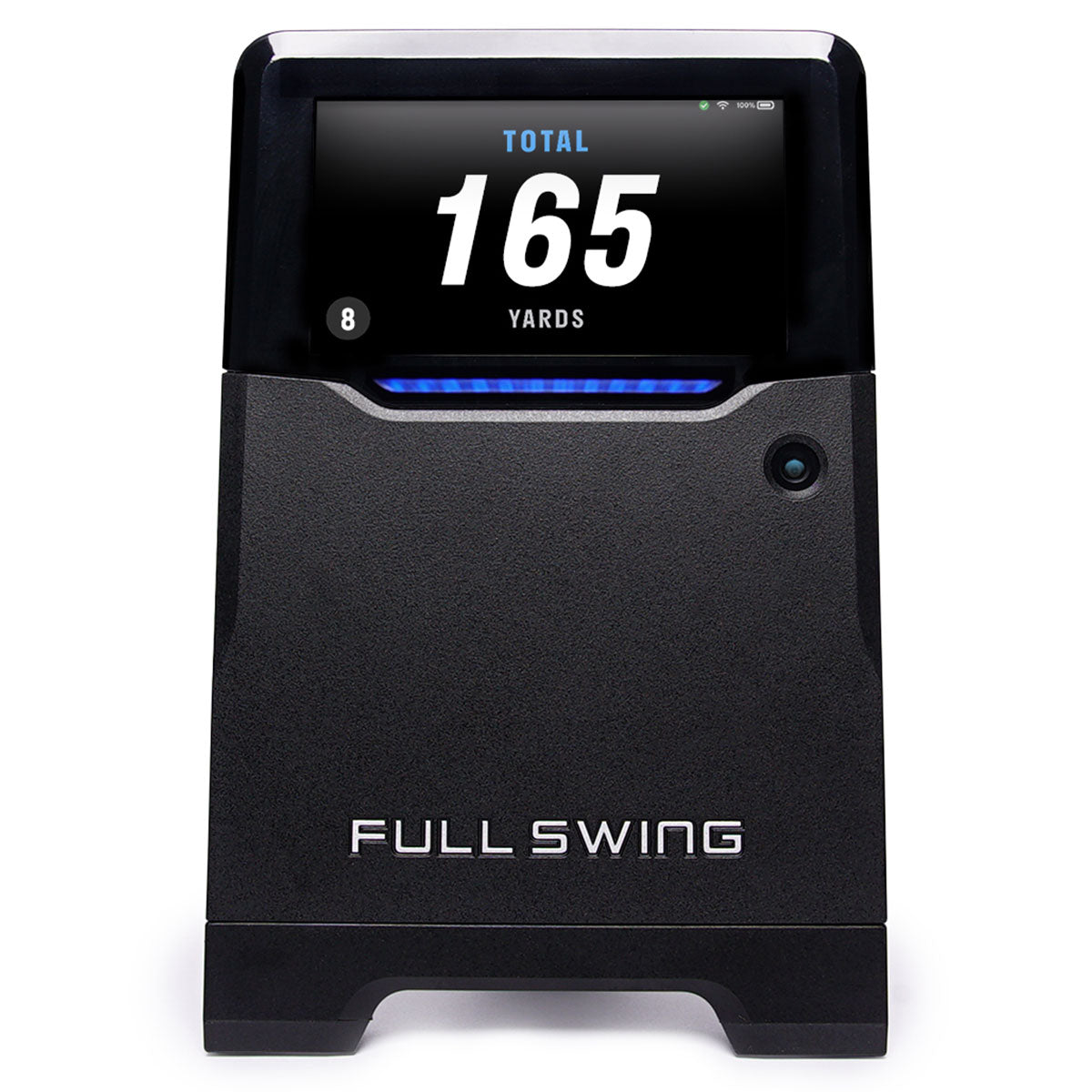
7.9/10Full Swing KIT review: the tape measure decides this, not Tiger
Tour pedigree, TGL on ESPN, and radar good enough to be checked against a Trackman outdoors. It also wants eighteen to twenty feet of room, which rules out most of the garages people buy it for.
Versus
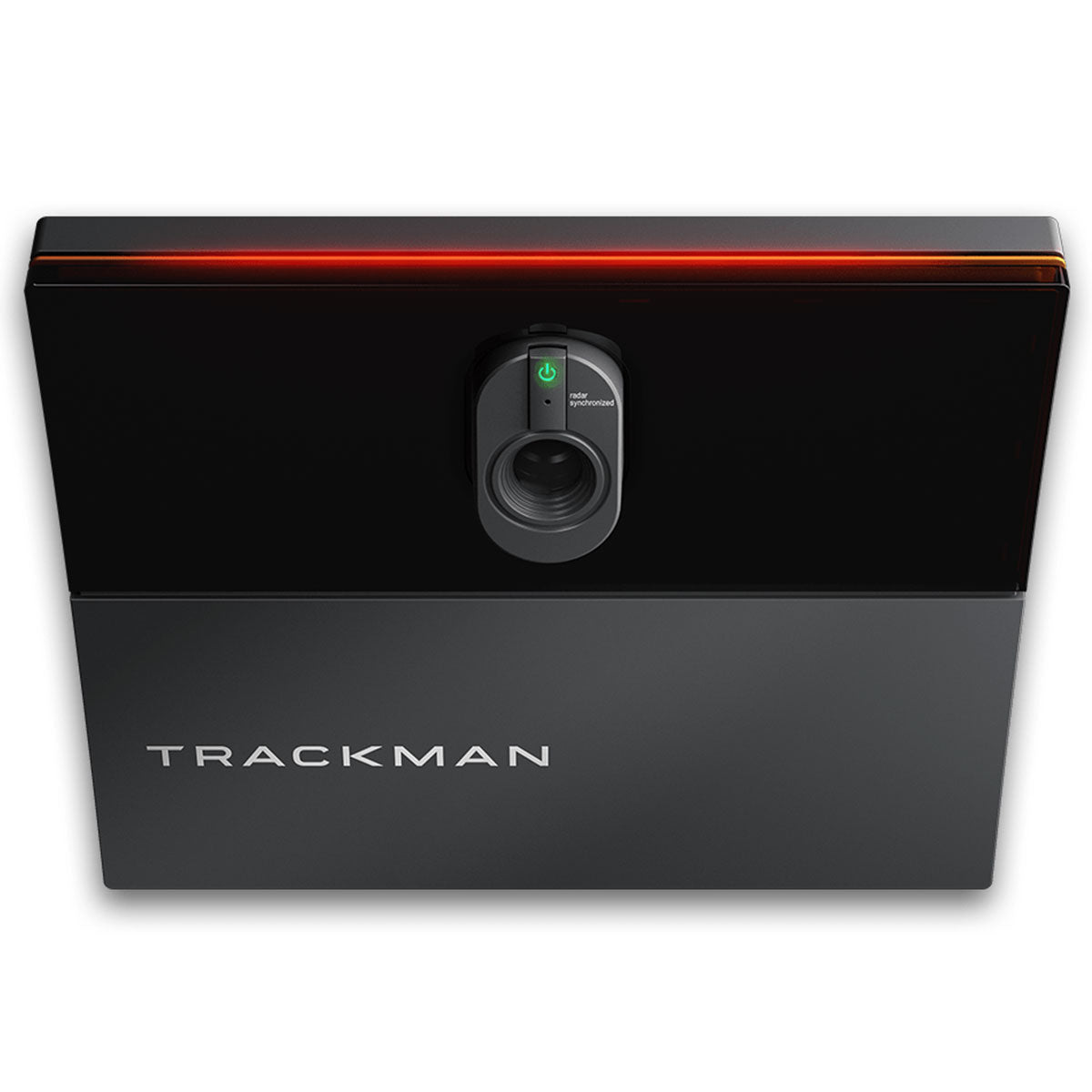
Trackman iO vs Uneekor EYE XO2: the year-one trap
Both mount overhead, both want ten feet of ceiling, and about $3,000 separates them on the shelf. Then Trackman's included first year runs out, and the gap starts growing by $1,100 a year.