
How to practise putting at home (and actually get better)
You hole more putts than you think on the carpet and fewer than you'd like on the course. Here's how to make home practice that transfers.
By Ross Hamilton · Staff Writer
 Explained
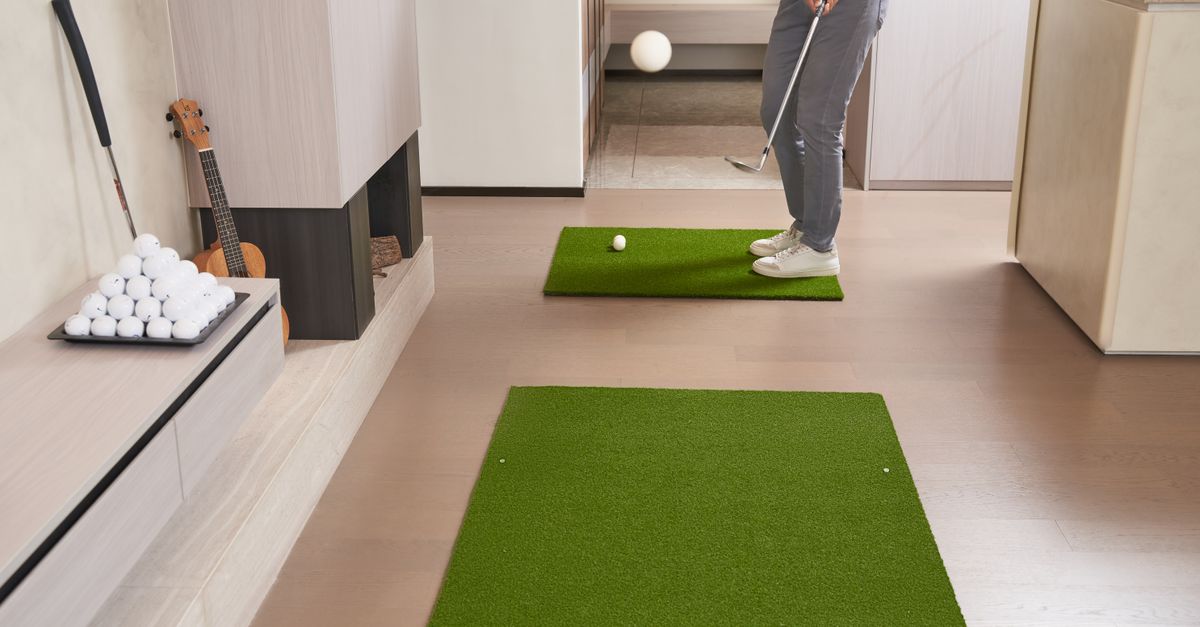
Train three things at home — start line, pace and a repeating stroke — in short, daily, structured reps, and your putting will transfer to the course far better than a monthly range marathon. Rolling balls aimlessly at a mug builds nothing. The good news: you can train all three in a hallway for the price of one club.
Why home putting is the best practice ROI in golf
Putting is around 40% of the strokes in an average round, yet it's the part of the game almost nobody practises deliberately — and it's the one skill you can train properly at home, in socks, in ten minutes, for the cost of a single mid-range wedge. You don't need a range, a tee time or daylight. That combination of high stroke-share and near-zero friction is why a short daily putting habit beats almost anything else you could do for your scores. The catch is that it has to be structured: the carpet is where good intentions go to become aimless rolling, and aimless rolling is just fidgeting. Train the three things below, in that order, and it transfers.
Start with line and stroke path
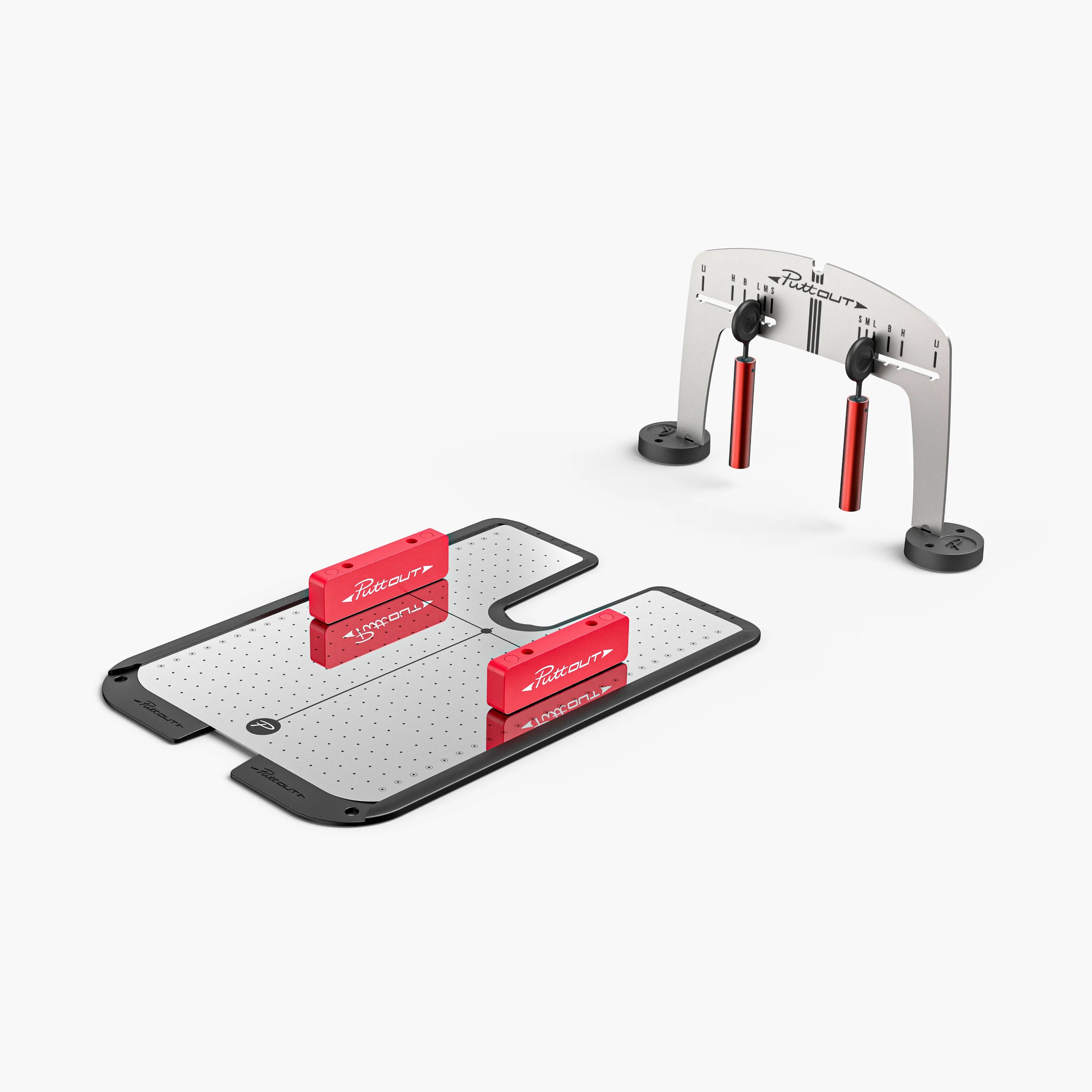
A mirror trainer sets your eyes over the ball and your shoulders square, and gate drills — two tees just wider than your putter head, or two balls forming a gate a few inches ahead of the ball — train the face angle at impact. This is the foundation because face angle at impact dictates the large majority of a putt's start line; get the ball starting where you aimed and most three- and four-footers take care of themselves. Spend a few focused minutes here checking that your eyes are over (or just inside) the ball and your shoulders aren't open, then roll putts through the gate without clipping it. Five honest minutes a day on this is worth more than an hour of random rolling, because you're training the one variable that decides whether short putts go in.
Then train pace
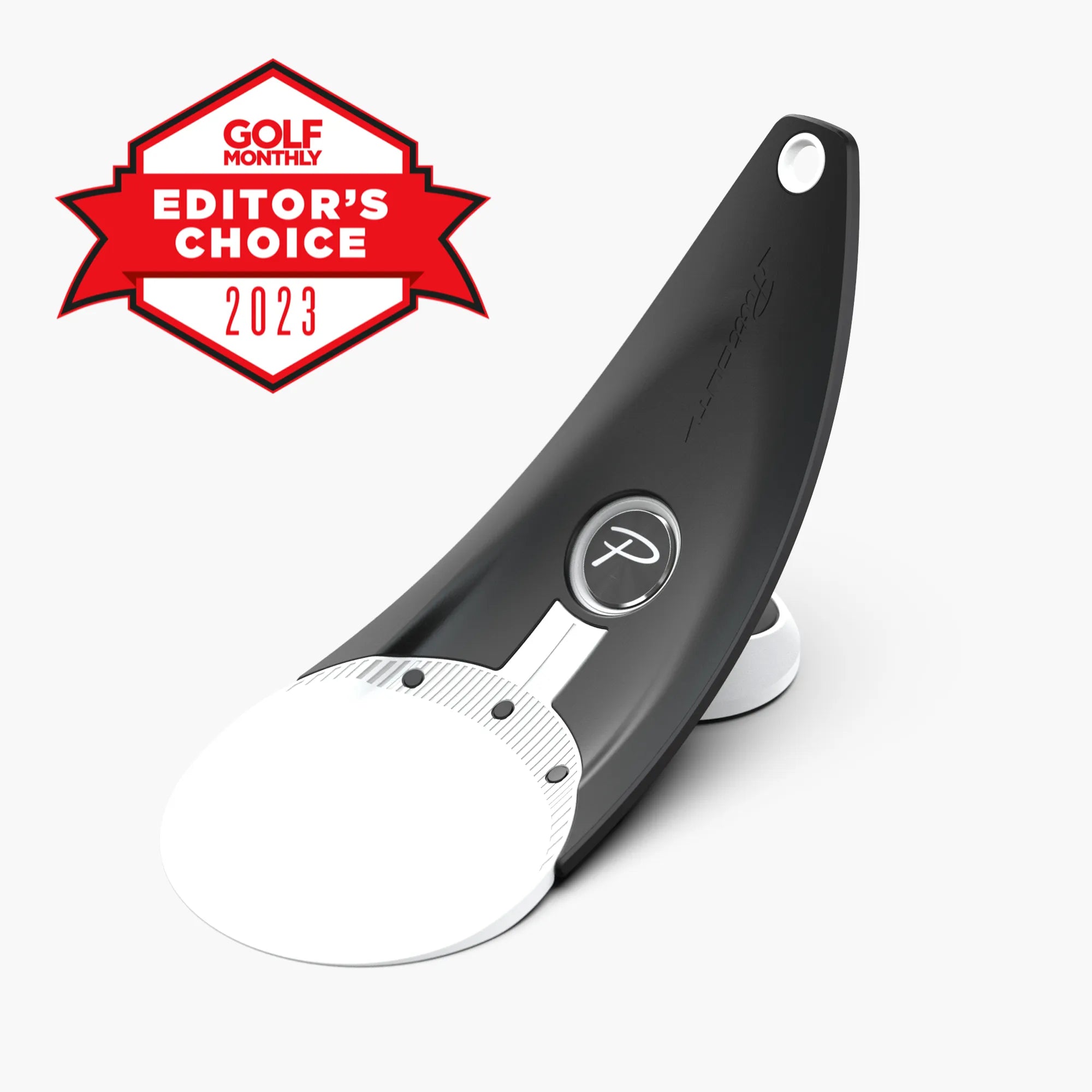
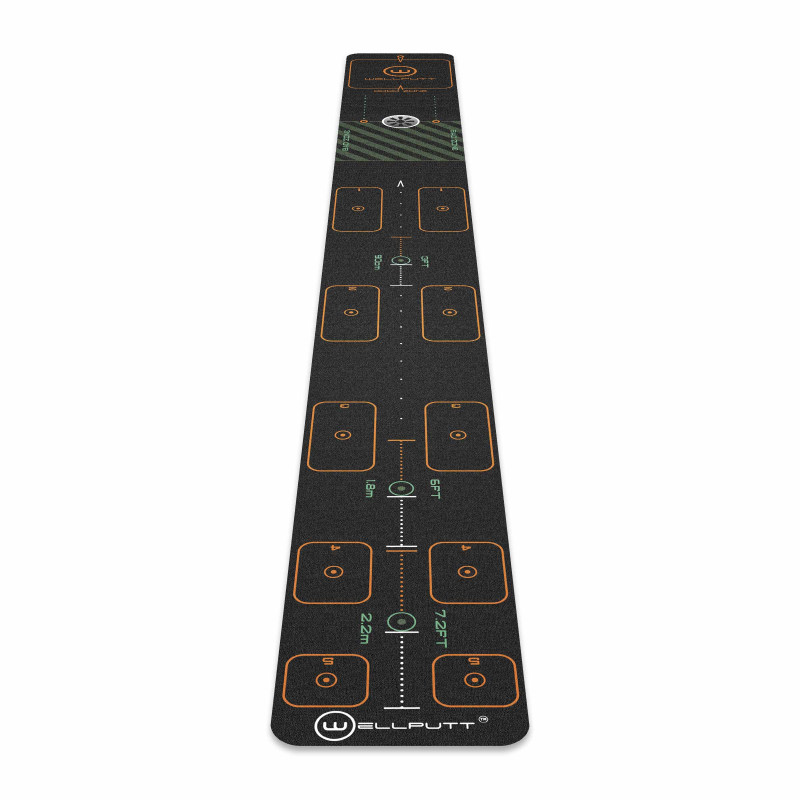
Pace is what actually kills amateurs on long putts — three-putts are overwhelmingly a speed failure, not a line one, because from twenty feet you don't need to hole it, you need to cosy it close enough to tap in. A PuttOut rewards the ideal speed and rejects a putt hit too hard, giving instant feedback (full review) — and because its ramp returns a well-struck putt the distance it would have rolled past the hole, you get a measurable read on your pace rather than a guess. A true-rolling mat lets you rehearse repeatable lengths with consistent feedback, marked out for structured distance drills. One honest caveat owners flag repeatedly: a hard floor or carpet rolls faster than a real green, so train the stroke, the tempo and the relative feel, not the absolute distance — don't expect the ten-foot stroke you grooved on the lounge floor to travel ten feet on a slow winter green.
A word on the stroke itself while you're training pace: keep the length of your backswing and through-swing roughly even and let the stroke accelerate gently through the ball rather than stabbing or decelerating, because a decelerating stroke is the single most common cause of poor distance control. The PuttOut is useful here precisely because a stabbed putt and a smoothly-struck one of the same intended pace return very differently — the feedback quietly nudges you toward a rhythmic stroke without you having to think about mechanics.
Make it a game with consequences
The reason carpet practice doesn't transfer is that there's no pressure and no cost to a miss, so build both in. Give yourself little tests: holing a gate-drill set in a row before you're allowed to stop; a 'ladder' where you putt to a coin at increasing distances and have to land within a flag's length; or a simple 'around the clock' where you hole short putts from several angles and start over if you miss one. The point is to create a stake — something you can fail at — because a stroke that holds up when a miss means starting over is a stroke that holds up on the course. This is the same block-versus-random principle that makes range practice transfer: vary the putt, re-commit each time, and finish under a little pressure.
Make it a habit that transfers
Keep it short, daily and structured: a few minutes on line through a gate, a few on pace with the PuttOut, then finish by holing five in a row so you end on a make under a little pressure. That last bit matters — it's the difference between grooving a stroke and rehearsing success, and it sends you out remembering the ball going in. Daily beats marathon by a distance here, because putting is a feel-and-rhythm skill that decays fast and rebuilds fast; ten minutes most days keeps it warm in a way one long monthly session never can. These are the aids worth owning, as we argued in the only three training aids worth it, and they're the core of a proper home putting lab.
The takeaway
Structured beats aimless, daily beats marathon, and pressure beats comfort. A mirror for line, a feedback aid and a true mat for pace, ten minutes most days finishing on a make — build that routine and your scorecard moves where it counts, on and around the greens, for less outlay than a single new wedge. Picks are in our best training aids guide.
Products mentioned in this article
PuttOut
PuttOut Premium Pressure Putt Trainer
Pace and start-line feedback — the core of any home setup.
ifrothgolf earns a commission on purchases made through these links, at no extra cost to you. It never changes what I recommend. Full disclosure.
Frequently asked
- Does putting on a carpet at home actually help?
- Yes, if it's structured. Practising start line, pace and a repeating stroke transfers well; aimlessly rolling balls doesn't. The one caveat is speed — a hard floor or carpet rolls faster than a real green, so train feel and technique, not exact distances.
- What's the most important thing to practise in putting?
- Start line and pace. Get the ball starting on your intended line and short putts largely take care of themselves; control your pace and you eliminate the three-putts that wreck scores on long putts.
- How long should a home putting session be?
- Short and daily beats long and occasional — around 10 minutes split between line and pace, finishing by holing several in a row. Putting is a feel skill that decays and rebuilds fast, so frequency matters more than duration; that little daily habit builds a stroke you trust under pressure far better than an infrequent marathon.
- What equipment do I actually need to practise putting at home?
- Three things cover it: an alignment mirror to set your eyes and shoulders and train start line, a feedback aid like the PuttOut for pace, and a true-rolling mat for repeatable distances. Together they cost less than a single new wedge and let you train every part of putting in a hallway.
- How do I make home putting practice transfer to the course?
- Add a consequence. Aimless rolling has no pressure, so it doesn't transfer; instead set little tests — hole several in a row, putt to a coin at varying lengths, start over on a miss — and vary the putt each time rather than grooving one. Finishing on a made putt under a little pressure is what carries to the first green.
Read next
Review
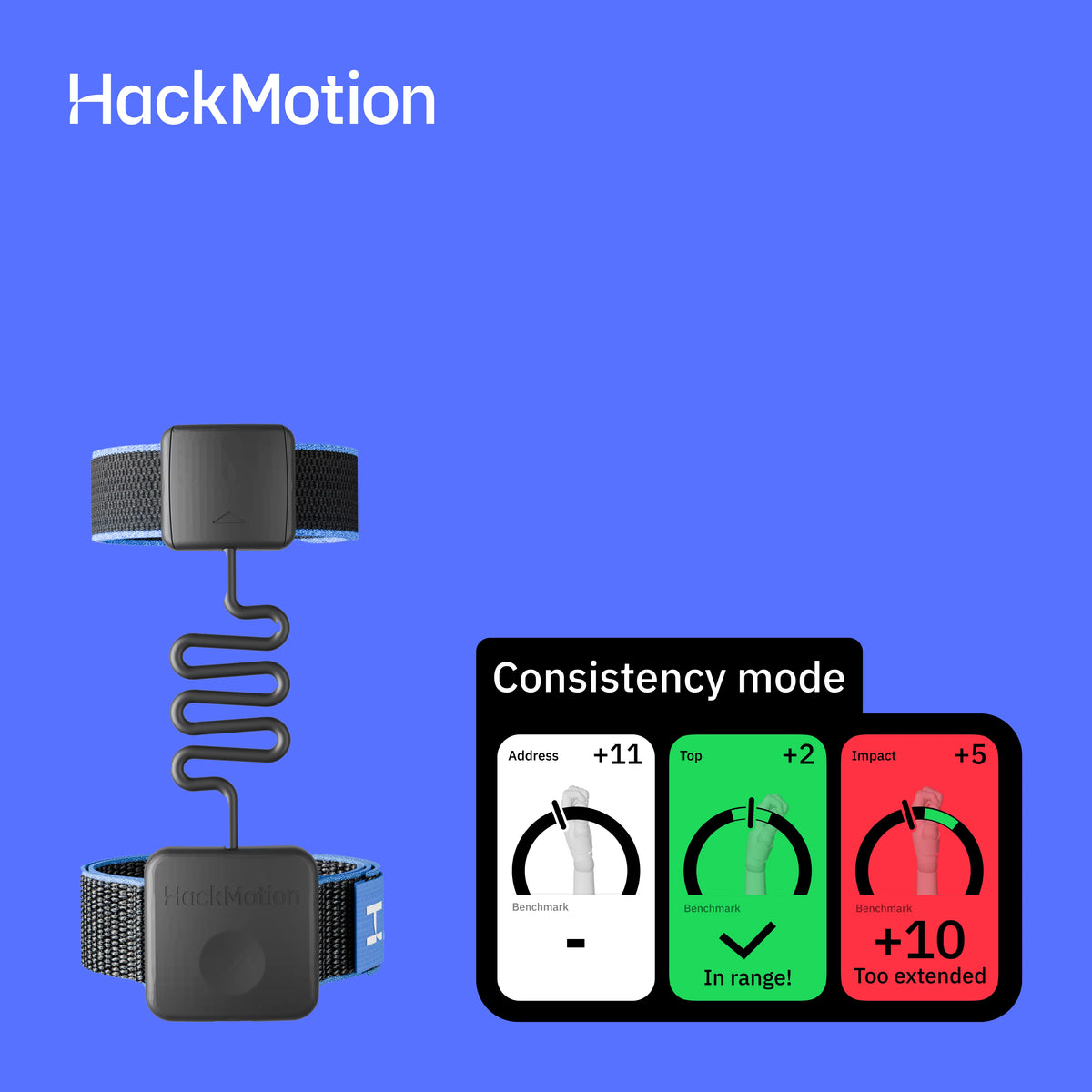
8.5/10HackMotion Core review: the wrist sensor that shows you why you slice
Clubface control is the hidden cause of most slices, and until now it was invisible. HackMotion straps a sensor to your lead wrist, measures what your hands are doing 800 times a second, and beeps when you square the face. For the improver obsessed with ball-striking, it's genuinely revealing tech.
Review
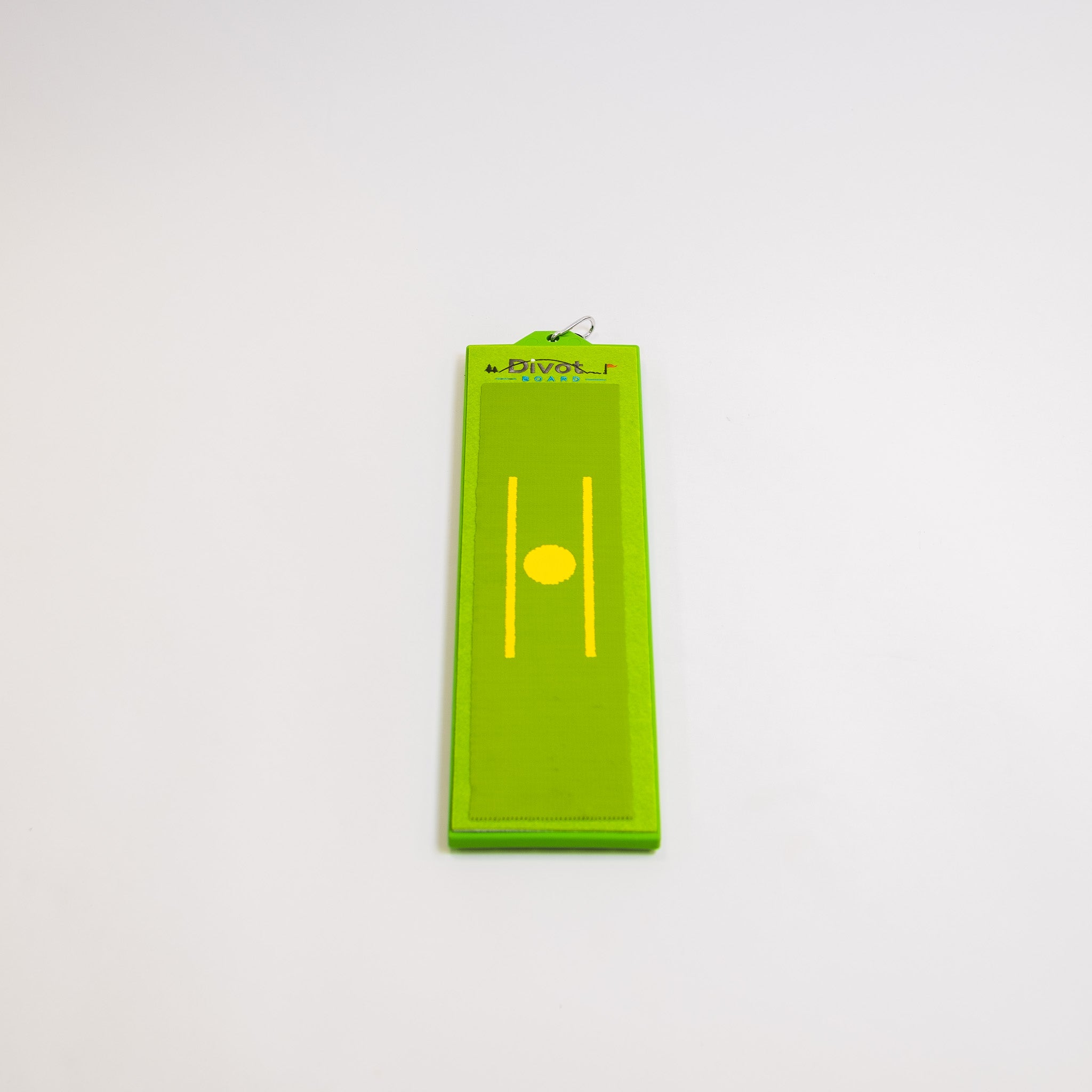
8.2/10Read your divots: the cheap board that fixes ball-striking
It's all over golf TikTok for a reason — instant, brutally honest feedback on where your club actually bottoms out.
Review
8.8/10PuttOut Pressure Putt Trainer review: the cheap aid that actually gets used
Most training aids end up in the garage. This little ramp is the rare one that earns a permanent spot — here's why it works.