
PuttOut vs Perfect Practice: one of these mats has no hole in it, the other has two and a ball return
Both are sold as putting mats and they are not the same product. One has no hole in it. The other has two, and neither of them is the size of a golf hole.
By Ross Hamilton · Staff Writer
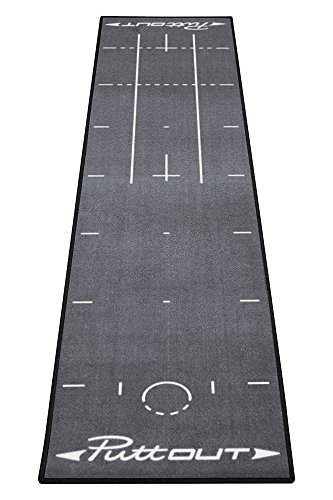
PuttOut
PuttOut Putting Mat
A 240cm surface with alignment lines and pace targets, and no hole at all. You supply the target.
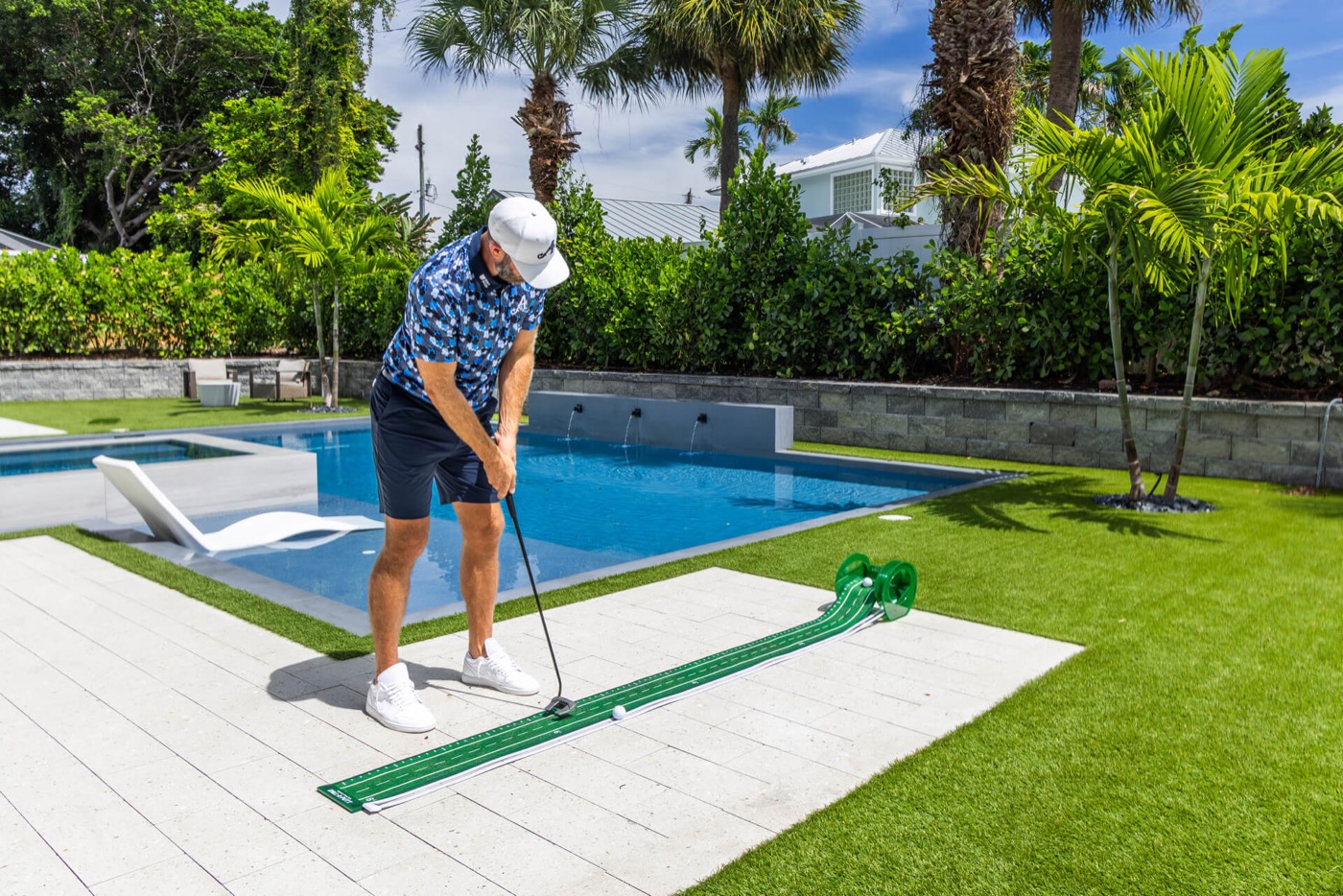
Perfect Practice
Perfect Practice Putting Mat (Dustin Johnson)
Nine feet six of Crystal Velvet with two undersized cups and a magnet-driven ball return.
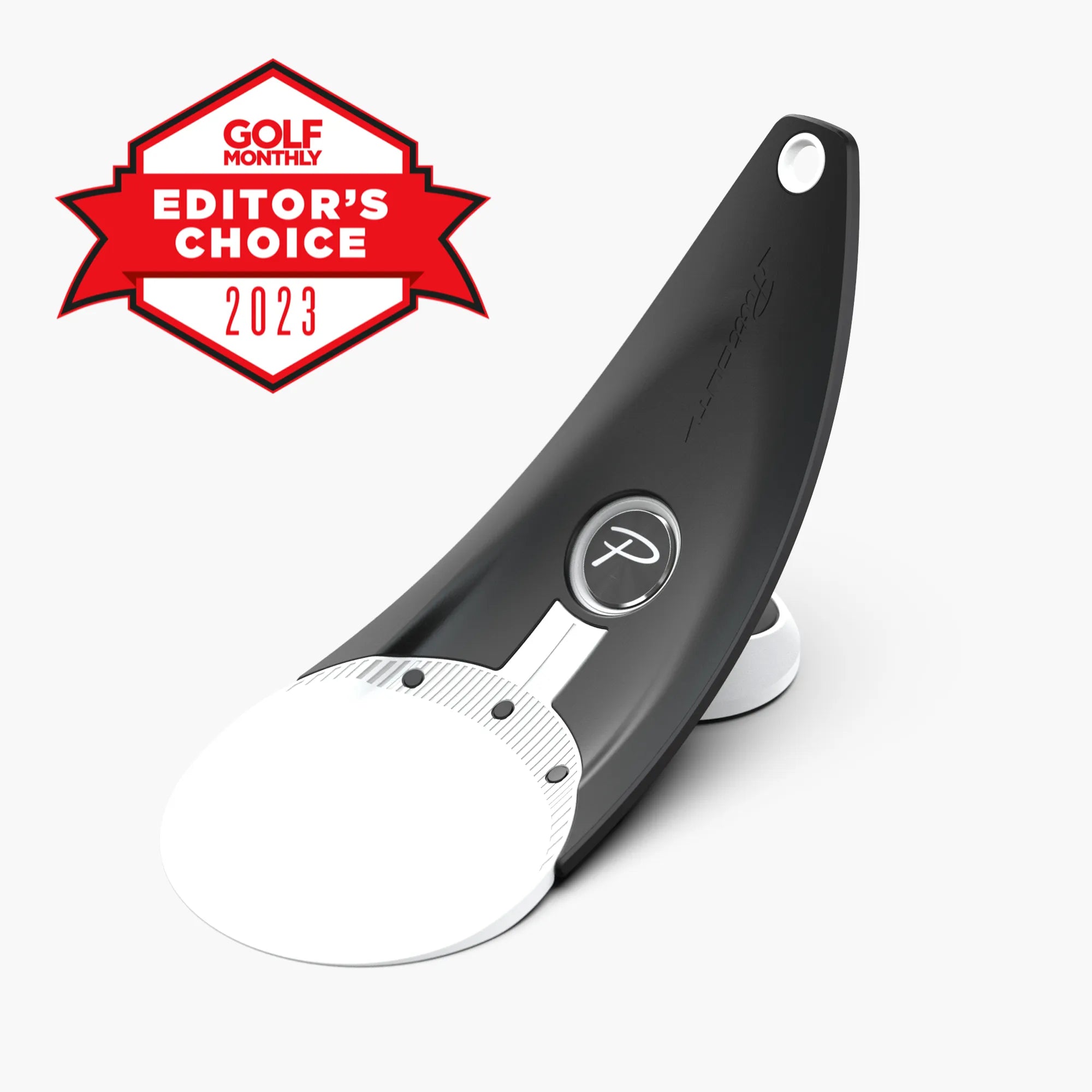
PuttOut
PuttOut Premium Pressure Putt Trainer
The target the PuttOut mat is designed around, and the reason its total cost is not what the mat costs.
ifrothgolf earns a commission on purchases made through these links, at no extra cost to you. It never changes what I recommend. Full disclosure.
Part of our guide toBest Putting Aids 2026Your greens are being hollow-cored round about now, which means the putting surface you have access to for the next six weeks is sanded, slow and lying to you. We made the case for moving putting practice indoors while that happens in aeration season, and the broader case for it in what survives the walk back onto grass, where putting is one of the three things that transfers at close to full strength. So the mat question stops being theoretical in September.
Two mats come up more than any others, and they are routinely compared as though they are alternatives. They are not really competing. One of them does not have a hole in it.
Short answer
Buy the PuttOut mat if the thing you want to practise is start line and pace on a true, quick roll, and you are happy to add your own target. Buy the Perfect Practice mat if the thing that ends your practice sessions is bending down to collect balls, because the ball return is the whole product and it is the difference between twenty putts and a hundred.
That is the decision. Everything below is why, and the two things neither of them will tell you.
What the PuttOut actually is
A surface, and a good one. The medium size is 240cm by 50cm, PuttOut's own figure for the roll is 10 on the stimpmeter, and it carries distance markings out to six feet, alignment lines and pace targets printed into the mat. There is a thick rubber backing and it ships rolled inside a cardboard cylinder rather than folded, which is why it lies flat immediately instead of curling at the corners for a fortnight. It goes back into a drawstring bag in about four seconds. Slim and large versions exist if 240cm is the wrong length for your hallway.
What it does not have is a hole, or a return, or anything to putt at. That is deliberate rather than mean: the mat is built to sit in front of the PuttOut Pressure Putt Trainer, the parabolic dish that rejects a putt hit too hard and returns a good one to your feet. Sold together they make a complete station. Sold apart, and priced apart, the mat at around $70 is a floor and not a practice tool, and it is worth knowing that before the box arrives.
What the Perfect Practice actually is
A station. The standard edition is 9 feet 6 inches long — nearly a metre longer than the PuttOut — on a Crystal Velvet surface inside a wooden frame, with printed alignment and distance markings and a magnetised ball return that sends the ball back down the mat after every stroke. Perfect Practice publishes the roll speed as 10 to 14 on the stimpmeter, and there is a compact 8-foot version with one cup and an extra-long 15-foot-6 version if you have a corridor to give it.
The return is not a gimmick and it is the reason I would put this one in most people's houses. Practice dies on friction. If every three putts costs you a walk, a bend and a straighten, you stop at twenty, and twenty putts a day is not enough repetition to change anything. Take the walk away and the same ten minutes becomes a hundred strokes.
Neither of its holes is a golf hole
Here is the thing to know, and it comes from Perfect Practice's own specification rather than from anyone's opinion. The two cups measure 2.56 inches and 3.35 inches. A golf hole is 4.25 inches. So the smaller cup is a little over 60 per cent of the width of the real thing, and the larger one — routinely described in the marketing as the regulation-sized cup — is around 79 per cent of it.
The small hole is a legitimate training constraint. Shrinking the target sharpens start line and makes a real hole look generous when you get back to one, which is a coaching idea older than the mat. What it is not is a measurement. Whatever percentage you hole indoors tells you nothing about your percentage from six feet on a Saturday, in either direction, and the moment you start keeping score against an undersized cup you are calibrating your confidence to a number that does not exist. Use it as a constraint, never as a stat.
The speed you are practising on is your floor, not your mat
The second thing nobody says, and again it is in the manufacturer's own copy. Perfect Practice quotes its roll at 10 to 14 on the stimp, and then adds the honest qualifier: it depends what is under the mat. That is a four-point range, which in green terms is the gap between a wet municipal green in February and a major championship.
It follows that the same mat on thick carpet and the same mat on floorboards are two different practice surfaces, and that a mat's advertised stimp reading is a property of the installation rather than the product. If you want your indoor pace work to mean anything, put the mat on one surface and leave it there. If you move it between the lounge carpet and the kitchen tiles, you are practising two speeds and learning neither.
What a home mat cannot teach you, on either of these
Both are flat, both are straight, and both run one speed. So neither of them teaches green reading, because there is no break to read. Neither teaches slope, uphill or downhill pace, or what a putt does across a grain. Neither reproduces capture speed at a real hole, where a ball dying into the front edge drops and the same ball at pace lips out.
Which means the honest scope of indoor putting is short putts, start line and stroke repetition — and, on the longer mat, a bit of pace calibration against a fixed reference. That is a smaller claim than either box makes, and it is still worth doing, because face angle decides most of the direction on a six-footer and face angle is exactly what a flat mat can train. We laid out a session that uses that properly in how to practise putting at home.
Who should buy the PuttOut
The golfer who already owns a target, or is buying the Pressure Putt Trainer alongside it, and who cares more about the roll than the furniture. It is the faster, tighter, more portable of the two — 240cm rolls into a bag and goes to a hotel, and the pace targets printed on it are a better tool for distance control than most people realise. It is also the cheaper entry at around $70, as long as you remember that the entry does not include anything to aim at.
Who should buy the Perfect Practice
Everyone whose problem is that they do not practise. The longer bed gives you a genuine ten-footer instead of a six, the return keeps you in rhythm, and the frame means it lives in a room rather than being deployed. At around $130 it is close to twice the money and it arrives finished, which for most households is the difference between a mat that gets used and a mat that stays in the cupboard. The one caveat worth budgeting patience for: like every rolled mat it can hold a ripple out of the box, so give it a day or two flat on a hard floor before you judge the roll.
Who should buy neither
If your putting is losing you shots from outside twenty feet, neither mat is the answer, because neither is long enough to practise the stroke that fixes it. Ten feet of true roll does not teach you a lag putt, and you would be better served by half an hour on the practice green before it gets cored, or after it recovers.
If you will not leave it out, do not buy it. This is not a moral point, it is the whole of the evidence: a mat that has to be unrolled gets used twice, and the single strongest predictor of whether either of these improves your putting is whether there is a place in your house where it can simply stay.
And if you three-putt because you miss greens and never had a look at birdie in the first place, spend the money on the part of your game that is actually leaking. A putting mat sharpens a stroke. It does not manufacture the putts you never had.
Frequently asked
- Is the hole on a Perfect Practice putting mat regulation size?
- No. The standard edition has two cups measuring 2.56 inches and 3.35 inches, and a golf hole is 4.25 inches. The larger cup is often described as regulation sized in listings, but it is around 79 per cent of the width of a real hole and the smaller one is around 60 per cent. Treat them as training constraints rather than as a way of measuring how many putts you hole.
- Does the PuttOut putting mat come with a hole?
- No. The mat is a surface with alignment lines, distance markings out to six feet and printed pace targets, and it has no cup and no ball return. It is designed to be used with the separately sold PuttOut Pressure Putt Trainer, the parabolic dish that returns a good-paced putt to your feet, so budget for the pair if you want a complete station.
- How fast is an indoor putting mat compared with a real green?
- Around 10 on the stimpmeter for a quality mat, which is quicker than most club greens in winter and slower than a tournament surface. The number is not fixed by the mat, though. Perfect Practice quotes 10 to 14 depending on what is underneath it, so the same mat on carpet and on a hard floor are two different speeds. Keep it in one place if you want your pace work to mean anything.
- Can you learn to read greens on a putting mat?
- No. Both of these mats are flat and straight, so there is no break to read, no slope to judge and no grain. Indoor putting is worth doing for start line, face control and stroke repetition from short range, which is where most putts are won and lost, but green reading and long-range pace have to be learned on grass.
Read next
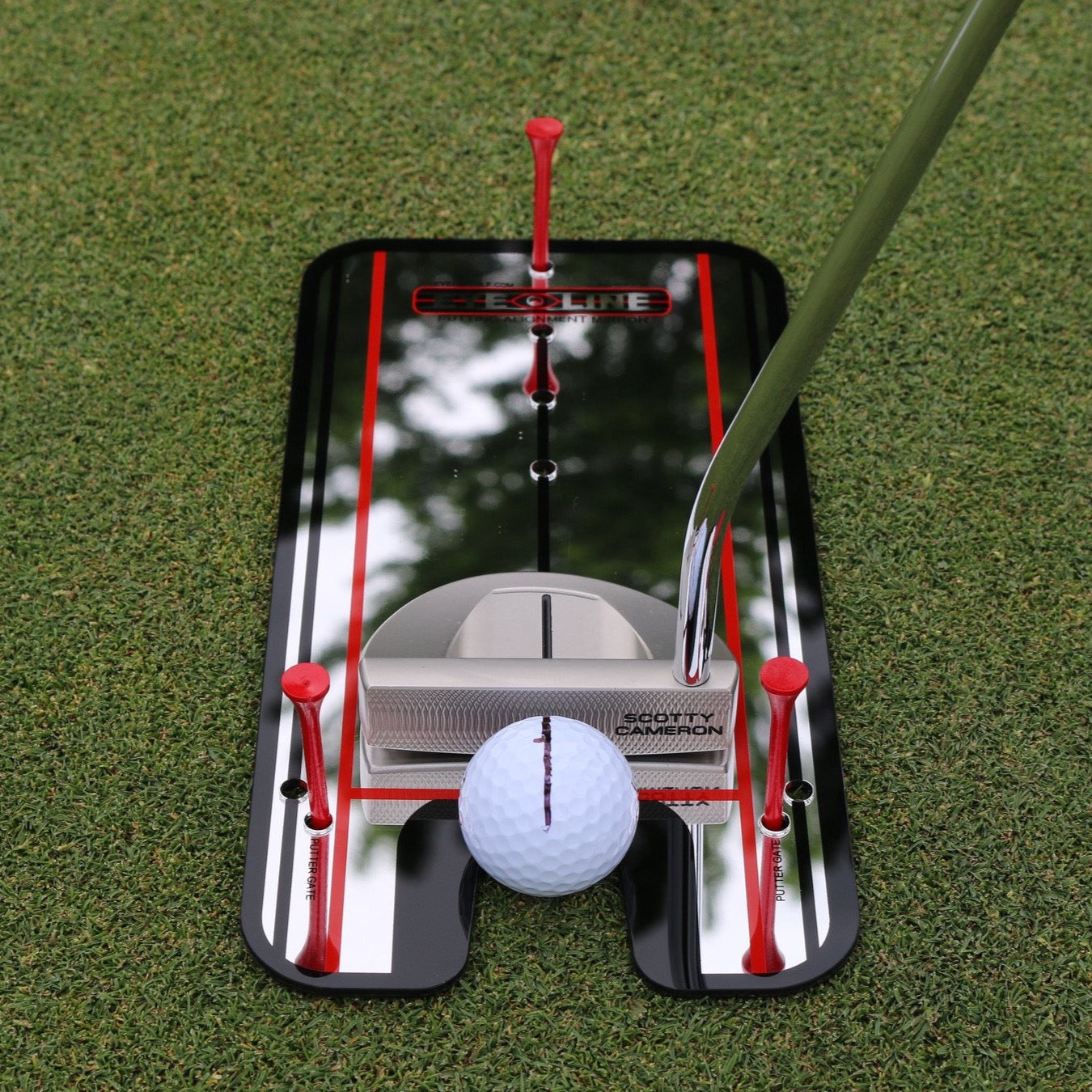
Explained
The best putters on Earth practise with cheap plastic — and you keep buying putters
Walk any tour practice green and it's covered in mirrors, gates, string lines and chalk — a full putting station for less than a dozen premium balls. Meanwhile amateurs respond to missed putts by buying a new putter. Here's how to decode the tour putting station, and which pieces actually move your handicap.
Review
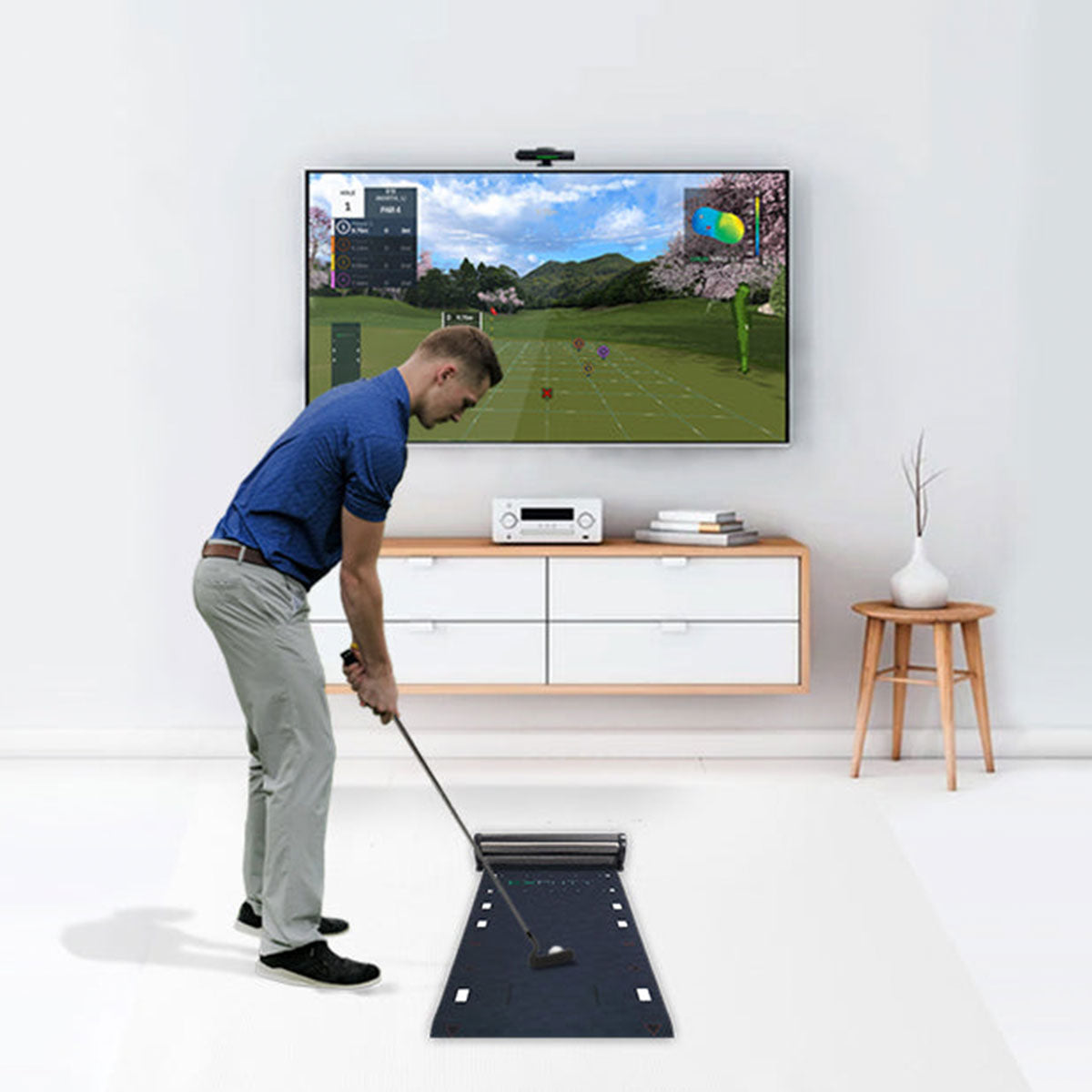
7.5/10Exputt RG review: the putting simulator whose 44-inch mat decides what it can teach
A putting-only simulator that nobody in the gear press takes seriously, aimed at the part of the game that quietly falls apart between October and April. What it measures, what it only pretends to, and the mat dimension that explains both.
Review
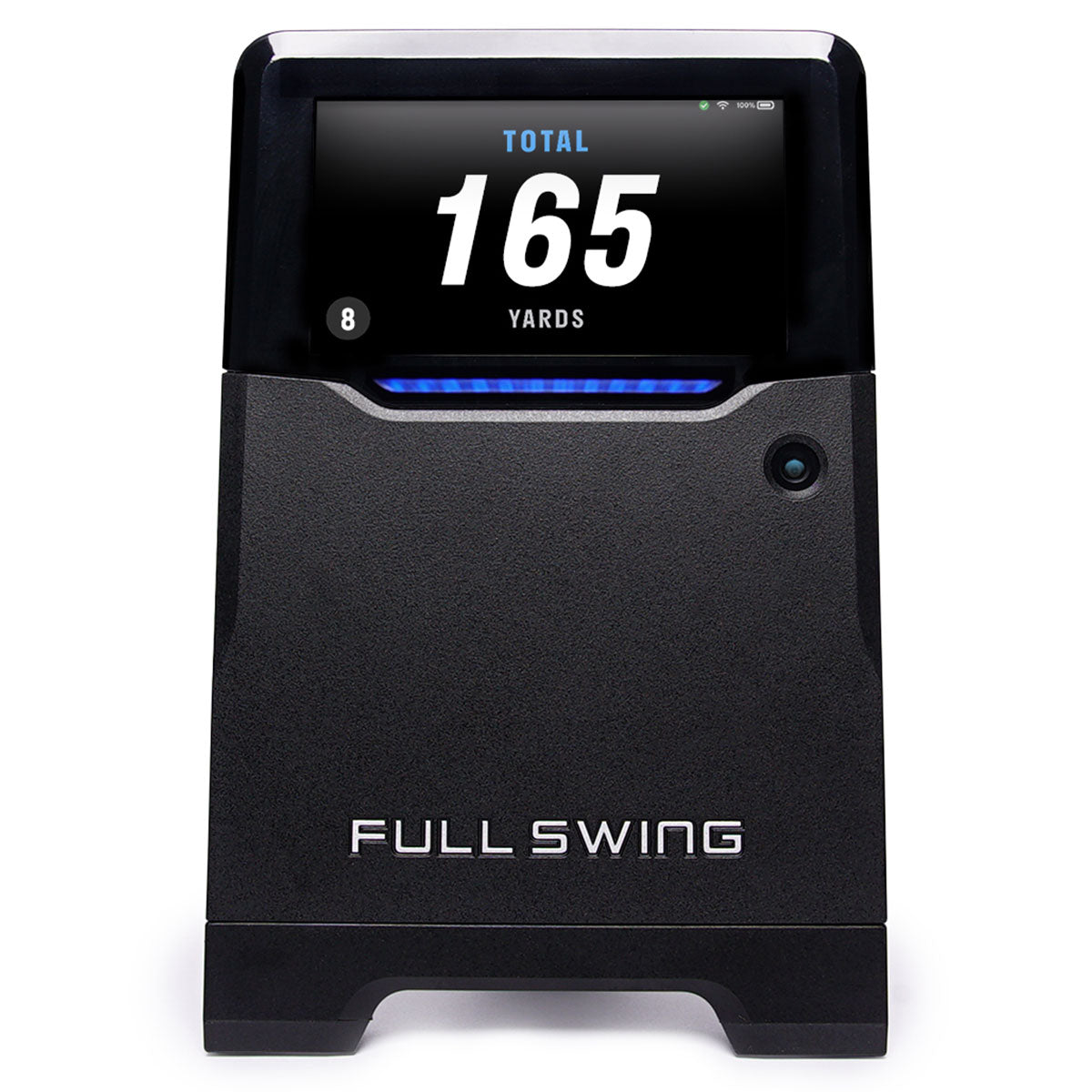
7.9/10Full Swing KIT review: the tape measure decides this, not Tiger
Tour pedigree, TGL on ESPN, and radar good enough to be checked against a Trackman outdoors. It also wants eighteen to twenty feet of room, which rules out most of the garages people buy it for.