
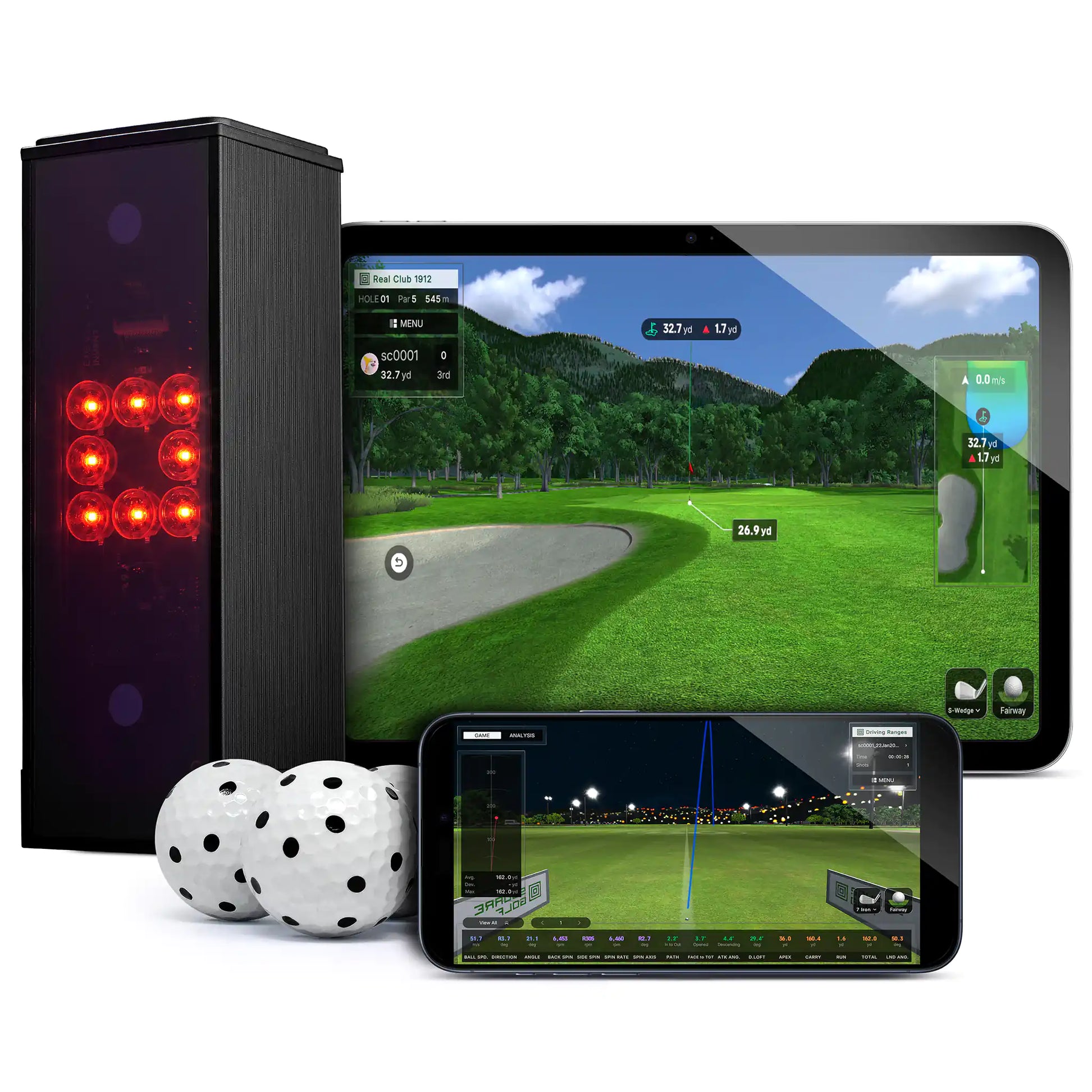
A compact camera-based launch monitor and simulator for indoor use, sold direct in the UK through Square Golf's own site.
Build a Garage Golf Simulator
For playing when it's grim outside.
Turn the garage into a year-round practice bay and the weather stops being an excuse. A home simulator comes down to four things: a launch monitor (the brain that hands you real numbers), something to hit into (an impact screen or net), a quality hitting mat, and enough safe swing space. Get those right and you can practise and play whatever it's doing outside.
We've spread the picks across budgets because the build is modular. Spend the most on the launch monitor and the mat — those are what you feel and rely on every session. A budget unit like the Garmin R10 or Square paired with a net and a good mat gets you started for far less than a full setup, often cheaper than a couple of seasons of green fees, and you can add an impact screen later for the immersive picture. Putting kit rounds it out.
Before you buy a single thing, measure your ceiling height and swing clearance — taller players need more, and safety beats every other spec. This shelf suits the golfer who plays through grim winters and wants reps on demand; it's an investment that pays back against range and course costs, not a casual purchase.
ifrothgolf earns a commission on purchases made through these links, at no extra cost to you. It never changes what I recommend. Full disclosure.
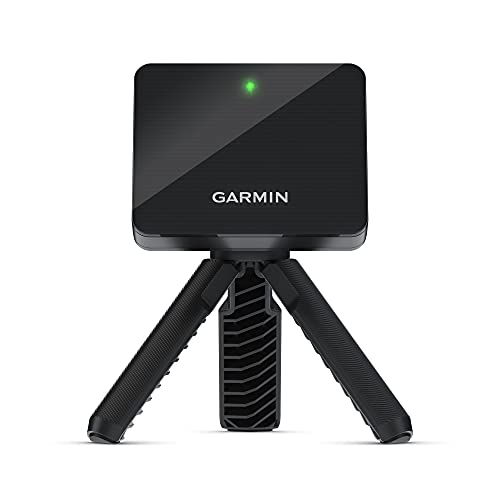
The Garmin Approach R10 is a pocket-sized radar launch monitor aimed at the golfer who wants real data, range practice, and a basic home sim setup without remortgaging the house.
A portable camera-plus-radar launch monitor from Rapsodo that doubles as a home sim, aimed at golfers who want proper ball data without remortgaging the house for a Trackman or GCQuad.
A doppler radar launch monitor with a built-in screen and remote, aimed at the average club golfer who wants real numbers at the range or in the garage without a monthly subscription.
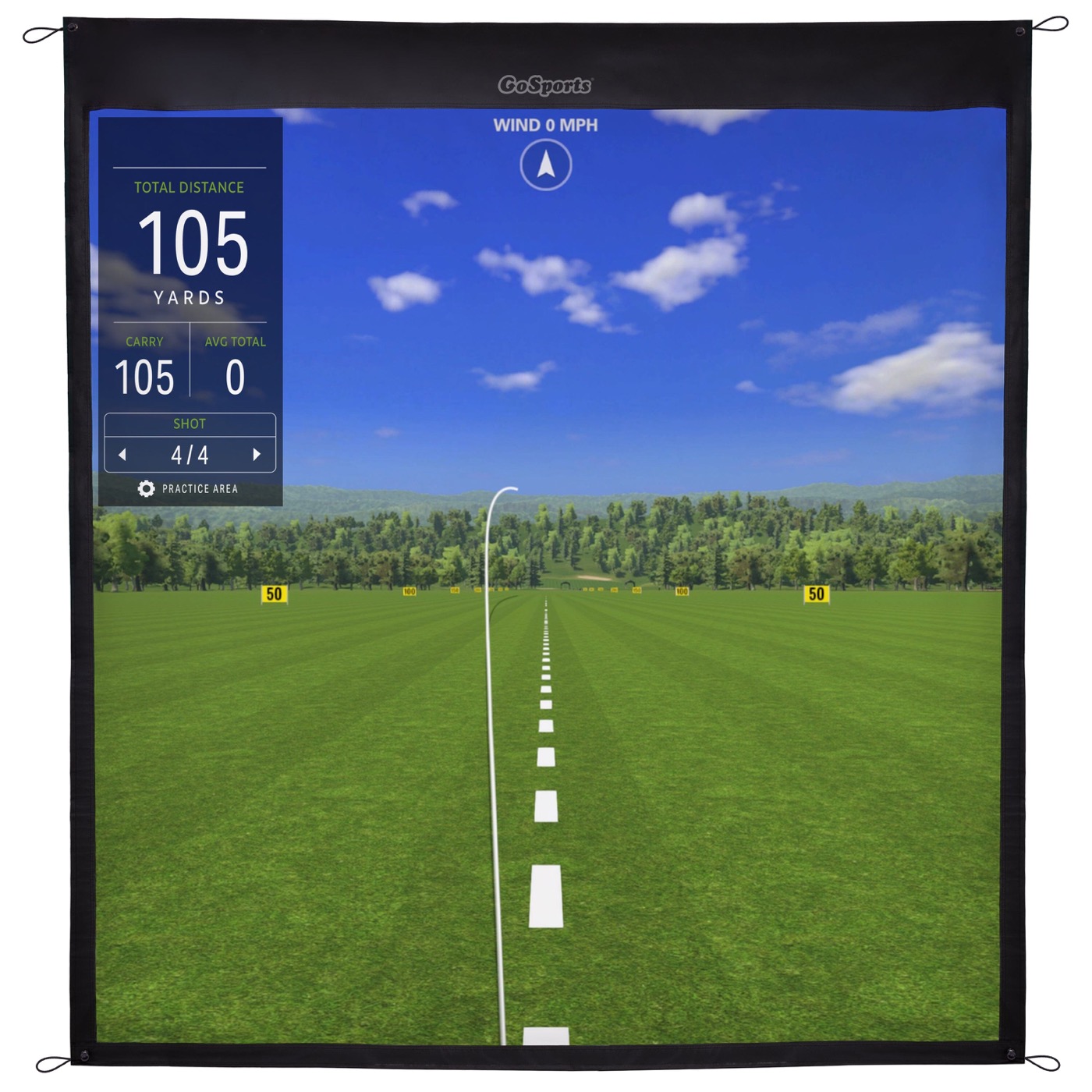
A tensioned polyester impact screen that doubles as your projection surface and your ball-stopper, aimed at anyone building a home or garage golf sim instead of paying club rates to hit into a TrackMan bay.
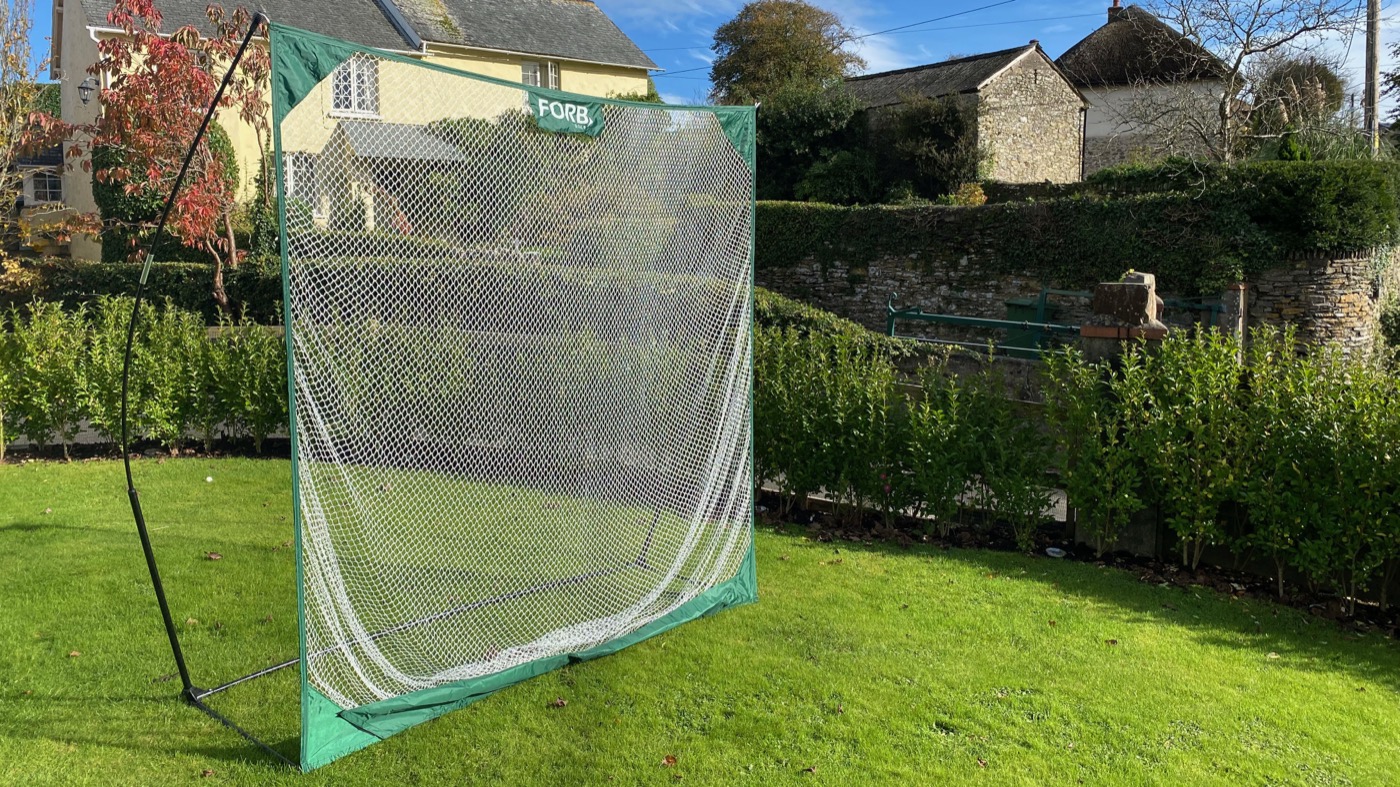
The FORB Pro Pop-Up net in the 10x7ft size, a simple flat-panel hitting net for back garden practice, aimed at anyone who wants to bash balls at home without a full cage.
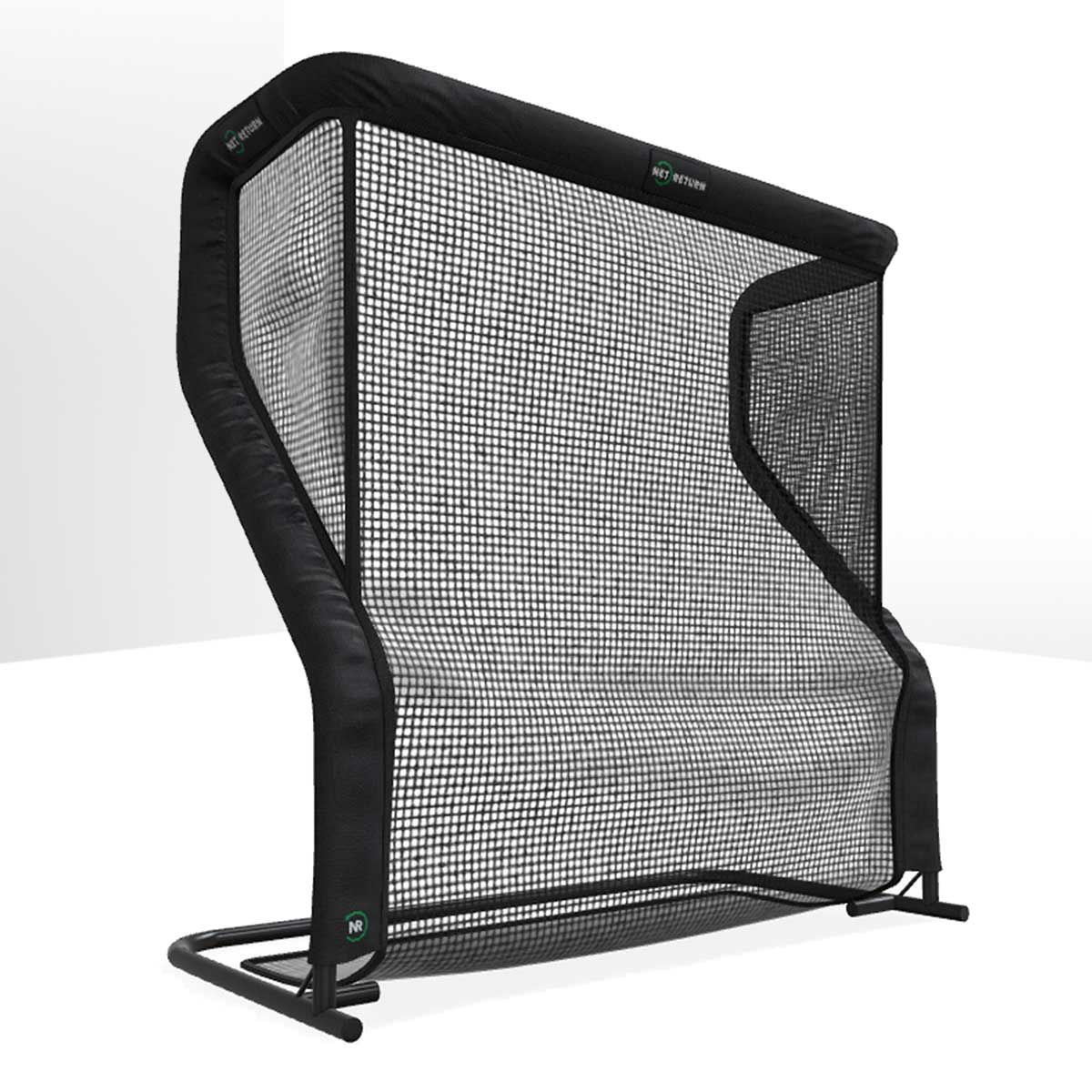
Every cheap hitting net has the same failure mode, and it isn't durability. It's that you hit six balls, walk forward, pick six balls up, walk back, and repeat until you decide you've practised enough. The Net Return's patented shape returns the ball to your feet automatically, and the effect on how much you actually hit is dramatic — a twenty-minute session becomes a hundred balls instead of forty, with your rhythm intact because you never stopped. The netting is commercial-grade and rated to absorb strikes up to 225mph, which is comfortably beyond anything you'll produce and the reason these things survive years in a garage rather than a season. It is expensive for a net, and that's the honest sticking point: you can buy something that stops a golf ball for a fifth of the price. What you're paying for is the ball coming back, and if you're using it twice a week through a winter, that's the feature that gets you there.
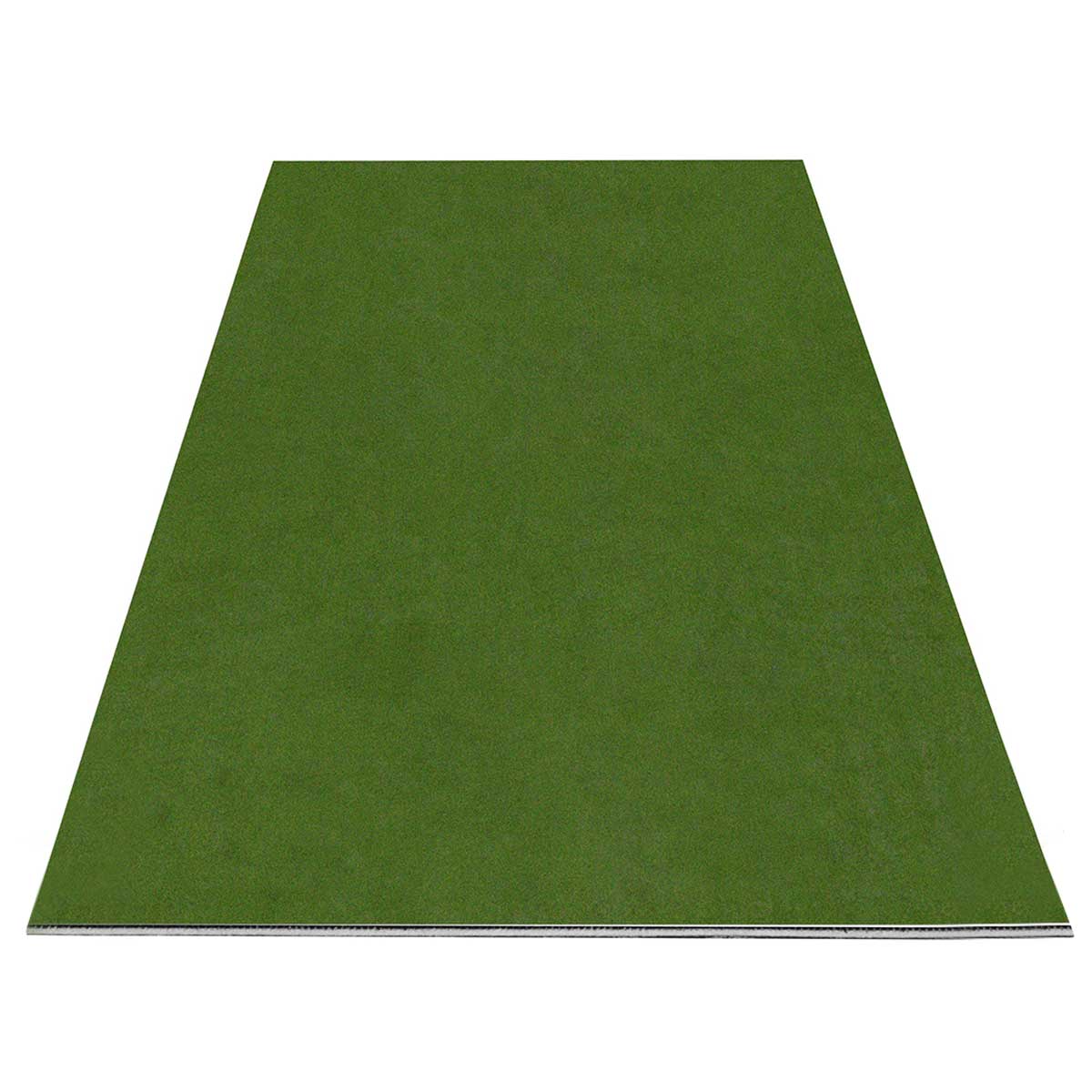
This is a mat designed around one problem most range mats create. A standard 4x5 or 5x5 mat is an island: a ball returning from a net reaches the edge, drops onto whatever your floor is, and stops somewhere you have to walk to. The Pro Turf is six feet wide by ten feet long precisely so the return keeps running all the way back to your stance, which is what makes a Net Return setup actually continuous rather than nearly continuous. The construction is sensible for a home: a 42oz nylon face with 5mm foam backing, about three-quarters of an inch thick and roughly 54lbs, so it rolls up like a carpet rather than needing a permanent installation — genuinely useful in a garage that's still a garage. Two rubber tees are included. The bonus most people discover afterwards is that ten feet of consistent nap makes a perfectly good putting surface, so with a cup and flag it becomes a short-game station too. It's an expensive mat in isolation; as the piece that finishes a ball-return bay, it's the logical partner.
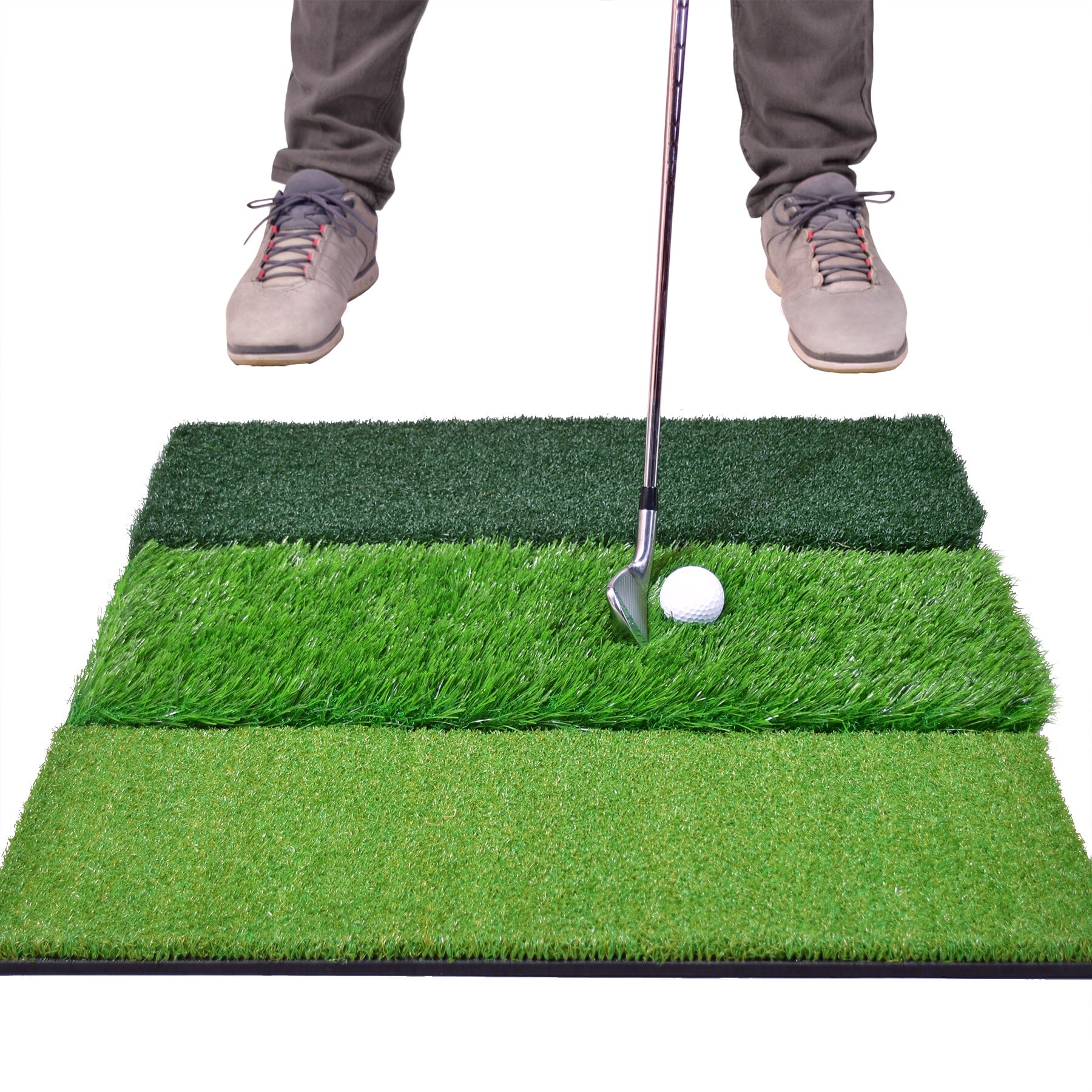
The FORB Tri-Turf is a small, foldable three-section practice mat (roughly 60cm x 40cm) with separate fairway, rough and fringe turf strips, aimed at golfers who want to rehearse different lies in the garage, garden or at the range without lugging a full mat about.
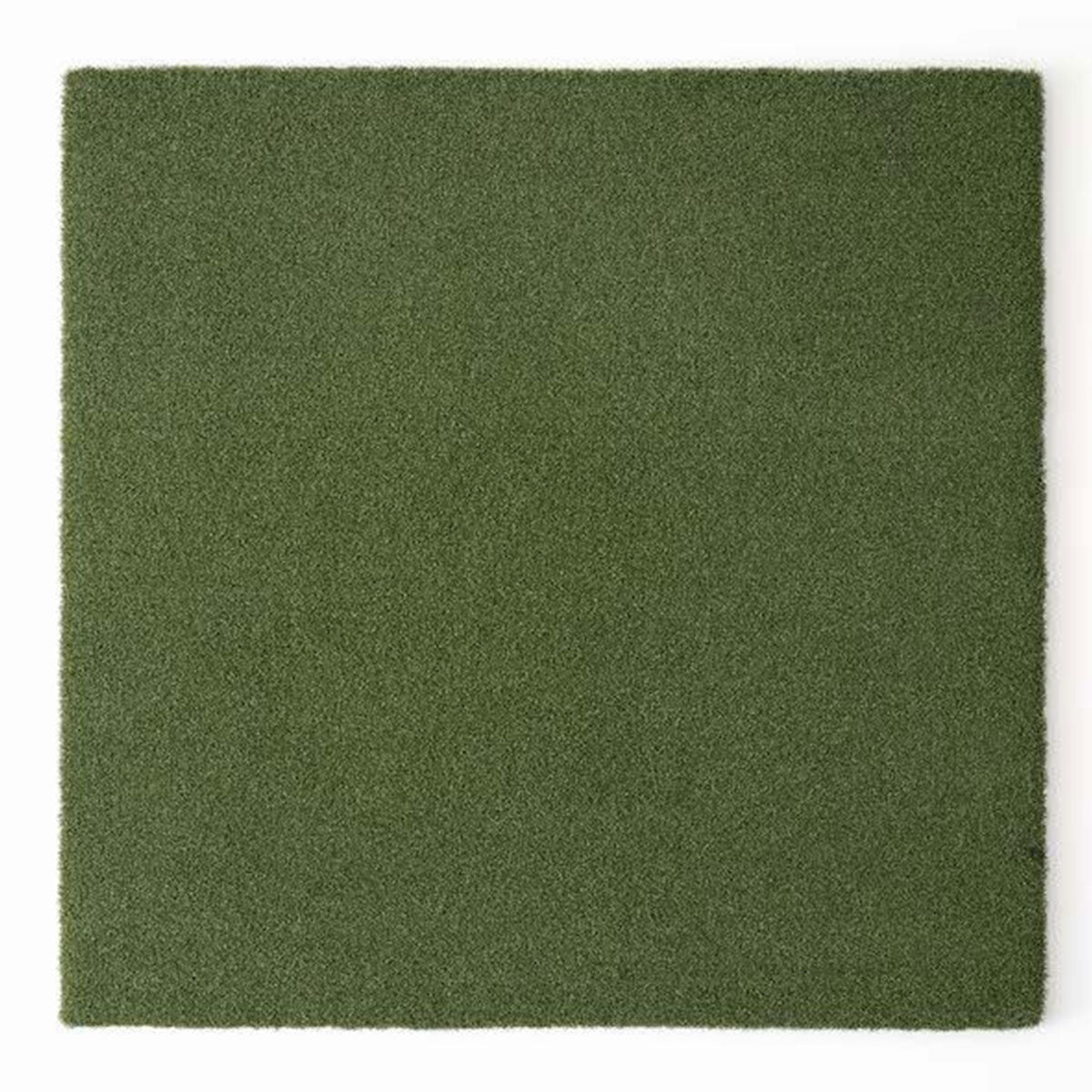
Hitting mats are the least glamorous line on a sim budget and the one people regret cheaping out on twice: once in the wrists, once when the thing curls at the edges after a winter. The size is the first thing to get right. A 5x5 footprint means your stance and the ball sit on one continuous surface, so your feet aren't an inch below the ball on a strip mat — a small geometry error that quietly rewrites your low point and undoes the data you bought a launch monitor to collect. This one is built around that: dense turf with enough give to take a genuinely descending strike without the jarring bounce cheap mats hand back, and enough weight to stay flat on a garage floor instead of creeping under load. It won't feel like a fairway, because nothing at this price does. It will let you hit a few hundred balls a week without your lead wrist filing a complaint, which is the actual job.
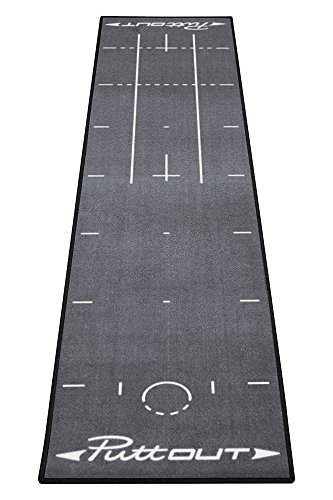
The PuttOut Putting Mat is a roll-up indoor putting mat with printed alignment and distance guides, aimed at golfers who want to grind on short putts at home over winter or before a round.
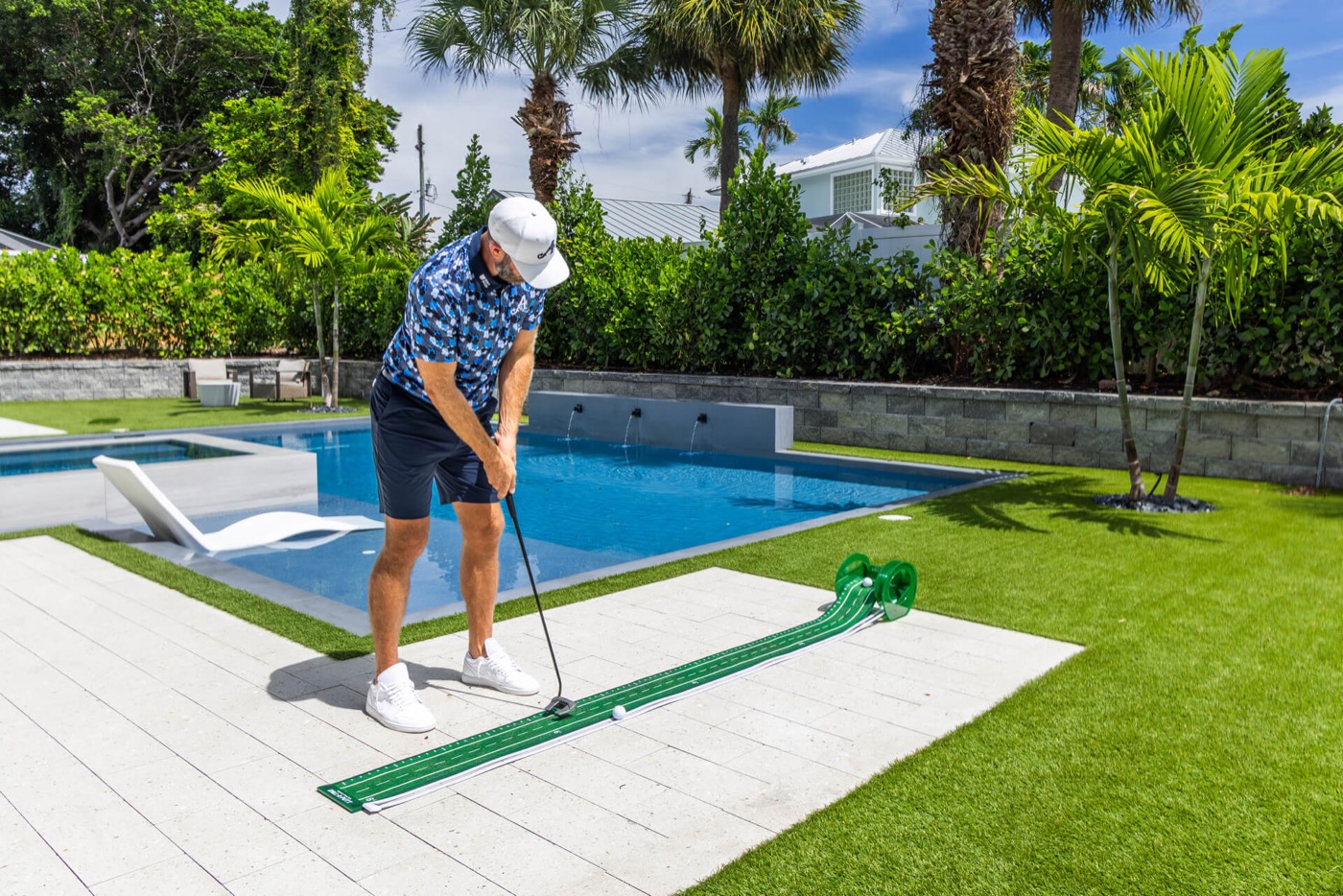
A premium roll-out putting mat with a wooden frame, two hole sizes, alignment "train track" lines and a gravity ball return, fronted by Dustin Johnson. Aimed at golfers who want to grind their short putts at home or in the office.
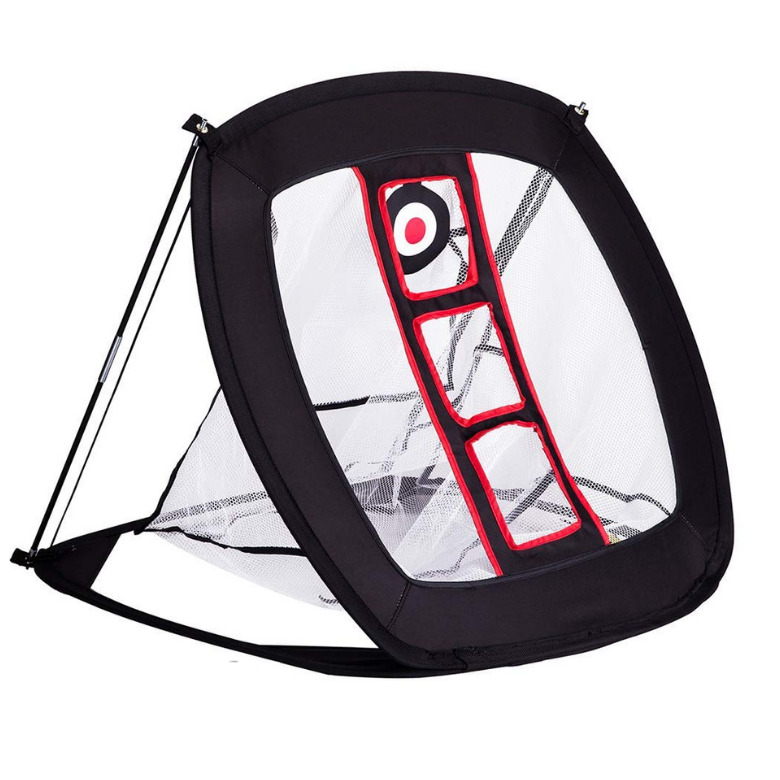
A collapsible, spring-framed net that pops open into a freestanding target, usually with a couple of pocket holes to aim at. It's the cheap, grab-and-go way to practice chips and pitches in the garden without peppering the fence.

Frequently asked
- What do I need to build a garage golf simulator?
- Four things: a launch monitor (the brain), something to hit into (an impact screen or net), a quality hitting mat, and safe swing space. Spend most on the launch monitor and mat, start with a net if budget is tight, and check your ceiling height first.
- What's the cheapest way to get a home simulator?
- A budget launch monitor like the Garmin R10 or Square paired with a net and a good mat gets you started for far less than a full build — often cheaper than a couple of years of green fees. Add an impact screen later for the immersive picture.
- How much ceiling height do I need for a garage sim?
- Enough to make a full swing with arms extended without clipping the ceiling — measure your own swing, as taller players need more. Swing clearance and safety matter more than any other spec, so confirm the space before buying the kit.
- Do I need a screen, or will a net do?
- A net is plenty if you mainly want to practise and see your numbers — it's cheaper, smaller and the sensible place to start. An impact screen adds the projected, play-the-course experience, so add it later once the launch monitor, mat and net are sorted.
- Are budget launch monitors accurate enough for home use?
- For practice and improvement, yes — units like the Garmin R10, Rapsodo MLM2 Pro or Square give consistent, useful feedback that's plenty to train with. They're not tour-fitting tools, so treat the absolute numbers as a guide and focus on the trends and relative changes.
Related reading
More on this from the desk
Opinion
The smartest time to buy a golf simulator is the middle of summer
Nobody is thinking about indoor golf in July — which is exactly why the golfer who builds now plays all winter while everyone else is fighting over stock in November.
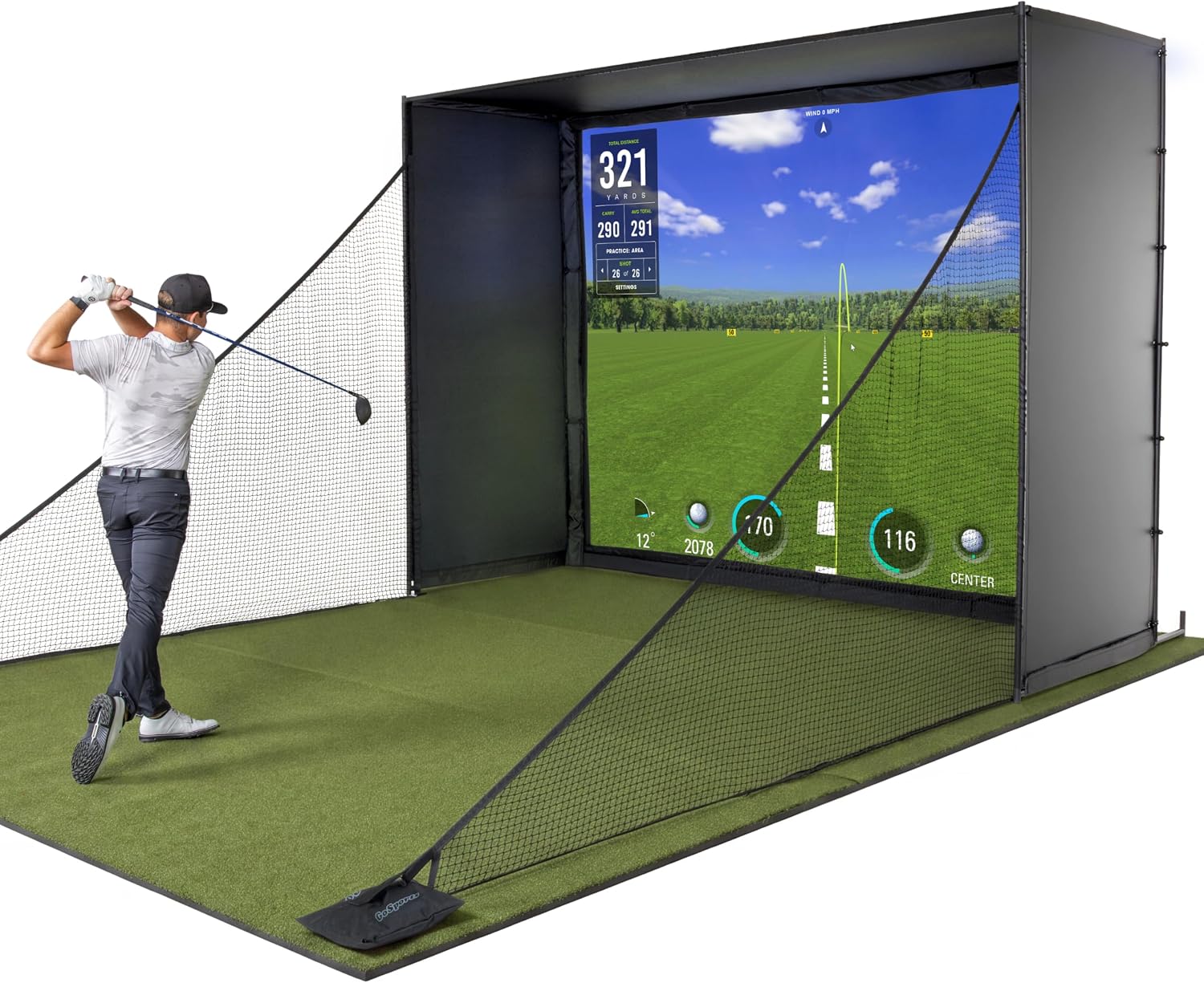
Explained
You're upgrading your golf sim in the wrong order
The most common home-sim regret isn't a launch monitor's accuracy. It's a room you flinch in and a picture you can't see in daylight — and both get budgeted last.
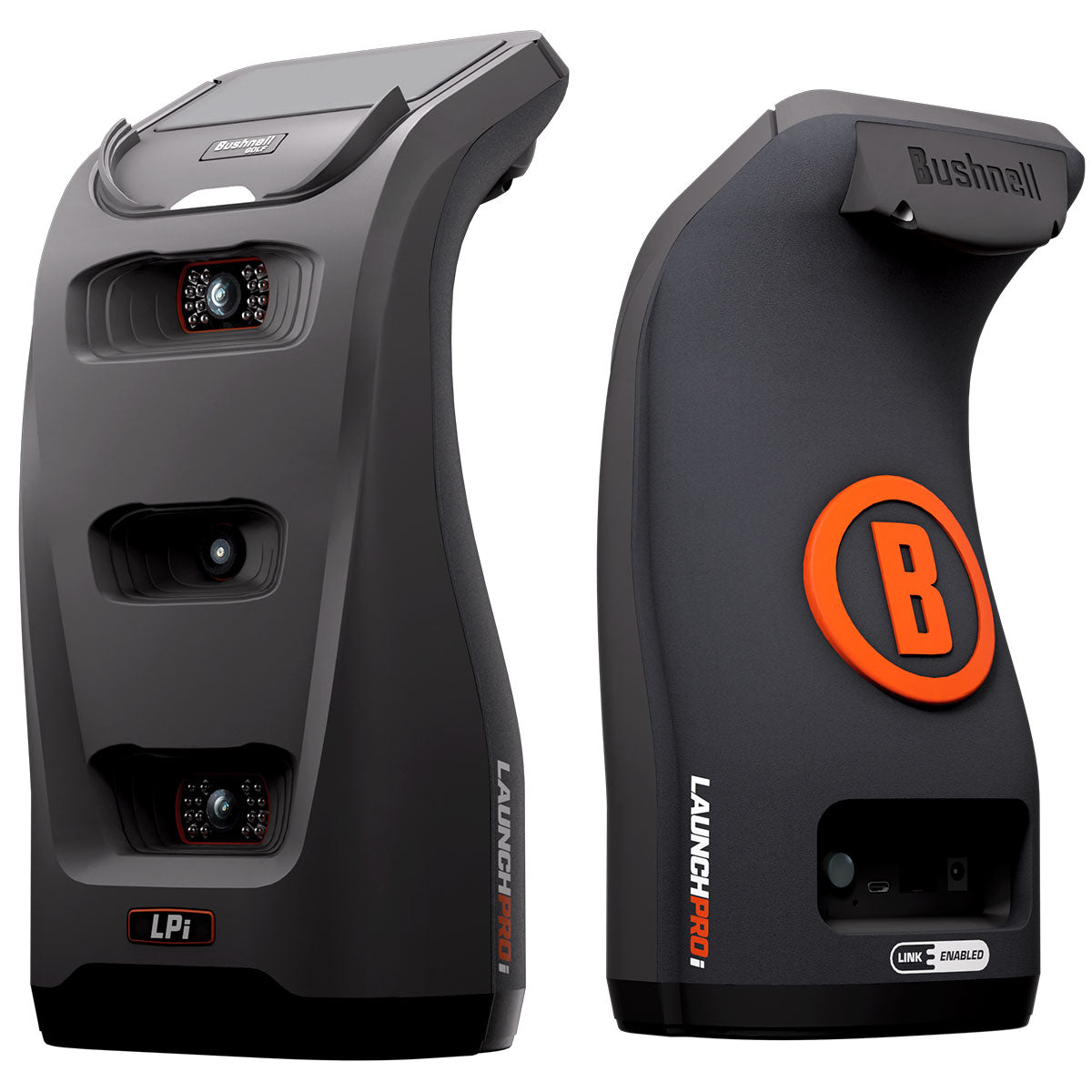
Explained
Your launch monitor isn't the most important thing you'll plug in, and the bill nobody budgets for proves it
Every home sim budget on the internet lists the sensor, the screen, the mat and the projector. Two line items decide whether the room is actually good, and neither one is on the list.