
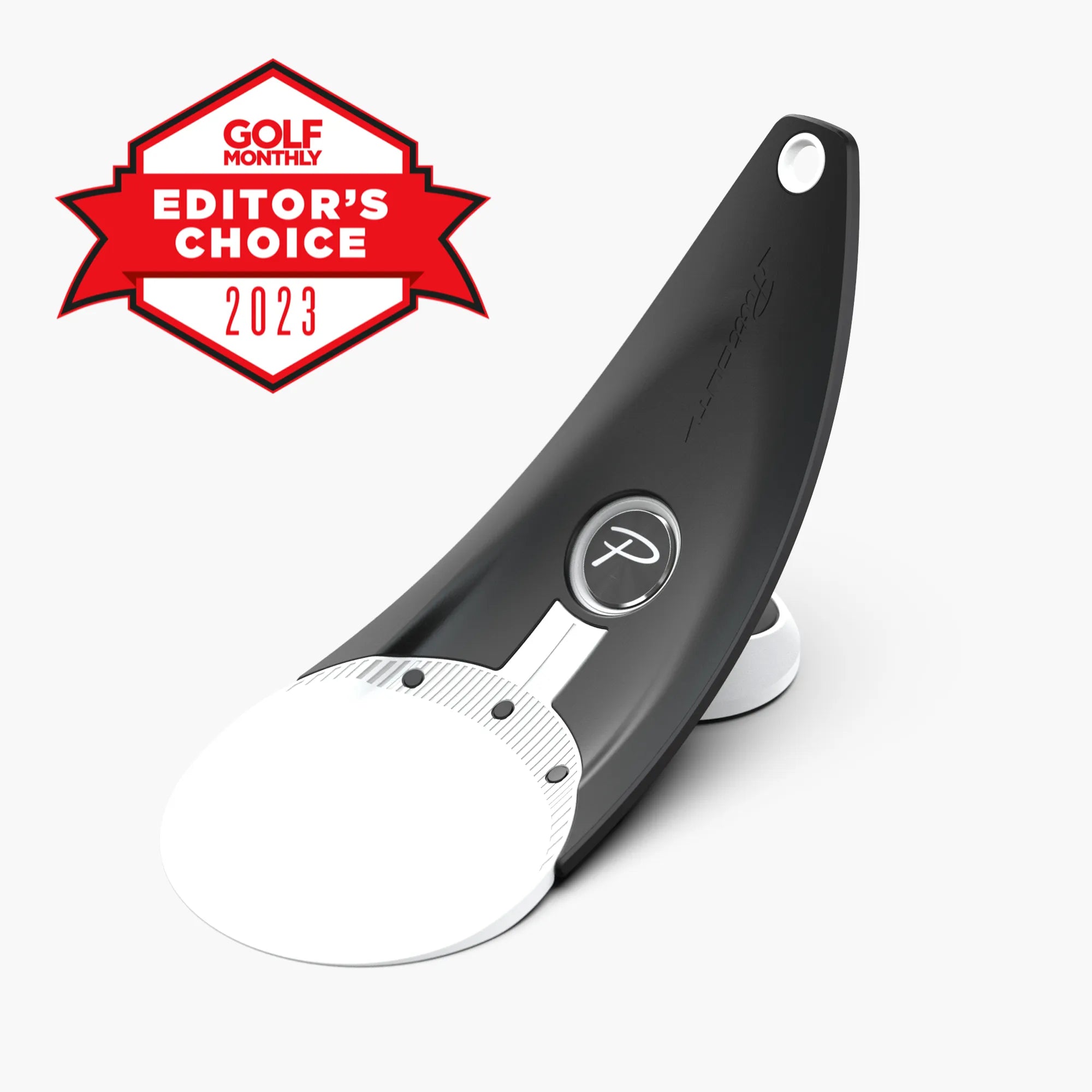
A pocket-sized putting aid: a parabolic ramp with a micro-target that catches dead-perfect putts and rolls everything else back to you. Aimed at anyone who wants to practise short putts at home or on the range without chasing balls all over the carpet.
The Ultimate At-Home Practice Kit
How I keep the rust off between rounds.
Reps win, and you don't need a tee time to get them. This is the kit that turns a lounge, garage or garden into a practice space, so you arrive at the first tee in spring already sharp instead of shaking off six months of rust. The putting mats and feedback trainers, the nets and hitting mats for full swings, and the tempo, alignment and contact aids that quietly build better habits.
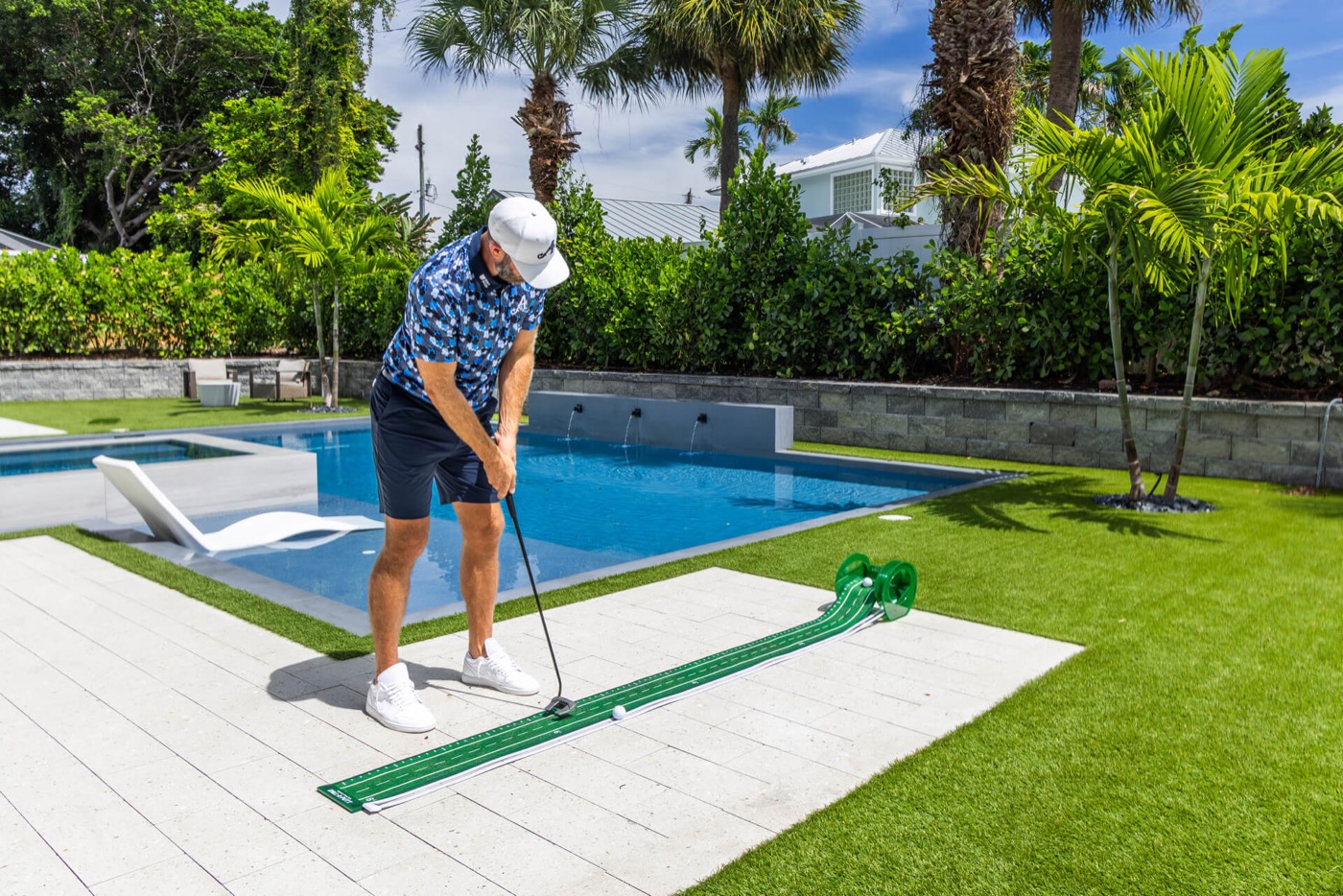
We ordered the edit by where it pays back fastest. Putting comes first because you hit more putts than any other shot and it transfers almost perfectly indoors — a true-rolling mat plus a feedback trainer like the PuttOut is the highest improvement-per-pound buy here. Full-swing kit (a net, a turf mat) needs space and structure to be worth it, and the tempo and contact aids — alignment sticks, the Orange Whip, a smart ball — are cheap habit-builders that work alongside everything else.
It suits anyone who wants to improve between rounds without paying for range balls or a coaching block. Be honest with yourself about space and discipline first: aimless rolling or bashing balls without a target doesn't transfer, but ten focused minutes a day genuinely does.
ifrothgolf earns a commission on purchases made through these links, at no extra cost to you. It never changes what I recommend. Full disclosure.
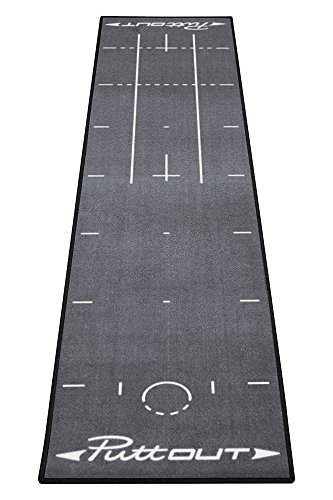
The PuttOut Putting Mat is a roll-up indoor putting mat with printed alignment and distance guides, aimed at golfers who want to grind on short putts at home over winter or before a round.
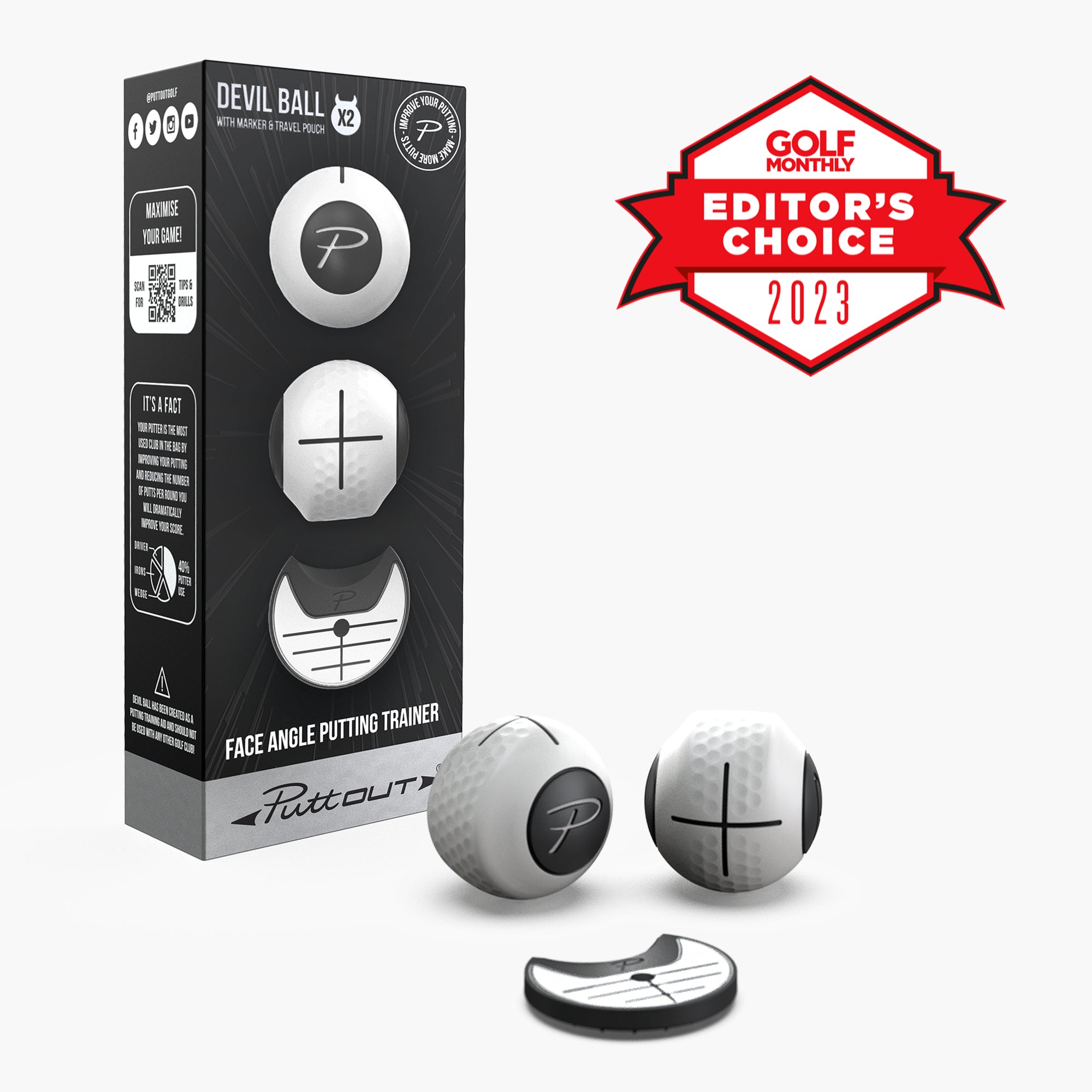
A weighted practice ball with flat edges that exaggerates face angle errors at impact, so a slightly open or closed putter face sends it visibly offline.
A premium roll-out putting mat with a wooden frame, two hole sizes, alignment "train track" lines and a gravity ball return, fronted by Dustin Johnson. Aimed at golfers who want to grind their short putts at home or in the office.
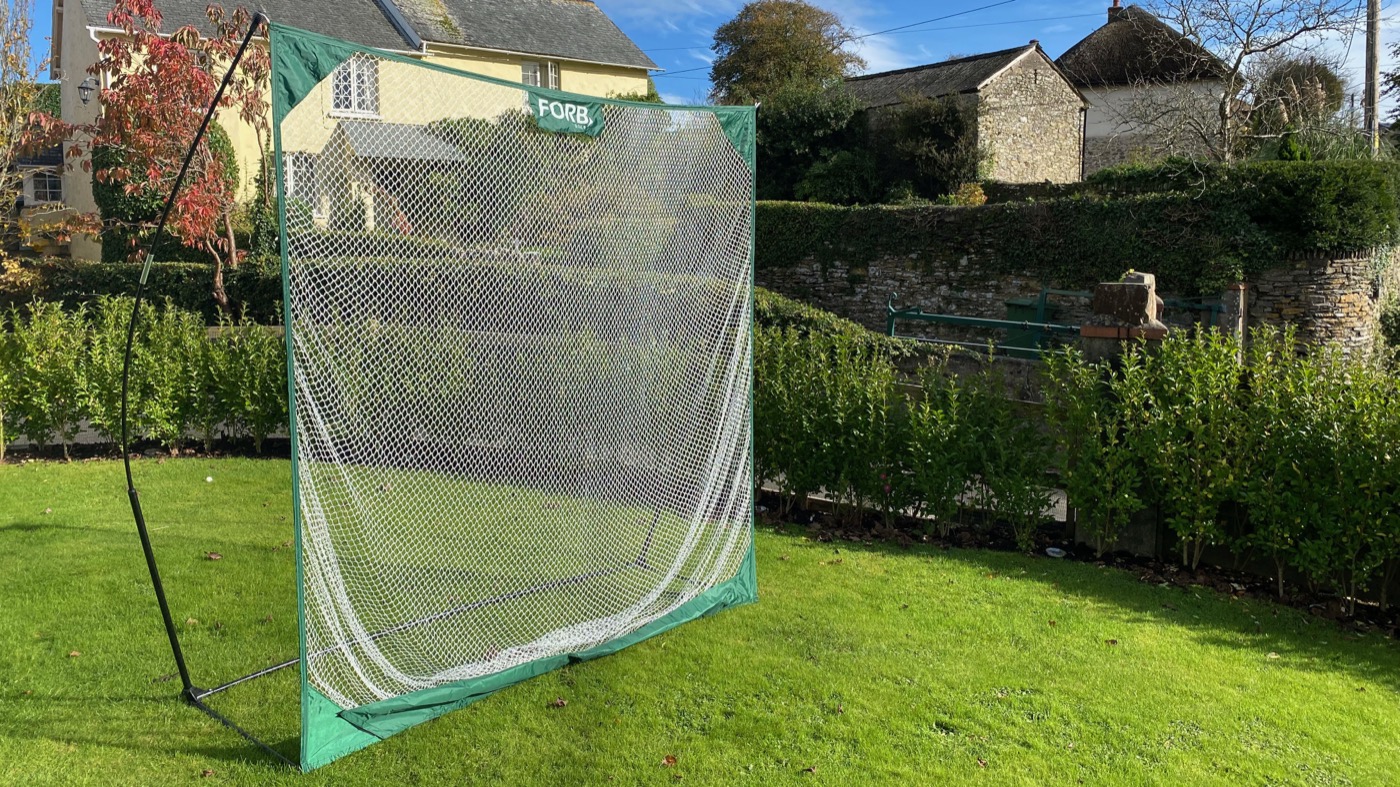
The FORB Pro Pop-Up net in the 10x7ft size, a simple flat-panel hitting net for back garden practice, aimed at anyone who wants to bash balls at home without a full cage.
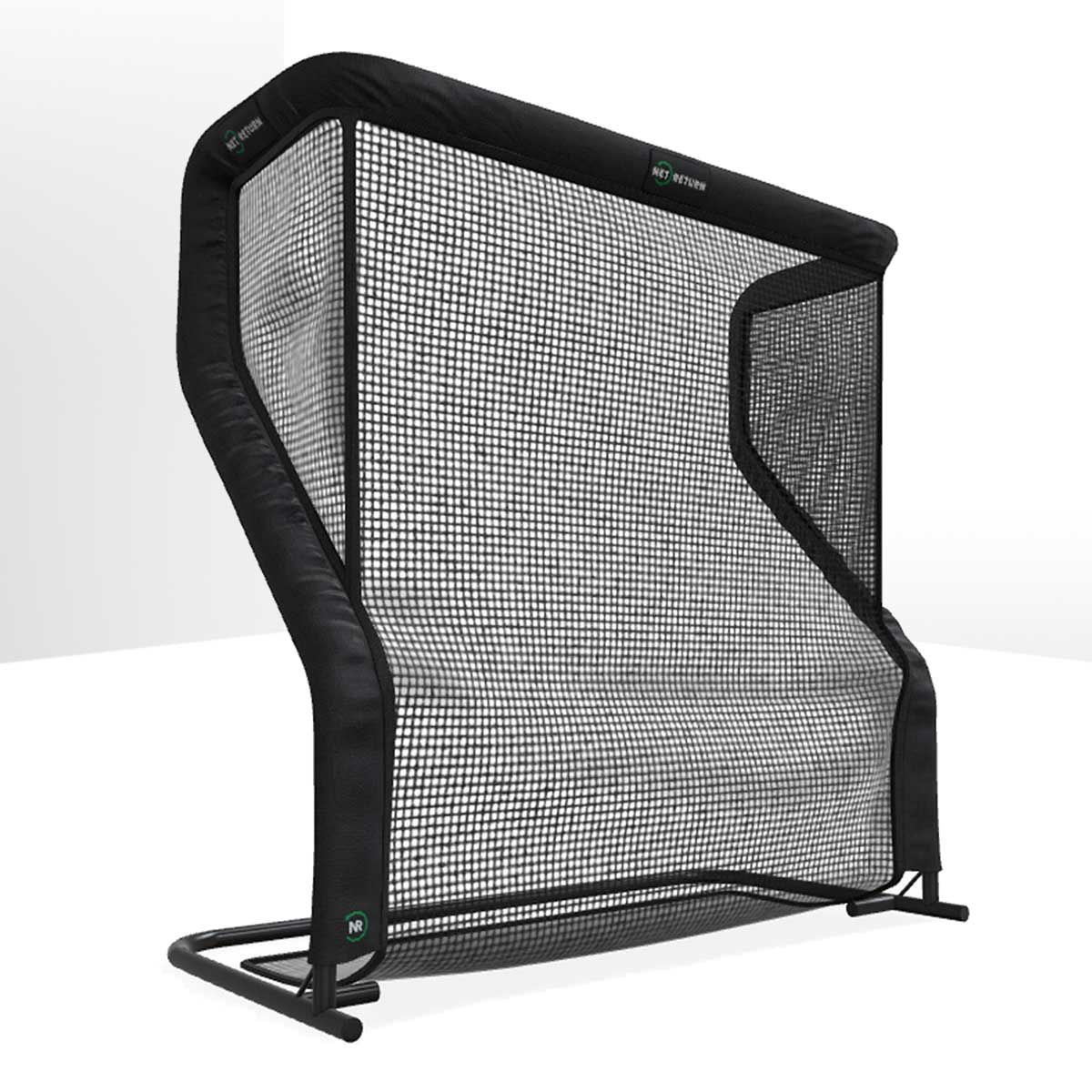
Every cheap hitting net has the same failure mode, and it isn't durability. It's that you hit six balls, walk forward, pick six balls up, walk back, and repeat until you decide you've practised enough. The Net Return's patented shape returns the ball to your feet automatically, and the effect on how much you actually hit is dramatic — a twenty-minute session becomes a hundred balls instead of forty, with your rhythm intact because you never stopped. The netting is commercial-grade and rated to absorb strikes up to 225mph, which is comfortably beyond anything you'll produce and the reason these things survive years in a garage rather than a season. It is expensive for a net, and that's the honest sticking point: you can buy something that stops a golf ball for a fifth of the price. What you're paying for is the ball coming back, and if you're using it twice a week through a winter, that's the feature that gets you there.
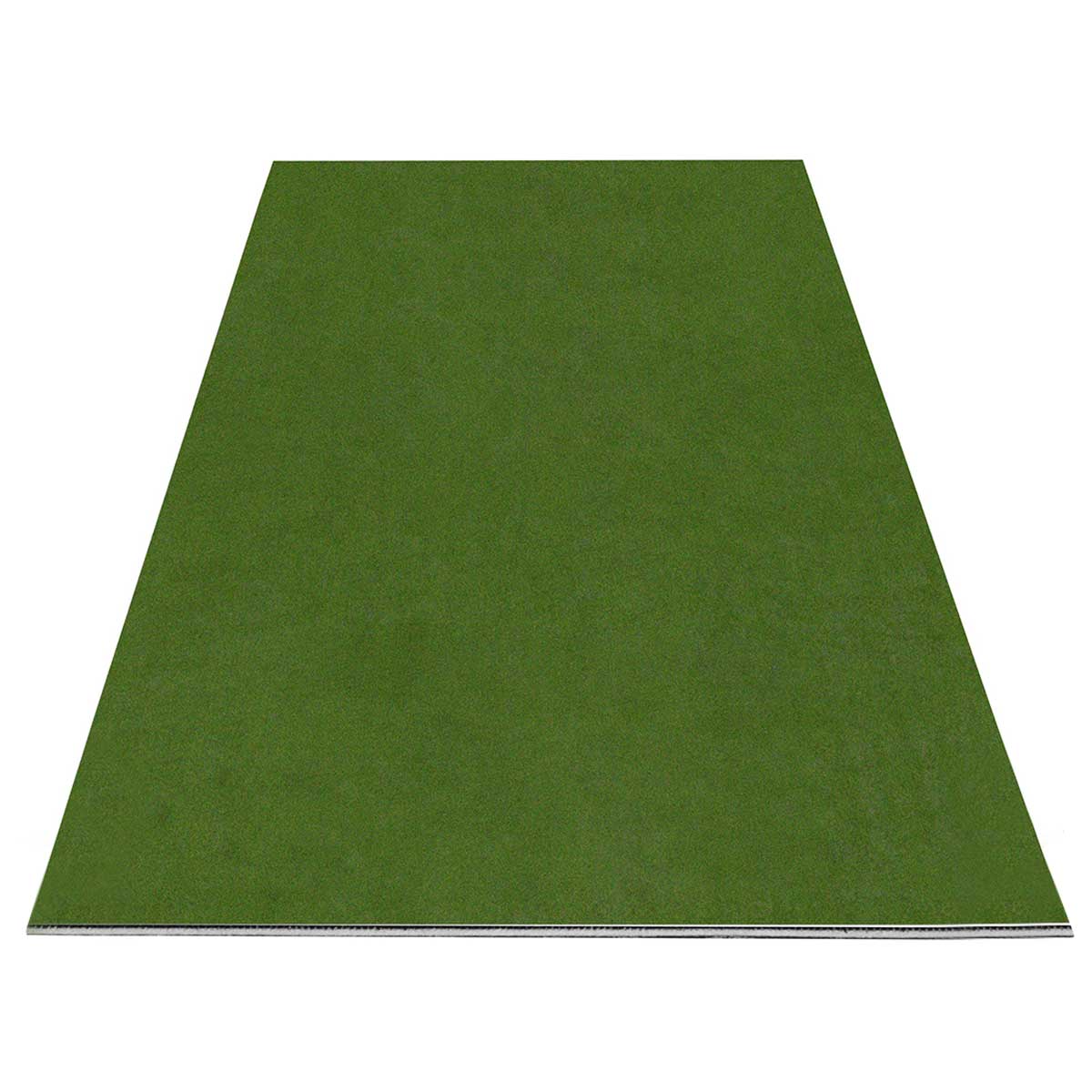
This is a mat designed around one problem most range mats create. A standard 4x5 or 5x5 mat is an island: a ball returning from a net reaches the edge, drops onto whatever your floor is, and stops somewhere you have to walk to. The Pro Turf is six feet wide by ten feet long precisely so the return keeps running all the way back to your stance, which is what makes a Net Return setup actually continuous rather than nearly continuous. The construction is sensible for a home: a 42oz nylon face with 5mm foam backing, about three-quarters of an inch thick and roughly 54lbs, so it rolls up like a carpet rather than needing a permanent installation — genuinely useful in a garage that's still a garage. Two rubber tees are included. The bonus most people discover afterwards is that ten feet of consistent nap makes a perfectly good putting surface, so with a cup and flag it becomes a short-game station too. It's an expensive mat in isolation; as the piece that finishes a ball-return bay, it's the logical partner.
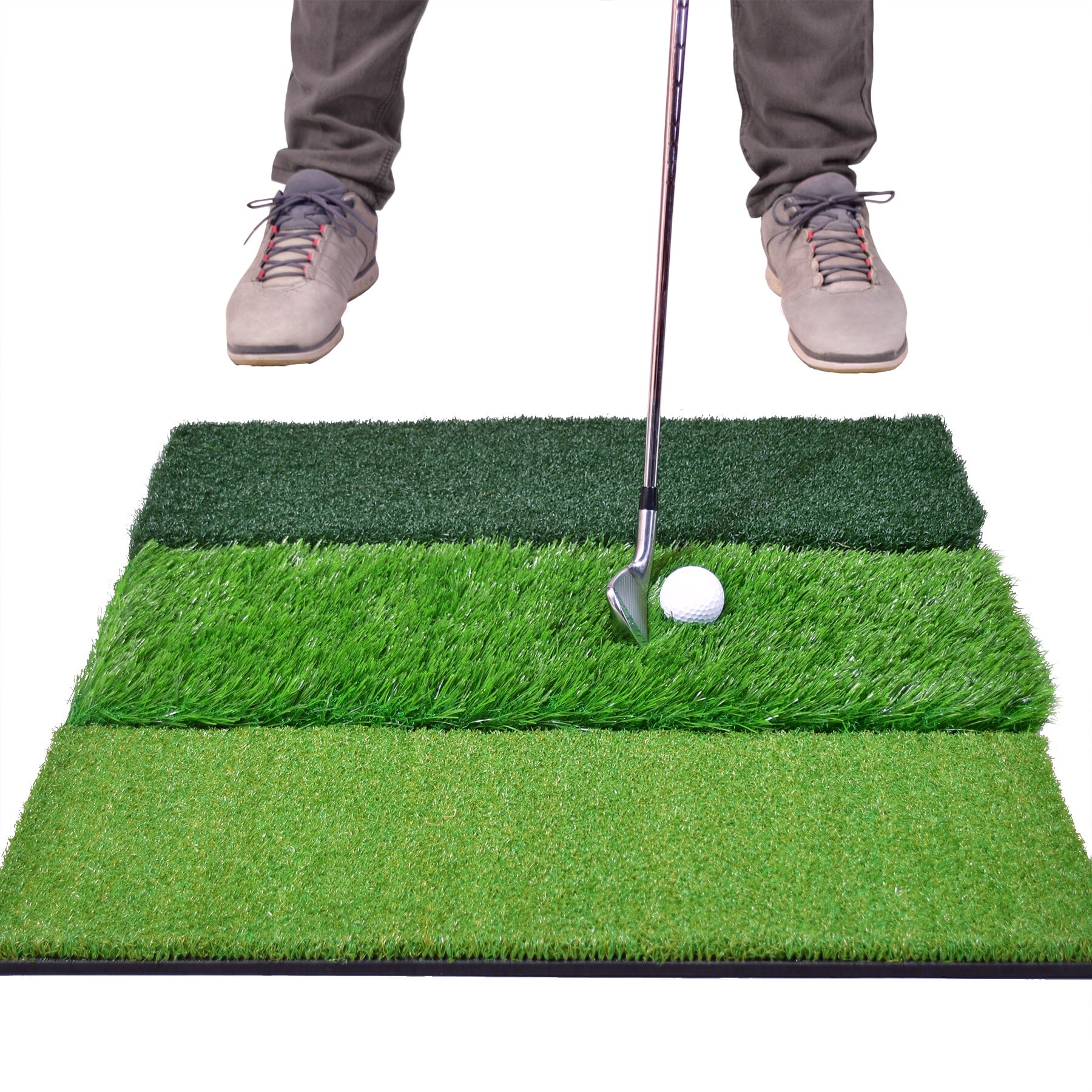
The FORB Tri-Turf is a small, foldable three-section practice mat (roughly 60cm x 40cm) with separate fairway, rough and fringe turf strips, aimed at golfers who want to rehearse different lies in the garage, garden or at the range without lugging a full mat about.
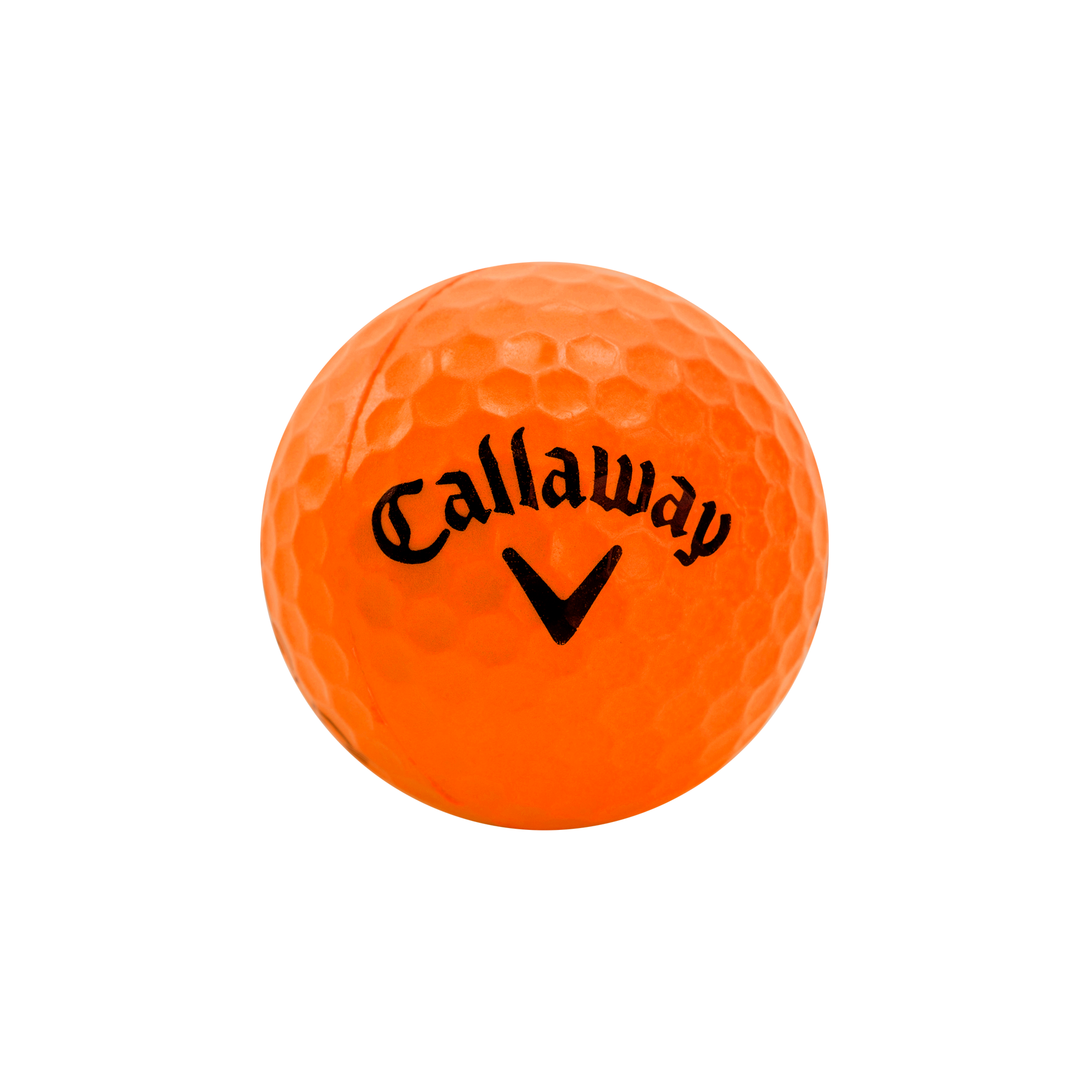
A nine-pack of soft foam practice balls with Callaway's hex dimple pattern, designed for full swings in gardens and tight spaces.
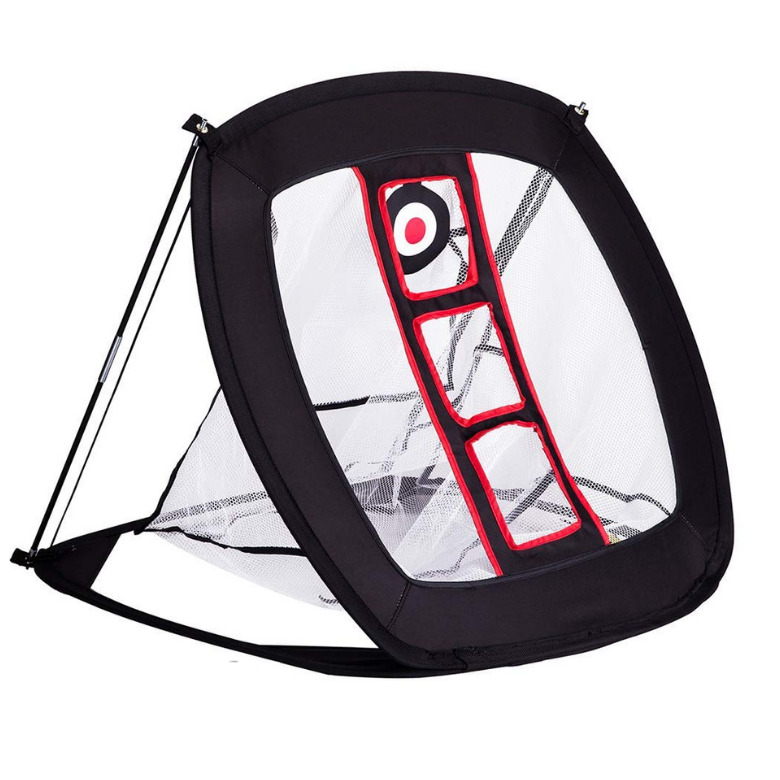
A collapsible, spring-framed net that pops open into a freestanding target, usually with a couple of pocket holes to aim at. It's the cheap, grab-and-go way to practice chips and pitches in the garden without peppering the fence.
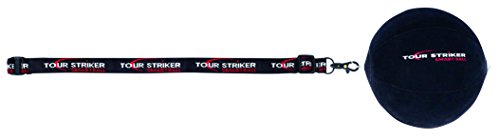
An inflatable ball on an adjustable lanyard that you trap between your forearms (or under an armpit) to drill arm-body connection. Aimed at the mid-to-high handicapper who chicken-wings it, loses connection in the backswing, or just can't compress an iron.
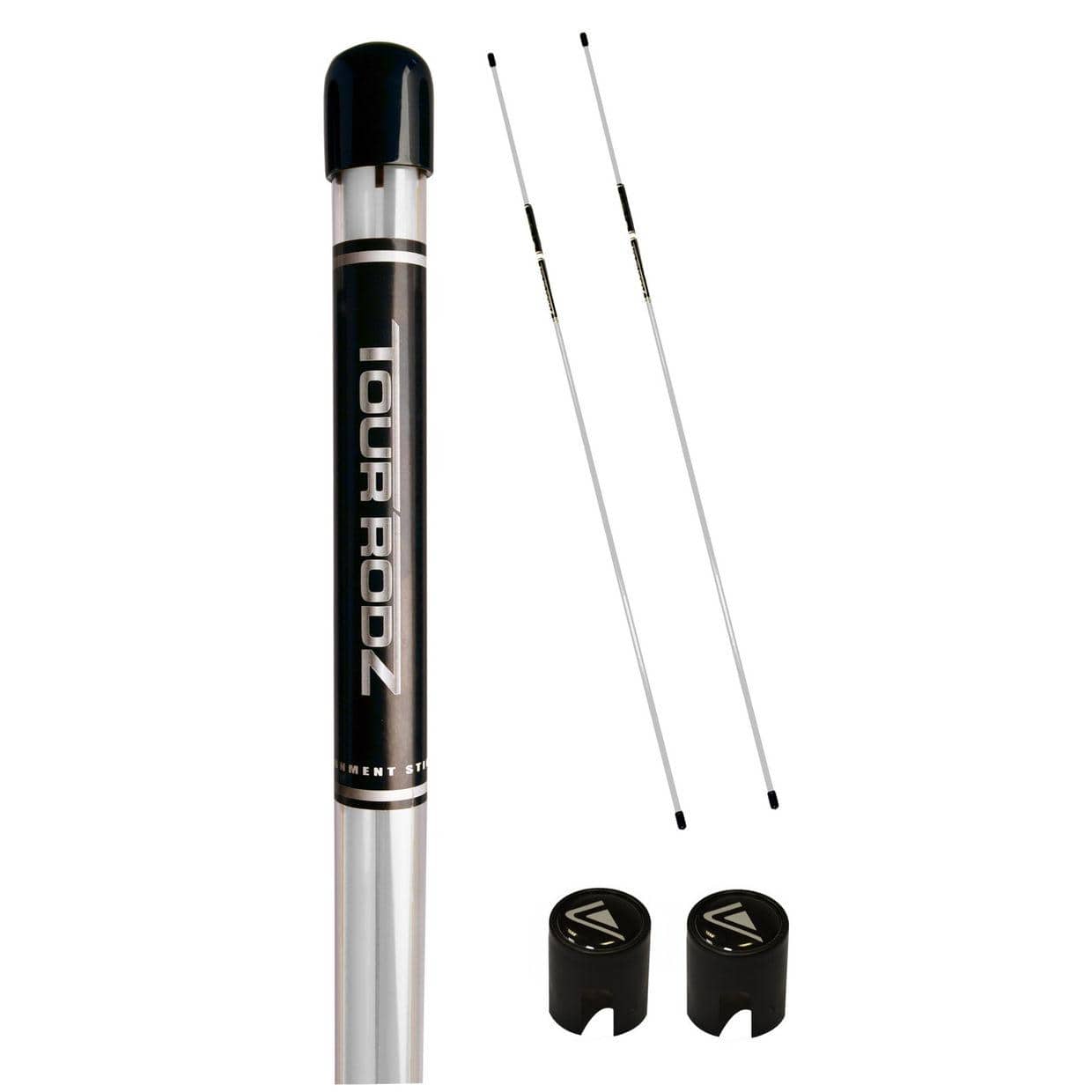
A no-frills pair of fibreglass alignment sticks, the cheapest way to start doing proper alignment, ball position and swing path drills at the range or in the garden. Aimed at anyone who wants the gains without paying tour-branded money.
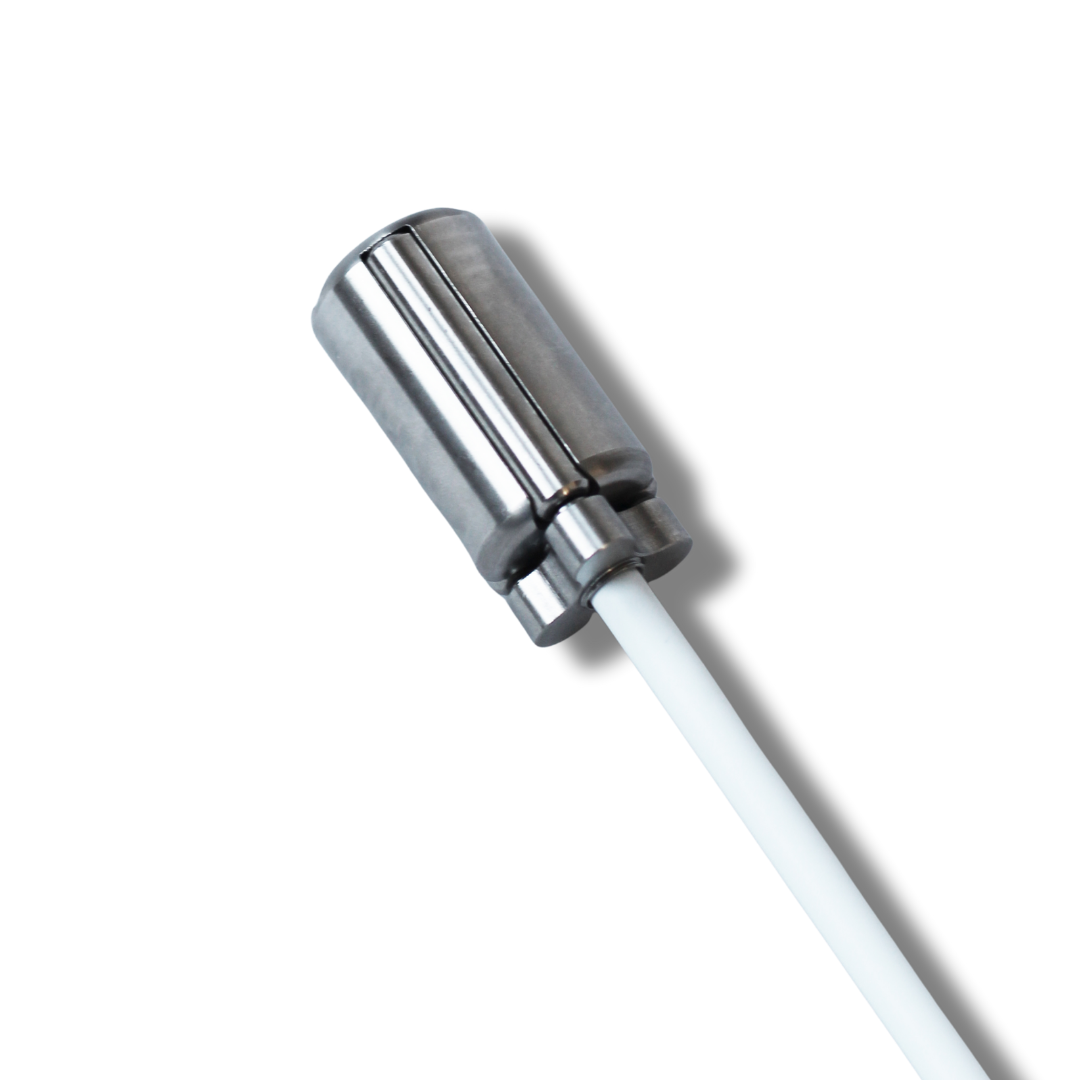
The Rypstick is a single 45-inch driver-length speed-training stick with weights you slide in and lock without tools, replacing the usual set of three clubs. It is aimed at golfers who want genuine clubhead speed and distance, and it earned a Golf Digest Editor's Choice.
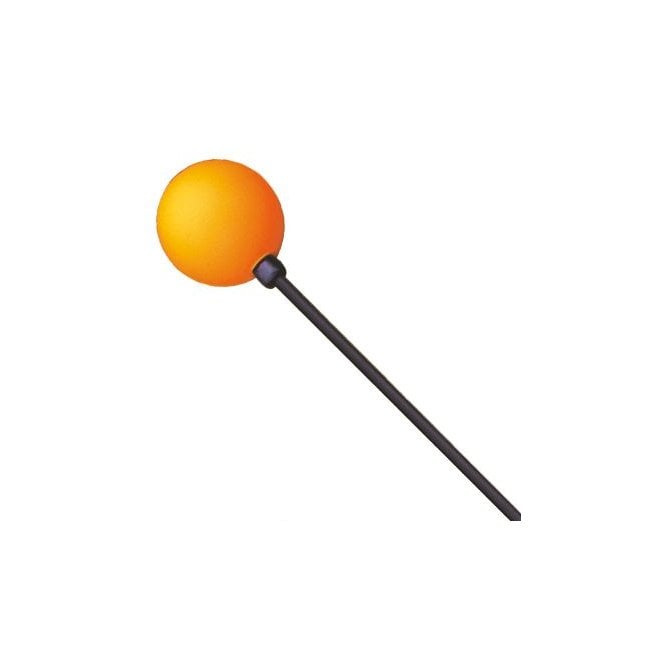
The Orange Whip Full Size is a tempo and rhythm trainer: a heavy orange ball on a deliberately whippy 47 inch shaft, aimed at golfers who want smoother sequencing, more flexibility, and a no-thinking warm-up before a round.
Frequently asked
- How can I practise golf at home?
- Putting transfers best — a true-rolling mat and a feedback trainer turn the lounge into a green. Add a net and turf mat in the garden or garage for full swings, plus tempo, alignment and contact aids to build habits between rounds.
- Is home golf practice actually effective?
- Very, if it's structured. Short daily reps on putting fundamentals and a few full swings into a net build real skill that shows up on the first tee in spring. Aimless rolling or bashing balls without a target doesn't transfer.
- What's the best home practice buy on a budget?
- A putting mat with a feedback trainer like the PuttOut gives the most improvement per pound, since you hit more putts than any other shot. Alignment sticks are the cheap next step for aim and setup.
- Can I hit full shots indoors safely?
- Into a proper practice net off a quality hitting mat, yes — with enough swing clearance and a mat that protects your wrists from hard ground. In a tight space without a net, switch to foam balls, and always check your ceiling and surroundings before swinging a real club.
- How much practice space do I actually need?
- Putting needs only a couple of metres of flat floor, which is why it's the easiest place to start. Full-swing work needs a net, a mat and enough room to swing freely without clipping anything — measure your space and your own swing before buying the bigger kit.
Related reading