
Vessel Player V Pro vs Sun Mountain 2.5+: four and a half pounds and two different theories of ownership
One is tour-grade synthetic leather, sixteen pockets and a spec sheet that reads like a staff bag that shrank. The other weighs less than a third of it. Both have carbon-fibre legs, which tells you exactly where the money went.
By Tom Whitaker · Staff Writer
ifrothgolf earns a commission on purchases made through these links, at no extra cost to you. It never changes what I recommend. Full disclosure.
Side by side
| Specification | VesselPlayer V Pro Stand Bag | Sun MountainSun Mountain 2.5+ Stand Bag |
|---|---|---|
| Bag type | stand (built like a downsized staff bag) | stand/carry (walking golfer who carries) |
| Dividers | 7-way or 14-way full-length fully enclosed dividers with dedicated putter slot | 9.0 inch 4-way top with full-length box dividers |
| Strap system | patented Equilibrium 2.0 double strap with 8-point swivel | X-Strap dual strap system, also works as a single strap |
| Material | tour-grade synthetic leather, water-resistant zippers, genuine leather pulls, carbon-fibre legs | carbon fibre legs and 100-denier ripstop nylon body |
| Pockets | 10 exterior and 6 interior pockets, plus magnetic antimicrobial rangefinder pocket | six pockets incl. velour-lined valuables, full-length apparel, ball pocket and beverage pouch |
| Weight | 7.55 lbs (7-way) to 7.75 lbs (14-way), before strap and rain hood | around 1.3kg (under 3lb) excluding rain hood |
Specs as published by each manufacturer. Rows in grey are where the two match.
Golf bags divide into two honest categories and the industry talks about neither of them. There is the bag you buy because you are going to be carrying it, and there is the bag you buy because you are going to be keeping it. These two are as clean an example of each as the market produces, and putting them side by side is more useful than any number of comparisons between bags trying to do the same thing slightly differently.
The Vessel Player V Pro is a downsized staff bag with legs on it: tour-grade synthetic leather, genuine leather pulls, water-resistant zippers, a fully enclosed seven- or fourteen-way top with a dedicated putter slot, and sixteen pockets between the outside and the inside. The Sun Mountain 2.5+ is the same company's smallest full-feature carry bag — 100-denier ripstop nylon, a nine-inch four-way top, six pockets, and a weight that has been the entire point of the model since it launched. One of these costs a little over twice what the other does. That is the smaller of the two gaps.
The weight, and why the two numbers are not measured the same way
Vessel lists the seven-way Player V Pro at 7.55 pounds and the fourteen-way at 7.75, both before strap and rain hood. Sun Mountain lists the 2.5+ at around 1.3kg — under three pounds — excluding the rain hood. Call it roughly four and a half pounds of difference, and note the asterisk while you are there: the Vessel figure excludes the strap system as well as the hood, and its Equilibrium 2.0 double strap with an eight-point swivel is not a light piece of hardware. Bag weights are quoted the way each brand finds most flattering, which is worth remembering the next time two spec sheets look close.
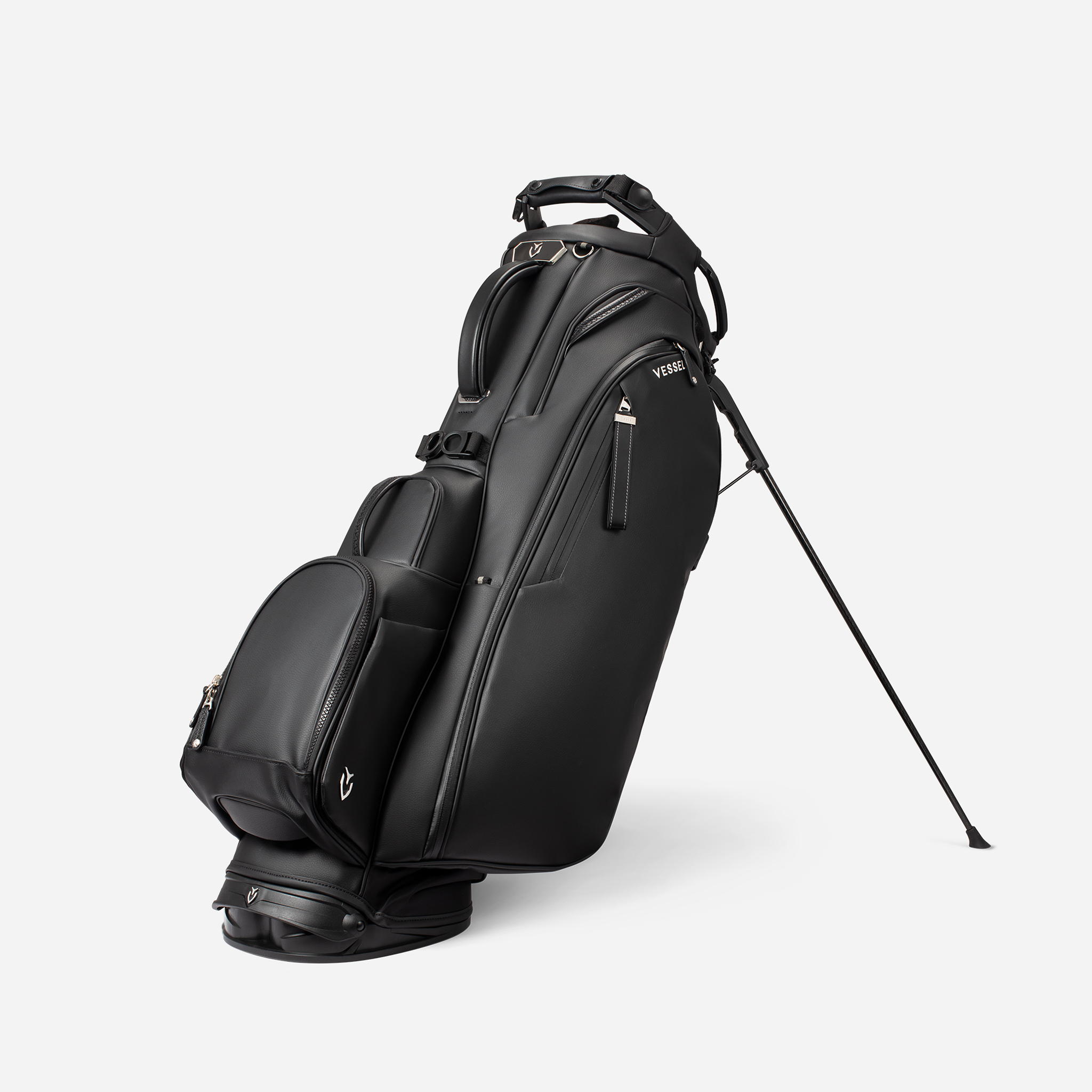
Four and a half pounds sounds like nothing written down. It is a bag of sugar and a half. What it actually is, on a course, is the difference between noticing your bag at the turn and noticing it on the fourteenth tee, and the second one costs shots. It is not a fitness argument and it is not about being able to manage the weight — anybody can carry seven and a half pounds. It is that carrying it for four hours changes what your golf swing is doing by the closing stretch, on precisely the holes where it matters.
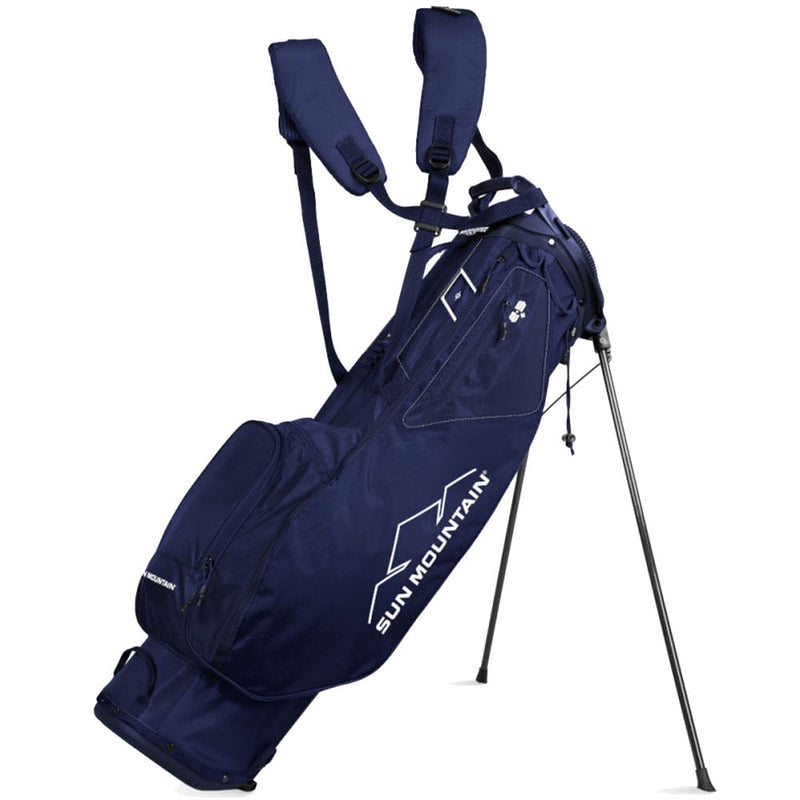
Sixteen pockets against six
The Vessel has ten exterior and six interior pockets, plus a magnetic antimicrobial rangefinder pocket. The Sun Mountain has six in total: velour-lined valuables, a full-length apparel pocket, a ball pocket, a beverage pouch and the rest. On a shop floor the sixteen wins that argument in about four seconds, because more pockets look like more bag.
We have made the case before that six pockets is enough and reach is the spec worth paying for, and this pairing is the clearest illustration of it in the catalogue. A round opens roughly four pockets. Which four is decided by how the bag stands, not by how many exist. What the Vessel genuinely buys you is not the count — it is the quality of the ones you use: the magnetic rangefinder pocket is a properly good piece of design, the enclosed full-length dividers stop the club-shaft rattle that eventually wears grips, and a putter slot on a carry bag is a real thing rather than a marketing line.
What the extra ten pockets also buy you is ten pockets' worth of fabric, zips and structure that you are carrying up a hill.
Both have carbon-fibre legs, which is the tell
Here is the detail that reframes the whole comparison. Both bags use carbon-fibre legs. That is the expensive, weight-saving component, and it is on the three-pound bag and the seven-and-a-half-pound bag alike. So the weight difference is not a case of one being engineered and the other not. Both are engineered. They are engineered towards opposite ends.
Sun Mountain spent its carbon budget getting a full-feature bag under three pounds, and then stopped adding things. Vessel spent its carbon budget offsetting the weight of leather, hardware and sixteen pockets, and got to seven and a half. Neither has cut a corner. They have made a decision, and the decision is about what a golf bag is for.
The question is how long you intend to own it
This is where I think the real split sits, and it is not the one the spec sheets set up. The Sun Mountain 2.5+ is an excellent bag with a ripstop nylon body, and ripstop nylon is a consumable. Walk with it every round, leave it in a car boot through a winter, and in some number of years you will replace it, without much feeling about the matter. That is not a criticism. It is the design working: light, capable, replaceable.
The Vessel is built on the other premise entirely — synthetic leather, sealed zippers, leather pulls, enclosed dividers — and it is sold direct from Vessel rather than through the usual retail chain, which is part of the same proposition. It is a bag you are expected to still be using in a decade, and the people who own one tend to talk about it the way people talk about a watch. Our review of it landed on that word: it feels like a luxury good, and it carries better than something that heavy has any right to.
So the honest question is not which bag is better. It is whether you want a golf bag to be a thing you replace or a thing you keep. If you have never once had a feeling about a golf bag, that is a complete answer in itself and it points at the Sun Mountain.
Who should buy neither
Trolley golfers and buggy golfers, and this is the largest group reading this. If your bag spends its round strapped to a push cart or a buggy rail, you are paying a carry-bag premium for a stand system you do not deploy and a strap you never put on. Everything you actually want — depth, a proper full-length apparel pocket, a top that does not need to be narrow — lives in the cart bags instead, usually for less money.
Skip the Vessel specifically if you walk and carry every round. It is a superb bag, and at seven and a half pounds it is the wrong tool for that job, whatever the strap system does to soften it. Skip the Sun Mountain specifically if your bag has to hold a jacket, a jumper, a full waterproof set and a dozen balls in October, because six pockets and a small footprint are a discipline and the 2.5+ will not pretend otherwise.
The one I would buy
I would buy the Sun Mountain 2.5+, and I would not think about it for long. I walk, the 2.5+ is the lighter bag by a margin nothing else in the comparison overcomes, and the money left over is a meaningful amount of golf. The stand bags guide has the rest of the field.
But I would not tell anyone who bought the Vessel that they had got it wrong, because they are not solving the same problem. If you ride or push most weeks, if the bag is going to be with you for ten years, and if you are the sort of person for whom the object matters, the Player V Pro is the best version of that idea anyone currently makes. The mistake is only ever buying one of these while believing you are buying the other.
Frequently asked
- How much heavier is the Vessel Player V Pro than the Sun Mountain 2.5+?
- About four and a half pounds. Vessel lists the Player V Pro at 7.55 pounds in the seven-way top and 7.75 pounds in the fourteen-way, before the strap and rain hood. Sun Mountain lists the 2.5+ at around 1.3kg, which is under three pounds, before the rain hood. Note that the Vessel figure also excludes its strap system, so the two numbers are not measured on quite the same basis.
- Is the Vessel Player V Pro worth the money?
- It depends on whether you carry. It is built as a downsized staff bag in tour-grade synthetic leather with sixteen pockets, fully enclosed full-length dividers, a dedicated putter slot and a magnetic rangefinder pocket, and it is designed to last many years rather than a few seasons. For a golfer who rides or pushes and wants one bag for the next decade, that case holds. For a golfer who carries every round, the weight makes it the wrong tool regardless of build quality.
- Which stand bag is best for walking and carrying?
- Of these two, the Sun Mountain 2.5+, by a wide margin. At around 1.3kg it is less than a third of the Vessel's weight while still offering a nine-inch four-way top with full-length dividers, six pockets, carbon-fibre legs and a dual X-Strap harness. Weight is the specification that matters most for a golfer on foot, because the cost of carrying is paid in the closing holes rather than at the first tee.
- Should a trolley golfer buy a premium stand bag?
- Usually not. A stand bag strapped to a push cart or buggy never deploys its legs and never uses its strap system, which are the two components you paid a premium for. A cart bag of similar quality generally offers more storage, better pocket access from the seated or strapped position, and costs less. Stand bags earn their money on the shoulder.
Read next
Review
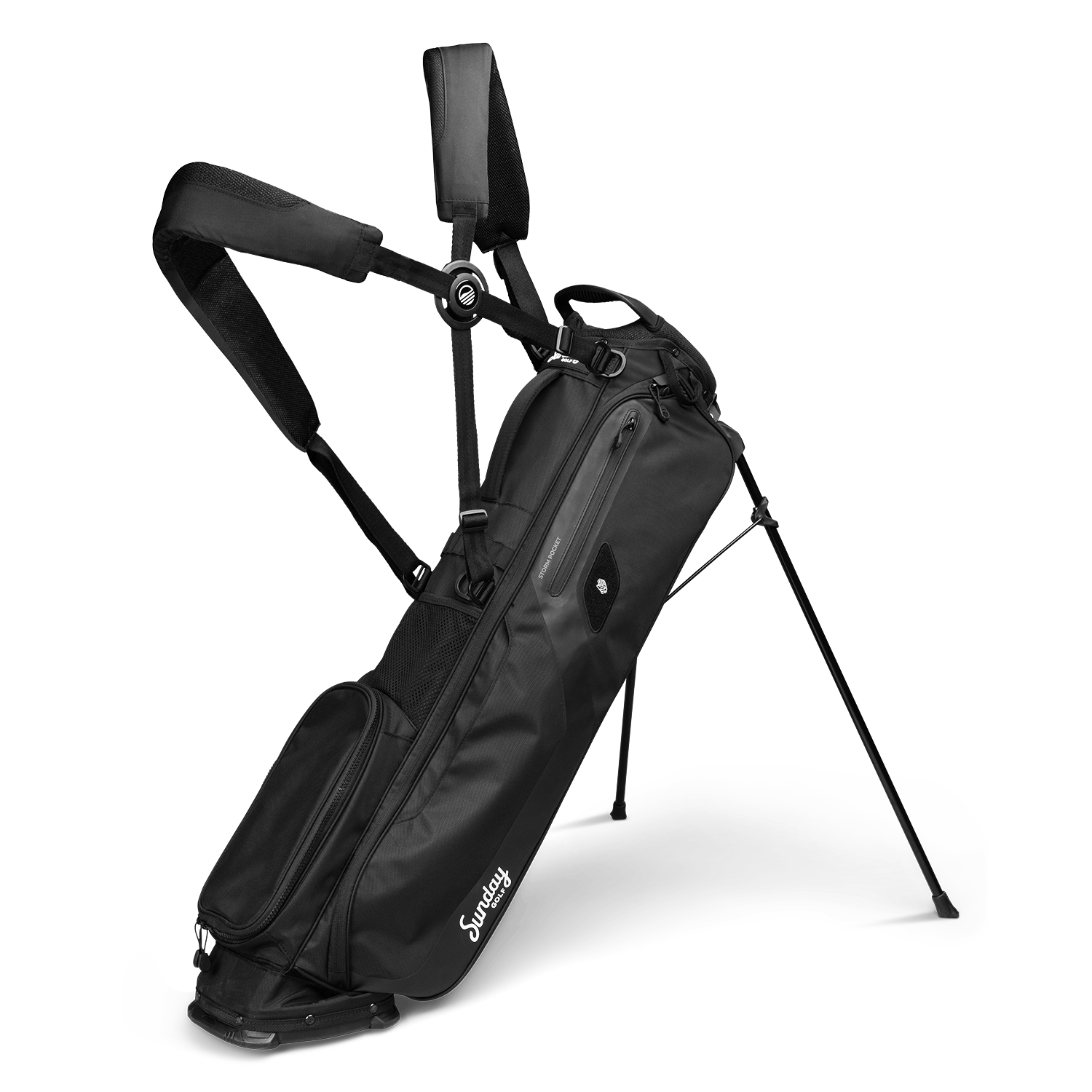
8.6/10Sunday Golf El Camino review: the featherweight bag that made walking cool again
At 1.8kg the El Camino weighs less than two dozen balls, yet it still carries ten-plus clubs, keeps two cans cold and stands rock-steady on the tee. For the walking golfer who's cut back to a half-set, it's close to perfect — as long as you're not trying to lug a full 14.
Versus
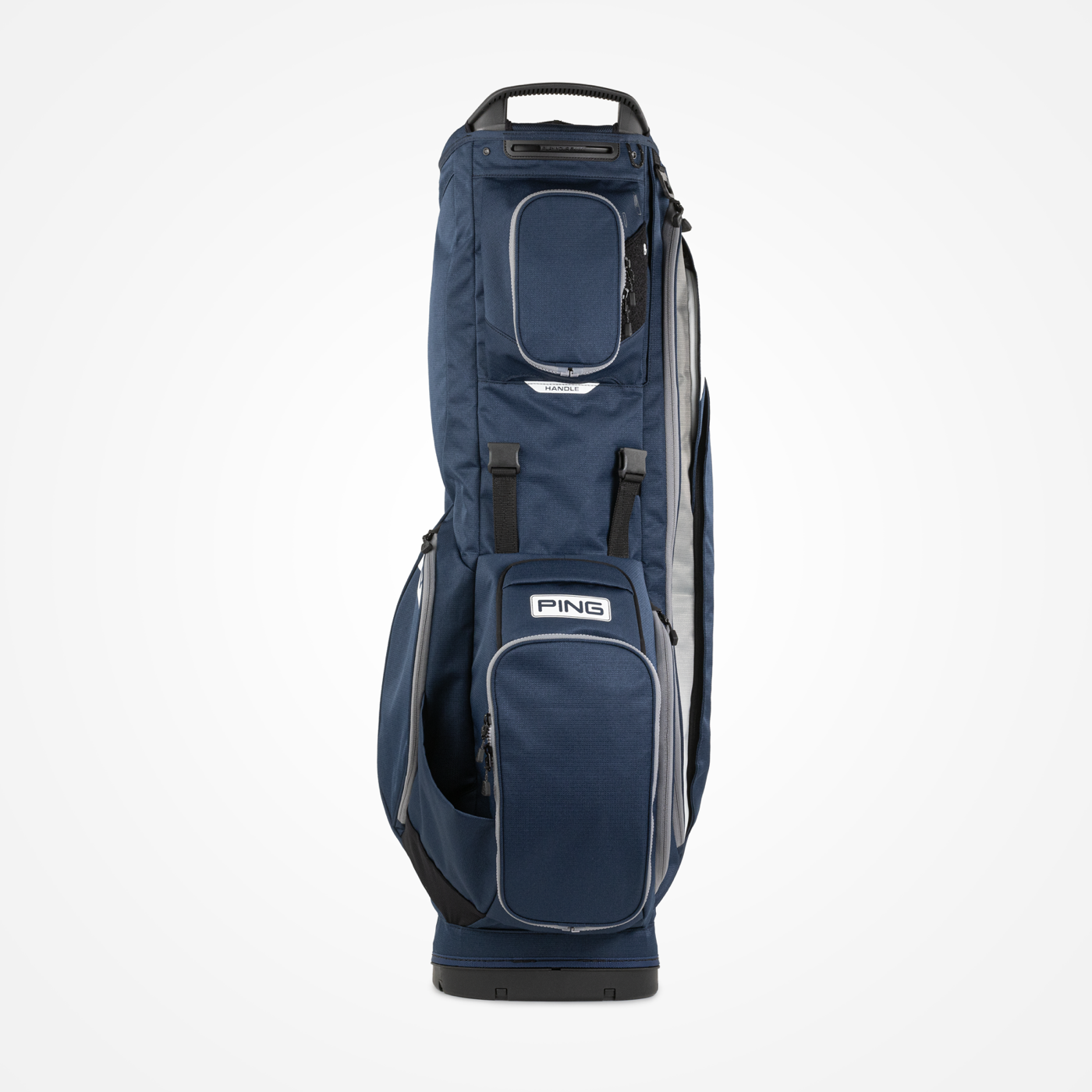
Stand bag vs cart bag: which one's right for you?
Buy the wrong one and you'll fight it every round. The choice is simpler than the wall of bags suggests — it's about how you get round.
Review
8.4/10Vessel Player V Pro review: the carry bag that feels like a luxury good
Stupidly nice to own, genuinely good to carry — if you can stomach the price, almost nothing else feels like this.