
Six pockets is enough on a golf bag, and reach is the spec worth paying for
Across six bags in our own catalogue the pocket count runs from six to thirteen. A golfer opens about four of them in a round, and which four is decided by how the bag stands rather than how many were fitted.
By Tom Whitaker · Staff Writer
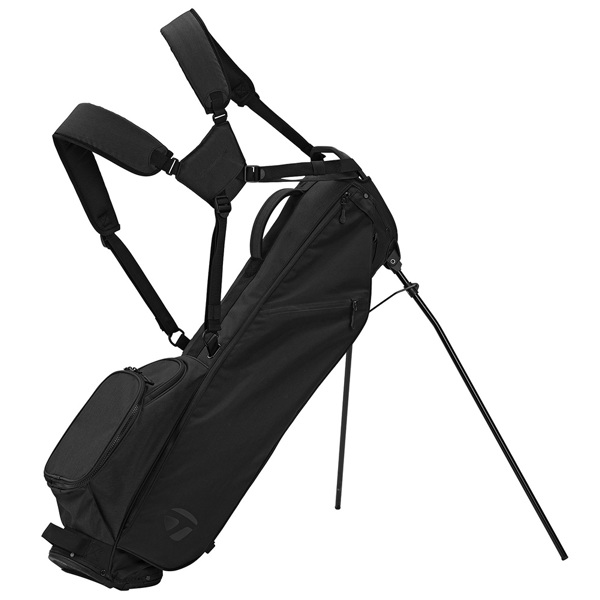
TaylorMade
TaylorMade FlexTech Carry Stand Bag
ifrothgolf earns a commission on purchases made through these links, at no extra cost to you. It never changes what I recommend. Full disclosure.
Pull six bags off our own shelves and count the zips. The TaylorMade FlexTech Carry has six pockets. The Cobra UltraLight Pro Cart Bag has thirteen. Between them sit a seven, a ten, an eleven and another ten, and every one of those numbers is printed on a swing tag in a larger font than the thing that actually decides whether you use them.
Here is the position, and for a lot of you it points at a cheaper bag than the one you were about to buy. Six pockets is enough for most golfers, and the spec worth paying for is how many of them you can open with one hand from where the bag is standing. Count is a manufacturing decision. Reach is a design decision, and only one of the two shows up on the fourth hole in the rain.
What an extra pocket physically is
Every pocket on a bag is a panel, a zip, a lining and a run of stitching. It adds weight, it adds a thing that can fail, and it adds somewhere for cargo to accumulate. The last of those is not a joke. Storage creates contents — the museum of dead gloves and unknown bananas we catalogued in your golf bag is too big exists because a pocket was available, not because anything needed carrying.
So the honest question on the shop floor is not how many pockets a bag has. It is which jobs need a home, and whether the bag puts each of those homes somewhere your hand goes.
Four pockets do the work
Time yourself over a round and the list barely varies. Balls and tees, opened twice. A glove, a phone, a rangefinder — the quick-access pocket, opened on most tees and most approaches. Valuables, opened once at the start and once at the end. A layer, opened when the weather turns or at the halfway hut. That is four, and everything beyond it is either a cooler, a specialist slot or dead space.
Which is why the FlexTech Carry is not the compromise it looks like on paper. Six pockets, one of them a dedicated water bottle pocket, on a bag that weighs roughly 1.4kg with a 3-way top and magnetic Leg Lock legs. If you carry, that is the whole list covered, and the seven pockets you did not buy are seven pockets of fabric you are not walking four miles with.
Reach changes completely depending on how the bag stands
This is the part the bag wall cannot show you, because in a shop every bag is standing upright on a rail in a position it will never occupy again.
On your back, you have two pockets. Whatever sits at hip height on the side facing away from you, and whatever you can hook a thumb into without unshouldering the straps. Everything else requires stopping, taking the bag off and putting it back on, which nobody does more than twice a round. This is precisely why a water bottle pocket placed low and outboard is a genuinely good feature on a carry bag and a decorative one on a cart bag.
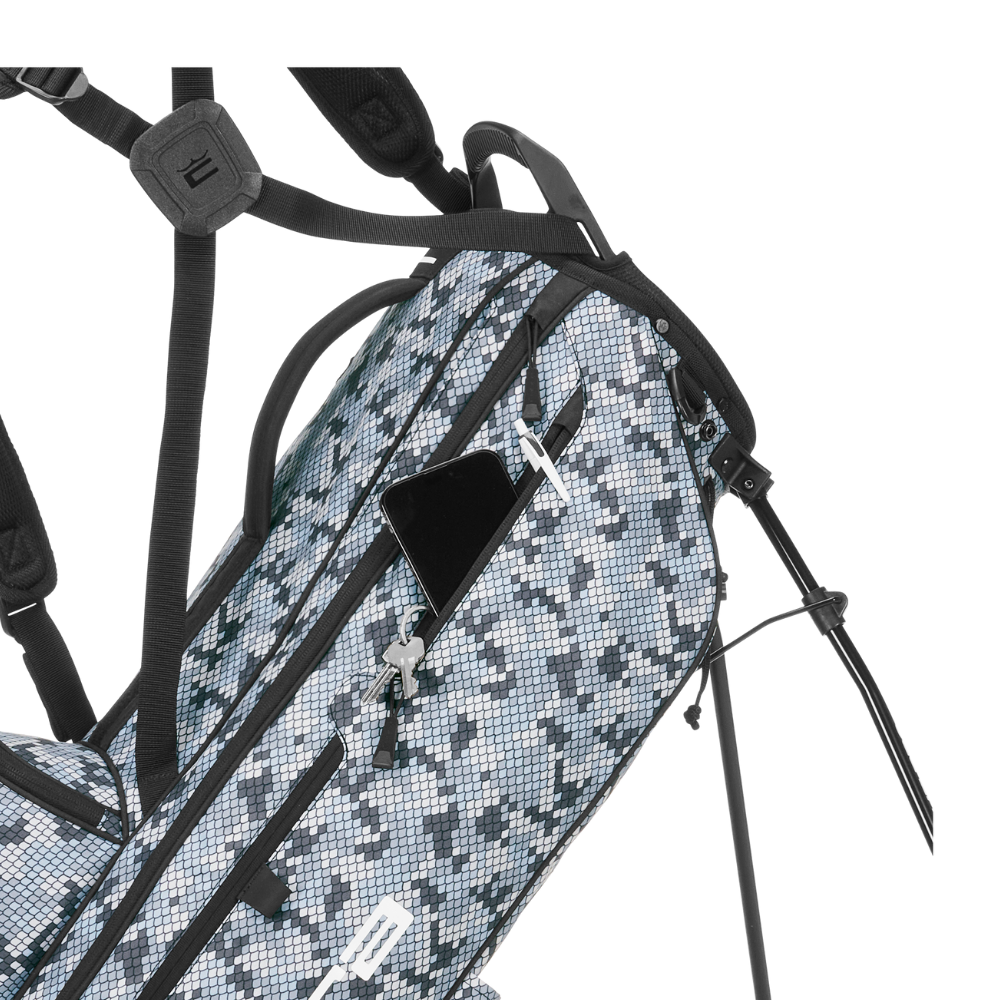
On its legs, the bag lies at an angle and half of it faces the ground. A stand bag deployed on a fairway is tilted maybe forty degrees, which puts one whole face of the bag towards wet grass and the other towards the sky. The pockets on the underside are not merely awkward, they are being pressed into the turf. The Cobra UltraLight Pro Stand Bag handles this properly for a 2.24kg bag: seven pockets, a magnetic-close valuables pocket and a dedicated rangefinder slot, both of which sit where a standing golfer's hand already is. A rangefinder pocket you have to lift the bag to open is a rangefinder pocket you stop using by the sixth.
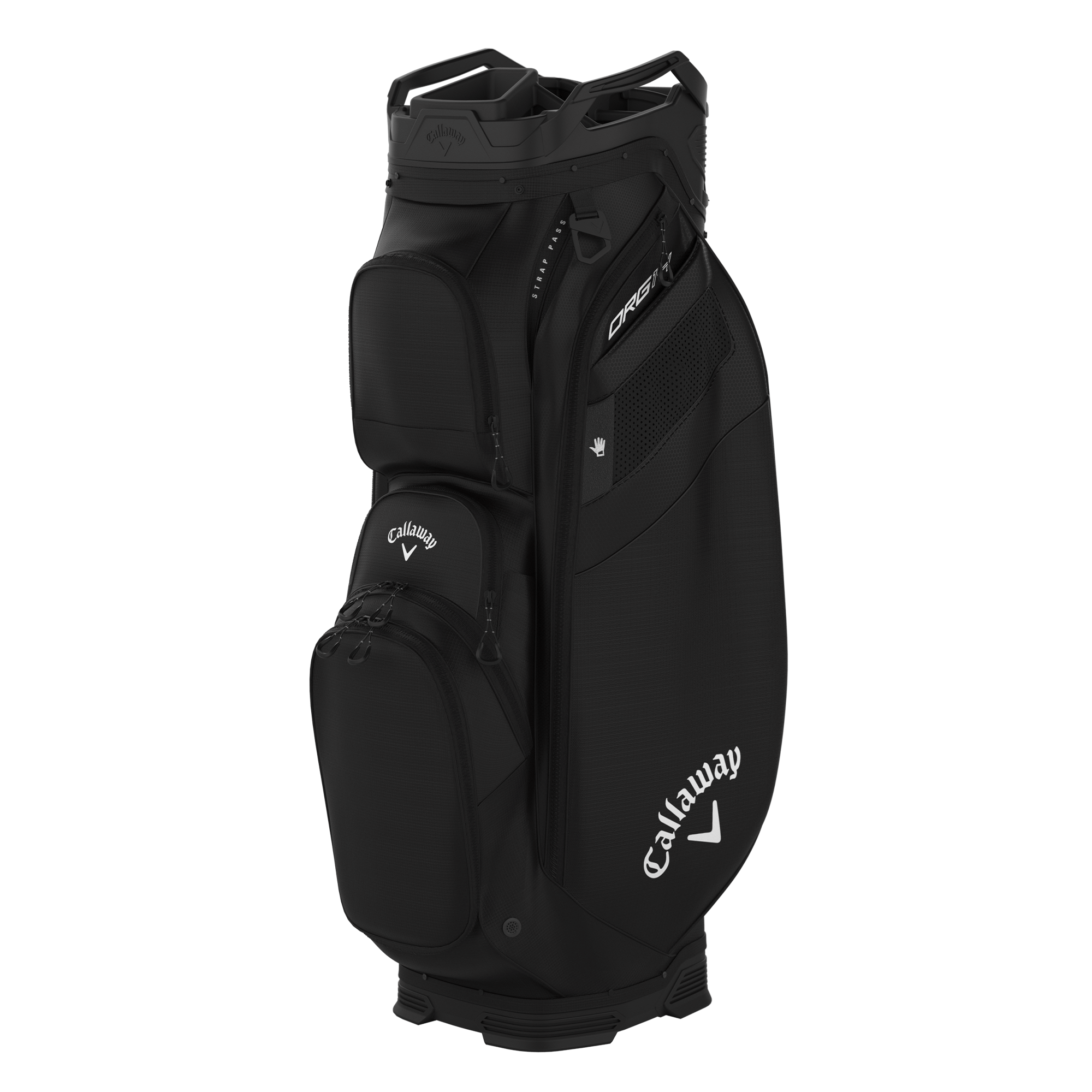
Strapped upright on a trolley, almost everything is reachable and symmetry starts to matter. A cart bag sits vertical at roughly waist height, so the constraint is no longer height but which side of the trolley you are standing on. The Callaway ORG 14 puts a front-facing GPS pocket and a magnetic-closure pocket for a phone or rangefinder where a walking golfer's hand arrives, which is the layout question worth asking. And the one genuine trap in this position — a strap running across your best pocket rather than behind it — we have already covered in the cart bag spec nobody checks, along with why a pass-through base is not optional.
The three pockets worth paying for
A lidless or magnetic quick-access pocket at hand height. The pocket you open most is the one you open while holding a club, a glove or a scorecard, which means a two-handed zip is a design failure. Magnetic closures exist for exactly this and they are the single best pocket feature in the category.
A velour-lined valuables pocket that is not the same pocket. Car keys and a rangefinder lens in one compartment is how a lens ends up scratched and how a phone screen picks up the marks nobody can account for. The separation is the feature, not the lining.
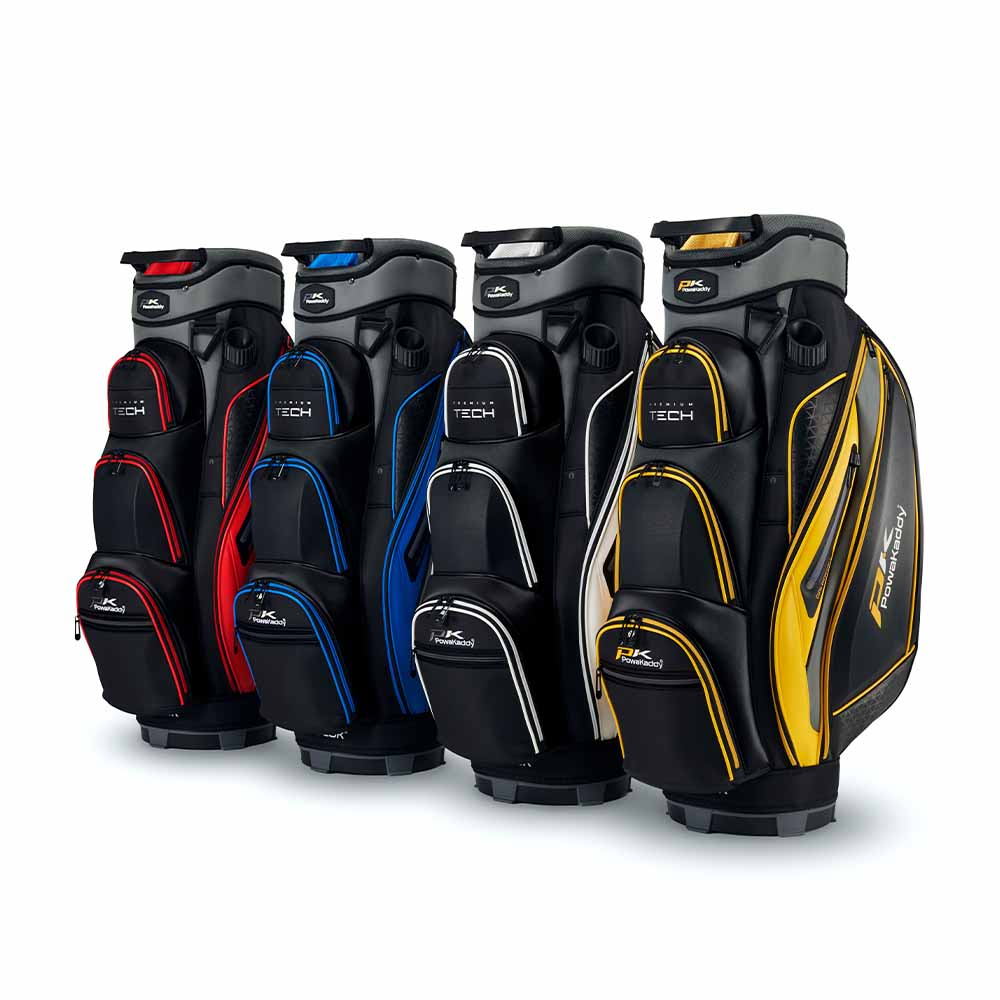
A full-length apparel pocket, but only if you carry a layer. This is the one that genuinely distinguishes a big cart bag from a small one, and it is the honest reason to go beyond six. The PowaKaddy Premium Tech carries around ten pockets including full-length apparel storage and velour-lined valuables, on a Key-Lock base built specifically for PowaKaddy trolleys. If a waterproof jacket and a midlayer live in the bag from October to March, that pocket earns its weight. If they live in the car, it is a long empty tube you are pushing up a hill.
The cooler pocket is a lining, not a fridge
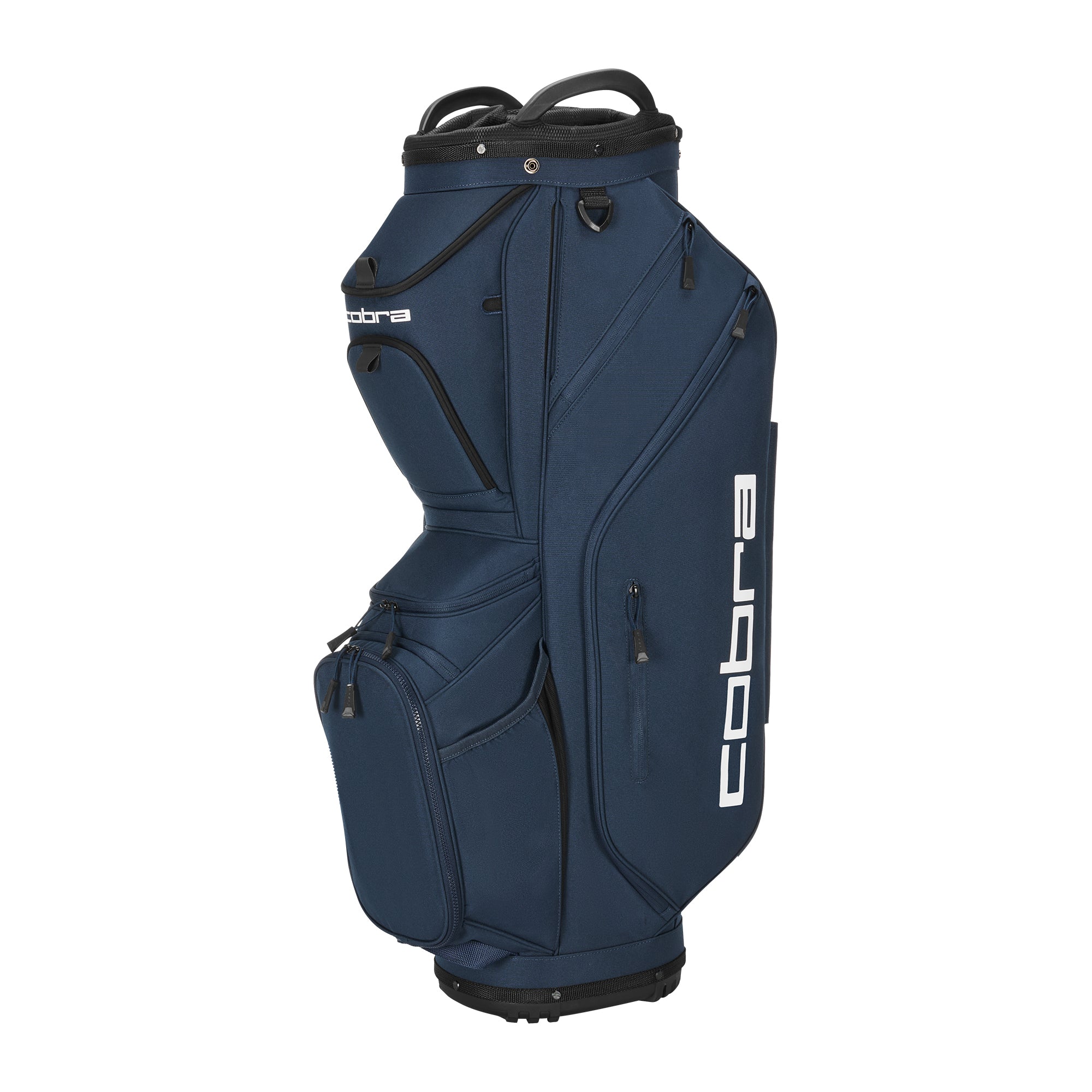
Every bag on this page has one, and the description is doing a lot of work. An insulated pocket has no refrigeration in it. It slows the rate at which a cold thing warms up, which means it is genuinely useful with a frozen bottle at eight in the morning and close to useless with a warm can at two in the afternoon. The Cobra UltraLight Pro Cart Bag has an oversized one that will swallow a few cans, and thirteen pockets in total at 2.84kg, which is light for the amount of bag you are getting. Buy it for the layout, not for the physics.
The purchase that is usually wasted
A thirteen-pocket cart bag bought by somebody who walks. It is the most common mismatch in the category and it is entirely understandable, because the cart bag is the one that looks like the serious purchase on the wall. On your back, ten of those pockets are unreachable, all of them are weight, and the organisation you paid for is happening behind you where you cannot see it.
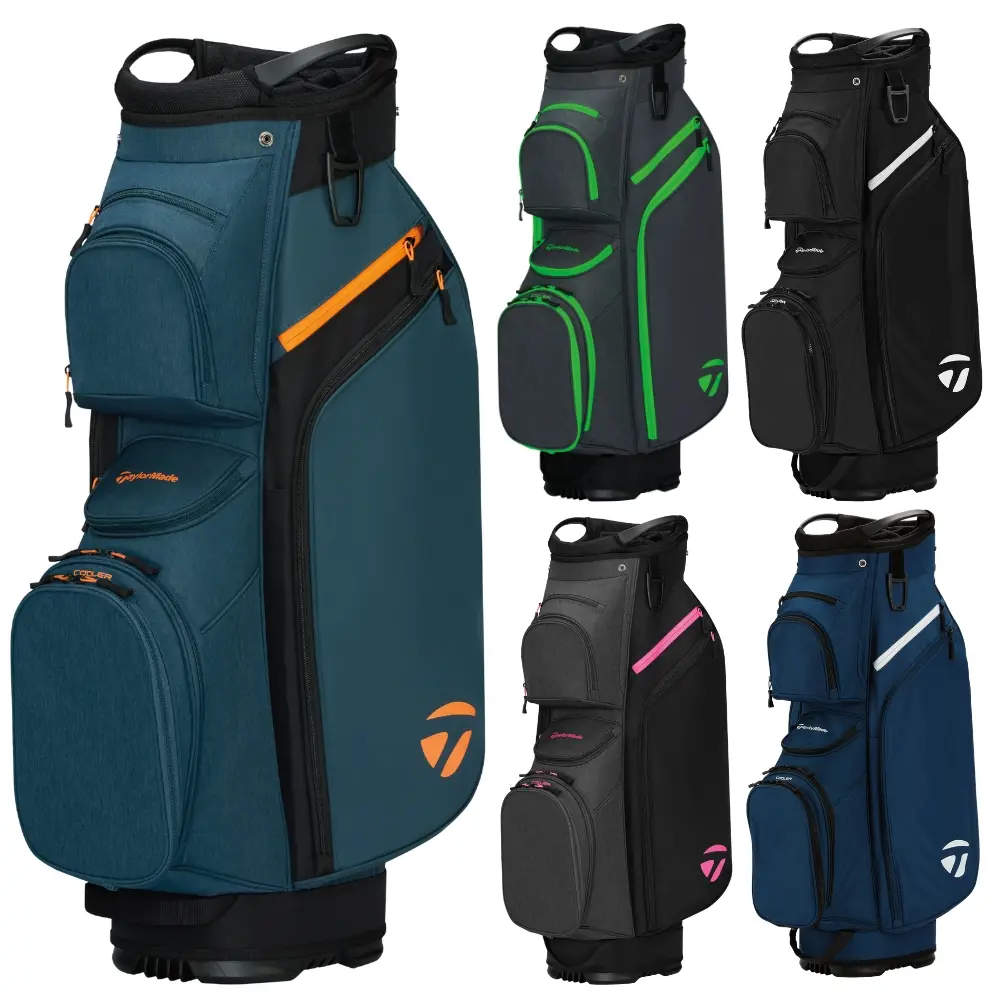
The mirror image is worth naming too. The TaylorMade Cart Lite has eleven pockets and a 360-degree zip-off ball pocket, which is a lovely thing on a trolley — the whole panel opens, you can reach every ball, and the bag never moves. Put the same bag on stand legs and that pocket is in the grass. Neither bag is wrong. They are answers to different questions about where the bag will be standing when your hand arrives.
Who can ignore all of this
Buggy riders. Your bag spends the round lying on a deck beside you at arm's length with every pocket exposed, reach is a non-issue, and you should simply buy whichever bag has the storage you want. The same goes for anyone whose bag lives permanently on an electric trolley they never unclip mid-round.
And if you are still choosing between bag types rather than layouts, stand bag against cart bag settles that faster than any pocket argument, while how to choose a golf bag covers the fit questions this piece deliberately skips.
The thirty-second test in the shop
Put the bag in the position it will actually live in. On your shoulders if you carry, on its legs if you walk with a stand bag, upright against a rail if it is going on a trolley. Then, without moving your feet and using one hand only, open the pocket you would keep a rangefinder in. Then the one with the balls. Then the valuables.
If all three are easy, the number on the swing tag does not matter. If any of them made you pick the bag up, it will make you pick it up forty times a season, and no amount of storage fixes it. The count is what the bag was sold on. Reach is what you actually bought.
Products mentioned in this article
TaylorMade
TaylorMade FlexTech Carry Stand Bag
Six pockets including a dedicated water bottle pocket, at roughly 1.4kg — the floor of the category, and enough for a walker.
Cobra
Cobra UltraLight Pro Stand Bag
Seven pockets with a dedicated rangefinder slot and a magnetic-close valuables pocket, at around 2.24kg.
Callaway
Callaway ORG 14 Cart Bag
Ten pockets with a front-facing GPS pocket and a magnetic-closure pocket sized for a phone or rangefinder.
TaylorMade
TaylorMade Cart Lite Bag
Eleven pockets and a 360-degree zip-off ball pocket — excellent strapped to a trolley, awkward on legs.
PowaKaddy
PowaKaddy Premium Tech Cart Bag
Around ten pockets including full-length apparel storage and velour-lined valuables, on a PowaKaddy-specific base.
Cobra
Cobra UltraLight Pro Cart Bag
Thirteen pockets, the most in our catalogue, with the magnetic valuables pocket sitting at hand height.
ifrothgolf earns a commission on purchases made through these links, at no extra cost to you. It never changes what I recommend. Full disclosure.
Frequently asked
- How many pockets does a golf bag actually need?
- Around six covers the jobs most golfers do in a round: balls and tees, a quick-access pocket for a glove, phone and rangefinder, a separate valuables pocket, a drinks pocket and somewhere for a layer. Bags with ten to thirteen pockets add coolers, apparel tubes and specialist slots, which are worth having if you ride or push a trolley and are mostly dead weight if you carry.
- What is the most useful pocket feature on a golf bag?
- A magnetic or lidless quick-access pocket positioned at hand height. It is the pocket you open most often, usually while holding a club or a glove, so a closure you can work one-handed matters more than the size of the compartment.
- Why can't I reach my stand bag's pockets on the course?
- A stand bag deployed on its legs leans at a steep angle, which turns one entire face of the bag towards the ground. Any pocket on that side is awkward at best and pressed into wet grass at worst. Check which pockets sit on the upper face when the legs are out, because those are the only ones you will use without lifting the bag.
- Does an insulated cooler pocket keep drinks cold?
- It slows warming rather than cooling anything down. There is no refrigeration in a bag pocket, only a lining, so it works well with something already frozen or chilled and does very little for a drink that started warm.
Read next
Review
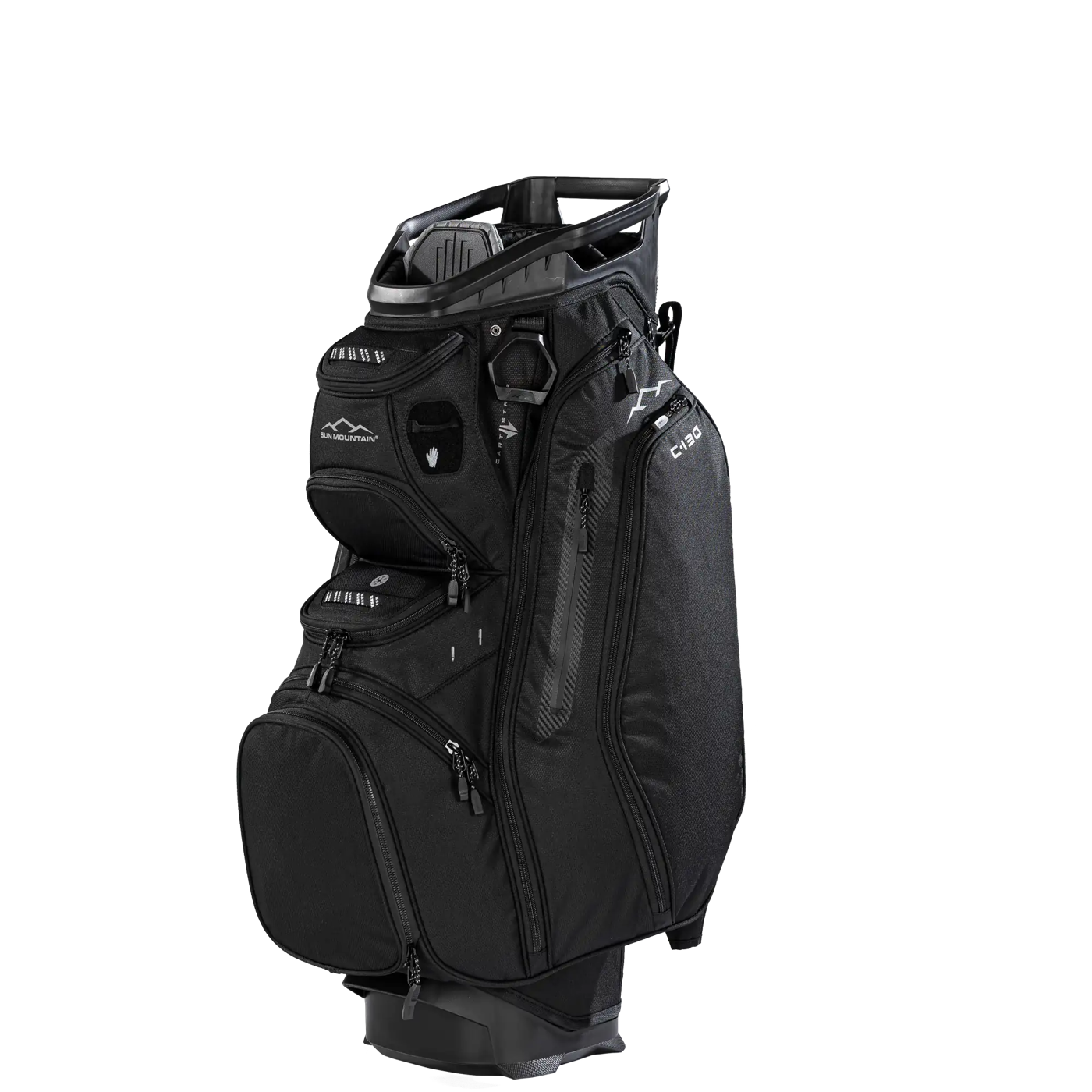
8.6/10Sun Mountain C-130 review: the cart bag with a place for everything
Cavernous, brilliantly organised and built to lock onto a trolley — if you ride or push every round, this is the one.
Explained
The 14-way divider is the most oversold feature in golf, and it's quietly wrecking your grips
A slot for every club sounds like the end of the tangle. It isn't — what actually matters is whether those 14 dividers run to the base, and most shoppers never check.
Explained
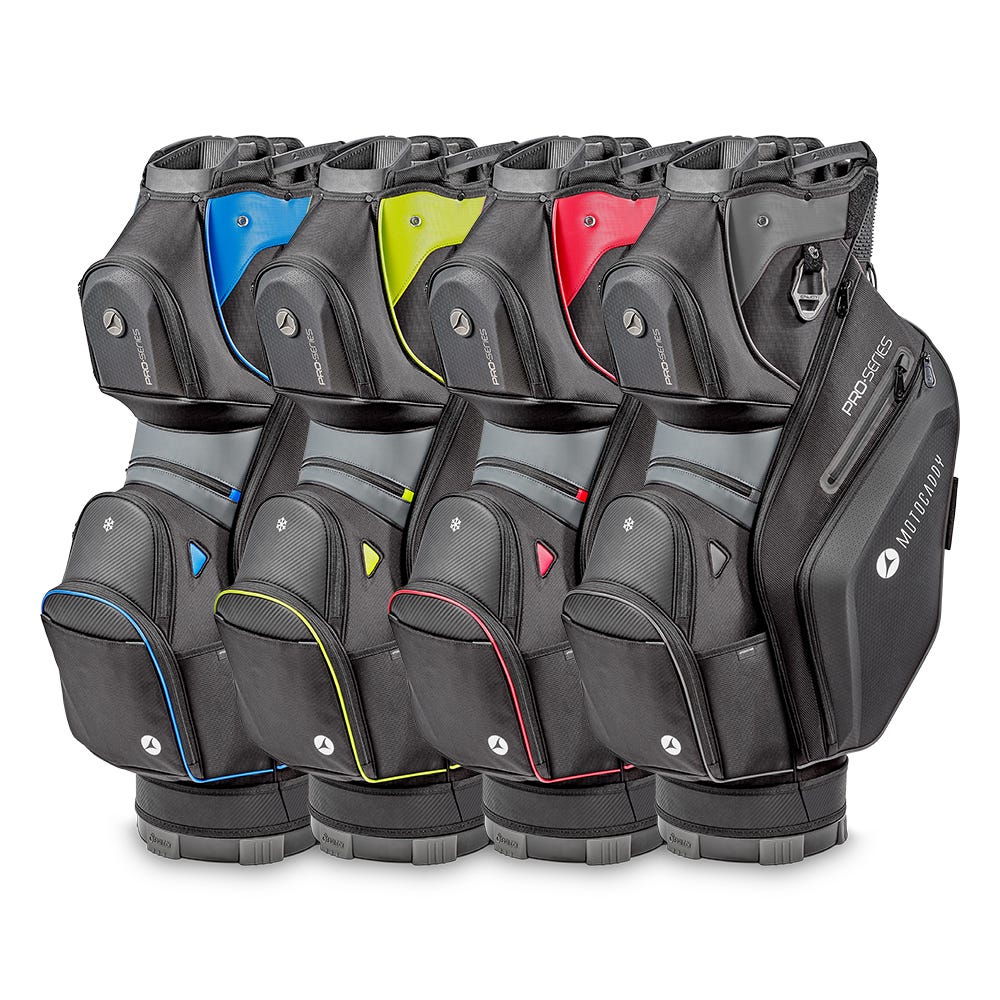
Nobody checks what a cart bag weighs, and the car park is where you find out
Pocket count is the number every shopper reads. Empty weight, and whether the base actually locks to the trolley it will live on, is the number that decides whether you like the bag.