
The 14-way divider is the most oversold feature in golf, and it's quietly wrecking your grips
A slot for every club sounds like the end of the tangle. It isn't — what actually matters is whether those 14 dividers run to the base, and most shoppers never check.
By Tom Whitaker · Staff Writer
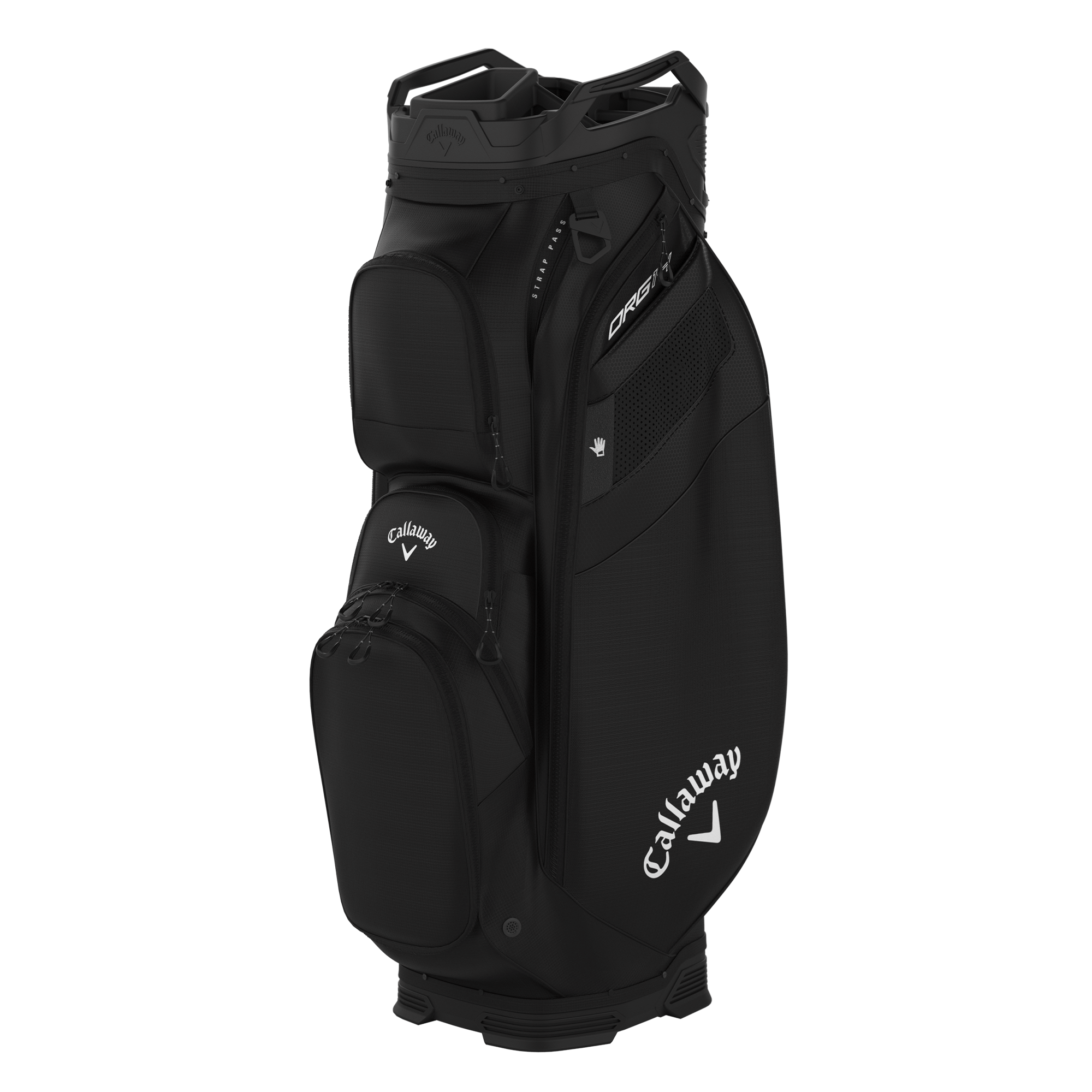
Callaway
Callaway ORG 14 Cart Bag
ifrothgolf earns a commission on purchases made through these links, at no extra cost to you. It never changes what I recommend. Full disclosure.
Walk the bag wall and count the tops. Fourteen slots, moulded, colour-flashed, sold as the end of the tangle: a home for every club, no more wrestling a 7-iron out of a knot of shafts. It is the single most repeated selling point in the category, and it is close to meaningless on its own. The number on the lid tells you how many openings there are at the collar. It tells you nothing about what happens in the eleven inches below it, which is where every problem you are trying to solve actually lives. A bag like the Callaway ORG 14 earns the name because its dividers are individual and run the whole way down; plenty of bags wearing the same number do not, and nothing on the swing tag will tell you which one you are holding.
Reach in and feel where the divider stops
Here is the test, and it takes four seconds in a shop. Put your hand into a slot and push down. On a properly built bag, the divider wall runs all the way to the base — a full-length channel, so each shaft travels in its own tube from collar to floor. On a lot of bags, the wall stops a few inches down and the rest of the bag is one open cavity with a moulded lid on top. Fourteen holes, one bucket. The shafts splay, cross and rest against each other the moment you tip the bag onto a trolley, and by the fourth hole you are pulling clubs through a lattice again, exactly as you were with the cheap 4-way you replaced. The top was never the feature. The channel is.
The spec line most people skip
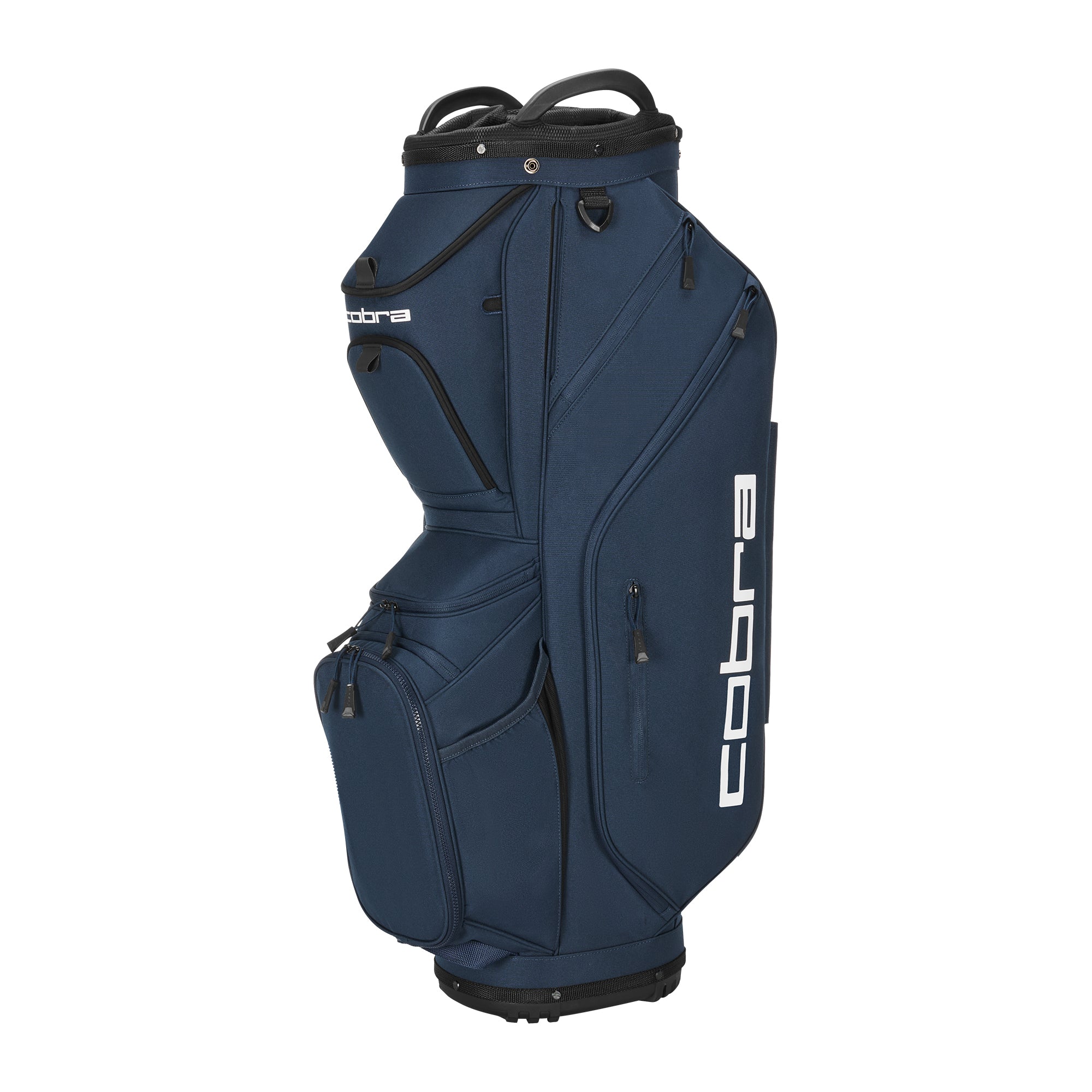
Our own catalogue makes the point better than any argument could. The Cobra UltraLight Pro Cart Bag at $275 is a genuinely good bag — 2.84kg, thirteen pockets, a proper pass-through trolley base — and it is honestly listed with a 14-way top of which three dividers are full length. That is not a criticism of Cobra; it is the normal arrangement across the market, and it is the reason the bag can be that light. But it means the bag sells you the number and delivers the number in the top moulding, while the organisation you imagined is partial. Know which one you are buying. If weight is what you wanted, that trade is a good one. If you bought it because fourteen meant fourteen, you have paid for a feature you did not get.
What crossing shafts actually cost you
Two things, and neither shows up until the bag is a year old. The first is grips. When shafts cross below the collar, every club you pull comes out under friction, dragging its grip along a neighbouring shaft or ferrule. Grips already wear from your hands; this is a second, entirely avoidable source of abrasion, and it works hardest on the clubs you use most. The second is crowns. Woods and hybrids ride high in a bag, and when a chunky driver head has to lean because the slot below it is shared, it spends the round tapping against a wedge head or a neighbouring shaft on every kerb and cart path. The chip you find on a fairway crown almost never came from the turf. It came from the bag, on the way to the turf. Full-length channels are, first and foremost, damage control.
The bags that actually do it
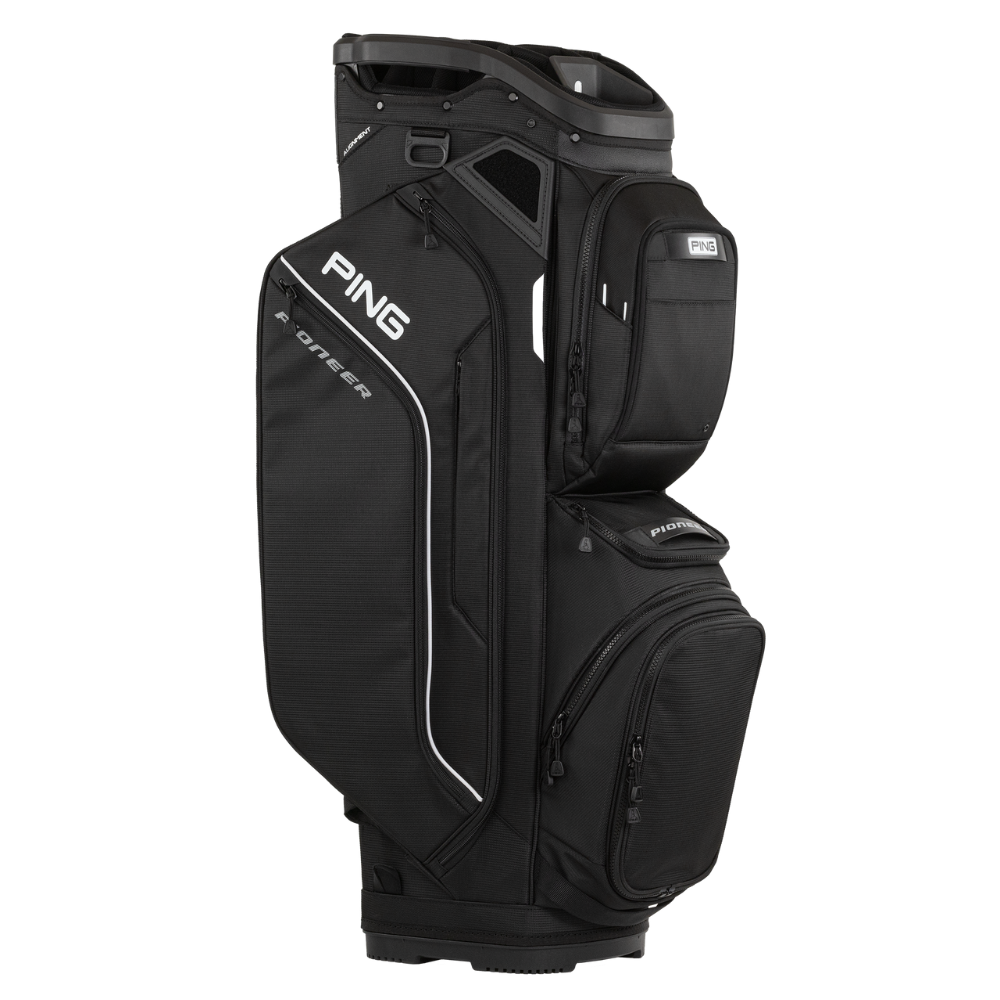
The Ping Pioneer at $250 is the maximalist answer: a 15-way top with padded full-length channels, sixteen pockets and around thirty-five litres of storage, plus an enlarged putter well sized for oversized grips and chunky mallets. It is a heavy bag at roughly 3.6kg and it is unapologetic about that — this is a trolley-only proposition — but nothing in it rattles, and the padding on the channels means the shafts are not clacking against bare moulding either.
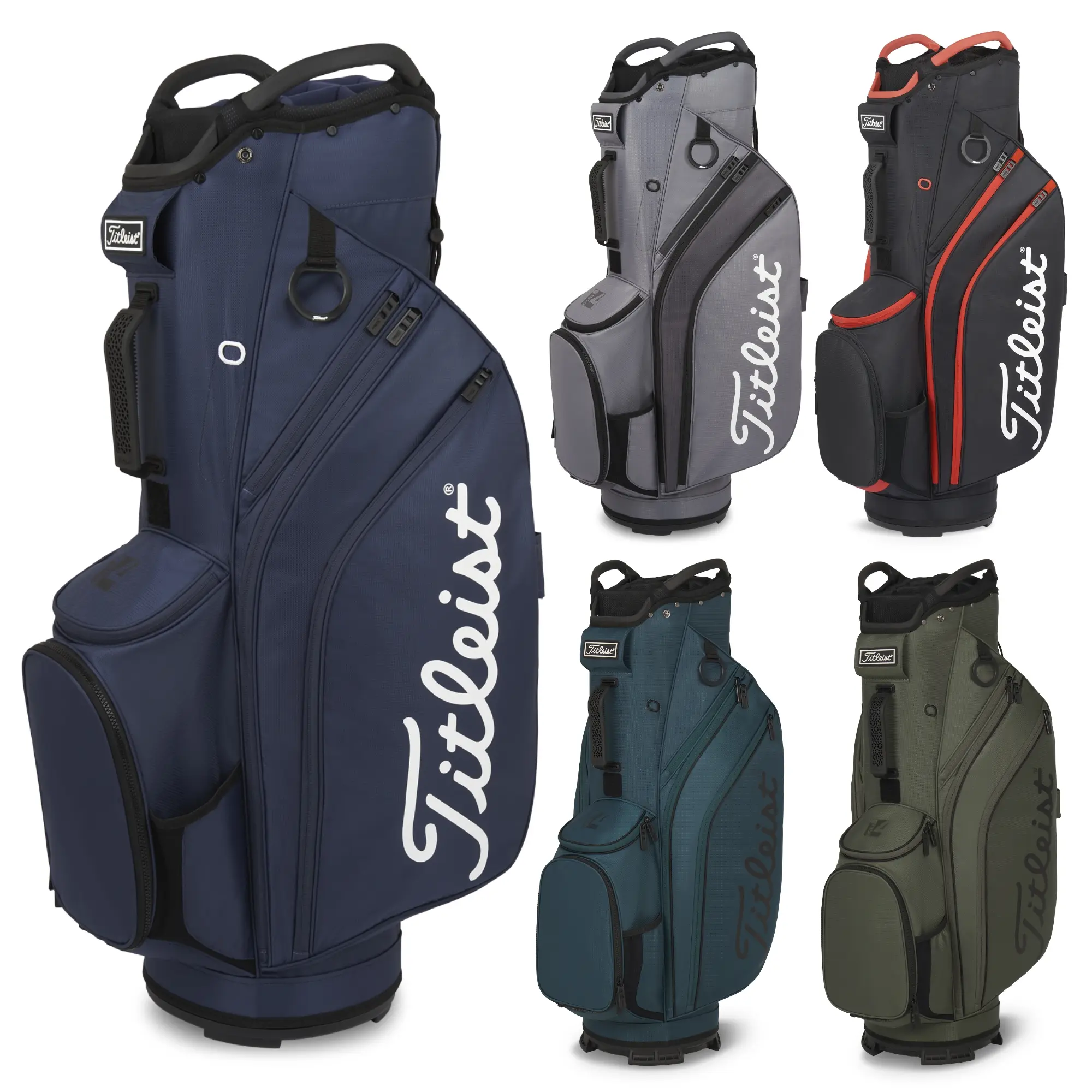
The ORG 14 at $300 does it with individual full-length dividers and a dedicated putter well, ten well-planned pockets and a cart-strap pass-through, at just under 3.1kg — with the honest caveat that the standard version is water-resistant rather than waterproof, so if you play through British winters look at the HD version instead. The Titleist Cart 14 at $225 is the quiet grown-up of the group: full-length sleeves, a putter well, and a symmetrical layout so the pockets open from either side of the trolley, with a strap pass-through that keeps them reachable when the bag is cinched down. That last detail is worth more than it sounds. A bag whose best pocket sits under the trolley strap is a bag you stop using properly by the third hole.
The four things to check, in order
First, do the dividers run to the base, and how many of them? Ask the number, not the top count. Second, is the putter channel wide enough for a fat counterbalanced grip or an armlock — plenty of 14-ways have fourteen identical narrow slots and no home for the one club with an oversized grip. Third, is the top opening big enough for a modern 460cc driver head plus a headcover, or are you going to be wrestling it past a neighbour every tee? Fourth, is there a cart-strap pass-through, so the strap runs behind the pockets instead of across them. Those four beat the divider count every time, and only one of them is ever printed on the swing tag.
If you walk, weight beats organisation
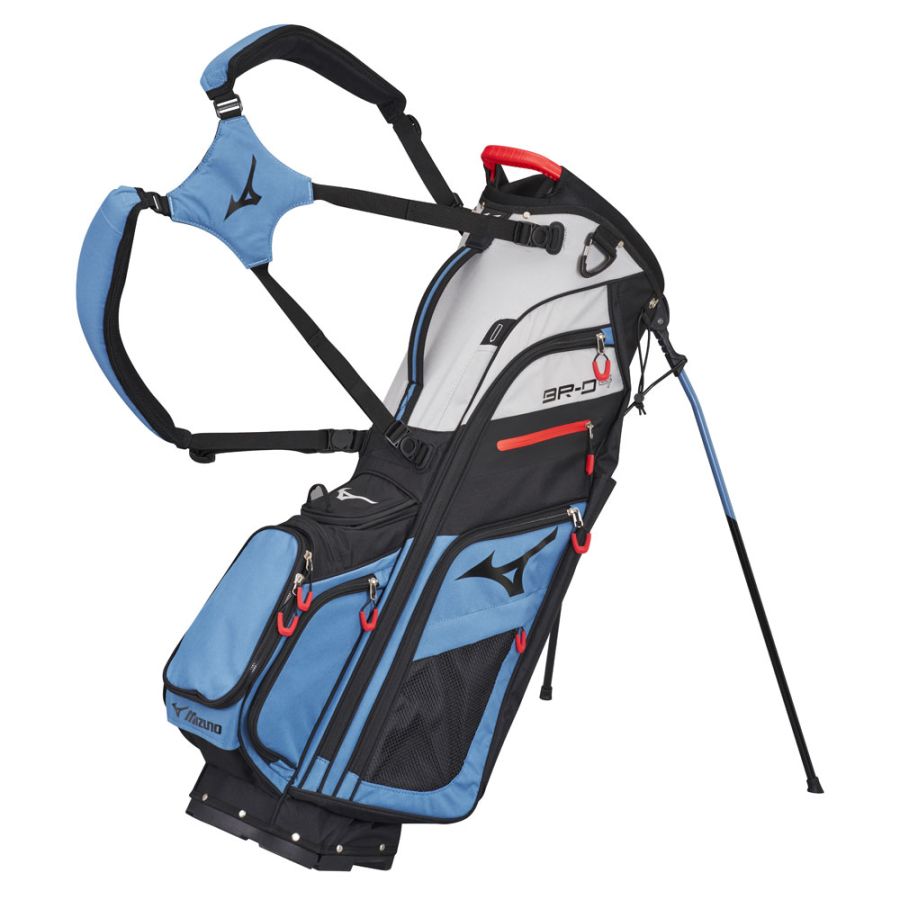
And now the part that undoes half of the above. If you carry, none of this matters as much as mass. Every divider wall is fabric, moulding and stitching, and a 14-way top on a stand bag is a straightforward weight penalty for organisation you are unlikely to need — you are pulling clubs from a bag tilted on its legs, not a vertical tube on a trolley. The Mizuno BR-D4 at $225 is the sane version: a 6-way top where all six channels run full length, twelve pockets, auto-deploy legs, a universal base with a cart-strap channel, and around 2.5kg empty. Six proper channels beat fourteen partial ones, and your shoulder gets the difference back over four hours. If you are still deciding which camp you are in, stand bag vs cart bag settles it faster than the bag wall will.
Who should skip the 14-way entirely
Skip it if you walk, full stop — buy a well-built 6-way stand bag and spend the saving on anything else. Skip it if the only 14-way in your budget is a cheap one, because a budget 14-way is almost always the worst of both worlds: the weight of the organisation with none of the channels. Buy the full 14 or 15 if you ride or push every round, you carry a rangefinder, a spare layer and a drink, and you genuinely want each club in its own tube for the next five seasons. That golfer exists and the Ping, the Callaway and the Titleist all serve them well. Just buy it for the channels, not the number on the lid. The rest of the bag field is in our best cart bags picks, and how to choose a golf bag covers the fit questions this piece doesn't.
Products mentioned in this article
Callaway
Callaway ORG 14 Cart Bag
Individual full-length dividers all the way down, plus a dedicated putter well.
Titleist
Titleist Cart 14 Bag
Full-length sleeves and a symmetrical pocket layout that opens from either side of the trolley.
Ping
Ping Pioneer Cart Bag
A 15-way top with padded full-length channels and a putter well that swallows oversized grips.
Cobra
Cobra UltraLight Pro Cart Bag
A genuine 14-way top, but only three of those dividers run full length — read the spec.
Mizuno
Mizuno BR-D4 Stand Bag
Six full-length channels and around 2.5kg — proof fewer dividers can be the better bag.
ifrothgolf earns a commission on purchases made through these links, at no extra cost to you. It never changes what I recommend. Full disclosure.
Frequently asked
- What does full-length divider actually mean?
- It means the divider wall runs from the collar all the way to the base of the bag, so each shaft sits in its own channel for its full length. Many bags have a 14-way top moulding but only a handful of walls that reach the bottom, leaving the rest of the interior as one open cavity where shafts still cross.
- Does a 14-way top really damage grips?
- A partial one can. When shafts cross below the collar, every club is pulled out under friction against a neighbouring shaft or ferrule, which abrades the grip on top of normal hand wear. Crowded slots also let driver and hybrid heads lean and tap against each other, which is where most bag-inflicted crown chips come from.
- Is a 4-way or 6-way bag worse than a 14-way?
- Not necessarily. A 6-way with full-length channels organises the bag more effectively than a 14-way whose dividers stop a few inches down, and it's lighter and quieter with it. Count the full-length channels, not the openings.
- What should I check besides the dividers?
- Whether the putter channel is wide enough for an oversized or counterbalanced grip, whether the top opening clears a modern driver head with its headcover on, and whether there's a cart-strap pass-through so the strap runs behind the pockets rather than across them.
Read next
Review
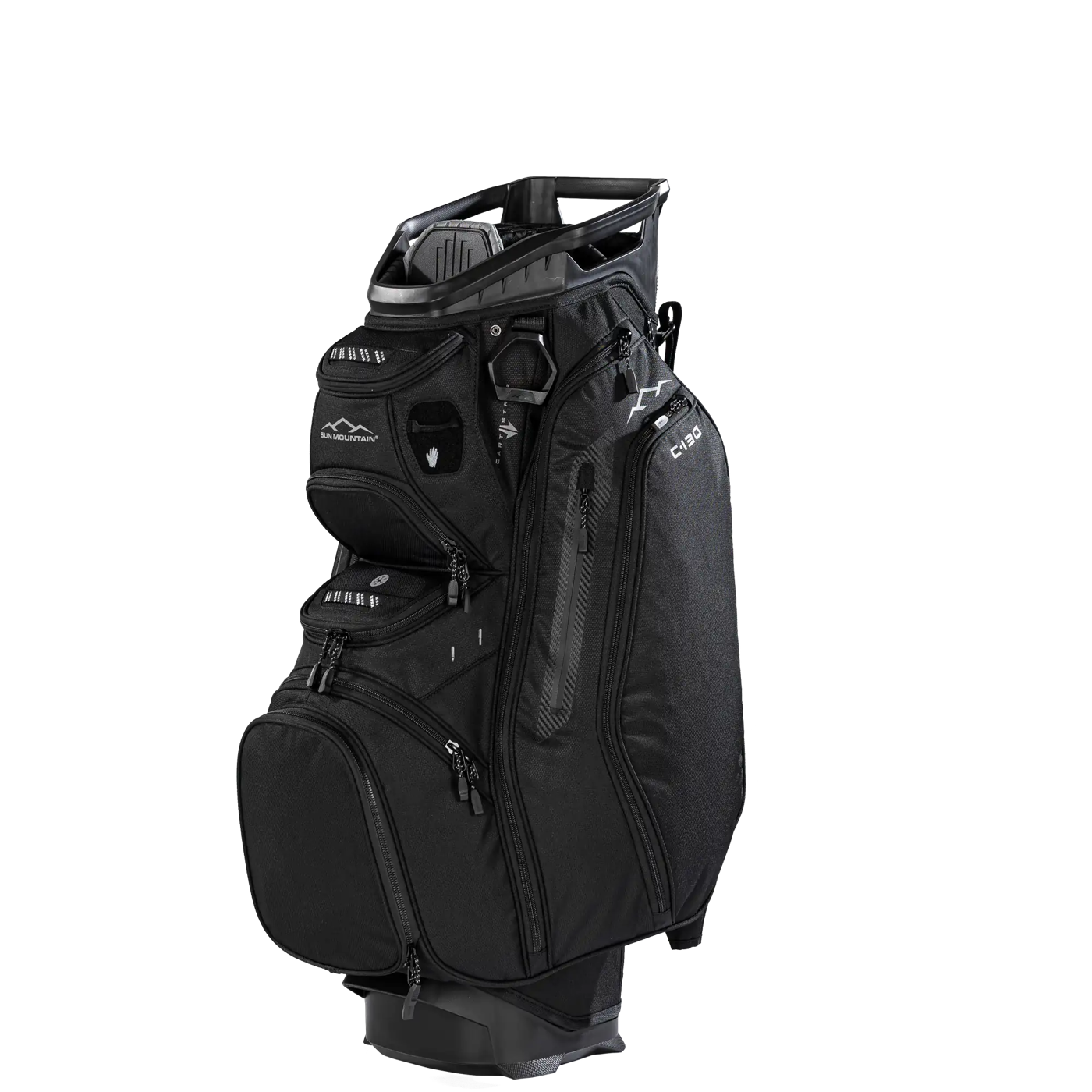
8.6/10Sun Mountain C-130 review: the cart bag with a place for everything
Cavernous, brilliantly organised and built to lock onto a trolley — if you ride or push every round, this is the one.
Explained
Nobody checks what a cart bag weighs, and the car park is where you find out
Pocket count is the number every shopper reads. Empty weight, and whether the base actually locks to the trolley it will live on, is the number that decides whether you like the bag.
Explained
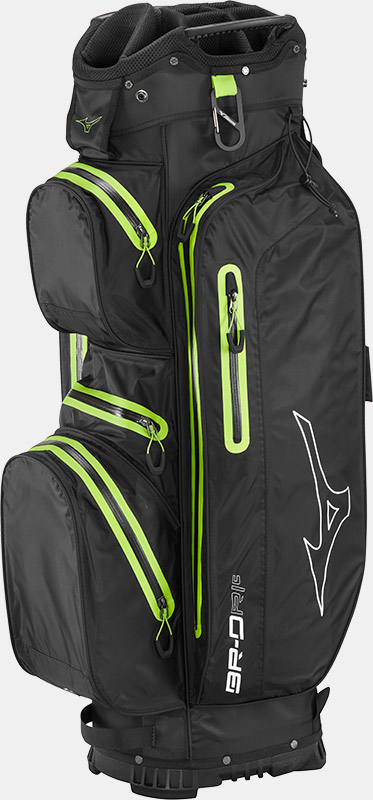
Golf bag waterproofing splits two ways: rain hoods keep the clubs dry, welded seams keep the bag dry
Every bag in the shop claims some version of weather protection, and the claims describe two completely different products. One protects your grips for four hours. The other stops the bag itself turning into a sponge until March.