
How to choose a golf bag: cart, stand, or carry for how you actually play
The right bag is decided by how you get round the course — so match it to your real golf, not the bag the pros carry.
By Tom Whitaker · Staff Writer
 Explained
Start here: choose your bag by how you get round, not by features. If you walk and carry, you want a stand bag. If you ride or push a trolley, you want a cart bag. If you play quick nines, you want a minimalist carry bag. And if you do a bit of everything, a light hybrid splits the difference. Everything else is detail.
Before the four bag types, it helps to understand the one factor that quietly decides whether you will still like your bag in two years: how it copes with load and weather over a long season. A bag is the only piece of kit you handle on every single shot's worth of walking, and the small mechanical details, how the strap distributes weight, how the legs deploy, whether the zips survive a wet winter, compound over hundreds of rounds into either a non-issue or a daily annoyance. The sections below go past the cart-versus-stand decision into the things that actually determine comfort and longevity, because a bag that fits your back and shrugs off rain is worth far more than one with an extra two pockets.
The walker who carries: a stand bag
If your default round is on foot with the bag on your back, weight and strap comfort are everything. A good stand bag sits between roughly two and three kilos, has sturdy retractable legs, and, most importantly, a balanced dual strap that spreads the load across both shoulders. The Ping Hoofer 14 is the long-running benchmark here: light enough to carry all day, with a strap system owner consensus praises for staying comfortable deep into the back nine, plus a fourteen-way top so every club has a home.
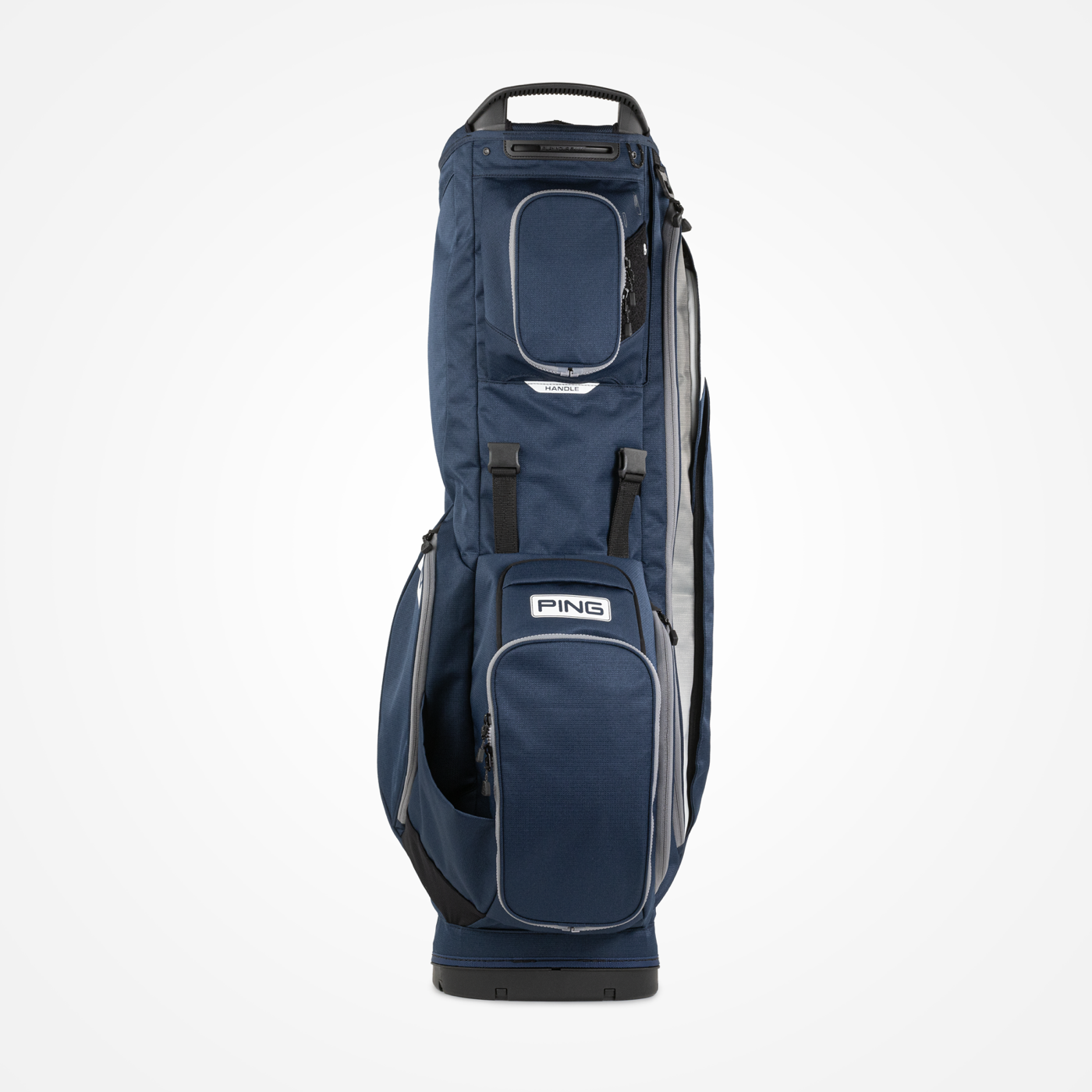
When you shop stand bags, prioritise the strap system above the pocket count. A bag you carry for four hours lives or dies on how it sits on your back. Full-length club dividers are a nice bonus that stops clubs tangling, but they add a little weight, decide whether the tidiness is worth it to you.
The rider or trolley user: a cart bag
If the bag spends the round strapped to a cart or push trolley, the maths flips entirely. You no longer care about carry weight, so you can have everything: more storage, bigger pockets, and a layout designed to be reached from behind. The Sun Mountain C130 is a classic cart bag, a cart-friendly base that locks onto a trolley without twisting, forward-facing pockets you can actually open while it is strapped down, and enough storage for a full day's kit.
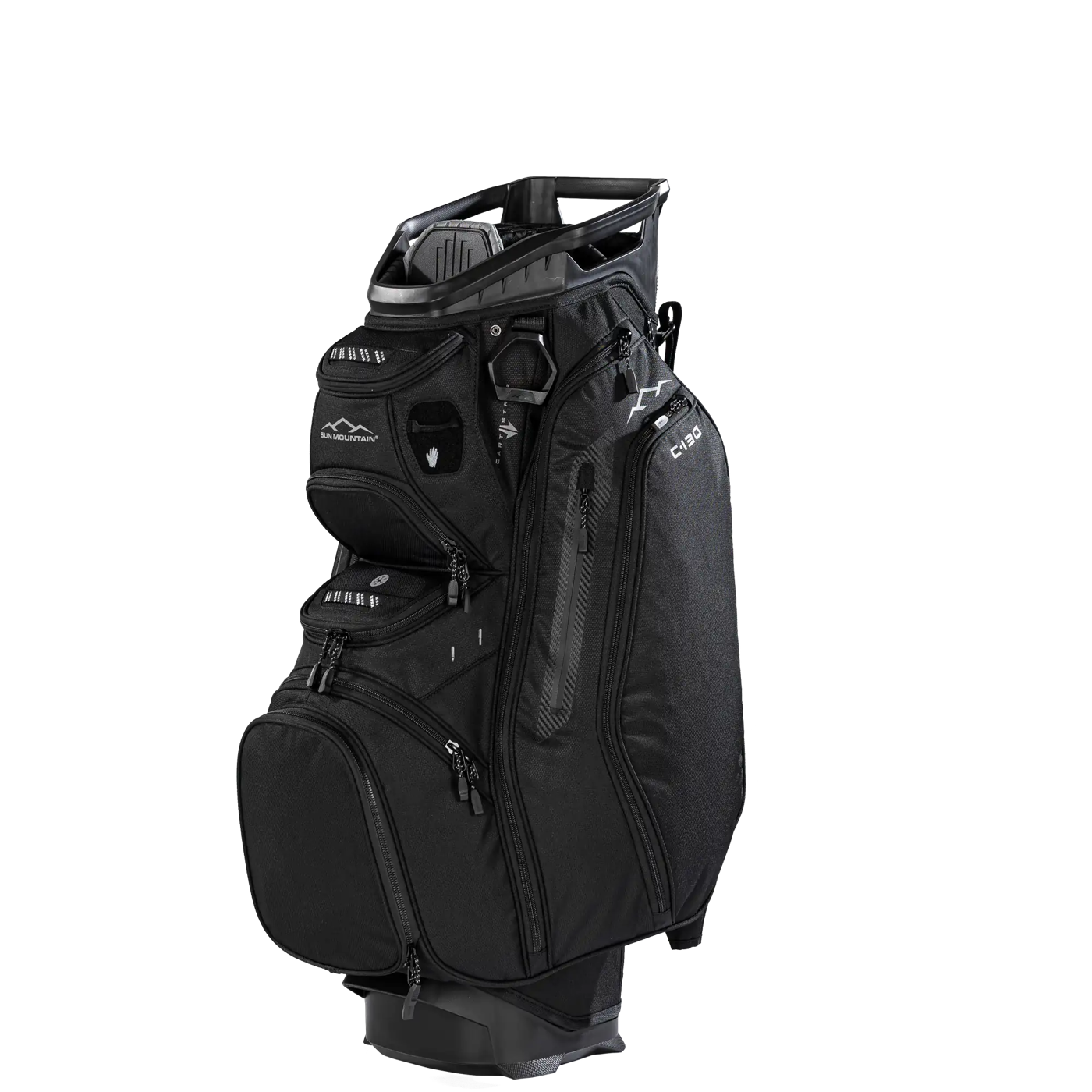
The detail that separates good cart bags from frustrating ones is pocket orientation. On a cart, the back of the bag faces away from you, so pockets need to angle forward to stay usable. A cart bag with carry-bag pocket placement will have you unstrapping it every time you want a glove. Check the layout, not just the storage volume.
The quick-nine minimalist: a Sunday bag
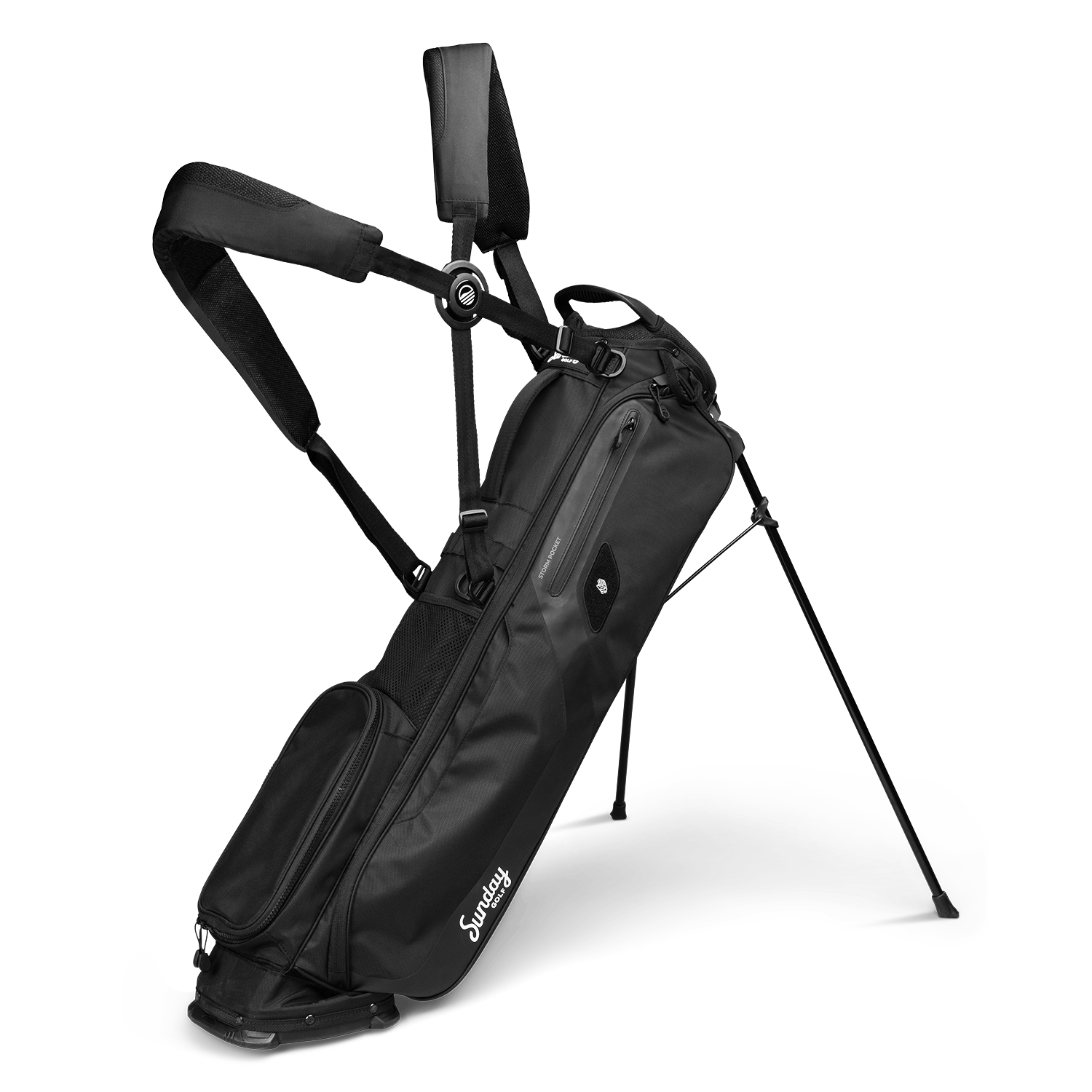
Sometimes you do not need fourteen clubs and a kitchen sink. For a twilight nine, a practice session, or a walkable executive course, an ultralight carry bag is the most enjoyable way to play. The Sunday Golf El Camino is built for exactly this, feathery, simple, and easy to sling over a shoulder with a half set inside. It will not replace your main bag, but for fast, low-fuss golf it is liberating.
The trade-off is honest: minimal storage and fewer dividers. This is a second bag for a specific kind of round, not a do-everything purchase. Buy it knowing what it is for, and it will be one of the most-used pieces of kit you own.
The one-bag golfer: a light hybrid
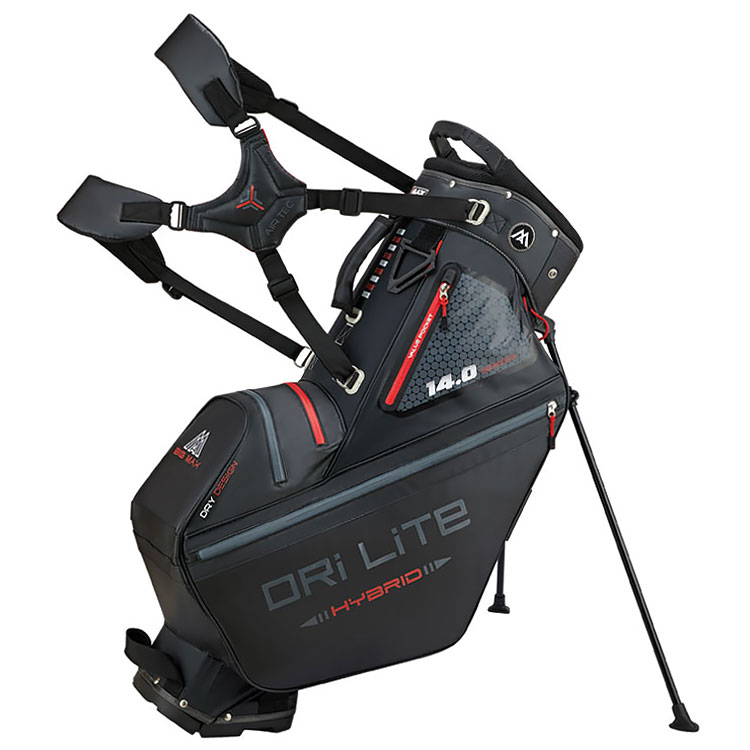
If you switch between walking and riding and refuse to own two bags, a hybrid is the compromise that actually works. It keeps stand legs for the days you carry, but uses a cart-stable base and a strap that stows away for the days you ride. The Big Max Dri Lite Hybrid is a strong example, light enough to carry occasionally, stable enough to live on a trolley, and weather-resistant for the rounds when the sky opens.
A hybrid will never be the lightest carry bag or the most cavernous cart bag, and that is the deal you accept for owning one bag instead of two. For the golfer who genuinely alternates between methods week to week, that compromise is the right one.
Weight, straps and the back you have to protect
The number on the spec sheet is only half the weight story; how the load sits on you is the other half, and it is the half that hurts. A balanced dual-strap system, the kind that pulls the bag in tight to your back and spreads the weight across both shoulders, will feel dramatically lighter than a single strap carrying the same kilos, because it stops the bag swinging and twisting your spine with every step. Look for padded, adjustable straps with a hip or sternum connection, and a back panel that holds the bag away from sweating into your shirt. The cheapest way to ruin a walking round is a bag that loads one shoulder and rides low on your hips.
The stand mechanism matters more than buyers expect, because you deploy it forty or fifty times a round. Good legs splay wide and plant firmly even on a slope, with a base that grips rather than skids, and they retract cleanly when you lift the bag rather than catching on the strap. Cheap stand mechanisms get sticky, deploy at a lazy angle and let a loaded bag topple on uneven ground, which is how clubs get scratched and balls roll away. Pick the bag up, sling it, set it down and lift it again in the shop if you can; a stand system that feels reluctant on day one only gets worse as the springs and feet wear in over a season.
Pockets, durability and surviving the weather
Organisation is not about pocket count, it is about whether the pockets you reach for most are where your hand naturally goes. The ones that genuinely help are a velour-lined valuables pocket that will not scratch a phone or watch, a full-length apparel pocket big enough for a packed waterproof, and a couple of easy-access pockets at the top for balls, tees and a glove without breaking stride. A wall of small zips you never open is dead weight and marketing. Think about which three things you grab every few holes and make sure those live within an easy reach of where the bag sits, whether on your back or strapped to a trolley.
Durability and weather resistance are where cheap bags quietly fail first, and almost always at the zips and the base. Look for chunky, weather-sealed or water-resistant zips and a tough, reinforced base, because the base takes every drop onto a cart deck and every drag across a car boot. A fully waterproof bag with taped seams is a real upgrade if you play through wet winters, keeping a spare layer and your valuables genuinely dry rather than merely shielded. If you mostly play in the dry, a water-resistant fabric is plenty and saves weight. Either way, judge a bag's longevity by its zips, straps and base, the moving and load-bearing parts, not by how many compartments it advertises.
How to decide
Picture your last ten rounds. If most were on foot, buy the stand bag. If most were on a cart or trolley, buy the cart bag and stop worrying about weight. If you are buying a second bag for fast nines, the Sunday bag is a joy. And if your rounds are genuinely split, the hybrid saves you owning two. Match the bag to your real golf, and you will never resent carrying it.
Products mentioned in this article
Ping
Ping Hoofer 14 Stand Bag
The walker's choice: a benchmark stand bag with a comfortable dual strap and well-organised pockets.
Sun Mountain
Sun Mountain C-130 Cart Bag
The rider's choice: a full-feature cart bag with a cart-friendly base and forward-facing pockets.
Sunday Golf
Sunday Golf El Camino Stand Bag
The minimalist's choice: an ultralight carry bag built for a quick nine or walking a handful of clubs.
Big Max
Big Max Dri Lite Hybrid Tour Stand Bag
The do-it-all choice: a light hybrid with stand legs and a cart-stable base for golfers who switch between walking and riding.
ifrothgolf earns a commission on purchases made through these links, at no extra cost to you. It never changes what I recommend. Full disclosure.
Frequently asked
- How heavy should a carry stand bag be?
- Aim for roughly two to three kilos. Below that you sacrifice storage and durability; above it the bag becomes a chore to carry for a full round. Strap comfort matters as much as the raw weight.
- Why can't I just use a cart bag and carry it occasionally?
- Cart bags are heavier and lack a balanced carry strap, so they punish you on foot. Their pockets also face forward for cart access, which is awkward to reach when the bag is on your back.
- Is a hybrid bag a good first bag?
- It can be, if you genuinely alternate between walking and riding. If you mostly do one or the other, a dedicated stand or cart bag will do that job better for the same money.
- Do I really need fourteen-way dividers?
- No, but full-length dividers stop clubs tangling and protect shafts. They add a little weight, so it is a trade-off between tidiness and carry comfort, decide based on how precious your clubs are to you.
Read next
Review
7.9/10Full Swing KIT review: the tape measure decides this, not Tiger
Tour pedigree, TGL on ESPN, and radar good enough to be checked against a Trackman outdoors. It also wants eighteen to twenty feet of room, which rules out most of the garages people buy it for.
Versus
Trackman iO vs Uneekor EYE XO2: the year-one trap
Both mount overhead, both want ten feet of ceiling, and about $3,000 separates them on the shelf. Then Trackman's included first year runs out, and the gap starts growing by $1,100 a year.
Versus
Uneekor EYE XO2 vs Foresight GC3: ceiling or floor?
About $4,000 separates them, but they're not really rivals — one lives in your ceiling forever, the other sits on the floor and travels. The cheaper one is also the one with no subscription.