
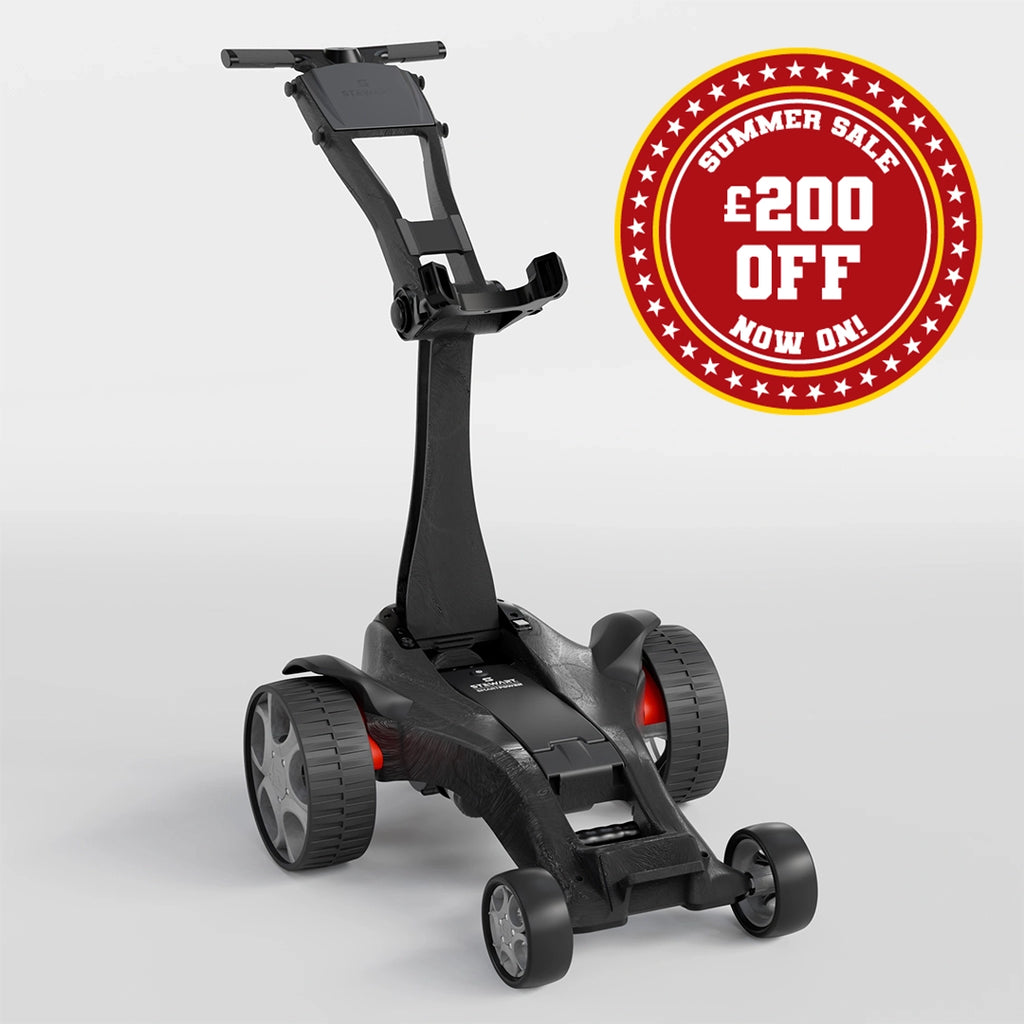
Stewart Golf's flagship electric trolley. It does the usual remote-control thing, but its party trick is Follow mode: pop the handset in your pocket and the trolley tracks you down the fairway on its own, adjusting speed and direction so you can walk with nothing in your hands. It is designed, engineered and hand built in Britain.
Best Remote & Follow Trolleys 2026
Let it follow you, or drive it yourself.
The most fun money you can spend on walking golf: trolleys that follow you down the fairway or drive ahead on a remote, so you walk the whole round hands-free. The Stewart Q Follow and Motocaddy M7 are the benchmarks — proven following tech, strong battery life and the build quality you'd want at this price — with PowaKaddy's RX1 and Stewart's Vertx close behind, and the Motocaddy M3 the sensible step down if you're happy driving by handset rather than being followed.
The first real choice is follow versus remote. Follow trolleys track a beacon you wear and trail a set distance behind you, which feels genuinely magical on an open fairway but can lose you in tight, tree-lined or crowded conditions. Remote models put a handset in your pocket and let you drive the trolley ahead to the next tee, which is more reliable and usually cheaper. After that it's battery range for your course's length, fold size for your boot, and how the thing handles slopes — downhill control braking matters far more than top speed.
These are a serious outlay with more electronics to go wrong than a simple push cart, so treat them as a luxury bought for the experience rather than a necessity. Honest note: if you mostly want to save your back, a good electric or push trolley does that for a fraction of the price — buy a follow or remote model for the genuine joy of an empty-handed round.
ifrothgolf earns a commission on purchases made through these links, at no extra cost to you. It never changes what I recommend. Full disclosure.
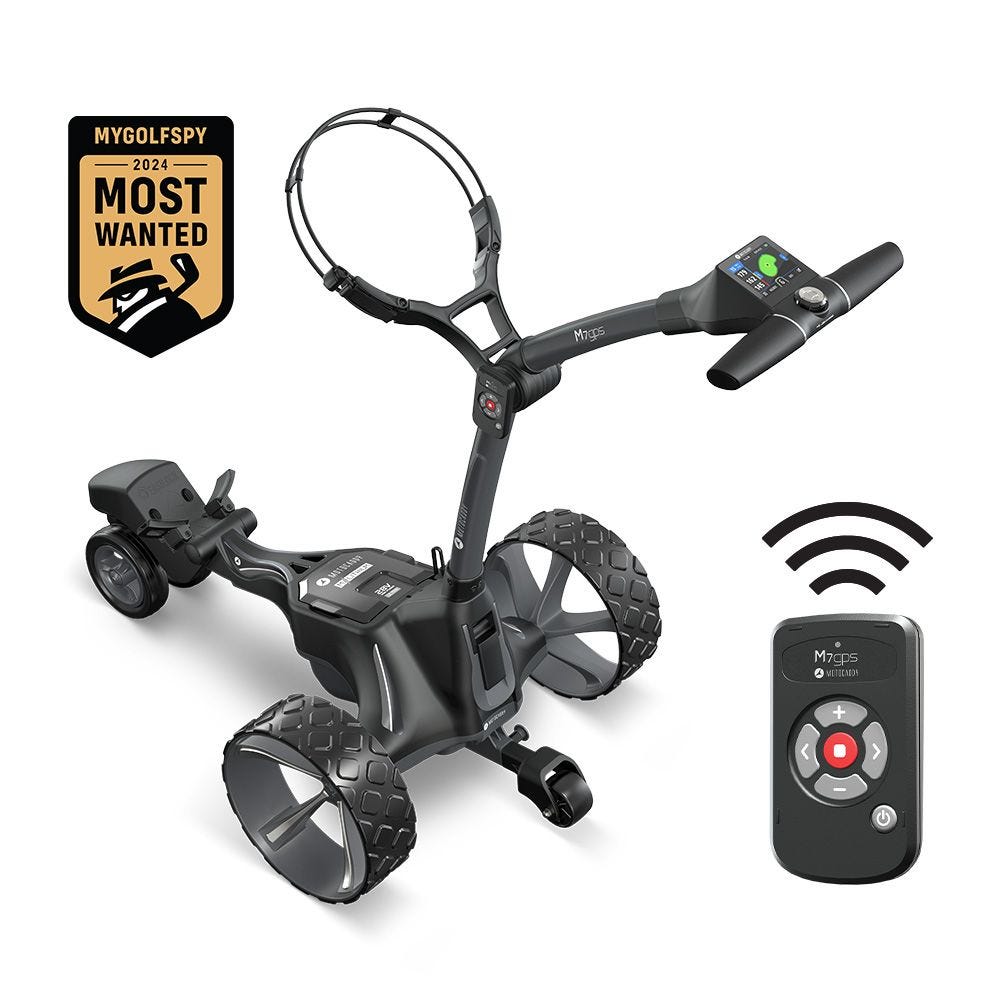
Motocaddy's flagship: a fully remote-controlled electric push trolley with a built-in 3.5 inch touchscreen GPS, twin motors, downhill braking and a cable-free lithium battery. It drives itself ahead of you, parks where you point it, and shows yardages and full-hole maps without needing a watch or phone.
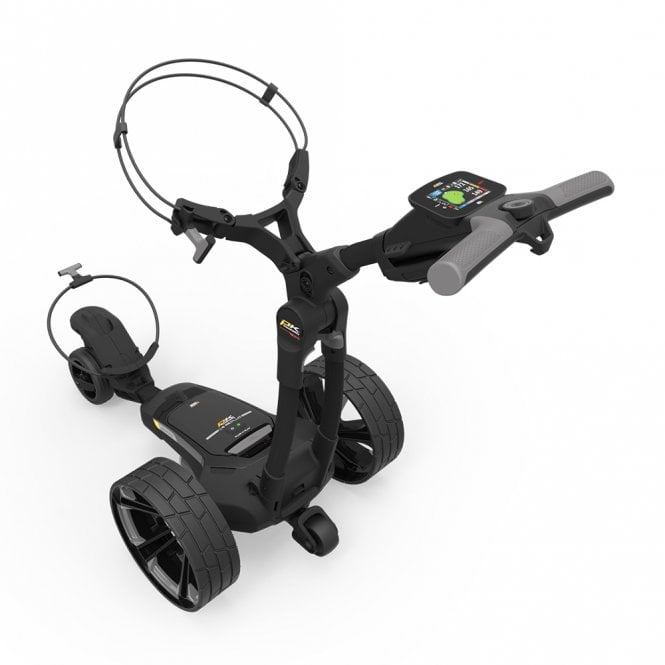
The RX1 GPS is the top of PowaKaddy's remote-control range and was billed as the first touchscreen remote GPS trolley. You drive it with a slimline handset that has a genuine 50 metre range, and the 3.5 inch colour touchscreen on the trolley itself doubles as a GPS unit preloaded with over 40,000 courses, front-middle-back and hazard distances, scorecard and drop-pin, with no subscription. Underneath sit twin 30v 230w near-silent motors, Slope Traverse Assist to hold a line across cambers, a swivel front wheel and the very light XL-Plus lithium battery.
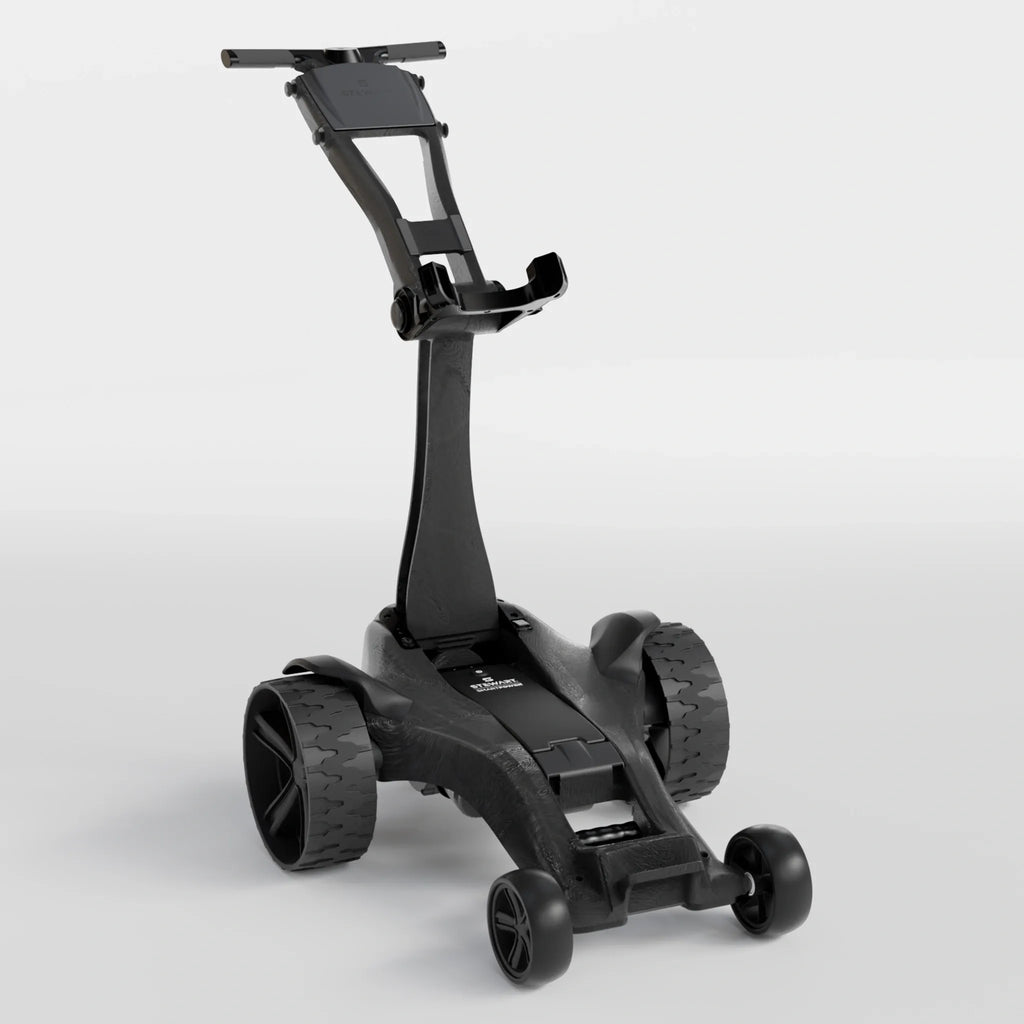
A premium remote-controlled electric trolley, designed and hand-built in the UK by Stewart Golf. You drive it from a handset up to 100m away, or let it follow three programmable cruise speeds while you walk alongside. The headline trick is Active Terrain Control: a CORTEX chip samples the ground a thousand times a second and feeds power to two EcoDrive motors so the trolley holds a steady line and pace across cambers and climbs instead of running away downhill or stalling up a bank.
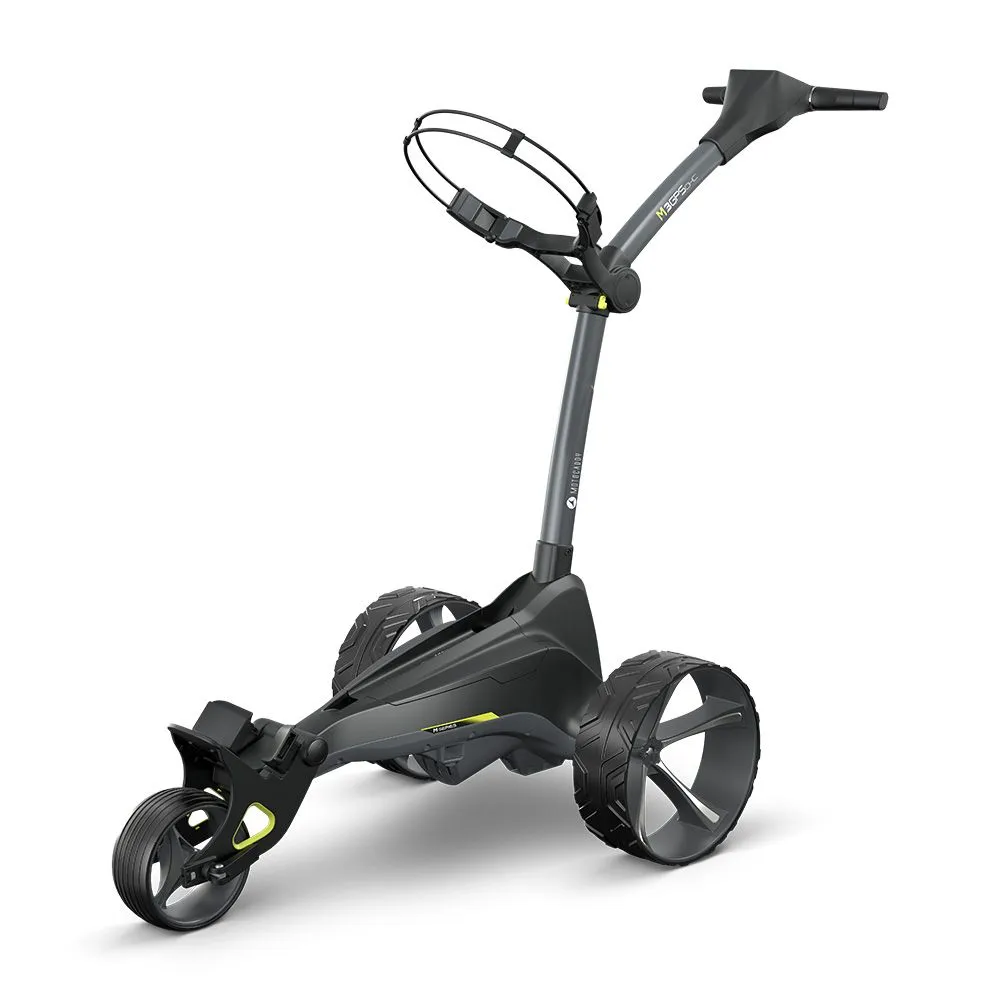
This is Motocaddy's compact electric trolley with a full GPS unit built straight into the handle. You get a 230W motor running off a 28V system, a 2.8 inch colour touchscreen loaded with 40,000 courses, and the DHC bit, which is automatic downhill control that holds a steady speed when you point it down a slope. Throw in the electronic parking brake, all-terrain tyres and nine speed settings and it is built for proper walking golf on real, lumpy terrain.
Frequently asked
- What is the best follow trolley for golf?
- The Stewart Q Follow and Motocaddy M7 are the benchmarks — reliable following, strong build and good battery life. PowaKaddy's RX1 and Stewart's Vertx are close behind. All are a serious outlay, so buy for the joy of a hands-free round.
- How do follow golf trolleys work?
- They pair with a small handset or beacon you wear, using sensors to track and follow a set distance behind you down the fairway. Remote models instead let you drive the trolley ahead by hand controller, leaving your hands free either way.
- Are remote and follow trolleys worth the money?
- Only if you'll genuinely enjoy walking hands-free — they cost far more than a push or standard electric trolley and have more electronics to go wrong. They're a luxury bought for the experience, not a necessity for getting the bag round.
- Follow or remote — which type should I buy?
- A follow trolley trailing you down the fairway feels magical on open courses but can struggle in tight, busy or tree-lined settings. A remote model you drive ahead by handset is more reliable and usually cheaper. If your home course is wooded or crowded, lean remote; if it's open parkland or links, follow shines.
- How long does the battery last on an electric trolley?
- Most quality lithium batteries comfortably cover 18 to 36 holes on a charge, but range drops on hilly courses and in cold weather. Match the rated capacity to the longest round you'll play, and charge it the night before rather than mid-week to avoid a dead unit on the first tee.
Related reading
More on this from the desk
Versus
Stewart Q Follow vs PowaKaddy RX1 GPS: follow-me or remote-control?
The robot-caddie era has quietly arrived, and it has split into two philosophies: a trolley that follows you down the fairway on its own, and a trolley you drive from a handset with a GPS brain bolted on. Here's which robot deserves your money — and the honest case for buying neither.
Versus
Stewart Q Follow vs MGI Zip Navigator AT: follow mode is a fair-weather feature, and the drive decides autumn
One trolley walks behind you with the handset in your pocket. The other goes exactly where your thumb sends it. On dry, open ground that is a preference. From October it becomes a question about traction, weight and how often you were reaching for the handset anyway.