
Stewart Q Follow vs PowaKaddy RX1 GPS: follow-me or remote-control?
The robot-caddie era has quietly arrived, and it has split into two philosophies: a trolley that follows you down the fairway on its own, and a trolley you drive from a handset with a GPS brain bolted on. Here's which robot deserves your money — and the honest case for buying neither.
By Ross Hamilton · Staff Writer
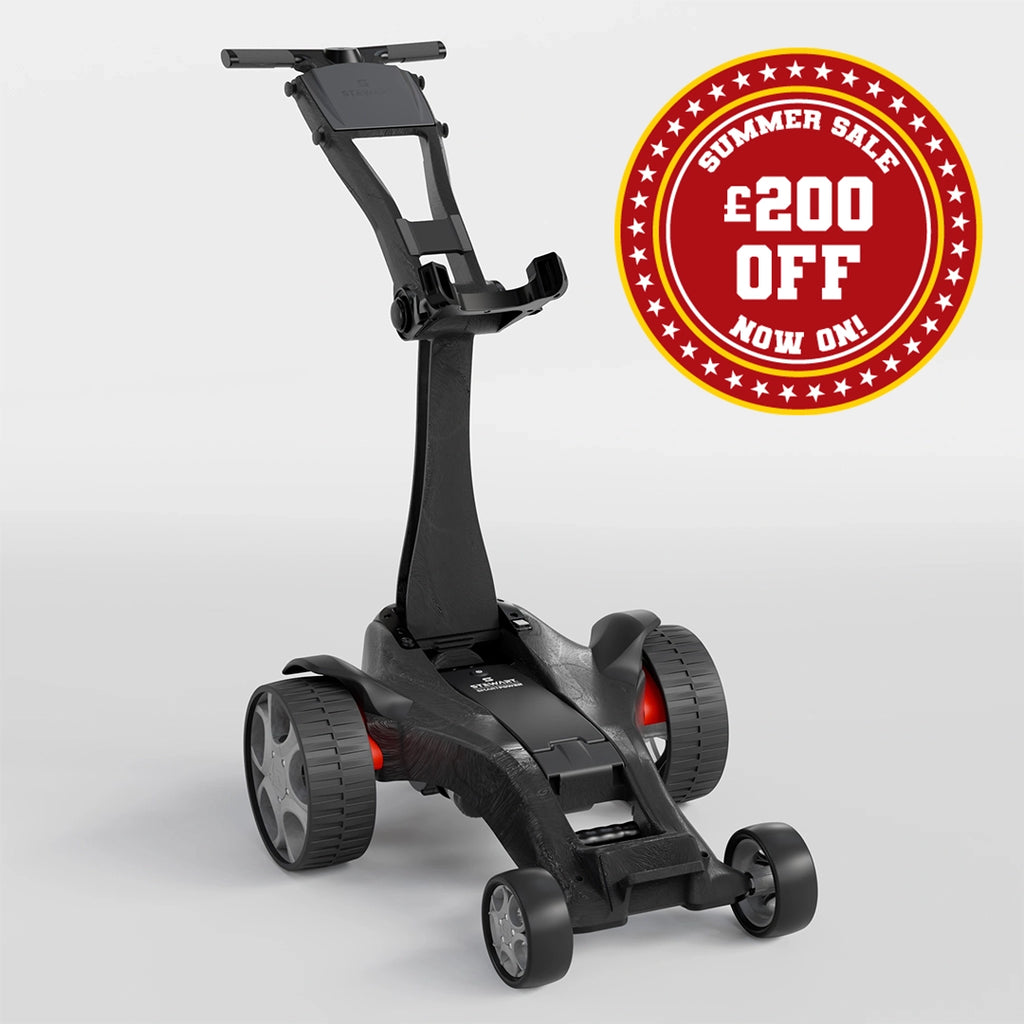
Stewart Golf
Stewart Golf Q Follow
The prestige pick: hand-built in Britain, and Follow mode means you walk the fairway with nothing in your hands.
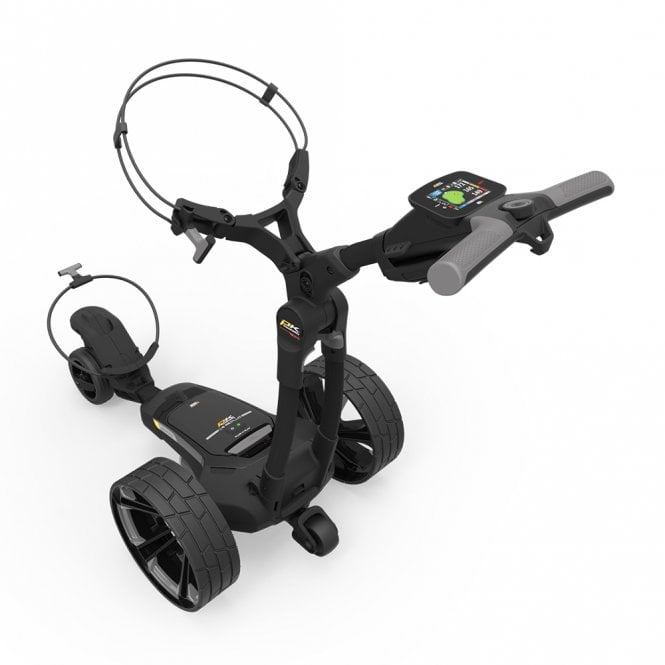
PowaKaddy
PowaKaddy RX1 GPS Remote Trolley
The value-per-feature pick: remote control plus a full touchscreen GPS with no subscription, for less money.
ifrothgolf earns a commission on purchases made through these links, at no extra cost to you. It never changes what I recommend. Full disclosure.
Side by side
| Specification | Stewart GolfStewart Golf Q Follow | PowaKaddyPowaKaddy RX1 GPS Remote Trolley |
|---|---|---|
| Trolley type | follow/remote electric | remote electric |
| Features | 8th-gen Follow mode (tracks you down the fairway hands-free) plus full remote control (forward, reverse, left, right); 75m Bluetooth remote range | slimline remote handset with 50 metre wireless range; swivel front wheel, anti-tip rear wheel, USB charging port |
| Battery | Base 230Wh or Max 307Wh | next-gen XL-Plus Plug n Play 30v lithium, IP66 rated, 40% smaller than previous |
Specs as published by each manufacturer. Rows in grey are where the two match.
Buy the Stewart Golf Q Follow if the whole point is walking a golf course with nothing in your hands — it is about as good as a follow trolley gets right now, and it feels like it. Buy the PowaKaddy RX1 GPS if you want remote control plus a proper built-in GPS for less money — the value-per-feature play in a category not famous for value. That is the verdict; here is the interesting part. The robot caddie golf has been promising for a decade has finally, quietly arrived, and it has split into two competing philosophies. One machine follows you. The other obeys you. Which one suits you says a lot about why you wanted a robot in the first place.
Two robots, two philosophies
The Q Follow's party trick is in the name. Drop the handset in your pocket and the trolley tracks you down the fairway on its own, adjusting speed and direction so you can simply walk — Stewart calls it the eighth generation of its Follow mode, and it sits alongside a full remote (forward, reverse, left, right) with a 75-metre Bluetooth range and battery monitoring through the Stewart Golf app. The RX1 takes the opposite route: you drive it. A slimline handset with a genuine 50-metre range sends the trolley ahead of you, around the bunker, over to the next tee — wherever you point it. Neither approach is wrong, but they feel completely different on grass. The Stewart is a companion; the PowaKaddy is a machine you operate. Some golfers find hands-free walking borderline spiritual. Others find piloting the robot is the fun part.
The case for the Stewart
The Q Follow is designed, engineered and hand-built in Britain on a microcellular composite chassis, and the build is the first thing anyone notices — this is a trolley with genuine prestige-object energy, superbly stable and a joy on open courses. You choose a base 230Wh battery or the bigger 307Wh Max, good for roughly 18 to 36 holes, and it folds in under 30 seconds. The caveats deserve equal billing. At about 14.1kg before the battery goes in, it is a lump to lift into a car boot every Saturday. Follow mode is a clever assistant rather than a full caddie replacement — around greens, tees and tight pinches you will still pull the handset out and drive. And at $2,050 it costs more than many golfers' iron sets. You are not buying transport; you are buying the experience of walking empty-handed, hand-built by people who clearly obsess over it.
The case for the PowaKaddy
The RX1 GPS is the top of PowaKaddy's remote range and was billed as the first touchscreen remote GPS trolley — and that GPS is the whole argument. The 3.5-inch colour touchscreen on the handle carries over 40,000 preloaded courses with front, middle and back yardages, hazard distances, a scorecard and drop-pin measuring, with no subscription fees ever. Underneath sit twin near-silent motors with Slope Traverse Assist to hold a straight line across cambers, a swivel front wheel, an anti-tip rear wheel, a USB port for your phone, and PowaKaddy's XL-Plus lithium battery — the lightest in the class. You get a two-year trolley warranty and five years on the battery. At $1,800 it undercuts the Stewart while bundling in a GPS unit you would otherwise buy separately, which is why it wins the pounds-per-feature contest without breaking sweat.
What the spec sheets won't tell you
In practice the two modes trade places over 18 holes. Follow mode is magic on wide, open fairways — you genuinely forget the trolley exists — but it needs managing in traffic, so the Stewart becomes a remote trolley around greens anyway. The RX1 asks you to half-pilot it all round, but that has its own payoff: you can send it toward the next tee while you finish putting, a small daily flourish that never gets old. The RX1's screen also consolidates devices — if it replaces a GPS watch or handheld, that is one less thing to charge and one cleaner argument to make to whoever audits your golf spending. The Stewart counters with app-based battery monitoring and the simple fact that nothing else on the market walks beside you quite like it.
The honest alternative
Now the part the brochures skip: a conventional electric trolley does about 90 per cent of this job for a fraction of the money. It still carries your bag up the same hills, still saves your back and your energy for the shots, still folds into the boot. What you are paying for here is the last 10 per cent — the hands-free glide or the remote-park flourish — and it is a luxury, not a necessity. Nobody needs a robot caddie; plenty of people very much want one, and that is a fine reason to buy things. But if the maths makes you wince, the sensible money lives in our best electric trolleys guide, and your golf will not suffer one bit.
Which robot should you buy
The gadget-lover and the prestige buyer should take the Stewart Q Follow: it is the better-built object, the follow act is the category's headline trick, and it is the one that draws a crowd on the first tee. The value-conscious feature buyer should take the PowaKaddy RX1 GPS: more capability per pound, fee-free GPS built in, and a long battery warranty behind it. Skip both if you ride a cart, only walk occasionally, or resent lifting anything heavy out of a boot — a robot you leave in the garage is the most expensive kind. The full field, including the cheaper compromises, lives in our remote and follow trolleys guide and across our trolleys coverage.
Frequently asked
- What is the difference between a follow trolley and a remote trolley?
- A follow trolley tracks you automatically — you put the handset in your pocket and it walks behind or beside you down the fairway, adjusting its own speed and direction. A remote trolley is one you steer yourself from a handset, sending it forward, backward, left and right. The Stewart Q Follow does both; the PowaKaddy RX1 is remote-control with a built-in GPS.
- Does the PowaKaddy RX1 GPS need a subscription?
- No. The RX1's 3.5 inch touchscreen GPS comes preloaded with over 40,000 courses, with front, middle and back distances, hazards, a scorecard and drop-pin measuring, and there are no subscription fees at all.
- How many holes does the Stewart Q Follow battery last?
- Stewart offers two batteries: the base 230Wh and the larger 307Wh Max, which between them cover roughly 18 to 36 holes. You can monitor the battery through the Stewart Golf app, and regular 36-hole walkers should choose the Max.
- Is a follow or remote trolley worth it over a normal electric trolley?
- Honestly, only if the robot part genuinely excites you. A conventional electric trolley carries your bag up the same hills for far less money — what you pay extra for is hands-free following or remote steering, which is a luxury rather than a performance gain. Great fun, but not a necessity.
Read next
Versus
Stewart Q Follow vs MGI Zip Navigator AT: follow mode is a fair-weather feature, and the drive decides autumn
One trolley walks behind you with the handset in your pocket. The other goes exactly where your thumb sends it. On dry, open ground that is a preference. From October it becomes a question about traction, weight and how often you were reaching for the handset anyway.
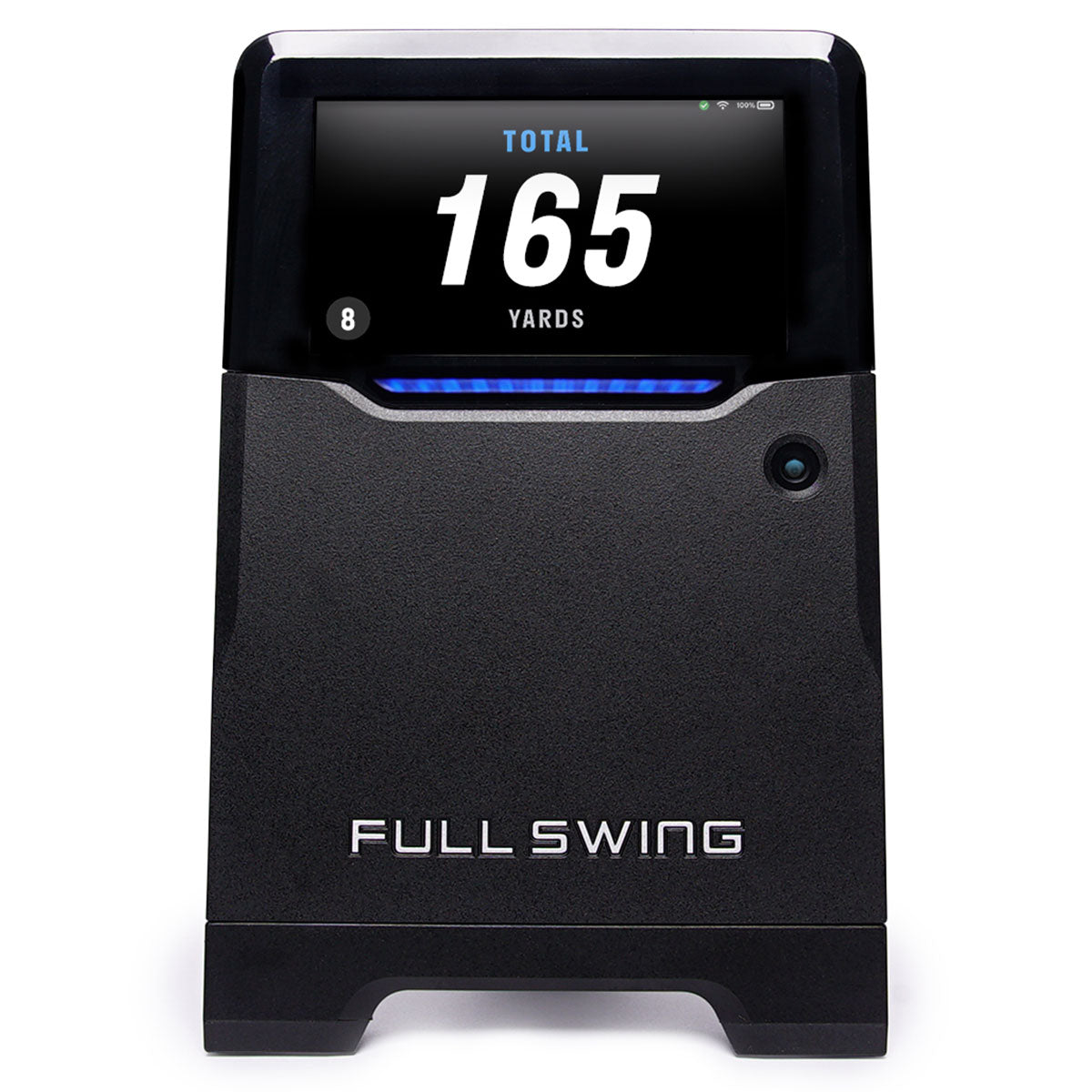
Review
7.9/10Full Swing KIT review: the tape measure decides this, not Tiger
Tour pedigree, TGL on ESPN, and radar good enough to be checked against a Trackman outdoors. It also wants eighteen to twenty feet of room, which rules out most of the garages people buy it for.
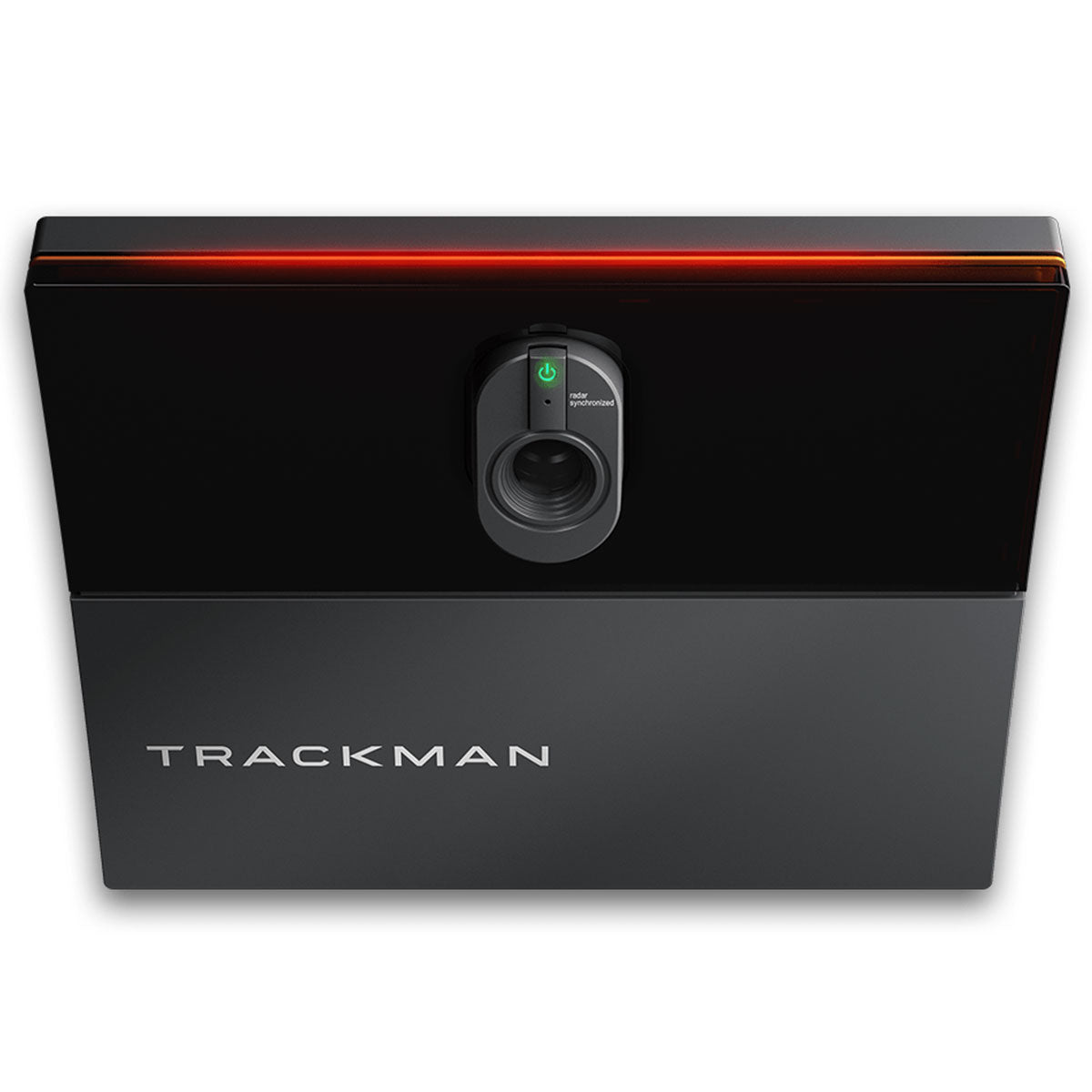
Versus
Trackman iO vs Uneekor EYE XO2: the year-one trap
Both mount overhead, both want ten feet of ceiling, and about $3,000 separates them on the shelf. Then Trackman's included first year runs out, and the gap starts growing by $1,100 a year.