
Motocaddy M7 GPS Remote vs Stewart Vertx: same price, so it comes down to the GPS screen and the battery warranty
Two 100-metre remote trolleys at the same list price. One puts a 3.5-inch GPS in the handle and five years of cover on the battery; the other skips the screen for terrain control, a flatter fold and a month to try it.
By Tom Whitaker · Staff Writer
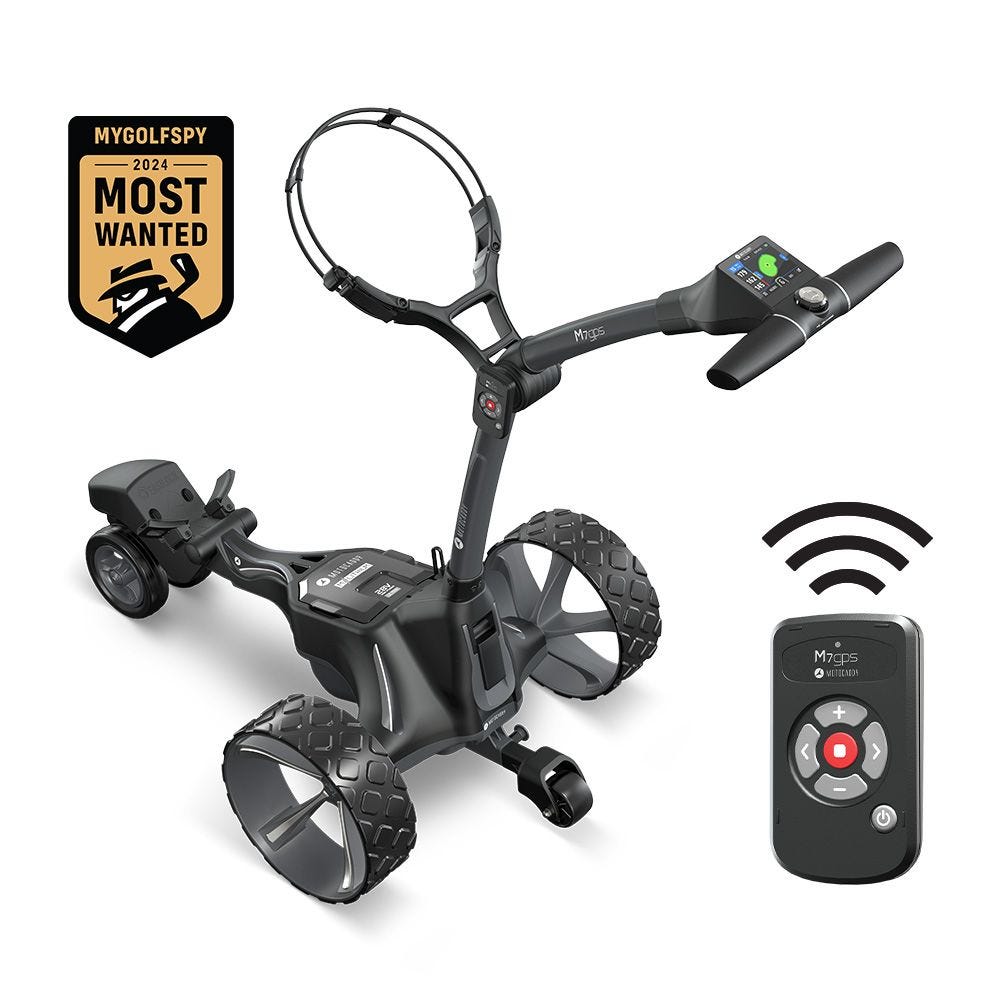
Motocaddy
Motocaddy M7 GPS Remote Electric Trolley
Pick if you want the trolley to be your GPS as well, and you value a five-year battery warranty in writing.
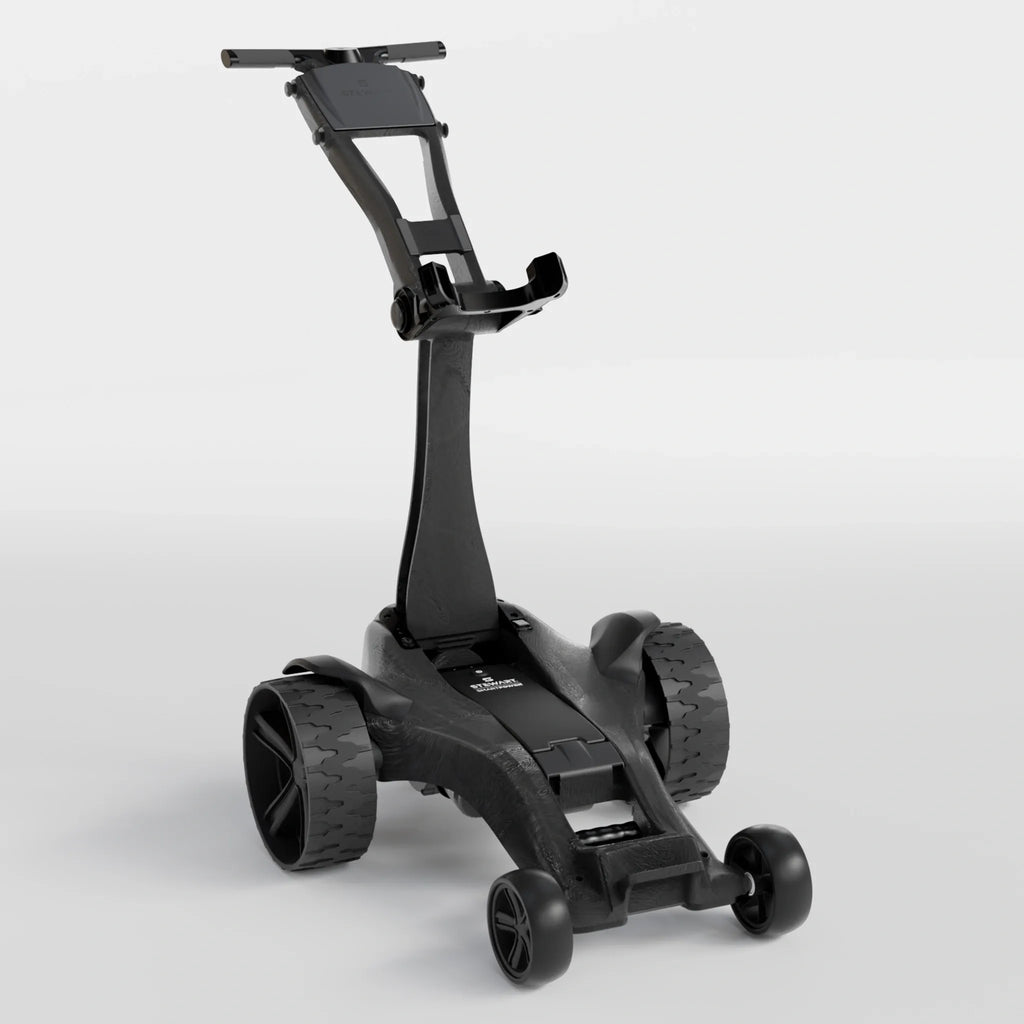
Stewart Golf
Stewart Golf Vertx Remote Trolley
Pick if you already carry a rangefinder or watch, play a hilly course, and want the lower, flatter fold and a 30-day trial.
ifrothgolf earns a commission on purchases made through these links, at no extra cost to you. It never changes what I recommend. Full disclosure.
Side by side
| Specification | MotocaddyMotocaddy M7 GPS Remote Electric Trolley | Stewart GolfStewart Golf Vertx Remote Trolley |
|---|---|---|
| Trolley type | remote electric | remote electric |
| Features | pocket remote with forward, reverse, left and right control plus manual dial mode on the handle | 100m Bluetooth remote range with three cruise-control speeds; designed and hand-built in the UK |
| Terrain features | twin 230W DHC motors with automatic downhill control and anti-tip stabiliser wheel | dual EcoDrive motors (190W each) with Active Terrain Control; CORTEX chip reads the ground 1,000 times a second to hold pace on slopes |
| Battery | cable-free Click N Connect lithium with auto-disconnect to stop accidental drain | SmartPower LiFePO4, 2,000+ charge cycles (230Wh or 307Wh) |
| Warranty | 24-month plus extendable battery cover up to 5 years | 2-year |
Specs as published by each manufacturer. Rows in grey are where the two match.
Late October is when the buggies go back in the shed at a lot of UK clubs and the winter walking starts. It is also when people who have been talking about a remote trolley all summer finally buy one, because four months of wet, heavy fairways is a long time to push a bag. At the top of that market, two trolleys sit at exactly the same list price and look like the same product on a shop page. They are not.
The Motocaddy M7 GPS Remote is Motocaddy's 2026 flagship: a remote trolley with a 3.5-inch GPS touchscreen in the handle. The Stewart Golf Vertx Remote is a remote trolley built in Gloucestershire with no screen at all, sold on how it handles slopes. Both are around $1,800 in their base form. The decision comes down to four things: whether you want the screen, the battery and its warranty, the shape of your car boot, and the bag you put on it.
What is the same
Get the shared ground out of the way, because it is larger than either brand would like. Both quote a remote range of 100 metres, Motocaddy saying "100m+". Both are driven from a pocket handset, both hold a steady pace on descents without you touching anything, and both carry a rear stabiliser wheel against tipping. Both have a two-year warranty on the trolley itself. If what you want is to send the trolley up the fairway and walk to your ball with empty hands, either does it. Which is why the differences decide it.
The M7 is a GPS unit that carries your bag
The screen is the M7's argument. Motocaddy lists 40,000 preloaded courses with free lifetime full-hole mapping, front, middle and back distances, hazards, 2D and 3D views with a movable target, and 3D hole flyovers. It tracks score, fairways, greens and putts, has a round timer and a three-minute lost-ball timer, pushes phone notifications over Bluetooth and updates over WiFi. The handset is new for 2026 and charges by USB-C, and it has a lock so a pocket does not send the trolley into the lake.
Underneath sit twin 230W motors on a 28V system with nine speed settings, automatic downhill control, and what Motocaddy calls Adaptive Terrain Stability, which watches the load on each wheel and adjusts motor output to keep the trolley tracking straight. The anti-tip wheel retracts and stays attached when you fold, and the frame takes Motocaddy's EASILOCK bag fitting, which secures a Motocaddy bag without a lower strap.
The value test is simple. If the M7's screen replaces a GPS watch or rangefinder you would otherwise buy, a chunk of its price is that device. If you already own one you trust, you are paying for a second.
The Vertx is built for the hill
Stewart's pitch is Active Terrain Control. A chip it calls CORTEX reads the ground 1,000 times a second and feeds power to two 190W motors so the trolley holds its line and pace on climbs, cambers and descents. Stewart says the Vertx matches your walking pace on the way down, and its product description mentions regenerative braking. You get three programmable cruise speeds instead of a dial, a free app for battery level, quick-release wheels, and a freewheel mode that Stewart is clear is a failsafe only.
There is no screen, no GPS and no notifications. For a golfer who already wears a watch or carries a laser, that is not a loss, it is not paying twice.
The battery and the warranty
This is the difference that gets the least attention and lasts the longest. Motocaddy covers the M7's lithium battery for 60 months, five years, on top of the 24 months on the trolley and charger. Stewart's Vertx page lists a two-year warranty and no separate, longer battery term.
Stewart's answer is chemistry. Its SmartPower battery is LiFePO4, which Stewart says is tested for more than 2,000 charge cycles, and it comes in two sizes: the 230Wh Base at 2.5kg, which is the one at the headline price, and the 307Wh Max at 3kg, which costs extra. Stewart declines to quote a hole count, saying every course is different, though its own product copy elsewhere mentions a 45-hole battery. Motocaddy's M7 uses its cable-free CLICK 'N' CONNECT ULTRA lithium battery with an auto-disconnect and a pop-up charging port, and does not quote a hole count on the page either.
Two thousand cycles is a lot of golf. A five-year warranty is a promise in writing. If you are the sort of buyer who keeps a trolley for most of a decade, weigh those two against each other rather than either against nothing.
The boot test
Motocaddy gives the folded M7 as 650 by 470 by 420 millimetres, with the anti-tip wheel retracted. Stewart gives the Vertx as 540 by 600 by 320. By volume the Vertx is about a fifth smaller, but the shape matters more than the number: the Stewart is wider and much lower, the Motocaddy narrower, longer and taller. A low, wide parcel suits a hatchback with a deep floor; a narrow, taller one suits a boot with wheel arches eating the width. Measure your boot with the parcel shelf in before you choose. Stewart says the Vertx folds in under six seconds and has an integrated carry handle.
On weight, Stewart lists the Vertx frame at 14.6kg plus a 2.5 or 3kg battery. Motocaddy lists the M7 at 14.9kg without saying whether that includes the battery. Either way you are lifting something in the 15 to 18kg range twice a round, and anyone with a bad back should know that before the motors make the walk easy.
The bag question
One line in Stewart's FAQ should be read by anyone who carries a stand bag. For the Vertx it recommends a cart, staff or tour bag weighing 13 to 15kg, and says lightweight stand bags are not recommended because they can raise the centre of gravity. That is a meaningful restriction on a remote trolley that will be driven across slopes with nobody holding the handle. If your bag is a light stand bag you have no plan to replace, the M7 is the more forgiving platform, and if you own a Motocaddy bag, EASILOCK is a small bonus.
Stewart's other point in its favour is a 30-day trial on every new Vertx, as long as it has not been customised to your order. Stewart excludes trolleys customised to your specification, so check how that applies before choosing anything other than the standard build.
The verdict
Buy the Motocaddy M7 GPS Remote if you do not already own a GPS device, you want the trolley to do the yardages as well as the carrying, and the five-year battery warranty matters to you. It is the more complete product for the same money.
Buy the Stewart Vertx Remote if you already carry a rangefinder or watch, your course has real climbs and cambers, your boot suits a low, wide fold, and you play from a cart bag. The 30-day trial means you can find out on your own hills.
Skip both if your course is flat and you are happy steering from the handle, because a standard electric trolley carries the bag for far less, and our electric trolley guide has the field. The wider remote and follow range, including Stewart's Q Follow, is in our remote and follow trolleys guide.
Frequently asked
- What is the difference between the Motocaddy M7 GPS Remote and the Stewart Vertx Remote?
- The M7 has a 3.5-inch GPS touchscreen with 40,000 preloaded courses and free lifetime mapping, Bluetooth phone notifications and a 60-month battery warranty. The Vertx has no screen or GPS, and is built around Stewart's Active Terrain Control for slopes, a LiFePO4 battery tested for over 2,000 charge cycles, a lower and flatter fold and a 30-day trial. Both have a 100-metre remote and cost about the same in base form.
- Which is lighter, the Motocaddy M7 GPS Remote or the Stewart Vertx?
- Stewart lists the Vertx at 14.6kg plus a battery of 2.5kg (Base) or 3kg (Max). Motocaddy lists the M7 GPS Remote at 14.9kg without stating whether the battery is included, so the two are close and either means lifting roughly 15 to 18kg.
- Can you use a stand bag on the Stewart Vertx Remote?
- Stewart does not recommend it. Its guidance for the Vertx is a cart, staff or tour bag weighing between 13 and 15kg, because lightweight stand bags can raise the centre of gravity and make the trolley less stable.
- What warranty do the Motocaddy M7 GPS Remote and Stewart Vertx have?
- Motocaddy gives the M7 GPS Remote 24 months on the trolley and charger and 60 months on the lithium battery. Stewart lists a two-year warranty for the Vertx Remote and offers a 30-day trial on new trolleys that have not been customised.
Read next
Versus
Stewart Q Follow vs PowaKaddy RX1 GPS: follow-me or remote-control?
The robot-caddie era has quietly arrived, and it has split into two philosophies: a trolley that follows you down the fairway on its own, and a trolley you drive from a handset with a GPS brain bolted on. Here's which robot deserves your money — and the honest case for buying neither.
Versus
Stewart Q Follow vs MGI Zip Navigator AT: follow mode is a fair-weather feature, and the drive decides autumn
One trolley walks behind you with the handset in your pocket. The other goes exactly where your thumb sends it. On dry, open ground that is a preference. From October it becomes a question about traction, weight and how often you were reaching for the handset anyway.
Review
8.1/10Stewart Golf Q Follow review: the best-made trolley in the category, and follow mode is its summer feature
Stewart's flagship follows you down the fairway with the handset in your pocket, is designed and engineered in Great Britain, and has just gone up in price with a new edition. The engineering earns the money. The headline feature earns it for about eight months of the year.