
Stewart Golf Q Follow review: the best-made trolley in the category, and follow mode is its summer feature
Stewart's flagship follows you down the fairway with the handset in your pocket, is designed and engineered in Great Britain, and has just gone up in price with a new edition. The engineering earns the money. The headline feature earns it for about eight months of the year.
By Ben Marsden · Reviews Editor
The verdict
Excellent
What's great
- Genuinely exceptional build: British-made twin 190W motors, composite chassis and a LiFePO4 pack with app monitoring
- Stewart publishes the numbers that let you choose the battery properly, including watt-hours per round
- Follow mode is the best implementation of the idea anyone sells, and it doubles as a full 75-metre remote
Watch out
- The feature you are paying the premium for is at its weakest in traffic, on cambers and on soft ground — which is most of the winter
- 16.6kg to lift with the base battery in, and the new edition has pushed the entry price up again
Bottom line — The most beautifully made trolley in the category and the only one that lets you walk empty-handed, but follow mode is a wide-open, dry-ground feature and most walkers are better served by an electric trolley at a third of the money.
Stewart Golf
Stewart Golf Q Follow
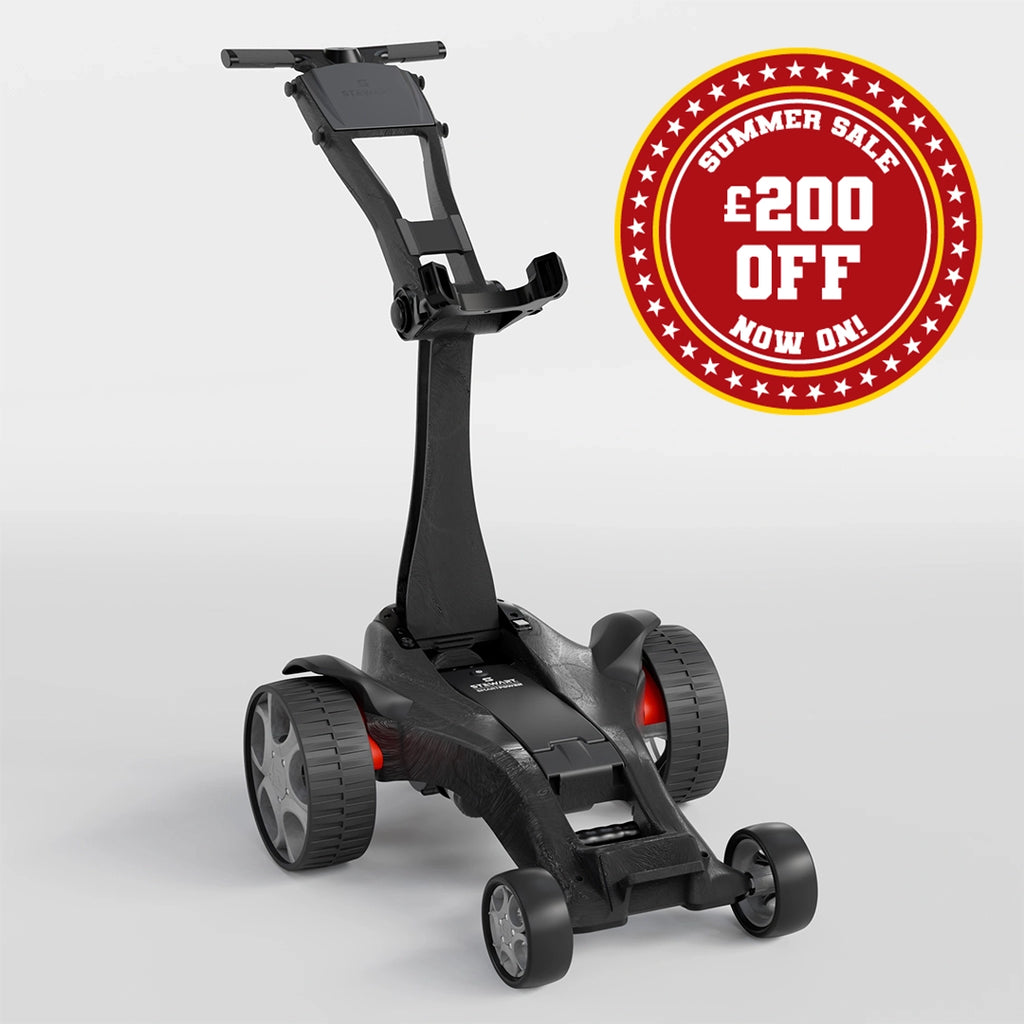
There is a specific moment the Q Follow is built for. Eight in the morning, first off, nobody in front of you, and four hundred yards of fairway with nothing on it. You put the handset in your pocket, start walking, and the trolley comes with you. No handle, no thumb on a button, nothing in either hand. It is genuinely lovely and there is nothing else on the market that does it this well.
The Stewart Golf Q Follow is the eighth generation of that system and Stewart's current flagship. It starts at $2,300 in black on Stewart's own shop, rises to about $2,400 in a colour, and the Max-battery versions run to a little over $2,750. That is up on the previous edition, which is worth knowing before you go looking for last year's price. What follows is what the money buys, what the feature is actually worth across a full year, and who should spend a third of it instead.
What the price is paying for, and it is not the software
Open the spec sheet and the Q Follow reads like a piece of engineering rather than a piece of consumer electronics. Twin 190-watt motors spinning at 1,500 to 1,800rpm, designed and built in Britain, on a microcellular composite chassis. Stewart describes the whole thing as designed and engineered in Great Britain and stamps the motors and electronics as British-made, which in a category dominated by badge-engineered far-eastern platforms is not a small claim. Next-generation Bluetooth gives the handset 75 metres of range, and the trolley carries a full conventional remote — forward, reverse, left, right — alongside the following. Two-year warranty when you register it.
It feels like the price. That is not nothing and I am not going to be sniffy about it: this is the only trolley in the category that reads as an object someone was proud to make, and a meaningful number of people buying at this level are buying exactly that. It is a legitimate reason to spend money. It is just not the reason the marketing gives you.
The battery decision is arithmetic, and Stewart hands you the number
Most trolley brands quote battery life in rounds, which is a marketing unit. Stewart publishes something better: it states that an average eighteen-hole round consumes 135 watt-hours. Combine that with the two packs it sells and the decision stops being a guess.
The Base pack is 230Wh and weighs 2.5kg. That is one round with a comfortable reserve and nowhere near two. The Max is 307Wh at 3.0kg, which is two rounds with a thin margin rather than a generous one. So: if you play eighteen and charge at home, the Base is the right pack and the upgrade is money wasted. If you play thirty-six, or you play twice between charges, or your course is genuinely hilly — hills spend watt-hours faster than flat ground and Stewart's figure is an average, not a promise — take the Max and stop thinking about it. The cells are LiFePO4 with app-based monitoring, which is the chemistry you want for cycle life.
One thing to sort out the day you take delivery rather than in November: where the battery lives out of season. Both PowaKaddy and Motocaddy publish the same guidance, and it applies to any lithium trolley pack — store it fully charged, at room temperature, never below about ten degrees Celsius, and check or top it up inside two months. We went through why that advice runs opposite to what you have read about phone batteries in what actually happens to golf gear over winter. A four-figure trolley with a dead pack in March is an avoidable and very annoying bill.
Follow mode, honestly
Here is where the review has to be careful, because this feature is both the best thing about the trolley and the most conditional.
It works, and on the right hole it is close to magic. What it is not is a hands-free system for a round of golf. Three situations interrupt it and they are not edge cases. Course traffic is the first: a group crossing, a greenkeeper, a fourball waved through, and you take the handset out. Tight ground is the second — around greens, through the gap between a bunker and a slope, on a walk-off that doubles back — where driving it is simply quicker than negotiating with it. Camber is the third, and from October to March it is the one that matters, because a trolley holding a line across a wet side-slope is doing a harder job than the same trolley on a dry one.
We reached the same conclusion from the other direction when we put this trolley up against MGI's all-terrain flagship in Q Follow vs MGI Zip Navigator AT: follow mode is a fair-weather feature, and on soft, sloping ground the drive system is what decides the trolley. Nothing about reviewing the Q Follow on its own changes that, and I am not going to pretend it does. Stewart, to its credit, positions Follow as a clever assistant rather than a caddie replacement, which is more honest than the category norm.
So when does it genuinely earn the premium? A specific and identifiable set of conditions: a wide, well-drained course; early or quiet tee times; walking alone or in a two-ball; and a golfer for whom the walk itself is the point. If that is four or five rounds a month for you, the feature is real and the money makes sense. If your golf is a four-ball on a busy Saturday at a course that goes soft in October, you are buying a very expensive remote trolley and you will operate it like one for half the year.
The bit that happens twice a round, forever
The trolley weighs 14.1kg without a battery. Add the Base pack and you are lifting 16.6kg into a boot; add the Max and it is 17.1kg. Folded, it is 540mm tall, 600mm wide and 320mm deep, and those are the numbers to take out to the car with a tape measure before you order anything.
This is the part of premium trolley ownership people consistently underestimate, because the money is a one-off and the lift is not. Seventeen kilos twice a round, forty rounds a year, is the ownership experience nobody puts in a brochure. For comparison, Motocaddy's current entry SE is listed at 9.3kg. If your back is the reason you stopped carrying, weigh that honestly against the reason you are looking at a trolley in the first place.
Who should buy something else, and it is most people
Blunt version: the robot is a luxury and it is priced like one. Three alternatives cover almost everybody who arrives at this page.
If what you actually want is your bag carried up the hill, an entry electric trolley does that job for roughly a third of the money. The Motocaddy SE has a quiet 230W motor, a cable-free battery and none of the electronics, and on a flat parkland course you will not miss a single thing the Stewart does.
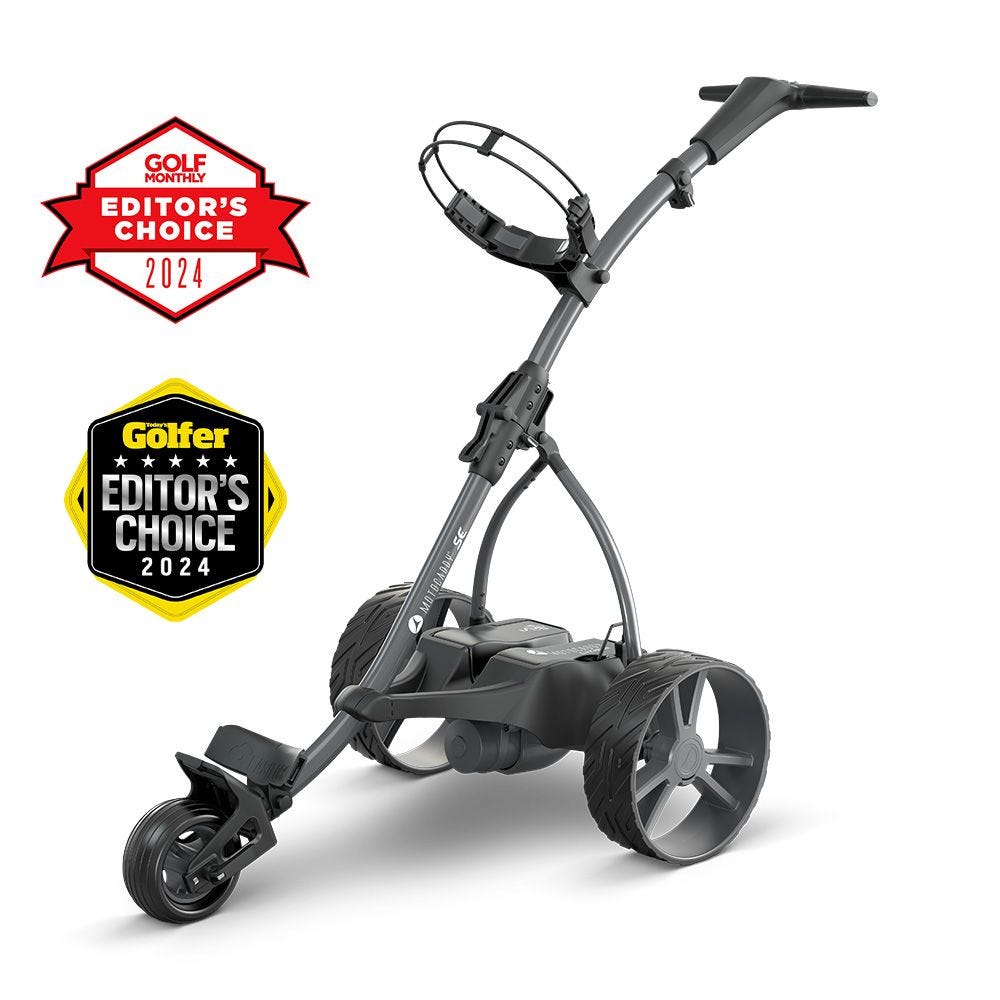
If hills are the specific problem and pushing is not, the MGI E-BOOST is the most sensible thing in this whole category: a push cart in feel with a motor you engage on the climb. No remote to learn, no handset to lose, and a fraction of the price. It is not light, though: MGI lists it at 11.35kg with the battery fitted, heavier than almost any plain push cart.
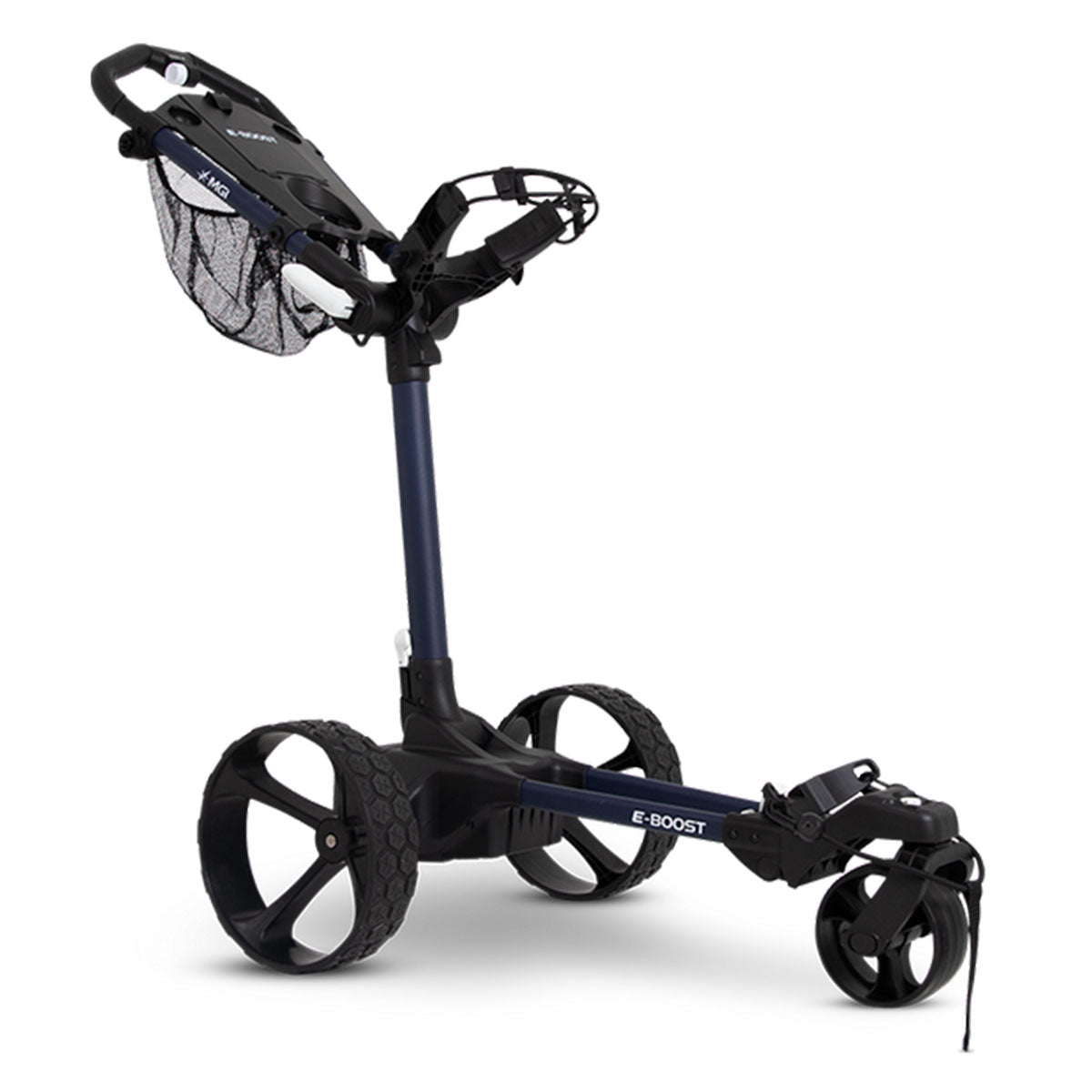
And if you want remote control at the premium end but the following is not the draw, the PowaKaddy RX1 GPS undercuts the Stewart by several hundred and bundles a full touchscreen GPS with over forty thousand courses and no subscription, which is a device you would otherwise buy separately. We compared the two in Q Follow vs PowaKaddy RX1. There is also a cheaper Stewart, the Vertx Remote, whose engineering is pointed at terrain rather than at following you — the more coherent Stewart for a hilly course.
Buy none of them if you play fewer than about twenty rounds a year. A premium trolley slowly discharging in a garage is the most expensive way anyone has yet devised to own a battery. The full field sits in our remote and follow trolleys guide.
The verdict
The Q Follow is the best-made trolley in the category and the only one that delivers the empty-handed walk properly. The engineering is real, the battery figures are published honestly enough to let you choose correctly, and the build justifies a premium on its own terms.
What it does not do is justify the premium on the strength of follow mode alone, because follow mode is at its best on exactly the days when a trolley matters least and at its weakest on the days it matters most. Buy it if you play open, dry, quiet golf and the walk is the point, and buy it knowing you are also buying a superb remote trolley for the other half of the year. If that description is not you, the money is better spent elsewhere in this list, and I would rather say so than sell up the range.
Where to buy
8.1/10Stewart Golf
Stewart Golf Q Follow
The follow trolley that quietly trundles after you while you just walk and play.
Frequently asked
- How much does the Stewart Golf Q Follow cost?
- Stewart Golf's own shop lists the new Q Follow from 1,799 pounds for the black Base model with the 230Wh battery, around 1,899 for other colour finishes, and up to about 2,149 pounds for a Max battery version in a premium finish. That is an increase on the previous edition, so older prices quoted elsewhere are likely to be out of date.
- Which Q Follow battery should you buy, the Base or the Max?
- Stewart states that an average eighteen-hole round consumes 135 watt-hours. The Base pack is 230Wh, which covers one round with a comfortable reserve but will not cover two. The Max pack is 307Wh, which covers thirty-six holes with a modest margin. Choose the Base if you play eighteen and charge at home, and the Max if you regularly play thirty-six, play twice between charges, or walk a genuinely hilly course, since climbing consumes more than the stated average.
- Does follow mode work in all conditions?
- No. It is at its best on wide, open, well-drained fairways with nobody around. Course traffic, tight ground around greens and bunkers, walks that double back on themselves, and wet side-slopes are all situations where owners take the handset out and drive the trolley manually. Treat follow mode as an excellent assistant on open holes rather than a hands-free system for a whole round, which is broadly how Stewart itself positions it.
- How heavy is the Stewart Q Follow to lift into a car?
- The trolley weighs 14.1kg on its own. The Base battery adds 2.5kg and the Max adds 3.0kg, so you are lifting between 16.6kg and 17.1kg in total. Folded, it measures 540mm high, 600mm wide and 320mm deep. Those are the figures to check against your boot before ordering, because the lift happens twice every round for the life of the trolley.
Read next
Versus
Stewart Q Follow vs PowaKaddy RX1 GPS: follow-me or remote-control?
The robot-caddie era has quietly arrived, and it has split into two philosophies: a trolley that follows you down the fairway on its own, and a trolley you drive from a handset with a GPS brain bolted on. Here's which robot deserves your money — and the honest case for buying neither.
Versus
Stewart Q Follow vs MGI Zip Navigator AT: follow mode is a fair-weather feature, and the drive decides autumn
One trolley walks behind you with the handset in your pocket. The other goes exactly where your thumb sends it. On dry, open ground that is a preference. From October it becomes a question about traction, weight and how often you were reaching for the handset anyway.
Review
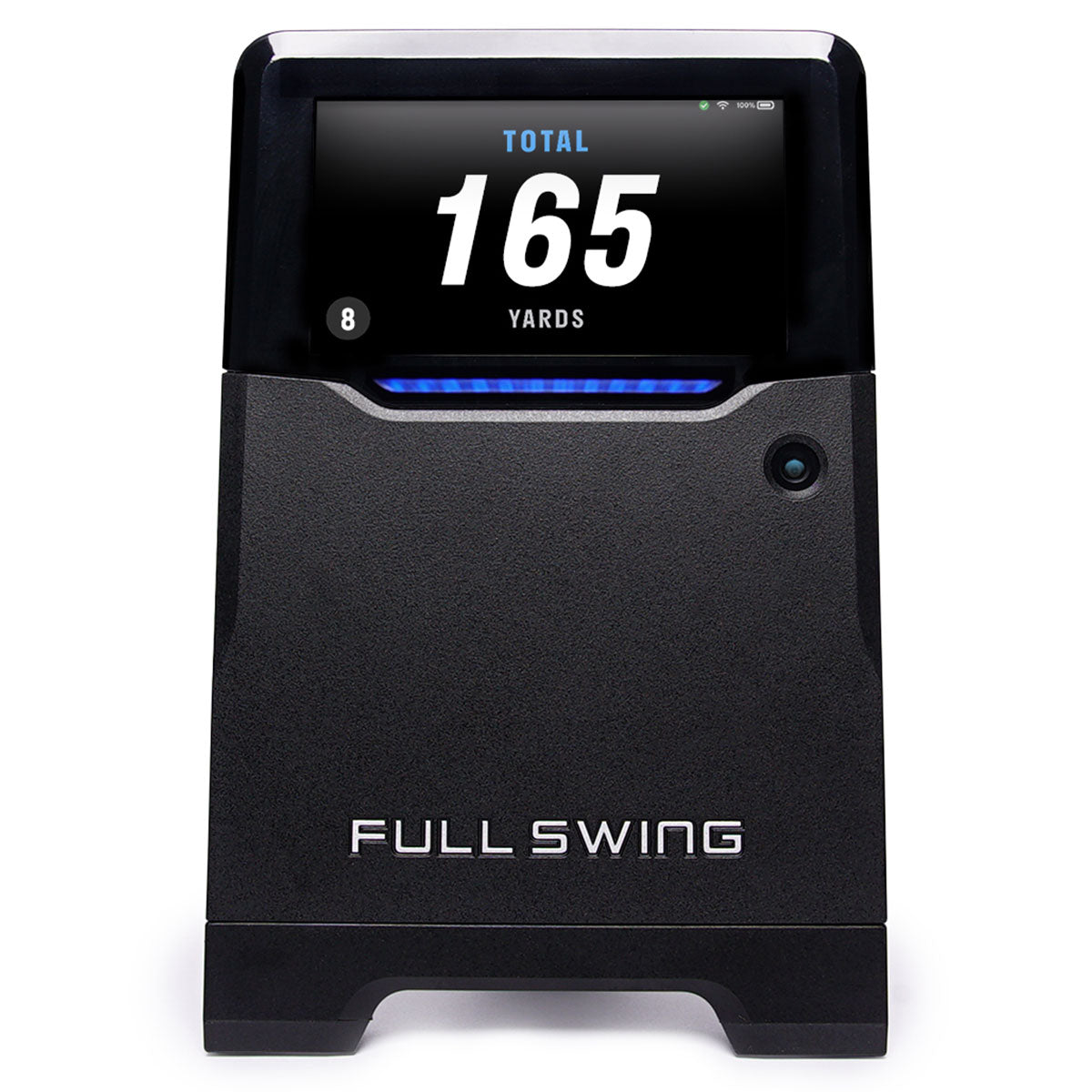
7.9/10Full Swing KIT review: the tape measure decides this, not Tiger
Tour pedigree, TGL on ESPN, and radar good enough to be checked against a Trackman outdoors. It also wants eighteen to twenty feet of room, which rules out most of the garages people buy it for.