
Garmin Approach S44 vs Instinct Crossover Solar: hole maps against a battery measured in months
Same maker, same course database, same phone app. One draws the hole for you and charges every four rounds. The other survives anything, runs on sunlight and shows you three numbers.
By Jordan Hale · Equipment Writer
Garmin
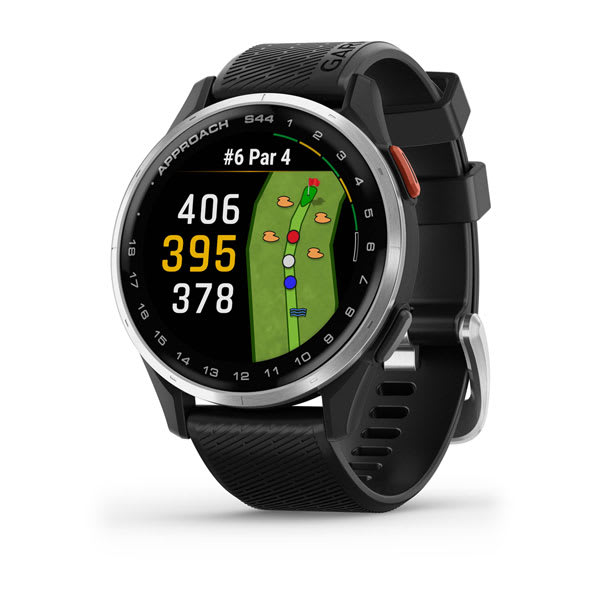
Garmin Approach S44
The slim golf watch: 42 grams, AMOLED, hole maps and hazard distances, and no heart rate sensor.

Garmin
Garmin Instinct Crossover Solar
The rugged multisport hybrid with analogue hands and solar charging, which does golf competently and maps nothing.
Shot Scope
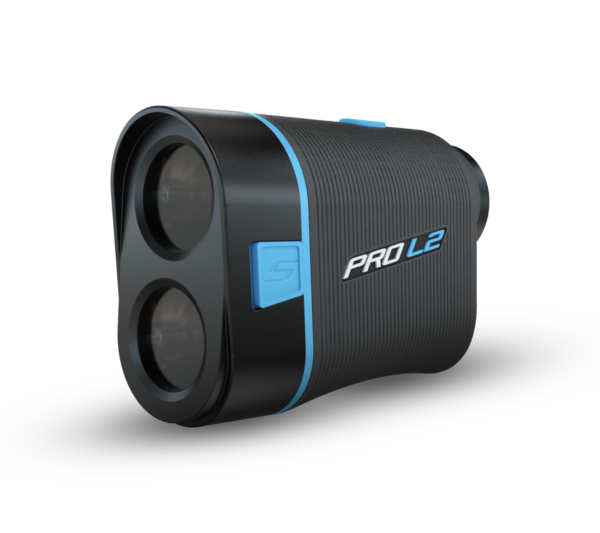
Shot Scope PRO L2
What to buy instead if the number you actually want is to the flag rather than to the green.
ifrothgolf earns a commission on purchases made through these links, at no extra cost to you. It never changes what I recommend. Full disclosure.
Part of our guide toBest Golf GPS Watches 2026Buy the Garmin Approach S44 if the watch is for golf. Buy the Garmin Instinct Crossover Solar if the watch is for the outdoors and golf is one of the things you do in them. The awkward part of this comparison, and the reason it is worth writing at all, is that the golf watch is the cheaper one by a distance.
These are not rivals in the normal sense. Same maker, same course database, same app, same underlying idea of where you are standing. What separates them is what each was designed to survive, and every other difference falls out of that one decision.
What the S44 actually is
A golf watch that has been shrunk until it stops announcing itself. A slim 43mm case, 42 grams on the wrist, a 1.2 inch colour AMOLED touchscreen, and the full Garmin course layer underneath: 43,000-plus preloaded courses, front, middle and back green distances, and a hazard view. Battery is about 15 hours in GPS mode, which is four rounds and a bit. Around $300.
What Garmin cut to reach that price is the heart rate sensor, and that is a bigger omission than it sounds. No wrist heart rate means no sleep tracking, no stress metrics and no useful training data, so the S44 is not a fitness watch that also does golf. It is a golf watch you will happily wear to work. Shot tracking is present and serviceable rather than the reason to buy it.
What the Instinct Crossover Solar actually is
A different product entirely, wearing a watch-shaped disguise. It is built to military durability standards, it charges from sunlight so the battery stretches into weeks and months rather than hours, and it carries multi-band GPS with an altimeter, barometer and compass. The party trick is genuinely good: physical analogue hands that rotate out of the way to expose the digital display underneath.
Its golf mode covers the basics properly. Front, middle and back yardages, a digital scorecard, a tournament-legal mode. What it does not have is the picture. No hole maps, no hazard graphics, no layup view. You get three numbers and your own knowledge of the hole, which on your home course is plenty and on a course you have never seen is not. At around $600 it is comfortably the dearer of the two.
The inversion worth understanding before you spend
Most golf technology gets more golf-capable as it gets dearer. This pair does the opposite, and if you go in expecting the usual ladder you will buy the wrong one.
The extra money on the Instinct buys ruggedness, solar charging, sensors for altitude and navigation, and a case that shrugs off the kind of knock that would end an AMOLED watch. None of that is fake value. It is simply not golf value. If every hour you spend outdoors is a golf hour, you are paying a substantial premium for engineering aimed at hills, and receiving a less capable device on the only surface you use it.
The reverse is also true and worth saying fairly. If you hike, run trails, sail, ski or work outdoors, a dedicated golf watch is the wrong shape of tool and the Instinct is not an indulgence.
The battery argument is smaller than the spec sheet makes it
Months versus 15 hours looks like a rout and mostly is not one. Fifteen hours of GPS is four rounds, which for most golfers is a fortnight, and the watch charges overnight on the day before you play. Battery anxiety in golf is a solved problem at any tier above the very cheapest.
Where the solar genuinely matters is away from a socket: multi-day walking, a week somewhere without reliable power, long shifts outdoors, or simply hating the charging ritual enough that it has become a reason you stopped wearing something. That is a real preference and I am not going to talk anyone out of it. It just is not a golf argument, and it gets sold as one.
One honest ding on the S44 side: Garmin's proprietary charging cable is the kind of thing you lose and then have to buy again. Get a spare when you get the watch.
Course knowledge is the variable nobody mentions
Here is the question that actually decides this for a lot of people, and it has nothing to do with either spec sheet. How many different golf courses do you play in a year?
If the answer is one or two, you already know that the bunker on the left is 240 to carry and that the green runs away at the back. Front, middle and back numbers are all the information you need and the Instinct's simpler golf mode costs you nothing on the course you know by heart.
If the answer is a dozen, including away days and holiday golf, the hole map is the whole point of owning a GPS watch at all. Standing on a blind tee shot somewhere unfamiliar with three numbers and no picture is precisely the situation the S44 exists for, and the Instinct will leave you guessing.
Who should buy neither
Anyone whose real complaint is that they want the distance to the flag rather than the distance to the green. No GPS watch answers that question, because a watch knows where the green is and not where today's pin is cut. On a big green with a flag tucked at the back, a middle number can be fifteen yards short of the truth.
That golfer wants a laser, and does not need to spend much. The Shot Scope PRO L2 at around $190 runs the same firmware as the brand's flagship, locks flags to within a yard out to 700 yards, has a slope toggle for competition and a magnet for the trolley. We laid out the broader choice in GPS watch vs laser rangefinder, and the short version is that they answer different questions rather than the same question at different prices.
The other group who should skip both: anyone who wants their watch to tell them where the shots are going. Neither of these is a shot-tracking system in any serious sense, and if that is the goal there are watches built around it.
The verdict
For the large majority of golfers reading this, the S44 and the extra money stays in the account. It does the golf job properly, it is light enough to forget you are wearing, and it looks like a normal watch, which is the quiet reason golf watches now get worn at all. Pair it with the tier guidance in how much golf GPS watch you need if you are not sure the slim end is right for you.
The Instinct Crossover Solar is a genuinely great watch for a person, not for a golfer. If that person is you, buy it with your eyes open: you are accepting a plainer golf experience in exchange for a watch that will still be working after something that would have finished the other one.
Frequently asked
- Does the Garmin Instinct Crossover Solar show golf hole maps?
- No. It covers golf with front, middle and back green distances, a digital scorecard and a tournament-legal mode, but there are no colour hole maps or hazard graphics. That is fine on a course you know well and limiting on one you have never played.
- Does the Garmin Approach S44 track heart rate?
- No. Garmin left the wrist heart rate sensor out to reach the price, so there is no sleep, stress or proper fitness tracking. It is a slim golf GPS watch that passes as an everyday watch rather than a health tracker.
- Is 15 hours of GPS battery enough for a golf watch?
- For most golfers, yes. Fifteen hours in GPS mode is roughly four rounds, so a charge the night before you play covers a fortnight of normal golf. Solar charging matters when you are away from power for days at a time, which is an outdoor-life benefit rather than a golf one.
- Should I buy a GPS watch or a laser rangefinder?
- A watch gives you distances to the front, middle and back of the green without aiming, which suits fast play and unfamiliar courses. A laser gives you the exact distance to the flag, which matters on large greens and when you are attacking pins. They answer different questions, so the better buy depends on which number you want rather than on price.
Read next
Explained
AI swing apps and smart wearables in 2026: worth it?
App coaching and swing sensors can genuinely help — but only if you'll do the reps. The honest take on what moves your scores and what's just expensive data.
Opinion
Garmin built a GPS watch just for juniors — and it's smarter than it sounds
The Approach J1 is the first golf GPS watch designed specifically for kids. It sounds like a gimmick — it isn't. Here's what it actually does, who it's really for, and where it fits.
Versus
Garmin Approach S70 vs S44: the extra money buys Virtual Caddie and a health watch, not better yardages
Same course database, same AMOLED idea, same front-middle-back numbers. The S70 costs more than double, and almost everything it adds happens either off the course or inside a club suggestion.