
GPS watch vs laser rangefinder: which should you buy first?
They solve the distance problem in opposite ways. Most golfers only need one to start — here's how to choose.
By Jordan Hale · Equipment Writer
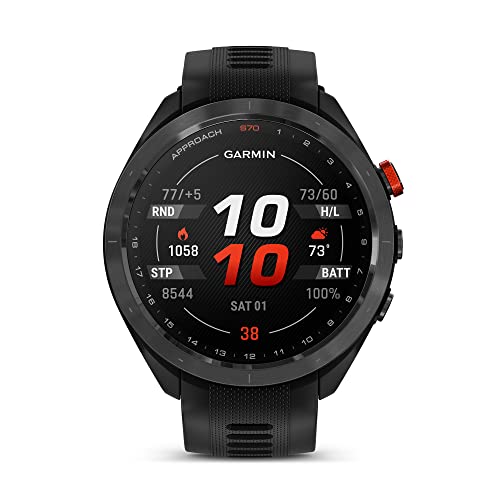
Garmin
Garmin Approach S70 (47mm)
Pick for glance-down distances, full course maps and shot tracking on your wrist.
ifrothgolf earns a commission on purchases made through these links, at no extra cost to you. It never changes what I recommend. Full disclosure.
Part of our guide toBest Golf Rangefinders 2026Want speed, simplicity and help around the whole hole? Start with a GPS watch. Want exact, attack-the-pin precision and you'll happily aim? Start with a laser. They answer the same question — how far is it? — in opposite ways, and which suits you matters far more than the brand or the badge. Here's how to choose the one to buy first, and when it's worth owning both.
How each works
A laser is point-and-shoot precision to a specific target — range the flag and you get the exact yardage to that pin, to the yard. A GPS watch is the opposite philosophy: it knows where you are on a preloaded course map and serves up instant, glance-down distances to the front, middle and back of the green, plus hazards and layups, without you aiming at anything. One is a sniper; the other is a map. That single difference is the whole decision, and everything below flows from it.
The GPS watch case
A watch like the Garmin Approach S70 is the friendlier daily driver: lift your wrist, read your numbers, keep moving — no reaching into the bag, no aiming, no holding steady. It maps the whole hole from 43,000-plus preloaded courses, gives you carries over a hazard you can't see and layup numbers on a blind dogleg, and doubles as a shot tracker and a proper everyday smartwatch with sleep, heart-rate and payments. In testing it lands within a yard or two of a laser to the middle of the green. The honest trade-off is precision and cost: a watch gives you green distances, not the exact yardage to a flag tucked back-left, and the best ones are a premium spend that often layers green-contour detail behind a subscription. A budget model strips all that back to clean front/middle/back numbers for a fraction of the price.
The laser case
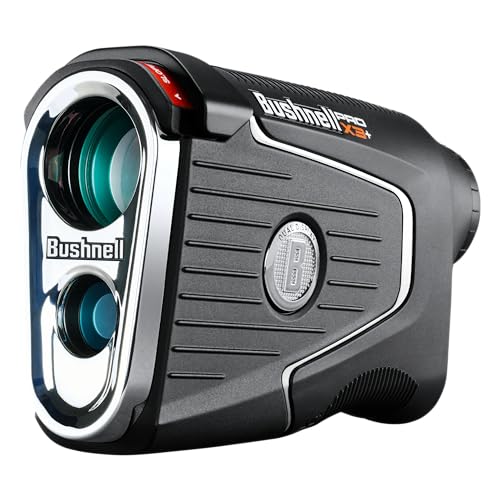
A laser like the Bushnell Pro X3+ is the precision tool: range the flag and you get the exact number, gold when you're dialled in and genuinely attacking pins rather than aiming at the fat of the green. The Pro X3+ pairs 7x optics with a fast, jolt-confirmed lock that picks a flag out of a busy backdrop from 600-plus yards, and it even factors temperature and altitude into a plays-like number. The trade-offs are real: you have to take it out, hold it steady and aim — harder than it sounds with cold or shaky hands, which is why image stabilisation matters — and it tells you nothing about the hazard you can't see over. Most lasers also have switchable slope, which raises its own question we tackle in is slope worth it.
What about cost and accuracy
Don't assume the laser is the dearer choice — it isn't necessarily. A flagship watch like the S70 sits around $650, in the same bracket as a flagship laser, while a basic GPS watch like the $190 Approach S12 undercuts almost any laser. On accuracy, both are trustworthy to within a yard or two; the difference is what they're accurate to. The laser is exact to whatever you point it at, the watch is exact to the green's mapped front, middle and back. If the pin is in the middle of a flat green, they'll agree. The gap opens up on a big green with a flag tucked at the very back, where the watch's middle number could be 15 yards short of the true pin distance — which is exactly when a confident player wants the laser.
Speed, pace of play and the practical stuff
There's a quieter argument that rarely makes the spec sheets: how each affects your round in practice. A watch is the faster of the two by a wide margin — you read it walking to your ball, with no break in stride, which keeps your group moving and your rhythm intact. A laser is a deliberate act: stop, take it out, raise it, aim, lock, lower it, put it away. That's a few seconds you don't notice on your own but that adds up across a fourball, and it's slower still in the cold or with gloves on, which is where stabilisation earns its money. The flip side is that a laser doesn't depend on your course being mapped, doesn't drain anything you need later, and never serves you a number for the wrong hole — a failure mode every GPS user has hit at least once. For a busy weekend course where pace matters, the watch usually wins; for a quiet round where you're genuinely shot-planning, the laser's deliberate pace is part of its appeal. There's a learning curve to a laser, too, that a watch doesn't have: holding it steady and consistently locking the flag rather than the backdrop takes a few rounds to master, which is one more reason newcomers tend to get on better starting with the wrist.
Which to buy first
Buy on temperament, not spec sheets. New to distance tech, or you value speed and whole-hole strategy and don't want to faff with aiming? Start with the watch — it's where most golfers should begin, and it covers the broader GPS watch vs phone app vs handheld question too. A confident ball-striker who attacks flags, plays the same handful of courses and doesn't mind aiming? Start with the laser. Who should buy a watch first: higher handicappers, course-strategy thinkers, and anyone who'll wear it daily. Who should buy a laser first: single-figure players, competitive golfers who attack pins, and anyone who finds wrist devices fiddly. Plenty of keen golfers end up with both — and a connected setup now even beams the laser's number straight to the watch, so the two stop being an either/or. The field's in our best rangefinders guide.
Frequently asked
- GPS watch or laser rangefinder — which is better?
- Neither; they're different tools. A GPS watch is faster and maps the whole hole with no aiming, giving front/middle/back green distances; a laser gives the exact yardage to a specific pin but needs aiming and can't see hidden hazards. Watch for speed and strategy, laser for precision.
- Which should I buy first?
- If you want speed, simplicity and whole-hole help, start with a GPS watch — that's most golfers. If you're a confident ball-striker who attacks pins, plays familiar courses and doesn't mind aiming, start with a laser.
- Is a GPS watch as accurate as a laser?
- Both are trustworthy to within a yard or two, but they measure different things. A laser is exact to whatever you aim at; a watch is exact to the green's mapped front, middle and back. They'll agree on a flat green, but the watch can read short when the pin is tucked at the back.
- Do I need both?
- Not to start — one covers most golfers comfortably. Many keen players add the second later, and some Garmin devices now connect so a compatible laser can relay its pin number straight to your watch, giving you both readings in one glance.
Read next
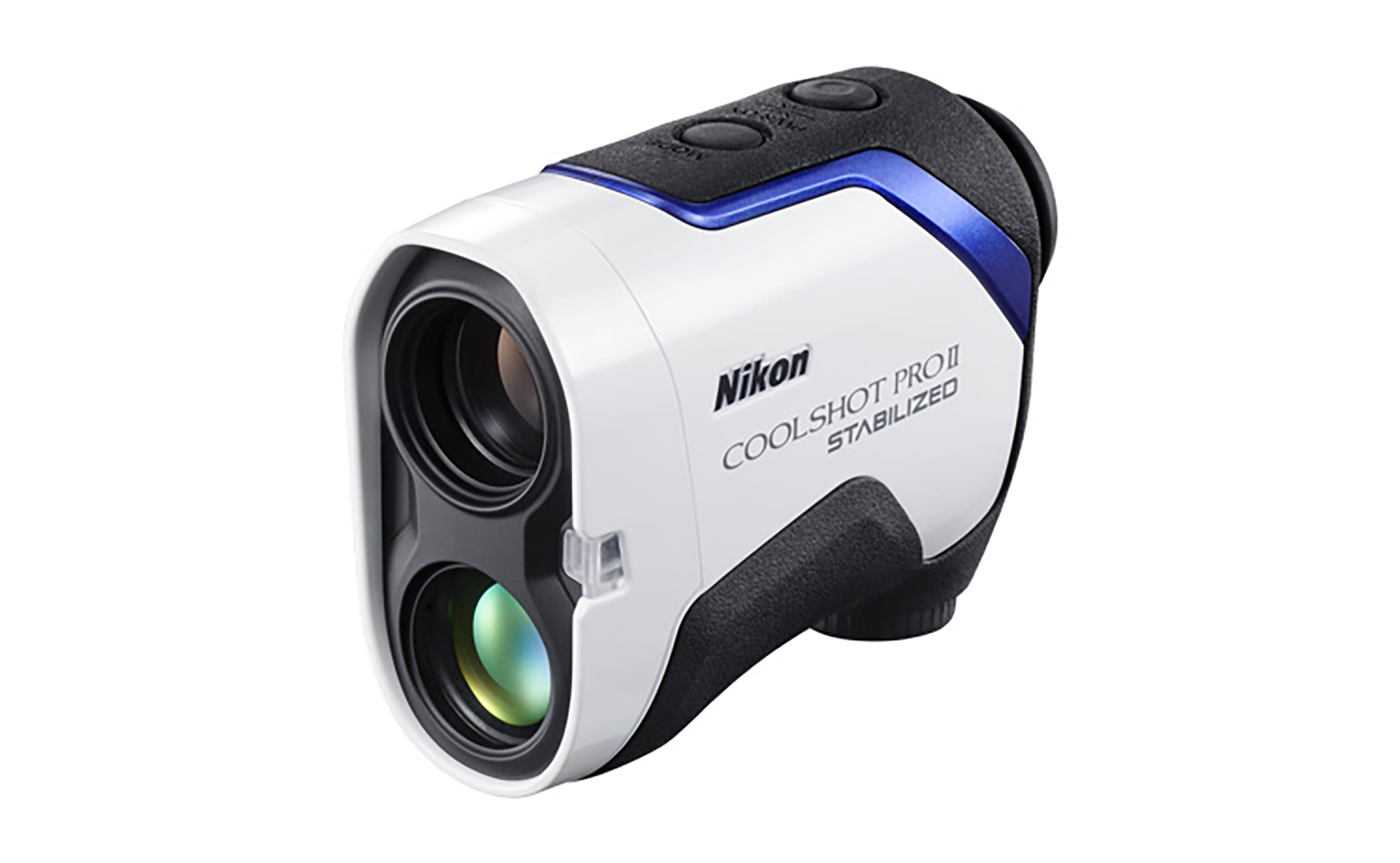
Versus
Nikon Coolshot Pro II vs Precision Pro NX10: how much rangefinder do you need?
One buys you the best optics and a gyro-stabilised picture; the other gives you most of the experience for a little over half the outlay. Which is the smarter buy?
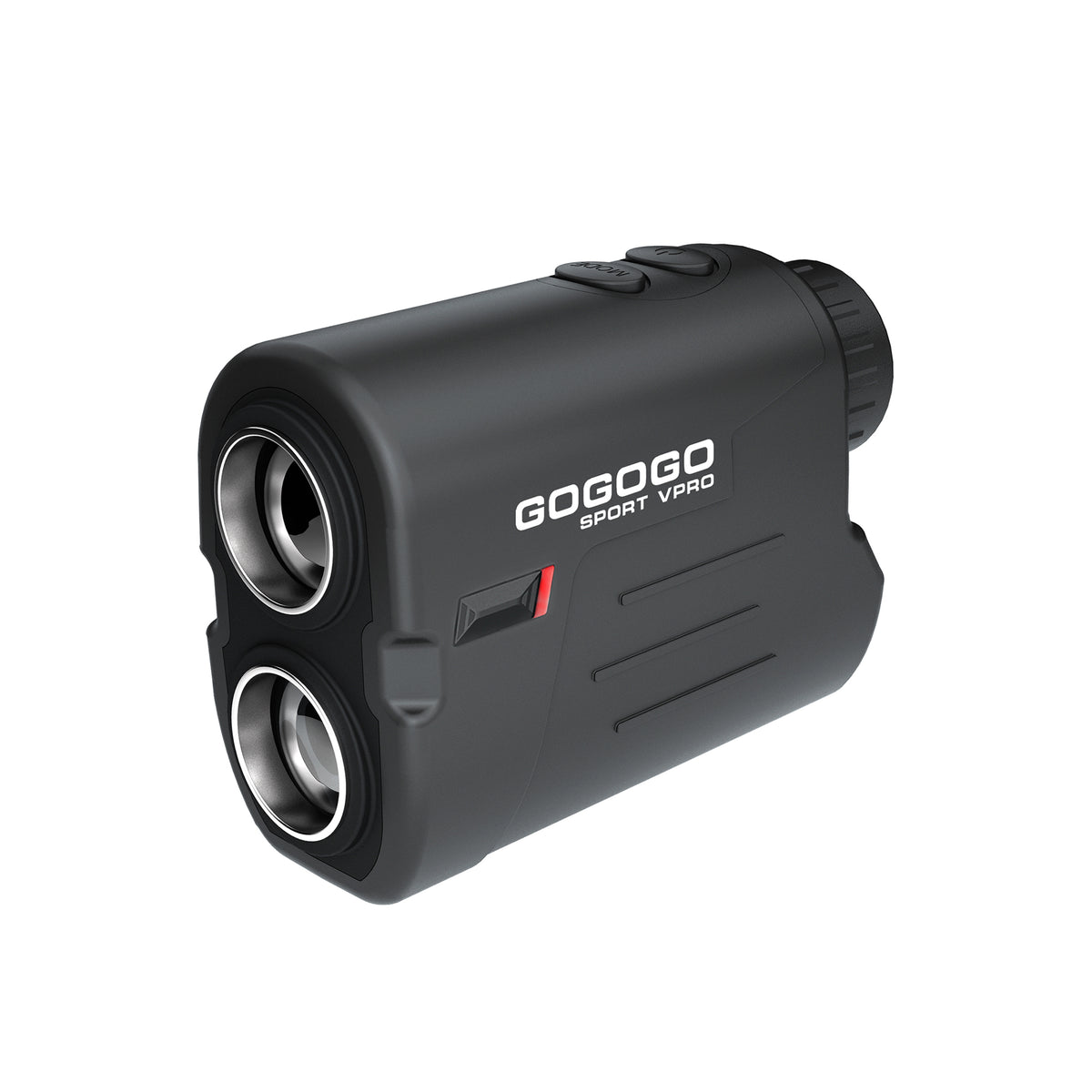
Versus
GoGoGo Vpro vs Bushnell Tour V7 Shift: do you really need to spend 5x?
A budget-laser icon against the tour-caddie standard — one costs roughly five times the other, and only one specific golfer actually needs the expensive one.
Review
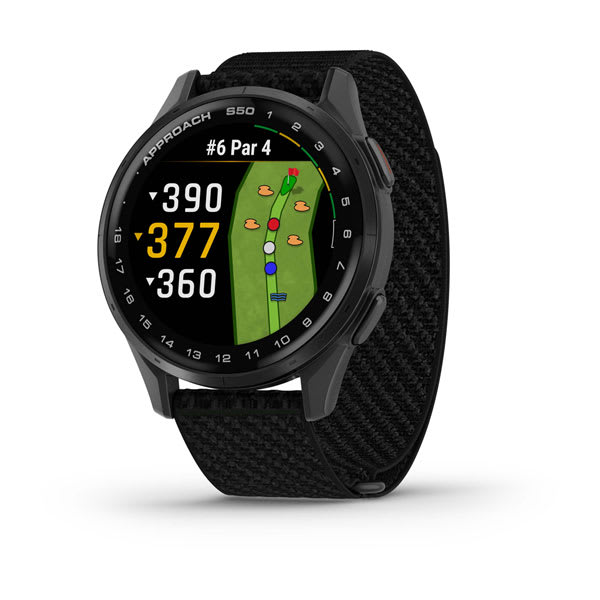
8.7/10Garmin Approach S50 review: the golf watch most people should actually buy
The S50 takes nearly everything that made Garmin's flagship special — the gorgeous AMOLED screen, slope-adjusted distances, shot tracking, wrist heart rate and Garmin Pay — and sells it for a lot less than double. For most golfers, this is the sweet spot.