
Garmin Approach S70 review: the GPS watch that does almost everything
A gorgeous AMOLED screen, full course maps and a battery that lasts. Is this the only piece of distance tech most golfers need?
By Jordan Hale · Equipment Writer
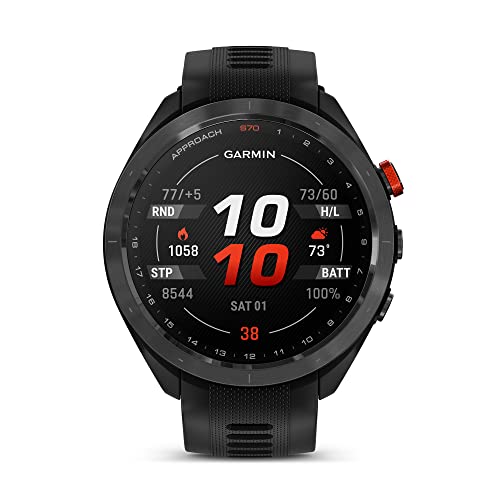
The verdict
Excellent
What's great
- Gorgeous, bright AMOLED screen that's easy to read in sunlight
- Full course maps, hazards, layups and a learning Virtual Caddie
- Doubles as a capable everyday smartwatch with strong battery life
Watch out
- Premium price, and the best green-contour data needs a paid subscription
- Touchscreen gets temperamental in rain and cold
- Gives green distances, not exact yardage to a specific pin
Bottom line — If you want one device for distances, strategy, stats and daily wear, the S70 is the most complete watch out there — just mind the subscription for green contours, and don't expect it to replace a laser's pinpoint precision.
Garmin
Garmin Approach S70 (47mm)
ifrothgolf earns a commission on purchases made through these links, at no extra cost to you. It never changes what I recommend. Full disclosure.
The Garmin Approach S70 is the most complete GPS watch in golf — a stunning AMOLED screen, full course maps, shot tracking and strong battery life in one device you'll also wear every day. It's a premium spend, the best green-contour data sits behind a subscription, and a laser still wins for exact pin numbers. But if you want one piece of distance tech that does almost everything, this is it, and here's exactly where it earns the money.
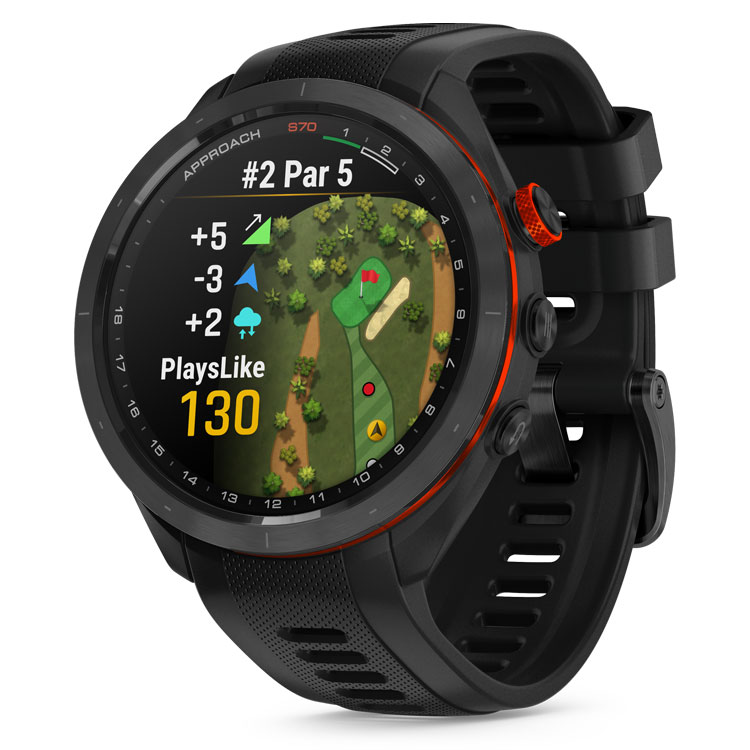
A golf computer on your wrist
It's Garmin doing what Garmin does best: full-colour CourseView maps of 43,000-plus preloaded courses, front/middle/back yardages at a glance, hazard and layup distances, and a Virtual Caddie that learns your game over a few rounds and suggests a club. PlaysLike distances fold in elevation and weather so a uphill 150 reads as the 158 it really plays. In independent testing the GPS locks on in seconds and lands within a yard or two of a laser to the middle of the green — and you can drag a target around the map to range a specific spot. For course strategy and quick numbers it's faster than pulling out any handheld, because there's nothing to pull out: you just lift your wrist.
Living with it
As a daily driver it's hard to fault. The 47mm AMOLED touchscreen is the headline and deserves it — bright, sharp and genuinely readable in full sun, a clear step up from the older transflective Garmins. Battery runs roughly 20 hours in GPS golf mode and up to 16 days as a smartwatch, so a full round barely dents it and charging anxiety is minimal, even with the always-on screen drinking more than the old displays. Off the course it's the full Garmin suite: sleep, Body Battery, VO2 max, payments and music, so it earns its place on your wrist seven days a week. It tracks your shots and stats too — the honest self-knowledge that actually lowers scores — and it now even pairs with a laser that beams the pin number to your wrist, closing the one gap a watch has always had.
The Virtual Caddie deserves a word, because it's the feature that separates a flagship from a numbers-only watch. Out of the box it's generic; give it a few rounds of shot data and it starts suggesting clubs based on how far you actually hit each one, factoring in the elevation and wind from PlaysLike. It won't replace your own judgement on a tricky shot, but as a sanity check — am I really an 8-iron from here, or am I kidding myself? — it nudges a lot of amateurs out of their habitual wrong club. Combined with the shot tracking, it turns the watch into a quiet feedback loop: play, record, see where your real distances and misses are, adjust. That's the part of the S70 that can genuinely lower a score over a season, as opposed to merely telling you a number faster.
The honest caveats
Two things temper the praise, and reviewers and owners flag both consistently. First, the touchscreen turns temperamental in rain and cold and gets fiddly when you're dragging the target cursor down a long par 5 — keep at it with the physical buttons in bad weather, which is exactly why Garmin kept them. Second, the best stuff costs extra: detailed green contours sit behind a Garmin Golf membership, which stings a little when you've already paid flagship money for the watch. Minor gripes pile up too — it can't tell walking from riding in a cart so your step count inflates, and full Apple Health syncing is patchy. None of it undermines the watch; all of it is worth knowing before you spend.
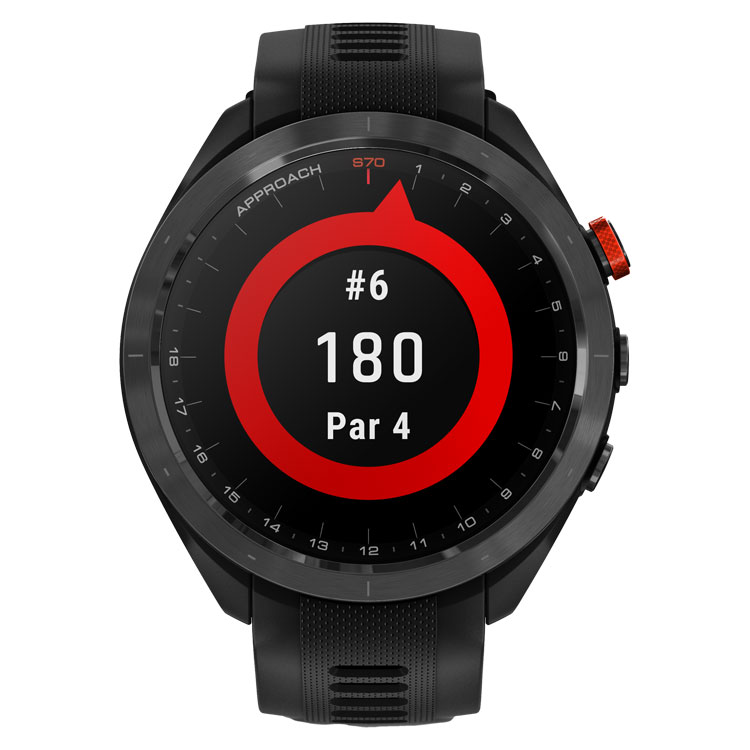
Is it worth the premium over a cheaper watch?
This is the real question for most buyers, because the S70 isn't competing only with lasers — it's competing with Garmin's own cheaper watches. A sub-$190 model like the Approach S12 gives you accurate front/middle/back numbers, hazard distances and a scorecard, which is genuinely all a lot of golfers use. The S70's premium buys four things on top: the gorgeous AMOLED screen and full-colour hole maps, PlaysLike elevation-and-weather distances, shot tracking and the learning Virtual Caddie, and a proper everyday smartwatch you'll wear off the course. If you'll lean on all four — especially the daily-wear part — the maths works, because you're replacing both a golf watch and a fitness watch. If you only ever glance at the green numbers, you're paying a flagship price for a basic job, and the cheaper Garmin is the smarter buy. Be honest about which golfer you are before you spend, because the gap is several hundred pounds.
Who should skip it
Two golfers. The one who only wants front/middle/back numbers — a far simpler, cheaper Garmin like the Approach S12 does exactly that for a fraction of the price, and we lay out that whole spectrum in GPS watch vs phone app vs handheld. And the precision-obsessed: a watch gives you green distances, not the exact yardage to a back-left pin, which is a laser's job (the trade-off we unpicked in GPS watch vs laser).
Who should buy it
The golfer who wants one device for distances, full-course strategy, shot tracking and everyday wear, and will genuinely use all of it. For that golfer it's about as complete as wrist golf gets — gorgeous, fast and dependable, the benchmark the rest of the field is measured against. The data-driven player who likes to track their game, the gadget lover, and anyone replacing both a fitness watch and a golf device will feel the value most keenly. See where it sits in our best golf GPS guide.
Where to buy
8.8/10Garmin
Garmin Approach S70 (47mm)
Garmin's flagship golf watch with a gorgeous AMOLED screen and full Virtual Caddie smarts.
ifrothgolf earns a commission on purchases made through these links, at no extra cost to you. It never changes what I recommend. Full disclosure.
Frequently asked
- Is the Garmin Approach S70 worth it?
- If you want one device for distances, course strategy, shot tracking and everyday smartwatch wear, yes — it's the most complete golf watch available. If you only need basic front/middle/back numbers, a cheaper Garmin like the S12 does that for a fraction of the price.
- GPS watch or laser rangefinder?
- A watch like the S70 is faster for whole-hole layout and needs no aiming; a laser gives the exact yardage to a specific pin. Many keen golfers carry both — the S70 now even links to a compatible Garmin laser that relays the pin number to your wrist.
- How's the battery life?
- Around 20 hours in GPS golf mode and up to 16 days as a smartwatch, so a full round barely dents it. The always-on AMOLED screen draws more than older transflective displays, but it's still strong by colour-screen standards.
- Do I need the Garmin Golf subscription?
- Not for the core experience — yardages, maps, hazards and shot tracking all work out of the box. The membership unlocks detailed green contours, which is a genuinely useful extra but feels cheeky given the watch's premium price.
Read next
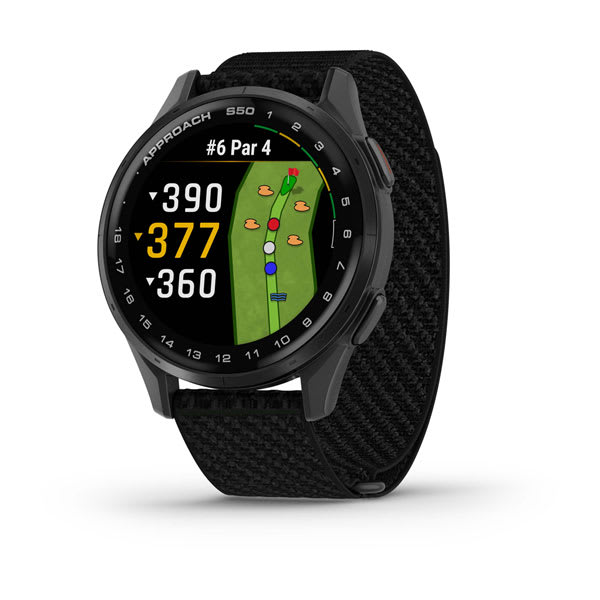
Versus
Garmin Approach S50 vs Shot Scope V5: slick watch or free game data?
Two very different GPS watches at two very different prices — one is the polished all-rounder, the other quietly tells you where you actually lose shots.
Review
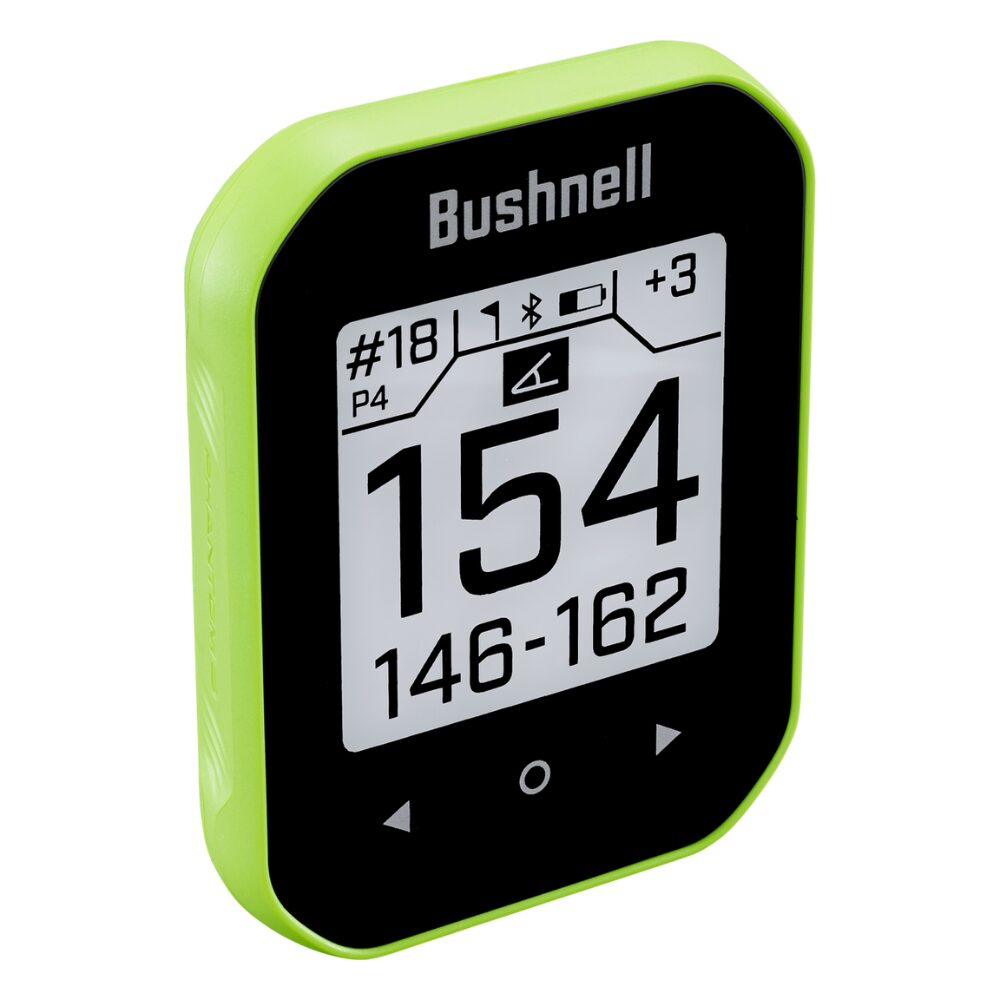
8.0/10Bushnell Phantom 3 review: the no-faff GPS that costs less than a wedge
No watch on your wrist, no laser to aim, no subscription — just big, glanceable yardages and slope in your pocket. For a lot of golfers that's the whole job, done, for the price of a decent round.
Review
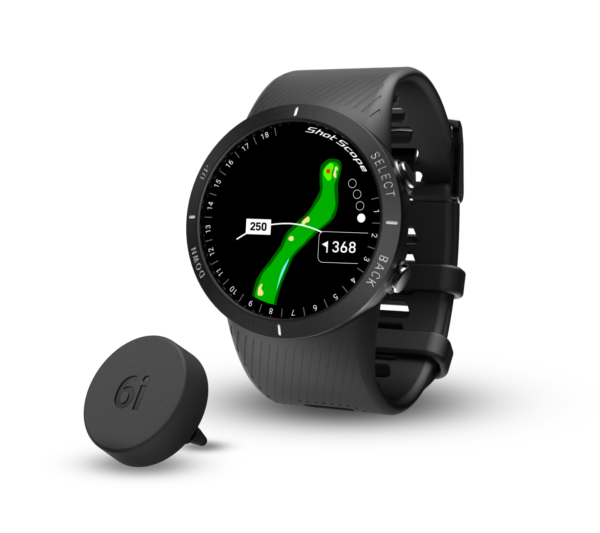
8.4/10Shot Scope V5 review: the golf watch that tracks your whole game for free
Most game-tracking systems hand you tour-level stats and then charge you monthly to keep them. The V5 gives you strokes gained and 100-plus stats on your own game with no subscription, ever — and that changes the maths entirely.