
GPS watch vs phone app vs handheld: how should you get your distances?
Three ways to know how far it is, and they suit very different golfers. The honest pros and cons of each.
By Jordan Hale · Equipment Writer
 Explained
For most golfers, a GPS watch is the sweet spot of speed and simplicity — glance at your wrist, read your number, keep moving. An occasional player can save the money and use a free phone app; a golfer who wants the exact yardage to a tucked pin should add a laser. They aren't really rivals so much as three rungs on a ladder, and where you sit depends on how often you play and how much precision you actually need. Here's how the three honestly stack up before you spend a penny.
Phone apps: the free entry point
Many are free or a few quid a year, and they give real golf-course data: front/middle/back yardages, full hole maps and accuracy that's genuinely within a yard or two of a dedicated watch — because they're using the same satellite positioning and the same mapped courses. For someone testing whether GPS distances even help their game, this is the no-risk way in. The catches are all practical rather than about accuracy. You pull your phone out and wake the screen every single shot, which is slower than a wrist glance and gets old fast over four hours. GPS hammers the battery, so an 18-hole round can leave your phone gasping by the back nine — exactly when you might need it for a lift home. And it's one more thing to drop, soak or leave on a bench. Fine for the occasional golfer; a faff for the regular.
GPS watch: the convenience king
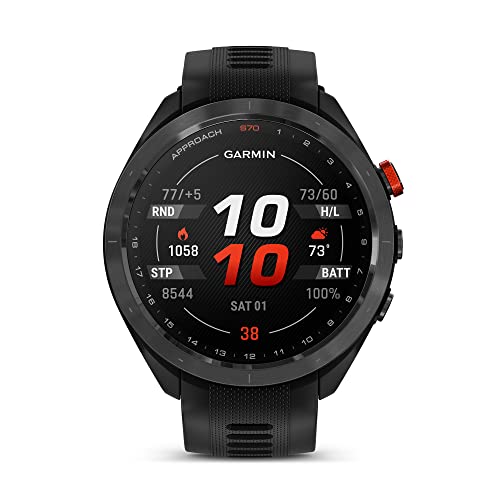
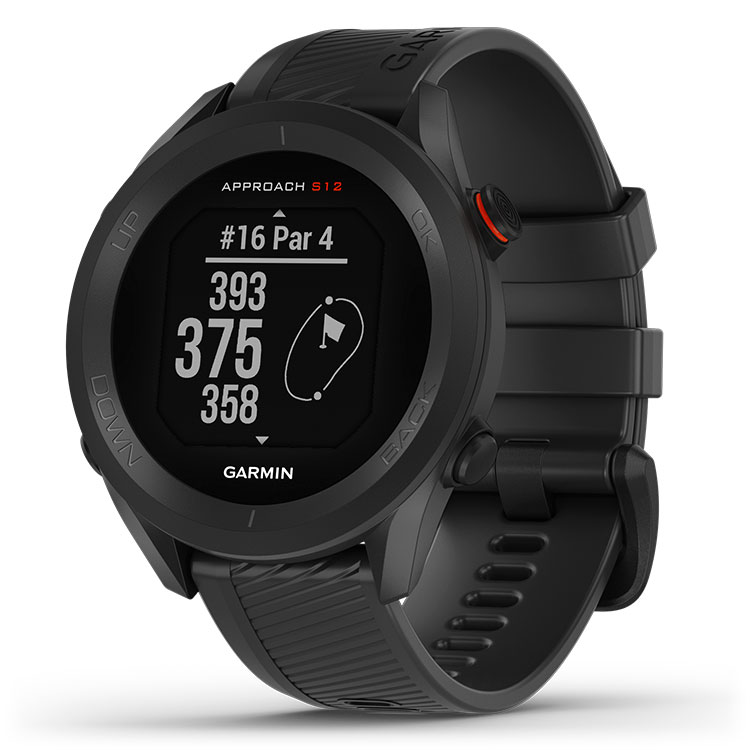
No phone, no faff — your numbers live on your wrist and you never break stride. This is where most regular golfers land, and the category splits cleanly by budget. A budget model like the Garmin Approach S12 strips it back to clean front/middle/back distances, hazard yardages and a simple scorecard on a display whose battery lasts weeks, all for around $190 — for a beginner or anyone who finds a phone fiddly mid-round, it's the easiest possible entry into GPS golf. A premium one like the Approach S70 adds full-colour course maps, PlaysLike elevation distances, shot tracking, a learning Virtual Caddie and proper everyday smartwatch use, at a flagship price nearer $650. Whichever tier you pick, the trade-off versus a laser is the same: a watch gives you green distances, not the exact yardage to a back-left pin.
The decision between the two watch tiers matters more than people expect, because it's a several-hundred-pound gap. The honest test is whether you'll wear it off the course. If a golf watch sits in a drawer between rounds, the cheap one is the smart buy — it does the on-course job nearly as well as the flagship and you're not paying for a fitness watch you won't use. If it'll live on your wrist every day, the premium model's screen, maps and health tracking start earning their keep seven days a week, and the cost spreads across two jobs rather than one. There's no shame in the budget tier; plenty of low handicappers use nothing more than front, middle and back, because that plus their own course knowledge is genuinely enough.
Handheld laser: the precision tool
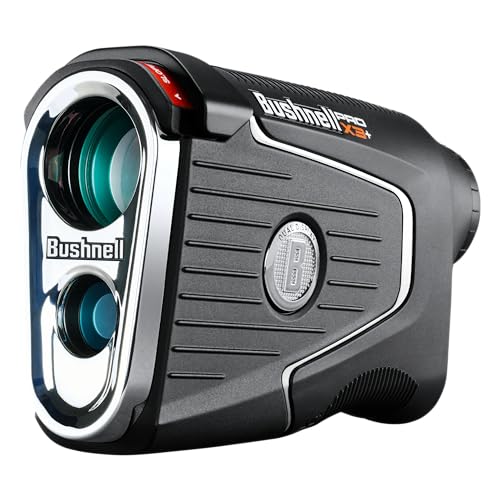
Point, shoot, exact number — a laser like the Bushnell Pro X3+ is unbeatable for the yardage to the flag itself, accurate to the yard with a fast, jolt-confirmed lock and 7x optics that pick a pin out of a busy treeline. For a confident ball-striker attacking flags, nothing else gives you that certainty. The downsides are the flip side of its strength: you have to take it out, hold it steady and aim it — harder than it sounds in cold or with shaky hands — and it tells you nothing about the hazard or the green's front edge you can't see over. It's also a single-purpose device, where a watch earns its keep off the course too. We went deeper on that head-to-head in GPS watch vs laser.
Can you mix and match?
You don't have to pick just one, and a lot of golfers don't. A common, sensible setup is a cheap GPS — even a free phone app — for the whole-hole picture (carries, layups, where the trouble is), paired with a laser for the exact number once you're in range of the green. The app handles strategy off the tee; the laser handles precision on the approach. That combination costs less than a flagship watch and arguably covers more bases, at the price of carrying two things. The newest twist closes the gap further: certain Garmin lasers now relay their pin reading straight to a compatible Garmin watch, so you get the laser's exactness displayed on your wrist alongside the watch's map — one ecosystem doing both jobs. If you already wear a Garmin watch, that connected route is worth weighing before you buy a standalone laser. The point is that these three categories aren't mutually exclusive; they're building blocks, and the right stack depends on how seriously you play.
Which should you buy?
Segment it honestly by how often you play and how precise you need to be. Occasional golfer who tees it up a handful of times a year — a free app is plenty; don't spend. Regular golfer who wants speed and zero faff — a GPS watch, and it's where most should start; pick the budget tier for plain numbers, the premium tier if you'll use the maps and wear it daily. Precision-focused or competitive player who attacks pins and doesn't mind aiming — a laser, either as your first buy or added later once you're serious. Plenty of keen golfers eventually run a watch and a laser together, and the gap between budget and premium watches is unpicked in our Garmin Approach S70 review. The full field is in our best golf GPS and best rangefinders guides.
Products mentioned in this article
ifrothgolf earns a commission on purchases made through these links, at no extra cost to you. It never changes what I recommend. Full disclosure.
Frequently asked
- Is a GPS watch or a laser rangefinder better for golf?
- A watch is faster and gives front/middle/back green distances at a glance with no aiming — best for most golfers. A laser gives the exact yardage to the flag but you must aim it steadily and it can't see hidden hazards. Many keen golfers eventually carry both.
- Is a free golf GPS app good enough?
- For an occasional golfer, yes — apps give accurate course distances and hole maps for free or a few pounds a year, within a yard or two of a dedicated watch. The downside is pulling your phone out every shot and the battery drain over 18 holes, which is what makes a dedicated watch worth it for regular players.
- Do GPS watches give pin-accurate distances?
- No — they give distances to the front, middle and back of the green, not to a specific pin position. They'll match a laser when the flag is in the middle of a flat green, but read short when it's tucked at the back. For the exact number to a tucked flag you need a laser rangefinder.
- What's the cheapest way to get GPS distances on the course?
- A free phone app costs nothing and is accurate. If you want a dedicated device that won't drain your phone or slow you down, a budget GPS watch like the Garmin Approach S12 covers front/middle/back numbers for around $190 with weeks of battery life.
Read next
Versus
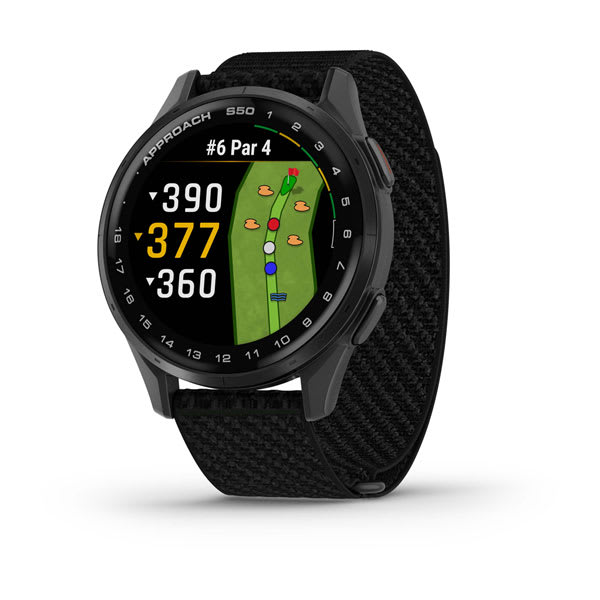
Garmin Approach S50 vs Shot Scope V5: slick watch or free game data?
Two very different GPS watches at two very different prices — one is the polished all-rounder, the other quietly tells you where you actually lose shots.
Review
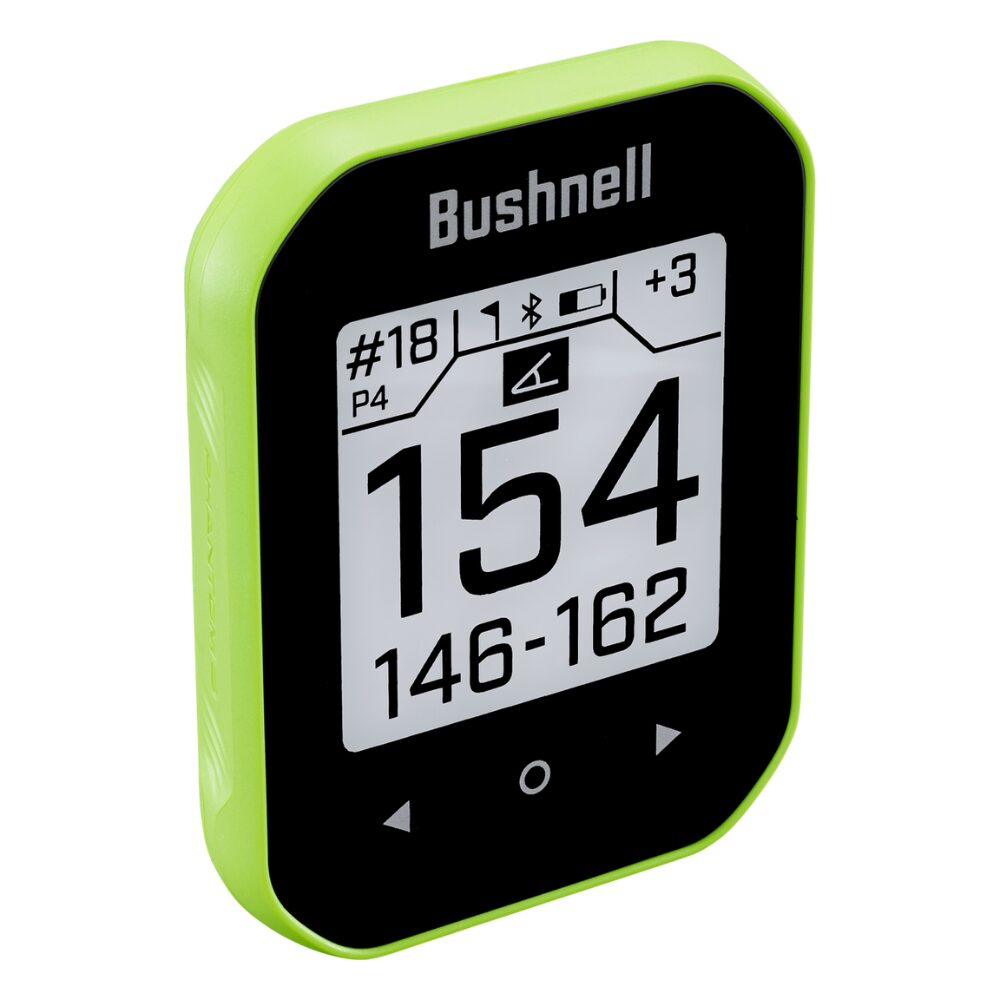
8.0/10Bushnell Phantom 3 review: the no-faff GPS that costs less than a wedge
No watch on your wrist, no laser to aim, no subscription — just big, glanceable yardages and slope in your pocket. For a lot of golfers that's the whole job, done, for the price of a decent round.
Review
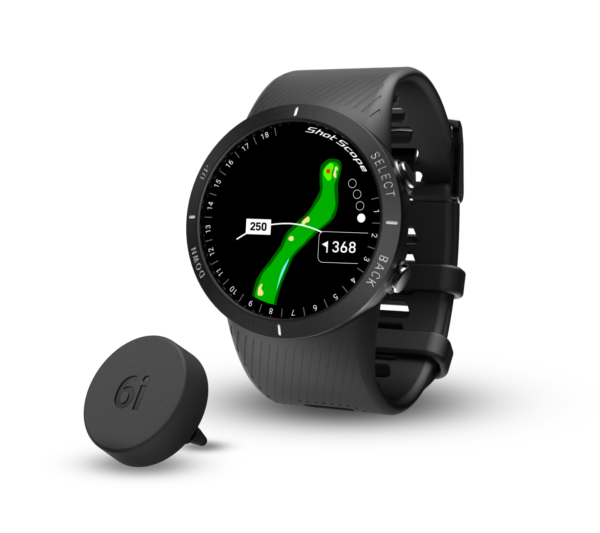
8.4/10Shot Scope V5 review: the golf watch that tracks your whole game for free
Most game-tracking systems hand you tour-level stats and then charge you monthly to keep them. The V5 gives you strokes gained and 100-plus stats on your own game with no subscription, ever — and that changes the maths entirely.