
Golf shoes stopped looking like golf shoes — and got better for it
The saddle-shoe uniform is dead. The best-selling golf shoes of 2026 look like running shoes and lifestyle sneakers, the upstarts that forced the change came from cricket and the minimalist-comfort school, and the real spec now is whether you can wear them home. That's progress, not decline.
By Tom Whitaker · Staff Writer
 Opinion
Put a 2026 best-seller next to a golf shoe from fifteen years ago and the older one looks like a museum piece: white leather, contrast saddle, kiltie optional, the unofficial uniform of the game since roughly the Eisenhower administration. Now look at what's actually selling. The hottest golf shoes of 2026 look like running shoes and lifestyle sneakers — knit uppers, foam midsoles, silhouettes you'd wear to an airport without explanation. Here's the position: this isn't golf losing its identity to fashion. It's golf footwear finally being designed around feet instead of dress codes, and the shoes got genuinely better the moment they stopped dressing for the clubhouse.
The uniform nobody chose
The saddle shoe wasn't a performance decision; it was an inheritance. For decades the category's design brief started with how a golf shoe was supposed to look and worked backwards, which is how the game ended up with stiff leather boxes that needed breaking in like cricket bats and felt like dress shoes with cleats — because that's literally what they were. The tell is what happened when real footwear engineering finally arrived: nobody asked for saddles back. Comfort won every blind test that mattered, which is the market's way of admitting the old uniform was never about the golf. We've already litigated the traction question elsewhere — spikeless won that argument — but this is a different point. That was about what's under the shoe. This is about what the shoe is: who designs it, what it looks like, and what it says about who golf thinks it's for.
The outsiders forced it
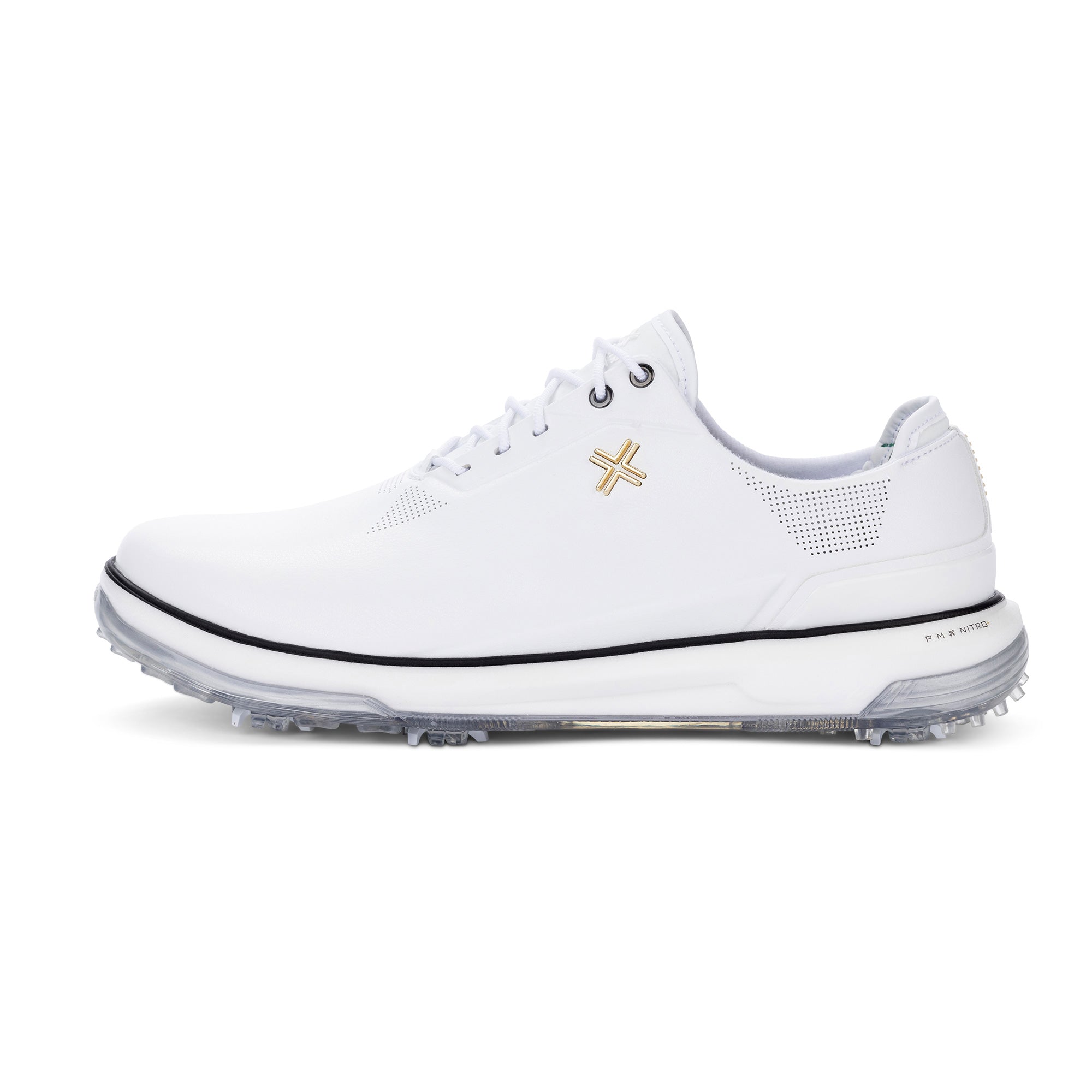
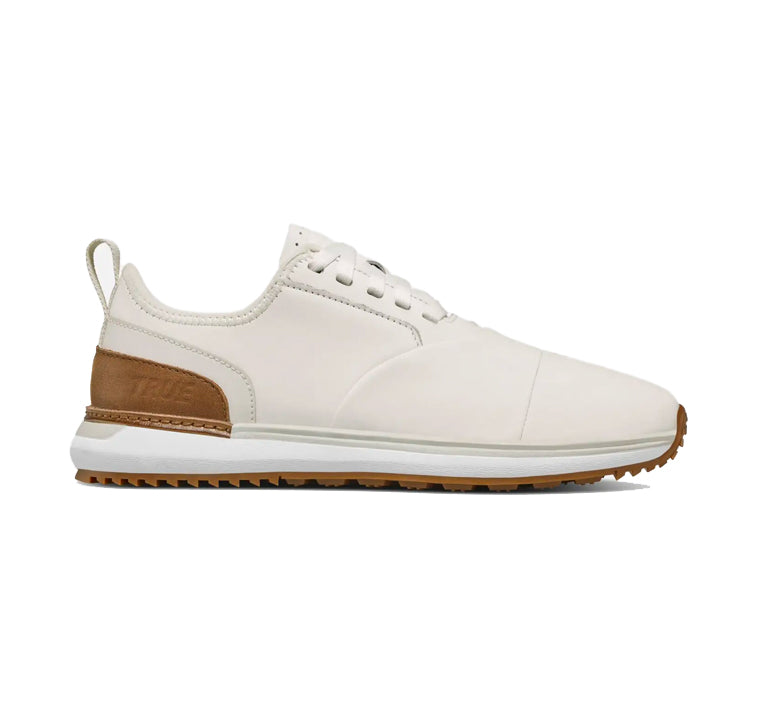
The big three didn't lead this shift; they were dragged into it, and the dragging was done by brands with no reverence for the saddle. PAYNTR arrived from cricket footwear — a sport with its own crusty shoe traditions — and treated golf as a fresh engineering problem. The result, the PAYNTR Eighty Seven SC, hides a carbon-fibre propulsion plate above the outsole like a modern racing shoe, built with Jason Day and reviewed rapturously by the golf press. It nods to a classic leather look, but its heart is pure performance-sneaker thinking, and stock sells out accordingly. TRUE Linkswear came from the opposite direction — the minimalist, walking-comfort school — and its LUX Pro is the thesis stated plainly: a low-drop, superfoam-cushioned leather shoe that plays 18 and walks into a bar without a costume change. Neither brand existed in golf's old order, neither carries a decade of saddle-shoe inventory to protect, and both now set the pace for a category the incumbents thought was settled.
The empire wears trainers now
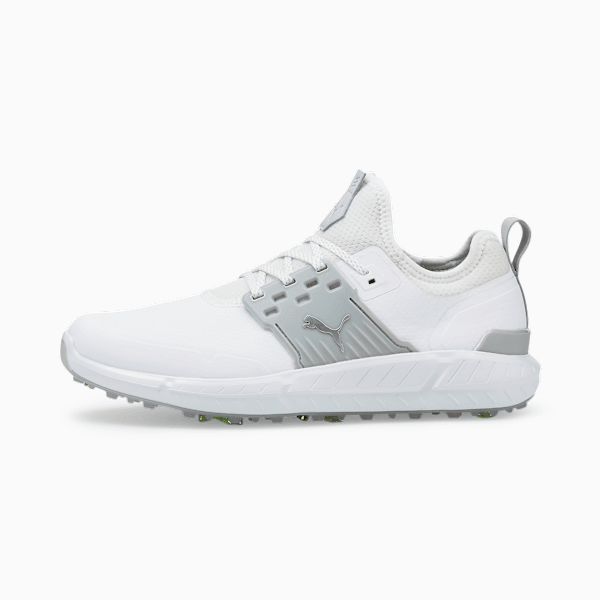
Watch what the giants did next, because it's the whole story in miniature. Nike's Air Zoom Infinity Tour NEXT% spikeless is a tour-level platform that leans hard into the modern sneaker look — breathable mesh, Air Zoom cushioning, a silhouette borrowed from the running wall — and it's one of the easiest shoes in the category to recommend. Puma's Ignite Articulate runs the brand's springy Ignite foam straight from its running line, with a sock-like bootie fit and grooves that let the shoe flex with your foot — and notably it does all this on cleats, proof that the sneaker takeover is about design language and comfort engineering, not just the spikeless sole. When the incumbents are shipping running-shoe technology under both spiked and spikeless golf shoes, the argument is over. The upstarts didn't take a niche; they took the roadmap.
The real spec sheet has one line
Strip the marketing and the test that now decides purchases is brutally simple: can you wear them to the course, play 18, and wear them home — to the errand, the school run, the beer garden — without thinking about it? Call it the wear-them-home test. It sounds like a lifestyle indulgence and it's actually a performance spec, because a shoe comfortable enough to forget about for twelve hours is a shoe that isn't distracting you over a five-footer on the seventeenth. It also quietly rewrites the economics: a golf shoe you only wear for golf has to justify its price across maybe thirty rounds a year, while a shoe that lives in your normal rotation amortises itself. The old category logic — one stiff pair for golf, real shoes for real life — now reads like paying twice. And it explains who the new shoes recruited: the golfer in their twenties or thirties who was never going to buy a saddle shoe at all now has a dozen options that look like the rest of their wardrobe, which is a bigger deal for the game's front door than any grow-the-game campaign.
What the traditional shoe still owns
Credit where due: the classic look isn't dead, it's just been demoted from default to occasion-wear. Some clubs still expect a traditional silhouette and will for decades, and there the saddle belongs — turning up to a formal member-guest in something that looks fresh off a half-marathon reads as a statement whether you mean it or not. And a well-made classic leather golf shoe remains the pick for genuinely formal golf: it polishes, it patinas, it matches tailoring the way no knit upper ever will. If your golf lives at that end of the game, buy beautiful leather and ignore all of this. But that's the concession, not the argument. The centre of the market has moved, the shoes are better for it, and the wear-them-home era is producing the best golf footwear the game has ever had. The proof is in our best spikeless golf shoes guide — and the rest of the category lives in shoes.
Products mentioned in this article
PAYNTR
PAYNTR Eighty Seven SC Golf Shoes
The upstart flagship: cricket-shoe pedigree, a carbon plate under a classic leather look — the new wave's proof of concept.
TRUE Linkswear
TRUE Linkswear LUX Pro
The comfort-school pick: a premium leather walking shoe you can play 18 in and wear straight to the bar.
Nike
Air Zoom Infinity Tour NEXT% Spikeless
The big-brand response done right: a tour platform that walks like the running shoe it resembles.
Puma
Puma Ignite Articulate
Running-shoe DNA on cleats: Puma's springy Ignite foam and a sock-like fit, for those who still want spikes under the sneaker.
ifrothgolf earns a commission on purchases made through these links, at no extra cost to you. It never changes what I recommend. Full disclosure.
Frequently asked
- Why do modern golf shoes look like sneakers?
- Because brands started designing around foot comfort and athletic-footwear engineering — foam midsoles, breathable uppers, flexible outsoles — instead of the traditional dress-shoe template. Upstart brands from outside golf forced the shift, and the major manufacturers followed once comfort-led shoes started outselling classic styles.
- Are sneaker-style golf shoes allowed at golf clubs?
- At the vast majority of courses, yes — spikeless and sneaker-style golf shoes are standard now. A minority of traditional clubs still expect a classic silhouette, especially for formal events, so it is worth checking the dress code before a member-guest or a round at an older private club.
- Is PAYNTR a real golf brand?
- Yes — PAYNTR came from cricket footwear and moved into golf, where its Eighty Seven SC, developed with Jason Day and built around a carbon-fibre propulsion plate, became one of the most talked-about shoes in the game. Stock regularly sells out in popular sizes.
- Do sneaker-style golf shoes perform as well as traditional ones?
- Generally yes, and often better for walking golfers: modern foam cushioning and flexible construction reduce fatigue over 18 holes, and tour-derived outsoles grip well in most conditions. A classic leather shoe still has a place in formal settings and at traditional clubs, but the performance argument now favours the modern designs.
Read next
Review
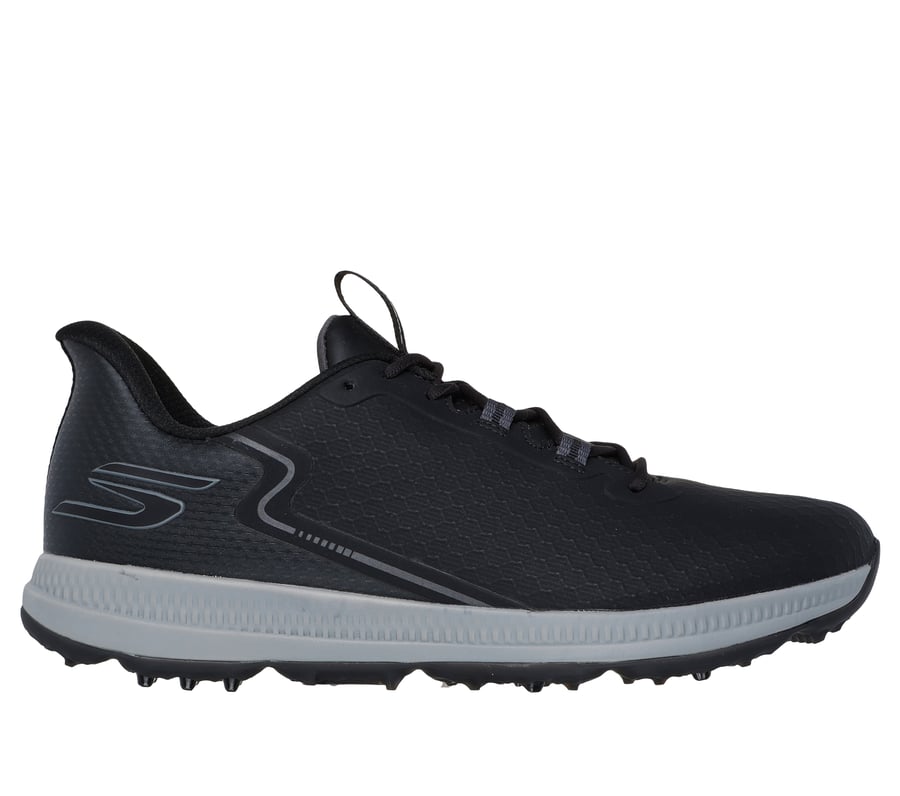
8.0/10Skechers GO GOLF Elite 6 review: is 'most comfortable shoe in golf' enough?
Skechers keeps winning the comfort argument on golf shoes. Whether that's the shoe you should buy depends entirely on how — and where — you play.
Review
8.4/10TRUE Linkswear LUX Pro review: the cult walking shoe that plays 18 then goes to the pub
A premium leather spikeless shoe built around walking comfort rather than a tour athlete's swing — for the golfer who walks and hates changing shoes afterwards, it's a revelation.
Opinion
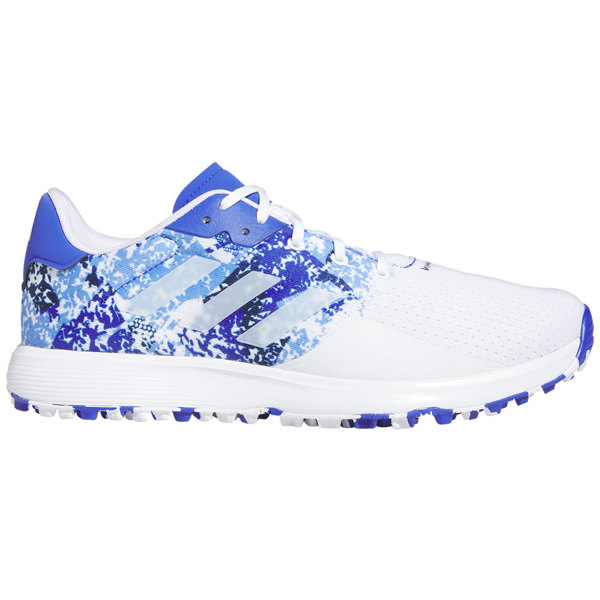
Spikeless won. Stop arguing about it.
The 'spikes for grip' line is a decade out of date. For the golf most of us play, spikeless is simply the better shoe — and it's not close.