
Your spikeless shoes lost their grip months ago and they still look brand new
A spiked shoe tells you when it is finished: you can see the worn cleat and replace it for pennies. A spikeless outsole never does. The lugs quietly round off somewhere around 50 to 80 rounds, the upper keeps looking immaculate, and you start blaming your swing for a slip that is actually your left shoe.
By Dan Mercer · Editor
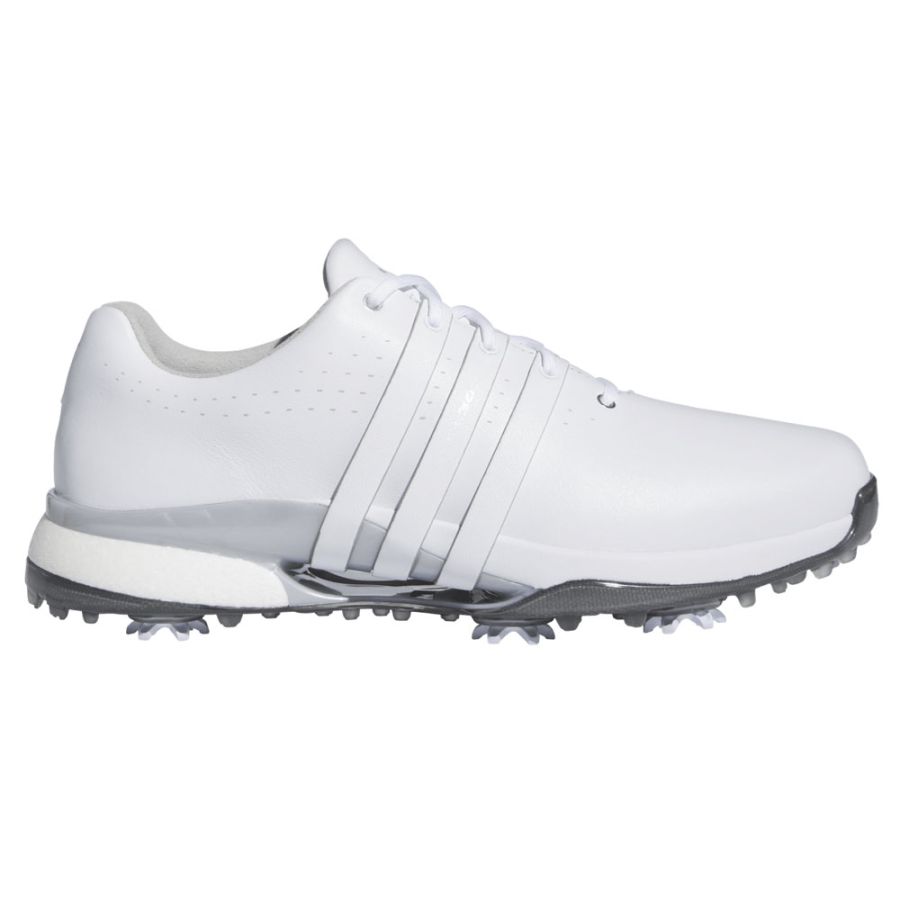
adidas
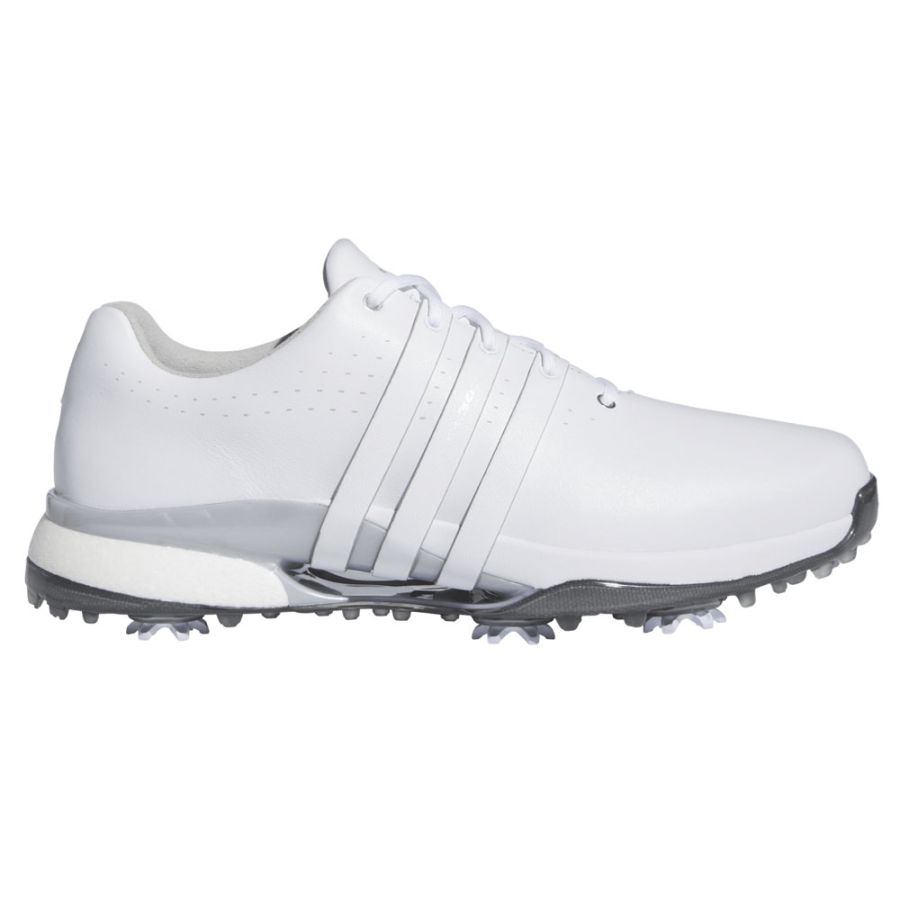
adidas Tour360 24 Spikeless
There is a moment that happens to almost every spikeless owner and almost nobody diagnoses correctly. You are on a slightly damp par three, slightly downhill lie, and your trail foot moves through impact. Not a fall. Just a slide of a couple of centimetres that pulls the low point forward and leaves the shot thin and right. You think about your weight shift. You think about the lie. You do not think about your shoes, because your shoes look new.
They probably are not. And unlike the spiked pair they replaced, they were never going to tell you.
Spiked shoes fail loudly, spikeless shoes fail silently
This is the whole point, so it is worth being precise about it. A spiked shoe wears at a discrete, visible, replaceable part. A cleat rounds off, or shears, or falls out in the car park, and you can see it. You know. You buy a bag of replacements for less than a sleeve of balls, spend ten minutes with a wrench, and the shoe is functionally new again. The soft-spike system is, in effect, a service interval.
A spikeless outsole has no service interval, because the traction is moulded into the sole. There is no part to inspect and no part to swap. When it degrades, the shoe does not change its appearance in any way you would notice — the leather still looks good, the laces are fine, the sole still has a tread pattern on it. It has just stopped being the tread pattern you paid for.
What is actually wearing
Three things, and only one of them is obvious.
The first is lug depth, which is the one people check. Tread wears down, you can see it, fine. But it is the least important of the three, because a spikeless outsole loses its bite long before the lugs are visibly flattened.
The second is lug edge geometry, and this is the real culprit. A fresh spikeless lug has a crisp, sharp perimeter — a defined edge that bites into turf the way a tyre's sipes bite into a wet road. Grip comes from that edge, not from the depth behind it. Wear rounds the edge off first. A lug that has lost two millimetres of height but kept a sharp edge still grips. A lug at nearly full height with a rounded, polished edge does not. That is why the visual inspection everyone performs is the wrong one.
The third is the rubber compound itself. Softer, grippier rubber hardens with heat cycles, UV, and simply time. An outsole that has spent two summers in a car boot has changed chemically whether or not you played in it. Hardened rubber deforms less under load, which means less contact area, which means less friction. It is the same reason old tyres are dangerous at full tread depth.
Put those together and the honest working range most people should assume is somewhere around 50 to 80 rounds before traction has meaningfully declined — sooner if you walk on hard, dry ground, which polishes lugs faster than soft turf does.
How to check yours properly, in about fifteen seconds
Turn the shoe over and ignore the middle of the sole. Look at the lugs directly under the ball of the trail foot — right shoe for a right-hander. That is the pressure point where the whole downswing loads, and it wears several times faster than the heel or the arch.
Now run a fingernail across a lug edge there, then do the same on a lug near the instep that barely gets loaded. If the pressure-point edge feels noticeably rounder and smoother than the sheltered one, you have your answer. Compare the two areas rather than judging one in isolation — the sheltered lug is a free reference sample of what your own shoe looked like when new.
The second check is a fingernail press into the rubber. If the reference area gives slightly and the pressure area feels glassy and hard, the compound has gone off. Both checks take longer to read about than to perform, and doing one at the end of each season is the entire maintenance regime for a spikeless shoe.
What this does to the buying decision
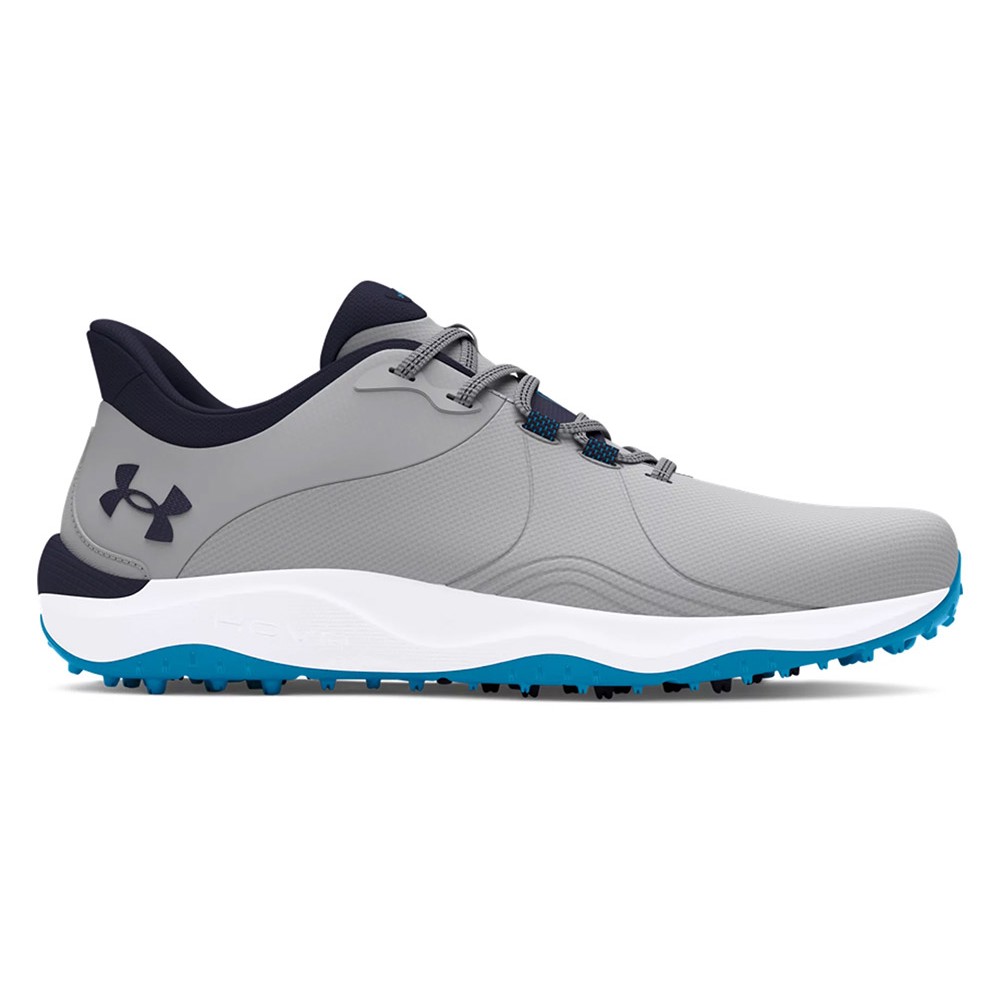
Spikeless is still the right default for most golfers. Better to walk in, better in the clubhouse, better on cart paths, more comfortable over eighteen, and modern versions grip well enough that the traction argument is mostly settled for anyone playing sensible conditions. The Under Armour Drive Pro Spikeless is the shape of the category done right — it grips like a shoe with cleats, wears like a trainer, and walks a full round without punishing your feet. Nothing here is an argument against buying spikeless.
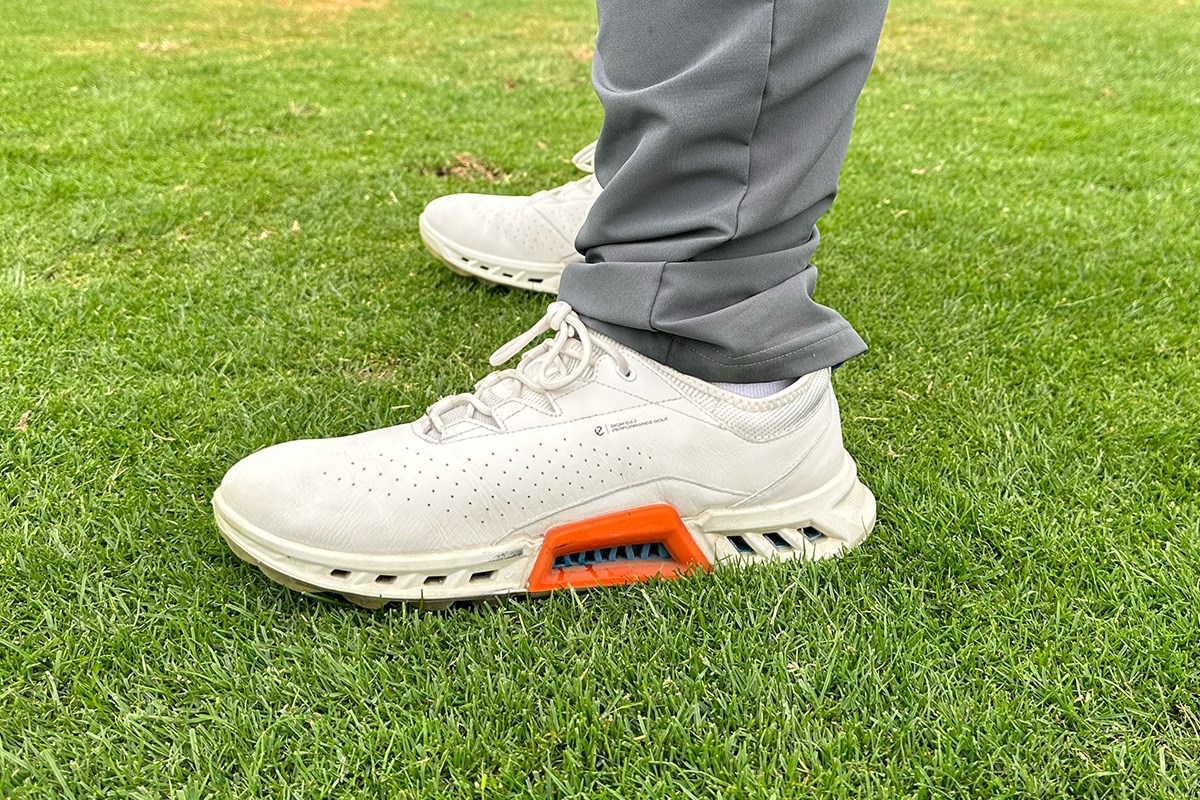
It is an argument about how you spend on it. Because a spikeless shoe is a consumable and a spiked shoe is not, the value maths change as the price goes up. Spend heavily on a spiked shoe and you are buying an upper, a chassis and a waterproof membrane that will outlast many outsole cycles, because you can keep renewing the traction. Spend heavily on a spikeless shoe and you are buying an upper that will comfortably outlive the only part of the shoe that does the gripping. The ECCO Biom C5 is a genuinely excellent shoe — the Scandinavian construction and natural weatherproofing are not marketing — and it will very likely still look and feel premium at a point when its outsole has quietly stopped doing its job. That is not a criticism of the shoe. It is the category.
Where we would spend
Our position: at the top of the spikeless range, you are paying for comfort, materials and waterproofing, all of which are real and worth money. You are not paying for longer traction life, and you should not assume you are. So buy a premium spikeless shoe because you want to wear it, not because you expect it to last proportionally longer.
If you play a lot, the better strategy is a good mid-price spikeless in rotation, replaced honestly on the fifteen-second check above, rather than one expensive pair kept two years past its grip. If you want one nice pair, put the money into a shoe like the adidas Tour360 24 Spikeless, where the leather upper and stability chassis genuinely justify the spend, and then accept up front that the sole is on a clock.
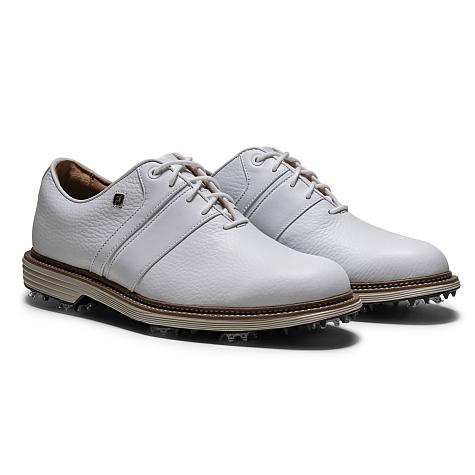
There is a third route worth naming. A traditional leather shoe such as the FootJoy Premiere Series Packard is built to be kept for years, which makes the outsole question the deciding one: check whether the pair you are looking at has replaceable cleats or a bonded spikeless sole, because that single detail determines whether the upper's longevity is an asset or an irrelevance. Retailers list it either way, and it is the spec buyers most often skip.
Who should still buy spiked
Three groups, and they should not be talked out of it. If you play wet courses regularly — genuine winter golf on soft, saturated turf — replaceable cleats give you traction a moulded lug cannot match when the surface is moving under you. If your home course is properly hilly, with steep side slopes and uphill lies, the same applies for the walking as much as the swinging. And if you swing hard enough that you feel your feet working at the top, the extra bite is worth the slightly worse cart-path experience. Something like the adidas Tour360 24 covers that brief without giving up modern comfort.
Everyone else: stay spikeless, but stop treating the shoe as a durable good. Check the trail-foot lugs at the end of each season, compare them against a sheltered lug on the same sole, and replace when the edges have gone. It is a cheaper fix than the swing lesson you were about to book. For the wider argument on the two systems, see spikeless versus spiked golf shoes, and our full shoes coverage for what is worth buying now.
Products mentioned in this article
adidas
adidas Tour360 24 Spikeless
A proper tour shoe in spikeless clothing — leather and real stability, which is exactly why the outsole outlives its grip.
Under Armour
Under Armour Drive Pro Spikeless
Grips like a spiked shoe and wears like a trainer, which makes it the sensible place to spend if you replace often.
ECCO
ECCO Biom C5 Golf Shoe
Premium Scandinavian build and weatherproofing, and the clearest example of the value maths this piece is about.
FootJoy
FootJoy Premiere Series Packard
Full-grain leather built to last years, so the outsole question decides whether the upper ever gets to.
adidas
adidas Tour360 24 Golf Shoes
The spiked answer for wet courses and steep ground, where replaceable cleats are worth the walk.
ifrothgolf earns a commission on purchases made through these links, at no extra cost to you. It never changes what I recommend. Full disclosure.
Frequently asked
- How long do spikeless golf shoes keep their grip?
- Assume somewhere around 50 to 80 rounds before traction has meaningfully declined, and less if you walk mostly on hard, dry ground. The shoe will usually still look close to new at that point, which is why so many golfers keep playing them well past it.
- How can I tell if my spikeless shoes have worn out?
- Look at the lugs directly under the ball of your trail foot, which is the pressure point. Run a fingernail across a lug edge there, then across a sheltered lug near the instep. If the pressure-point edge is noticeably rounder, smoother or harder than the sheltered one, the traction has gone.
- Can you replace the grip on spikeless golf shoes?
- No. The traction is moulded into the outsole, so there is no cleat to swap. That is the core difference from a spiked shoe, where worn cleats cost very little to replace and effectively reset the shoe's grip.
- Is it worth paying more for premium spikeless golf shoes?
- For comfort, materials and waterproofing, yes. For grip life, no. A more expensive spikeless shoe does not generally hold its traction longer, so the extra spend buys you a nicer shoe to wear rather than a longer-lasting one.
Read next
Review
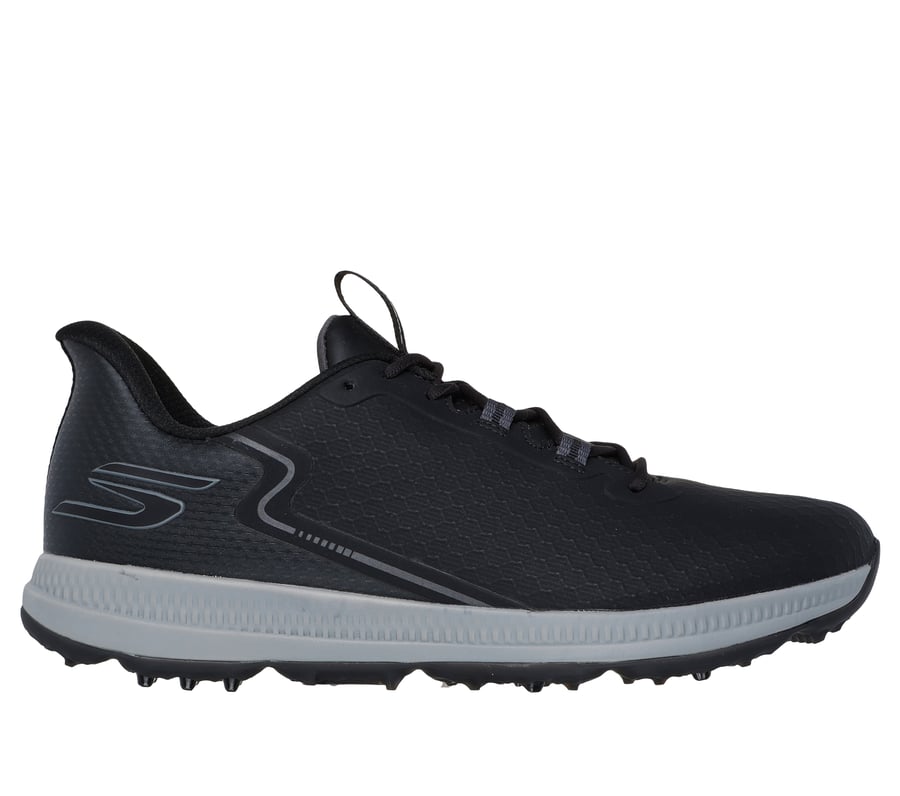
8.0/10Skechers GO GOLF Elite 6 review: is 'most comfortable shoe in golf' enough?
Skechers keeps winning the comfort argument on golf shoes. Whether that's the shoe you should buy depends entirely on how — and where — you play.
Review
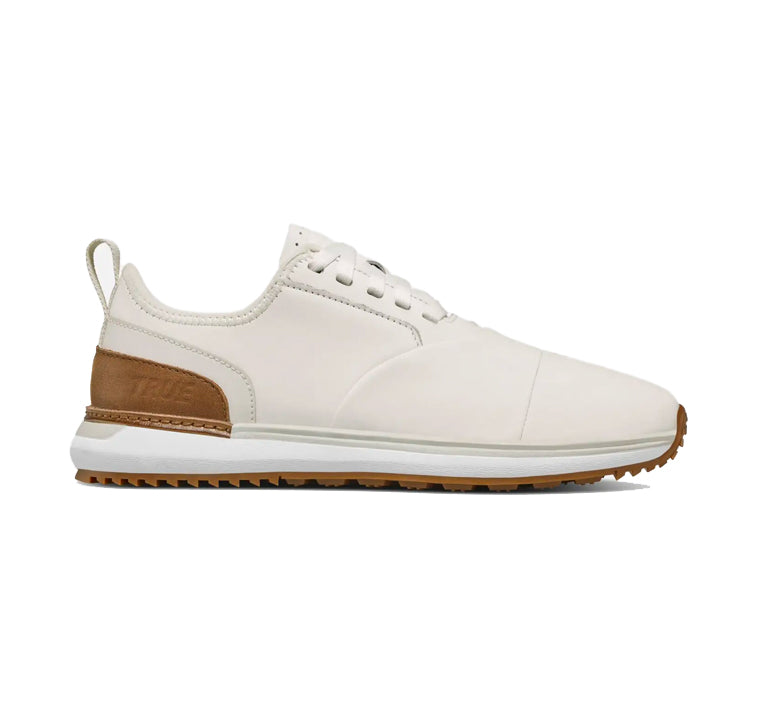
8.4/10TRUE Linkswear LUX Pro review: the cult walking shoe that plays 18 then goes to the pub
A premium leather spikeless shoe built around walking comfort rather than a tour athlete's swing — for the golfer who walks and hates changing shoes afterwards, it's a revelation.
Opinion
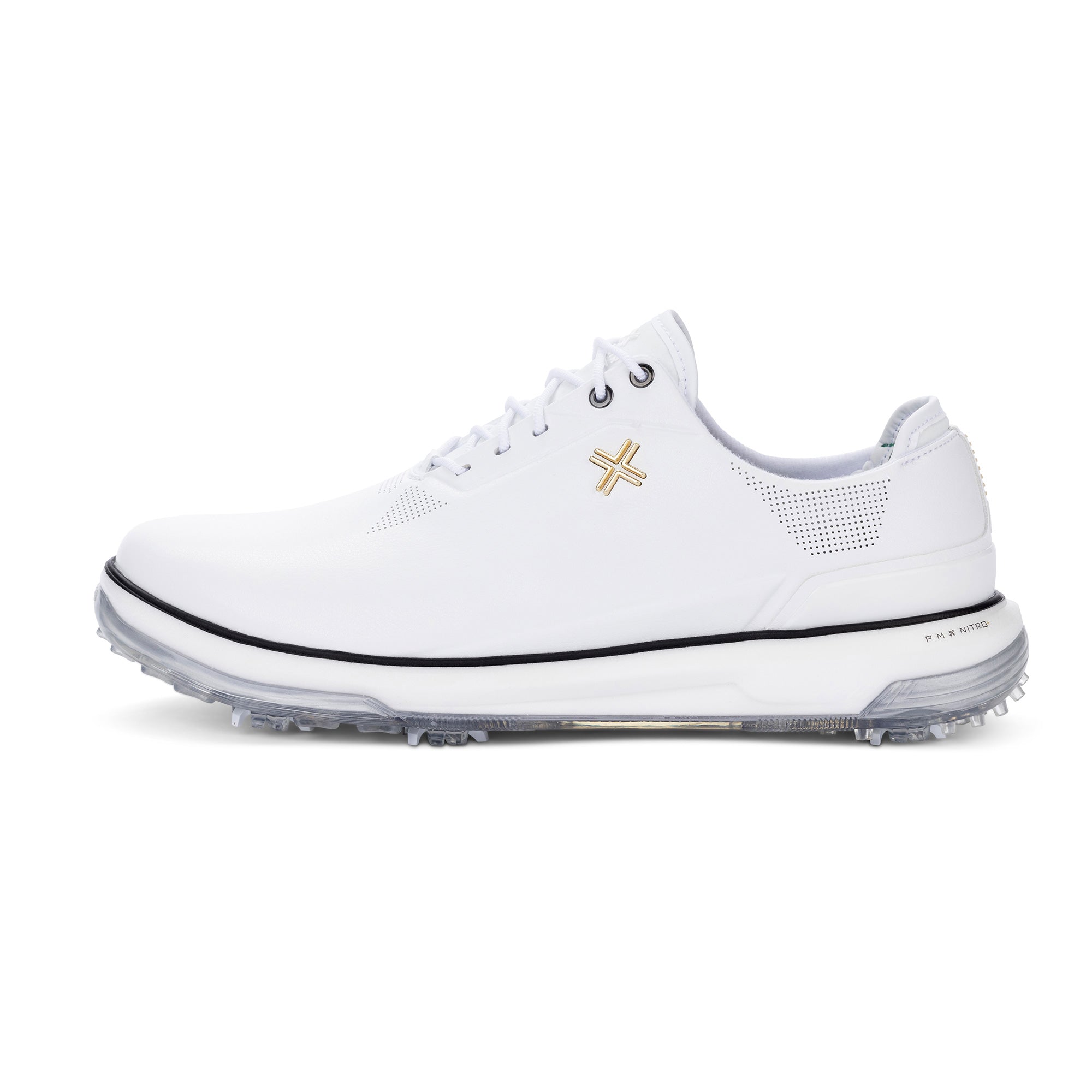
Golf shoes stopped looking like golf shoes — and got better for it
The saddle-shoe uniform is dead. The best-selling golf shoes of 2026 look like running shoes and lifestyle sneakers, the upstarts that forced the change came from cricket and the minimalist-comfort school, and the real spec now is whether you can wear them home. That's progress, not decline.