
Square Golf launch monitor review: the camera unit that undercuts the radar crowd
A newer camera-based monitor that reads club data the budget radar crowd can't — and never charges a subscription. Here's honestly where it fits in a home sim.
By Marcus Bell · Simulator & Indoor Golf Writer
The verdict
Excellent
What's great
- Camera-based club data (face angle, path) that's rare at this price
- Free practice modes and no monthly subscription
- Reads happily in a tight indoor bay where radar struggles
Watch out
- Indoor-only — sunlight can damage the sensors, so no range use
- Full sim rounds cost credits after the 1,000-round welcome bundle
Bottom line — The budget benchmark for indoor camera-based sim golf: real club data and no subscription, so long as you accept it never leaves the garage.
Square Golf
Square Golf Home Launch Monitor
ifrothgolf earns a commission on purchases made through these links, at no extra cost to you. It never changes what I recommend. Full disclosure.
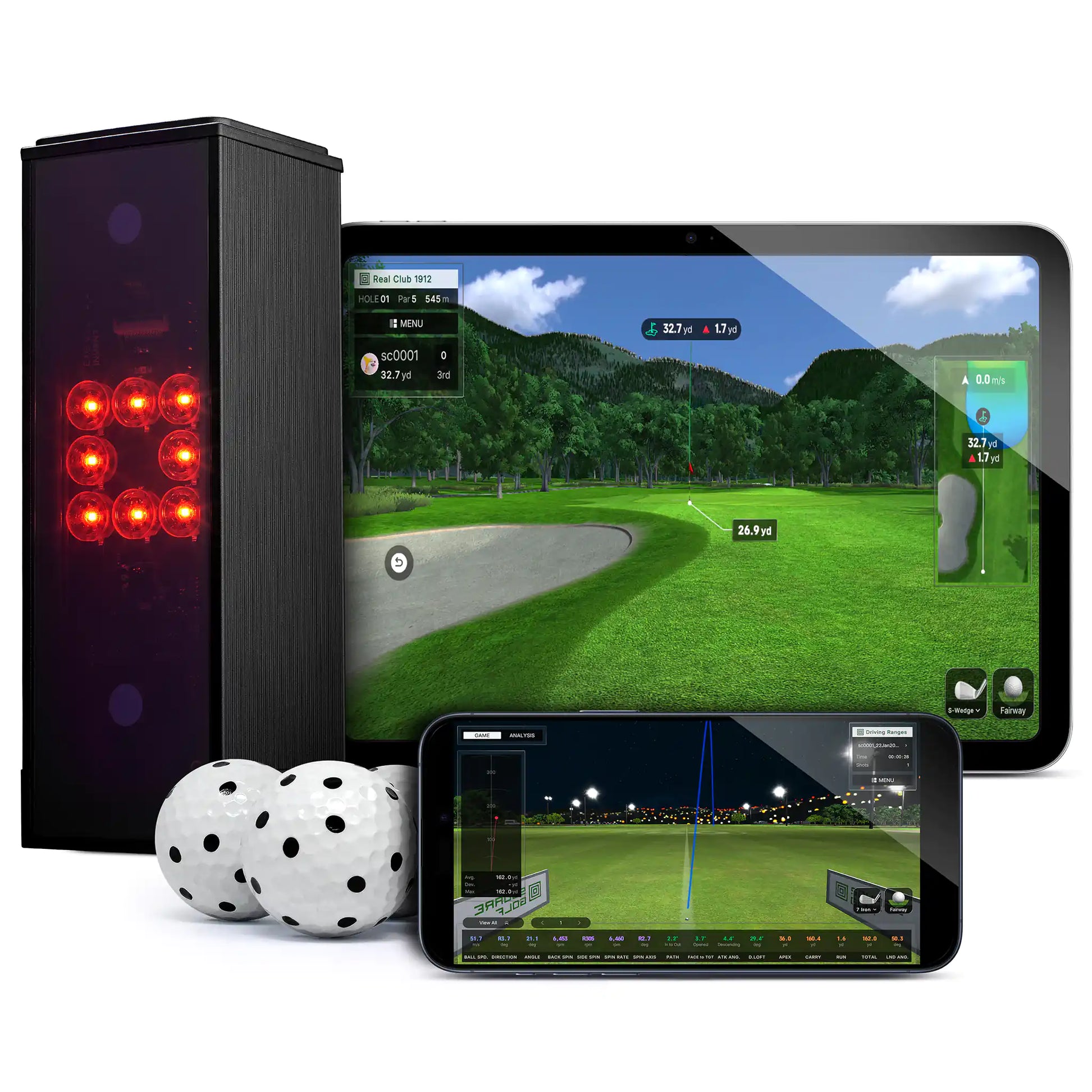
If you want a home simulator on a real-world budget, the Square Golf launch monitor is the unit I point mates to first. It's a camera-based (photometric) device that reads proper ball and club data — including face angle and path, which is rare at this price — runs its practice modes for free, and never asks for a monthly subscription. It isn't a tour-fitting reference and it's strictly indoor-only, but for garage and spare-room sim golf around $900, it's the budget benchmark.
The launch monitor story of the last couple of years has been the radar units — the Garmin R10, the Shot Scope LM1 — dragging the price of numbers down to impulse-buy territory. The Square Golf comes at it from a different angle: instead of Doppler radar, it uses a high-speed camera with machine-vision tracking, sat beside the ball, and that camera-first design is what lets it read club delivery data most budget radars only estimate. It's a genuinely different proposition to the radar crowd, and understanding that difference is the whole point of this review. If the underlying tech is new to you, start with launch monitors explained.
What it measures, and why the camera matters
The headline is that you get ball data — ball speed, launch, spin — plus club data including face angle and path. That club-delivery detail is the thing budget radar units either fudge or skip entirely, and it's genuinely useful if you want to understand why your ball starts where it does, not just how far it went. Owner consensus is that the Square Golf tracks believably for practice and gapping, and the machine-vision approach means it's reading the strike up close rather than inferring a full flight from a few feet of ball travel. For a golfer building a home bay who wants to actually work on face control, that club data is the reason to choose this over a similarly-priced radar puck.
The no-subscription pitch (with an honest asterisk)
Here's where the Square Golf earns its keep against rivals that charge hundreds a year to unlock numbers the hardware already measures: practice modes are completely free, forever. You can hit balls, see your data and work on your game without ever paying another penny. Simulated rounds on realistic courses run on a credits system, and you get 1,000 welcome credits included — enough for 55 or so full rounds before you spend anything. That's the honest asterisk: after your welcome bundle, playing full sim courses costs credits, so a heavy course-player will have a small ongoing spend. Practice, though, stays free for life. If you mostly want a numbers-and-skills tool with the occasional virtual round, the running cost is effectively zero; if you want to play unlimited courses all winter, factor the credits in.
Where it fits vs the radar crowd
This is the question most buyers actually have, so let's be direct. Against budget radar like the Garmin R10, the Square Golf's advantages are real club data and the fact that a camera reads happily in a tight indoor bay — radar wants ball flight and gets jittery in a cramped garage net. Against pricier radar-plus-camera units like the FlightScope Mevo Gen2, the Square Golf gives up outdoor use, some data breadth and the longer track record, but it costs meaningfully less. Its natural competitor is really the photometric bracket — it's doing a cut-price version of what the SkyTrak-class units do, and for a fixed indoor setup that's exactly the right trade. The one hard limit to internalise: it is indoor-only, because sunlight can interfere with and even damage the sensors. This is not a take-to-the-range device.
Who it's for, who should skip
Buy the Square Golf if you're building a home simulator on a normal budget and want camera-based accuracy with club data, free practice and no subscription — it's one of the best-value ways into sim golf going, and the credits model means the sticker price is close to the true price for a practice-led user. It suits the garage-golfer and the winter-practice improver especially well.
Skip it if you need a unit that also works outdoors on the range (a radar like the R10 is the answer), if you want unlimited virtual-course play without an ongoing credits spend, or if you're chasing tour-fitting precision and the widest possible data set — that's where you spend up to the Mevo Gen2 or a SkyTrak-class monitor. If you're unsure which rung of the ladder you belong on, our Launch Monitor Finder sorts it in three questions, and the full field is in our best launch monitors guide.
Setting it up to actually get value
A launch monitor is only as good as the discipline around it, and a camera unit rewards a tidy setup. Give it a consistent position beside the ball, hit a handful of shots to settle before you trust the readings, and use the free practice modes with a job in mind rather than just watching numbers flash. The highest-value session is still a gapping audit — hit ten balls with each scoring club, bin the two freaks, write down the believable carry — and the club-face data adds a second layer most budget setups can't give you: you can start pairing a pushed start line with an open face and actually work on it. Treat the numbers as a trend across ten balls, not a verdict on one swing, and the Square Golf gives you a genuinely capable practice tool that happens to also drop you onto a virtual course when you fancy it.
The verdict in context
The Square Golf matters because it makes a data-rich home simulator a sensible purchase for an ordinary golfer, not a gearhead's splurge. Judged as an outdoor, do-everything, tour-grade tool it isn't that, and it never claims to be. Judged as the budget benchmark for indoor camera-based sim golf — with real club data and no subscription wall — it's excellent, and that's the fair way to judge it. If a no-fuss garage bay is the dream, this is where I'd start.
Where to buy
8.3/10Square Golf
Square Golf Home Launch Monitor
Camera-based sim golf at home with no subscription, the budget benchmark.
ifrothgolf earns a commission on purchases made through these links, at no extra cost to you. It never changes what I recommend. Full disclosure.
Frequently asked
- Is the Square Golf launch monitor radar or camera-based?
- It's camera-based (photometric), using a high-speed camera with machine-vision tracking beside the ball. That's what lets it read club data like face angle and path, which most budget radar units only estimate or skip.
- Does the Square Golf need a subscription?
- No monthly subscription. Practice modes are free for life. Simulated rounds run on a credits system — you get 1,000 welcome credits (around 55 rounds) included, and only heavy course-players will spend more after that. Practice always stays free.
- Can I use the Square Golf outdoors?
- No — it's indoor-only. Sunlight can interfere with and even damage the sensors, so it's built for garage and spare-room setups. If you need a unit for the range too, a radar device like the Garmin R10 is the better fit.
- How does it compare to the Garmin R10?
- The Square Golf reads real club data and works better in a tight indoor bay, where radar gets jittery. The R10 is cheaper and works outdoors on the range. Choose the Square Golf for a fixed home sim, the R10 for versatility on and off the course.
Read next
Review
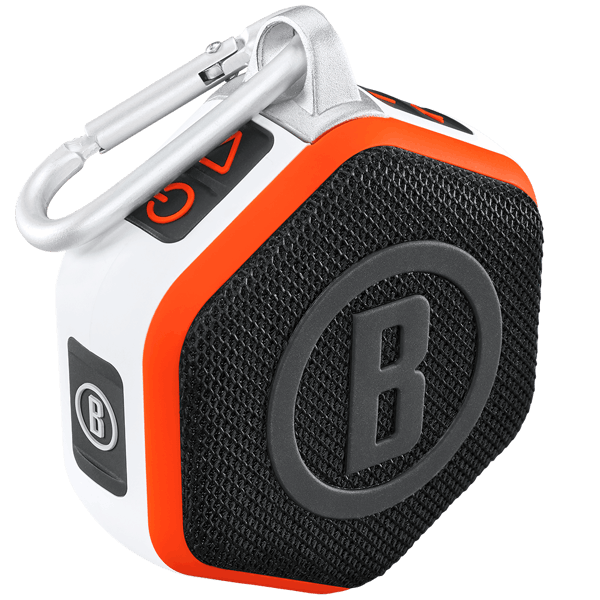
8.3/10Bushnell Wingman Mini review: the speaker that made music on the course respectable
Music on the golf course went from etiquette scandal to default in about five years, and this is the device that did it — a pocket-size speaker that clips to a bag, snaps to a cart frame, and reads out your yardages on demand. For cart and buddies golf, it's the one to get.
Review
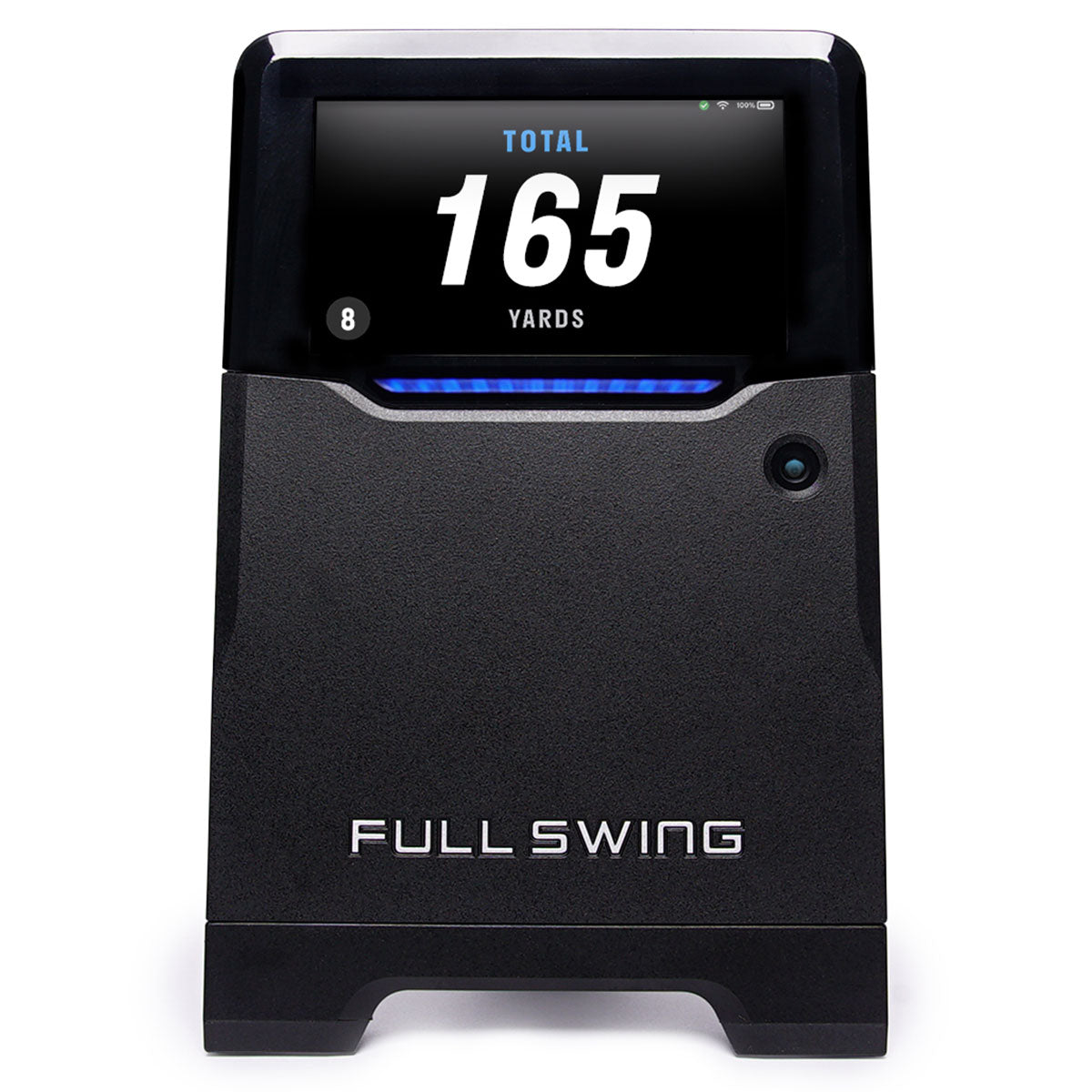
7.9/10Full Swing KIT review: the tape measure decides this, not Tiger
Tour pedigree, TGL on ESPN, and radar good enough to be checked against a Trackman outdoors. It also wants eighteen to twenty feet of room, which rules out most of the garages people buy it for.
Versus
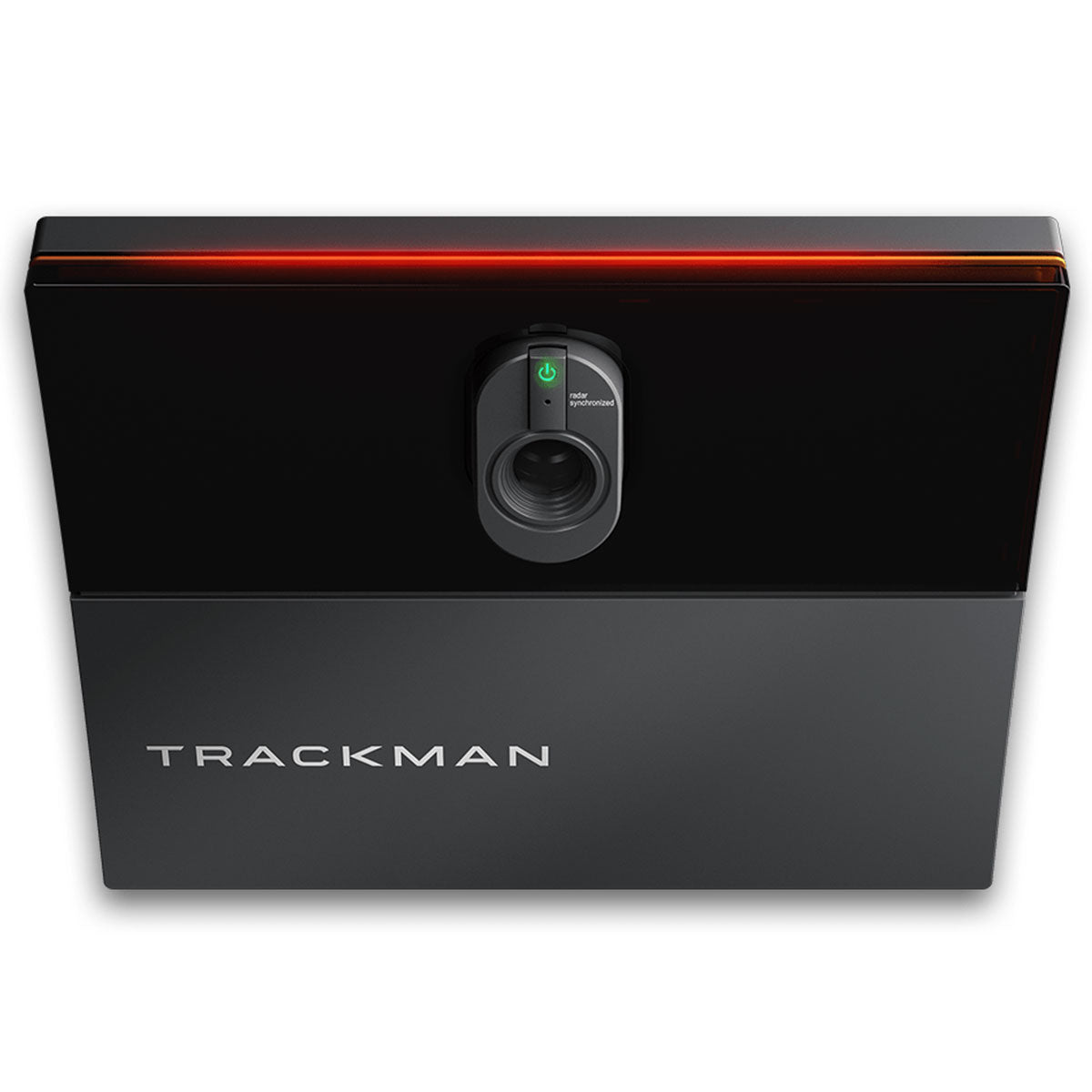
Trackman iO vs Uneekor EYE XO2: the year-one trap
Both mount overhead, both want ten feet of ceiling, and about $3,000 separates them on the shelf. Then Trackman's included first year runs out, and the gap starts growing by $1,100 a year.