
FootJoy HyperFlex vs adidas Tour360 24: two spiked waterproofs, and the choice is knit that walks or leather that braces
Both have replaceable cleats, both are waterproof, and both carry a one-year waterproof warranty. So the waterproofing does not decide it. What decides it is whether your winter problem is tired legs on the walk or a back foot that will not stay put.
By Dan Mercer · Editor
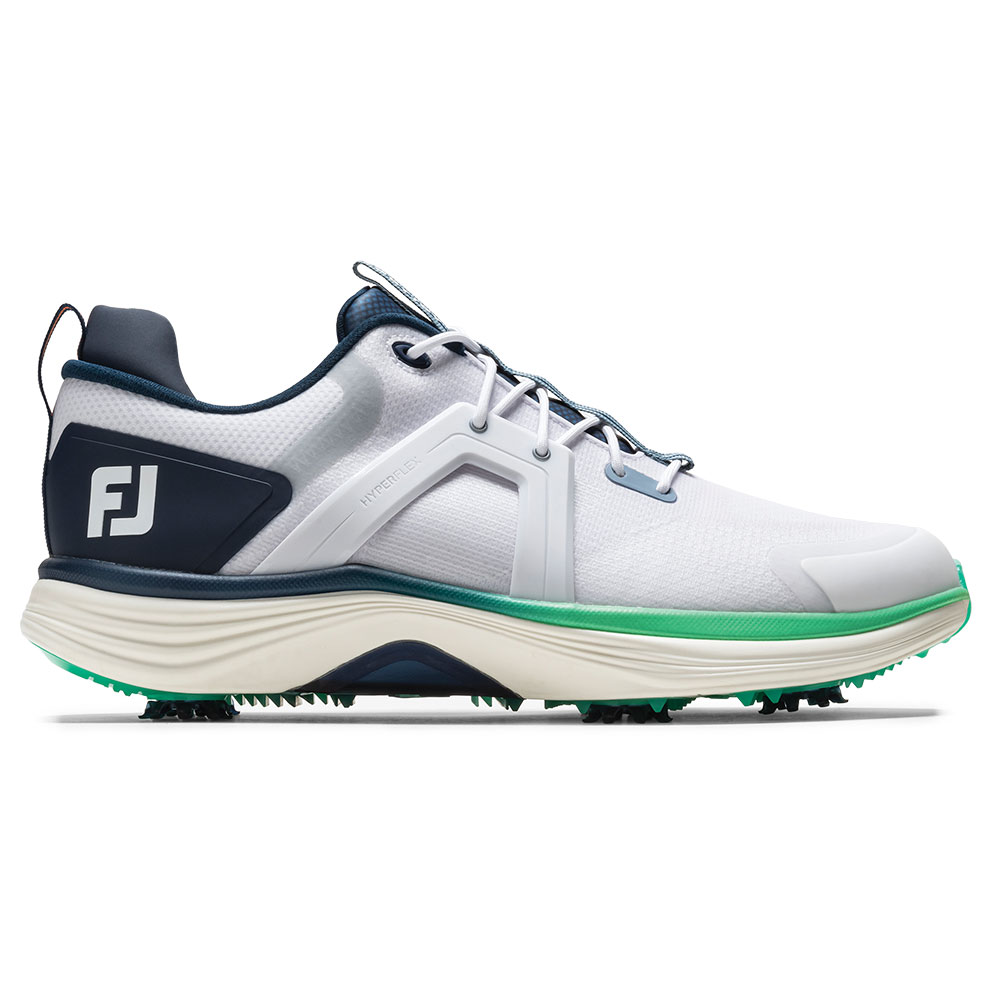
FootJoy
FootJoy HyperFlex
Pick if winter golf means walking hilly, heavy parkland and the back nine is where your feet give out.
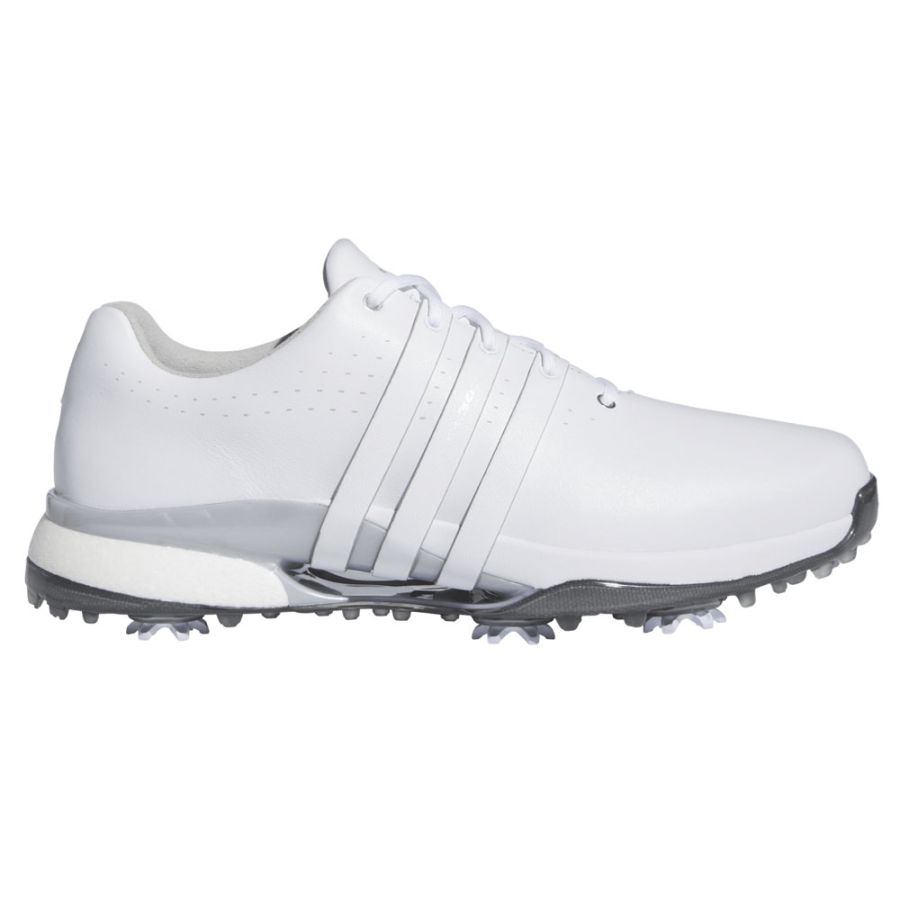
adidas
adidas Tour360 24 Golf Shoes
Pick if you swing hard, your back foot slides on wet lies, and you want leather that braces more than it bends.
ifrothgolf earns a commission on purchases made through these links, at no extra cost to you. It never changes what I recommend. Full disclosure.
Side by side
| Specification | FootJoyFootJoy HyperFlex | adidasadidas Tour360 24 Golf Shoes |
|---|---|---|
| Shoe type | spiked | spiked |
| Upper material | ControlKNIT engineered knit with easy-to-clean waterproof coating | waterproof leather with 360Wrap support |
| Outsole | OptiFlex | THINTECH 7-spike TPU outsole with removable tornado-style cleats plus secondary flex-groove traction |
| Waterproof warranty | 1 year | 1-year waterproof guarantee |
| Fit notes | regular and wide fittings, UK 6 to 14; size up to wide if feet are broad | true to size, multiple colourways; needs breaking in |
Specs as published by each manufacturer. Rows in grey are where the two match.
The buggies go back in the shed somewhere around the end of October. At most parkland courses that is when winter golf turns into walking golf, often on ground that is soft and sloping and that sticks to everything. Three and a half hours of that is a different test from a summer round, and the shoe that passes it depends on what gives out first, your legs or your footing.
The FootJoy HyperFlex at around $200 and the adidas Tour360 24 at around $200 are two of the most obvious answers. Both are spiked, both are sold as waterproof, and they list within a pound of each other. Beyond that they are built for different golfers.
What this piece is not re-arguing
Whether you need spikes in winter at all is a question about your course, not your shoe. We covered that in the ground changes before the sky does, including why replaceable cleats beat a moulded sole on heavy ground. We also covered leather against knit as an upper that has to last several seasons in the Pro/SLX review. This piece starts from the assumption that you have decided on a spiked waterproof shoe, and asks which of these two.
The waterproofing is a draw
Start with what the box says, because it settles less than people expect. FootJoy claims 100 per cent waterproof protection for the HyperFlex, through a durable, easy-to-clean coating on its ControlKNIT upper, and backs it with a one-year waterproof warranty. adidas gives the Tour360 24 a waterproof leather upper, and Snainton lists the same one-year waterproof warranty. Neither brand promises more than the other on paper. If you were choosing on dry feet, you would be choosing on how the shoe looks.
Underneath: six low cleats against seven and lugs
The HyperFlex runs six low-profile Pulsar cleats by SoftSpikes per shoe. The Tour360 24 has seven of adidas's green-friendly ThinTech cleats plus what adidas calls strategically placed lugs, a secondary layer of moulded traction between them. On paper the adidas puts more points into the ground and the FootJoy sits lower to it. In mud the extra cleat and the lugs give more grip per step. On firmer winter ground, a low-profile cleat feels less like walking on studs.
One practical point for whichever you buy. The two shoes use different cleat systems, so a packet of replacements bought for one will not necessarily fit the other. Check the system before you buy spares, and buy them before the first set is worn, not after.
Where they really differ: flex or torsion
This is the decision. The HyperFlex is built to bend. ControlKNIT is a spiral-wound engineered knit, the midsole is StratoFOAM over an OrthoLite FitBed, and FootJoy describes the OptiFlex outsole as one that bends naturally with your foot to reduce walking fatigue. The TruFIT system holds the heel in place. All of it is aimed at the walk. On a hilly parkland course in December, the walk is most of the round.
The Tour360 24 is built to resist twisting. Its waterproof leather upper has adidas's 360Wrap support, and underneath it the Torsion Bridge is a see-through piece of construction that adidas says strengthens torsion control and stability. MyGolfSpy describes the cushioning as a Jet BOOST heel with a Lightstrike forefoot, which is soft where you land and firmer where you push off. This is a tour shoe in the old sense. It is designed so the foot cannot roll inside the shoe when you swing hard, and a shoe built that way is stiffer to walk in.
In plain terms, the HyperFlex puts its effort into the eighteen walks between shots and the Tour360 24 into the moment you swing. On a soft, sloping winter lie, a braced shoe keeps your back foot where you put it. Over the back nine, a flexible shoe stops your feet giving out. You are deciding which of those you notice more.
Fit, and the price you will actually pay
Both come in regular and wide fittings at Snainton, which is worth more than it sounds. A shoe that fits a broad foot does more for stability than any outsole. If your feet are broad, take the wide fitting on the HyperFlex rather than sizing up in the regular. Knit forgives a foot it does not quite fit. Structured leather, built to hold the foot still, generally does not, and it usually wants a few rounds before it stops feeling stiff.
On price, the list figures are almost identical, but the Tour360 24 is a 2024 shoe and is being priced like one. When I checked, Snainton had it marked down well below the figure on our page, while the HyperFlex was much closer to its own. If the adidas suits your swing, you will probably pay less for it. If it does not, a discount does not change that.
Who should buy which
Buy the HyperFlex if you walk your winter golf, your course is hilly or heavy, and your feet or legs are what fade on the back nine. It is the comfort pick with proper cleats. It is the one I would recommend to most club golfers who play through the winter, because most of them are walking, not hitting it 300 yards.
Buy the Tour360 24 if you swing hard and have felt your back foot move on a wet downhill lie, if you want a leather shoe that looks the part in the clubhouse, or if you simply like a firm, planted feel under the swing and can live with a stiffer walk. It is also the one to buy on price if a retailer has it discounted and the fit is right.
Skip both if your winter golf is on a links or sand-based course that stays firm, where a spikeless shoe is the right tool all year. Skip both too if your current spiked pair still has a good upper and just needs fresh cleats, because that costs a fraction of either. For the rest of the field, the waterproof golf shoes guide has more options.
Frequently asked
- Are the FootJoy HyperFlex and adidas Tour360 24 spiked golf shoes?
- Yes, both are spiked. The HyperFlex uses six low-profile Pulsar cleats by SoftSpikes per shoe. The Tour360 24 uses seven adidas ThinTech cleats plus moulded secondary lugs. Both cleat sets are replaceable, though they use different cleat systems, so check which replacements fit before you buy.
- Are the FootJoy HyperFlex and adidas Tour360 24 waterproof?
- Yes. FootJoy claims 100 per cent waterproof protection for the HyperFlex through a coated knit upper, and the Tour360 24 has a waterproof leather upper. Both carry a one-year waterproof warranty.
- Which is more comfortable for walking, the HyperFlex or the Tour360 24?
- The HyperFlex is built with walking in mind: a flexible knit upper, a StratoFOAM midsole and an OptiFlex outsole designed to bend with the foot and reduce fatigue. The Tour360 24 has soft cushioning, with a Jet BOOST heel and Lightstrike forefoot, but its leather upper and Torsion Bridge make it a stiffer, more braced shoe.
- Do I need spiked shoes for winter golf?
- On soft, heavy parkland, spiked shoes with replaceable cleats grip better than moulded spikeless soles. On links and sand-based courses that drain and stay firm, a spikeless shoe is usually fine all year.
Read next
Review
Mizuno Wave Hazard Pro Boa review: the grown-up waterproof I'd buy, and it isn't the one on the FootJoy wall
Full-grain leather, a Boa dial and the same Enerzy foam Mizuno puts in its running shoes. It undercuts the classic leather waterproofs by a long way, and there is one line in the small print that explains most of the gap.
Review
8.4/10FootJoy Pro/SLX review: the chassis is what you are paying for, not the waterproofing
It looks like the wet-weather version of the shoe more tour pros wear than any other. It is not, because that shoe is already warrantied waterproof. What the extra money buys is structure, and the trade is weight.
Versus
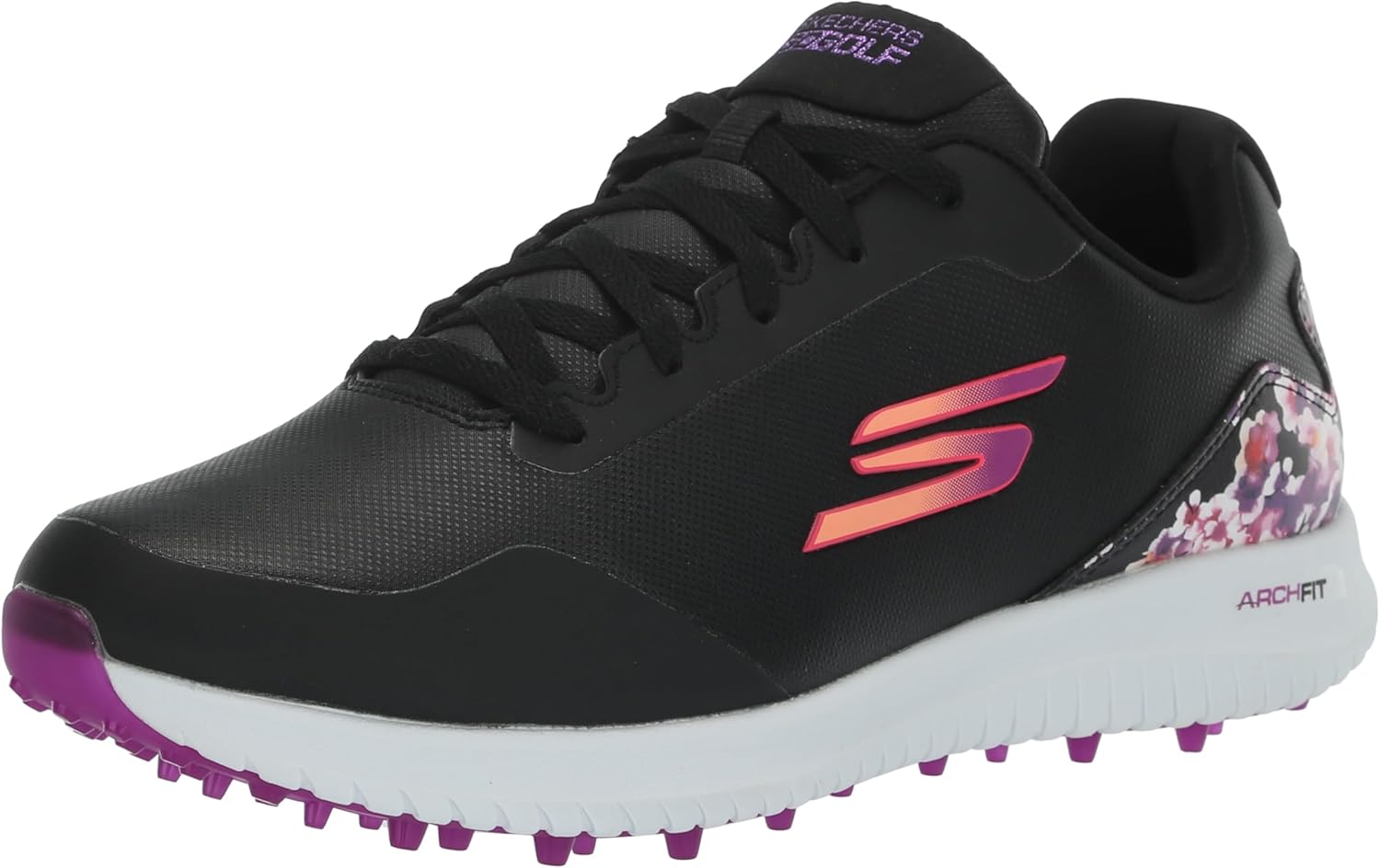
Skechers GO GOLF Max vs FootJoy FJ Flex for women: the waterproof Skechers is the winter shoe, the mesh Flex waits for spring
Two comfort-first women's spikeless shoes at almost the same price, built on almost the same idea. What separates them is the upper, and from October the upper is the part that decides whether your feet are dry on the fourth tee.