
FootJoy Pro/SLX review: the chassis is what you are paying for, not the waterproofing
It looks like the wet-weather version of the shoe more tour pros wear than any other. It is not, because that shoe is already warrantied waterproof. What the extra money buys is structure, and the trade is weight.
By Ben Marsden · Reviews Editor
The verdict
Excellent
What's great
- A properly braced platform: the moulded 3D X-Wing and TPU sidewall heel wrap push swing forces out to the perimeter, which is what a fast-hipped player wants on a wet sidehill lie
- Two years of waterproof cover, which is FootJoy putting a number against its own claim rather than a marketing adjective
- ChromoSkin leather over an OrthoLite bed reads as a grown-up golf shoe rather than a trainer, and leather is what stops a wet-season shoe looking secondhand by February
Watch out
- A spikeless outsole on a shoe aimed squarely at the wettest months, and heavy parkland clay still beats it
- Structure costs weight, so it is the less pleasant of FootJoy's spikeless pair to walk 36 in
- It is the dearest of FootJoy's three obvious autumn answers, for a benefit a lot of buyers will never feel
Bottom line — The FootJoy waterproof I would buy if I wanted leather and a braced chassis on ground that drains. If your winter course turns to soup, FootJoy's own cleated HyperFlex is the more correct shoe for less money.
FootJoy
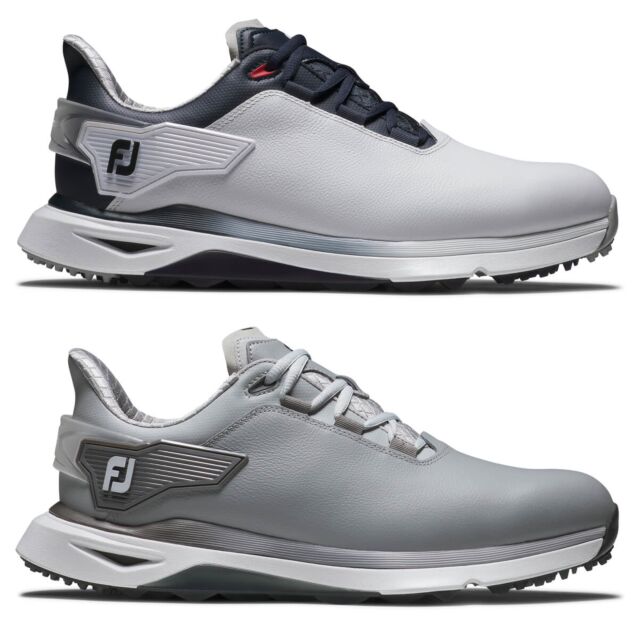
FootJoy Pro/SLX Golf Shoe
ifrothgolf earns a commission on purchases made through these links, at no extra cost to you. It never changes what I recommend. Full disclosure.
There is a wall in every pro shop in the country with three FootJoy boxes on it, and by the end of this month somebody in your fourball will have stood in front of it and reached for the dearest one on the logic that the dearest one must be the wettest-weather one. It is a reasonable assumption and it is wrong, and the shoe they carry to the till is usually not the one their golf needed.
The FootJoy Pro/SLX at around $225 is a good shoe and I would happily own a pair. But the thing it is sold on is not the thing you are buying, and untangling that is the only useful job this review has.
Waterproof is not the difference, whatever the box implies
The shoe the SLX sits above in the range is the FootJoy Pro/SL 2026, the spikeless shoe more tour professionals wear than any other and the one we called the tour default when we ran it against the PAYNTR Eighty Seven SC. That shoe already ships with a waterproof warranty. So does the HyperFlex. Waterproofing at this end of FootJoy's range is table stakes, not a differentiator, and reading the SLX as the waterproof member of a family where everything is waterproof gets you the wrong shoe for the right reason.
What the SLX does have is a longer stated commitment — two years of waterproof cover — and a different construction underneath. That construction is the product.
What the extra money actually buys
A moulded 3D X-Wing through the midfoot and a TPU sidewall heel wrap. Between them they do one job: take the load your swing puts through the shoe and push it out to the perimeter instead of letting it collapse inward, with the heel braced against rolling. On top of that sits a ChromoSkin leather upper and an OrthoLite bed, and under it a spikeless outsole.
Who feels that? A specific golfer, and it is worth being blunt about it. If you have a wide stance, quick hips, and you have ever stood on a damp downhill lie and had the back foot travel an inch further than you asked it to, the chassis is the fix and you will notice it on the first bracing swing. If your golf swing is a smooth, in-balance thing and your complaint about shoes is that your feet ache on the sixteenth, the chassis is not solving your problem and you are paying for engineering you cannot use.
Against the Pro/SL, which is the comparison that matters
The Pro/SL 2026 is a ground-up rebuild at around $200: a ZTEC upper, an OrthoLite X25 FitBed, the ARCTrax/SL outsole that mixes firm TPU blades with softer rubber nubs, a new Vantage last with a roomier toe box, and a shoe that is 29 per cent lighter than the one it replaced. Our full review is unchanged in its verdict: for the golf most people play, it is the benchmark.
Set the two next to each other and the SLX is not an upgrade, it is a different bias. The Pro/SL spends its budget on being light and roomy. The SLX spends it on being structured and leather. Twenty-nine per cent lighter is a back-nine number rather than a first-tee one, and it points the Pro/SL at the walker; the X-Wing and the heel wrap point the SLX at the swinger. Both are waterproof, both are spikeless, and the price gap between them is the least interesting part of the decision.
The practical test is which sentence you have said out loud about golf shoes. If it is some version of my feet are killing me by the end, buy the Pro/SL, and the wider toe box on the Vantage last makes that even more obviously the right call. If it is some version of my back foot moves in the wet, buy the SLX.
The spikeless problem I cannot wave away
Here is the honest limit, and it is the one the marketing has no answer for. The SLX is a shoe built for the wet half of the year with a moulded outsole. Traction on firm, damp ground is reliable and I have no quarrel with it. On genuinely heavy parkland in December — clay, standing water, a sloping lie with nothing underneath it — a moulded sole is a compromise and cleats are not, and no amount of chassis compensates for a contact patch that is skating.
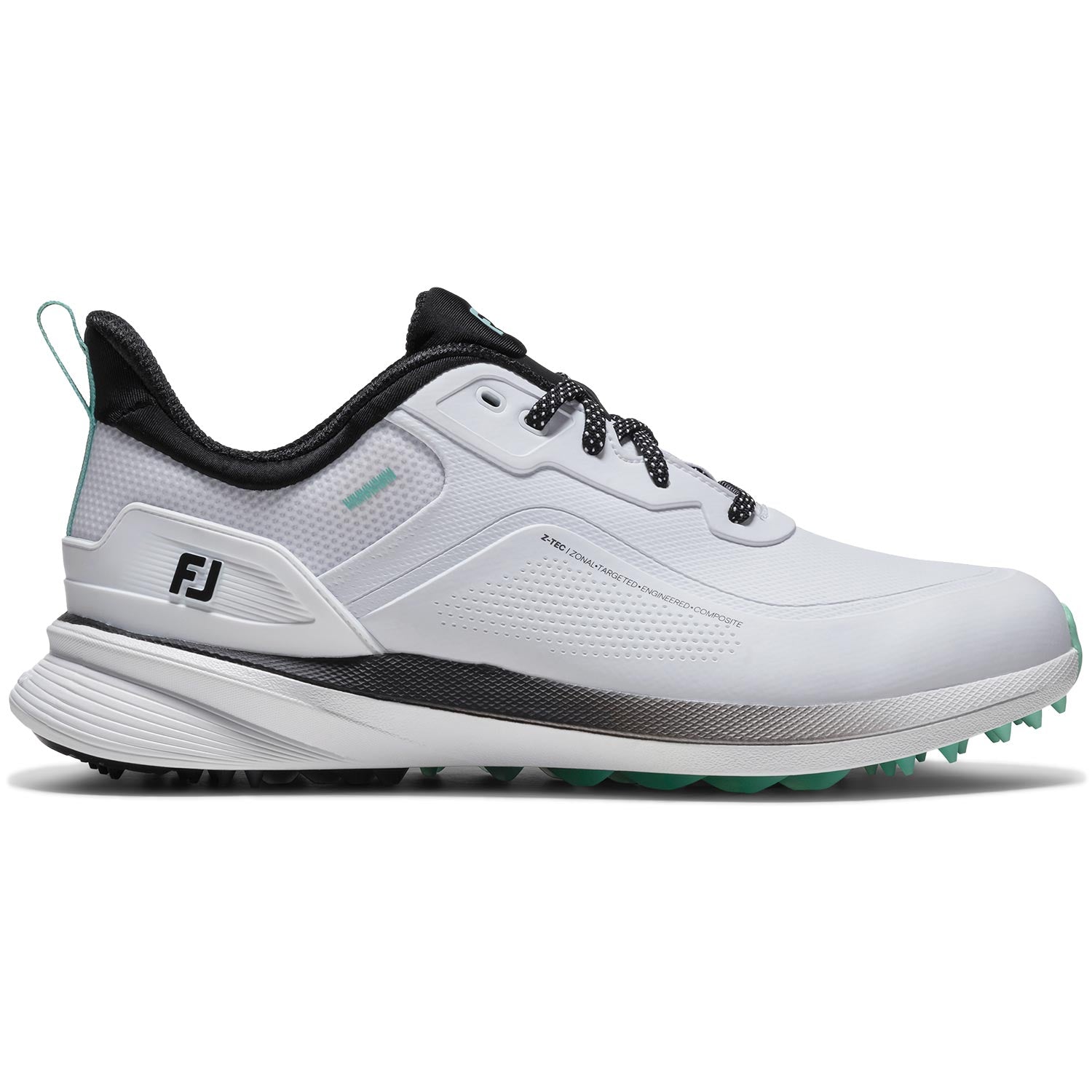
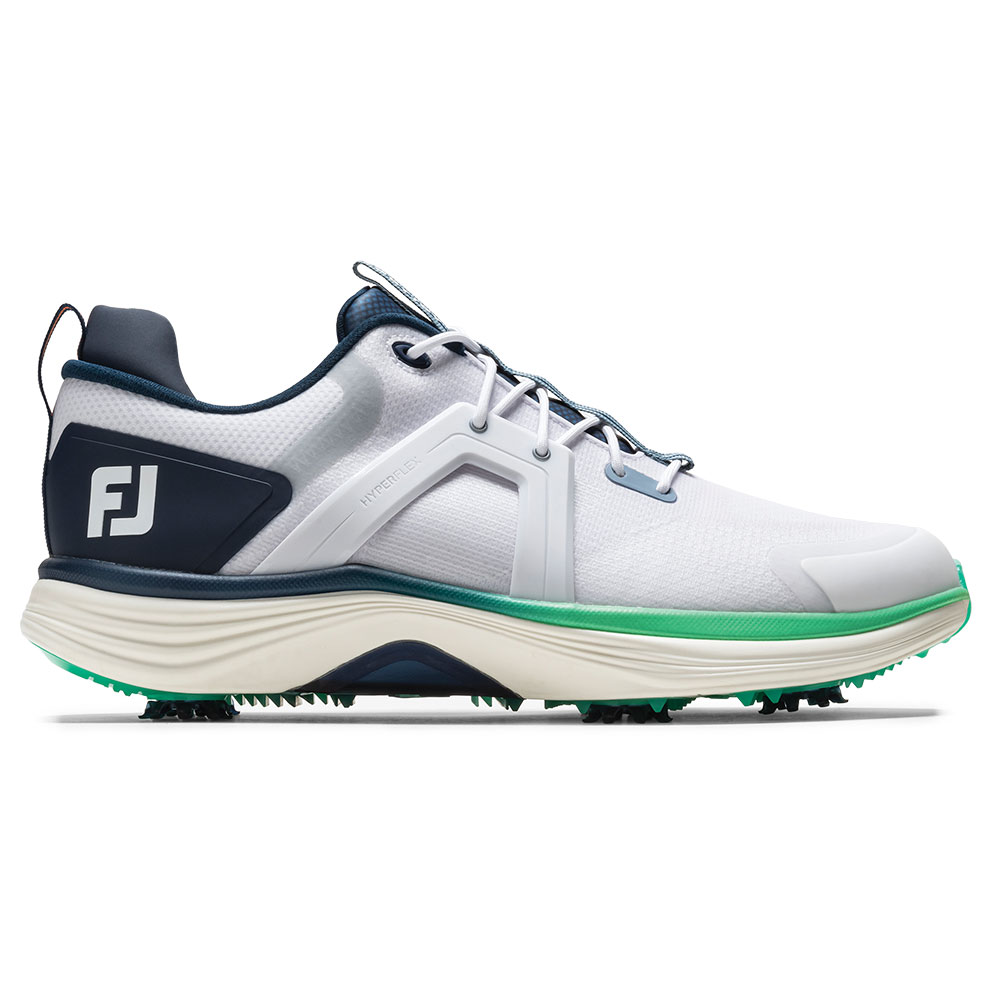
We made the general version of that case in the ground changes before the sky does and I will not re-run it. The specific version is more awkward for FootJoy, because FootJoy already sells the answer. The HyperFlex is around $200 — a waterproof-coated ControlKNIT upper, a StratoFOAM midsole, and six replaceable Pulsar LP cleats per shoe. Replaceable is the word that matters. When the traction on a moulded outsole rounds off, and it will, you buy a new pair of shoes. When cleats wear, you buy a packet of cleats. On a heavy course that difference is worth more over three seasons than anything in the SLX's spec sheet.
So the SLX is not the winter shoe. It is the wet-autumn shoe, and on a course that drains it will do the whole season.
Leather, and why it is still here
There is a reason FootJoy keeps putting leather on the shoes it charges most for, and it is not tradition. Synthetic uppers at this money crease across the forefoot and hold the crease, so a shoe that has done one winter looks like it has done three. Leather takes the same flex and ages into it. If you are the sort of buyer who keeps golf shoes for four seasons rather than two, that is a real part of what you are paying for and it does not appear in any performance claim.
The trade is that leather plus a waterproof membrane is warmer and heavier than knit plus a membrane. From October to March that is a feature. In May it is a shoe you will not choose, which is the quiet argument for why this is a second pair rather than a only pair.
Who should skip it
Anyone whose golf shoe problem is width or volume. The roomier last in FootJoy's current spikeless range arrived with the Pro/SL, and a structured leather shoe with a bracing chassis is the least forgiving thing you can put a broad forefoot into.
Anyone whose winter course is real mud — see above, buy the cleats, it is not close and it is cheaper.
Anyone who plays a dozen rounds a year between April and September. The two-year waterproof cover and the leather are both investments in weather you are not going to be standing in, and you would be better served by a lighter shoe and the change.
And anyone whose current waterproof shoe is under a year old. Clean the outsole properly with a brush, look at whether the edges still bite, and be aware that a rounded-off sole is invisible until you look for it — we set out the tell in your spikeless shoes lost their grip months ago. Most of the traction people think they have lost is packed grass.
What I would do
Buy it if you play a lot of autumn and winter golf on ground that drains, you want a leather shoe rather than a trainer, and you already know that stability rather than cushioning is the thing your swing asks of a shoe. That is a narrower group than the price positioning implies, and inside that group it is the best answer FootJoy makes.
Everyone else in front of that wall should take the Pro/SL and keep the difference, or walk past both and buy the cleated one. Buy in September either way. The single most predictable thing about waterproof golf shoes is that nobody thinks about them until the morning they need them, and by then the size you want has gone.
Products mentioned in this article
ifrothgolf earns a commission on purchases made through these links, at no extra cost to you. It never changes what I recommend. Full disclosure.
Frequently asked
- What is the difference between the FootJoy Pro/SL and the Pro/SLX?
- Both are waterproof spikeless FootJoy shoes, so waterproofing is not the difference. The Pro/SL 2026 is built around lightness and room, at 29 per cent lighter than its predecessor with a new Vantage last and a wider toe box. The Pro/SLX is built around structure, with a moulded 3D X-Wing and a TPU sidewall heel wrap that brace the foot laterally, plus a leather upper. The Pro/SL suits a walker; the Pro/SLX suits a player who feels the back foot move on wet lies.
- How long is the FootJoy Pro/SLX waterproof warranty?
- Two years. That is a longer stated commitment than most shoes in the category carry, and it is worth weighing if you keep golf shoes for several seasons. If you replace shoes every couple of years, which many golfers who walk regularly should because the outsole gives up before the upper does, it is cover you are unlikely to claim.
- Is the FootJoy Pro/SLX enough for winter golf?
- On firm or well-drained ground, yes. On heavy parkland clay it is not, because it uses a moulded spikeless outsole and no moulded sole matches cleats digging into soft, sloping turf. A cleated shoe with replaceable spikes is the right tool there, and it also lasts longer, because you can renew the contact point for the price of a packet of cleats rather than a new pair of shoes.
- Is a leather upper better than knit on a waterproof golf shoe?
- For longevity of appearance, generally yes. Synthetic and knit uppers crease across the forefoot flex point and keep the crease, so they look tired after one wet season, while leather ages into the same flex. The trade is that leather over a waterproof membrane is heavier and warmer, which is welcome from October to March and unwelcome in summer.
Read next
Review
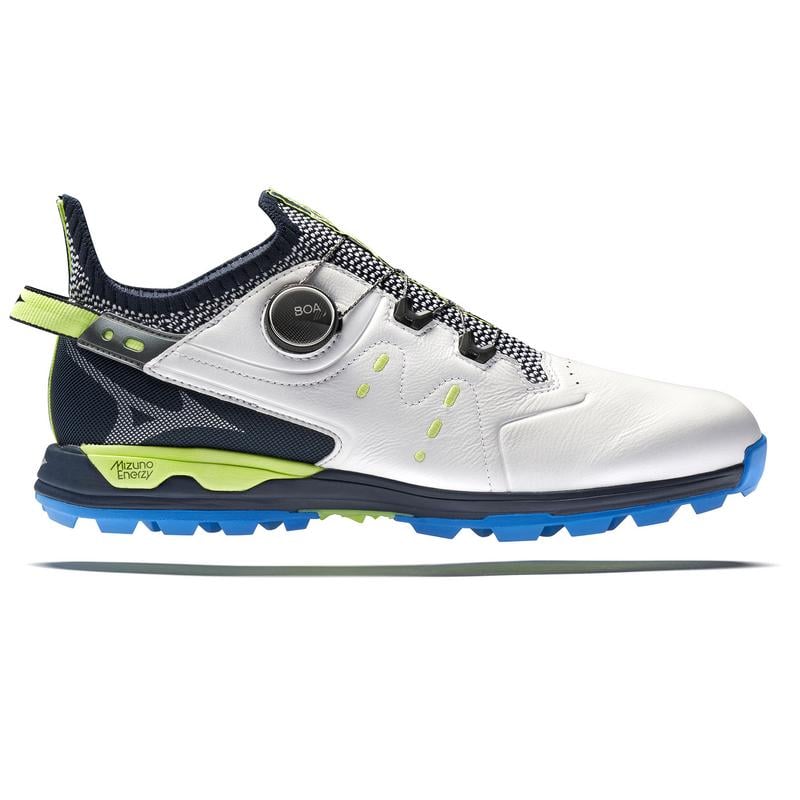
Mizuno Wave Hazard Pro Boa review: the grown-up waterproof I'd buy, and it isn't the one on the FootJoy wall
Full-grain leather, a Boa dial and the same Enerzy foam Mizuno puts in its running shoes. It undercuts the classic leather waterproofs by a long way, and there is one line in the small print that explains most of the gap.
Review
7.9/10Full Swing KIT review: the tape measure decides this, not Tiger
Tour pedigree, TGL on ESPN, and radar good enough to be checked against a Trackman outdoors. It also wants eighteen to twenty feet of room, which rules out most of the garages people buy it for.
Versus
Trackman iO vs Uneekor EYE XO2: the year-one trap
Both mount overhead, both want ten feet of ceiling, and about $3,000 separates them on the shelf. Then Trackman's included first year runs out, and the gap starts growing by $1,100 a year.