
Waterproof is the wrong first question for an autumn shoe: the ground changes before the sky does
Most golfers replace a summer spikeless shoe with a waterproof one and think the job is done. The thing that changes in autumn isn't the sky, it's the ground.
By Ben Marsden · Reviews Editor
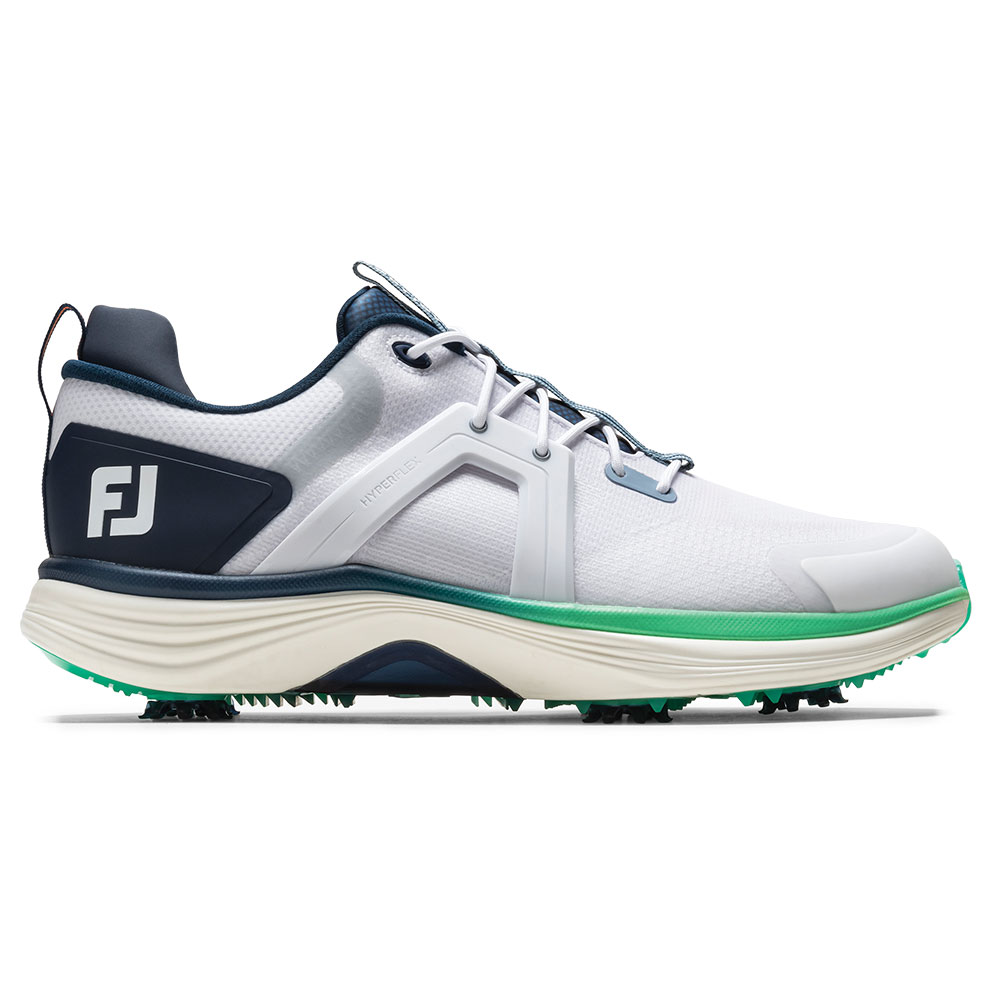
FootJoy
FootJoy HyperFlex
ifrothgolf earns a commission on purchases made through these links, at no extra cost to you. It never changes what I recommend. Full disclosure.
First properly wet Sunday of the season, eighth fairway, slightly downhill lie, nothing dramatic. The swing feels normal right up until the transition, when the back foot goes an inch further than it was asked to and the whole thing arrives late. Push, right rough, one of those shots where you stand there re-running it because nothing felt wrong. That happens in October in shoes that were flawless in July, and almost nobody connects the two.
Then, usually a week later, the same golfer buys a waterproof shoe and considers the problem solved. It isn't, because waterproof was never the variable that changed.
The ground changed, not the weather
What actually happens between August and October is underfoot. The ground softens. A firm summer fairway gives you a stable platform and rewards a shoe that is light and low. A soft one doesn't — the surface deforms under load, so every slope feels steeper than it is and the shoe has to find purchase in something that moves. That is a traction problem and a lateral-support problem. It is not a moisture problem.
Moisture matters, obviously. Wet feet on the twelfth ruins a round. But a membrane keeps water out of the upper; it does nothing whatsoever about whether your back foot stays where you put it. Treating waterproof as the whole answer is how golfers end up spending decent money and getting no more stable than they were.
Here is the version nobody wants to hear: a two-year-old waterproof shoe whose outsole has rounded off is worse in October than a spikeless shoe with fresh, sharp lugs. Rubber traction elements wear smooth long before the upper looks tired, and because the shoe still looks fine and still keeps water out, the wear is invisible. If you can run a thumb across your outsole and not feel the edges bite, the shoe has already failed at the only job that matters this month.
What I'd actually buy, and why it's spiked
If you play through autumn and winter on parkland, buy a spiked shoe and stop overthinking it. The FootJoy HyperFlex is the one I'd put my own money on: a ControlKNIT upper with a waterproof coating, a StratoFOAM midsole, and six replaceable Pulsar LP cleats doing the real work. The replaceable part is the point. When traction goes, you buy a packet of cleats instead of a whole new pair of shoes, which is the opposite of what happens with a moulded spikeless outsole. Around $200, and the wide fitting is worth taking seriously if your feet are broad.
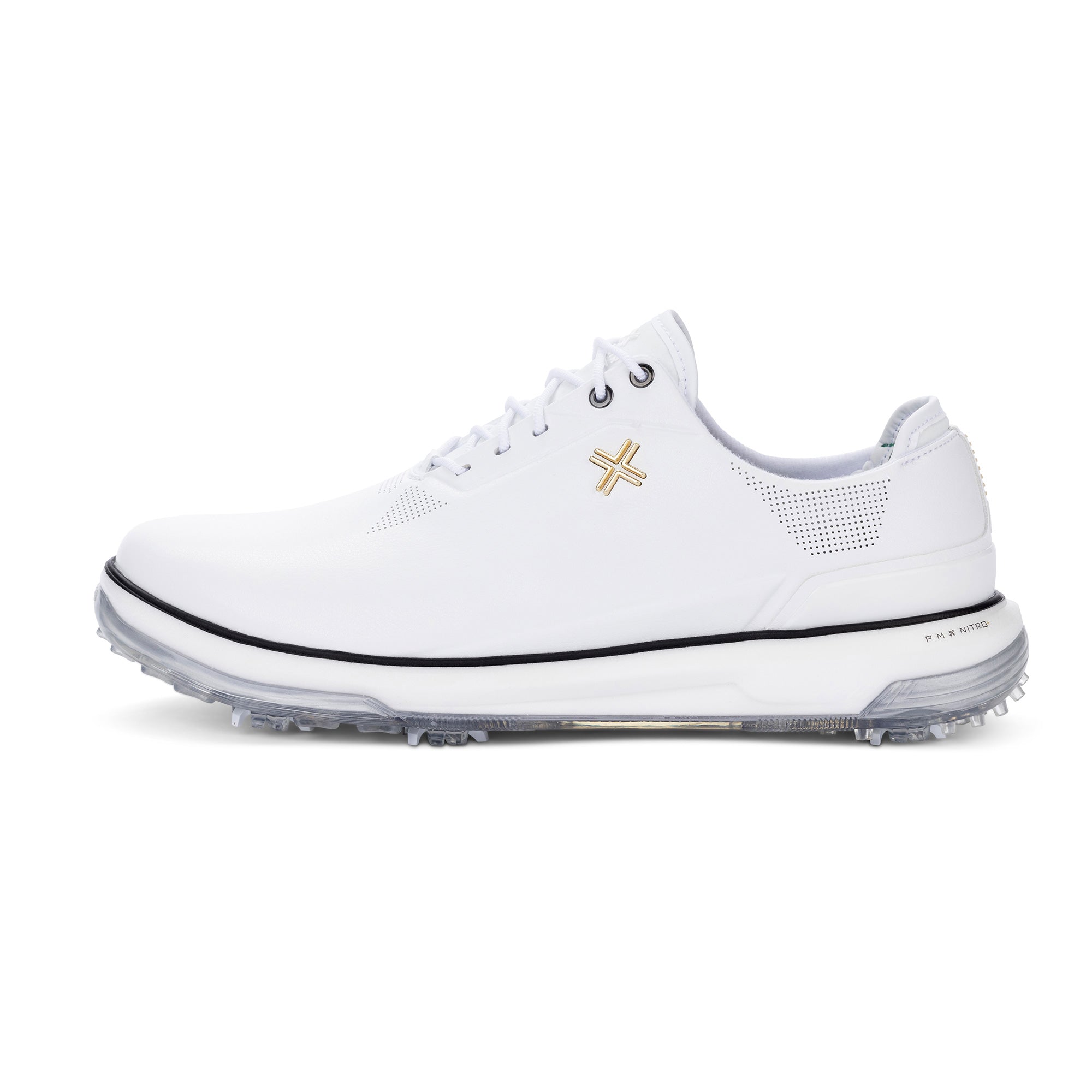
If you play all winter and you already know you do — the golfer who has proper waterproofs, not the golfer who owns waterproofs — the PAYNTR Eighty Seven SC is the flagship version of the same argument. Full waterproof membrane, Softspikes Tour Flex Pro replaceable spikes, and a Carbitex carbon plate that gives it a snap of energy return that no other golf shoe at the price really matches. At $250 from a young brand with patchy stock it is a lot to ask, and I would not recommend it to someone who plays twice a month. For someone playing forty winter rounds, the maths changes.
The shoulder-season shoes, and where they stop working
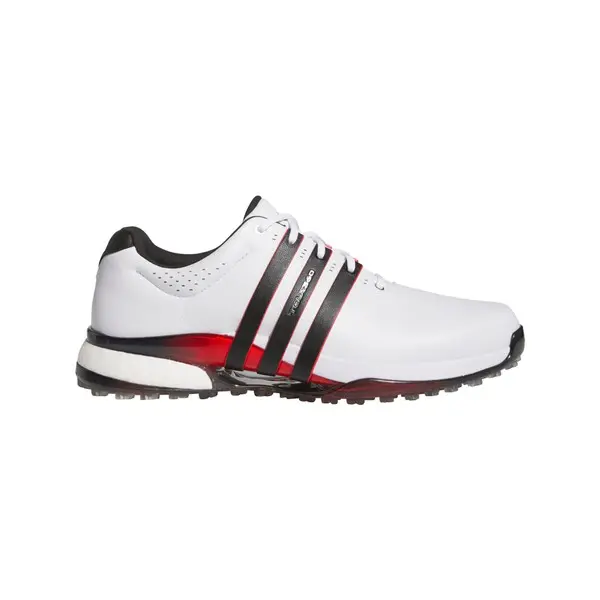
The adidas Tour360 25 is the best-looking answer here and the one I'd choose for September and October specifically. Waterproof leather, full-length BOOST, the 360WRAP midfoot that actually holds the foot through a hard swing. The catch is that the 3D Traxion outsole is spikeless, and spikeless grips well right up until the ground stops being ground. It is a superb shoulder-season shoe and a compromised January one. Around $190, and street prices dip below that.
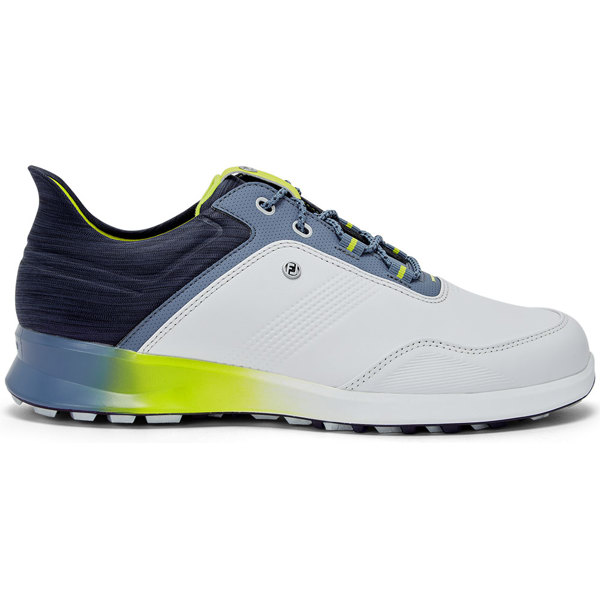
The FootJoy Stratos is the pick if comfort is the thing keeping you off the course rather than grip. Waterproof Pittards leather, a thick StratoFoam midsole, four widths from narrow to extra wide — which is a bigger deal than most spec sheets make it look, because a shoe that fits your actual foot shape does more for stability than any outsole pattern. Also spikeless, also often discounted as a previous-season model, and at roughly $200 full price it is usually available for less.
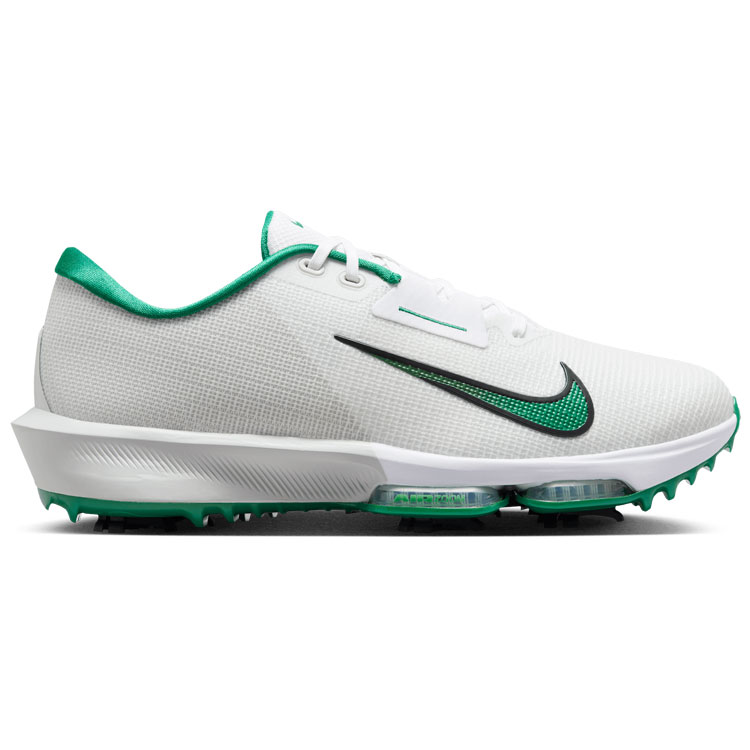
The Nike Air Zoom Infinity Tour NEXT% is the cleanest illustration of my whole argument. It is properly waterproof — Flyweave upper, two-year waterproof warranty — and it is one of the most comfortable shoes in golf, with stacked Zoom Air in the heel and a trainer's low profile. At around $140 it is also very good value. And in November it is still a spikeless shoe with a sole that packs with mud, which is precisely the trap: the box says waterproof, the buyer reads that as winter-ready, and the ground says otherwise.
Who should not buy a second pair
Plenty of you, and this is the part I'd want a mate to tell me. If you play two or three times a month on a links or a sand-based course, you do not need an autumn shoe. Those surfaces drain, they stay firm, and your summer shoe is still the correct tool in December. Buy new socks.
If your current shoe is under a year old and its lugs are still sharp, you do not need an autumn shoe either. Clean the outsole properly — actually clean it, with a brush, not a kick against the clubhouse wall — and reassess in a month. Most of the traction people think they have lost is packed grass.
And if your shoe takes replaceable spikes, replace the spikes. It is the cheapest performance purchase in golf by a distance and virtually nobody does it on schedule. A set of cleats costs less than a sleeve of premium balls and will do more for your ball-striking in wet conditions than any driver you are currently browsing.
The golfers who should buy: anyone whose only pair is spikeless with a worn sole, anyone playing regularly on heavy parkland, and anyone who has been quietly shortening their swing in October for years without knowing why. That last one is more common than it sounds. The shoe was never neutral.
Products mentioned in this article
FootJoy
FootJoy HyperFlex
The default autumn answer: knit upper with a waterproof coating and six replaceable Pulsar LP cleats doing the actual work.
adidas
adidas Tour360 25 Golf Shoes
Waterproof leather and BOOST, but a spikeless outsole — a shoulder-season shoe rather than a deep-winter one.
FootJoy
FootJoy Stratos
Cushioned waterproof leather for walkers who want dry feet more than a low, fast ride; four widths and often discounted.
Nike
Nike Air Zoom Infinity Tour NEXT%
Genuinely waterproof and very comfortable, but the spikeless sole is the part autumn will expose.
PAYNTR
PAYNTR Eighty Seven SC Golf Shoes
Premium spiked option with a carbon plate and a full membrane, for the golfer who plays all winter and knows it.
ifrothgolf earns a commission on purchases made through these links, at no extra cost to you. It never changes what I recommend. Full disclosure.
Frequently asked
- Do I need spikes for autumn and winter golf?
- On soft parkland, yes — replaceable cleats bite into ground that deforms under load in a way a moulded spikeless outsole cannot. On links or sand-based courses that drain and stay firm, a spikeless shoe is fine year round. The surface you play matters more than the month.
- Is a waterproof golf shoe enough for winter?
- Not on its own. A waterproof membrane keeps your feet dry but has no effect on whether your back foot stays put on a soft, sloping lie. Traction geometry and how well the upper holds your foot through the swing are the variables that actually change with the seasons.
- How do I know when my golf shoe outsole is worn out?
- Run a thumb across the traction elements. If the edges no longer feel sharp, they have rounded off and are no longer gripping soft ground, even if the shoe looks new and still keeps water out. Outsoles typically wear out well before uppers do, which is why the problem goes unnoticed.
- Should I own two pairs of golf shoes?
- Only if you play regularly on ground that gets properly soft. Two or three rounds a month on a well-draining course does not justify a second pair. If your shoe takes replaceable spikes, fitting a fresh set is a far cheaper fix than buying another shoe.
Read next
Review
7.9/10Full Swing KIT review: the tape measure decides this, not Tiger
Tour pedigree, TGL on ESPN, and radar good enough to be checked against a Trackman outdoors. It also wants eighteen to twenty feet of room, which rules out most of the garages people buy it for.
Versus
Trackman iO vs Uneekor EYE XO2: the year-one trap
Both mount overhead, both want ten feet of ceiling, and about $3,000 separates them on the shelf. Then Trackman's included first year runs out, and the gap starts growing by $1,100 a year.
Versus
Uneekor EYE XO2 vs Foresight GC3: ceiling or floor?
About $4,000 separates them, but they're not really rivals — one lives in your ceiling forever, the other sits on the floor and travels. The cheaper one is also the one with no subscription.