
Garmin Approach G82 vs Shot Scope H50: the built-in launch monitor only earns its price if you practise on a range
Two big-screen handhelds, more than twice apart on price. The difference is a radar launch monitor in the Garmin, and whether you need one comes down to how often you hit balls away from the course.
By Tom Whitaker · Staff Writer
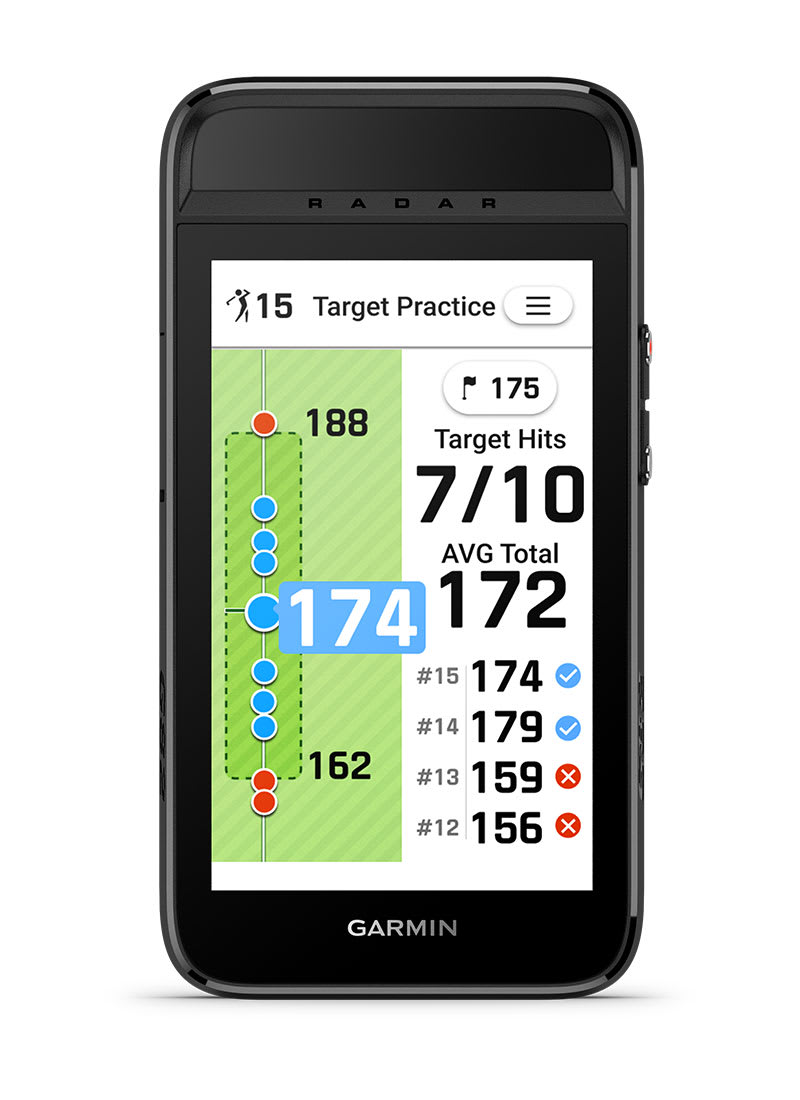
Garmin
Garmin Approach G82
Pick if you practise on a range most weeks and want the speed data, bag mapping and putting tempo work in the same unit as your course maps.
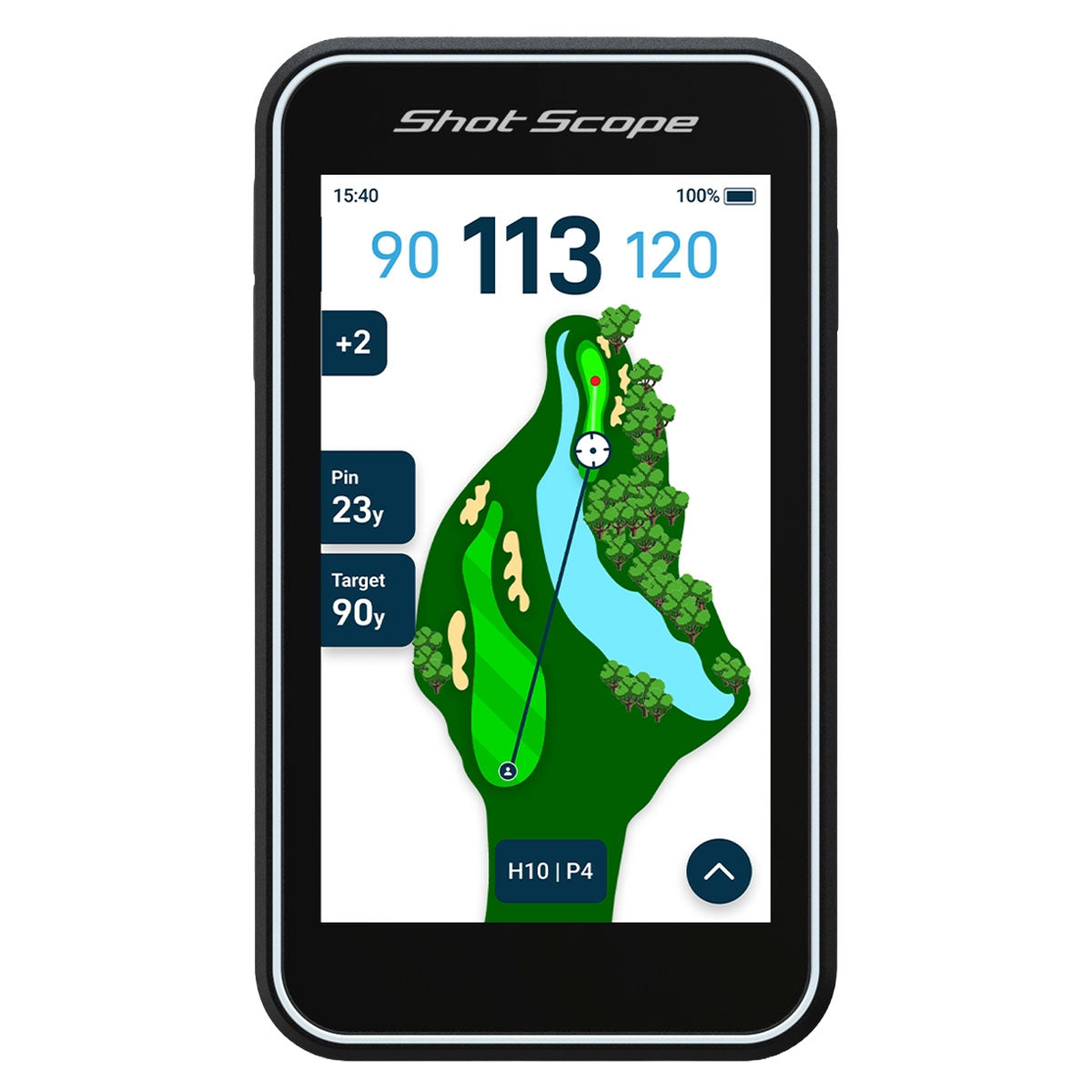
Shot Scope
Shot Scope H50
Pick if the device is for the course only: brighter screen, free green contours and stats, and no subscription at any point.
ifrothgolf earns a commission on purchases made through these links, at no extra cost to you. It never changes what I recommend. Full disclosure.
Side by side
| Specification | GarminGarmin Approach G82 | Shot ScopeShot Scope H50 |
|---|---|---|
| Device type | handheld gps + launch monitor | handheld gps |
| Display | 5-inch sunlight-readable touchscreen, full-colour maps | 4.3in AMOLED touchscreen, full-hole view |
| Courses preloaded | 43,000+ courses | 42,000+ courses |
| Features | PlaysLike + PinPointer distances | elevation-adjusted distances; green contour mapping |
Specs as published by each manufacturer. Rows in grey are where the two match.
Put the two side by side on a cart and from a few yards away you would struggle to say which costs more. Both are big-screened handhelds with a magnet on the back, 42,000-plus courses on board, full-hole maps and plays-like yardages. Then you notice the Garmin Approach G82 has a radar on the front, and that it costs more than twice as much as the Shot Scope H50.
That radar is the whole comparison. The question is not which is the better GPS. It is whether a handheld needs a launch monitor in it, and for most golfers the answer depends on one habit: how often you hit balls somewhere other than the golf course.
What the two share
Start with the overlap, because it is bigger than the price gap suggests. Garmin quotes 43,000-plus preloaded courses and Shot Scope 42,000-plus. Both give front, middle and back, hazard and lay-up distances, and plays-like numbers that adjust for elevation. Both are IPX7 waterproof, both charge over USB-C, and both sit on a cart frame on a magnet. Over the first hole, as a GPS, either does the job you bought it for.
We have already argued for the format itself in the case for the handheld GPS, so here we will assume you have chosen a handheld over a watch or a laser and focus on which one to buy.
Where the H50 is the better GPS
The H50 has the better screen for reading the course. It is a 4.3-inch AMOLED panel, the same display type phones use, with strong contrast and bright colour. The G82's is larger at 5 inches, but it is a transflective panel at 480 by 800, which is great in direct sun and flatter everywhere else. On paper, the H50's panel is the more vivid of the two, though Golfalot found the H50's map graphics dated, so vivid describes the panel rather than the design.
The bigger difference is what you pay to see the green. Shot Scope includes green contour maps on the H50, along with manual shot tracking, a digital scorecard for up to four players and more than 100 stats including strokes gained, and states that software, maps and updates are subscription-free for life. Garmin's own feature copy for the G82 says green contour data needs an active Garmin Golf membership, as does aerial imagery. Plugged In Golf put that membership at 10 dollars a month or 100 a year. Over three seasons, that changes how the price gap looks.
The H50 is also lighter, at 270 grams against the G82's 308, and its dual-band satellite receiver is a sensible thing to have under trees. The one GPS spec where the Garmin clearly wins is battery: up to 25 hours in GPS mode against the H50's 15-plus. Fifteen hours is still several rounds. It only matters on a golf trip where you will not see a plug for days.
What the G82's radar actually tells you
This is where the extra money goes, so it is worth being exact about it. The G82's radar measures speed: club head speed, ball speed and smash factor, plus swing tempo. It does not measure spin or launch angle. The carry distances it shows are estimates calculated from speed, and Plugged In Golf notes the unit displays them with a plus-or-minus range for that reason. On the green it reads putting stroke length, tempo and putter and ball speed, and shows your last three putts.
Independent reviewers agree on the speed numbers and disagree with the carries. Plugged In Golf found club and ball speeds within a few mph of a FlightScope Mevo Gen2, with 7-iron distances within five yards and driver right at ten yards off. Breaking Eighty had ball speed almost identical to a Bushnell Launch Pro and carry differing by five to ten yards. Their verdict was that it is accurate enough to be useful and not a substitute for a dedicated unit.
Useful for what, then? Three things. Speed training, where ball speed and smash factor are the numbers that matter and the G82 reads them well. Tempo, on the range and on the green, where the putting stroke-length and tempo data is a feature no other GPS offers. And bag mapping, which is the clever part: range sessions build a distance profile for each club, and that profile feeds the virtual caddie that recommends clubs on the course, using wind and elevation. The launch monitor is not there for its own sake. It is the G82's way of learning your yardages so the GPS can use them.
The decision: how often do you practise?
Buy the G82 if you are on a range most weeks. Then the radar earns its place. Bag mapping only works if you feed it, the speed and tempo data turns a bucket of balls into practice with a purpose, and the putting metrics give you a reason to spend twenty minutes on the practice green before a round. At $700 it is cheaper than buying a premium GPS and a standalone launch monitor separately, and it is one device in the bag, not two. If you already own a launch monitor, the case falls apart.
Buy the H50 if the device is for the course. That is most golfers. If you play on Saturday and go to the range now and then, you will use the G82's radar a handful of times a year, and the estimated carries it gives you will not be precise enough to rebuild your yardages from anyway. The H50 gives you the brighter screen, the green contours, the stats and the scorecard, with no subscription, for less than half the price.
Skip both if you want real carry numbers. A handheld that guesses carry from speed is not the tool for gapping wedges. If yardages are the goal, a dedicated launch monitor such as the Garmin Approach R10, which we cover in our R10 review, reads launch and spin, and you can pair it with a cheap handheld on the course.
One timing note. Amazon's Prime Big Deal Days run on 6 and 7 October. If either unit is discounted, the gap shrinks but the decision stays the same: the G82 is worth it if you practise, and the H50 is the better buy if you mostly just play.
The call
The H50 is the better GPS for the money, and for golfers who only want course data it is the one I would point to. The G82 is the better device for the golfer who practises, because its launch monitor is what feeds its course features. Be honest about how many range sessions you managed this summer. If the answer is more than you can count on one hand, the radar is worth it. If not, you would be paying for it to sit in your pocket.
Frequently asked
- What is the difference between the Garmin Approach G82 and the Shot Scope H50?
- Both are handheld golf GPS units with large touchscreens, over 42,000 courses, plays-like distances and cart magnets. The G82 adds a built-in radar launch monitor that measures club speed, ball speed, smash factor and tempo, plus putting stroke data, and has a 5-inch screen and up to 25 hours of GPS battery. The H50 has a 4.3-inch AMOLED screen, about 15 hours of battery, includes green contours and stats with no subscription, and costs less than half as much.
- Does the Garmin Approach G82 measure spin and launch angle?
- No. The G82's radar measures speed only: club head speed, ball speed, smash factor and swing tempo. Carry distances are estimated from those speeds rather than measured. Independent reviews found its speed readings close to dedicated launch monitors, but carry estimates differed by around five to ten yards, more with the driver.
- Do you need a subscription for the Garmin G82 or the Shot Scope H50?
- The Shot Scope H50 needs none: Shot Scope says its software, maps and updates are subscription-free for life, including green contours and stats. The Garmin G82 works without one, but Garmin lists green contour data and aerial imagery as requiring an active Garmin Golf membership, which also unlocks features such as wind data.
- Is a handheld GPS with a launch monitor worth it?
- Only if you practise regularly away from the course. The G82's radar is most useful for speed and tempo training, putting tempo, and bag mapping that feeds its virtual caddie. A golfer who mostly plays and rarely visits a range will get more value from a cheaper handheld such as the H50, and anyone who wants measured carry and spin should buy a dedicated launch monitor.
Read next
Versus
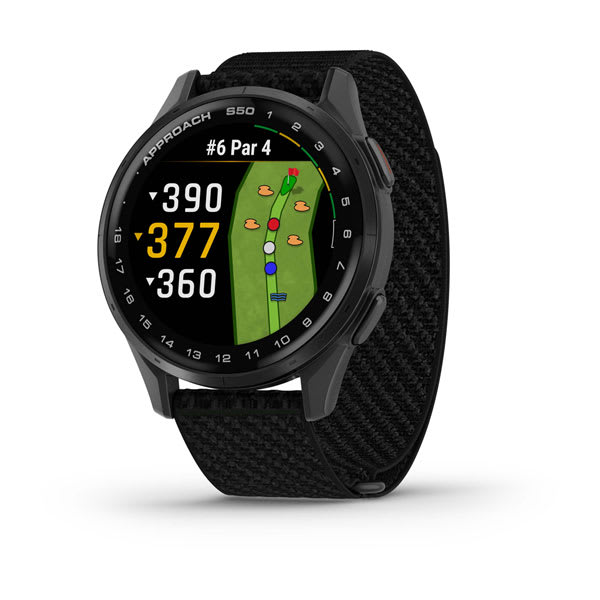
Garmin Approach S50 vs Shot Scope V5: slick watch or free game data?
Two very different GPS watches at two very different prices — one is the polished all-rounder, the other quietly tells you where you actually lose shots.
Review
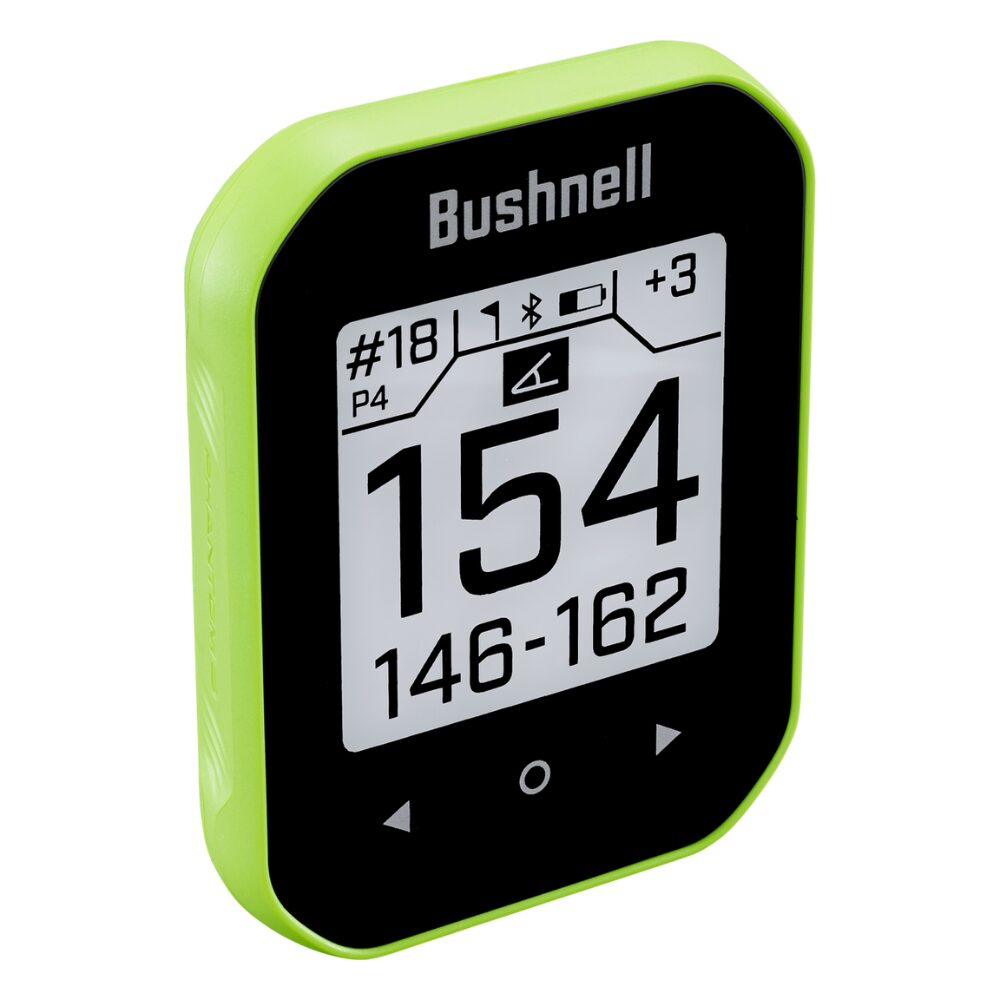
8.0/10Bushnell Phantom 3 review: the no-faff GPS that costs less than a wedge
No watch on your wrist, no laser to aim, no subscription — just big, glanceable yardages and slope in your pocket. For a lot of golfers that's the whole job, done, for the price of a decent round.
Review
8.4/10Shot Scope V5 review: the golf watch that tracks your whole game for free
Most game-tracking systems hand you tour-level stats and then charge you monthly to keep them. The V5 gives you strokes gained and 100-plus stats on your own game with no subscription, ever — and that changes the maths entirely.