
Garmin Approach R10 review: it will tell you your 150 club carries 138
Pocket radar, app simulator and on-course tracking for the price of a good rangefinder. Still the best-value way to find out what your game actually does.
By Ben Marsden · Reviews Editor
The verdict
Excellent
What's great
- Trustworthy practice numbers: carry, ball speed, clubhead speed
- App-based simulator play and on-course shot tracking
- Brilliant value for everything it does
Watch out
- No built-in screen — needs your phone
- Wants outdoor space or a roomy bay; not a photometric-grade unit
Bottom line — Still the best-value way to get real numbers plus a taste of home sim. Want screen-built-in simplicity or sim-grade accuracy? Look at the LM1 or SkyTrak+ respectively.
Garmin
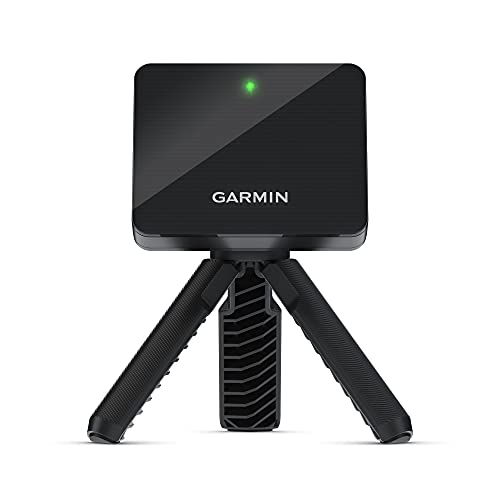
Garmin Approach R10 Launch Monitor
ifrothgolf earns a commission on purchases made through these links, at no extra cost to you. It never changes what I recommend. Full disclosure.
Everybody has the same first session with one of these, and it is not a pleasant one. You set it down at the range, hit ten seven-irons, and discover that the club you have been calling your 150 club for four years carries 138. Not on the bad ones. On average.
Every yardage you have used to make a decision since roughly 2022 has been fiction, and a plastic box the size of a deck of cards has just said so out loud, without any particular sympathy.
That is the Garmin Approach R10's real product. Not simulator golf, not the length of the metrics list. The uncomfortable truth about your own distances. At around $500 it remains the value all-rounder to beat, and our best all-round pick in the under-$1,000 roundup.
What you get for the money
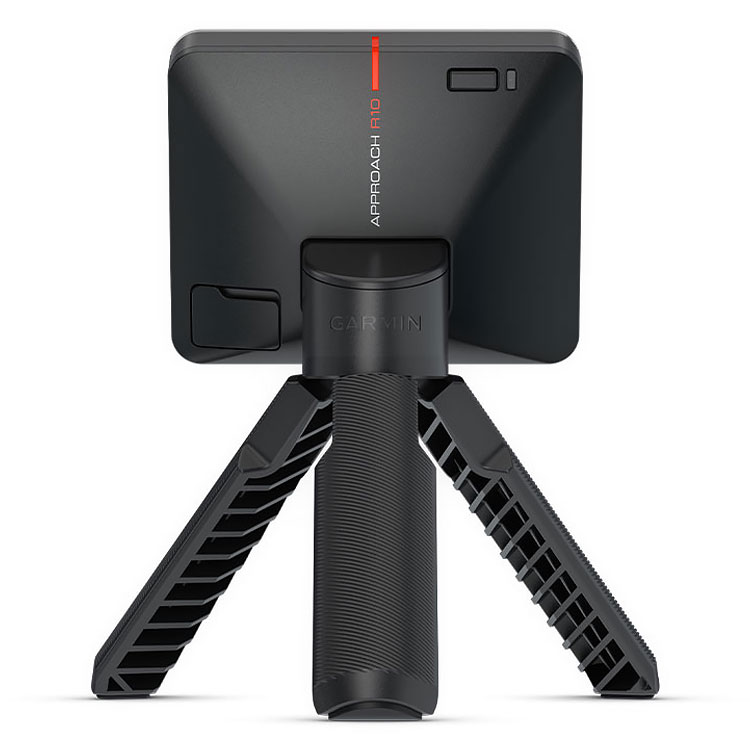
It is about the size of a deck of cards and uses Doppler radar to read carry, ball speed, clubhead speed, launch angle, club path and more, with Garmin quoting 14 plus metrics. It pairs with the Garmin Golf app over Bluetooth, tracks shots on real courses through a round, and runs virtual courses indoors via E6-powered home simulation. Battery life stretches to around ten hours, so it survives a full range session and then some, and it works indoors into a net, at the range, or off real turf in the garden.
No single one of those jobs is class-leading. The point is that nothing else does this many jobs at this price, and four years on nothing has really matched the ratio. Before it, this kind of feedback meant booking a fitting bay. After it, it lived in your range bag.
The humbling is the feature
Distance gapping is where most owners get their money back inside a week, and it works precisely because it is merciless. Sit the R10 down, hit ten balls per club, and you finally know your real carries rather than your best-ever carries, which is what most of us have quietly been using to pick clubs. That single blind spot costs more shots than any equipment fault you can name, and no new club fixes it.
It is just as good for speed work. Hit a few drives, make a change, and the ball-speed and clubhead-speed numbers tell you immediately whether you added real power or just felt like you did. That honest feedback loop is the whole argument for why a cheap launch monitor beats new clubs. Owners tend to report the same arc: a humbling first session, a fortnight of quietly recalibrating every yardage, then noticeably better approach play because they are finally aiming at numbers that exist.
As a home simulator
Genuinely good fun, with expectations managed. Paired with a net and the app it will run virtual rounds and keep a winter of practice interesting. It will not match a photometric unit like the SkyTrak+ for spin precision and rock-solid indoor play, and you feel that gap most on wedges and short irons, where modelled spin cannot fully impersonate measured spin. For garage rounds and staying sharp over winter it is plenty. For a sim build you would trust enough to fit clubs against, spend up, and budget for the hitting space rather than just the unit.
The catches
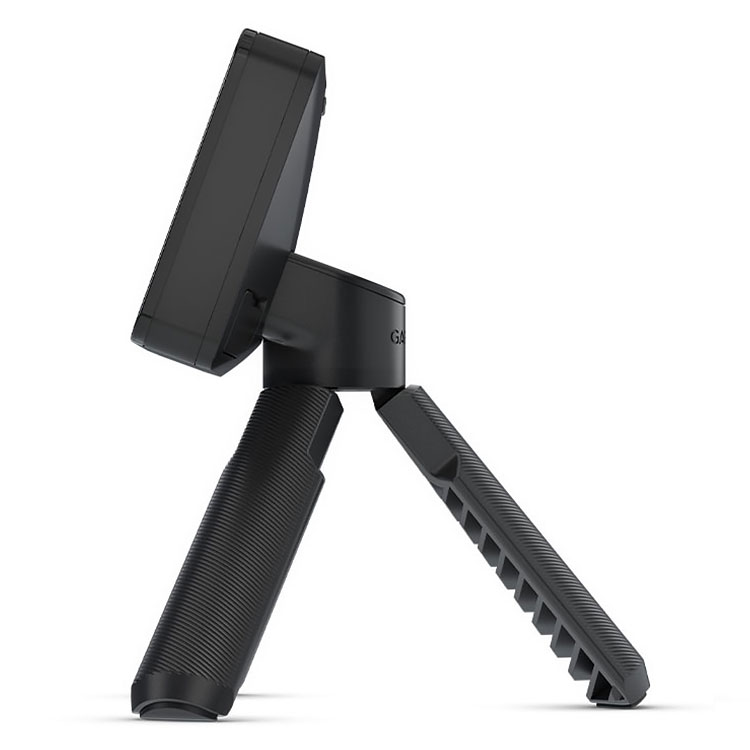
Three, none of them fatal. Spin is partly modelled rather than fully measured, so treat those numbers as a guide and do not try to fit a wedge against them. It is a radar unit, which means it wants room for the ball to fly, and the numbers drift if you crowd it against a net in a tight bay, so a cramped garage is not its natural home. And there is no screen, so every session starts with launching an app and propping a phone somewhere, which is exactly the friction the screen-equipped Shot Scope LM1 exists to remove. The fuller simulator experience also leans on a paid Garmin Golf membership, so factor that in if virtual rounds are the draw.
Who should buy it, and who should not
Buy it if you want the most capable do-everything unit under $1,250 and you are fine using your phone as the screen. Skip it if you want screen-built-in, subscription-free simplicity, where the LM1 is the cleaner tool, or if you are chasing simulator-grade spin accuracy for a serious build, where the SkyTrak+ is the smarter spend. For most golfers who simply want to practise with real information instead of hopeful guesses, it is still the default recommendation and the anchor of our best launch monitors guide. If you would rather have a personal answer than a hierarchy, our Launch Monitor Finder matches a unit to your space, goal and budget in three questions.
Where to buy
8.7/10Garmin
Garmin Approach R10 Launch Monitor
The launch monitor that put real ball and club data within reach of normal golfers.
ifrothgolf earns a commission on purchases made through these links, at no extra cost to you. It never changes what I recommend. Full disclosure.
Frequently asked
- Is the Garmin R10 worth it?
- For practice — dialling your real carry distances and checking whether swing changes add speed — absolutely, and it's the best-value all-rounder under $1,000. For a serious home simulator, a photometric unit like the SkyTrak+ is worth the step up.
- How accurate is the Garmin R10?
- Accurate enough for practice and gapping. Ball speed and carry are reliable; spin is partly modelled rather than measured, so it's not a pro-lab device. Give the radar room — it reads best outdoors or in a deep bay.
- Garmin R10 or Rapsodo MLM2 Pro?
- The R10 wins on portability, price and no subscription; the MLM2 Pro adds dual cameras, measured spin and automatic synced swing video. Choose the R10 for simple, cheap practice data, the MLM2 Pro if you learn visually and don't mind a Premium subscription for the best features.
- Does the Garmin R10 need a subscription?
- The core practice numbers and on-course tracking work without one. A Garmin Golf membership unlocks the fuller home-simulator experience, so factor that ongoing cost in only if virtual rounds are a priority for you.
Read next
Versus
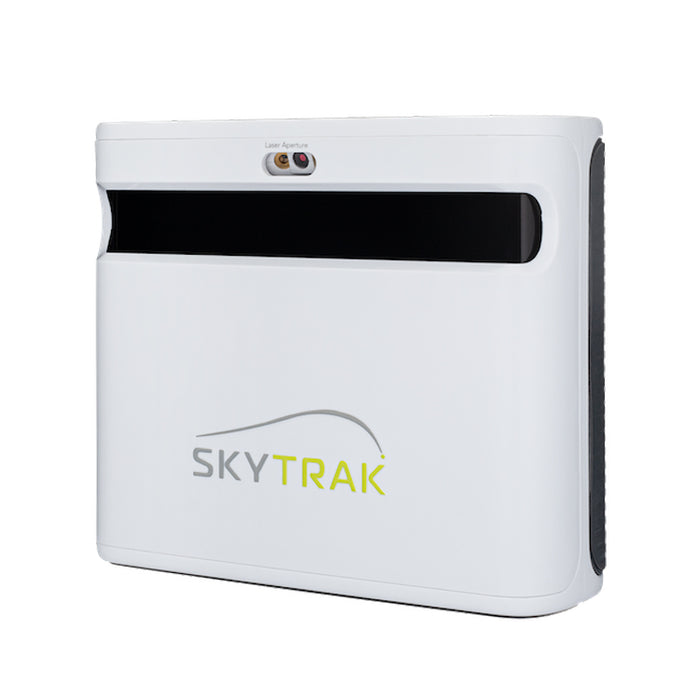
SkyTrak+ vs FlightScope Mevo+: your room decides this one, not your budget
Both are now outgoing models on run-out prices, which makes this more useful rather than less — the successors inherit the same trade-off. And it isn't the spec sheet. It's how much space you actually have.
Versus
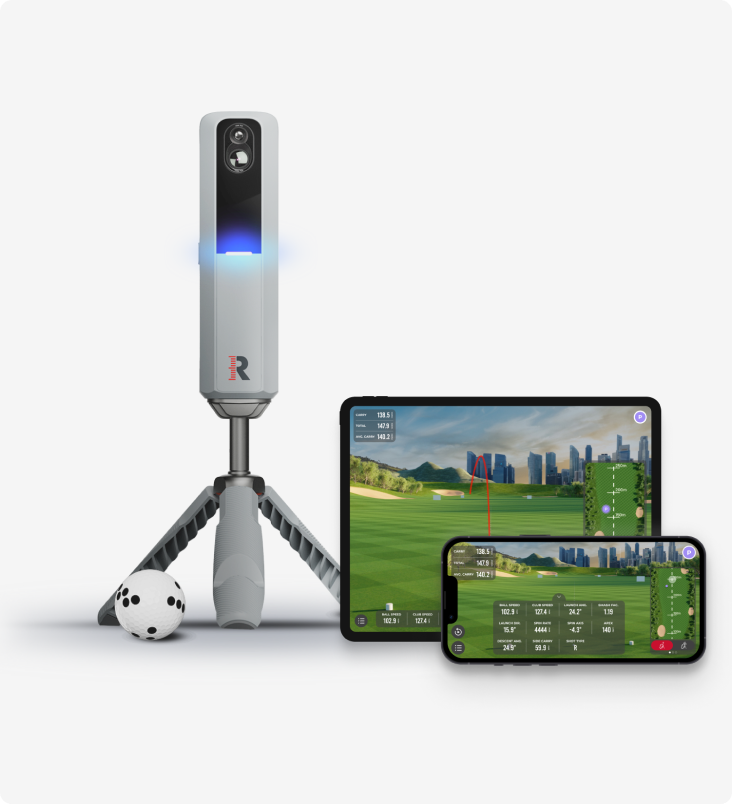
Rapsodo MLM2 Pro vs Shot Scope LM1: measured spin and sim golf, or just the number?
Two launch monitors golfers cross-shop constantly, sitting either side of the same question — how much do you actually need? One films your swing, measures spin and plays sim courses all winter. The other strips the whole idea down to a carry number on a screen.
Review
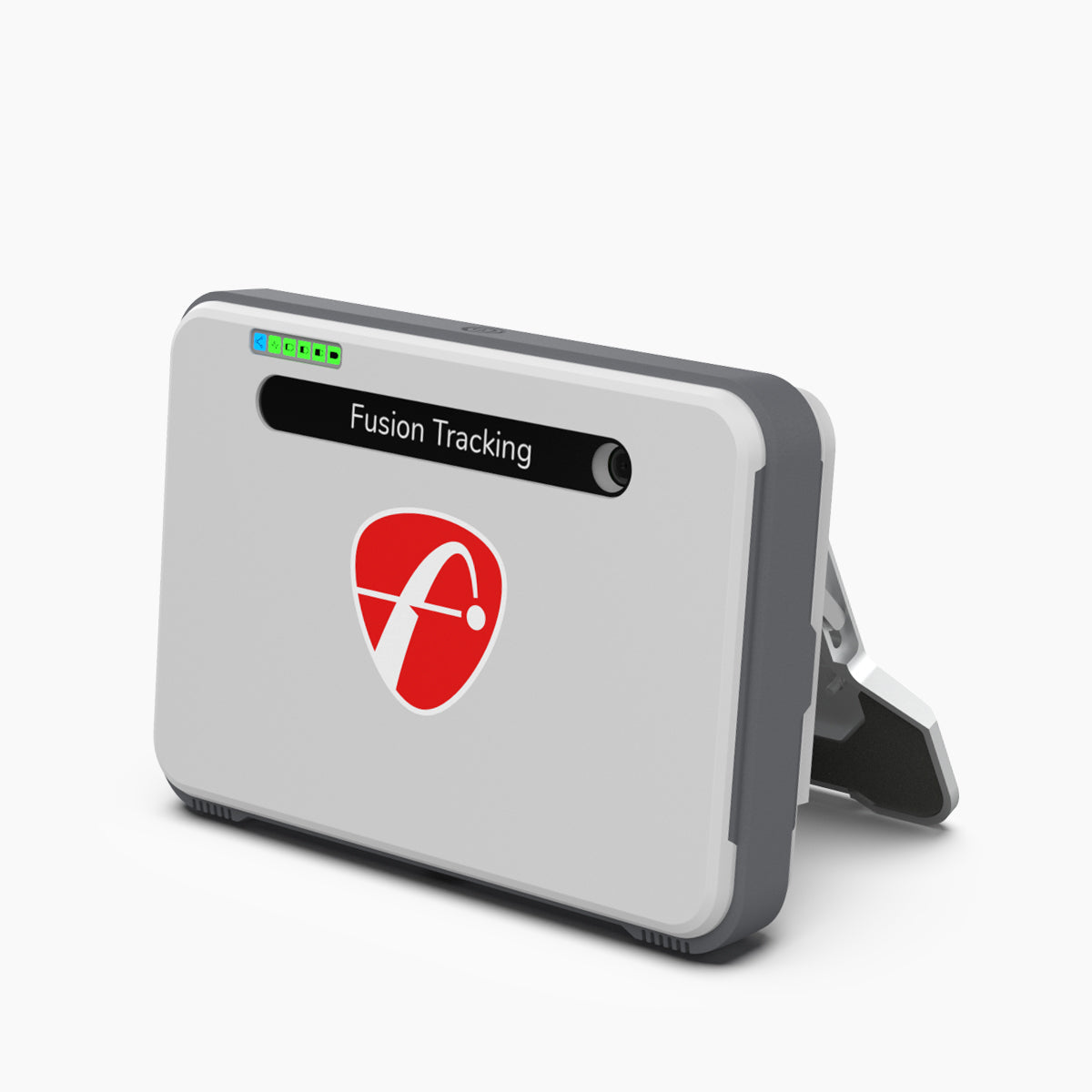
8.7/10FlightScope Mevo+ review: the launch monitor home simulators are actually built around
While the internet argues about budget camera units and the Garmin R10, the Mevo+ quietly became the default brain of the serious home sim — tour-grade radar heritage, full ball and club data, and out-of-the-box simulator connectivity. It needs room to breathe, and the add-ons push the real cost up.