
Garmin Z82 vs Bushnell Tour V7 Shift: one puts the hole in the viewfinder, the other puts your own carry numbers in it
Both fold a second layer of information into a laser, and both sit in the same bracket. One layer is 41,000 mapped courses laid over the hole you are standing on. The other is your own launch monitor carry numbers, and it is the one the Rules of Golf switch off in anything played to a card.
By Jordan Hale · Equipment Writer
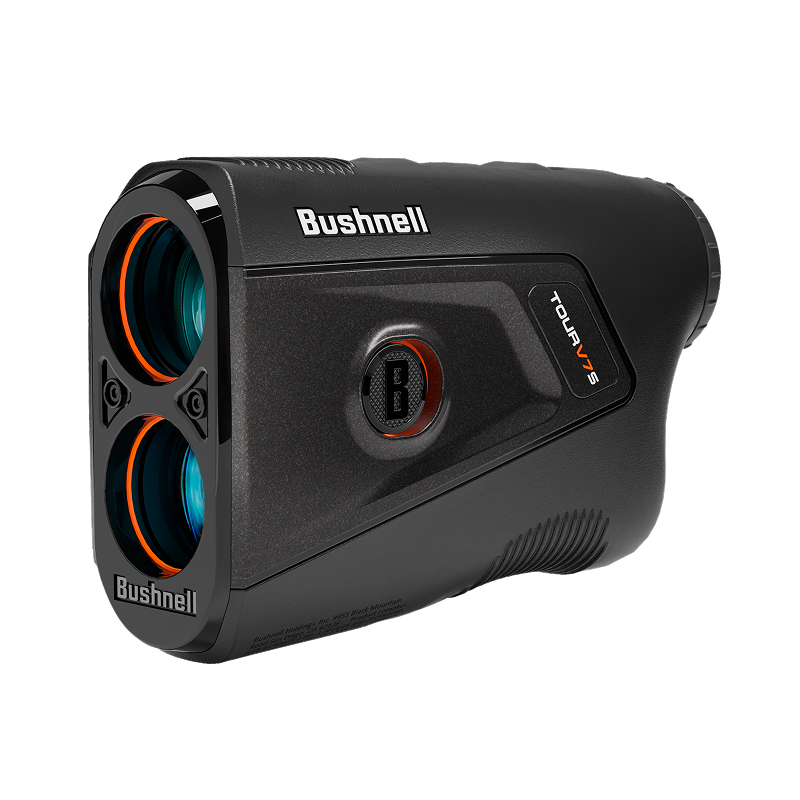
Bushnell
Bushnell Tour V7 Shift Laser Rangefinder
Pick if you want one unmistakable number and a slope switch you can point at.
ifrothgolf earns a commission on purchases made through these links, at no extra cost to you. It never changes what I recommend. Full disclosure.
Side by side
| Specification | GarminGarmin Approach Z82 | BushnellBushnell Tour V7 Shift Laser Rangefinder |
|---|---|---|
| Device type | laser rangefinder with GPS overlay | laser rangefinder |
| Magnification | 6x | 6x |
| Slope | PlaysLike slope | yes |
| Features | PinPointer for blind shots; wind data when paired with phone | yardage recall button |
Specs as published by each manufacturer. Rows in grey are where the two match.
Buy the Garmin Approach Z82 if you want to stop carrying a second device, and the Bushnell Tour V7 Shift if you want the fastest, least ambiguous number in golf. That is the usual framing for these two, and it is not wrong. It is just not the interesting part.
The interesting part is that both of these lasers add a second layer of information on top of the yardage, and the two layers come from completely different places. The Z82's extra layer is the golf course: a GPS map of the hole laid over what you are looking at. The V7's extra layer is you: your own club distances, pulled from launch monitor data, turned into a suggestion. Those are not competing features. They are competing ideas about what a rangefinder is for — and only one of them survives a competition round intact.
The Z82 puts the hole in the eyepiece
Look through the Z82 and you do not just get the number to the flag. You get the hole's GPS overlay, the hazards, and front, middle and back yardages laid over the view, from more than 41,000 preloaded courses. PinPointer helps when you cannot see the flag at all, which on a blind tee shot is the one moment a laser is otherwise useless. Image stabilisation steadies the reticle, and the laser itself is quoted as accurate to around ten inches at 450 yards.
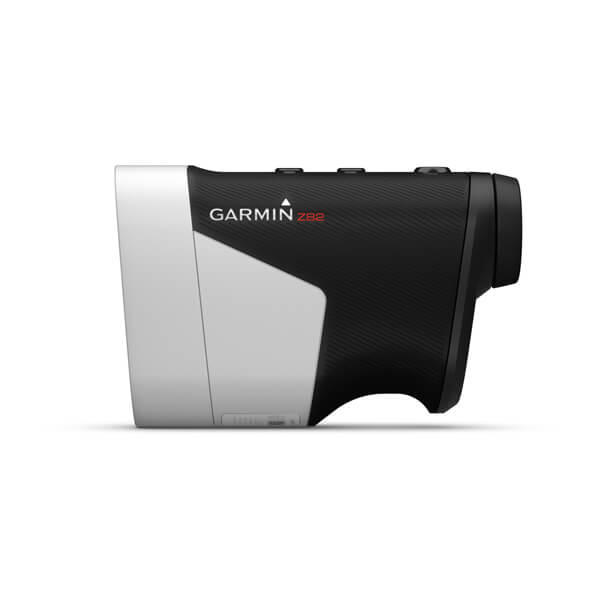
At $650 that is the most information any single device in your bag will give you, and the genuine argument for it is subtraction: it is a laser and a GPS watch and a course guide in one, so the thing you stop doing is carrying three gadgets and reconciling them on the tee. The honest catch is that it is a lot to process over one shot. There is a learning curve, and there is a real question about whether a golfer who already takes a while over the ball wants more numbers to look at.
The V7 Shift puts you in the eyepiece
Bushnell went the other way. At $500 the Tour V7 Shift is built around making one number unmistakable, and the 2026 change that matters is the dual-colour OLED — the plain distance in red, the slope-adjusted distance in green, so you always know which one you are reading. Anyone who has ever squinted at a slope figure and wondered whether they were about to hit a club too much will understand why that is a better idea than it sounds.
The rest is Bushnell doing what Bushnell does: 6x magnification, a 5 to 1,300 yard range at plus or minus a yard, PinSeeker with Visual JOLT so the flag is confirmed by a flash and a buzz, the BITE magnet that sticks it to a trolley, IPX6 weatherproofing. None of that is new and all of it works, which is the point.
The genuinely new feature is Link-Enabled Technology, which pairs the rangefinder with Foresight launch monitor data and puts a club recommendation in the display. Measure the flag, see the number, see the club. It is the cleverest thing either of these devices does.
The bit that decides it: what happens in a medal round
Rule 4.3a(1) is short and it is specific. A distance-measuring device must measure distance and nothing else — it must not measure elevation change, and it must not interpret that distance into a recommended line of play or club selection based on where your ball is. We have gone through what that does to the new AI-assisted lasers in detail, and the same logic applies here without any arguing.
So look at what each device loses when you tee it up in a comp. The Z82 loses PlaysLike slope and the wind data, and keeps everything else: the map, the hazards, the front-middle-back numbers, PinPointer. GPS distances to fixed points are conforming and always have been. You walk onto the first tee with most of what you paid for still working.
The V7 Shift loses slope, which is fine and expected, and it also loses the Link club recommendation — because a device telling you which club to hit based on your ball's position is the precise thing the rule describes. Its headline 2026 feature is a practice-round feature. That is not Bushnell hiding anything; the unit is explicitly built to switch modes. But it changes the value calculation for anyone whose golf is mostly played to a card.
Where the V7 wins that exchange is on proof. Its slope lives behind a physical switch on the outside of the device, so turning it off is a visible, physical act your playing partner can see you perform and can see the state of. The Z82's PlaysLike is a software setting inside a menu. Both are legal when off, but one of them you can settle an argument about on the tee box without handing your rangefinder to someone.
So which one
Buy the Z82 if you currently carry a laser and a GPS, if you play a lot of unfamiliar courses where knowing the shape of the hole is worth more than knowing the exact yardage, or if your hands shake over a long lock and the stabilisation would genuinely change your day. It is the most device you can buy and its extra layer is fully legal in competition, which is a better argument for it than Garmin makes.
Buy the Tour V7 Shift if you play the same two or three courses and already know them, if your golf is mostly medal play, or if what you want from a rangefinder is one number you can trust in under a second. It costs meaningfully less, the display is the best answer anyone has given to the which-number-am-I-looking-at problem, and the feature you lose in a comp is a feature you probably were not going to rely on anyway.
The one I would spend my own money on is the V7, and the reason is not the price. It is that a rangefinder is a device you use forty times a round in the two seconds before you commit to a shot, and in those two seconds less information is worth more than more of it. The Z82 is the better gadget. The V7 is the better rangefinder. If you want the full field rather than these two, the premium shelf is worth a look before you commit either way.
Frequently asked
- Is the Garmin Approach Z82 legal in competition?
- Yes, provided the PlaysLike slope feature and any wind data are switched off. The GPS overlay itself is conforming — distances to fixed points such as the front, middle and back of a green have always been allowed under the Rules of Golf. That means the Z82 keeps most of its functionality in a medal round, unlike features that adjust or interpret a distance.
- Can you use the Bushnell Tour V7 Shift's Link club recommendations in a tournament?
- No. Rule 4.3a(1) prohibits a device from interpreting distance information into a recommended club selection based on where your ball is, which is what the Link feature does when paired with launch monitor data. Slope must also be switched off. The rangefinder remains fully legal for measuring distance once both features are disabled, using the external slope switch.
- What is the difference between the Garmin Z82 and the Bushnell Tour V7 Shift?
- The Z82 is a laser with a full GPS course map overlaid inside the viewfinder, drawn from over 41,000 preloaded courses, plus image stabilisation and PinPointer for blind shots. The Tour V7 Shift is a pure laser focused on speed and clarity, with a dual-colour OLED display showing plain and slope-adjusted distances in different colours, a physical slope switch, and BITE magnetic mounting. The Z82 costs considerably more.
- Do I need a rangefinder with slope?
- Only for practice and casual rounds, since slope must be disabled in anything played under the Rules of Golf. It is genuinely useful on hilly courses for learning how much elevation change costs you, and every serious unit now ships with a way to turn it off. Choose based on how obvious that off-state is: a physical switch on the outside of the device is easier to demonstrate to a playing partner than a setting buried in a menu.
Read next
Explained
Is a rangefinder legal in competition? (The slope rule, simply)
Yes — usually — but one setting can disqualify you. The plain-English guide to using distance gear within the rules.
Versus
Bushnell Pro X3+ vs Garmin Z82: which premium rangefinder wins?
Two flagship lasers, two philosophies — the purist's tool versus the do-everything device. Here's who should buy which.
Review
7.9/10Full Swing KIT review: the tape measure decides this, not Tiger
Tour pedigree, TGL on ESPN, and radar good enough to be checked against a Trackman outdoors. It also wants eighteen to twenty feet of room, which rules out most of the garages people buy it for.