
Bushnell Tour V7 Shift review: the rangefinder most golfers should buy
Fast, confident lock-on, switchable slope and Bushnell's reliability — the all-rounder that tops the lists, and the one we recommend by default.
By Jordan Hale · Equipment Writer
The verdict
Excellent
What's great
- Dual-colour display ends slope-vs-straight number confusion
- Fast, jolt-confirmed lock you can trust on the flag
- Switchable slope with a competition-legal external indicator
- BITE magnet and proven Bushnell reliability
Watch out
- Pricey at $500 when a budget laser gives the same yardage
- 6x optics a step behind the dearer Pro X3+'s 7x glass
- CR2 battery rather than USB-C; LINK only useful with launch-monitor data
Bottom line — The default rangefinder recommendation and the best mid-priced laser Bushnell makes — it wins on the fundamentals, which is why it tops the lists.
Bushnell
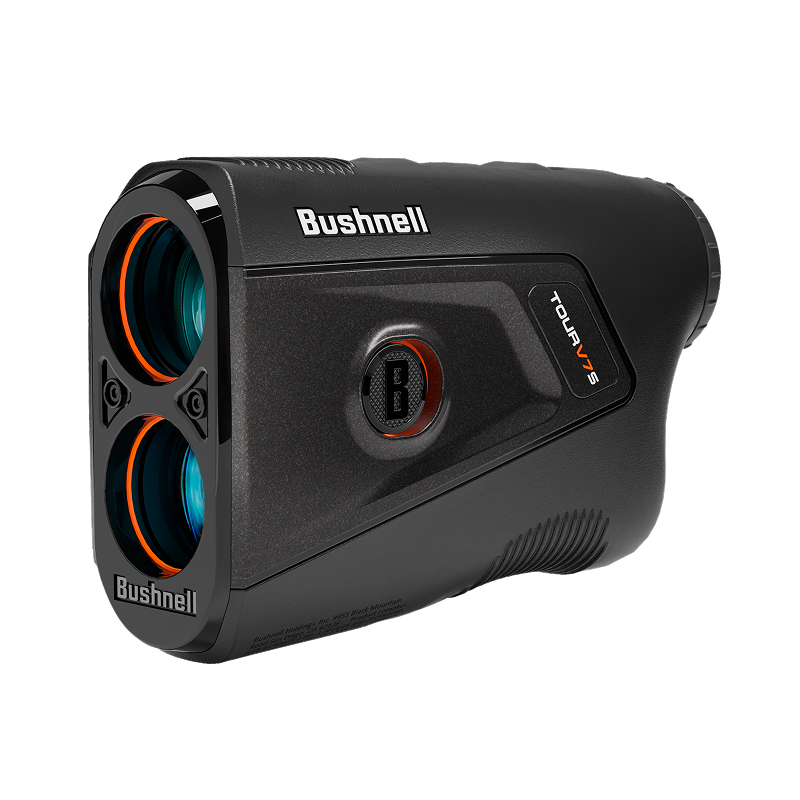
Bushnell Tour V7 Shift Laser Rangefinder
ifrothgolf earns a commission on purchases made through these links, at no extra cost to you. It never changes what I recommend. Full disclosure.
The Bushnell Tour V7 Shift is the rangefinder most golfers should buy — around $400 for a fast, confident lock, switchable slope and the brand reliability that makes Bushnell the tour standard. It's the all-rounder that tops the best-of lists and the default pick in our best rangefinders guide: not the cheapest, not the most feature-stuffed, just the one that does the core job better than almost anything. It's the 2026 model that replaces the V6 Shift, and the changes are sensible rather than flashy.
The dual-colour display is the real upgrade
The headline change over the V6 is the new dual-colour OLED display: slope-adjusted yardages show in green, straight-line yardages in red. That sounds like a gimmick until you've stood over a shot unsure whether the number in the viewfinder is the raw distance or the plays-like one — a genuine source of mis-clubs on every older laser. Here there's zero ambiguity. Golf Monthly called it the clearest display Bushnell has ever produced, and Today's Golfer reckoned Bushnell kept the best bits of the V6 and added genuinely useful extras rather than padding. It's the kind of fix you don't appreciate until you have it, then can't go back from.
Lock speed is the whole game
What you actually feel on every shot is how fast and confidently the unit grabs the flag, and the V7 Shift is excellent here. It locks quickly and confidently from silly distances — Bushnell rates it to range flags at 500-plus yards — and the PinSeeker with Visual JOLT pulse confirms you've hit the pin rather than the trees behind it. Reviewers consistently describe that jolt as reassuring rather than annoying, which matters; a buzz you start ignoring is a buzz that lets a bad number through. That jolt-confirmed lock is the feature that separates a rangefinder you trust from one you second-guess, and it's where Bushnell has long earned its reputation. The 6x magnification is a notch behind the 7x glass on the dearer Pro X3+, but in normal daylight you won't feel the gap.
Slope you can switch off
The 'Shift' is the slope toggle: flip it on for practice and casual rounds to get the plays-like distance — an uphill 150 might read as the 162 it really plays — flip it off, with an external indicator a playing partner can see, to make it legal for competition. Slope is disallowed in most competition unless a local rule permits it, so a visible, idiot-proof switch isn't optional, it's the whole point. Slope is also standard across the market now and a bit overhyped — we make that case in turn slope off and weigh it properly in is a slope rangefinder worth it — but having it on a clean, visible switch is exactly how you want it.
The extras, and the catches
Two Bushnell signatures carry over and both earn their keep: the BITE magnet, which slaps onto a trolley or cart rail and stays put over the bumps, remains the most-copied feature in golf tech, and there's a yardage-recall button for when you want the last number back. New for the V7 is LINK, which can pull your club distances from Foresight launch-monitor data and suggest a club — a genuine bonus if you ever get on a launch monitor, and dead weight if you don't. The honest catches are price and plumbing. At $500 you're paying a proper Bushnell premium when a budget laser ranges to the same yard, and it runs on a CR2 battery rather than USB-C charging, which feels a touch old-school at this money. UK stock also runs through golf retailers rather than Amazon for now.
How it stacks up against the V6 and the Pro X3+
Against the V6 Shift it replaces, the V7 is an evolution rather than a revolution: the dual-colour display is the headline, LINK is the new trick, and the rest — lock speed, JOLT, BITE magnet, slope switch — is the proven formula carried over. If you already own a V6 you're not missing much beyond that display clarity. Against the dearer Pro X3+, the gap is real but narrow: the X3+ gives you 7x glass against the V7's 6x, longer-range acquisition and altitude/temperature compensation, but it's the same family of lock and the same trustworthy slope switch. For most golfers the V7 Shift is the value sweet spot of that pair, and the X3+ is for those chasing the ceiling.
Who should buy (and who shouldn't)
Buy if you want a do-everything laser you'll trust for years and don't want to overthink it — this is the safe default. Save money with a budget laser if all you need is the number and you'll skip the premium glass and badge; every rangefinder gives the same yardage, as we explain in how much to spend. Step up to the Bushnell Pro X3+ only if you want the very best optics, the 7x magnification and the longest-range, most confident lock for serious competitive play. Skip it entirely if you'd rather have distances on your wrist all round — that's a GPS watch's job, not a laser's.
The verdict
The safe, excellent, default rangefinder recommendation, and the best mid-priced laser Bushnell has made. It wins on the fundamentals — fast lock, the clearest display in the range, switchable slope, proven reliability — which is precisely why it keeps topping the lists. You're paying the Bushnell premium for the badge and that display, and if both matter to you it's worth it. If neither does, a budget laser ranges to the same yard for less, and you should buy that with a clear conscience. But for the golfer who wants to buy one laser, never think about it again and trust it on every shot for the next decade, this is the one we point them at first.
Where to buy
8.7/10Bushnell
Bushnell Tour V7 Shift Laser Rangefinder
The new dual-colour Bushnell that finally makes slope readings idiot-proof.
ifrothgolf earns a commission on purchases made through these links, at no extra cost to you. It never changes what I recommend. Full disclosure.
Frequently asked
- Is the Bushnell Tour V7 Shift worth it?
- For most golfers, yes — it's a fast, reliable, slope-switchable laser from the tour-standard brand with the clearest display Bushnell makes, and a do-everything pick you'll trust for years. If you only want the yardage and will skip the premium glass and badge, a budget laser saves money for the same number.
- What's new on the V7 Shift versus the V6 Shift?
- The big change is the dual-colour OLED display — green for slope-adjusted yardages, red for straight ones — so you're never unsure which number you're playing. It also adds Bushnell's LINK club-recommendation feature; the fast lock, JOLT vibration and BITE magnet carry over from the V6.
- Does the Bushnell V7 Shift have slope, and is it legal for competition?
- Yes — slope is switchable via the 'Shift' toggle, with an external indicator showing when it's off. Switched off it's legal for competition; switched on it gives plays-like distances for practice and casual rounds. Slope is disallowed in most competition unless a local rule permits it, which is why the visible switch matters.
- Should I buy the Tour V7 Shift or the Pro X3+?
- The V7 Shift is the better-value all-rounder for most golfers. Step up to the Pro X3+ only if you want the very best optics, 7x magnification and the longest-range, most confident lock for serious competitive play — the yardage itself is identical.
Read next
Versus
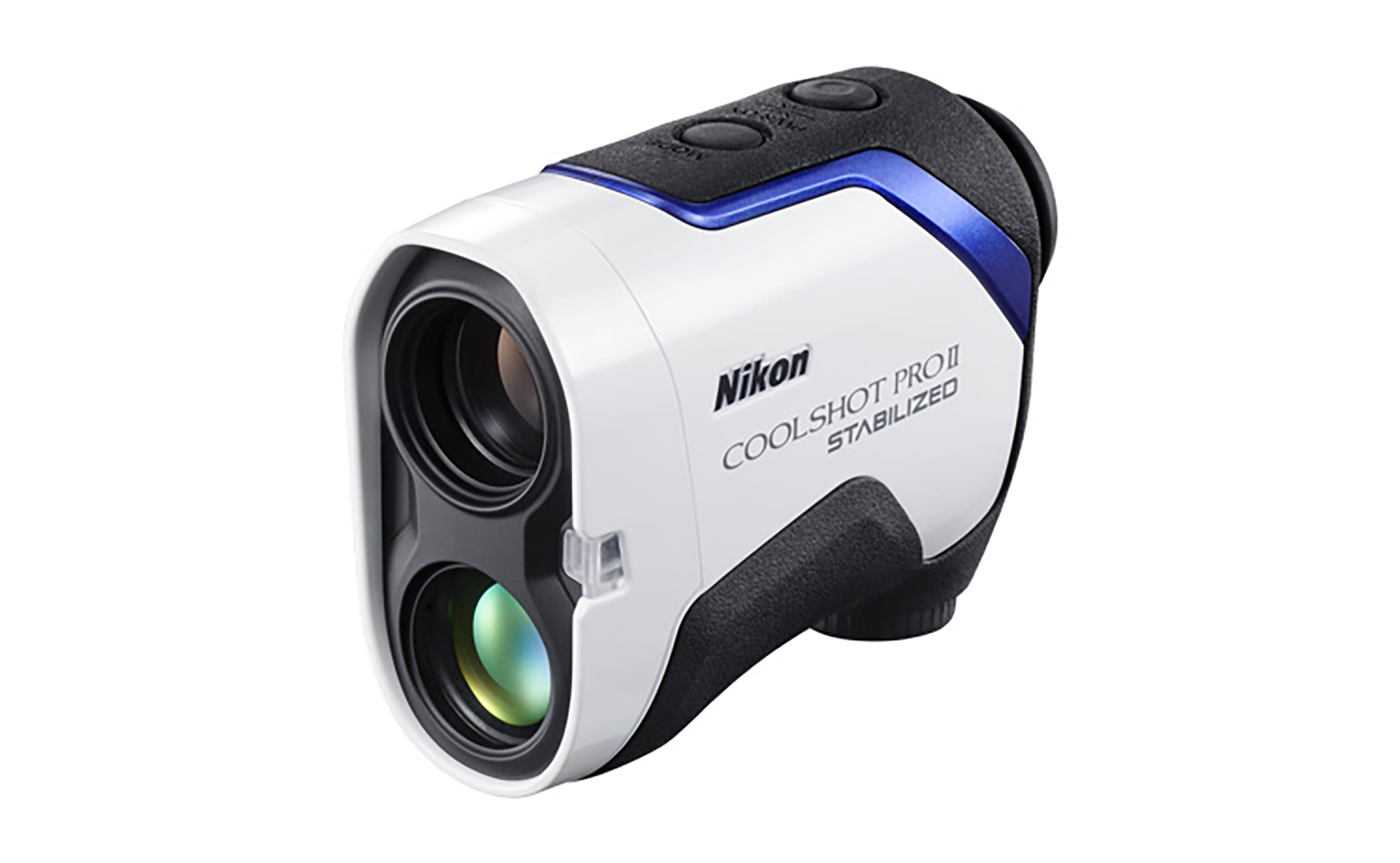
Nikon Coolshot Pro II vs Precision Pro NX10: how much rangefinder do you need?
One buys you the best optics and a gyro-stabilised picture; the other gives you most of the experience for a little over half the outlay. Which is the smarter buy?
Versus
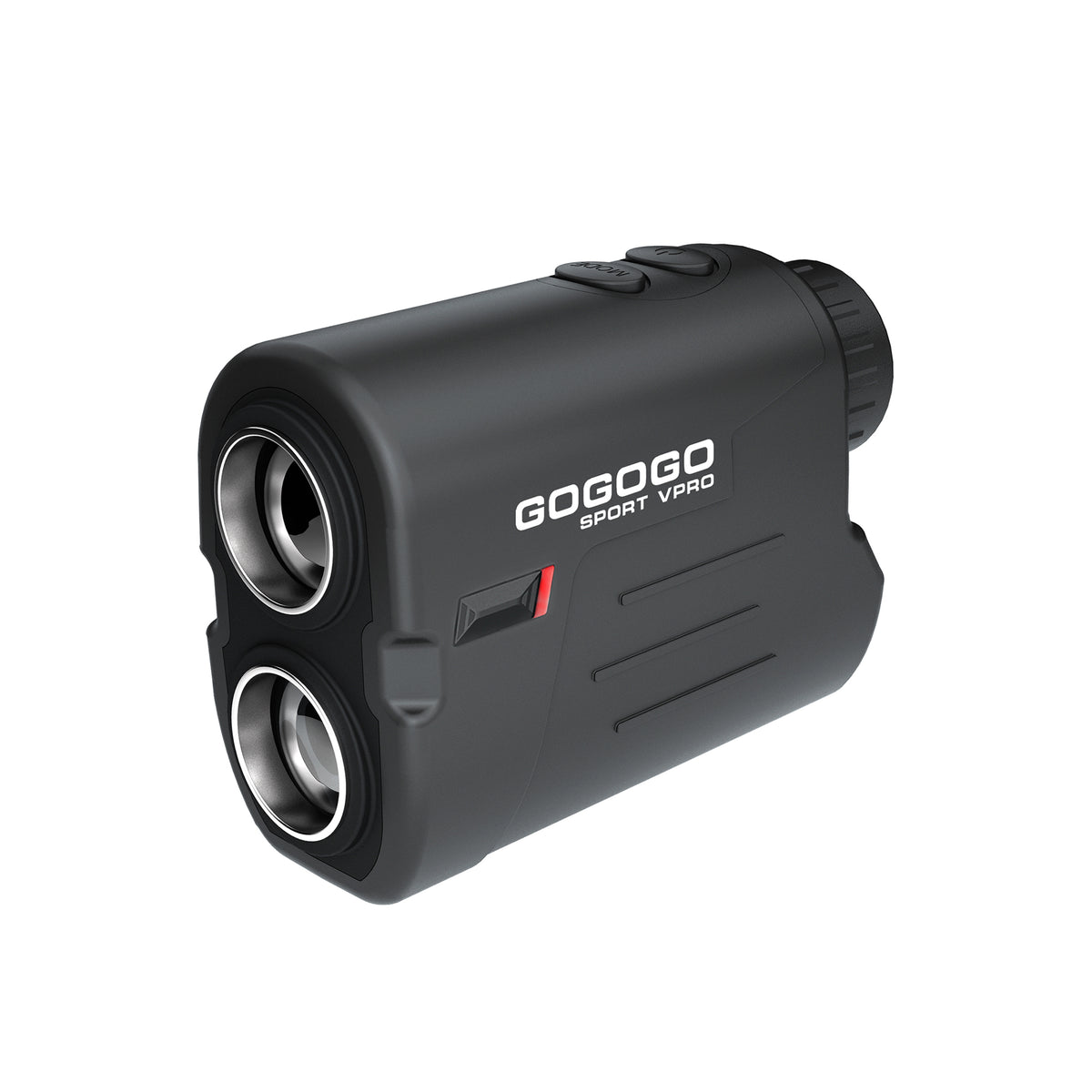
GoGoGo Vpro vs Bushnell Tour V7 Shift: do you really need to spend 5x?
A budget-laser icon against the tour-caddie standard — one costs roughly five times the other, and only one specific golfer actually needs the expensive one.
Review
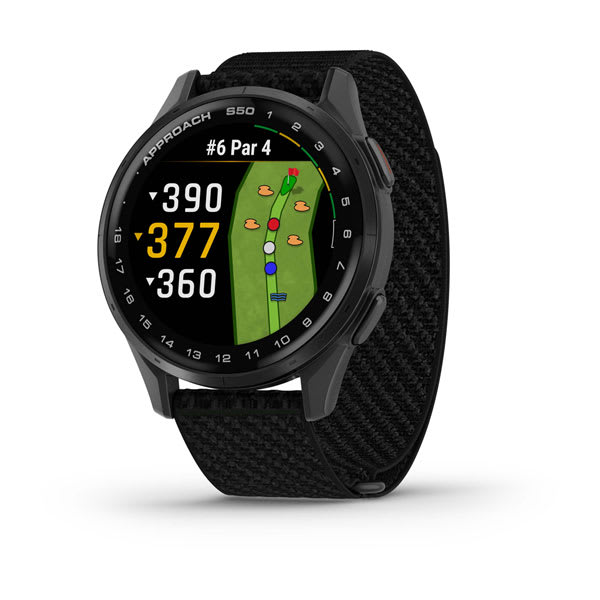
8.7/10Garmin Approach S50 review: the golf watch most people should actually buy
The S50 takes nearly everything that made Garmin's flagship special — the gorgeous AMOLED screen, slope-adjusted distances, shot tracking, wrist heart rate and Garmin Pay — and sells it for a lot less than double. For most golfers, this is the sweet spot.