
How much should you spend on a rangefinder?
They all measure the same yardage. Here's what your money actually buys above the basics — and where it stops mattering.
By Jordan Hale · Equipment Writer
 Explained
Buy in the middle — roughly $250–$350 — unless budget is genuinely tight or you play serious competitive golf. Every rangefinder gives the same yardage to the same pin; a $150 model and a $650 one agree on the number. What more money buys is lock speed, optics and stabilisation, and those stop mattering well before the top of the range. Spend where you'll feel it, not where the spec sheet is longest.
What you're actually paying for
Three things, in order: how quickly and confidently it locks onto the flag, the quality of the optics, and extras like slope, image stabilisation and vibration feedback. Notice what's not on the list — accuracy. The yardage itself is a solved problem across every price tier; budget testers from Golf Monthly and Today's Golfer have repeatedly clocked sub-$190 lasers within a yard or two of a Bushnell on the same shot. So when a $650 unit tempts you, ask which of those three things you'll actually notice on the course, because the number on the screen isn't one of them.
Entry ($130–$225): all most golfers need
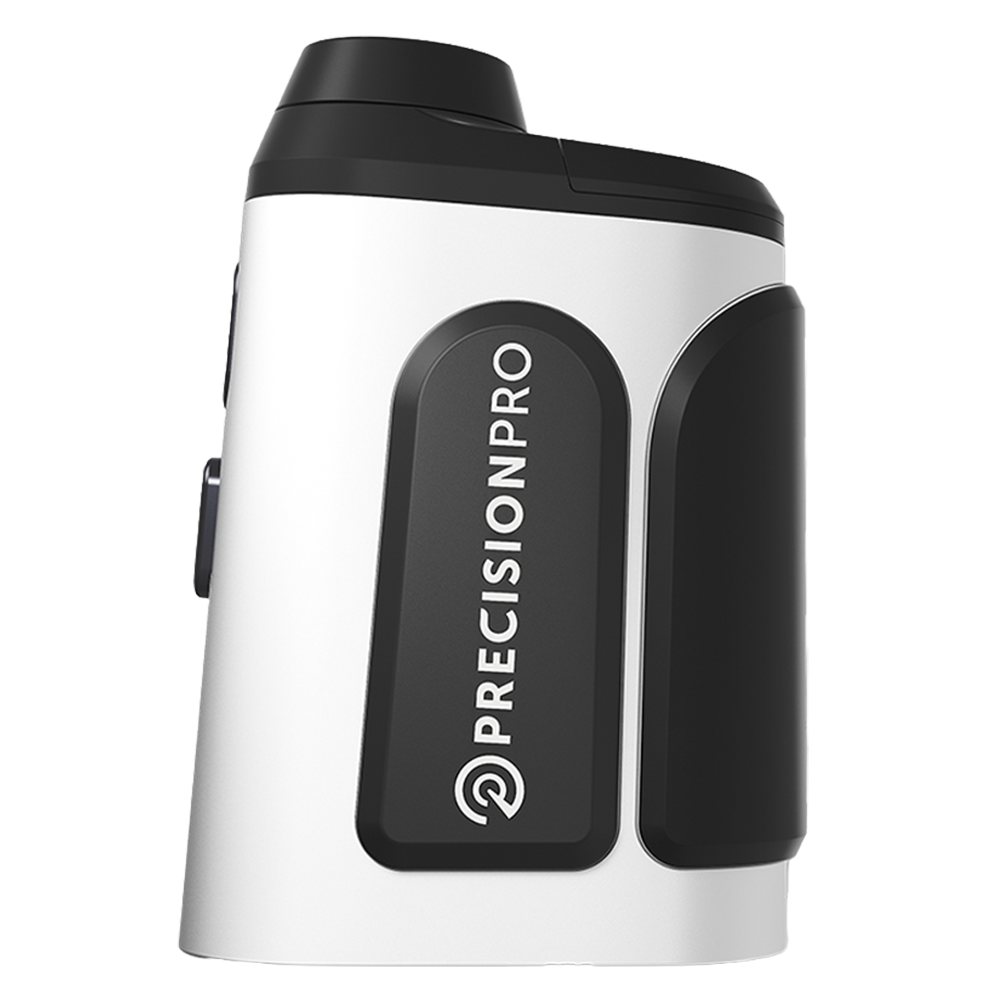
Accurate distances and a flag-lock that works. The Precision Pro NX10 is the honest example — it does the only job that matters and toggles slope off cleanly for the medal. Most budget lasers now include switchable slope, a CR2 battery and a basic display; the trade-off is that the glass is a touch dimmer in flat light and the lock can hunt a little past 150 yards, picking up the tree behind the flag so you re-shoot. If money is tight, stop here with no guilt; you are not losing yardage accuracy, only a little speed and polish.
The thing to watch at this tier is the bare-flag lock. Without a reflective prism on the pin — which you won't have in normal play — a cheaper unit's beam can struggle to separate a thin flagstick from the backdrop, so you hold it a beat longer or re-shoot to be sure. It's a minor annoyance rather than a dealbreaker, and it eases inside 150 yards where most of your scoring shots live. The honest read on the entry tier: it does everything a once-a-week golfer needs, and the money you'd spend climbing tiers buys polish, not better numbers.
Mid ($250–$375): the sweet spot
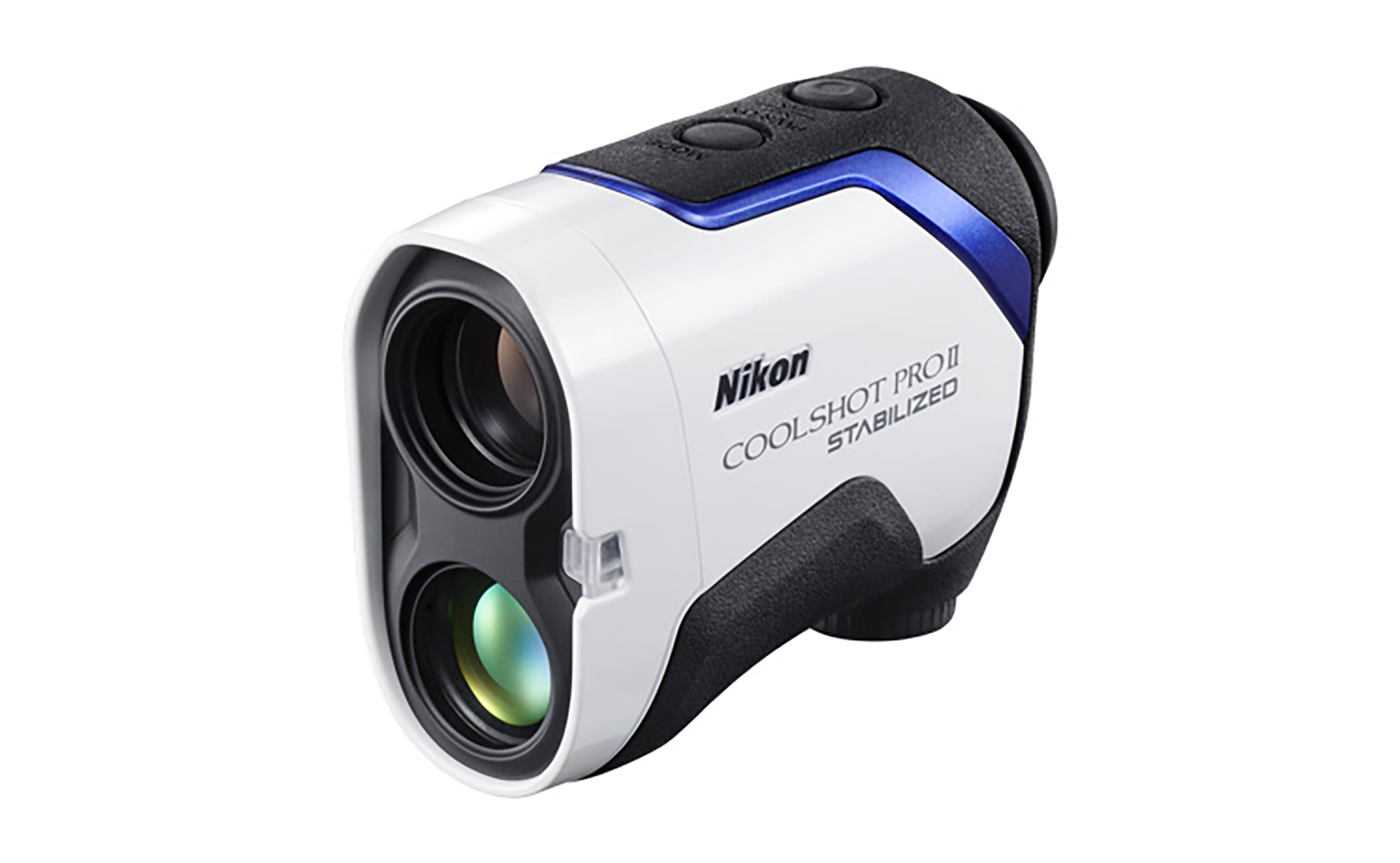
The glass gets clearer, the lock gets faster and steadier — a real help with shaky hands or in low light — and you'll usually get image stabilisation, the single upgrade most people actually feel on every range. The Nikon Coolshot Pro II is the pick here: its gyro genuinely steadies the picture so the dot stops dancing around the green, the 6x optics are a clear cut above budget glass, and a green ring plus a double beep confirms the lock. This is where most golfers should land — enough refinement to feel premium, no money wasted on features you'll switch off. Worth knowing at this tier: Nikon has archived the Coolshot Pro II in favour of the PROIII Stabilized, so if a Pro II is the unit tempting you, treat it as an outgoing-model buy and price it accordingly.
Premium ($500+): diminishing returns
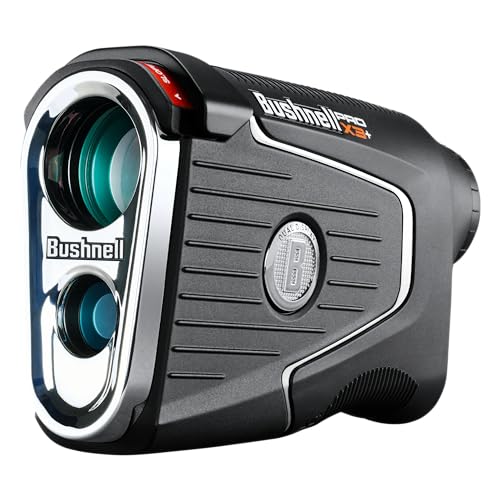
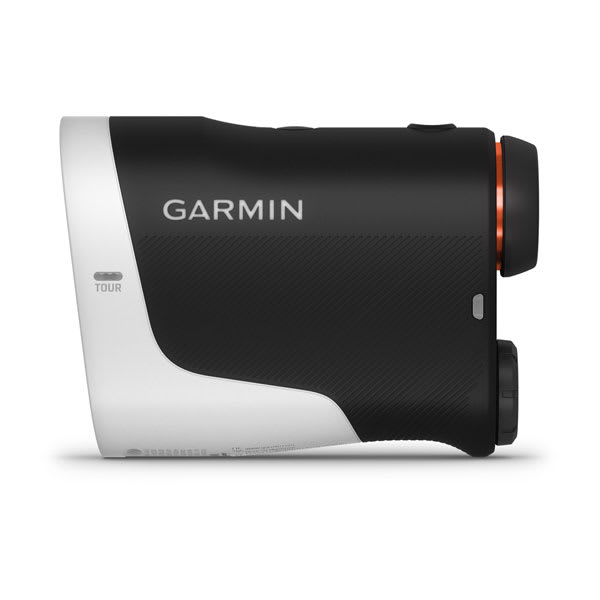
Tour-grade optics, lightning lock-on at long range, slick design. Lovely, but the number isn't more accurate — it just arrives a fraction faster through nicer glass. The Bushnell Pro X3+ is the tour standard, with 7x magnification and a lock you never second-guess, and worth it only if you play serious competition or simply want the best; we go deep on exactly what it does and doesn't justify in our Pro X3+ review. Be wary of paying up for app-based wind or elements data, much of which is fiddly in practice and illegal in competition anyway. The genuinely new idea at this end is connectivity: a laser like the Garmin Approach Z30 that beams the yardage to a paired GPS watch, which is only worth it if you already wear the watch.
Here's the part the spec sheets won't tell you: the jump from mid to premium is the smallest real-world difference of any step on this ladder. Going from a $150 unit to a $325 one is a noticeable upgrade in lock and glass; going from $325 to $650 is mostly the satisfaction of owning the best, plus a sliver of speed you'll struggle to perceive on the course. That's not a knock on premium lasers — they're genuinely superb — it's just an honest steer that the value curve flattens hard up here. Spend it if the money is incidental to you or you compete for trophies; otherwise the mid-tier already gave you 90 percent of the experience.
Competition vs casual: the one rule that overrides price
Your budget matters less than whether you ever play medals. If you compete, the non-negotiable is a slope switch you can turn off — slope-adjusted distance is disallowed in most competition unless a local rule permits it, and a unit you can't put into a conforming mode is useless to you on the day. If you only play social golf, slope-on is a smart club-picker and you never have to think about the rules. Either way the feature is now standard down to budget models, so it rarely changes which tier you buy; we lay out the legality in full in is a slope rangefinder worth it.
The honest steer
Buy in the middle; drop to entry if budget is tight; splurge only for competitive play or because you genuinely want the best glass. Whatever you choose, if you ever play medals make sure slope can be switched off — it's not legal in competition, and it's overhyped anyway. And if you'd rather have distances on your wrist all round than aim a laser, that's a different decision entirely, which we settle in GPS watch vs laser. The full field is in our best rangefinders guide, or let our Rangefinder Finder narrow it to one pick in three questions.
Products mentioned in this article
Precision Pro
Precision Pro NX10
Entry — accurate, locks onto the flag, does the only job that matters.
Nikon
Nikon Coolshot Pro II Stabilized
Mid — superb optics and a confident, stable lock.
This model is no longer made. Remaining stock is often discounted, so it can still be the better buy — just know you're buying the outgoing model.
ifrothgolf earns a commission on purchases made through these links, at no extra cost to you. It never changes what I recommend. Full disclosure.
Frequently asked
- How much should I spend on a golf rangefinder?
- Around $250–$350 for most golfers — the mid-tier buys faster lock, clearer optics and image stabilisation, the upgrades you actually feel. Drop to $130–$225 if budget is tight; only go premium ($500+) for serious competitive play or because you specifically want the best glass.
- Are expensive rangefinders more accurate?
- No. Every rangefinder gives effectively the same yardage to the same pin — budget testers regularly land within a yard or two of a Bushnell. More money buys lock speed, optical clarity and stabilisation, not a more accurate number.
- Is image stabilisation worth paying for?
- For most people, yes — it's the single upgrade you feel most, steadying the view so you lock the flag faster, especially with shaky hands or in low light. It typically appears in the mid-tier and is the main reason to step up from a budget laser.
- Should I pay extra for slope, wind or elements data?
- Not for slope — it's standard now, even on budget models. Treat app-based wind and elements features as nice-to-haves rather than reasons to spend: they can be fiddly in practice and are disallowed in competition, so you'll switch them off on medal days anyway.
Read next
Versus
Nikon Coolshot Pro II vs Precision Pro NX10: how much rangefinder do you need?
One buys you the best optics and a gyro-stabilised picture; the other gives you most of the experience for a little over half the outlay. Which is the smarter buy?
Versus
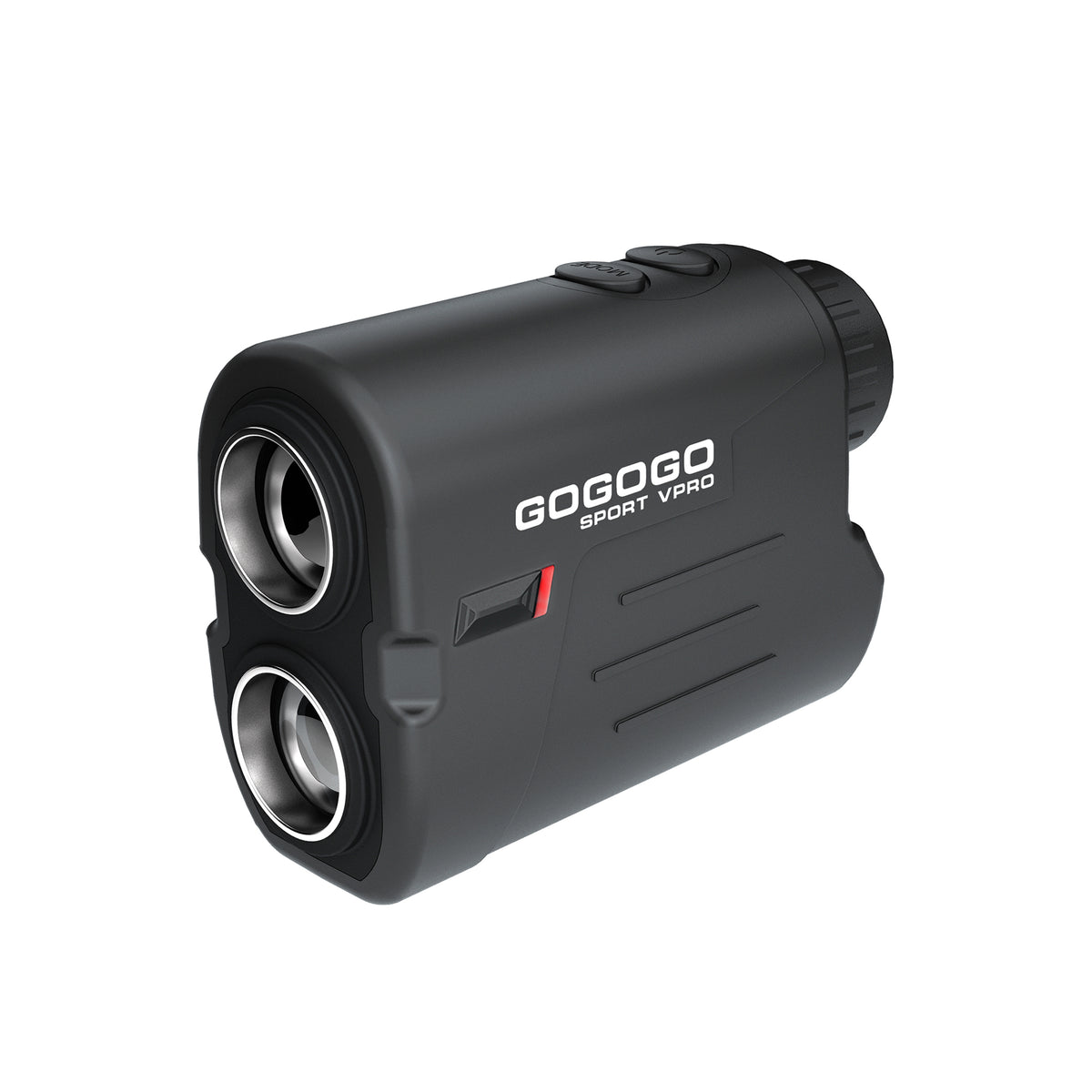
GoGoGo Vpro vs Bushnell Tour V7 Shift: do you really need to spend 5x?
A budget-laser icon against the tour-caddie standard — one costs roughly five times the other, and only one specific golfer actually needs the expensive one.
Review
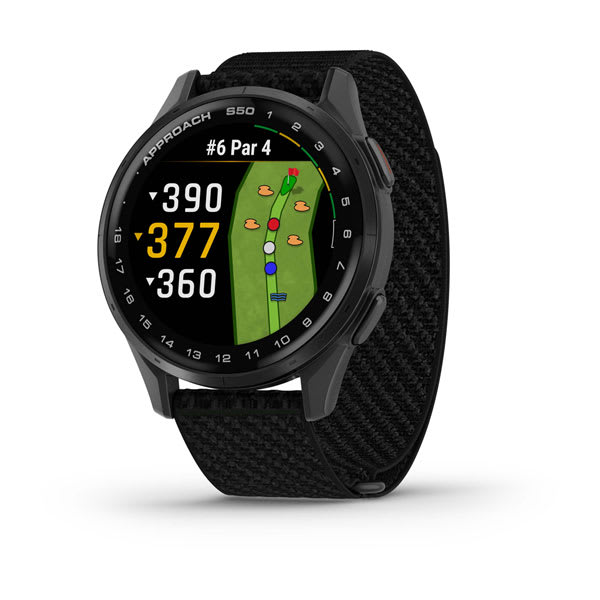
8.7/10Garmin Approach S50 review: the golf watch most people should actually buy
The S50 takes nearly everything that made Garmin's flagship special — the gorgeous AMOLED screen, slope-adjusted distances, shot tracking, wrist heart rate and Garmin Pay — and sells it for a lot less than double. For most golfers, this is the sweet spot.