
Nikon Coolshot Pro II review: the laser for anyone whose hands aren't steady
The best glass in the mid-tier and stabilisation that genuinely works. The smart-money laser if you play in dull light or your hands aren't rock steady.
By Ben Marsden · Reviews Editor
The verdict
Excellent
What's great
- Class-leading optics — bright, crisp and easy to read in any light
- Optical stabilisation that genuinely steadies a shaky lock
- Fast 0.3s reads and clear ring-plus-beep flag confirmation
Watch out
- Lock speed and long-range confidence trail the Bushnell Pro X3+
- No cart magnet, CR2 battery and a cheap bundled case
- Slope is casual-only — must be switched off to compete
Bottom line — The mid-tier sweet spot for most golfers — gorgeous glass and a rock-steady lock without the flagship outlay. Just know you're paying for the optics and the gyro, not extras, and budget for a better case.
Nikon
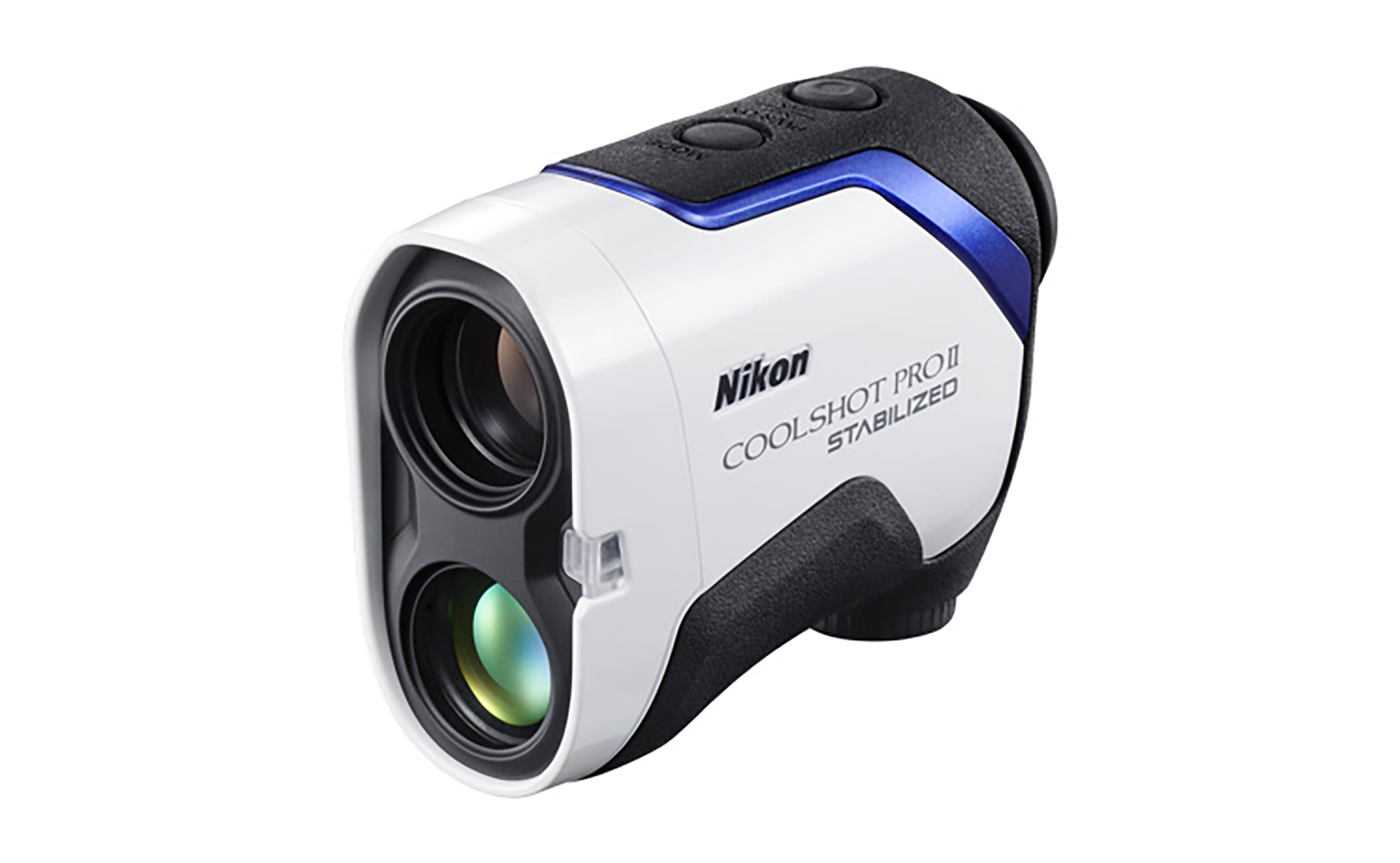
Nikon Coolshot Pro II Stabilized
ifrothgolf earns a commission on purchases made through these links, at no extra cost to you. It never changes what I recommend. Full disclosure.
There is a moment in every round that no spec sheet covers. Cold morning, flag about 180 out, and as you squeeze the button the little red dot slides off the pin and onto the trees behind it. Now you do not know whether that number is the flag or the tree line ten yards past it. So you range it again. You are still not certain. You hit it anyway, and you make a bogey that had nothing to do with your golf swing.
That moment is the entire reason to spend real money on a laser, and it is the moment the Coolshot Pro II was built to delete. Around $475, the best glass anywhere near this price, and stabilisation that is not just a word on the box.
One thing to know before anything else, because it changes what you should pay. Nikon has archived the Pro II and the Coolshot PROIII Stabilized is now the current model. The glass and the gyro are unchanged, so the Pro II is exactly as good as it always was. It just means you should be paying outgoing-model money for it, and it is why I would stop short of calling it the automatic buy.
The glass is not marketing
Nikon has been making optics for over a century and you can tell within about four seconds of looking through this thing. The 6x view is bright and crisp with a wide field, and the red OLED display adjusts its own brightness so it stays readable on a flat grey morning and again when you are staring into a low sun. Reviewers who have put the field side by side keep reaching the same conclusion, that this is the best glass of any rangefinder they have looked through. Where you actually feel it is picking a flag out of a busy treeline, which is precisely where cheaper optics leave you squinting and guessing. For a mid-priced laser the view belongs a tier up.
The gyro is the bit you will actually feel
The fundamentals are all here. HYPER READ returns a number in about 0.3 seconds, and a green ring plus an audible double beep confirm you have nicked the flag rather than the tree behind it. But the reason to choose this over something cheaper is the optical stabilisation, which cuts hand shake by roughly 80 percent and holds the reticle still enough that locking a distant pin stops being a wrestle.
Here is why that matters more than a longer maximum range or a fatter feature list. The failure mode of a cheap laser is not inaccuracy, because modern budget units measure to within a yard. The failure mode is doubt, and doubt is what actually costs you the shot. Stabilisation kills the doubt, and eighteen holes of not re-ranging is the thing you are really buying. As we argued in how much to spend on a rangefinder, stabilisation is the one upgrade most golfers genuinely feel.
What you give up
It is not flawless and owners are refreshingly blunt about it. There is no cart magnet, a casualty of the gyro inside, and genuinely irritating if you ride. The mode button is easy to knock, so you can wander into the wrong setting mid-round without noticing. It runs on a less common CR2 battery, the bundled soft case is cheap enough that most people replace it, and it looks dated next to flashier rivals. None of that touches the job it does. Budget for a hard case and a spare CR2 and you have dealt with nearly all of it.
How it sits in the range
The pitch is unusually clear: it trades features for fundamentals. A Bushnell Tour V-series gives you a cart magnet and a chunkier feature set. A budget Shot Scope or Blue Tees gives you slope, a magnet and USB-C charging for less money. What none of them matches is the glass and the gyro. So the whole comparison comes down to a single question. Do you want a steady, gorgeous, trustworthy picture, or do you want magnets, apps and a lower price? Both are reasonable answers. Only one of them is this laser.
Who should skip it
Two people. If you want the outright fastest lock and the most long-range confidence, the Bushnell Pro X3+ is still the benchmark, with 7x optics and a jolt lock that grabs flags 600 yards out. And if you are buying strictly on price, skip this without guilt. Cheaper lasers now range just as accurately, with slope and a magnet, for meaningfully less. The premium here is the optics and the gyro, full stop, and if you do not care about those two things you are paying for something you will never use. Its slope is casual-only and toggles off cleanly for competition.
Who should buy it
If your hands are not rock steady, if you play a lot of golf in flat dull light, or if you have ever ranged the same flag three times and still not trusted the number, this is the one I would buy. You are paying for the view and the gyro rather than a pile of app gimmicks, and for the right golfer that is a genuinely good trade. The rest of the field is in our best rangefinders guide.
Where to buy
8.8/10Nikon
Nikon Coolshot Pro II Stabilized
Nikon glass and optical stabilisation that make a shaky lock feel effortless.
This model is no longer made. Remaining stock is often discounted, so it can still be the better buy — just know you're buying the outgoing model.
ifrothgolf earns a commission on purchases made through these links, at no extra cost to you. It never changes what I recommend. Full disclosure.
Frequently asked
- Is the Nikon Coolshot Pro II worth it?
- For most golfers, yes — class-leading optics and effective image stabilisation at a sensible mid-tier price around $475. Only those who want the absolute fastest lock and most long-range confidence need the pricier Bushnell Pro X3+, and strict budget buyers can range just as accurately for less.
- Nikon Coolshot Pro II vs Bushnell Pro X3+?
- The Bushnell still leads on lock speed, 7x optics and long-range confidence; the Nikon counters with the best glass of any laser we've seen and stabilisation that steadies a shaky hand, for less. Most golfers will be very happy with the Nikon.
- Does it have a cart magnet?
- No — there's no magnet to stick it to a cart bar, a deliberate casualty of the stabilising gyro inside. If you ride and want a cart mount, that's the one practical thing it gives up.
- Does it have slope, and is it legal?
- Yes, switchable slope. Slope mode is disallowed in competition, but you can toggle it off cleanly to make the device conforming before a medal.
Read next
Versus
Nikon Coolshot Pro II vs Precision Pro NX10: how much rangefinder do you need?
One buys you the best optics and a gyro-stabilised picture; the other gives you most of the experience for a little over half the outlay. Which is the smarter buy?
Versus
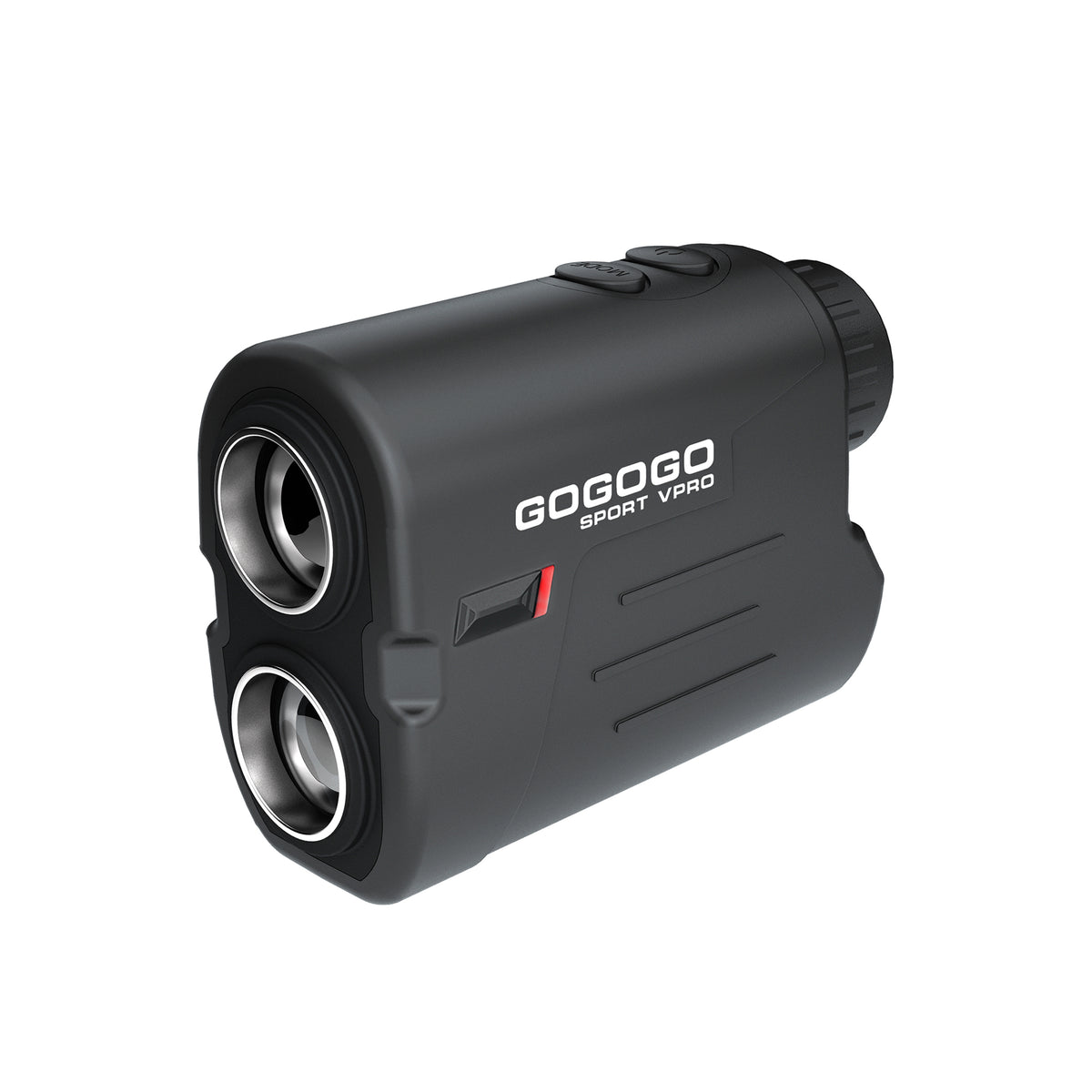
GoGoGo Vpro vs Bushnell Tour V7 Shift: do you really need to spend 5x?
A budget-laser icon against the tour-caddie standard — one costs roughly five times the other, and only one specific golfer actually needs the expensive one.
Review
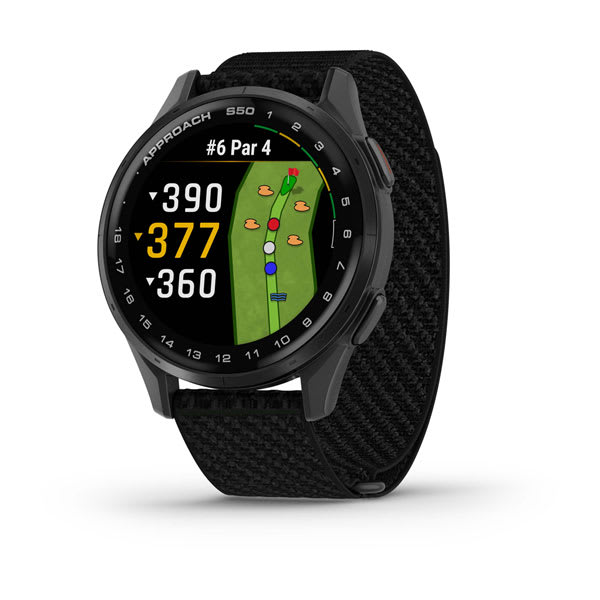
8.7/10Garmin Approach S50 review: the golf watch most people should actually buy
The S50 takes nearly everything that made Garmin's flagship special — the gorgeous AMOLED screen, slope-adjusted distances, shot tracking, wrist heart rate and Garmin Pay — and sells it for a lot less than double. For most golfers, this is the sweet spot.