
Garmin Approach Z30 review: the connected laser, if you're already a Garmin golfer
Garmin's first new rangefinder in years beams the pin number to your watch. Whether that's worth the money depends entirely on what's on your wrist.
By Tom Whitaker · Staff Writer
The verdict
Excellent
What's great
- Range Relay sends the pin distance to a paired Garmin watch — no other laser does this
- Accurate to within a yard of rival lasers, with trustworthy PlaysLike slope numbers
- Solid build, IPX7 waterproofing, cart magnet and Find My Garmin tracking
Watch out
- No jolt or vibration confirmation and inconsistent lock-on at distance
- Half the value is locked behind owning a Garmin watch — a weak standalone buy
Bottom line — A clever, well-made connected laser that earns its keep inside the Garmin ecosystem. If you don't wear a Garmin watch, a same-price Bushnell locks pins more confidently for less faff.
Garmin
Garmin Approach Z30
ifrothgolf earns a commission on purchases made through these links, at no extra cost to you. It never changes what I recommend. Full disclosure.
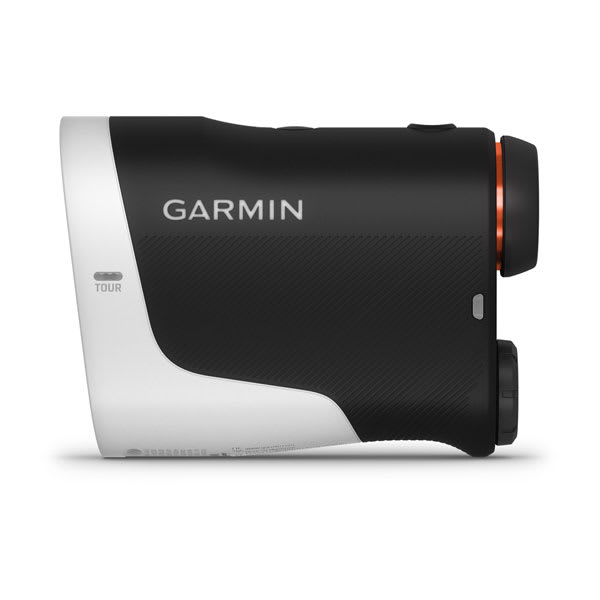
The Garmin Approach Z30 is a genuinely good laser rangefinder with one clever trick — Range Relay, which fires the pin distance straight to a paired Garmin watch — and it's the obvious buy if you already wear one. At around $500 it's accurate, well-built and cheaper than the top Bushnell. The honest catch is that half its appeal is locked behind owning a Garmin watch, and a purist laser locks pins more confidently for the money. Buy it for the ecosystem, not as a standalone.
What the Z30 actually is
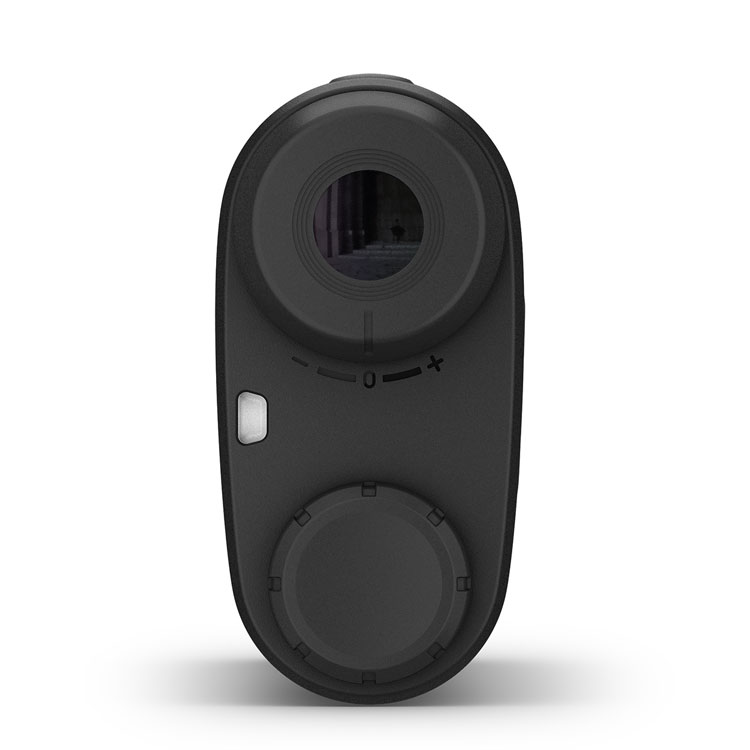
This is Garmin's successor to the long-running Z82 and, notably, the brand's first new laser rangefinder in years — so it carries some weight as a statement of intent against Bushnell's dominance. It's a slope-enabled laser that ranges out to around 400 yards with 6x magnification, IPX7 waterproofing and a magnetic mount that latches onto a cart frame. Standard laser fundamentals, in other words, wrapped in Garmin's typically tidy build. Independent testing put its distances within a yard of rival lasers, so the core job — give you a trustworthy number — is handled. The PlaysLike slope figures, which fold elevation into the yardage, are dependable too. None of that is what you're paying the premium for, though.
The one feature that justifies it: Range Relay
The party trick, and the entire reason to consider a Z30 over a cheaper or sharper laser, is Range Relay. Fire the laser at the flag and a second or two later your paired Garmin watch — an S70, S62, Epix and the like — displays the pin distance alongside front and back of green. No other laser does this, and if you already wear a compatible Garmin it genuinely changes how you play: you laser once, then glance at your wrist for the rest of the hole. Stack on Find My Garmin (so you stop leaving the unit on the cart) and the broader Garmin Golf app integration, and the Z30 stops being a standalone gadget and becomes one node in a connected distance system. That's the pitch, and when the ecosystem is already in place it's a compelling one.
Where it falls short
Two real gripes keep this from being a slam dunk. First, there's no jolt or vibration when it locks the pin, so you're squinting at the readout to trust the number rather than feeling a confirmation through the body the way a Bushnell gives you — and reviewers at Breaking Eighty reckoned reliable lock-on only landed five or six times across a full 18, which is poor at this money. A laser's one job is confident acquisition, and the Z30 wobbles exactly where the best lasers are rock-solid. Second, owners report it feeling a touch fragile, the battery is replaceable rather than rechargeable, and the magnification stops at 6x. The honest framing: as pure point-and-shoot hardware, a Bushnell does it better.
How it compares
Against a purist laser like the Bushnell Tour V7 Shift, the Z30 loses on the fundamentals — faster, more confident lock and the tactile jolt confirmation the Garmin lacks — and the V7 Shift typically costs less, too. Step up to the Bushnell Pro X3+ and you get class-leading 7x optics and the longest-range lock there is. So if all you want is the number, both Bushnells arguably out-laser the Garmin. What neither does is talk to your watch. That's the whole game here: the Z30 isn't trying to beat Bushnell at being a laser, it's trying to be the laser that completes a Garmin GPS setup. We unpack the wider standalone-laser case in how much to spend on a rangefinder, and the slope question in is a slope rangefinder worth it.
The day-to-day experience
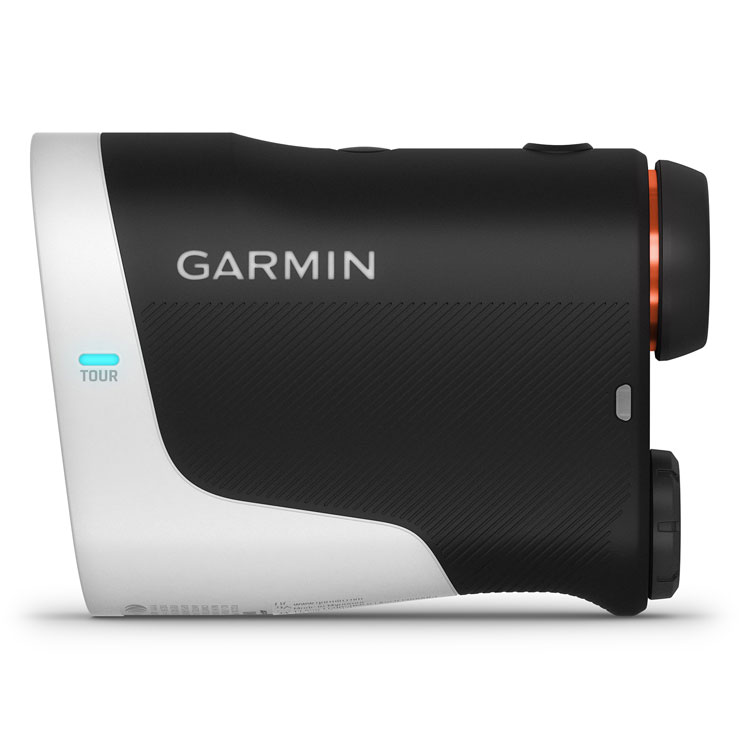
Strip away the connectivity and the Z30 behaves like a competent, slightly old-school laser. The 6x viewfinder is crisp and the readout is clean, but in flat early-morning or low-evening light it doesn't pull a flag out of a cluttered backdrop the way Bushnell's brighter, higher-magnification glass does — you notice it most when you're firing at a tucked pin with trees behind. The magnet holds the unit on a cart rail reliably over bumps, the IPX7 rating means a downpour won't faze it, and the build feels close to the pricier Z82 it replaces. The replaceable battery is a quirk in 2026, when most rivals have moved to rechargeable cells: convenient if you're caught out mid-round with a spare, mildly annoying if you'd rather just plug it in. None of this is bad; it's just unremarkable, which is exactly why the connected features have to carry the premium.
Who should buy it
Garmin golfers, full stop. If you already wear an Approach watch, Range Relay is close to a no-brainer — it slots the laser into a system you've already bought into, and that connected workflow is worth real money to the right player. It's also a sound pick if you simply want a well-built, accurate slope laser from a brand you trust and you treat the connected features as a welcome bonus rather than the point. For that golfer, the Z30 is an easy recommend and the lock-on niggles fade into the background of a system that mostly just works.
Who should skip it
Anyone who doesn't own a Garmin watch. As a standalone laser you're paying full whack for features you can't use and accepting a lock-on that isn't as reliable as a same-price Bushnell — buy a Tour V7 Shift instead and pocket the difference. Also skip it if confident, jolt-confirmed lock-on matters to you above all else, or if you want the sharpest possible optics, which is the Pro X3+'s territory. See where it sits against the field in our best rangefinders guide.
Where to buy
8.4/10Garmin
Garmin Approach Z30
Garmin's laser that talks to your phone and watch for a connected yardage system.
ifrothgolf earns a commission on purchases made through these links, at no extra cost to you. It never changes what I recommend. Full disclosure.
Frequently asked
- Is the Garmin Approach Z30 worth it?
- If you already wear a compatible Garmin watch, yes — Range Relay turns it into a connected distance system that no other laser offers. As a standalone laser it's harder to justify, because a similarly priced Bushnell locks pins more confidently and costs less.
- What is Range Relay on the Z30?
- Fire the laser at the flag and the pin distance, plus front and back of green, appears on your paired Garmin watch a second or two later. It's the Z30's signature feature and the main reason to choose it over a sharper, cheaper laser.
- Does the Z30 have slope?
- Yes. It gives PlaysLike slope-adjusted yardages that fold in elevation, and independent testing rates them as trustworthy. Remember slope is disallowed in most competition, so use it for casual play.
- Garmin Z30 or a Bushnell?
- For pure lasering, a Bushnell wins on confident lock-on and optics, and the Tour V7 Shift often costs less. The Z30's edge is Range Relay to a Garmin watch — so the answer comes down to whether you're in the Garmin ecosystem.
Read next
Versus
Nikon Coolshot Pro II vs Precision Pro NX10: how much rangefinder do you need?
One buys you the best optics and a gyro-stabilised picture; the other gives you most of the experience for a little over half the outlay. Which is the smarter buy?
Versus
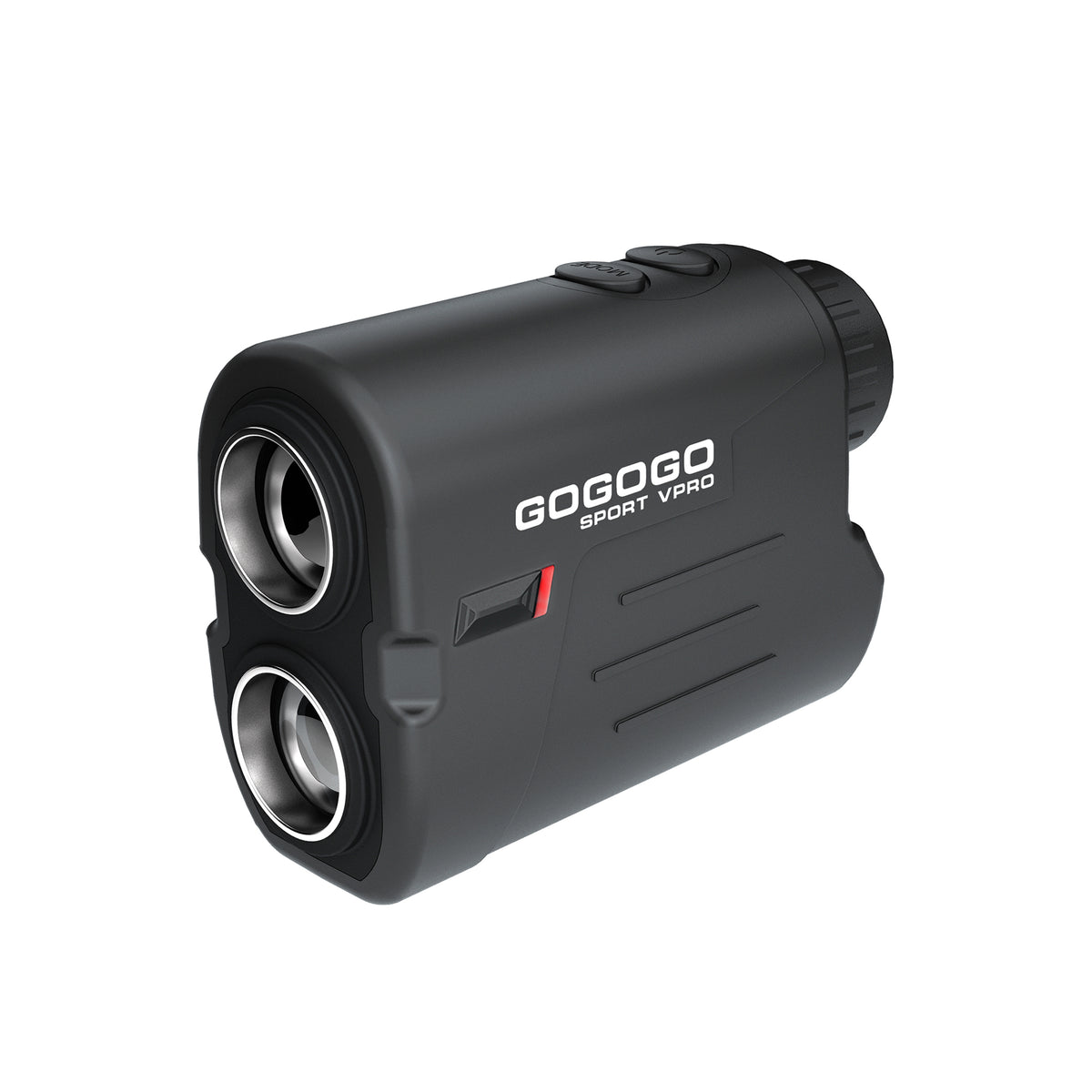
GoGoGo Vpro vs Bushnell Tour V7 Shift: do you really need to spend 5x?
A budget-laser icon against the tour-caddie standard — one costs roughly five times the other, and only one specific golfer actually needs the expensive one.
Review
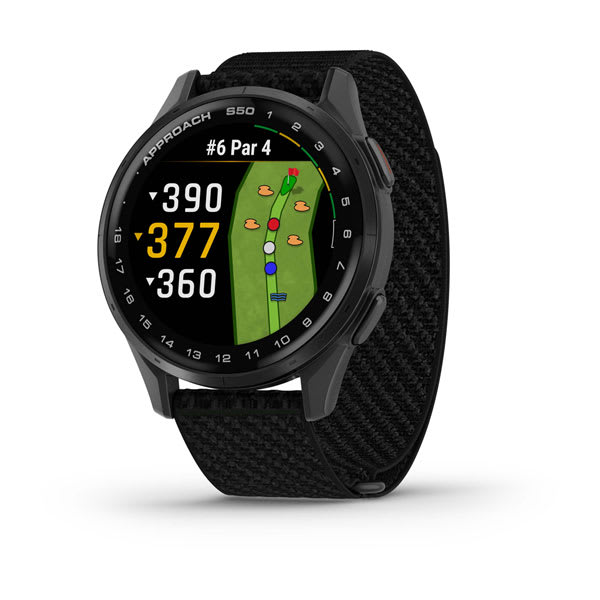
8.7/10Garmin Approach S50 review: the golf watch most people should actually buy
The S50 takes nearly everything that made Garmin's flagship special — the gorgeous AMOLED screen, slope-adjusted distances, shot tracking, wrist heart rate and Garmin Pay — and sells it for a lot less than double. For most golfers, this is the sweet spot.