
The mat is the one part of a home sim your body pays for — don't cheap out on it
Everyone agonises over the launch monitor and grabs the cheapest mat to save a few quid. It's backwards: the mat is the only component you physically feel on every single swing.
By Marcus Bell · Simulator & Indoor Golf Writer
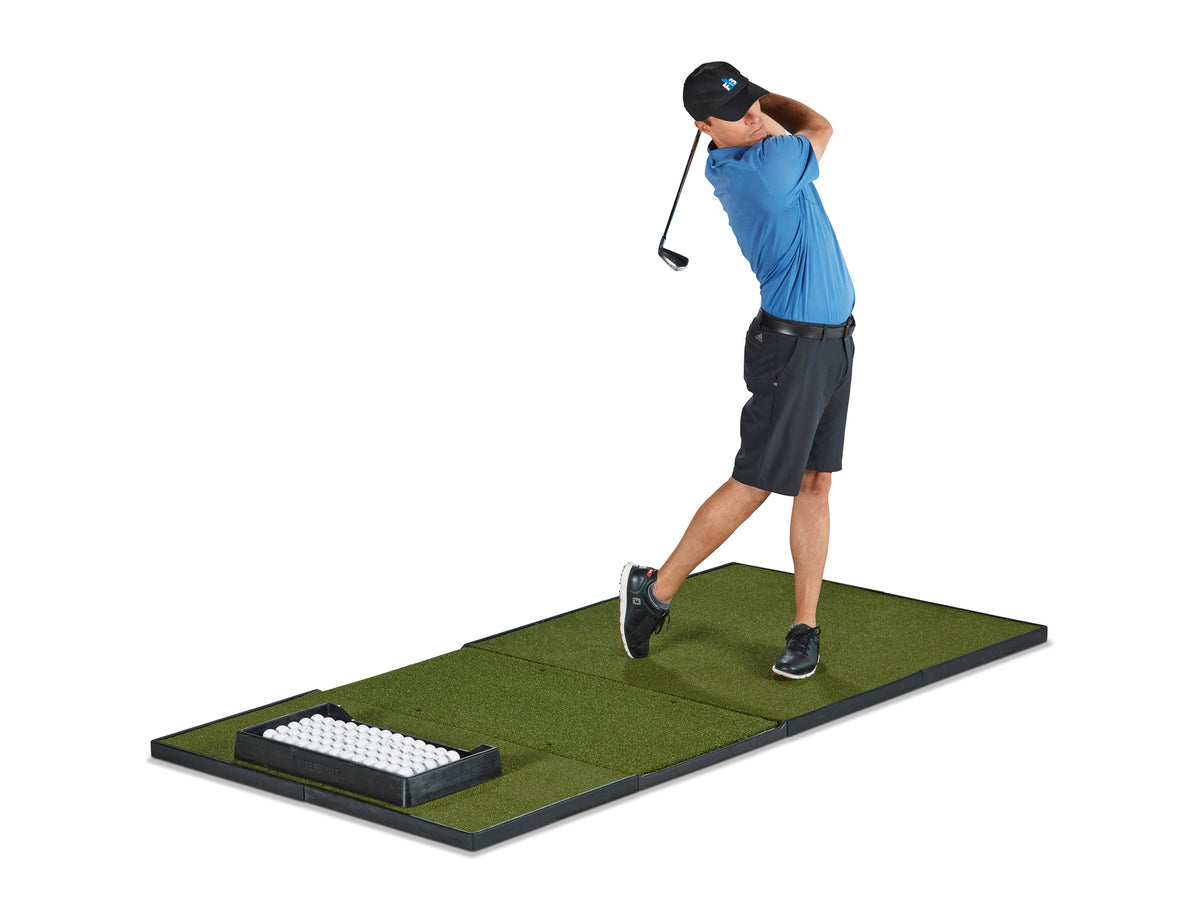
Fiberbuilt
Fiberbuilt Player Preferred Studio Golf Mat
ifrothgolf earns a commission on purchases made through these links, at no extra cost to you. It never changes what I recommend. Full disclosure.
Watch anyone plan a home simulator and you'll see the same budget shape: weeks of research into launch monitors, agonising over spin accuracy to the decimal, and then — almost as an afterthought — the cheapest hitting mat that'll do. It's exactly backwards. The launch monitor measures your golf; the mat is the only part of the whole build your body actually pays for, thousands of times a winter, and a bad one doesn't just feel worse — it can end your season with a sore elbow.
Here's the physics nobody mentions when they're selling you numbers. On a full swing you're delivering the club into the ground, and a thin mat on a concrete garage floor has nowhere to put that force except back up the shaft and into your wrists and elbows. Do that a few dozen times an evening, several evenings a week, and the golfer who saved $250 on the mat spends it on physio by February. The cheap mat is the one component that can actively hurt you.
What you're actually paying for
Three things, and only one of them is feel. The first is shock absorption — a proper mat has a give underneath that soaks up impact instead of returning it to your joints. The Fiberbuilt Player Preferred quotes a vibration layer that absorbs the vast majority of that shock, and you feel the difference within a session; it's the mat for someone who's going to hit daily for years.
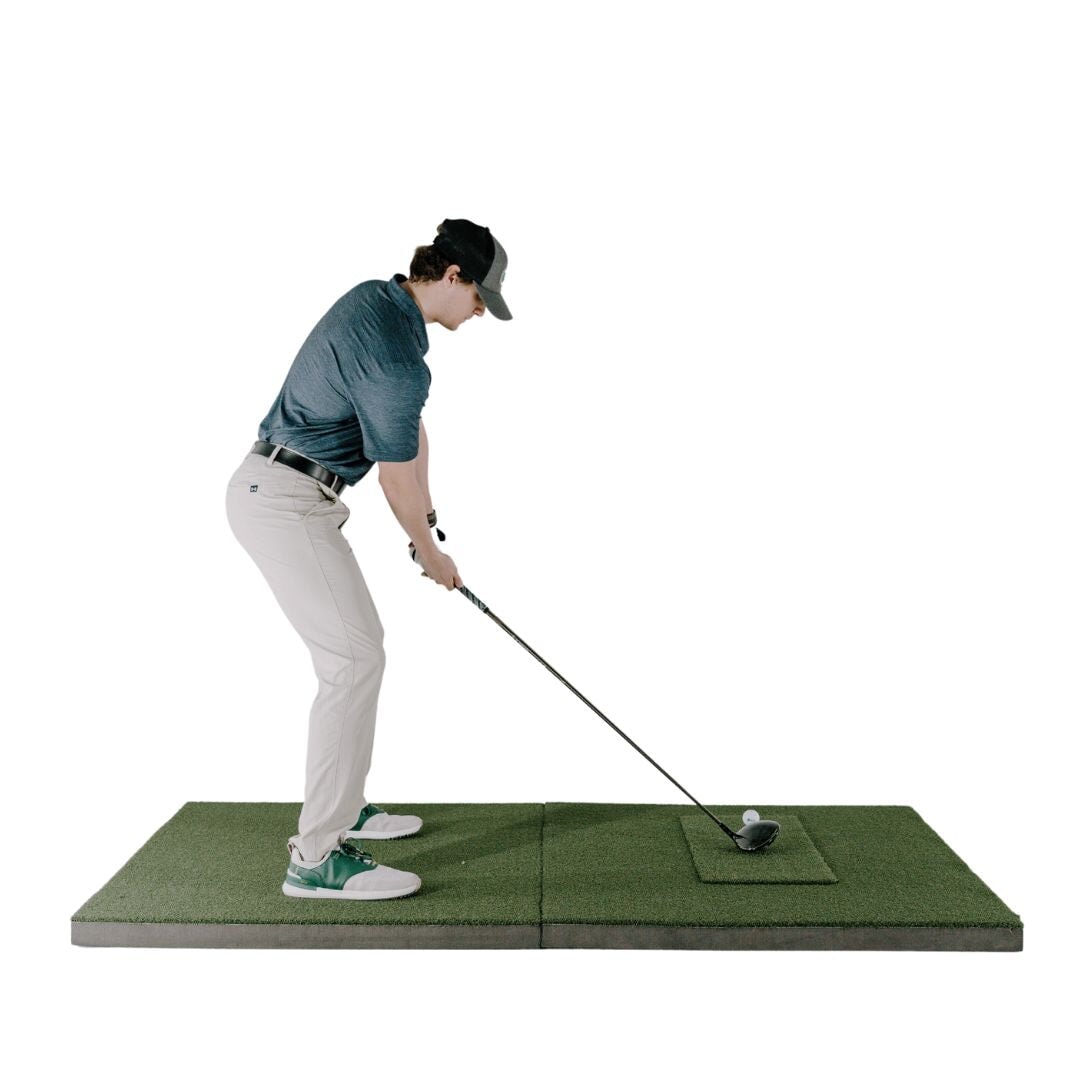
The second is honesty — a good mat tells you the truth about your strike. Cheap mats bounce a fat shot forward and let the club skip into the ball, flattering contact you didn't make; a quality surface like the SIGPRO Softy lets a fat shot feel fat, which is the feedback you actually came for. The third is real tees and longevity: better mats take a wooden tee instead of a rubber nub, and the SIGPRO's replaceable hitting strip means when the contact zone wears you swap a strip for a fraction of the price of a whole new mat — which is why the 'expensive' mat is often cheaper across three winters.
Who's allowed to go cheap
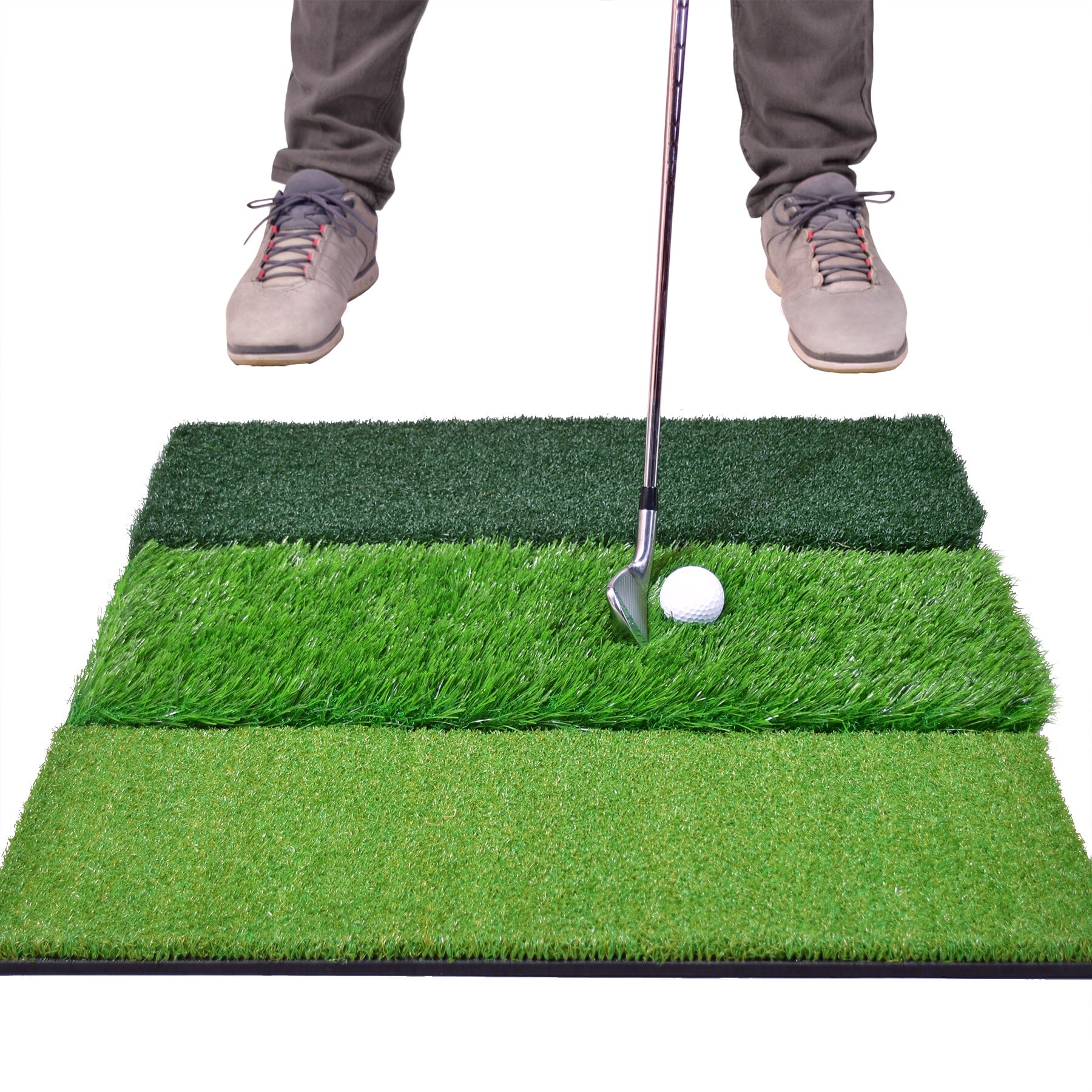
Not everyone needs to spend up, and I won't pretend otherwise. If you're building a first bay to see whether you even use it, or you'll hit a bucket a week rather than a bucket a night, a solid budget mat like the tri-turf mat is a completely sensible place to start — start there, and let the ache (or the joy) tell you whether to upgrade. The mistake isn't buying the cheap mat; it's buying the cheap mat and the expensive launch monitor, then wondering why your elbow hurts and the numbers feel hollow.
The half of winter golf the mat forgets
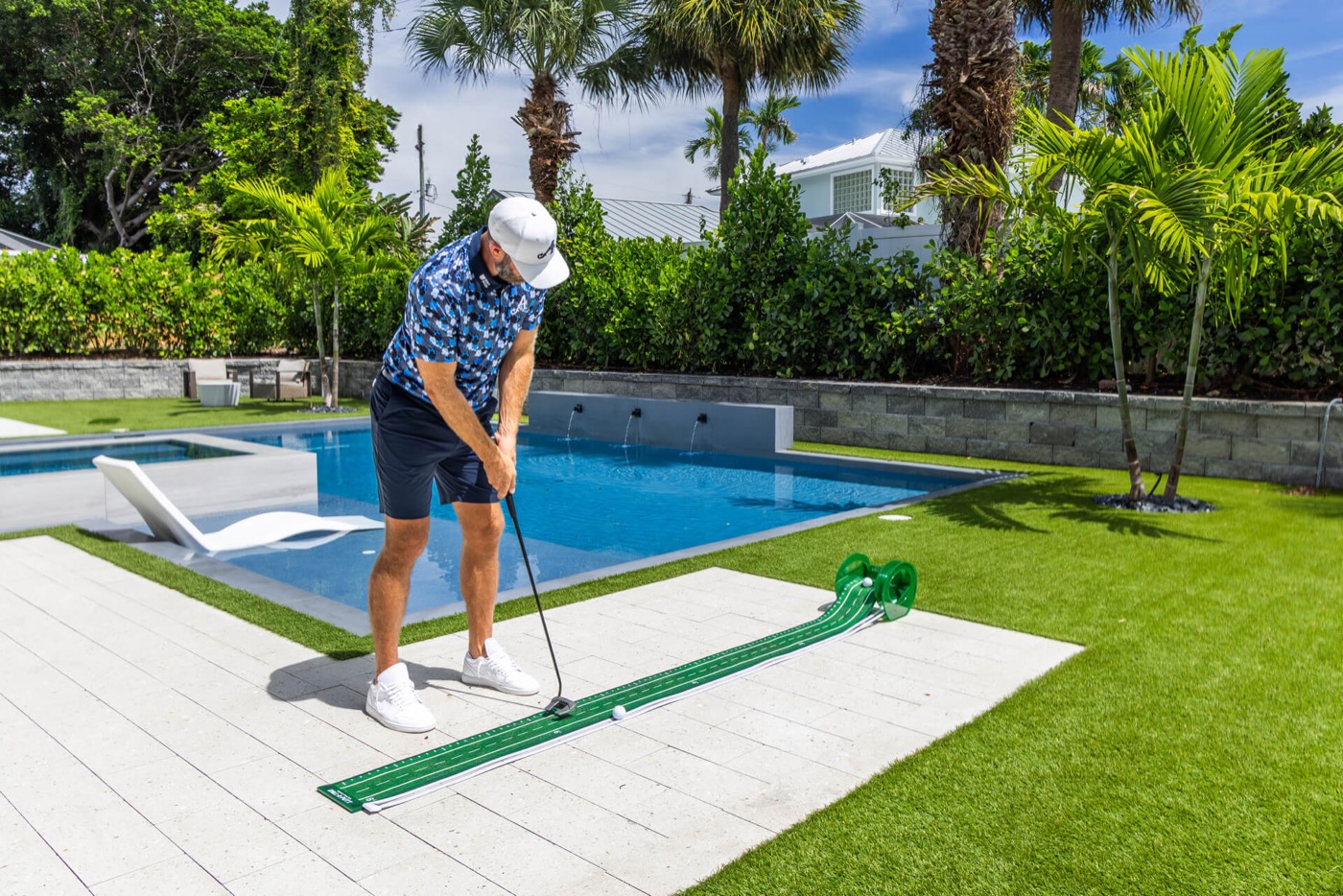
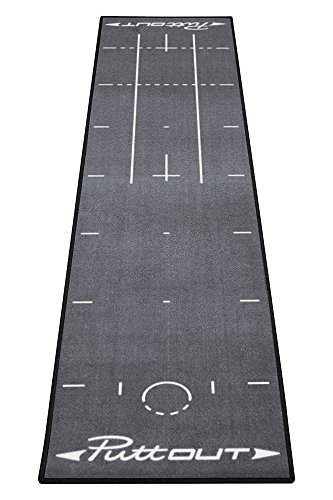
One more thing the hitting mat can't do: putting. It needs no ceiling height, no launch monitor and barely any space, and it's the part of your game that quietly falls apart over a winter indoors. A true-roll surface like the Perfect Practice mat or a compact PuttOut rounds out the room for pocket money next to everything else, and it's the cheapest stroke-saver in the whole build.
So spend in the right order. The launch monitor earns the biggest share because it's the accuracy of everything you see — that part of the obsession is fair. But the mat comes next, above the screen and the projector, because it's the piece you feel on every swing and the only one that can hurt you. Get those two right and the rest of the room is just how good it looks while your golf gets better. If you want the whole thing costed in the right order for your space, our Sim Room Architect builds it around your room, and the complete home simulator setup lays out every component.
Products mentioned in this article
Fiberbuilt
Fiberbuilt Player Preferred Studio Golf Mat
The permanent-build mat: grass-blade feel, honest feedback and a vibration layer your elbows will thank you for.
SIGPRO
SIGPRO Softy Golf Hitting Mat
The home-sim favourite: joint-friendly, takes a real tee, and a replaceable strip that makes it cheaper over time.
FORB
FORB Tri-Turf Golf Hitting Mat
A fine, honest budget mat to start on — just plan to upgrade if you end up hitting daily.
Perfect Practice
Perfect Practice Putting Mat (Dustin Johnson)
Rolls out the other half of winter golf — the putting the ceiling can't stop you doing.
ifrothgolf earns a commission on purchases made through these links, at no extra cost to you. It never changes what I recommend. Full disclosure.
Frequently asked
- How much should I spend on a golf simulator hitting mat?
- If you'll hit several times a week, a quality mat with real shock absorption and a replaceable strip (like the SIGPRO Softy or Fiberbuilt Player Preferred) is worth it and often cheaper over a few years. If you're testing a first bay or hitting occasionally, a solid budget mat is a sensible start — just don't pair a cheap mat with a premium launch monitor.
- Can a cheap golf mat hurt your joints?
- Yes. A thin mat on a concrete floor returns impact force up the shaft into your wrists and elbows over hundreds of swings. A mat with a genuine shock-absorbing layer soaks up most of that, which is why joint protection — not just feel — is the main reason to spend more.
- What's the most important part of a home golf simulator to spend on?
- The launch monitor first, because it's the accuracy of everything you see. The hitting mat second — above the screen and projector — because it's the piece you feel on every swing and the only one that can cause injury. The screen and projector change how it feels, not how much you improve.
- Do I need a separate putting mat for a golf simulator?
- It's the best-value add-on. Putting needs no ceiling height or launch monitor, it's the part of your game that suffers most over a winter indoors, and a true-roll mat costs a fraction of the rest of the build. It rounds out the room cheaply.
Read next
Review
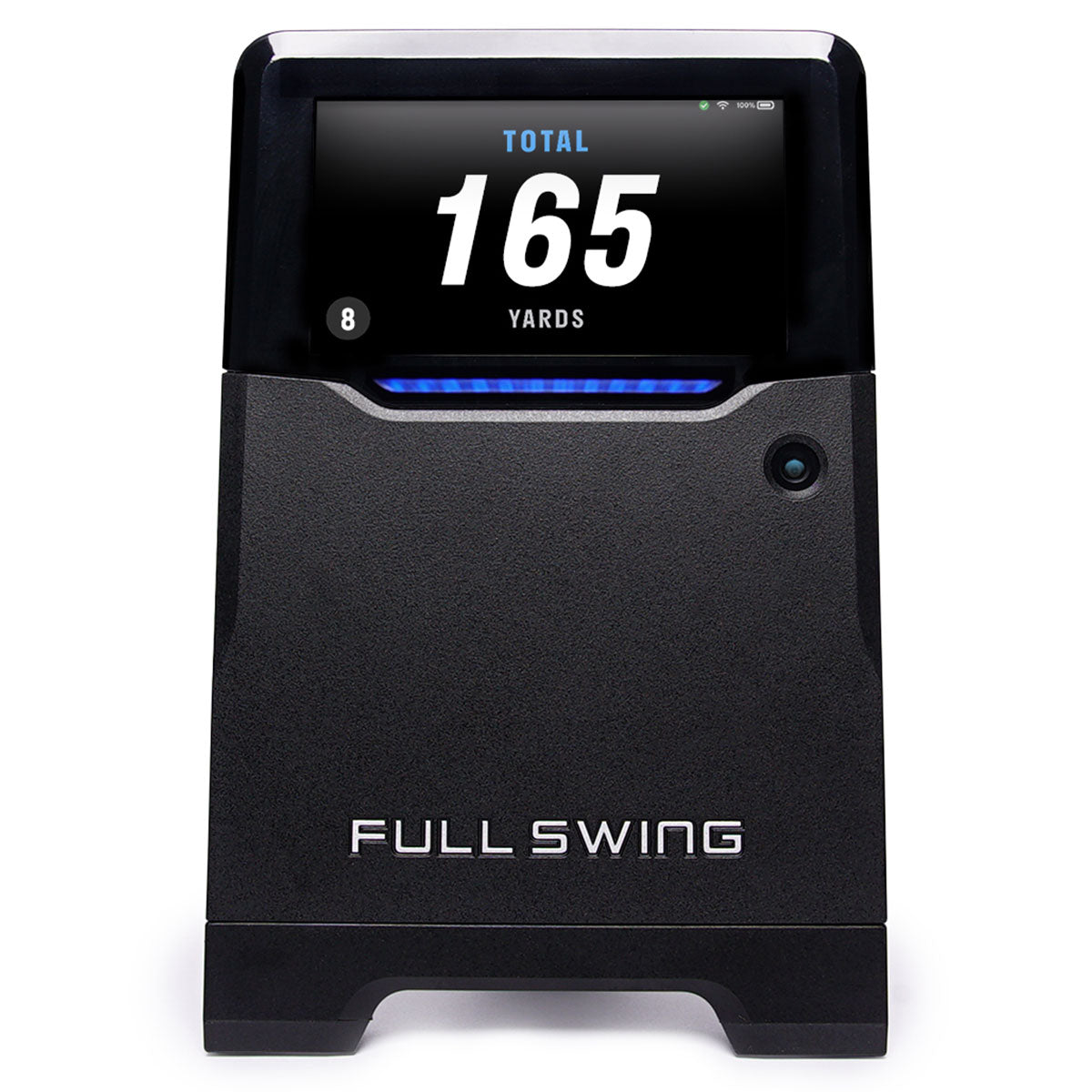
7.9/10Full Swing KIT review: the tape measure decides this, not Tiger
Tour pedigree, TGL on ESPN, and radar good enough to be checked against a Trackman outdoors. It also wants eighteen to twenty feet of room, which rules out most of the garages people buy it for.
Versus
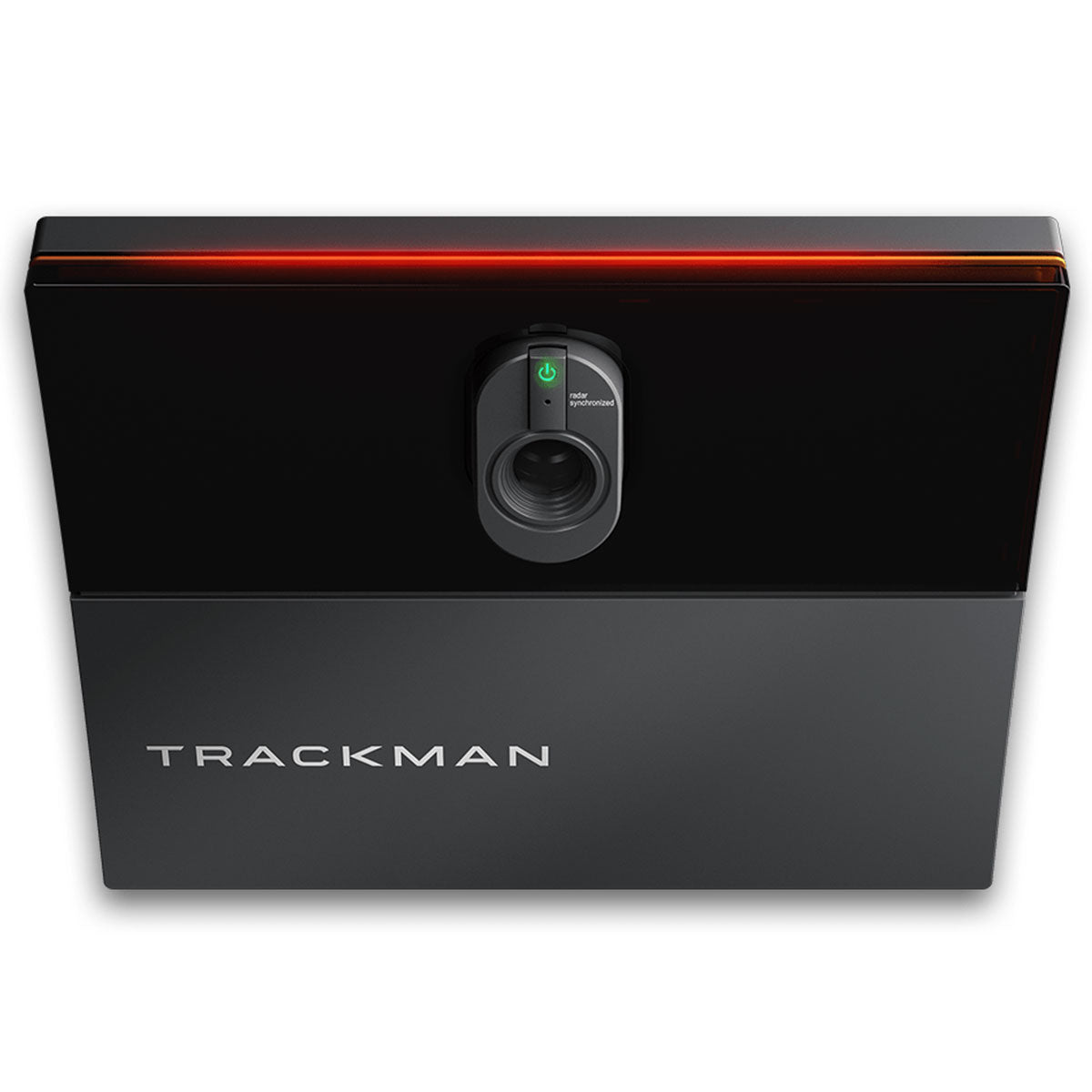
Trackman iO vs Uneekor EYE XO2: the year-one trap
Both mount overhead, both want ten feet of ceiling, and about $3,000 separates them on the shelf. Then Trackman's included first year runs out, and the gap starts growing by $1,100 a year.
Versus
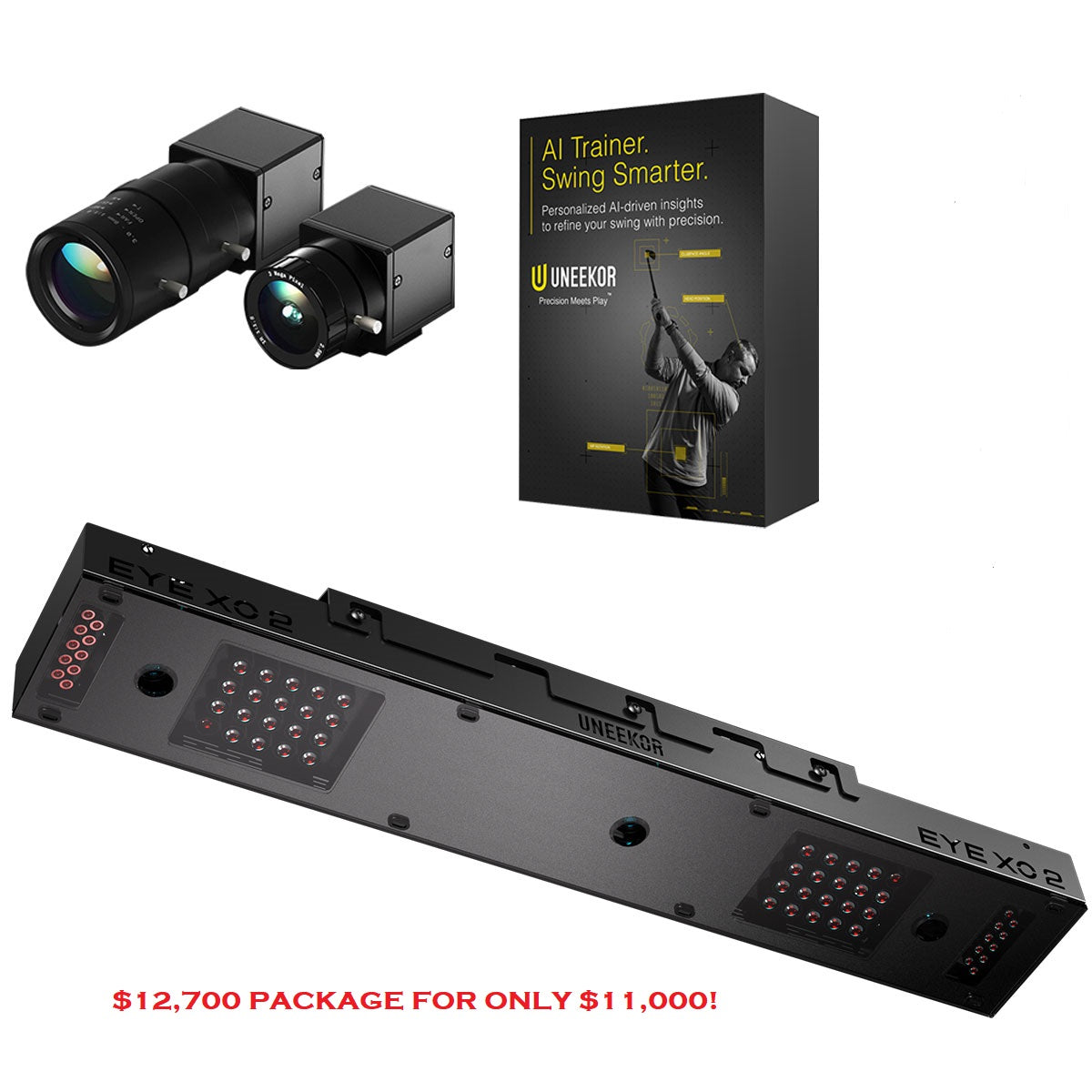
Uneekor EYE XO2 vs Foresight GC3: ceiling or floor?
About $4,000 separates them, but they're not really rivals — one lives in your ceiling forever, the other sits on the floor and travels. The cheaper one is also the one with no subscription.