
The Net Return Pro Series V2 review: add its own screen and it costs what a DIY enclosure does
The 8-by-7.5-foot Pro is the size most garages should buy, it stands in three and a half feet of floor, and adding The Net Return's own simulator screen brings it level with a Carl's Place DIY kit. Which one you want depends on whether winter is for practising or for playing.
By Ben Marsden · Reviews Editor
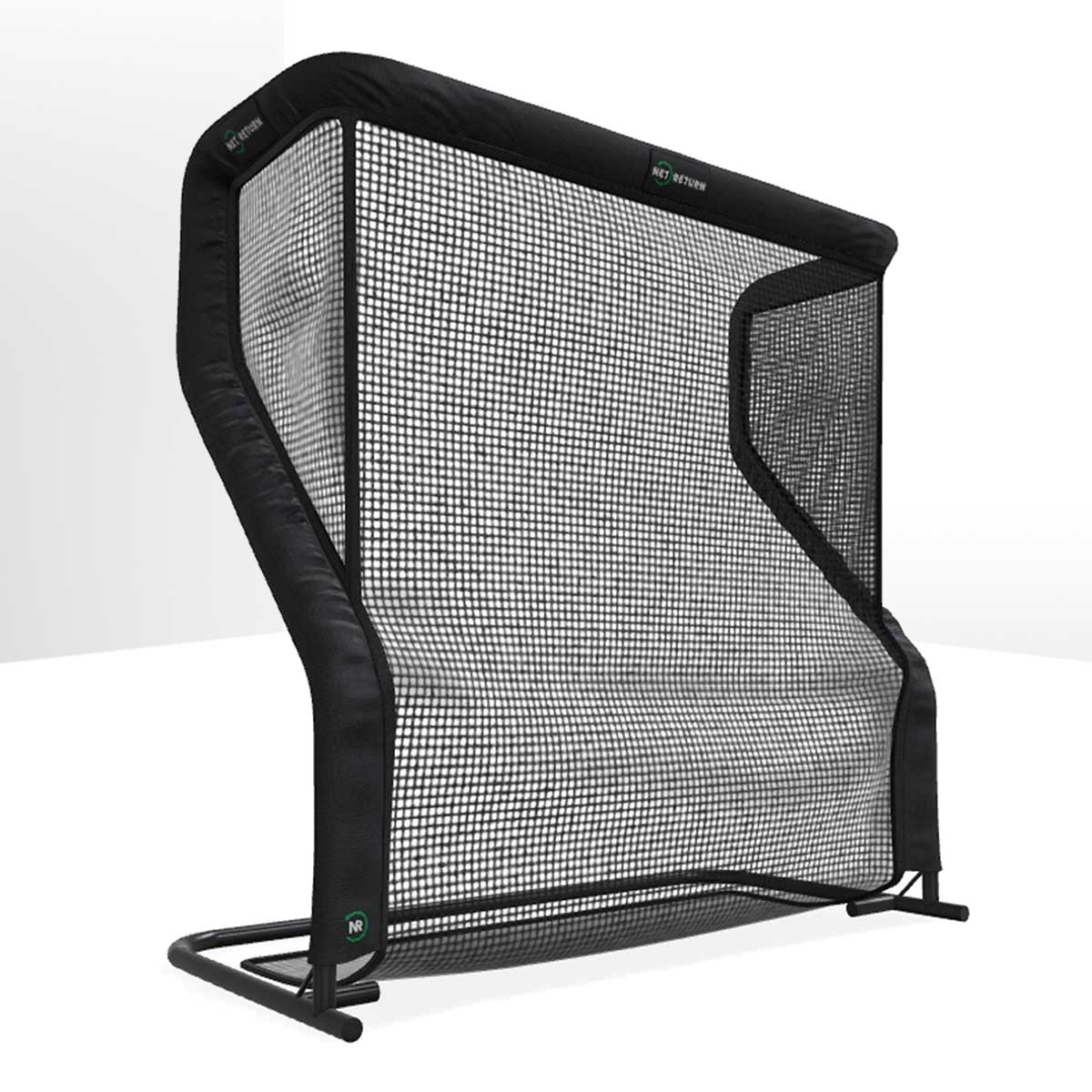
The verdict
Excellent
What's great
- The patented shape rolls every ball back to your feet, so a session is spent hitting rather than collecting
- Three and a half feet of floor depth and 28 pounds, so it fits a garage that still has to hold a car
- Netting rated for 225mph strikes, a 3-year warranty, and a simulator screen that bolts on when you want one
Watch out
- Expensive for a net: a basic one stops a golf ball for a fraction of the price
- Screen mode and ball-return mode are either/or, so the sim upgrade gives up the feature you paid for
- Turf, side barriers and overhead protection are all extra, and a full bay quickly costs double the net
Bottom line — The net I would buy for a winter of reps in a garage. Buy an enclosure instead if what you want is to play courses on a screen every night.
The Net Return
The Net Return Premium (Pro Series V2)
ifrothgolf earns a commission on purchases made through these links, at no extra cost to you. It never changes what I recommend. Full disclosure.
The clocks go back in the UK on Sunday 25 October, and with them goes the after-work range session for about five months. That is the moment people start pricing a garage setup, and it is the moment to be clear about what The Net Return Pro Series V2 is for. It is the net I would buy for a winter of reps. At $800 for the 8-by-7.5-foot Pro, it is expensive for something that stops a golf ball, and worth it for one reason: the ball comes back to your feet. Add The Net Return's own simulator screen and you are at roughly the price of a Carl's Place DIY enclosure kit, which is the comparison that decides who should buy it.
What you are paying for
The Net Return's patented shape catches the ball and rolls it back toward you, every time. That sounds trivial until you count a session. Without it, twenty minutes in a garage is a few minutes of hitting and the rest spent bending down, walking forward and walking back. We made that case at length in the piece on ball-return nets, and it still holds: the feature is not a better barrier, it is the removal of the step that kills the habit.
The rest of the spec supports that. The netting is commercial grade and rated for strikes up to 225mph, comfortably above any amateur's ball speed. The Pro weighs 28 pounds. The net carries a 3-year warranty, and The Net Return says it ships in one to three business days, which matters in late October when made-to-order sim gear can take weeks.
Home, Pro or bigger
The V2 range comes in sizes, and the one we link is the Pro: 8 feet wide and 7 feet 6 inches tall. Below it, the Home is 7 by 7 at $700. Above it, the Pro 8 is 8 by 8 at $900, the Pro 9 is 9 by 8 at $1,000, the Pro 10 is 10 by 8 at $1,100, and the Pro XL is 10 by 9.5 at $1,600. Every one of them stands in the same 3 feet 6 inches of floor depth, which is the number most buyers never look up and the one that decides whether it fits.
The Pro is the sweet spot for most garages. The extra foot of width over the Home is where a heel or toe miss with a driver lands, and the extra six inches of height helps with the lob wedge. Beyond that, buy width only if you know you spray the ball. If you are ordering through our link, check the size selector, because the page lists the Home first.
Priced against a full enclosure
This is the comparison that matters. The Net Return sells a Simulator Kit for the Pro, a dedicated impact screen plus a darkening valence, at $400. Net plus kit comes to about $1,200. The Carl's Place DIY Enclosure Kit, an impact screen with a nylon surround, is $1,200, and you still have to build the frame for it from 1-inch steel conduit or Carl's pre-cut pipe kit.
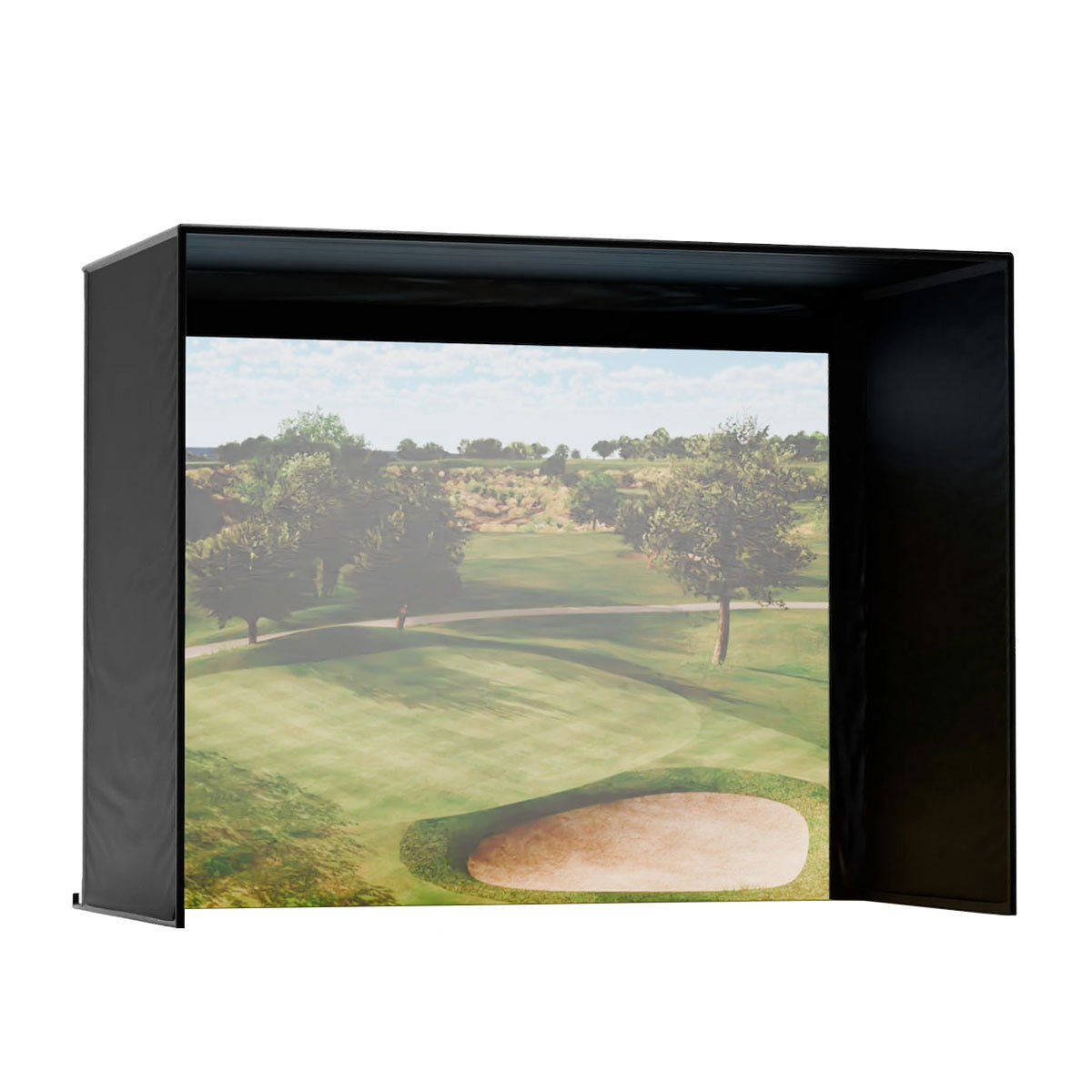
So the two cost the same, and they are built for different winters. The Net Return's screen attaches with grommets and bungees, and the company's own copy talks about switching back to ball-return mode, which tells you the screen and the return are either/or. With the screen up you have a projector target. With it down you have the ball-return net. The Carl's Place kit is built for a borderless, floor-to-turf picture and nothing else, and our Carl's Place DIY vs Pro comparison explains what that framing job really costs in time.
My view: if the goal is reps through the winter, with a launch monitor feeding you numbers and a screen used now and then for fun, the Net Return is the better buy, because the screen is a bolt-on and the return is the thing you use every night. If the goal is playing a full round on a screen three nights a week, buy the enclosure, because the Net Return's sim mode gives up the return that justified its price.
The turf question
A ball-return net has one weakness most buyers find afterwards: a standard 4-by-5 mat is an island. The ball rolls back, drops off the edge onto the floor and stops somewhere you have to walk to. The Net Return Pro Turf exists to fix that. It is 6 feet wide and 10 feet long so the return runs all the way back to your stance, with a 42-ounce nylon face on 5mm foam, about three-quarters of an inch thick and 54 pounds, and it rolls up like a carpet. On its own it is $600.
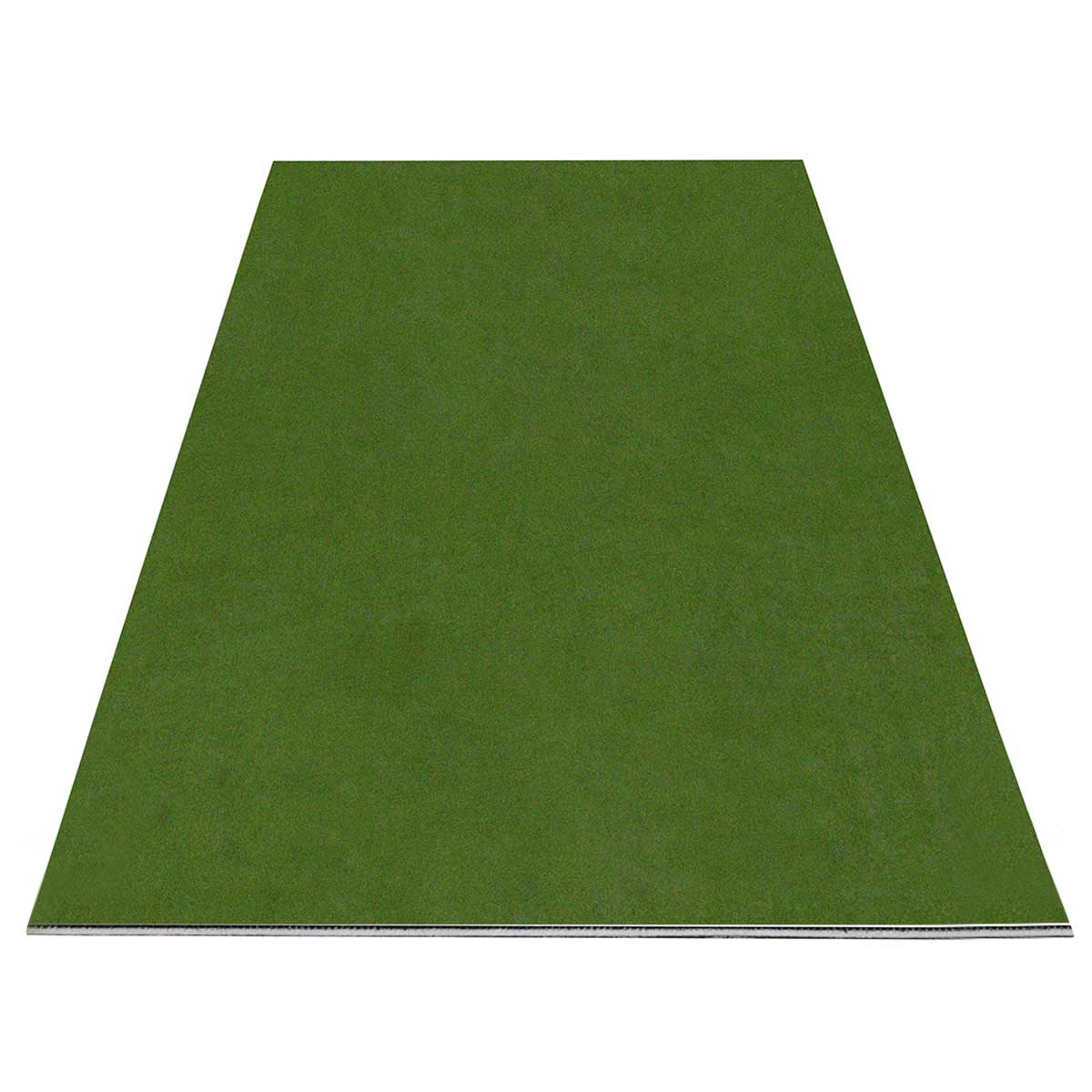
If you want the turf, buy the bundle. The Net Return's Pro Package puts the net, Pro Turf, side barriers, sandbags, tees and a duffle together at $1,500. Bought separately, the net, turf and side barriers alone come to about $1,650. The package is the cheaper way to get a complete bay.
Who should skip it
Skip it if you will hit twenty balls a week. A cheap net stops a golf ball, and the return only pays for itself when you are hitting a hundred. Skip it if your ceiling is low: a 7-foot-6 net does not guarantee swing clearance, and The Net Return says so itself. Indoors with high-lofted clubs, budget for the No Fly Zone V2 overhead at $300, which adds 1.5 feet of height and 3.5 feet of overhang. And if a launch monitor is part of the plan, check that maker's own ball-to-net and room-depth figures before you order anything.
The bottom line
This is the net I would buy for a garage this winter. It fits in three and a half feet, it survives anything you can hit into it, and it removes the reason most home practice stops in February. Just be clear which winter you are buying for. If it is reps, buy the Pro and the turf. If it is rounds on a screen, the money is better spent on an enclosure. The best golf nets and mats guide has the rest of the field.
Products mentioned in this article
ifrothgolf earns a commission on purchases made through these links, at no extra cost to you. It never changes what I recommend. Full disclosure.
Frequently asked
- What size is The Net Return Pro Series V2?
- The Pro is 8 feet wide and 7 feet 6 inches tall, weighs 28 pounds and stands in 3 feet 6 inches of floor depth. The Home is 7 by 7 feet. Larger options are the Pro 8 at 8 by 8, the Pro 9 at 9 by 8, the Pro 10 at 10 by 8 and the Pro XL at 10 by 9.5 feet, all with the same 3 feet 6 inches of depth.
- What is the difference between The Net Return Home and Pro?
- Size. The Home is 7 feet wide and 7 feet tall; the Pro is 8 feet wide and 7 feet 6 inches tall. Both use the same ball-return shape, the same 225mph-rated netting and the same 3-year warranty, and both stand in 3 feet 6 inches of floor. The extra width on the Pro catches heel and toe misses with a driver.
- Can The Net Return be used as a golf simulator?
- Yes, with The Net Return's Simulator Kit, which adds an impact screen and a darkening valence. The screen attaches with grommets and bungee cords, and the company recommends a 4:3 projector image to match its shape. The screen and the ball return are either/or: you switch between simulator mode and ball-return mode. A launch monitor and projector are separate purchases.
- How much room do you need for The Net Return Pro?
- The net itself needs 8 feet of width and 3 feet 6 inches of depth, and it is 7 feet 6 inches tall. On top of that you need room behind the ball for your full swing with a driver, enough ceiling height for your swing, and whatever ball-to-net distance your launch monitor specifies. The Net Return notes that net height alone does not guarantee ceiling clearance.
Read next
Explained
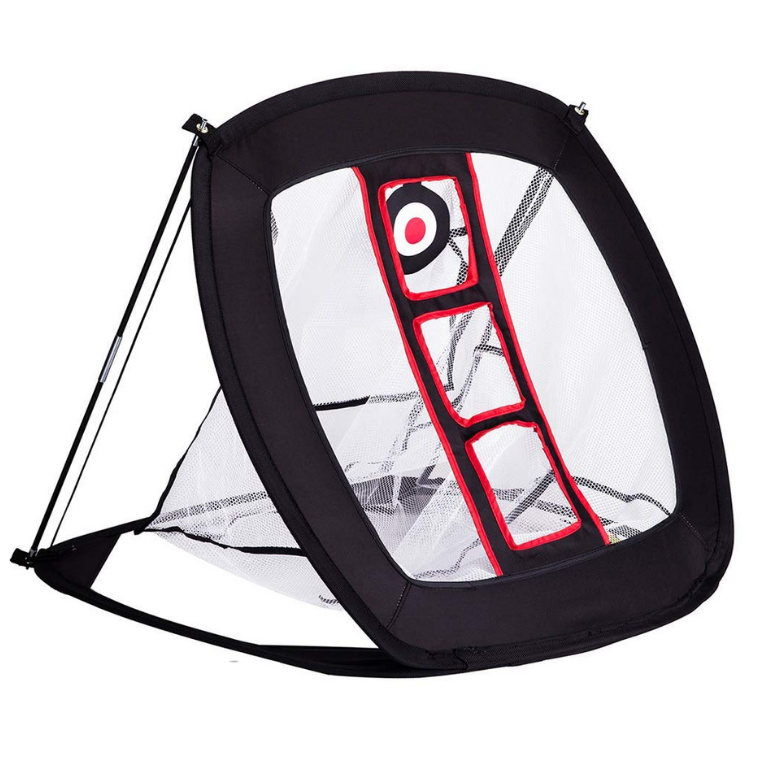
The best short-game facility in town might be your backyard
America just played one of its busiest golf weekends of the year — and most of those strokes were lost inside 60 yards, not off the tee. A chipping net, a bag of foam balls and a putting mat turn a garden and a long July evening into the practice station that actually moves your handicap. Bonus: it's how kids and partners get into the game without ever facing a range.
Versus
Fiberbuilt Player Preferred vs Studio Grass: two different turfs, and the price gap depends on your layout
Fiberbuilt's two simulator mats stand on different hitting surfaces and come in the same single-, centre- and double-hitting layouts. The extra money buys Pure Impact Turf and a vibration layer rated at 94.7 per cent, and how much extra depends on which layout your household needs.
Review
8.0/10Fiberbuilt Studio Grass review: buy the 7x4 single-hitting mat, because the both-hands layouts cost flagship money
Fiberbuilt's grass panel is the reason serious home bays end up on this mat, and the entry layout is the best way to buy it. The centre-hitting version is priced level with the Player Preferred, and it leaves out the panel your launch monitor sits on.