
Fiberbuilt Player Preferred vs Studio Grass: two different turfs, and the price gap depends on your layout
Fiberbuilt's two simulator mats stand on different hitting surfaces and come in the same single-, centre- and double-hitting layouts. The extra money buys Pure Impact Turf and a vibration layer rated at 94.7 per cent, and how much extra depends on which layout your household needs.
By Marcus Bell · Simulator & Indoor Golf Writer
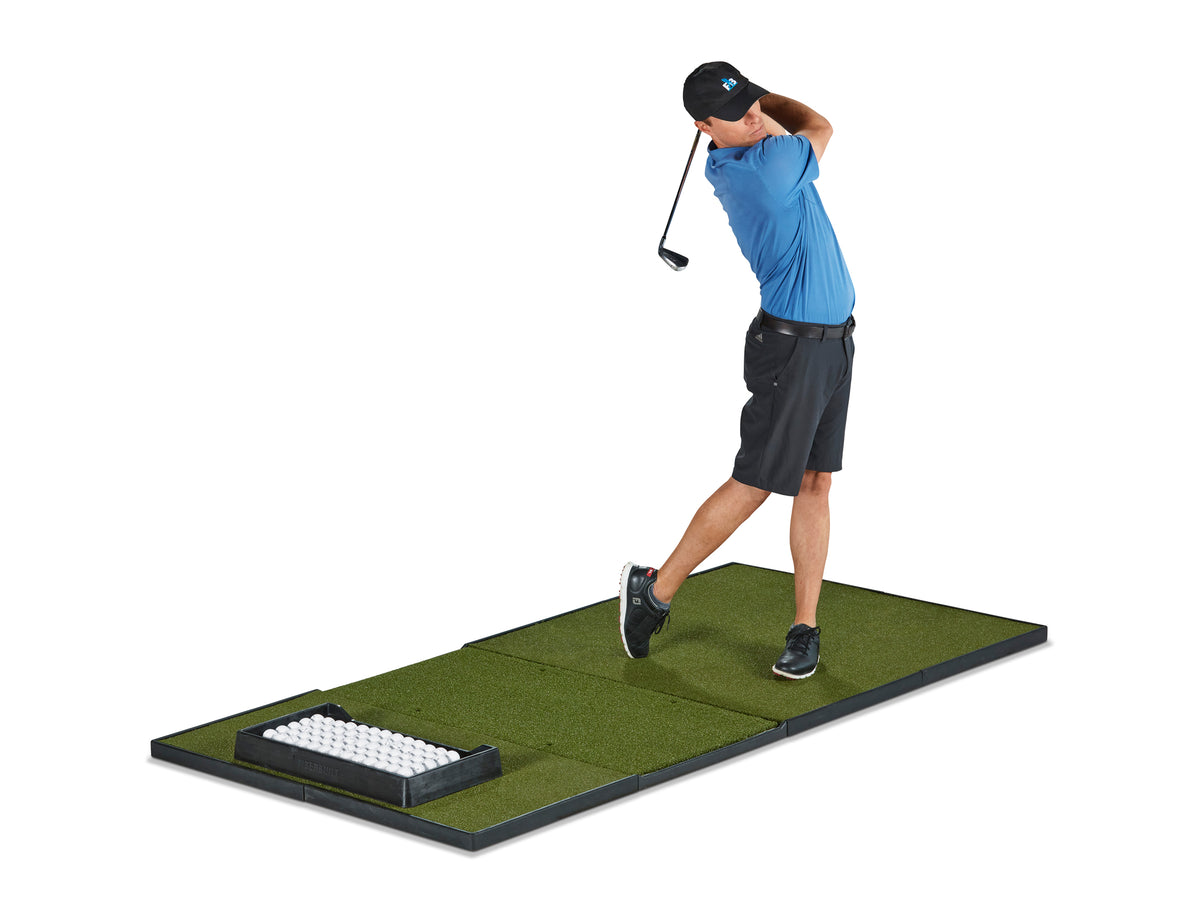
Fiberbuilt
Fiberbuilt Player Preferred Studio Golf Mat
Pure Impact Turf on a two-foot panel you tee up on with real tees, plus the vibration layer built for daily hitting.
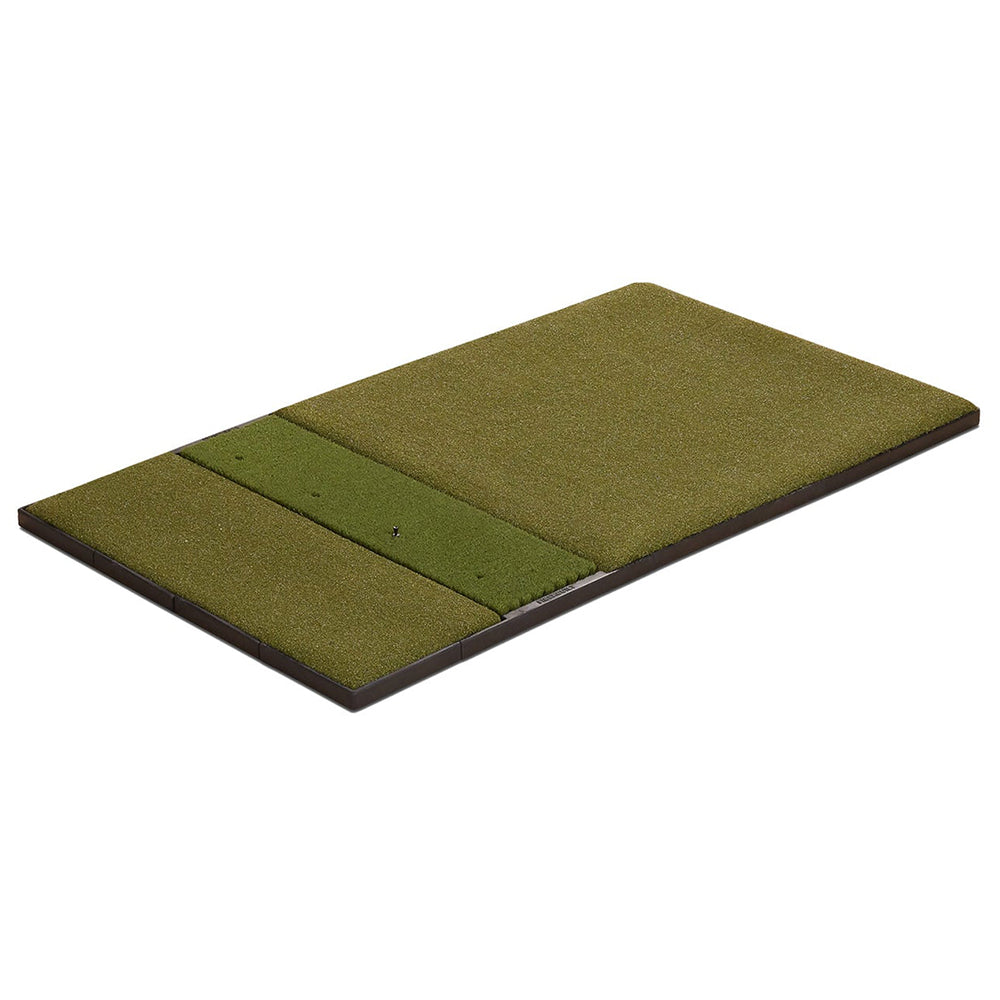
Fiberbuilt
Fiberbuilt Studio Grass Series
Fiberbuilt's original nylon grass panel with a 300,000-shot guarantee, and the cheaper way in at the entry layout.
ifrothgolf earns a commission on purchases made through these links, at no extra cost to you. It never changes what I recommend. Full disclosure.
Part of our guide toBest Golf Nets & Hitting Mats 2026Buy the Player Preferred if the room is permanent, you hit most days, and your elbows have already started expressing opinions. Buy the Studio Grass if the bay sees lighter use, if you want the most durable hitting strip Fiberbuilt makes, or if the budget stops one rung down. Both ranges come in single-, centre- and double-hitting layouts, so handedness is not what separates them. The surface under the ball and the layer beneath it are.
The Fiberbuilt Player Preferred and the Fiberbuilt Studio Grass Series sit two rungs apart in the same range, at $1,500 and $1,200 for their entry single-hitting layouts. That gap is real, but it is not fixed: it narrows the moment you change layout. And the two are not one surface on two different bases. They are two different hitting surfaces on similar modular frames.
The turf is not the same, so compare it properly
The Studio Grass hits off Fiberbuilt Grass, the firm's original nylon hitting surface, set in a one-foot-wide panel with holes for rubber tees (four on the four-foot-deep mats, six on the deeper ones) and backed by a 300,000-shot guarantee. Its case is durability and joint-friendliness: you can hit down and through without the jarring bounce of a carpet mat, and a fat shot registers as a fat shot rather than being flattered.
The Player Preferred hits off Pure Impact Turf, a different surface Fiberbuilt says is launch-monitor tested to mimic the launch conditions of real fairway grass. The standard panel is two feet wide rather than one, and a friction-fit holder lets you tee up on your own real tees. Wider strip, different fibre, different tee system. Which feels better is partly taste, but it is not the same strike, and the choice starts here rather than at the price.
What the extra buys is insurance, and insurance is priced on how often you claim
The Player Preferred's other headline item sits under the surface: a vibration absorption layer Fiberbuilt rates at 94.7 per cent of clubhead vibration absorbed. It is engineered to survive years of daily hitting rather than one enthusiastic winter.
Here is the honest reading of that number. If your sim takes forty balls a week from November to March and then goes quiet, you will very likely never cash the insurance, and the layer is a line item you paid for and did not use. If you are hitting three hundred balls a week for six months, or you already have a tendon that flares up, it is the most defensible upgrade in the whole bay. We have made the wider version of this argument before — the mat is the one component your body pays for on every swing — and the flagship is what that argument looks like when you follow it all the way.
Both ranges solve the two-handed household
Both mats are modular: a stance mat, a hitting panel and, on the single-hitting layouts, a two-foot spacer sized for a ball tray or a face-on launch monitor. Both ranges also come in centre-hitting and double-hitting layouts for a right-hander and a left-hander sharing the bay, which is the problem people otherwise solve with a ceiling-mounted launch monitor at a cost measured in thousands rather than hundreds. We laid those trade-offs out in overhead versus floor launch monitors. So the handedness fix is a reason to buy Fiberbuilt, not a reason to pick one of these two over the other.
The detail that catches people is what the centre-hitting layout leaves out. In both ranges it puts the hitting strip between two stance mats, and there is no spacer panel. If you want a both-handed bay and a face-on launch monitor sitting level with the ball, it is the double-hitting layout that carries spacers, and that is the larger, dearer configuration.
Price the layout you actually need, too. On PlayBetter the centre-hitting Studio Grass, at nine feet by four, is listed at the same price as the single-hitting Player Preferred at eight by four, and the centre-hitting Player Preferred sits a step above both. The entry-level gap between the two ranges is not the gap you will pay once the layout matches your household.
The spacer panel is the detail that decides your numbers
A floor-facing launch monitor wants to sit at a known height, on a level plane with the strike surface. Put a raised mat on a garage floor, set the unit on the bare concrete beside it, and you have introduced a height error into every reading — the sort of thing that gets blamed on the software for a fortnight before anybody thinks to measure. The single- and double-hitting layouts of both ranges carry two-foot spacers precisely so the device sits on the same plane as the ball.
The trade-off of any modular mat is seams, and seams on uneven concrete need straightening every so often. Both of these lock together on a tool-free rubber foundation, but neither replaces a flat floor. If the concrete is out, fix that before you blame either mat.
Who should buy neither
If your indoor setup is a net in a garage you visit twice a month, both of these are more mat than the use case deserves. The money does more for you in the thing that keeps you swinging, which is a return that puts the ball back at your feet instead of making you walk for it. That case is made in full in why garage practice dies in February, and The Net Return's own Pro Turf is the mat designed around continuous reps rather than divot realism.
And if you are weighing a Fiberbuilt against a cheap foam mat plus a brighter projector, take the mat. We have been consistent on this: the projector is the thing you look at, and the mat is the thing you hit. Only one of them sends anything into your wrists.
The call
Most buyers reading this should take the Studio Grass, because most home bays are not hit hard enough to cash the Player Preferred's vibration layer, and the Fiberbuilt Grass panel is the most durable strip in the range. Choose the layout before the range: single-hitting with a spacer for one golfer and a face-on unit, centre-hitting for a two-handed household whose launch monitor does not need to sit beside the ball, double-hitting if you need both. Then compare the two ranges at that layout, not at the entry price. The Player Preferred earns its premium in one specific house: permanent bay, high volume, a golfer who wants a wider strip and real tees, and a body that has already sent a warning shot.
Frequently asked
- What is the difference between the Fiberbuilt Player Preferred and the Studio Grass?
- The hitting surface and what sits under it. The Player Preferred uses Pure Impact Turf in a two-foot-wide panel with a friction-fit holder for real tees, over a vibration absorption layer Fiberbuilt rates at 94.7 per cent. The Studio Grass uses Fiberbuilt Grass, a nylon surface in a one-foot-wide panel with holes for rubber tees and a 300,000-shot guarantee. Both are modular and both come in single-, centre- and double-hitting layouts.
- Which Fiberbuilt mat works for a left-handed and right-handed household?
- Either, in a centre-hitting or double-hitting layout. The centre-hitting layout puts one strip between two stance mats and has no spacer panel, so it suits a launch monitor that does not sit beside the ball. If your unit sits face-on, the double-hitting layout includes spacers on both sides. On PlayBetter the centre-hitting Studio Grass is priced level with the single-hitting Player Preferred.
- Do I actually need a vibration absorption layer in a simulator mat?
- It depends entirely on volume. At around forty balls a week for one winter you are unlikely to notice it. At two hundred or more a week, or if you already have elbow or wrist trouble, it is the most defensible money in the bay, because the mat is the only component you physically absorb on every swing.
- Where does a launch monitor sit with a Fiberbuilt Studio mat?
- On the two-foot spacer panel in the single- and double-hitting layouts, which is sized for exactly that. The centre-hitting layout has no spacer. Getting a floor-facing unit onto the same plane as the ball matters, because sitting it on bare concrete beside a raised mat introduces a height error into every reading.
Read next
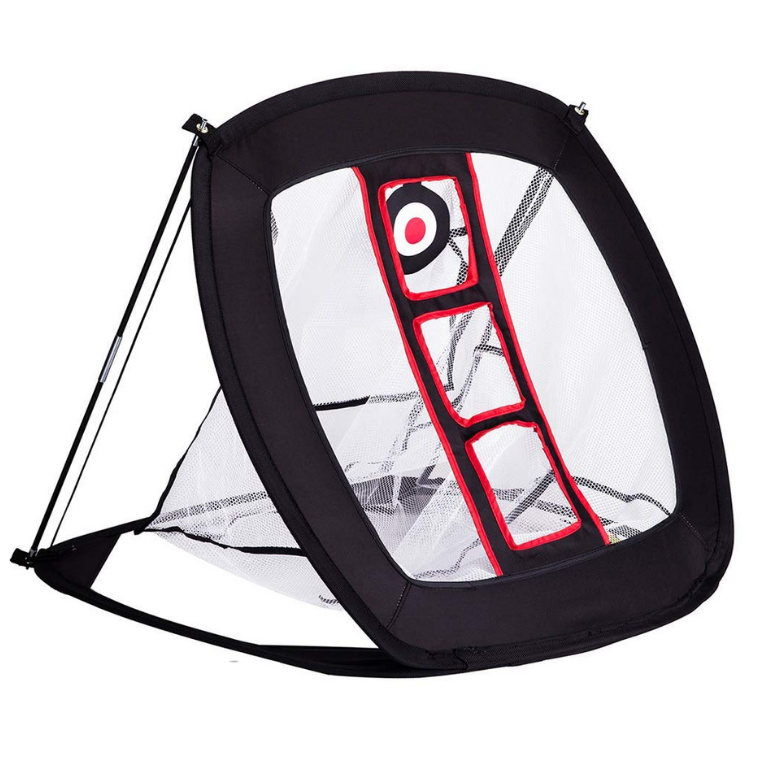
Explained
The best short-game facility in town might be your backyard
America just played one of its busiest golf weekends of the year — and most of those strokes were lost inside 60 yards, not off the tee. A chipping net, a bag of foam balls and a putting mat turn a garden and a long July evening into the practice station that actually moves your handicap. Bonus: it's how kids and partners get into the game without ever facing a range.
Review
8.0/10Fiberbuilt Studio Grass review: buy the 7x4 single-hitting mat, because the both-hands layouts cost flagship money
Fiberbuilt's grass panel is the reason serious home bays end up on this mat, and the entry layout is the best way to buy it. The centre-hitting version is priced level with the Player Preferred, and it leaves out the panel your launch monitor sits on.
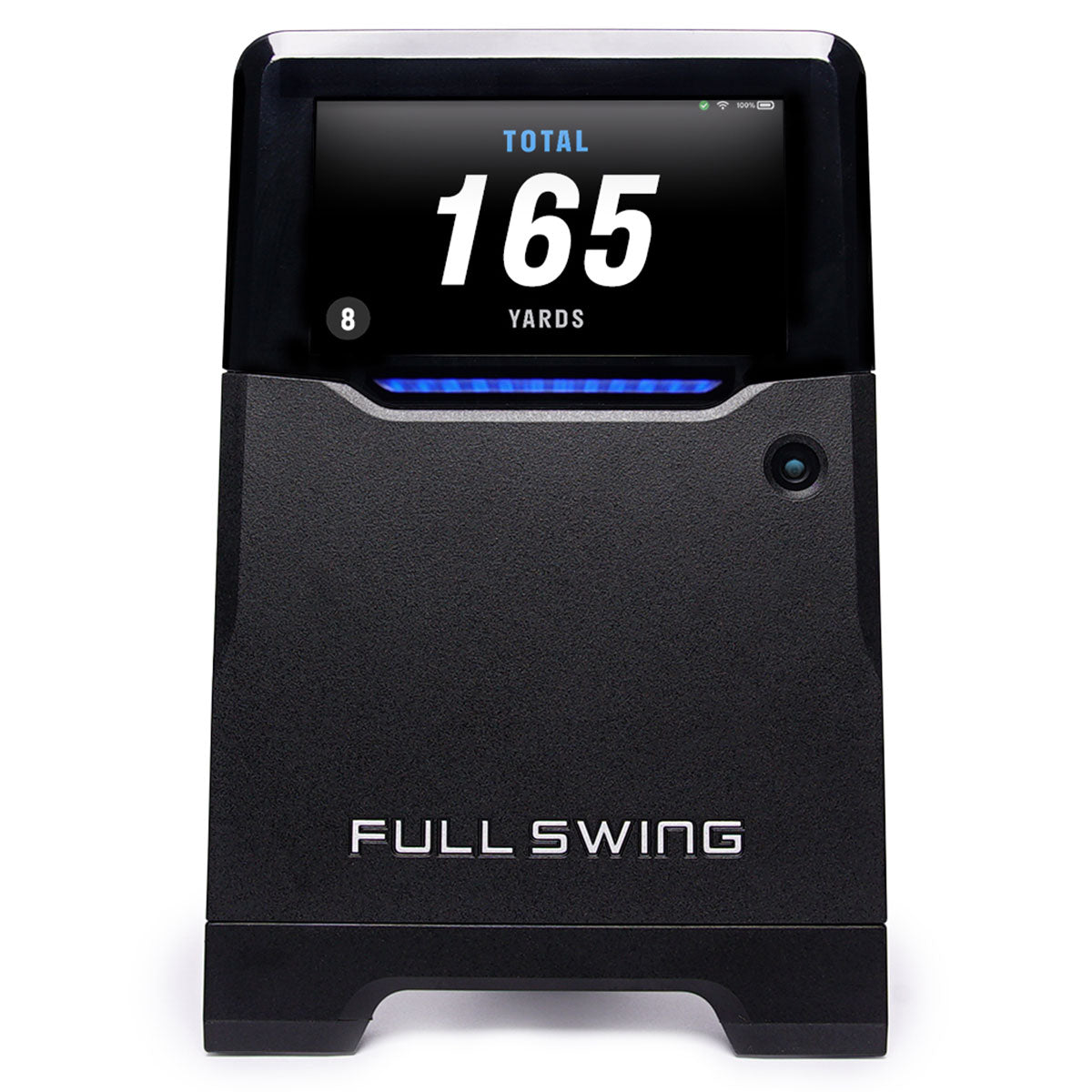
Review
7.9/10Full Swing KIT review: the tape measure decides this, not Tiger
Tour pedigree, TGL on ESPN, and radar good enough to be checked against a Trackman outdoors. It also wants eighteen to twenty feet of room, which rules out most of the garages people buy it for.