
Overhead or beside the ball? The home-sim decision nobody explains until you've already bought
Every premium launch monitor guide ranks units by accuracy. Almost none of them tell you that where the thing physically sits will change your sim room more than the spec sheet will — and that one of these choices is permanent.
By Marcus Bell · Simulator & Indoor Golf Writer
TruGolf
TruGolf APOGEE
ifrothgolf earns a commission on purchases made through these links, at no extra cost to you. It never changes what I recommend. Full disclosure.
Spend an evening reading launch monitor reviews and you'll come away with a ranked list by accuracy, a note about subscriptions and nothing at all about the decision that will actually shape your room: whether the unit lives on the ceiling or on the floor beside the ball. It gets skipped because it isn't a spec, it's an architecture — and it quietly determines how the bay feels to use, whether left-handers can play without a reset, what happens when you shank one, and whether you can ever take the thing somewhere else. Get it wrong and you don't get bad data, you get a room you stop using. Here's the decision, properly.
What 'overhead' actually changes
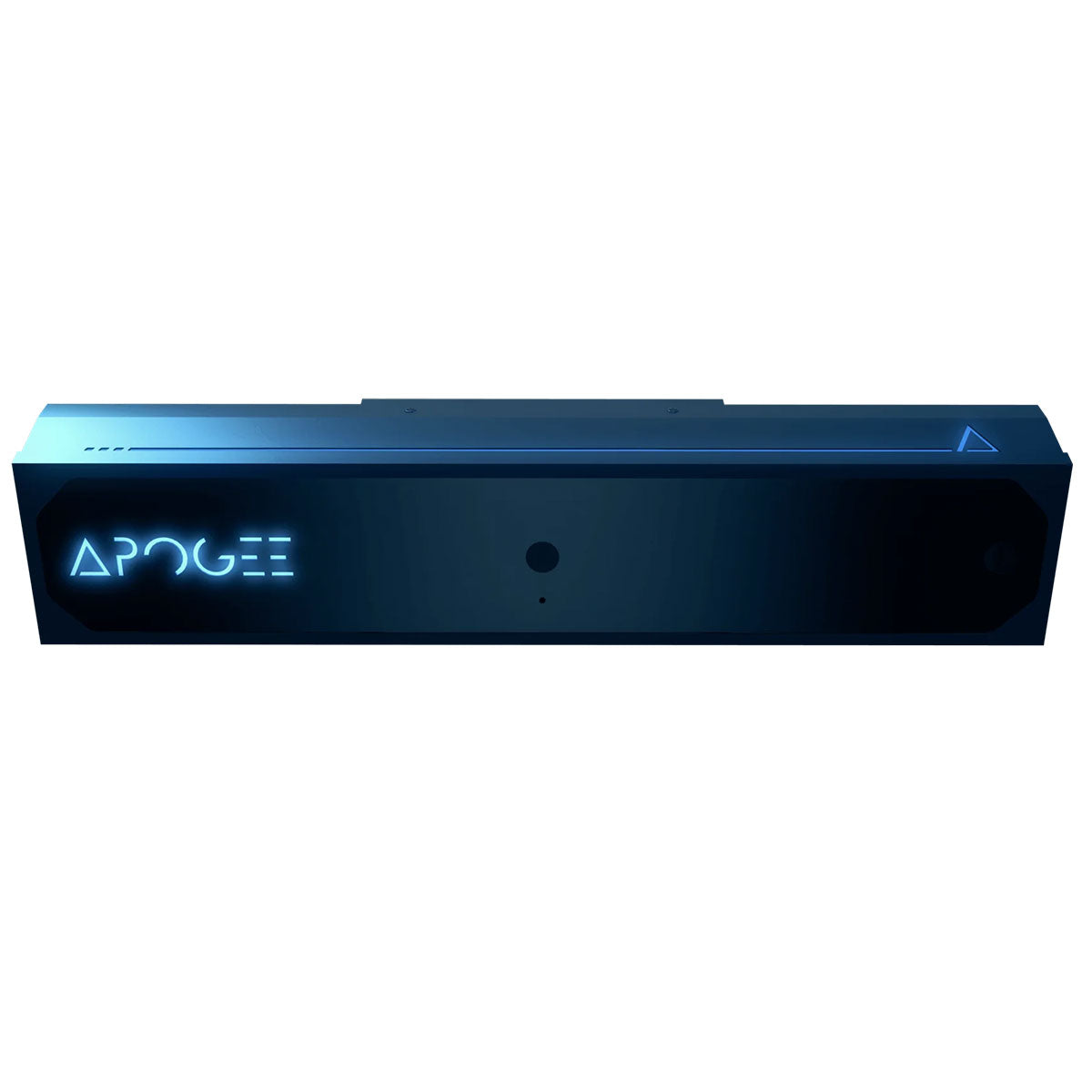
A ceiling-mounted unit reads the ball from above, roughly nine to ten feet over the hitting surface. The immediate consequence is that your floor is empty. That sounds cosmetic until you've spent a winter with a box sitting a metre to the right of the ball: you stop stepping there, you nudge it when you move the mat, you catch it with a low heel strike eventually, and every time a mate has a go you're explaining where not to stand. Clear the floor and the bay stops feeling like equipment and starts feeling like a room. The TruGolf APOGEE is the clearest expression of this — ceiling-mounted, no marked balls or club stickers, with slow-motion impact replay after every shot and, unusually, zero display delay so the ball appears on screen at the moment it should rather than a beat later.
The second thing overhead fixes is handedness. A floor unit sits on one side of the ball, which means a right-hander and a left-hander can't just swap in — someone has to move the box and re-square it. Overhead sees both. If your household has two golfers who swing opposite ways, or you host, that single fact is worth more than a spec-sheet accuracy difference you'd never detect.
What overhead costs you, and it isn't only money
Now the honest half. An overhead unit is a permanent install. You are drilling into a ceiling, running power and data up there, and committing that room to being a golf room. If you rent, if the garage is also where the car goes, or if you might move in two years, that's a serious constraint dressed up as a mounting instruction.
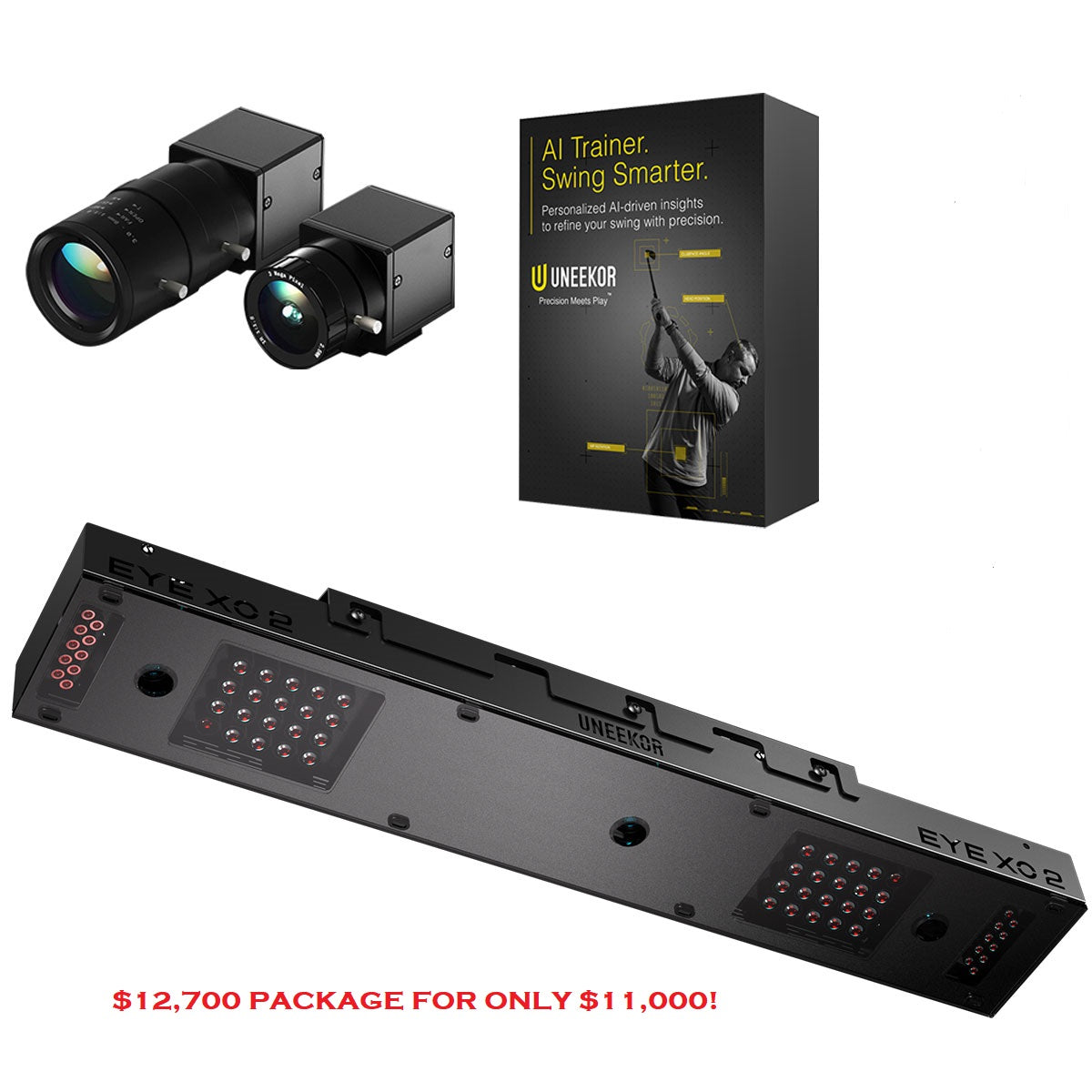
Worse, alignment is unforgiving in a specific and nasty way. Mount a floor unit slightly off and it usually tells you — it fails to read, or the numbers are obviously wrong. Mount an overhead unit slightly off and it keeps working and quietly hands you inaccurate data. The Uneekor EYE XO2 is explicit about this: get the position or alignment wrong and performance degrades rather than errors out. That's the failure mode you least want from a five-figure purchase, because you can practise against bad numbers for months without knowing. If you're not confident measuring and mounting to the millimetre, price a professional install into the build rather than discovering this later.
The ecosystem trap at the top
One more thing the overhead brochures don't foreground. Trackman's iO is the most credible name in measurement bringing its data standard indoors — ceiling-mounted, fusing radar with infrared and high-speed imaging, spin measured at impact rather than inferred. It's superb. It also doesn't run GSPro or E6 Connect, the two software packages most of the home-sim community actually plays on, and its full club-data set sits behind the upper subscription tier. So at the very top of the market you can spend more than anyone else and end up with a smaller course library than someone running a unit a fifth of the price. That's not a reason to avoid it — for a teaching bay or a fitter, Trackman's name is the product — but it's exactly the kind of thing you want to know before the ceiling gets drilled, not after.
The floor-standing counter-argument
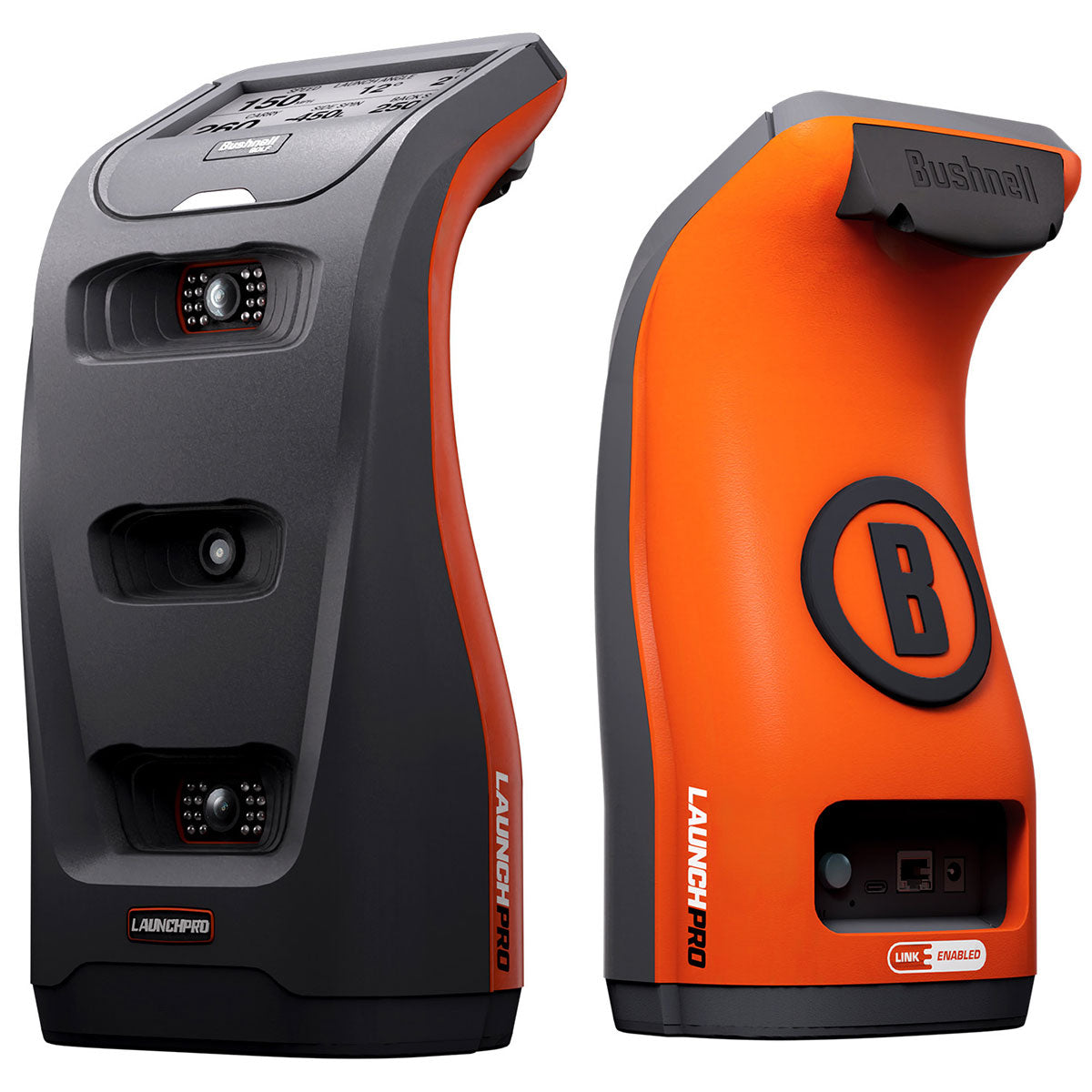
None of this makes floor units the poor relation. A floor-standing camera unit like the Bushnell Launch Pro is cheaper, sets up in seconds, packs into a bag, and — the part overhead can never match — goes outside. If your practice is genuinely split between winter indoors and summer on grass, one portable unit doing both jobs beats two units doing one each. It's also the only architecture that survives a house move without a conversation about making good the ceiling. For a room that's still partly a garage, floor-standing is not a compromise; it's the correct answer.
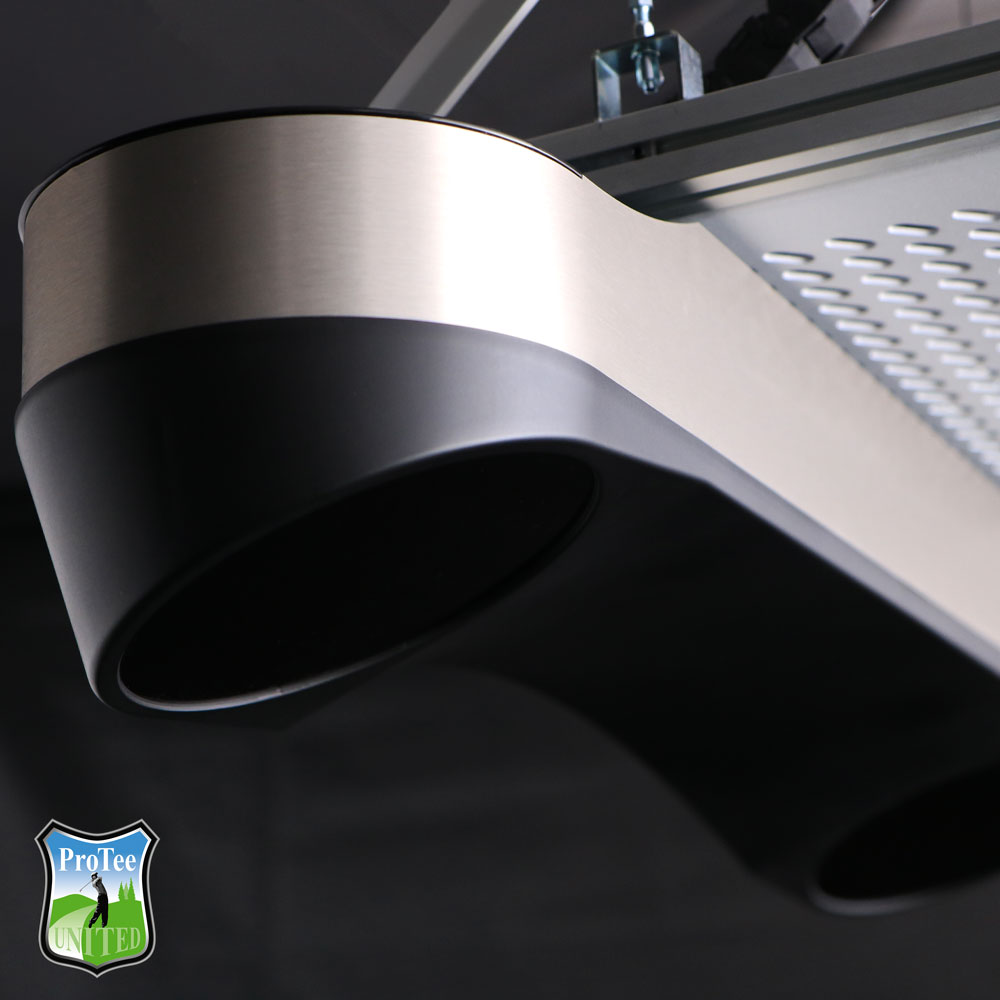
The middle path exists too: ProTee's VX is the cheapest honest route into overhead tracking, which makes the architecture available a long way below Uneekor and Trackman money. If you've decided the room is permanent but the top-tier budget isn't there, that's where to look first.
How to actually decide
Four questions, in this order. Is the room permanent, or does something else live in it? If something else lives in it, buy floor-standing and stop reading. Does anyone in the house swing the other way round? If yes, overhead pays for itself in convenience alone. Will the unit ever need to leave the room — to a range, a mate's garage, a new house? If yes, floor-standing. And finally: can you mount to the millimetre, or will you pay someone who can? If neither, the failure mode above should worry you enough to stay on the floor. Run those honestly and the shortlist usually collapses to two or three units, at which point our premium launch monitor guide ranks what's left, and the sim build planner will tell you whether your ceiling height supports the answer at all.
The part worth repeating
Accuracy is the thing every review measures and the thing you'll notice least, because everything at this level is accurate enough to improve your golf. Architecture is the thing no review measures and the thing you'll live with every session. Decide where the unit sits first, then rank what's left by data. Doing it the other way round is how people end up with a brilliant launch monitor in a room they've quietly stopped walking into.
Products mentioned in this article
TruGolf
TruGolf APOGEE
Overhead with zero display delay and slow-motion impact replay after every shot.
Bushnell
Bushnell Launch Pro Circle B
The floor-standing counter-argument: portable, cheaper, goes outside.
ifrothgolf earns a commission on purchases made through these links, at no extra cost to you. It never changes what I recommend. Full disclosure.
Frequently asked
- Are overhead launch monitors more accurate than floor-standing ones?
- Not inherently. Both architectures produce accuracy that comfortably exceeds what an amateur can detect. The real differences are practical: overhead clears the floor and reads both left- and right-handers, while floor-standing units are cheaper, portable and usable outdoors.
- What ceiling height do I need for an overhead launch monitor?
- Typically around nine to ten feet above the hitting surface, though it varies by unit. Measure before you buy, because a ceiling that is too low rules the whole architecture out regardless of budget.
- What happens if an overhead launch monitor is mounted slightly wrong?
- It usually keeps working and gives you inaccurate data rather than an obvious error. That is the dangerous failure mode, because you can practise against bad numbers for months without realising. If you are not confident mounting precisely, budget for a professional install.
- Does the Trackman iO work with GSPro?
- No. The iO does not support GSPro or E6 Connect, the two simulator packages most of the home-sim community plays on, and its full club data sits behind the upper subscription tier. Worth knowing before committing, since cheaper units run both.
- Should a left-handed and right-handed household buy overhead?
- It is the strongest single argument for it. A floor unit sits on one side of the ball and has to be physically moved and re-squared to swap handedness, whereas an overhead unit sees both without touching anything.
Read next
Review
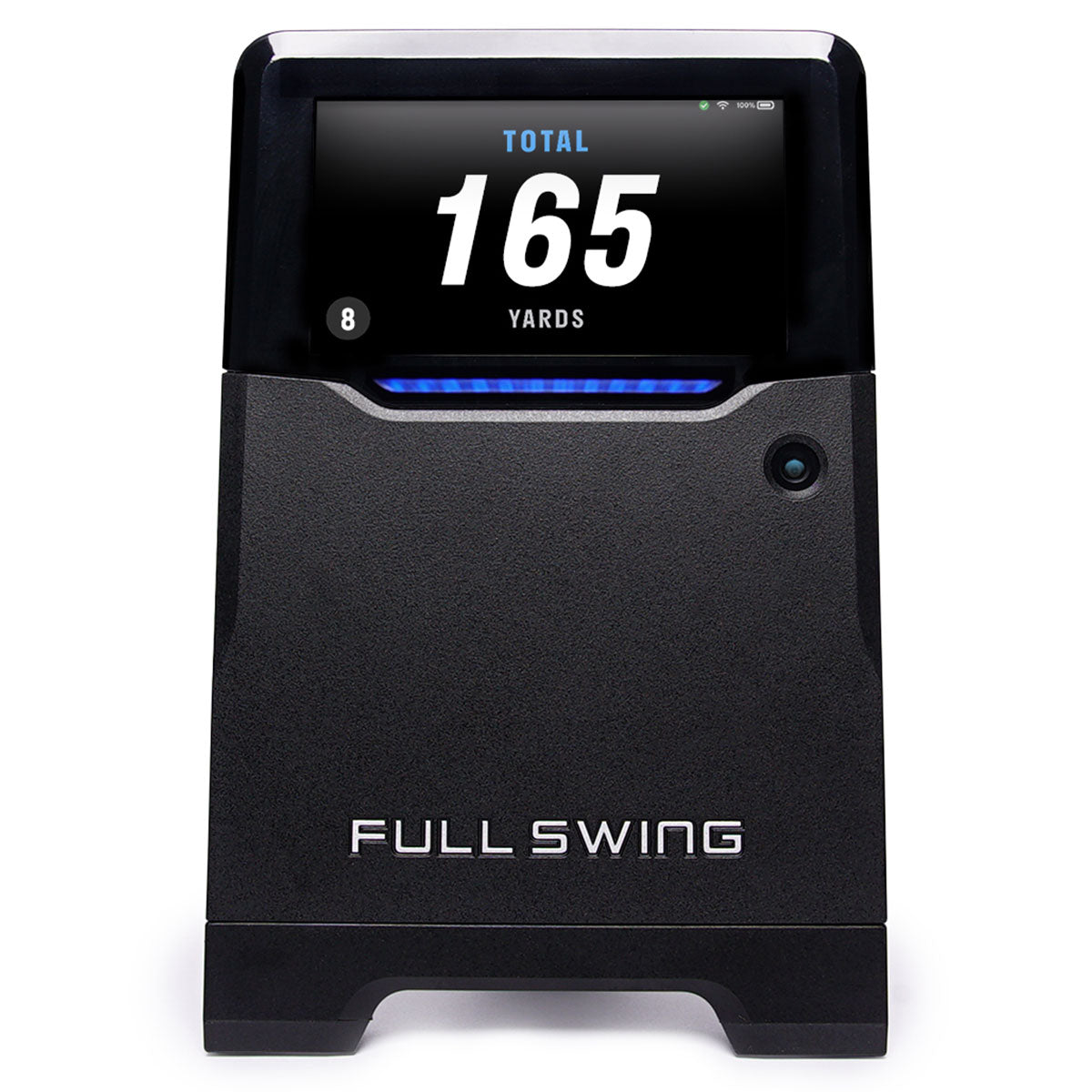
7.9/10Full Swing KIT review: the tape measure decides this, not Tiger
Tour pedigree, TGL on ESPN, and radar good enough to be checked against a Trackman outdoors. It also wants eighteen to twenty feet of room, which rules out most of the garages people buy it for.
Versus
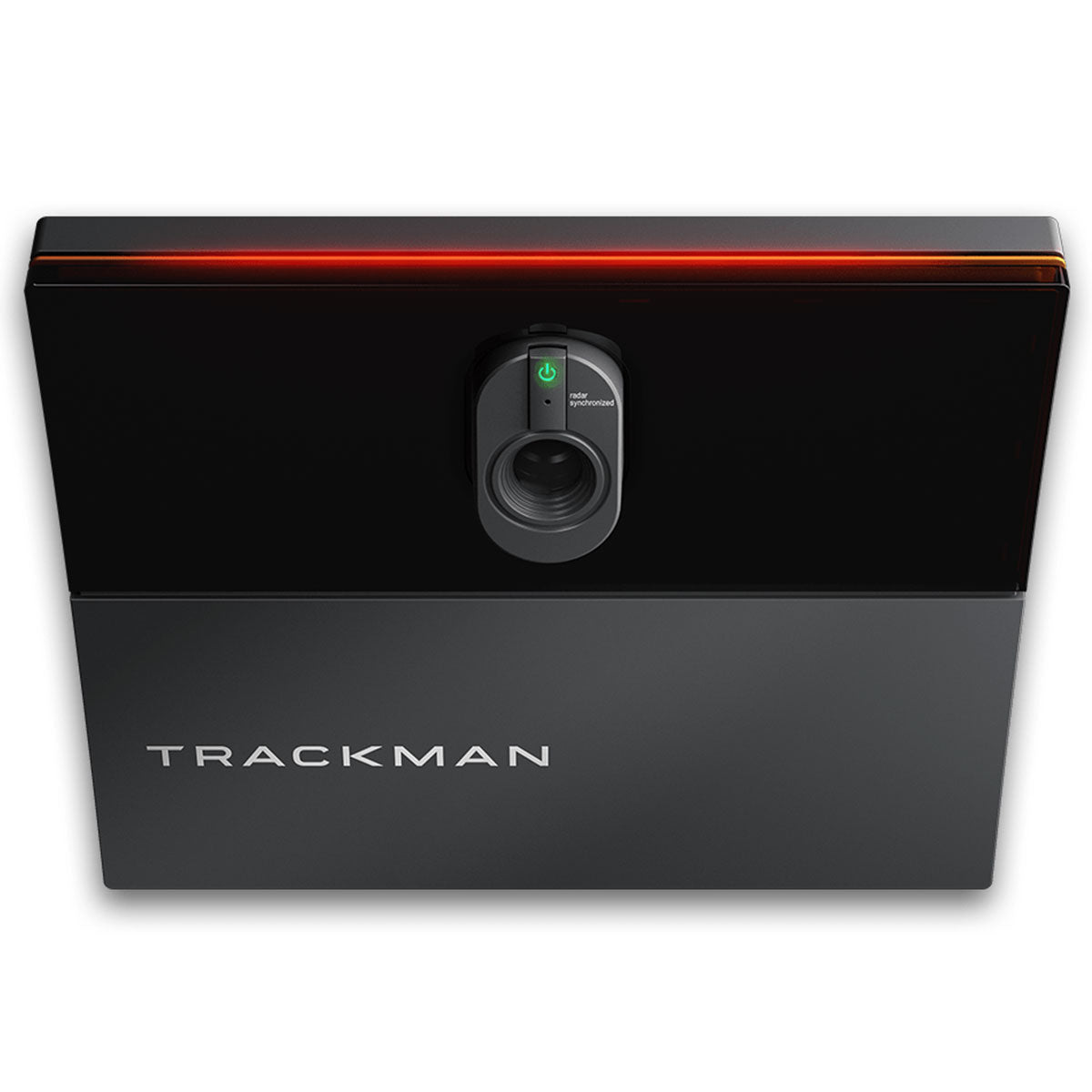
Trackman iO vs Uneekor EYE XO2: the year-one trap
Both mount overhead, both want ten feet of ceiling, and about $3,000 separates them on the shelf. Then Trackman's included first year runs out, and the gap starts growing by $1,100 a year.
Versus
Uneekor EYE XO2 vs Foresight GC3: ceiling or floor?
About $4,000 separates them, but they're not really rivals — one lives in your ceiling forever, the other sits on the floor and travels. The cheaper one is also the one with no subscription.