
September beats January for a swing change: playable turf, evening light and nothing on the card
Everyone starts working on their game in January, in the dark, off a mat, with four months until it counts. September has better light, better turf and the one condition a swing change actually needs.
By Ben Marsden · Reviews Editor
HackMotion
HackMotion Core Wrist Sensor
ifrothgolf earns a commission on purchases made through these links, at no extra cost to you. It never changes what I recommend. Full disclosure.
Every club in the country has the same conversation in the last fortnight of August. Someone leans on the bar after the championship, looks at a scorecard that got away from them on the back nine, and says the two words. Next year. They mean it. Then nothing happens until the middle of January, when they buy a lesson, stand on a covered range in the rain, and hit forty balls at a target they cannot see.
That gap is the single most wasted stretch in amateur golf, and I have watched it happen at three clubs now. The six weeks in front of us are the ones that would have worked.
The condition a swing change needs is not motivation
A change to your swing or your stroke needs one thing above everything else: a period where being worse temporarily does not cost you anything. Every coach says a version of this and almost nobody arranges their year around it. When you alter a wrist position or a start-line routine, your ball-striking gets worse before it gets better. That is not a failure of the change, it is the change. It is also completely intolerable if there is a monthly medal on Saturday and a handicap you have spent two seasons defending.
Right now, that pressure is gone. The championship is done. The winter league is a social fixture with a bacon roll at the end of it. There is nothing on the card until spring. This is the only stretch of the calendar where you can play badly on purpose and it costs you a laugh in the bar.
January has the motivation and none of the conditions
The reason people default to January is that the calendar tells them to. It is a terrible month for it. The light goes at four. The turf is either frozen or soup. Every session happens off a mat, which flatters a fat strike and hides the exact fault you are trying to fix. And the pressure has quietly come back, because there are now eleven weeks until the season opens and you want the change bedded in by then.
September and October give you the opposite trade. Playable turf that tells you the truth about your strike. Enough light for a proper evening session. Genuine feedback from real ground. And no deadline whatsoever. You will not feel like starting — that is the honest problem, and the only real argument for January. But motivation is the one input you can manufacture, and daylight in November is not.
Work that has a number attached
Here is the position: in the next six weeks, only do practice that produces a measurement you can compare against the one you took last week. Everything else is a hobby.
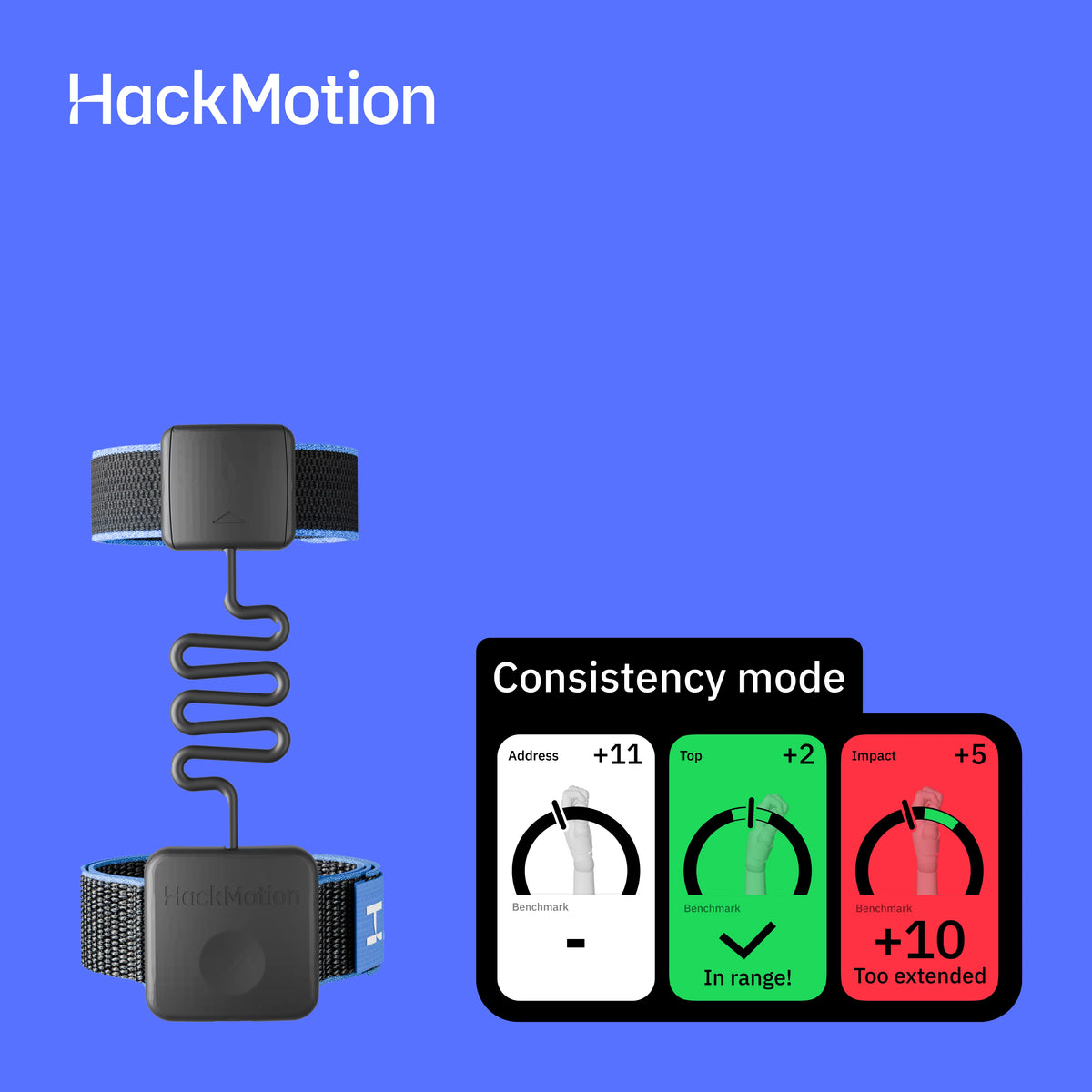
Clubface control is where I would start, because it is the hidden cause of most of what golfers describe as inconsistency and almost nobody works on it directly. HackMotion Core straps to your lead wrist and reads flexion and extension at roughly 800 measurements a second, with real-time audio feedback so you hear the position rather than guessing at it afterwards. At around $300 it is the cheapest genuine feedback loop in golf, and the audio is the reason it works — you get the information during the swing, not on a screen ten seconds later. It is a serious tool rather than a toy, and a beginner will find it overwhelming. If you have never had a lesson, spend the money on the lesson first.
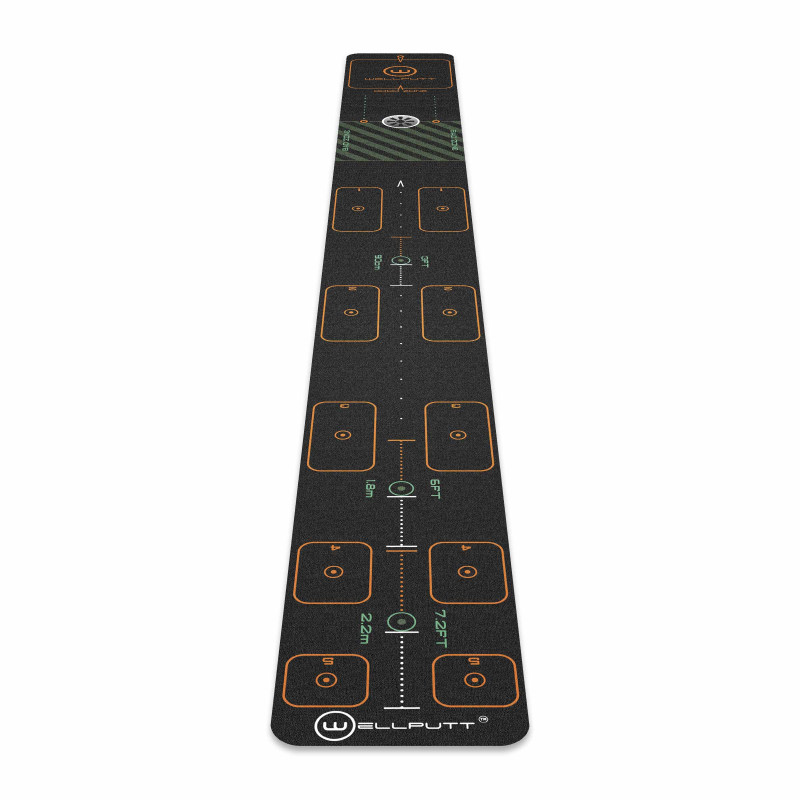
Then putting, which is where the strokes actually are and which almost everybody practises badly. The WellPutt 3m mat at around $110 is a structured system rather than a strip of carpet: the surface carries markers for eye position, alignment, start line and stroke length, it rolls at something close to a medium-fast green rather than the dead drag of a cheap mat, and the free companion app turns it into fifty-odd drills with scores attached. There is no cup, which some people hate. I think the absence is the point — with nowhere for the ball to disappear, your only feedback is start line and pace, which are the two things you are supposed to be training.
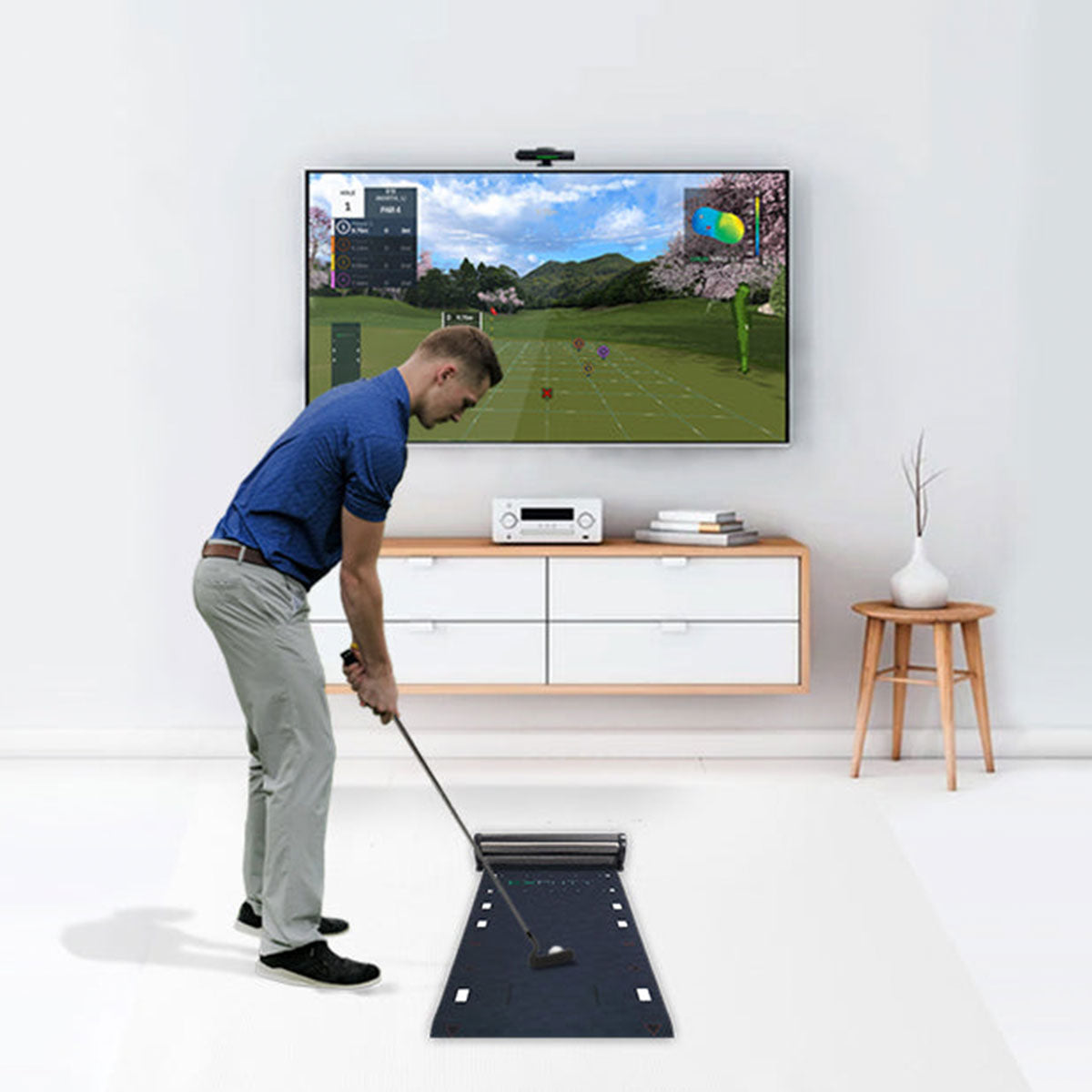
If your problem is pace on real greens rather than mechanics, the Exputt RG does something no mat can. An infrared sensor reads your actual stroke and rolls the putt out on a modelled green with contour, so a putt you pushed on a left-to-right slope misses the way it would outdoors. At around $475 it is not cheap for a putting device, and modelled break is still modelled. But it is the only thing in this list that gives you green-reading and pace practice at ten at night in November, and pace is the skill that decays fastest over a winter.
What is not worth six weeks
Standing on a range hitting driver at a distant net, with no measurement, no target discipline and no feedback beyond how it felt. It is the default because it is the easiest thing to do with an hour, and it changes essentially nothing — we laid out why, and what to do instead, in most range practice is wasted. If you take one thing from this piece, make it that a bucket of balls without a number attached is a pleasant evening, not practice.
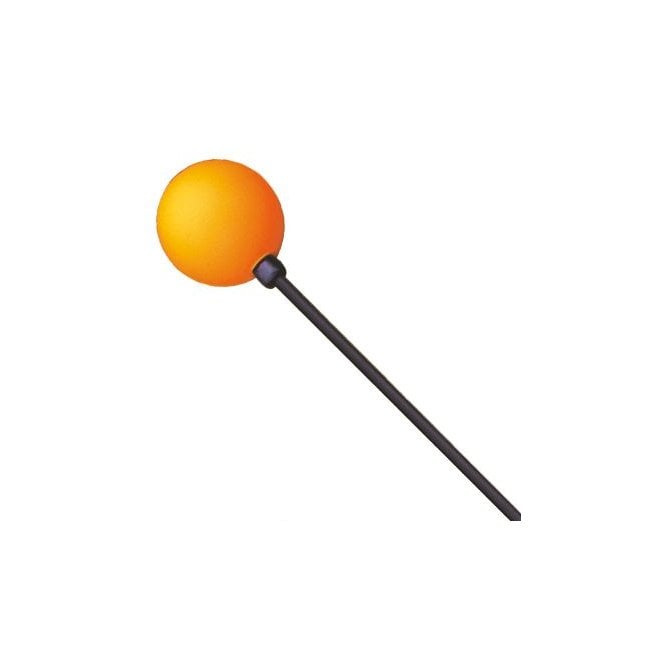
The Orange Whip sits in an awkward middle and deserves an honest word, because it is the aid most likely to be recommended to you this autumn. At around $140 it is excellent at what it does: the flexible shaft and weighted head make it impossible to muscle, so it trains tempo, sequencing and release, and it is the best dynamic warm-up device I know of. What it does not do is fix a mechanical fault. If your problem is an open face at impact, swinging a weighted stick will not close it. Buy it as a warm-up and a tempo habit. Do not buy it as the six-week project.
Make it frictionless or it will not happen
The practical reason winter work dies is logistics. Sessions that require driving somewhere happen twice. Sessions that require walking into a garage happen four times a week. If you are going to hit balls at home, the thing worth spending on is not another gadget but the surface — the Net Return Pro Turf is six feet by ten specifically so a ball returning from a net keeps rolling back to your stance instead of stopping somewhere you have to go and fetch it. It is around $600, which is a lot for a mat, and it rolls up rather than needing an installation. It also doubles as ten feet of putting surface, which is the bit most buyers discover afterwards.
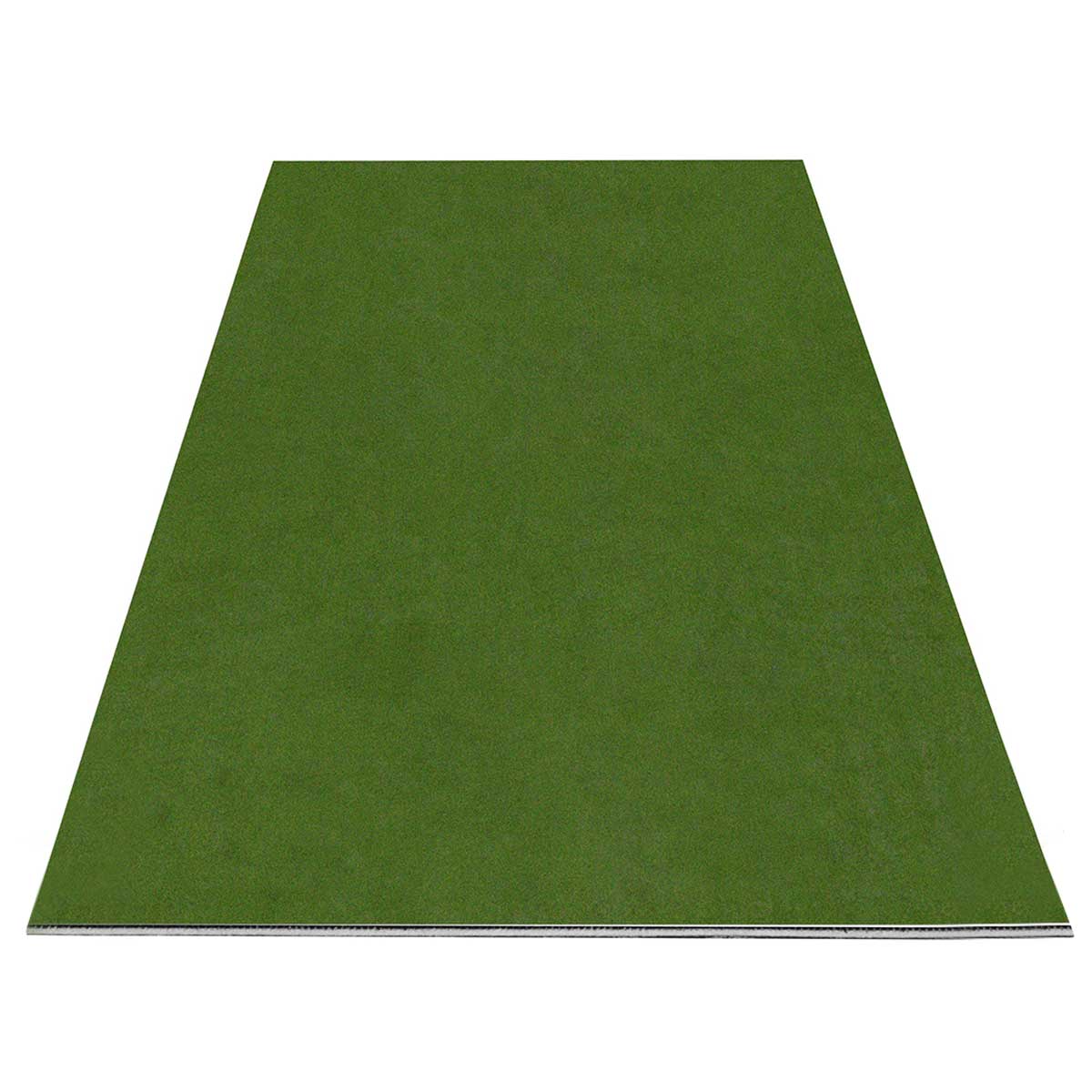
That is where I would put the money, in that order: the feedback device first, the putting surface second, the hitting station only if you already know you will use it. Buy nothing at all and you can still do the important part, which is to pick one measurable thing, take a number this week, and take the same number in the middle of October.
The bar conversation is next Saturday. The difference between the people who meant it and the people who did not is entirely visible by Christmas, and it has nothing to do with how much they spent.
Products mentioned in this article
HackMotion
HackMotion Core Wrist Sensor
Wrist angles read hundreds of times a second, with a sound in your ear when you get it right. The clearest feedback loop under a lesson budget.
WellPutt
WellPutt 3m Putting Mat (10ft First)
Start line and stroke length printed on the floor, ten feet of true roll, and an app that turns it into sessions.
Exputt
Exputt RG EX500D
Pace and contour practice in a living room, which is the part of the game a full-swing sim ignores.
Orange Whip
Orange Whip Full Size Trainer
Tempo and a proper warm-up, not a fault fix. Buy it knowing which of those you need.
The Net Return
The Net Return Pro Turf
Six feet by ten, so the ball returns to your stance and the session never stops for housekeeping.
ifrothgolf earns a commission on purchases made through these links, at no extra cost to you. It never changes what I recommend. Full disclosure.
Frequently asked
- When is the best time of year to change your golf swing?
- The weeks immediately after your club's competitive season ends, typically September and October in the UK. A swing change makes your ball-striking worse before it improves, so it needs a period where a bad round has no consequences. Those weeks also still have usable daylight and real turf, which January does not.
- How long does a golf swing change take to bed in?
- Most coaches work in blocks of six to twelve weeks for a meaningful motor-pattern change, with the first two to three weeks usually producing worse results than before. That is why the change needs to start when nothing is riding on the score. Working on it in short, frequent sessions with feedback beats occasional long sessions without any.
- Is practising indoors over winter actually worth it?
- Yes, for anything with measurable feedback. Putting start line and pace, wrist and clubface positions, and tempo work all transfer well from indoor practice. Full-swing distance work off a mat transfers poorly, because a mat hides fat strikes and gives no information about turf interaction.
- What should a mid-handicapper work on in the off-season?
- Pick one thing that can be measured. Clubface control at impact and putting start line and pace are the two that produce the most strokes saved for the effort, and both can be trained at home with feedback. Avoid spending the off-season on distance, which is the slowest-improving and least score-relevant part of the game for most mid-handicappers.
Read next
Review
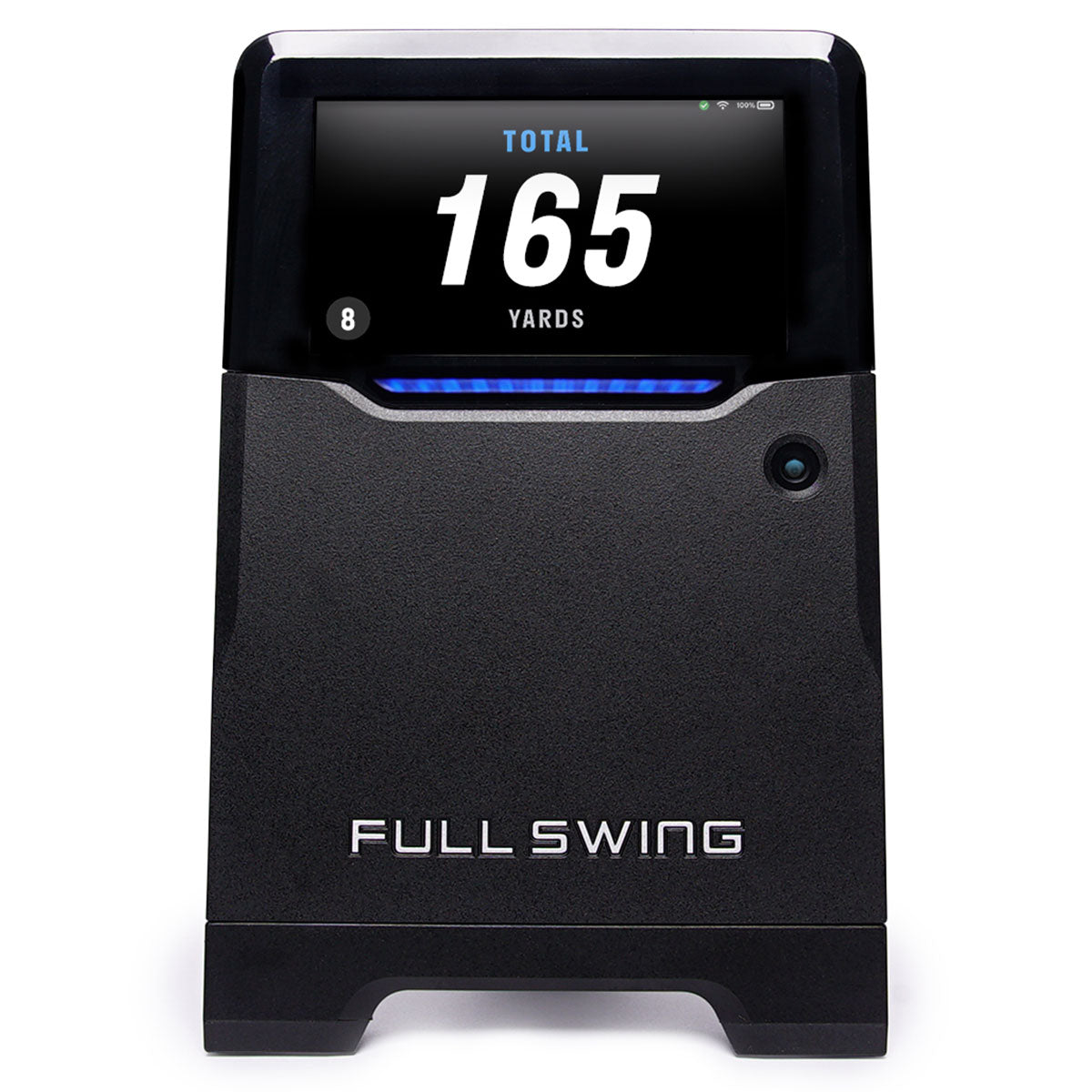
7.9/10Full Swing KIT review: the tape measure decides this, not Tiger
Tour pedigree, TGL on ESPN, and radar good enough to be checked against a Trackman outdoors. It also wants eighteen to twenty feet of room, which rules out most of the garages people buy it for.
Versus
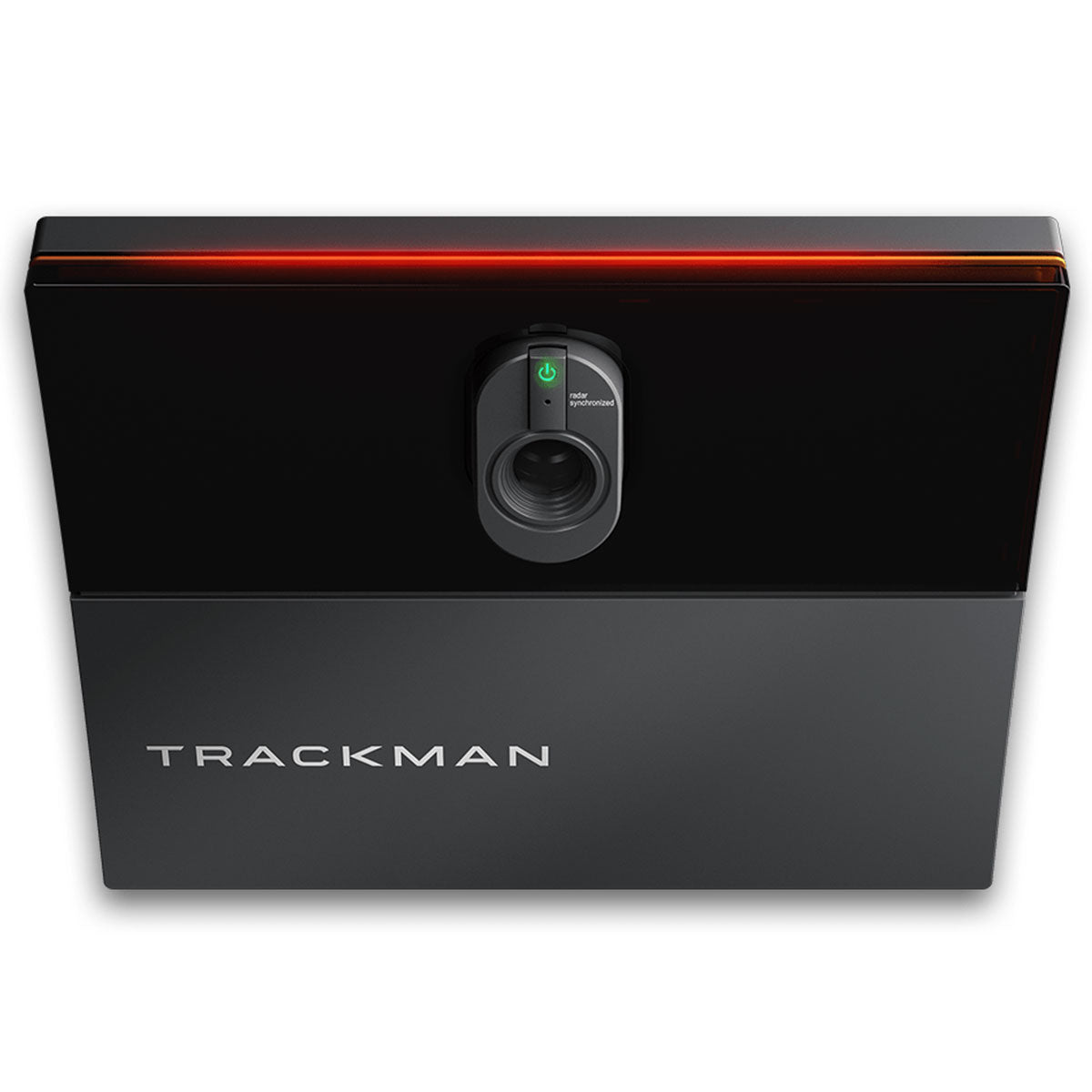
Trackman iO vs Uneekor EYE XO2: the year-one trap
Both mount overhead, both want ten feet of ceiling, and about $3,000 separates them on the shelf. Then Trackman's included first year runs out, and the gap starts growing by $1,100 a year.
Versus
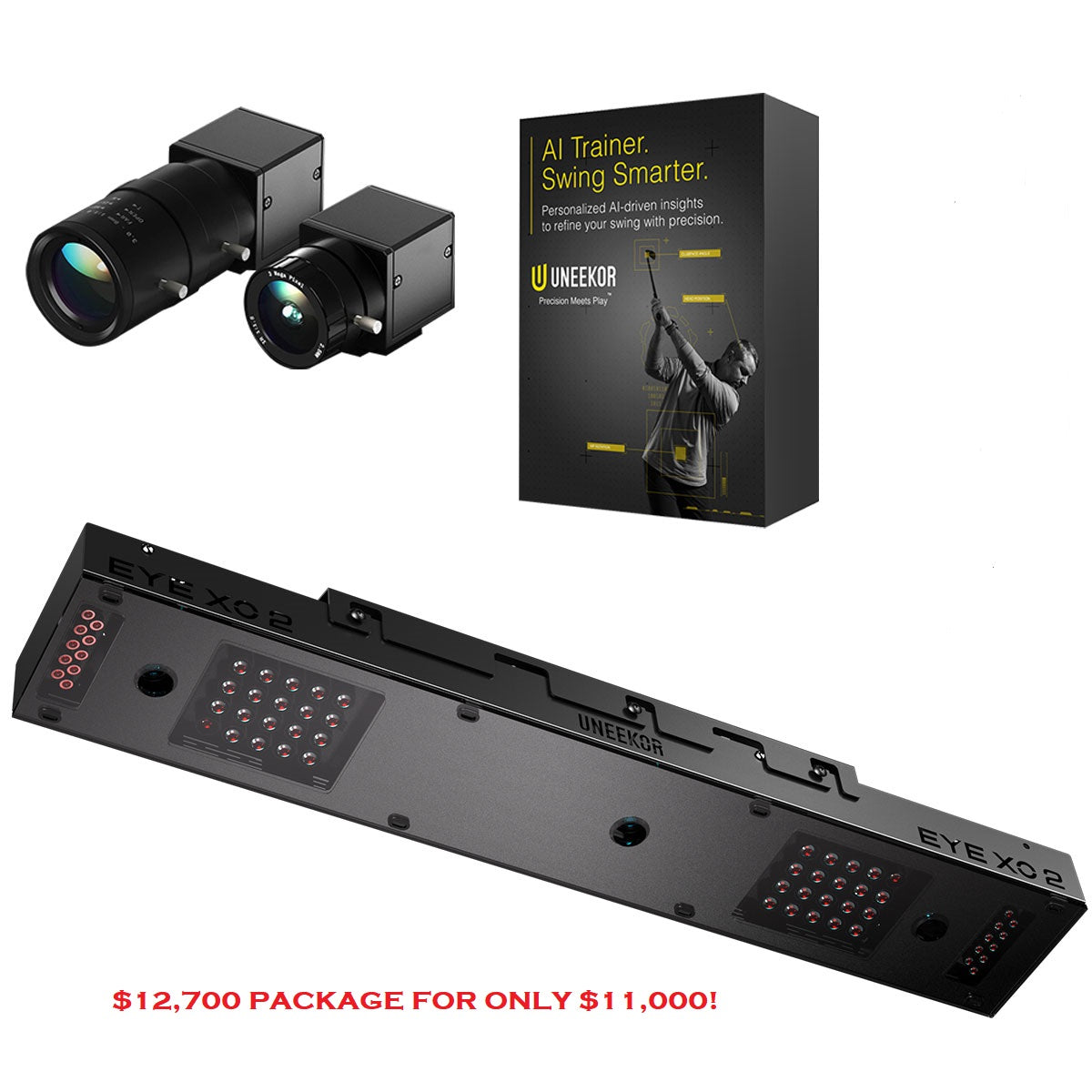
Uneekor EYE XO2 vs Foresight GC3: ceiling or floor?
About $4,000 separates them, but they're not really rivals — one lives in your ceiling forever, the other sits on the floor and travels. The cheaper one is also the one with no subscription.