
Swing speed training, explained: distance stopped being something you buy
MyGolfSpy's 2026 Most Wanted test hit 20,580 shots with 42 drivers and found the gaps between them are tiny. The gap between swing speeds is enormous — and overspeed training is the one proven way to move yours. Here's how speed sticks actually work, what they cost you in time, and who should skip them.
By Dan Mercer · Editor
 Explained
MyGolfSpy hit 20,580 shots with 42 drivers for its 2026 Most Wanted test, and the most expensive lesson in the data is how little separates them. The TaylorMade Qi4D took the consistency crown, the Callaway Quantum Max led its speed category for overall performance and forgiveness — and the yardage gaps between the podium and the pack are the kind you need a spreadsheet to see. Meanwhile the gap between a 90 mph swing and a 100 mph swing is worth more carry than any driver release this decade. Distance stopped being something you buy a while ago. It became something you train.
Overspeed training — the speed-stick protocols you've seen all over golf social media — is the one training method with a genuine track record for moving that number. It's not a gadget purchase, though. It's a fitness programme wearing a golf costume, and whether it works for you comes down almost entirely to whether you'll actually do it. Here's the honest version.
Why swinging something lighter makes you faster
The principle is borrowed from sprint and throwing sports: swing implements lighter than your driver at absolute maximum intent, and your nervous system gradually recalibrates what 'full speed' means. Your brain governs your swing speed conservatively — it holds you to a pace it trusts. Repeatedly moving something light faster than your normal ceiling teaches the motor system that a quicker pattern is safe and available, and some of that new speed transfers to the club that matters. Heavier sticks in the same session add a strength stimulus and keep the pattern honest. This is neuromuscular adaptation, not swing theory — you're not learning a new move, you're raising the rev limiter on the one you have.
What the numbers really say
SuperSpeed's own protocols claim gains in the region of five per cent of clubhead speed over weeks of consistent work. Treat that with the scepticism any company number deserves: independent results vary, some golfers gain much less, and the gains follow the same rule as gym strength — stop training and they fade. Detraining is real, which is why the honest pitch is a standing habit, not a six-week miracle. Still, even a conservative outcome matters. Three or four mph of clubhead speed is roughly eight to ten yards of carry, which is more than the gap between most of those 42 drivers — a point our breakdown of where driver distance actually comes from makes at length.
The kit, from full protocol to warm-up whip
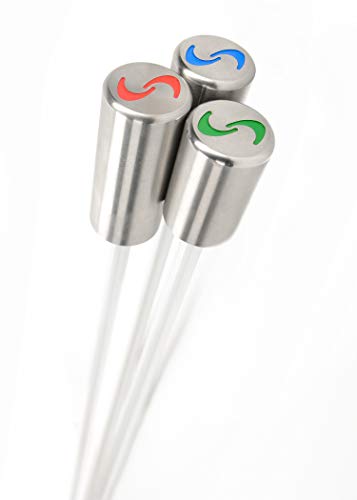
The SuperSpeed Training System is the default: three weighted sticks — two lighter than your driver, one heavier — with free app-guided protocols, and tour names like Padraig Harrington attached to it. It's the most established version of the method, and the structure is the real product; the sticks are just calibrated weights.
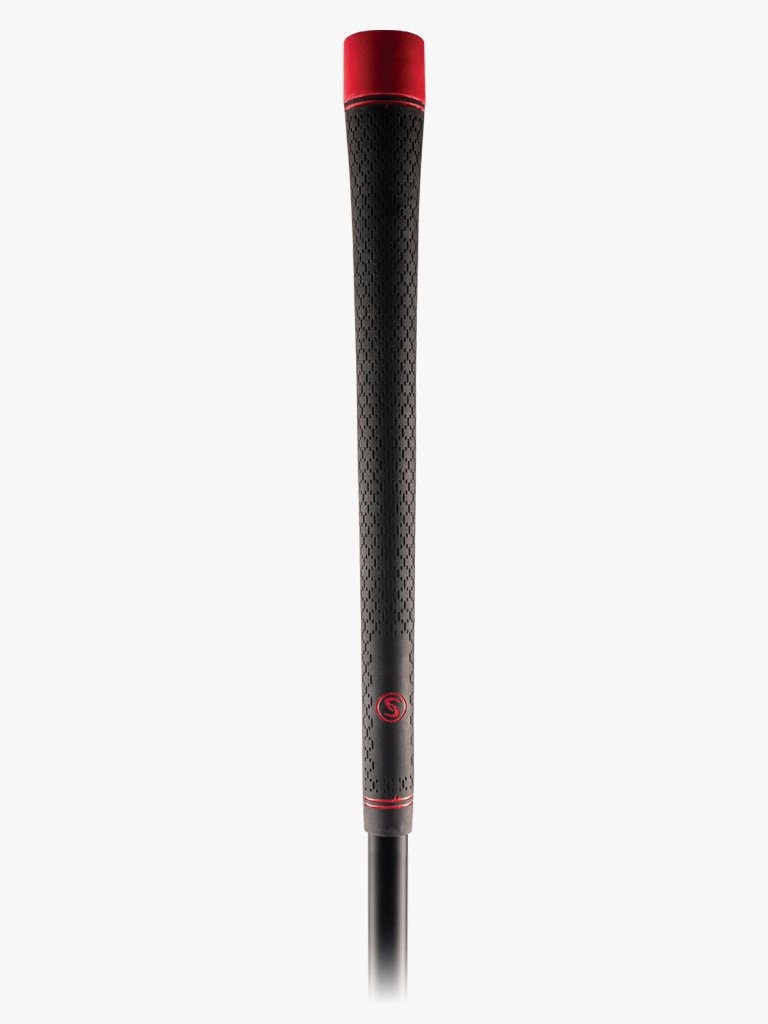
The Rypstick compresses the same idea into one adjustable shaft with eight weight settings and guided 15-minute workouts — the tidy-garage option, though you'll want a radar or launch monitor to actually track your mph. The SuperSpeed C counterweight is a different animal: a single counterbalanced club that shifts mass behind your hands to train release speed. It's an add-on for players who've plateaued on a standard set, and close to pointless as a first purchase.
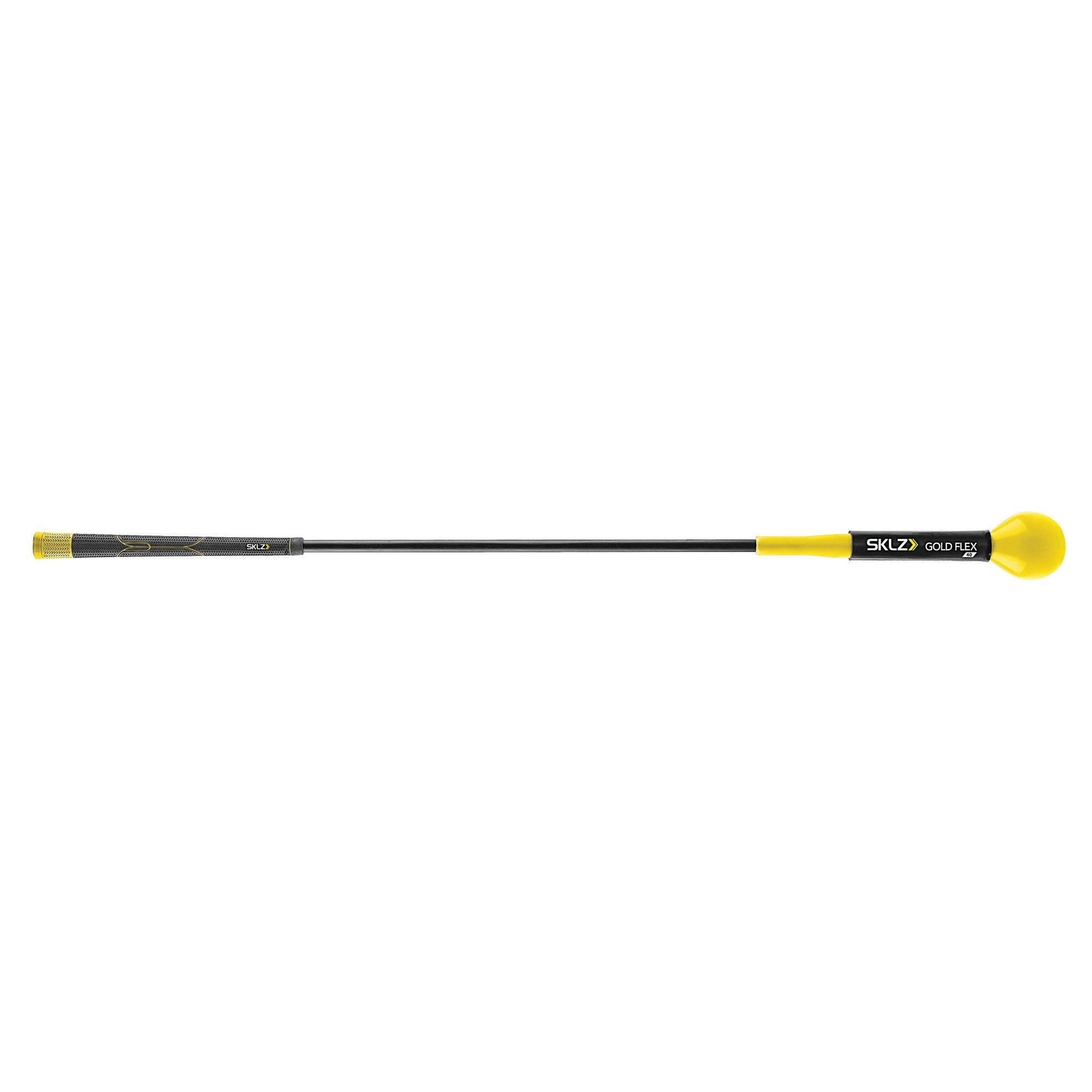
And the SKLZ Gold Flex isn't overspeed training at all — it's a weighted, whippy tempo-and-flexibility stick that makes a superb warm-up and an honest first step for a fraction of the cost. Know which one you're buying.
What it actually asks of you
Less glamorous than the social clips suggest. A typical protocol session is a structured set of maximum-intent swings with each stick — dominant side and non-dominant side, standing and sometimes kneeling or step-changing to vary the pattern — with full recovery between sets, because the whole point is quality of speed, not volume of effort. Tired swings train slowness. The non-dominant work feels absurd the first week and turns out to matter: it balances the load on your body and, per the companies' own reasoning, helps the nervous system generalise the new speed rather than grooving a one-sided heave. Fifteen minutes, done properly, is genuinely enough.
Every credible protocol asks for roughly three sessions a week, fifteen-odd minutes each, sustained for months. Not days — months. Gains typically show early and then arrive in slow instalments, and they stay only as long as the habit does. That's the whole economics of speed training: the sticks are a modest one-off cost, but the programme is a recurring payment made in Tuesday evenings. Budget for the time the way you'd budget for the gear, because the gear without the time is a coat rack. It's worth measuring, too — a cheap radar or launch monitor turns the programme from an act of faith into a scoreboard, and golfers who can see the number climb are the ones still swinging sticks in October.
Injury common sense
Swinging at genuine maximum intent is a physical stress your body may not be used to, so treat it like the workout it is. Warm up properly before every session — the swings should never be the warm-up. Build volume gradually, stop at sharp pain rather than pushing through it, and if you're a senior or carry a back, shoulder or elbow history, start with lighter loads and fewer reps and progress slower than the app suggests. The protocols work on the same timeline either way; the only schedule that matters is the one you can repeat without breaking yourself.
Who gains most — and who should skip it
The biggest winners are the golfers furthest from their physical ceiling: slower-swing players and seniors, for whom a few recovered mph is the difference between a hybrid and a nine-iron into the green. Juniors and naturally quick players tend to see smaller percentage gains because there's less headroom. Who should skip it: anyone who won't do it consistently — an unused speed stick is the most common speed stick in golf, and if you already know your training habits, believe them. Skip it too if you currently spray your driver; speed multiplies your miss as happily as your best strike. If you're in, start with our best swing speed trainers guide and the wider training hub — and give it a season, not a fortnight.
Products mentioned in this article
SuperSpeed Golf
SuperSpeed Golf Training System (3-Stick Set)
The original three-stick overspeed set with the most established protocols — the default starting point.
RYP Golf
Rypstick Golf Swing Speed Trainer
One adjustable stick, eight weight settings — the whole protocol in a single tool if you hate clutter.
SuperSpeed
SuperSpeed C Counterbalance Speed Stick
A counterweighted add-on that targets hand and release speed — for plateau-breakers, not beginners.
SKLZ
SKLZ Gold Flex Golf Swing Trainer
The budget warm-up whip: tempo, flexibility and a proper pre-round loosen — not a speed protocol on its own.
ifrothgolf earns a commission on purchases made through these links, at no extra cost to you. It never changes what I recommend. Full disclosure.
Frequently asked
- Do speed sticks actually increase swing speed?
- Yes, when the protocols are followed consistently. Swinging lighter-than-normal implements at maximum intent retrains the nervous system to allow a faster motion. SuperSpeed's own numbers claim gains around five per cent over weeks of work; independent results vary, and the gains fade if you stop training.
- How long does swing speed training take to work?
- Plan on roughly three sessions a week of about fifteen minutes each, sustained for months. Some golfers see small early jumps within weeks, but durable gains build slowly and only persist while the habit does — detraining is real.
- Is overspeed training safe for seniors?
- Generally yes, with sensible precautions. Warm up thoroughly before every session, start with lighter loads and fewer repetitions than the standard protocol, progress gradually, and stop at any sharp pain. Seniors are also among the biggest beneficiaries, since they typically have the most recoverable speed.
- How many yards is one mph of clubhead speed worth?
- As a rule of thumb, one mph of clubhead speed is worth roughly two and a half to three yards of carry with the driver. A three to four mph gain — a realistic outcome from consistent overspeed training — is therefore worth more distance than upgrading between most current drivers.
- Do I need the full three-stick set or just one trainer?
- The three-stick systems and single adjustable trainers like the Rypstick run the same style of protocol, so either works as a starting point. Counterweighted sticks are add-ons for experienced speed trainers, and weighted warm-up whips build tempo and flexibility rather than raw speed.
Read next
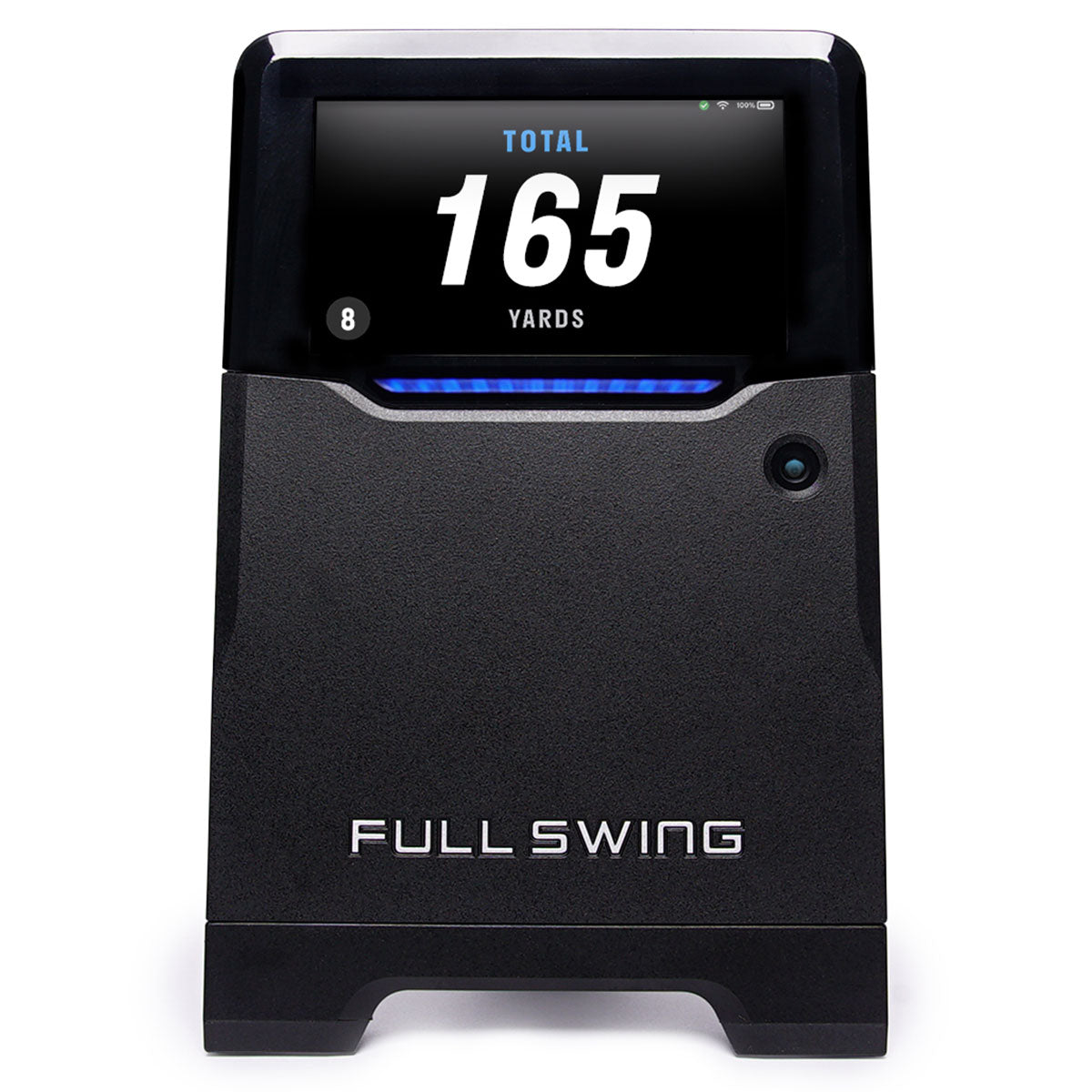
Review
7.9/10Full Swing KIT review: the tape measure decides this, not Tiger
Tour pedigree, TGL on ESPN, and radar good enough to be checked against a Trackman outdoors. It also wants eighteen to twenty feet of room, which rules out most of the garages people buy it for.
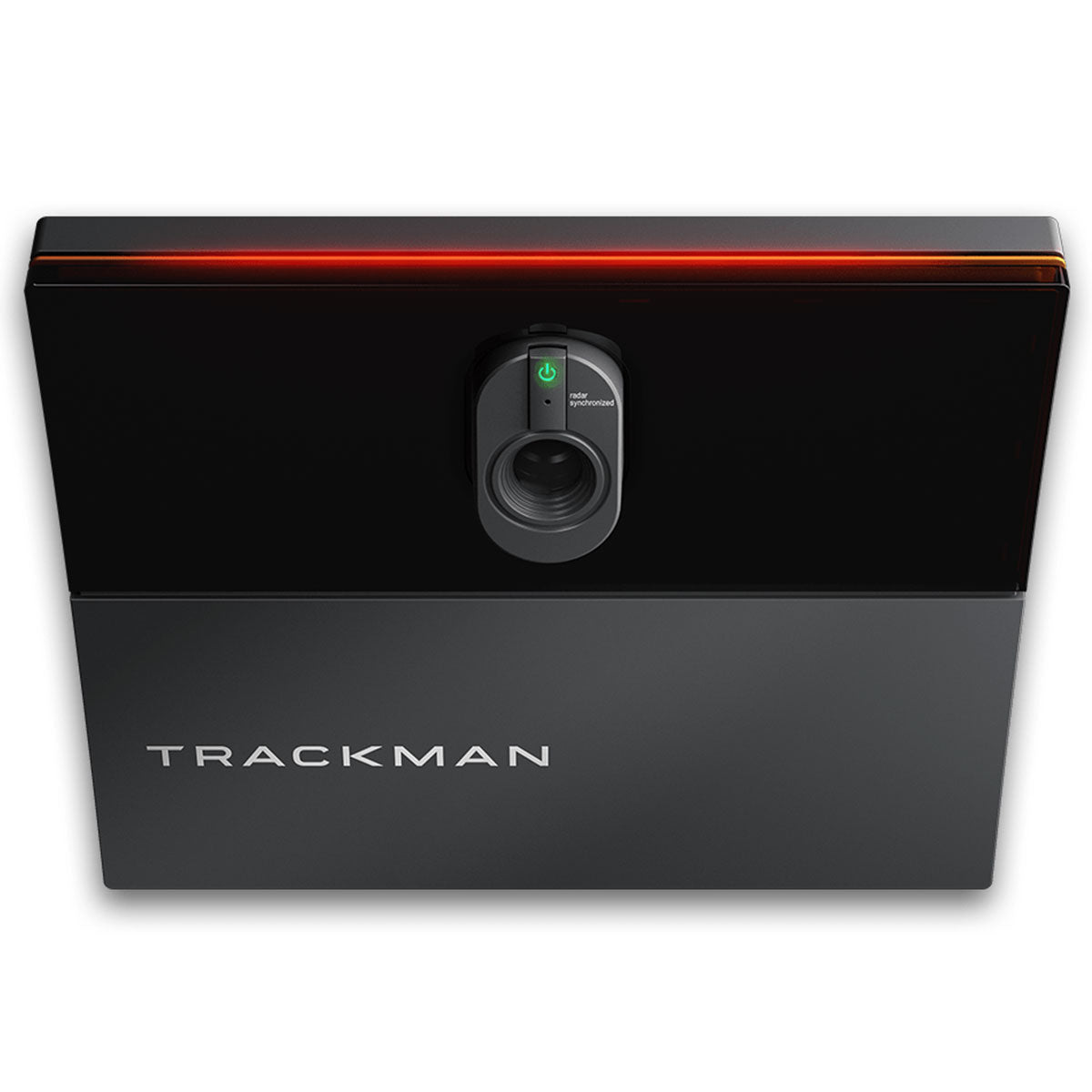
Versus
Trackman iO vs Uneekor EYE XO2: the year-one trap
Both mount overhead, both want ten feet of ceiling, and about $3,000 separates them on the shelf. Then Trackman's included first year runs out, and the gap starts growing by $1,100 a year.
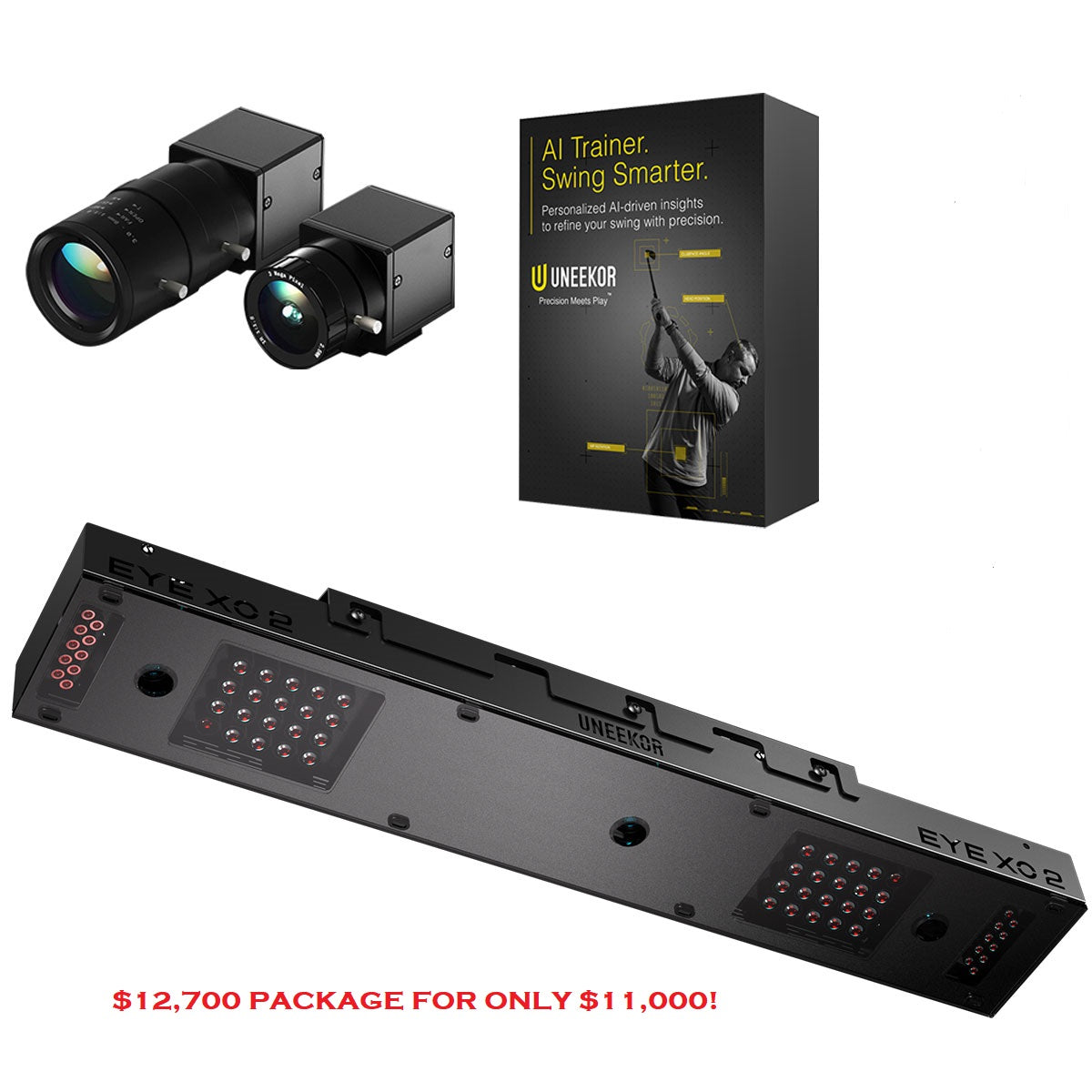
Versus
Uneekor EYE XO2 vs Foresight GC3: ceiling or floor?
About $4,000 separates them, but they're not really rivals — one lives in your ceiling forever, the other sits on the floor and travels. The cheaper one is also the one with no subscription.