
adidas Tour360 24 Spikeless vs Nike Air Zoom Infinity Tour NEXT%: a tour chassis against a running platform
Both are spikeless, both are waterproof, both are last-generation shoes selling at end-of-line money. What is underneath them was designed by people solving opposite problems, and that is the entire decision.
By Ross Hamilton · Staff Writer
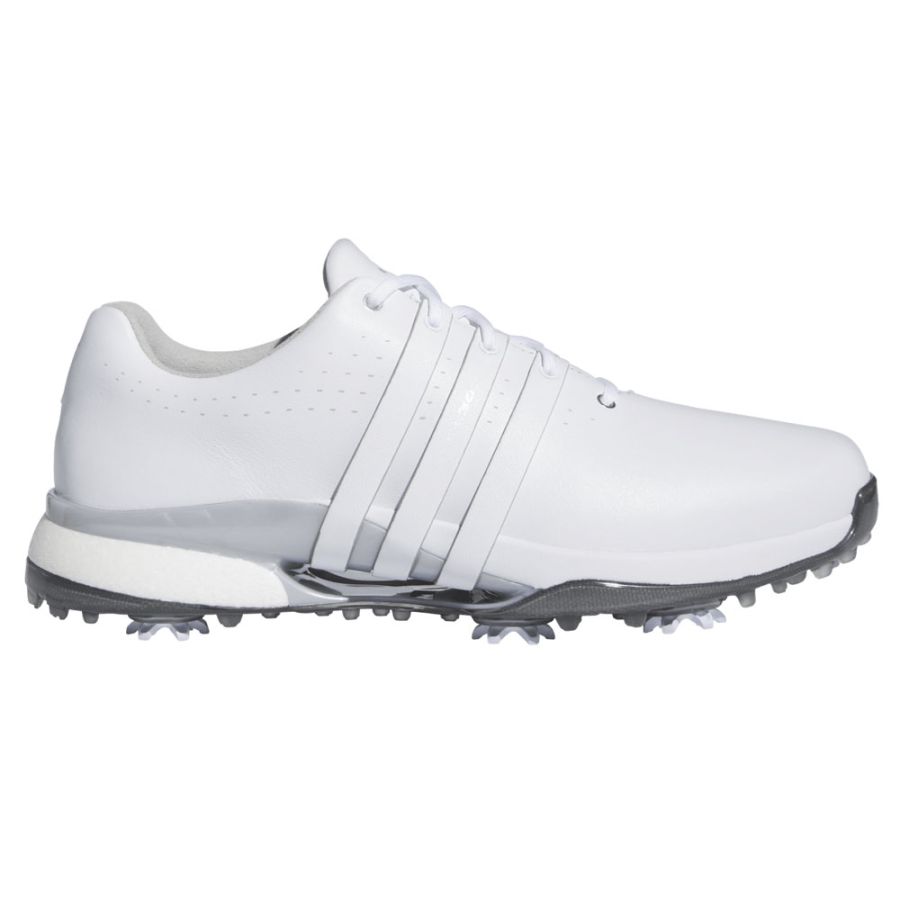
adidas
adidas Tour360 24 Spikeless
The flagship tour chassis with the cleats removed: Torsion Bridge, 360Wrap and waterproof leather over a lugged spikeless sole.
Nike
Air Zoom Infinity Tour NEXT% Spikeless
A running platform under a golf outsole: twin Air Zoom units, mesh upper, waterproof skin, and the lighter walk of the two.
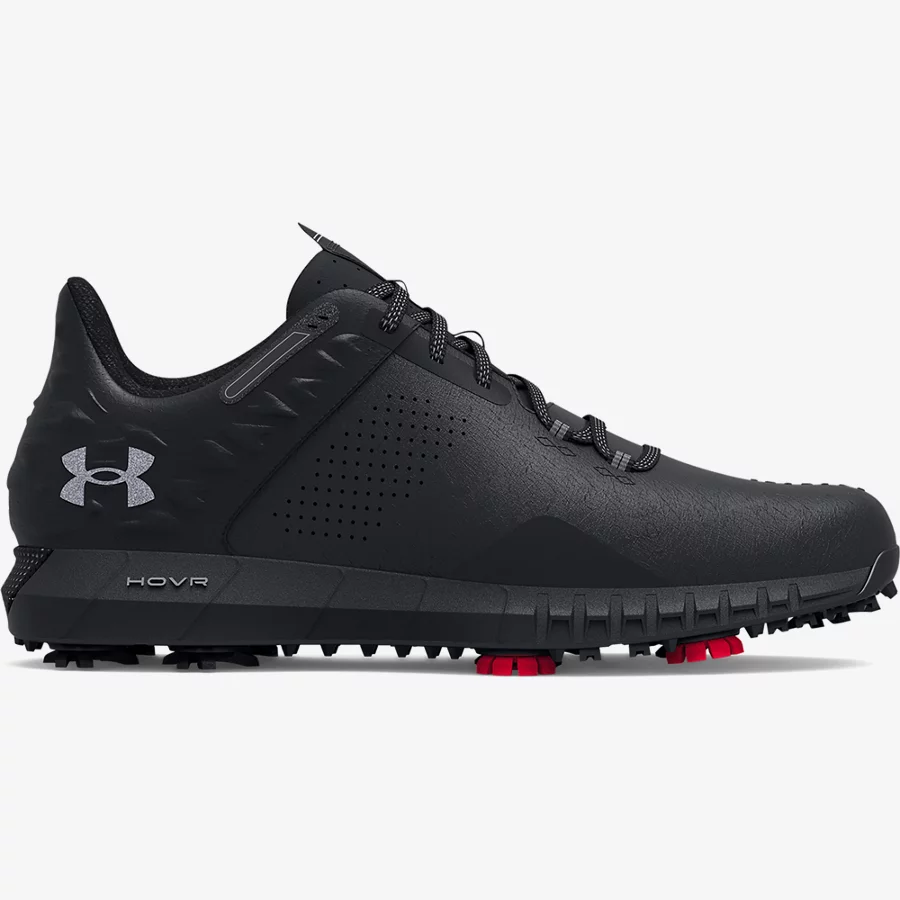
Under Armour
Under Armour HOVR Drive 2 Wide (E)
Where to start instead if you already know you need an E fitting, and it takes spikes.
ifrothgolf earns a commission on purchases made through these links, at no extra cost to you. It never changes what I recommend. Full disclosure.
Part of our guide toBest Spikeless Golf Shoes 2026Buy the adidas Tour360 24 Spikeless if you need the shoe to hold still while you swing at it. Buy the Nike Air Zoom Infinity Tour NEXT% Spikeless if the part of the round that hurts is the last four holes. That is the decision, it is not close for most people once they have read the two sentences above honestly, and almost none of it has anything to do with the specs printed on the box.
Worth clearing one thing out of the way first, because it is where most autumn shoe writing stops and it is not useful here. Both of these are waterproof, both carry a manufacturer's guarantee behind that, and neither is going to let water in this season. Waterproofing is a tick, not a tiebreaker, and we have already argued at length that the ground is what changes in autumn, not the sky. What separates these two is structural, and it starts under the foot.
One is a tour shoe with the cleats taken off
The Tour360 is adidas's flagship, the shoe its tour staff actually wear, and the spikeless version is not a watered-down cousin of it. It is the same chassis. You get the 360Wrap lacing that pulls the upper around the midfoot and kills heel slip, the Torsion Bridge linking forefoot to heel so the platform does not twist when you load into the ground, a Lightstrike midsole, and a waterproof leather upper rather than a knit. Only the contact patch changed: instead of replaceable cleats there is a lugged, multi-directional spikeless outsole.
The result is a shoe that feels like equipment. It is firm, it is held, and it resists. Around $180, and adidas built it to be swung in hard rather than strolled about in, which is exactly what you want if your miss arrives because the ground underneath you moved first.
The other is a running shoe that found a golf outsole
Nike came at the same brief from the opposite end. The Air Zoom Infinity Tour NEXT% Spikeless is built on two Nike Air Zoom units, one in the heel and one in the forefoot, which is running-shoe cushioning technology doing running-shoe work. The upper is light, breathable mesh with leather overlays and a waterproof skin over the top, the outsole is a moulded rubber pattern derived from the cleated tour version, and the whole silhouette is unapologetically a trainer.
It is the more pleasant shoe to spend five hours in and it is not a close-run thing. It also runs wider than the original Infinity Tour, which matters more than the marketing makes it sound. At around $170 list and usually a good deal less than that on the shelf, it is the cheaper of the two as well.
The decision is which part of your round is failing
Here is the useful way to choose, and it needs no spec sheet at all. Think about the shots that go wrong and where in the round they happen.
If the bad ones are slope-related, if you have felt the back foot travel an inch further than you asked it to on a downhill lie, if you tend to swing hard and your ball flight goes sideways rather than short, the adidas is the shoe. A braced platform is not a comfort feature. It is the thing that stops your lower half arriving somewhere your swing did not plan for.
If the bad ones are fatigue-related, if you are fine at the twelfth and hacking it about by the sixteenth, if you walk 18 and your feet are the reason you stopped enjoying the back nine, the Nike is the shoe. Cushioning is a back-nine spec and nobody sells it that way.
The two genuinely trade against each other, which is why this is a real decision rather than a ranking. A softer, taller stack of foam under your foot compresses and moves under a fast transition. A stiff, braced chassis does not move, and it is also the less pleasant thing to walk 36 holes in. There is no shoe that maximises both, and anyone telling you otherwise is describing a midsole they have not walked far enough in.
The limit both of them share
Neither of these takes a replaceable cleat, and that is the honest catch on the whole spikeless category rather than a knock on either shoe. Moulded traction is a consumable you cannot restock. When the lugs round off, the shoe is finished as a wet-ground shoe, and it happens long before the upper looks tired, which is exactly why spikeless outsoles lose their grip while still looking new.
Run a thumb across the lugs before you buy anything at all. If the edges on your current pair still bite, you do not need either of these yet and the money is better spent elsewhere.
Stock, sizing and one listing trap
Both are previous-generation shoes, which is the reason to look at them now: the discounts are real and they are what makes either a smart buy rather than a compromise. It also means stock thins as the season goes, and the adidas is further along that curve than the Nike.
The listing trap is specific and it catches people every year. The Tour360 24 exists as both a cleated and a spikeless shoe under almost the same product name, and the photographs on a third-party listing are not always the version in the box. Read the outsole description before you pay, not after.
On sizing, the Nike is the more forgiving of the two and runs roughly true. The adidas is a lockdown-first shoe and fits like one.
Who should buy neither
Three groups, and the first is the biggest.
Anyone whose winter golf is on heavy parkland from November onwards. Both of these are excellent September and October shoes and compromised January ones, because moulded lugs pack with mud and a soft, deformed surface wants something that bites into it. Buy a cleated shoe for those months and keep the spikeless pair for the shoulder season.
Anyone who already knows they need a wide fitting. Do not buy a standard last and hope it runs generous, because a shoe that is wrong across the joint of your big toe cannot be fixed by any outsole pattern or any midsole. Start instead from something built on a wide last, like the Under Armour HOVR Drive 2 Wide (E), which is also spiked and therefore solves the November problem at the same time. We went through it properly in our HOVR Drive 2 Wide review.
And anyone whose current spikeless shoe is under a year old with sharp lugs. Clean it with a brush and reassess in a month.
What I would buy
For a golfer who swings hard on undulating parkland and plays most weekends through the shoulder season, the adidas, and I would not agonise over it. The chassis is the thing you cannot add later, and a spikeless shoe that holds the platform is a genuinely rare object.
For a golfer who walks a flat, well-drained course, plays for the day out as much as the score, and wants one pair that goes from the car park to the pub without a change, the Nike, and it costs less. Two good shoes, two different problems, and the mistake is picking on the badge rather than on which of those two sentences is about you.
Frequently asked
- Is the adidas Tour360 24 Spikeless the same shoe as the cleated Tour360 24?
- It uses the same chassis, including the 360Wrap lacing, the Torsion Bridge and the waterproof leather upper, but the outsole is different. The spikeless version has moulded lugs instead of replaceable cleats. They are listed under almost identical names, so check the outsole description before ordering.
- Which of these two is better for walking 18 holes?
- The Nike. It is built on two Air Zoom cushioning units with a mesh upper, so it is lighter and softer underfoot than the adidas, which prioritises a firm, braced platform. Cushioning shows up in the last few holes rather than the first few.
- Can either of these be used for winter golf?
- On courses that drain and stay firm, yes, all year. On heavy parkland from November onwards, no. Moulded spikeless lugs pack with mud and cannot bite into ground that deforms under load, and neither shoe takes a replaceable cleat, so a spiked shoe is the correct tool for those months.
- Do either of these come in a wide fitting?
- Neither is built on a dedicated wide last, although the Nike runs wider than the original Infinity Tour it replaced. Anyone who already knows they need an E fitting should buy a shoe designed on a wide last rather than hoping a standard one runs generous, because fit problems cannot be solved by cushioning or traction.
Read next
Review
8.0/10Skechers GO GOLF Elite 6 review: is 'most comfortable shoe in golf' enough?
Skechers keeps winning the comfort argument on golf shoes. Whether that's the shoe you should buy depends entirely on how — and where — you play.
Review
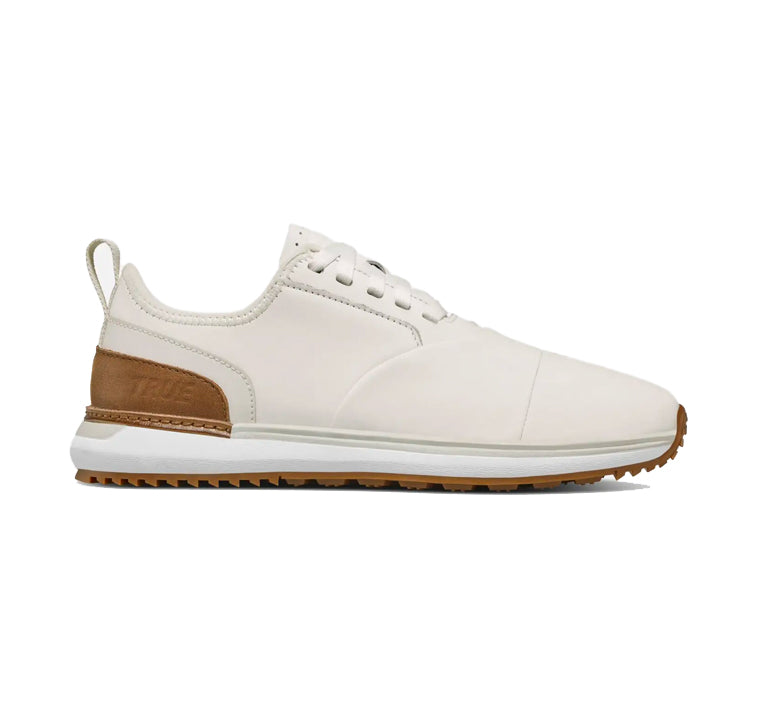
8.4/10TRUE Linkswear LUX Pro review: the cult walking shoe that plays 18 then goes to the pub
A premium leather spikeless shoe built around walking comfort rather than a tour athlete's swing — for the golfer who walks and hates changing shoes afterwards, it's a revelation.
Opinion
Golf shoes stopped looking like golf shoes — and got better for it
The saddle-shoe uniform is dead. The best-selling golf shoes of 2026 look like running shoes and lifestyle sneakers, the upstarts that forced the change came from cricket and the minimalist-comfort school, and the real spec now is whether you can wear them home. That's progress, not decline.