
Arccos Air vs Shot Scope V5: the subscription decides this one too
Both track every shot you hit and tell you where your strokes go. One asks for a payment every year forever, and over five seasons that gap is bigger than the hardware.
By Tom Whitaker · Staff Writer
ifrothgolf earns a commission on purchases made through these links, at no extra cost to you. It never changes what I recommend. Full disclosure.
Part of our guide toRangefinders, GPS & TrackersShot tracking is the rare piece of golf technology that reliably changes behaviour. Golfers who track discover that their approach play is worse than they thought and their putting better, and start practising the thing that's actually costing them. That's worth more than most equipment.
The two dominant approaches solve it differently, and the honest comparison is less about features than about what you'll have paid by 2031.
What they share
Both record every shot, both build a strokes-gained style picture of your game, both give you real club distances rather than the ones you tell your friends. Both are accurate enough that the data is trustworthy.
Both also depend on the same thing: playing enough rounds for the data to mean anything. Twenty rounds is where the picture stabilises. If you play eight times a year, neither is worth buying yet, and that's the first honest filter.
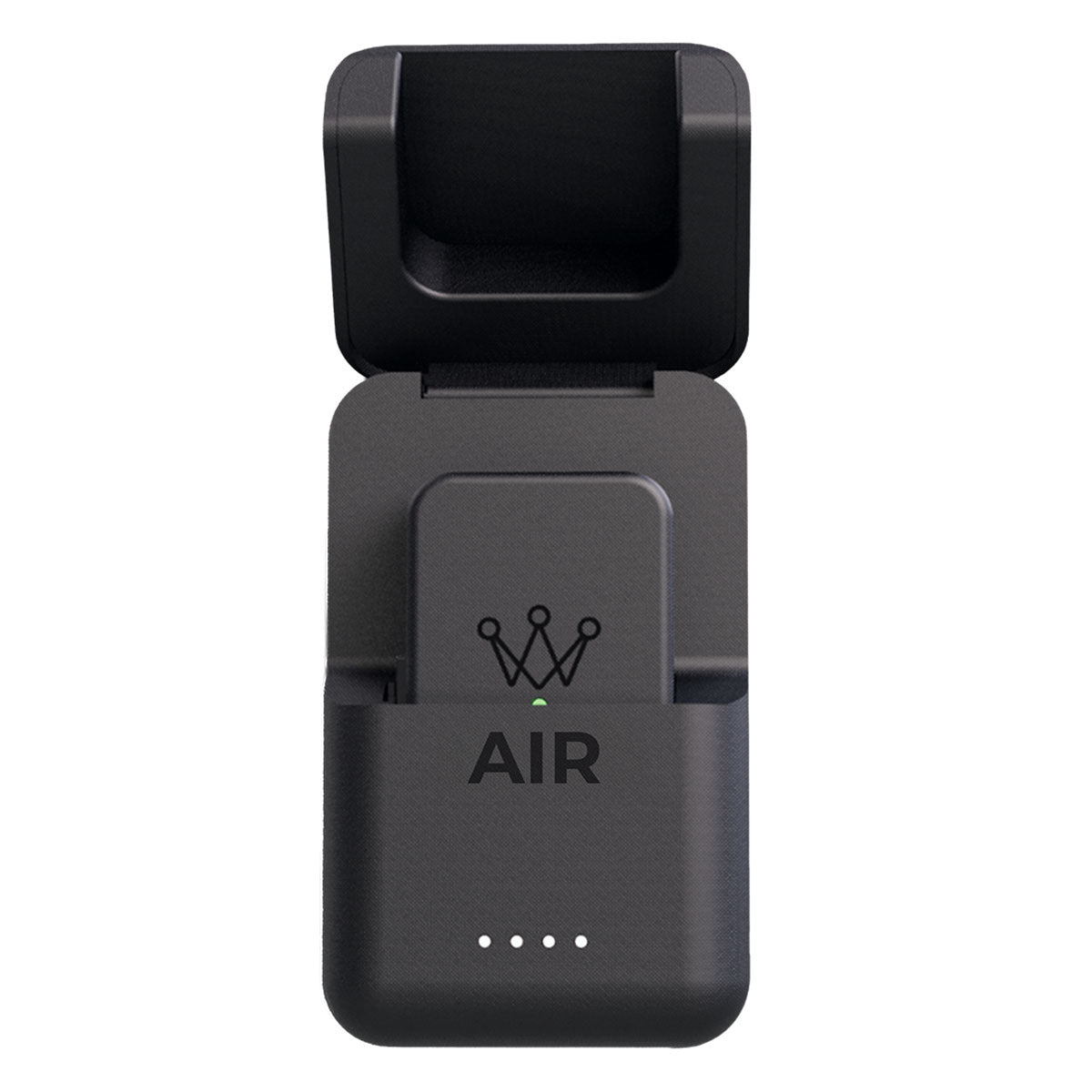
The Arccos case
Arccos's strength is the completeness of its automatic tracking and the maturity of its analytics. It's been at this longest, the data model is the most developed, and the caddie-style recommendations are genuinely useful once it knows your game.
The Air is the simplified route — less kit to attach and remember than screwing sensors into fourteen grips, which matters because the most common failure mode for shot trackers is the golfer forgetting a piece and giving up.
The cost is the model. Arccos is a subscription, and it doesn't stop. That's a defensible way to fund continuous software development, and it's also a permanent line item on a hobby that already has several.
The Shot Scope case
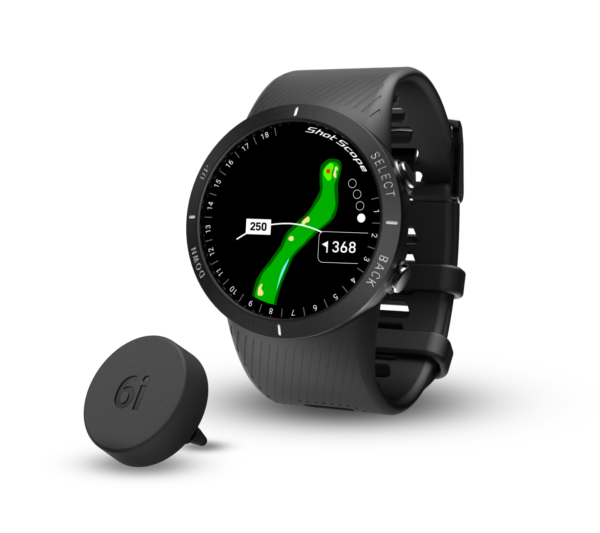
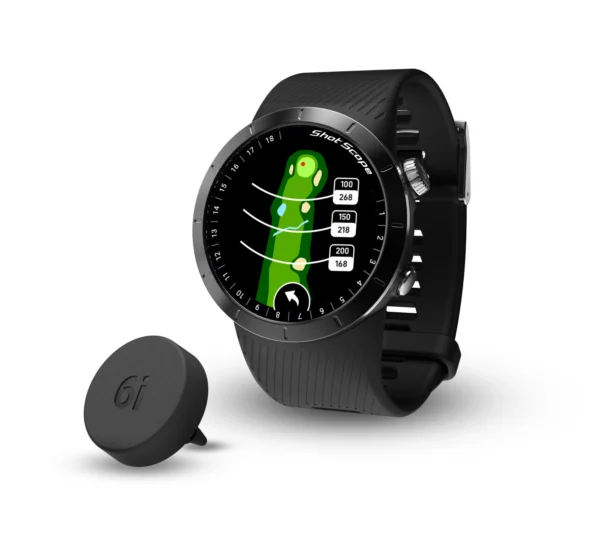
Shot Scope's proposition has been consistent for years: buy it once, no subscription. The V5 combines a GPS watch with automatic shot tracking, and the analytics are good rather than best-in-class.
That's the whole argument and it's a strong one. Over five years the difference between a one-off purchase and an annual subscription is substantial — enough to be a driver, a fitting, or a decent chunk of a season's golf. And unlike a lot of no-subscription claims, Shot Scope has actually held the line on it.
What you give up is analytical depth and polish. Arccos's insights are more sophisticated and its app is better. If you're the sort of golfer who'll genuinely dig into the numbers, that gap is real.
The question that decides it
Not which app is nicer. How long will you use this?
If the honest answer is a season or two — you want to find out where your shots go, fix a couple of things and move on — take Arccos. Its analytics are better, the tracking is more complete, and you'll cancel before the subscription total gets uncomfortable.
If the answer is a decade — you're a data person, you'll track forever, you keep kit — take Shot Scope. You're buying the same core benefit and the cost curve is flat instead of climbing.
If you want a GPS watch anyway, Shot Scope's V5 does both jobs in one device, which quietly removes a purchase.
If you'll forget to attach anything, take the Air or the grip sensors and accept the subscription. A tracker you don't use is worse value than either.
What the data will actually tell you
Worth setting expectations, because both products are sold on insight and most golfers find the same three things:
Your driver is fine and your wedges aren't. Approach play from 100 to 150 yards is where most amateurs lose the most, and almost nobody practises it.
Your real club distances are shorter than your stated ones, usually by a club. This is the single most valuable output of either device and it costs you nothing to act on.
Your putting is better than you think. Three-putts feel catastrophic and are rarer than the feeling suggests. The strokes are going somewhere else.
None of that requires the more expensive analytics. It requires twenty tracked rounds and the willingness to believe the result.
What tracking won't fix
Both of these will tell you where your strokes go with real precision, and it is worth being clear that this is a diagnostic rather than a treatment.
The common pattern is a golfer who tracks diligently for a season, learns that they lose most strokes on approach play from 120 yards, and then continues practising exactly as before because the range has a driver mat and no target greens. The data was correct and it changed nothing.
If you buy one of these, decide in advance what you'll do with the answer. Realistically that means booking a lesson on whatever it identifies, or restructuring practice around it. Data you don't act on is an expensive hobby, and it's the most common outcome for both of these products.
The privacy question nobody asks
Both systems build a detailed record of where you play, when, and how you perform, held on someone else's servers. For most golfers that's an entirely acceptable trade for the insight, and neither company has done anything to suggest otherwise.
It's worth knowing the difference in exposure, though. A subscription model means your data lives somewhere you keep paying to access, and the practical question is what happens to your history if you stop. Check the export options before you commit to several seasons of data, because a decade of tracked rounds is genuinely valuable and you want to be able to take it with you.
The verdict
Arccos is the better software. Shot Scope is the better deal, and for most golfers the deal wins — because the insights that change your practice are the basic ones, and both products deliver those equally well.
Take Arccos if you'll use it hard and briefly. Take Shot Scope if you'll use it forever. And either way, commit to twenty rounds before drawing conclusions, because a tracker abandoned in July has told you nothing at all.
Frequently asked
- Is Shot Scope really subscription free?
- Yes — the hardware is a one-off purchase and the analytics platform doesn't charge an ongoing fee, which the company has maintained across several product generations. That's the central difference from Arccos, whose model is subscription-based.
- How many rounds before shot tracking data is useful?
- Around twenty. Below that, a couple of unusual rounds distort the averages, particularly for clubs you don't hit often. If you play fewer than ten rounds a year, neither system is worth buying yet.
- What do shot trackers usually reveal?
- Three things, consistently: approach play from roughly 100 to 150 yards is where most strokes are lost, real club distances are usually about a club shorter than golfers assume, and putting is better than it feels. The club-distance correction alone is worth the exercise.
- Do I need a GPS watch as well as a shot tracker?
- Not necessarily. Shot Scope's V5 combines both in one device, which removes a separate purchase. Arccos runs through your phone, so if you also want yardages on your wrist you'd be buying a watch on top.
Read next
Explained
Your yardages are fiction — and millions of tracked shots prove it
Ask a golfer how far he hits his 7-iron and you'll get a number. Ask a shot-tracking database and you'll get a different, shorter, truer one. The gap between the two is costing you more strokes than your swing is — and the fix costs a month of honesty, not a new set of irons.
Explained
How to get a golf handicap (and why it's cheaper and easier than you think)
You no longer need a pricey club membership or a stack of medal cards. Here's the fastest route to an official Handicap Index in 2026 — and the everyday rounds that now count towards it.
Opinion
The most useful data in golf doesn't come from a launch monitor
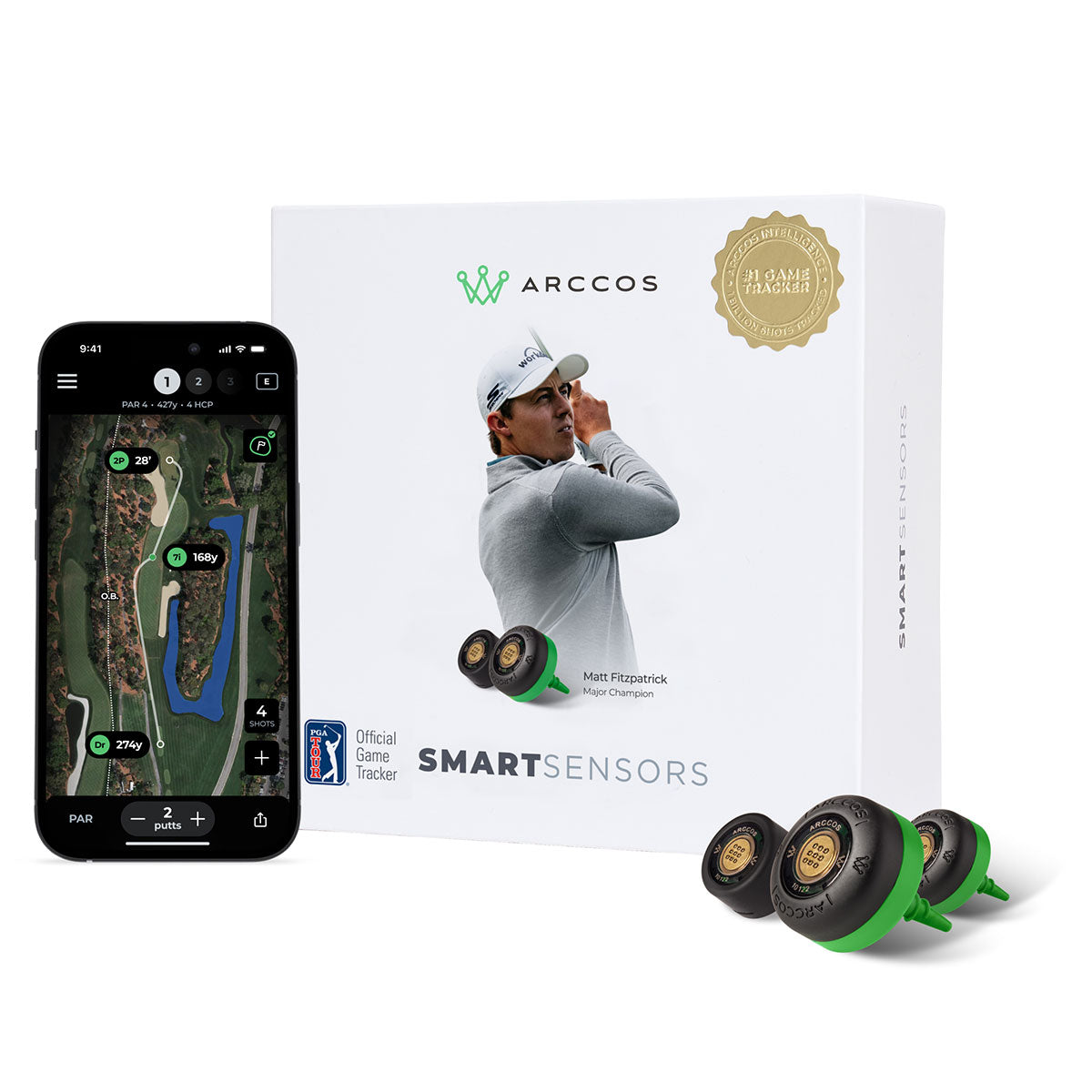
Home sims measure the shots you choose to hit, in a room with no wind, no lie and no consequences. The numbers that actually tell you where your handicap is leaking cost about $250 and screw into the end of your grips.