
Push trolley vs electric trolley: is the extra money worth it?
One asks you to push your own clubs up the hill. The other does it for you, for nearly three times the price. How to tell which one you actually need.
By Ben Marsden · Reviews Editor
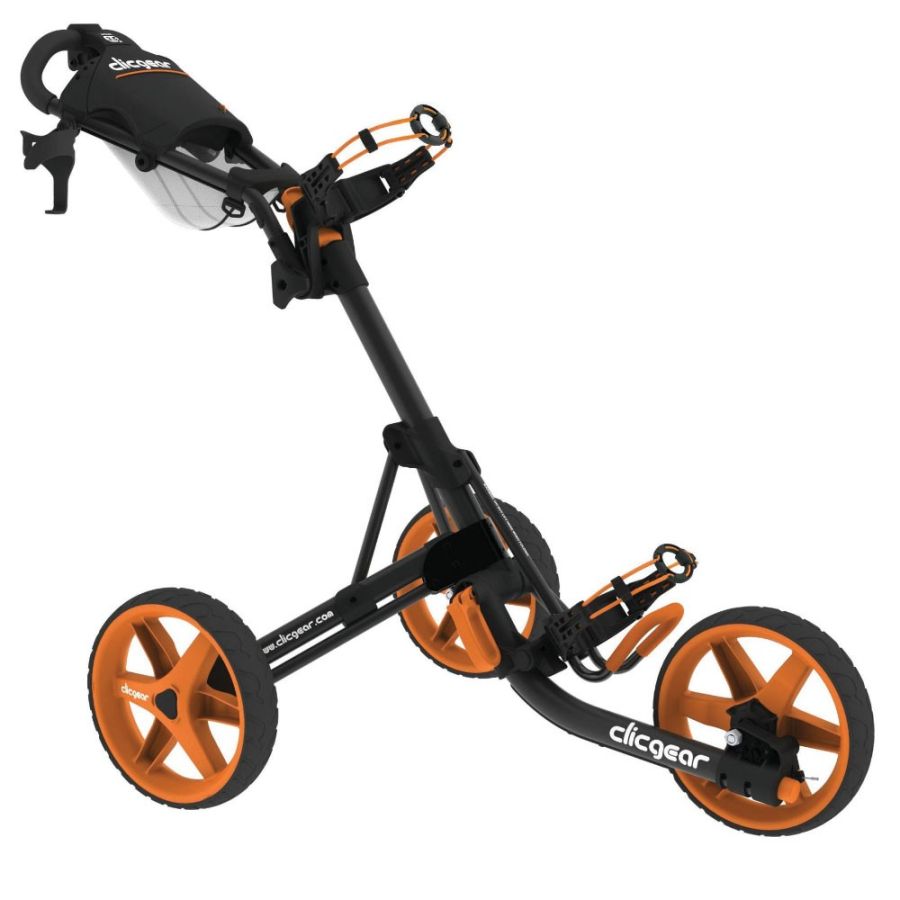
Clicgear
Clicgear 3.5+ Push Trolley
A third of the price, lasts a decade, and nothing to charge. The value answer.
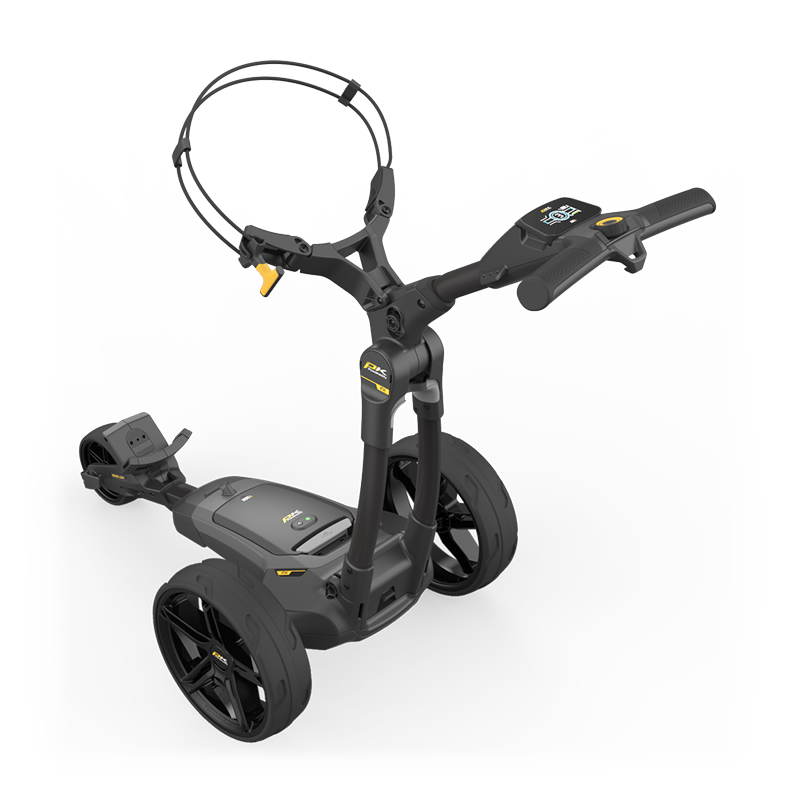
PowaKaddy
PowaKaddy FX3 Electric Trolley
Folds in one motion with the battery on. Worth it if your course goes up.
ifrothgolf earns a commission on purchases made through these links, at no extra cost to you. It never changes what I recommend. Full disclosure.
Side by side
| Specification | ClicgearClicgear 3.5+ Push Trolley | PowaKaddyPowaKaddy FX3 Electric Trolley |
|---|---|---|
| Trolley type | push (three-wheel) | electric |
| Folded size | folds to a compact cube roughly 60 x 38 x 33cm | folds roughly 20 percent smaller than older FX models |
| Features | maintenance-free airless tyres; front-wheel brake plus front-wheel alignment adjustment | quiet 30V 230W motor; 1-Click folding mechanism; MAG-LOK bag attachment with built-in bungee straps |
Specs as published by each manufacturer. Rows in grey are where the two match.
There is a hole at your course and you know exactly which one it is. The fairway tilts up and then carries on tilting, and by the time you reach the green you are breathing through your mouth and your grip pressure has gone somewhere unhelpful. That hole is the entire push-versus-electric argument. Everything else is detail.
The honest summary before we start: a good push trolley is one of the best-value purchases in golf, an electric trolley is a luxury, and that luxury is a good deal more defensible than most people who own one will admit to you.
What the money actually buys
A Clicgear 3.5+ is around $275. Aircraft-grade aluminium frame, airless tyres that never need pumping, a console with four accessory tabs, and a fold down to a cube of roughly 60 by 38 by 33cm at about 8.5kg. It is the trolley half your club already owns, and they own it because the things refuse to die.
A PowaKaddy FX3 is around $750. A 30V 230W motor does the pulling, a colour screen shows speed and battery state, and the whole thing folds in one motion with the battery still attached, which sounds like a small thing until you have wrestled an older electric trolley into a boot in the rain. The 18-hole battery is 1.8kg, it charges over USB-C, and PowaKaddy puts a five-year UK warranty on it, which tells you roughly what they think of it.
The case for pushing
It is a third of the money, and that gap buys a lot of golf. There is nothing to charge, nothing to forget and very little to break. You cannot turn up on a Saturday and discover your push trolley is on four percent. It is lighter to lift into a boot, simpler to store, and there is every chance it will still be rolling in ten years, by which time the electric one will be on its second battery.
There is also an unfashionable argument that pushing your own clubs four miles is one of the few genuinely useful bits of exercise golf still offers, and that quietly outsourcing it is a slightly odd thing to pay for. I am not going to lean on that one too hard, because I have owned both.
The case for not pushing
The real argument for electric is not laziness. It is the last four holes.
Pushing fifteen kilos of clubs up a hill costs you something, and the bill does not arrive until the 15th, when your legs are heavy and your tempo gets quick and you start steering it. If you have ever finished a round convinced the back nine got away from you for no reason you could name, this is a candidate. Whether removing that is worth roughly $475 depends entirely on your course and your body, and anyone who tells you the answer is obvious is describing themselves rather than you.
The four things that actually decide it
Hills first, and it is the big one. On a flat parkland course a push trolley is close to unbeatable value and the electric is a want rather than a need. On anything genuinely undulating the electric earns its money every single week. If your course is properly steep, look at downhill control, which is what the Motocaddy M3 GPS DHC is built around: it holds a constant speed on descents rather than dragging you down the hill behind it.
Boot space second. Both of these fold well, which is not true of the category as a whole, so check the folded dimensions against your actual car rather than against the idea of a car.
Frequency third. Once a month, push. Twice a week for the next decade, the sums look very different, and the cost per round on an electric trolley that lasts ten years is smaller than most golfers assume when they flinch at the sticker.
And your back, fourth. If you have one that complains, this stops being a luxury purchase and becomes something closer to a medical one. Stop reading and buy the electric.
What I would buy
Flat course, once a week: the Clicgear, without a second's hesitation, and I would put the difference towards lessons that will do more for my scores than any wheel ever has. Hilly course, twice a week: the FX3, and I would not feel remotely guilty about it.
The genuine error is buying an electric trolley for a flat course because it feels like the grown-up purchase, and then discovering that what you actually bought was a charging routine. The full fields are in our best push trolleys and best electric trolleys guides.
Frequently asked
- Is an electric golf trolley worth it?
- It depends almost entirely on your course. On hilly terrain, or if you play twice a week or have a back that complains, an electric trolley is worth the extra and the cost per round over its lifetime is lower than the sticker suggests. On a flat course played occasionally, a good push trolley does the same job for around a third of the money.
- How much does a good push trolley cost?
- Around $275 gets you a benchmark three-wheeler like the Clicgear 3.5+, with an aluminium frame, airless tyres and a full accessory console. Solid big-brand options start lower, from about $170, and the main things you pay more for are the fold, the frame quality and the accessory system.
- Do electric trolleys work on hilly courses?
- Yes, and hills are where they justify themselves. Look specifically for downhill control, which holds a steady speed on descents instead of letting the trolley run away from you, and consider an electronic braking system. Both are options worth having if your course is genuinely steep.
- How long do electric trolley batteries last?
- Modern lithium batteries are usually sold in 18-hole and 36-hole versions, so you pick based on whether you ever play more than a single round in a day. Manufacturers back them seriously — PowaKaddy offers a five-year UK battery warranty on the FX3 — so treat the battery as a long-term part of the purchase rather than a consumable.
Read next
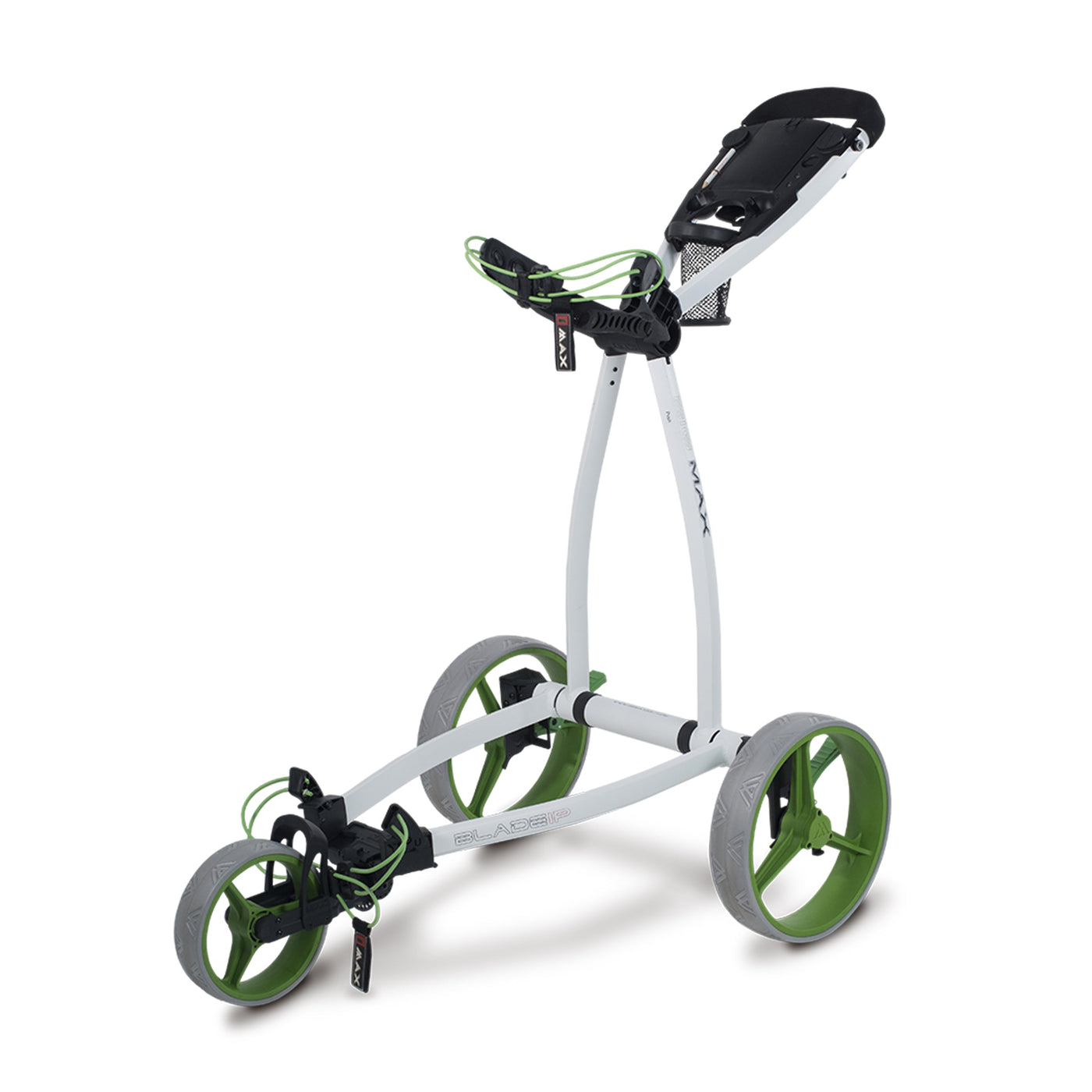
Versus
Push vs electric trolley: which is actually worth it?
One saves your back for not much money; the other saves your legs for rather more. How to spend wisely on carrying nothing.
Opinion
An electric trolley is the best money I've spent on golf
Not the clubs, not the gadgets. The thing that made me enjoy walking 18 again was the least glamorous purchase in the bag.
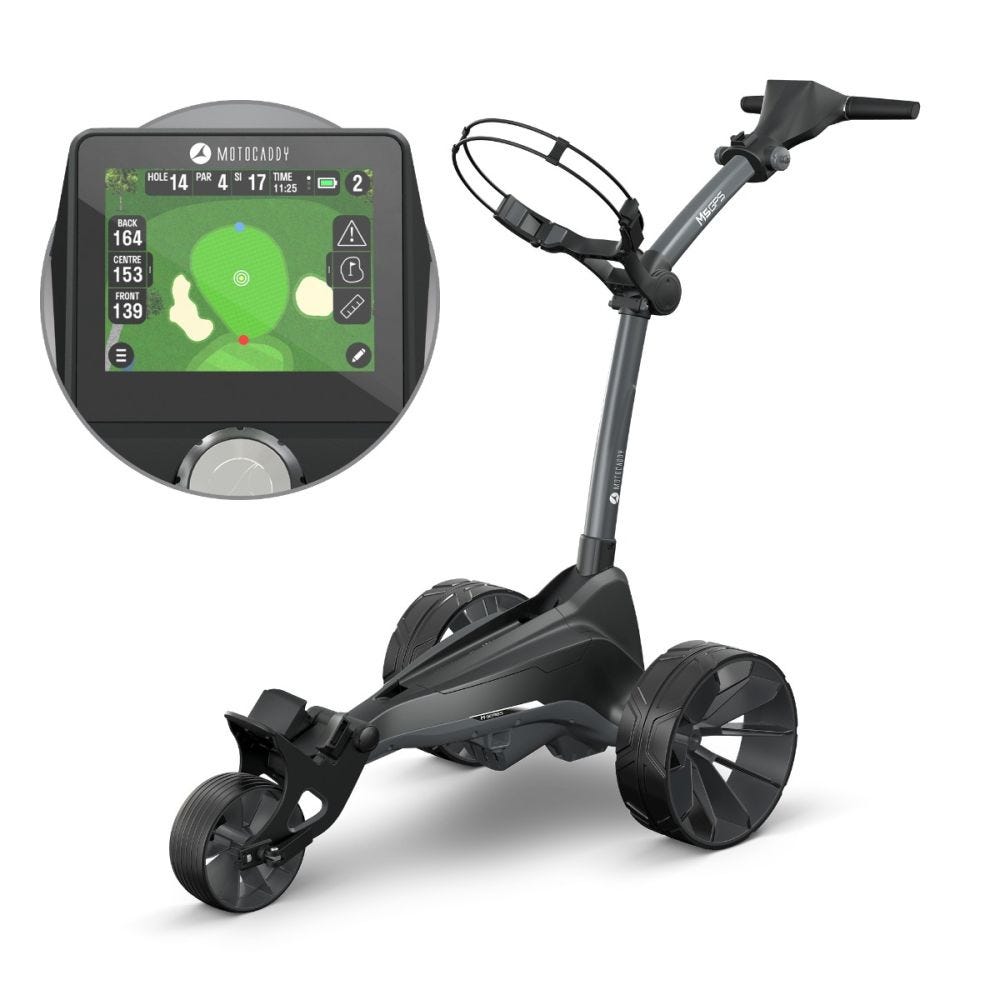
Review
8.8/10Motocaddy M5 GPS review: the electric trolley that does the thinking
GPS course maps, downhill control and a battery that shrugs off 36 holes — the do-it-all electric trolley most walkers should buy first.