
Push vs electric trolley: which is actually worth it?
One saves your back for not much money; the other saves your legs for rather more. How to spend wisely on carrying nothing.
By Jordan Hale · Equipment Writer
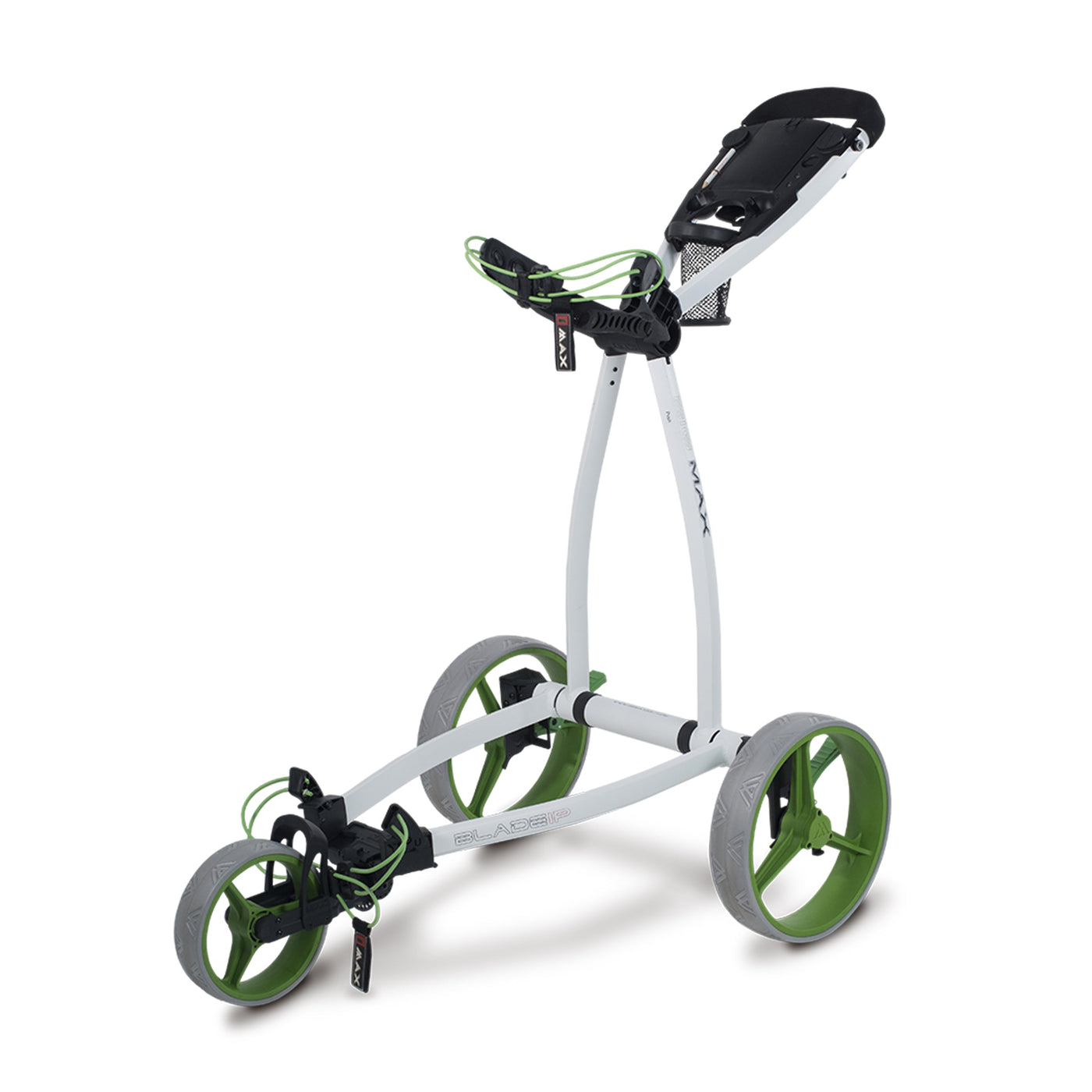
Big Max
Big Max Blade IP 2 Push Trolley
Pick for value, simplicity and a fold that swallows into any boot.
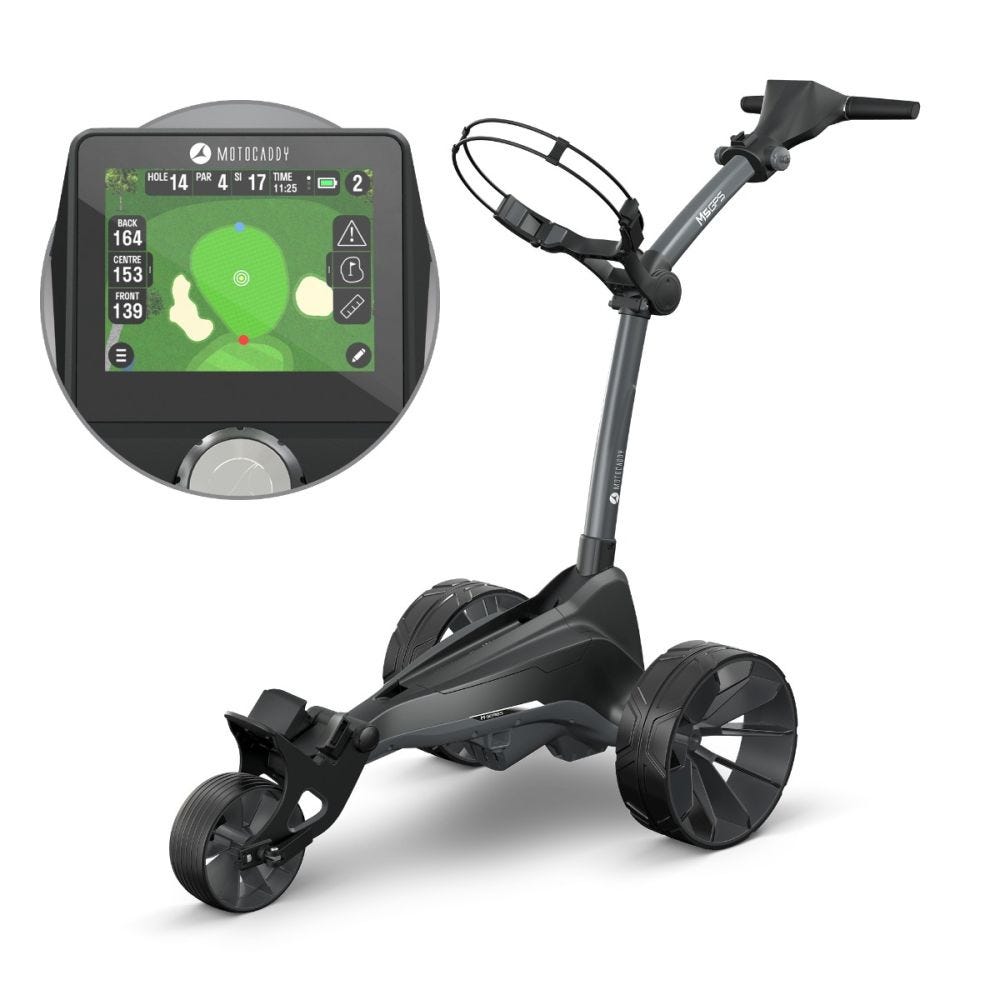
Motocaddy
Motocaddy M5 GPS Electric Trolley
Pick to genuinely save your legs — GPS, downhill control and a battery that laughs off 18.
ifrothgolf earns a commission on purchases made through these links, at no extra cost to you. It never changes what I recommend. Full disclosure.
Side by side
| Specification | Big MaxBig Max Blade IP 2 Push Trolley | MotocaddyMotocaddy M5 GPS Electric Trolley |
|---|---|---|
| Trolley type | push (two-wheel) | electric (three-wheel push-button) |
| Weight | around 6.7kg | 10.5kg |
| Folded size | flat-fold to ultra-thin pack size (slides under a bed or into a car boot) | 650 x 470 x 410mm |
| Warranty | five-year | 24-month trolley and charger, 60-month battery |
Specs as published by each manufacturer. Rows in grey are where the two match.
Flat course and a healthy back? A push trolley is the smart-money pick. Hills, a sore back, or you fade late in the round? An electric trolley earns its premium. Carrying wrecks most of us sooner than we'd admit, and a trolley of either kind fixes it — but the gap between the two is several hundred pounds, so the only question that matters is how much of the work your body can still spare over four hours.
What you're really buying
Both take the weight off your body; the difference is who supplies the push. A push trolley moves the bag off your back and shoulders and onto three wheels, but your legs still drive it round. An electric trolley does the pushing for you, so you arrive at every ball having spent almost no energy getting there. That second saving is the one golfers underrate, because it doesn't show up until the closing holes — when the energy you didn't burn hauling a bag is exactly the energy your swing and your decisions need. The honest framing isn't laziness versus virtue. It's stamina management, and whether your particular body and your particular course make that worth paying for.
Price sets the stakes. A genuinely good push trolley like the Big Max Blade IP 2 lands around $300; a do-it-all electric such as the Motocaddy M5 GPS runs to roughly $1,250 — four times the money. That gap is too big to wave away, which is why this decision deserves more thought than 'whichever looks nicer in the shop'.
The push trolley case
A push trolley takes the load off your body, folds away for the boot, never needs charging and costs a fraction of the electric option. The Blade IP 2 is a good example of how far the category has come: it uses a true flat-fold mechanism that collapses to a remarkably thin slab — thin enough to slide under a bed — rolls straight, and weighs only around 6.7kg, so lifting it in and out of the car is a non-event. On a flat or gently rolling course you still do the pushing, but that's no hardship; it keeps you moving at a good clip and, for many walkers, the light exercise is part of the appeal. The one honest trade-off with the flattest-folding designs is lateral stability: a narrow two-wheel base can feel slightly tippy on a steep sidehill lie with a heavy bag, where a wide three-wheel cart sits more planted. For most golfers on most courses, though, a push trolley is the sensible, money-smart choice, and our best push trolleys guide ranks the field.
The electric trolley case
An electric trolley is the buy if your course is hilly, your back is a genuine issue, or you simply want to arrive at the ball fresh enough to swing well on the 17th. A modern lithium unit like the M5 GPS comfortably covers 18 holes on a charge — with enough headroom for 36 if you top it up between rounds — and a quiet 230-watt motor pulls the bag along across nine speed settings while you walk beside it. The better trolleys add a GPS screen in the handle showing front, middle and back distances and full-hole maps from a library of 40,000-plus pre-loaded courses, so you can leave the watch at home. None of that lowers your handicap on paper, but arriving at the closing holes with your legs intact absolutely can — which is the broader case we make in an electric trolley is the best money I've spent. One thing to budget for if your course is properly hilly: downhill control (Motocaddy's DHC) is a separate, pricier trim rather than standard on the base M5 GPS, so factor it in if you genuinely need braking on steep descents.
Which is worth it for you
Decide on your course and your body, not the spec sheet. Flat or gently rolling course, healthy back, tight budget — push, every time; you'd be paying hundreds for a problem you don't have. Hills, a dodgy back, a dodgy hip or knee, or you reliably finish rounds cooked — the electric is worth every penny, and the saving it makes shows up precisely where your scores fall apart. The in-between case is the player on undulating terrain with a healthy back: there, a push trolley is usually still enough, and the money is better spent on lessons or a fitting. If you've already decided electric is for you, the two brands worth comparing are weighed up in Motocaddy M5 vs PowaKaddy CT8, and the full field sits in our best electric trolleys guide.
A note on the long-term sums
Don't forget the running and ownership costs, because they nudge the maths both ways. An electric trolley is a piece of consumer electronics: the lithium battery is the part that ages, though the M5 GPS carries a 60-month battery warranty and the Blade IP 2 a five-year frame warranty, so neither is a throwaway. A push trolley has essentially nothing to go wrong and nothing to charge, which is part of its appeal for the occasional or fair-weather golfer. But if you walk 36 or more holes most weeks and your body feels it, the electric's cost spread over years of fresher closing holes is easier to justify than the sticker shock suggests. Buy for how often and how hard you actually walk, not for the round you imagine playing.
Frequently asked
- Is an electric trolley worth it over a push trolley?
- If your course is hilly, your back struggles, or you tire late in rounds, yes — it saves your legs and energy for your golf. On a flat course with a healthy back, a push trolley does the job for far less.
- How much more does an electric trolley cost?
- Typically several times the price of a push trolley. The premium buys motorised pushing, downhill braking, GPS on some models and a battery that lasts a full round.
- Do push trolleys fold down small?
- Modern ones fold flat and compact enough for most car boots, need no charging, and weigh much less than electric models — a good flat-fold push cart is around 6.7kg and collapses to a thin slab. The trade-off with the flattest folders is slightly less lateral stability on steep sidehill lies.
- Does an electric trolley need downhill braking?
- Only if your course is genuinely hilly. On most layouts the speed dial handles descents fine. If you do need true downhill control, note it's often a separate, pricier trim — on Motocaddy it's the DHC version, not standard on the base M5 GPS — so budget for it.
Read next
Opinion
An electric trolley is the best money I've spent on golf
Not the clubs, not the gadgets. The thing that made me enjoy walking 18 again was the least glamorous purchase in the bag.
Review
8.8/10Motocaddy M5 GPS review: the electric trolley that does the thinking
GPS course maps, downhill control and a battery that shrugs off 36 holes — the do-it-all electric trolley most walkers should buy first.
Versus
Motocaddy M5 GPS vs PowaKaddy CT8: the electric trolley to buy
The two brands that own the fairway, head to head — it comes down to the screen, the fold and how your course slopes.