
Motocaddy M5 GPS review: the electric trolley that does the thinking
GPS course maps, downhill control and a battery that shrugs off 36 holes — the do-it-all electric trolley most walkers should buy first.
By Jordan Hale · Equipment Writer
The verdict
Excellent
What's great
- Strong lithium battery — comfortable 18, headroom for 36
- Cable-free CLICK N CONNECT battery and a quiet, smooth nine-speed motor
- Genuinely useful integrated GPS: front/mid/back and full-hole maps from 40,000+ courses
- Durable aluminium build with a long 60-month battery warranty
Watch out
- A serious four-figure outlay versus a push trolley or a non-GPS M-Series
- GPS gives hole context, not a precise number to a tucked pin
- Downhill control isn't standard — it's the dearer DHC trim
Bottom line — The electric trolley to shortlist first — it hauls the bag and gives trusted yardages in one package. Justify it with hills, a sore back, or wanting your energy for the closing holes, and budget up to DHC if your course is genuinely steep.
Motocaddy
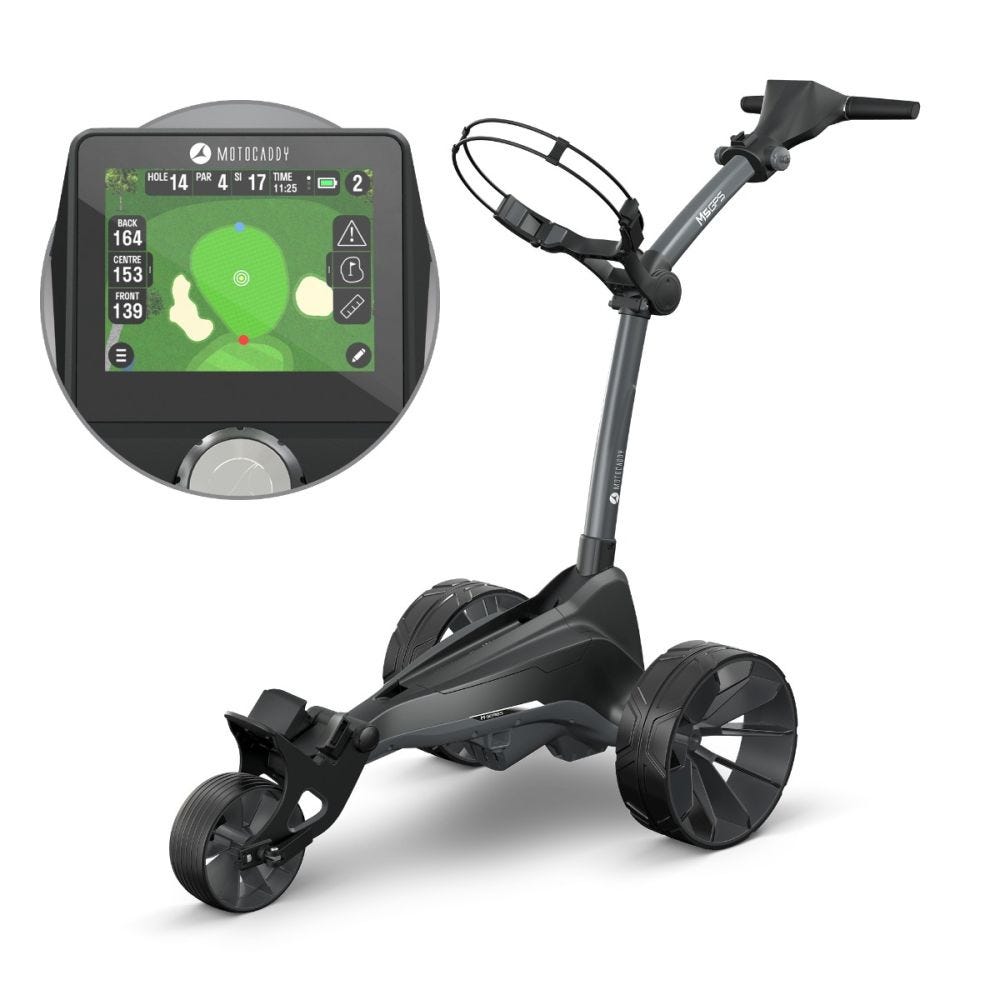
Motocaddy M5 GPS Electric Trolley
ifrothgolf earns a commission on purchases made through these links, at no extra cost to you. It never changes what I recommend. Full disclosure.
The Motocaddy M5 GPS is the electric trolley most walkers should look at first: a strong lithium battery, a genuinely useful GPS screen baked into the handle, intuitive nine-speed control and a build that lasts. It's a serious outlay at around $1,250 and plain overkill on a flat course with a healthy back. But on hills, or if your back complains or you fade late in rounds, it's transformative — and here, drawing on the spec sheet and owner-and-reviewer consensus, is what actually matters.
The boring stuff it nails
Electric trolleys live or die on battery, motor and build, and the M5 GPS handles all three with the assurance you'd hope for at this price. The CLICK N CONNECT lithium battery drops on without trailing cables and comfortably covers 18 holes, with enough headroom for 36 if you charge between rounds — battery anxiety simply isn't part of the experience the way it is on cheaper sealed-lead-acid units. The quiet 230-watt motor runs across nine speed settings on a 28-volt system, so it pulls a heavy bag up a drag without straining and idles down to a crawl on the tee box. And the aluminium frame is genuinely durable rather than flimsy-plasticky, folding to around 10.5kg in a 650 x 470 x 410mm package that drops into most boots. Motocaddy backs it with a 24-month trolley warranty and a 60-month battery warranty, which tells you how much life they expect you to get out of it.
The day-to-day handling is where a trolley quietly earns or loses your goodwill, and the M5 GPS gets the small things right. The cable-free battery is the standout: it drops on and lifts off without a trailing lead to wrestle or a port to line up, with an auto-disconnect and a pop-up charge socket, so loading the car is a ten-second job rather than a fiddle in a cold car park. The nine speed settings sound like marketing until you use them — you genuinely want a slow crawl alongside you on a tight fairway and a quicker walking pace down a long straight hole, and the dial covers both without lurching. It's the kind of polish you stop noticing precisely because it never annoys you, which is the highest compliment you can pay a trolley.
The GPS — and what it isn't
The 3.5-inch colour touchscreen is the headline, and it's well executed: front, middle and back distances plus full-hole mapping pulled from over 40,000 pre-loaded courses, with Bluetooth phone notifications and a USB charging port thrown in. For brain-off course management it's a real convenience — you glance at the handle instead of fishing out a watch. But be clear-eyed about what it is. This is whole-hole context, not a pinpoint number to a tucked flag. If you want the exact yardage to the pin you'll still want a rangefinder or GPS watch; the trolley GPS is a bonus, not a replacement. And it's the bonus you're paying a hefty premium for — the cheaper non-GPS M-Series trolleys give you the same chassis, motor and battery for a lot less, so if you already own a GPS device you'd buy, the upgrade is harder to justify.
The one caveat to budget for
Don't assume this model brakes itself on descents. True downhill control is Motocaddy's DHC feature, and it's a separate, dearer trim — not standard on the base M5 GPS. On a flat or gently rolling course you'll never miss it: you simply ease the speed dial down on the way down a slope. But if your club is built on a properly steep hillside, where you actively want the trolley held back so it can't run away from you, that's exactly the scenario DHC exists for, and you should budget up for it rather than discovering the gap on the first downhill par three. It's the single spec most likely to catch a hilly-course buyer out.
Who should skip it
Two golfers, plainly. The flat-course player with a healthy back — a push trolley does most of the job for a quarter of the cost, folds flatter and never needs charging. And the strict budgeter, because at four figures this is a real outlay and the cheaper non-GPS Motocaddys (or a rival like the PowaKaddy FX3) deliver most of the benefit for far less. If neither hills nor your body are an issue, the premium is hard to defend.
Who should buy it
Anyone who plays hills, whose back complains, or who wants to arrive at the closing holes with the energy to still swing well — the real benefit isn't laziness, as we argued in the best money I've spent on golf. For that golfer the M5 GPS is a superb do-it-all trolley that does the bag-hauling and the yardages in one tidy package. The honest summary is that nothing about it disappoints at the price: the battery is dependable, the motor is quiet and precise, the GPS is a real convenience rather than a gimmick, and the build feels like it'll see out years of weekly golf. The only two reasons to look elsewhere are budget and slope — if money is tight a non-GPS sibling saves a lot, and if your course is steep you want the DHC trim. If you want to weigh it against its closest rival before you commit, Motocaddy M5 vs PowaKaddy CT8 settles which suits your course, and it's the one we point to first in our best electric trolleys guide.
Where to buy
8.8/10Motocaddy
Motocaddy M5 GPS Electric Trolley
A proper do-it-all electric trolley with a built-in GPS screen, so you ditch the watch and let the cart carry the bag and the brains.
ifrothgolf earns a commission on purchases made through these links, at no extra cost to you. It never changes what I recommend. Full disclosure.
Frequently asked
- Is the Motocaddy M5 GPS worth it?
- If you play hills, your back struggles, or you tire late in rounds, yes — strong battery, downhill control and a durable build. On a flat course with a healthy back, a push trolley does most of the job for far less.
- How long does the battery last?
- Comfortably a full 18 holes on the cable-free CLICK N CONNECT lithium battery, with enough headroom for 36 if you top it up between rounds. Motocaddy backs it with a 60-month battery warranty, so it's built to last years rather than seasons.
- Does the M5 GPS have downhill control?
- Not as standard — true downhill braking is Motocaddy's DHC feature, sold as a separate, pricier trim. On flat or gently rolling courses you ease the speed dial down on descents and won't miss it. If your course is genuinely steep, budget up to the DHC version.
- Is the trolley's GPS as good as a rangefinder?
- No — it gives whole-hole maps and front/middle/back distances for course management, not the precise yardage to a specific pin. Pair it with a rangefinder or GPS watch if you want exact numbers to a tucked flag.
Read next
Versus
Push vs electric trolley: which is actually worth it?
One saves your back for not much money; the other saves your legs for rather more. How to spend wisely on carrying nothing.
Opinion
An electric trolley is the best money I've spent on golf
Not the clubs, not the gadgets. The thing that made me enjoy walking 18 again was the least glamorous purchase in the bag.
Versus
Motocaddy M5 GPS vs PowaKaddy CT8: the electric trolley to buy
The two brands that own the fairway, head to head — it comes down to the screen, the fold and how your course slopes.