
Motocaddy M5 GPS vs PowaKaddy CT8: the electric trolley to buy
The two brands that own the fairway, head to head — it comes down to the screen, the fold and how your course slopes.
By Tom Whitaker · Staff Writer
ifrothgolf earns a commission on purchases made through these links, at no extra cost to you. It never changes what I recommend. Full disclosure.
Side by side
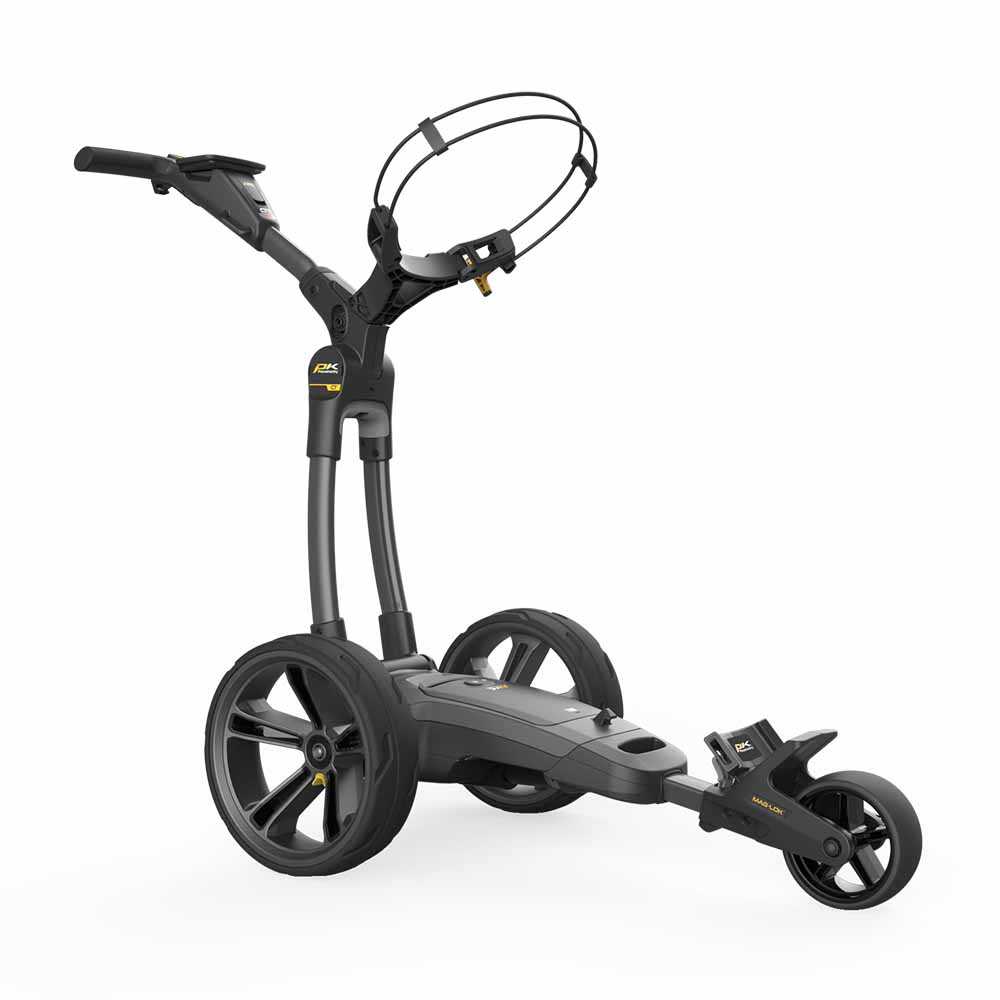
| Specification | MotocaddyMotocaddy M5 GPS Electric Trolley | PowaKaddyPowaKaddy CT8 GPS Electric Trolley |
|---|---|---|
| Trolley type | electric (three-wheel push-button) | electric (compact) |
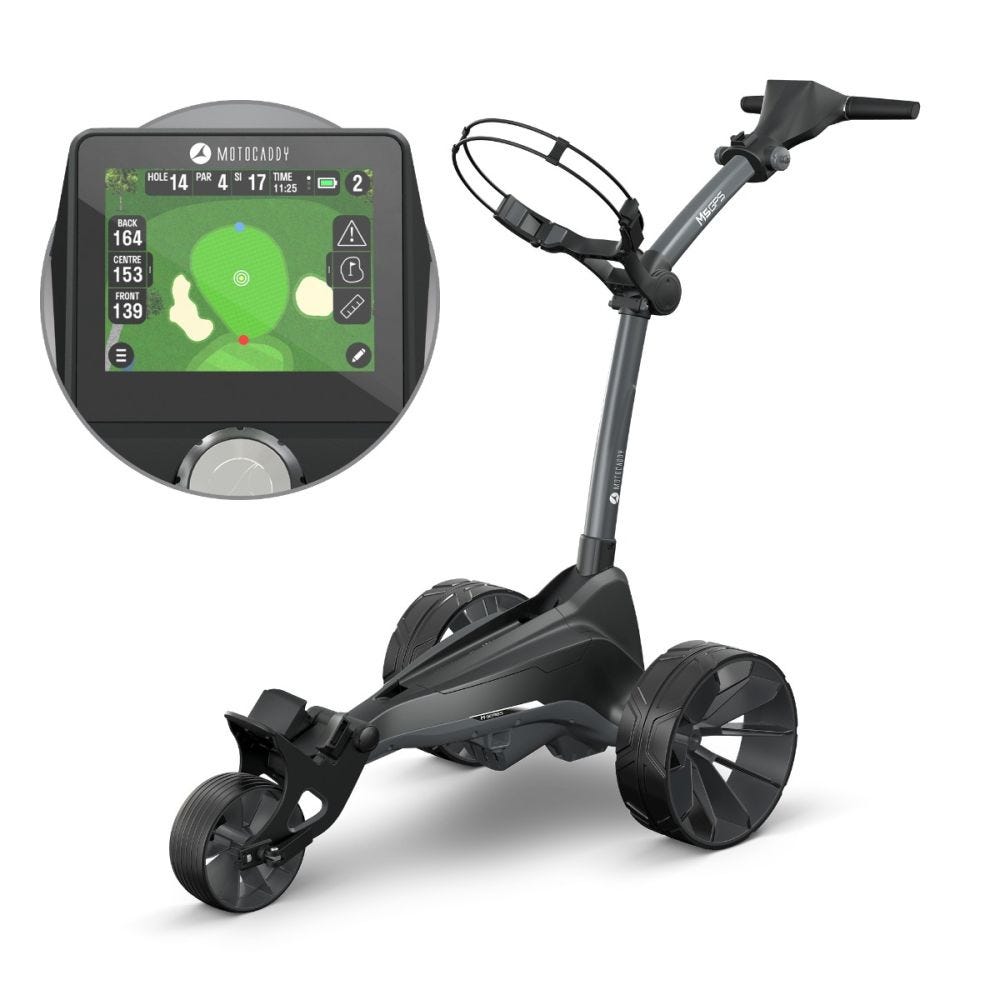
| Display | 3.5 inch colour touchscreen GPS with 40,000+ pre-loaded courses, front/mid/back and full-hole mapping; dark/light display modes | 3.5 inch full-colour TFT touchscreen GPS with 128MHz processor, preloaded with 40,000+ courses worldwide; Advanced Green View with bunkers and hazards, Stableford/Strokeplay scoring and app game tracking |
| Features | 230W motor on a 28V system with nine speed settings; aluminium frame; Bluetooth phone notifications and USB charging port | 30v 230-watt motor |
| Battery | CLICK N CONNECT cable-free lithium with auto-disconnect and pop-up charge port | Plug n Play 30v lithium, 18 or 36 hole options |
| Weight | 10.5kg | 9.9kg without battery (11.7kg with battery) |
| Folded size | 650 x 470 x 410mm | 510mm H x 425mm W x 375mm D, around 35 percent smaller than its nearest compact rival |
| Warranty | 24-month trolley and charger, 60-month battery | 2-year frame, 5-year pro-rata lithium battery |
Specs as published by each manufacturer. Rows in grey are where the two match.
Buy the Motocaddy M5 GPS for the bigger, slicker GPS screen and the nine-speed motor; buy the PowaKaddy CT8 GPS for a solid build and a fold that packs down absurdly small. These two brands own the fairway, and they're closely matched where it counts — lithium batteries offered in 18 or 36-hole capacities, a 3.5-inch colour touchscreen GPS preloaded with 40,000-plus courses, and a fold that doesn't need a degree in origami. At roughly $1,250 for the Motocaddy and $1,150 for the PowaKaddy, the price gap is real but modest, so the decision comes down to your course, your car boot and what you value day to day.
First: is an electric trolley even worth it?
Before you spend four figures, make sure the format is right. If you walk and carry, the answer is usually yes — we make the case that it's the best money many golfers spend, preserving your back and legs for the swing on the closing holes. But if your course is flat and your back is healthy, a push trolley does most of the job for a quarter of the money; push vs electric trolley settles that before you spend on either of these. Assume from here you've decided electric is for you.
How they're alike
Start with the overlap, because it's large. Both run quiet 30-volt-class lithium systems offered in 18 and 36-hole battery options, so a single charge comfortably covers a full day's golf — battery range is genuinely not a differentiator here. Both put a 3.5-inch full-colour touchscreen on the handle with front, middle and back distances, full-hole mapping and hazard info from a 40,000-plus course library, plus app-based scoring and game tracking, so neither leaves you reaching for a separate device. And both carry serious warranties — a 24-month frame cover and a five-year (pro-rata) lithium battery warranty apiece — that mark them out as multi-season buys rather than disposables. You will not be disappointed by either; this is a choice between two genuinely good trolleys, not a good one and a bad one.
Motocaddy M5: the GPS and motor pick
The Motocaddy nudges ahead on the bits you touch every hole. Its CLICK N CONNECT battery drops on without trailing cables, the 230-watt motor runs across nine speed settings on a 28-volt system so it's easy to dial precisely, and the GPS screen and menus are clean and quick to read in bright light or dark. It also adds Bluetooth phone notifications and a USB charging port. Folded it's around 10.5kg in a 650 x 470 x 410mm aluminium package — tidy, if not the smallest here. One thing to know: true downhill control is Motocaddy's separate DHC trim, not standard on this base M5 GPS, so on a steep course budget up for it. We covered the trolley in full in our M5 GPS review.
PowaKaddy CT8: build and a tiny fold
The PowaKaddy answers with feel and packability. It feels a shade more solid in the hand, and its party trick is the fold: PowaKaddy claims it collapses around 35 percent smaller than its nearest compact rival, packing down to roughly 510 x 425 x 375mm — so if your boot is small or already full of family clutter, this is the one that disappears into it. The 3.5-inch touchscreen runs a quick 128MHz processor with Advanced Green View showing bunkers and hazards, plus Stableford and strokeplay scoring. It runs a 30-volt 230-watt motor and weighs 9.9kg without the battery. Note that, like the base Motocaddy, its spec doesn't list a dedicated downhill braking system — on a properly hilly course you'll be managing descents on the speed control with either of these, so don't pick one over the other expecting hands-off braking.
Match it to your situation
Because they're so close, the smart move is to let your specifics break the tie rather than agonising over reviews. Tiny or perpetually full car boot? The CT8's class-leading folded size is the single most decisive difference, and it'll settle the argument before any spec sheet does. Spend a lot of time fiddling with menus and want the cleanest screen and the easiest battery handling? The M5 GPS is the more polished day-to-day device. Watching the budget? The PowaKaddy comes in around $1,150 against the Motocaddy's $1,250, a small but real saving. Already invested in one brand's app or batteries from a previous trolley? Staying in the family saves you nothing on the trolley but simplifies spares and charging down the line. None of these is a wrong answer — they're just different priorities.
The verdict
Both are excellent and both will outlast a cheap rival by years. Value the cleaner GPS interface, the nine-speed motor and cable-free battery? The Motocaddy edges it. Short on boot space or you simply prefer the more solid-feeling, ultra-compact-folding unit, and happy to save a little money? The PowaKaddy CT8 is the pick. If your course is genuinely steep, neither base model brakes itself — look at Motocaddy's DHC trim instead. The reassuring part is that there's no losing pick here: both are built by the two brands that have dominated the trolley market for years, both carry the same long battery warranty, and owners of either rarely regret the buy. Spend ten minutes folding and unfolding each in a shop, glance at the two screens side by side, and trust your gut — the one that feels right in your hands is the one you'll be happy pushing for the next decade. Either way you're buying near the top of our best electric trolleys guide, so this is a hard choice to get wrong.
Frequently asked
- Motocaddy M5 GPS or PowaKaddy CT8 — which should I buy?
- Get the Motocaddy M5 for the cleaner GPS interface, nine-speed motor and cable-free battery; get the PowaKaddy CT8 for a slightly more solid feel and a fold that packs down around 35 percent smaller than its nearest rival. They're closely matched, so let boot space and screen preference decide.
- Do both trolleys last 36 holes on a charge?
- Yes — both offer lithium batteries in 18 and 36-hole capacities, so the larger battery comfortably covers a full day's golf. Battery range isn't a meaningful differentiator between them.
- Which one has downhill braking for hilly courses?
- Neither base model lists a dedicated downhill braking system, so on steep courses you'll manage descents on the speed control with either. If you want true hands-off downhill control, look at Motocaddy's separate DHC trim rather than these two.
- Is an electric trolley better than a push trolley?
- If you want to save your legs and energy for the round, yes — but it costs much more. A push trolley is lighter on the wallet and fine on flat courses; an electric earns its keep on hills or for golfers who tire late in the round.
Read next
Versus
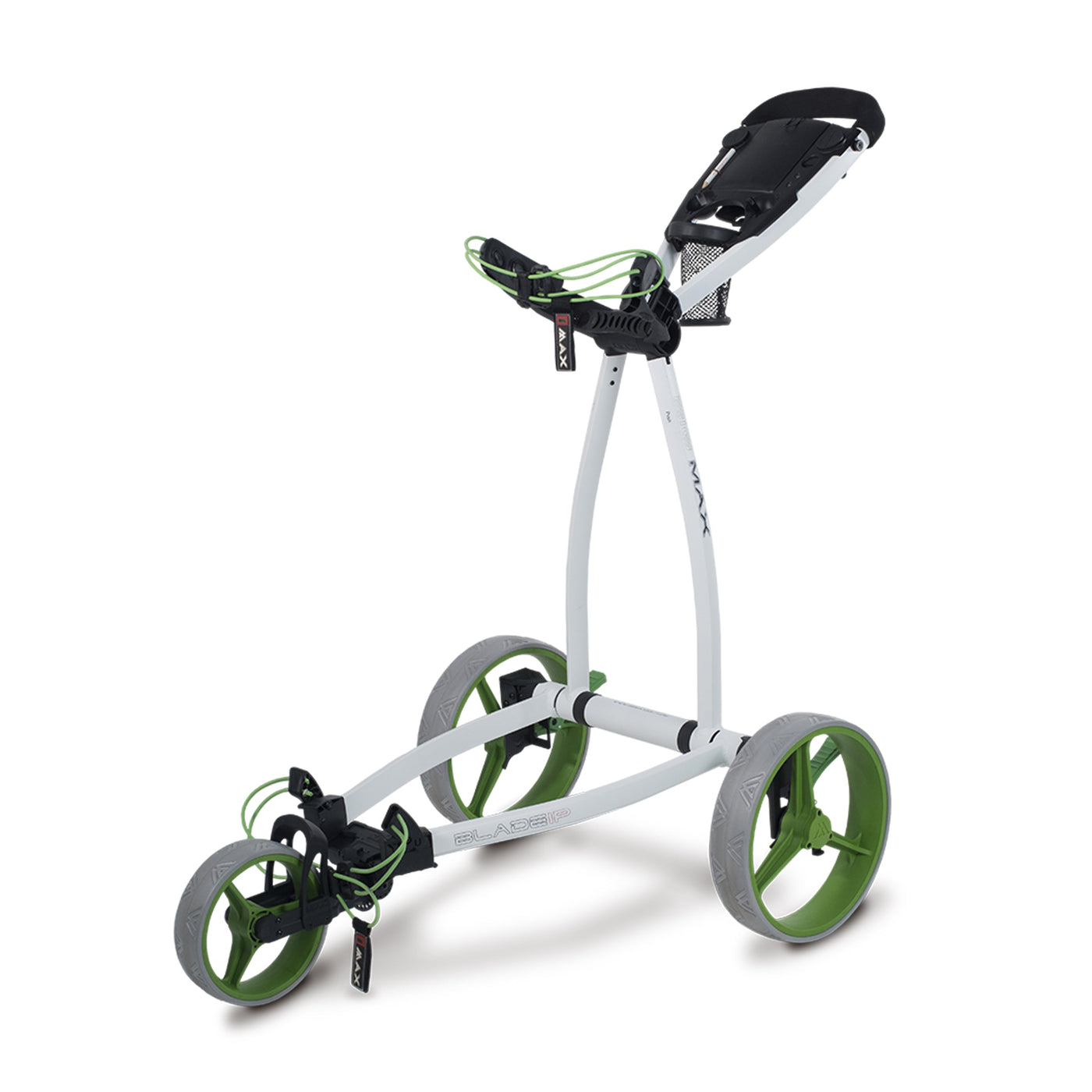
Push vs electric trolley: which is actually worth it?
One saves your back for not much money; the other saves your legs for rather more. How to spend wisely on carrying nothing.
Opinion
An electric trolley is the best money I've spent on golf
Not the clubs, not the gadgets. The thing that made me enjoy walking 18 again was the least glamorous purchase in the bag.
Review
8.8/10Motocaddy M5 GPS review: the electric trolley that does the thinking
GPS course maps, downhill control and a battery that shrugs off 36 holes — the do-it-all electric trolley most walkers should buy first.