
PowaKaddy CT8 GPS review: the compact trolley with GPS baked into the handle
It folds smaller than almost anything in its class and puts a colour touchscreen GPS on the handle. Is the integrated screen worth the premium?
By Tom Whitaker · Staff Writer
The verdict
Excellent
What's great
- Folds around 35 percent smaller than its nearest compact rival
- Most responsive, feature-rich GPS touchscreen we have seen on a trolley
- Quiet 30v motor and a 5-year pro-rata lithium battery warranty
Watch out
- Expensive at around $1,150 — a big chunk is the screen you may already own
- No electronic braking or remote at this spec; touchscreen fiddly in wet/gloves
Bottom line — The pick of the compact GPS trolleys if storage space and on-handle distances both matter. Pay the premium only if you will use the screen; owners of a watch or laser should buy the cheaper non-GPS PowaKaddy.
PowaKaddy
PowaKaddy CT8 GPS Electric Trolley
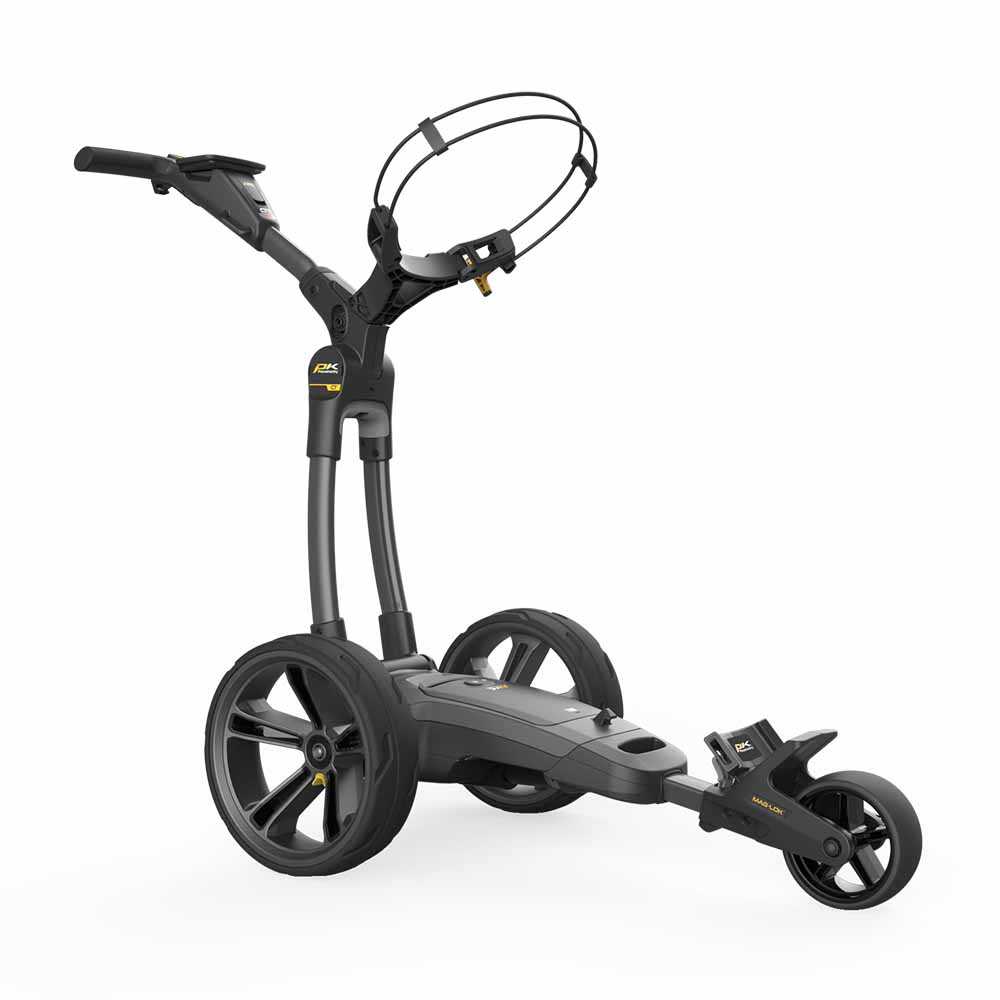
If your two priorities are a trolley that disappears into a small boot and on-screen distances without strapping a second gadget to the frame, the PowaKaddy CT8 GPS is about as good as the compact category gets — it folds roughly a third smaller than its nearest rival and carries the most responsive trolley GPS we have seen. The honest catch is the price: at around $1,150, a big chunk is the screen, so be sure you will actually use it. If you already trust a watch or laser, a cheaper non-GPS PowaKaddy gives you the same chassis for far less.
The folded size is the headline
The CT8's party trick is how small it collapses: down to roughly 510 x 425 x 375mm, around 35 percent smaller than its nearest compact rival. If you drive a small car or share a boot with kids' gear and a weekly shop, that is the difference between owning an electric trolley and not bothering. It manages this while staying genuinely light at 9.9kg without the battery, and the chassis still feels solid rather than flimsy for the weight. There is a small knack to the compact fold, but most owners have it smooth within a few goes.
The GPS you are paying for
Built into the handle is a 3.5-inch full-colour TFT touchscreen running a 128MHz processor, preloaded with 40,000+ courses worldwide. You get front/middle/back distances, an Advanced Green View with bunkers and hazards, Stableford and Strokeplay scoring, and app-based game tracking — all on the handle, so there is one less device to charge and clip on. It is the most responsive and feature-rich GPS we have seen baked into a trolley, and having distances at eye level genuinely helps club selection without fishing a phone out of your pocket. The flip side: that screen is what you are paying the premium for, so if you already own a GPS watch or laser you are effectively buying distances twice.
There is a quiet convenience argument for the integrated screen that the spec sheet undersells. A handle-mounted GPS is always there, always charged off the trolley's own battery, and always at eye level — you never forget to charge a watch, never dig a phone out with a glove on, and never lose the unit. For golfers who find separate gadgets a faff, that single-device simplicity is genuinely the selling point, more than the raw distance accuracy, which any modern GPS gets right. The course detection is automatic and there are no sneaky annual subscription fees, so once it is set up it just works. Whether that convenience is worth a few hundred pounds over a non-GPS trolley is the entire decision — and it is a personal one, not a performance one.
On the course
A 30v 230-watt motor pulls a loaded bag up wet hills quietly, and the Plug n Play lithium battery comes in 18- or 36-hole capacities so genuine all-day walkers are covered. The 2-year frame warranty plus a 5-year pro-rata lithium battery warranty is reassuring at this money. A few honest watch-outs: the battery can take up to 12 hours for a full charge, so you cannot leave it to the last minute before a round; the touchscreen gets fiddly with wet hands or thick winter gloves; and at this spec there is no electronic braking or remote control, so steep downhill courses or a follow function mean stepping up to the EBS or RemoteX models, which cost more again.
The battery choice deserves a moment of thought before you buy. The 18-hole pack is genuinely an 18-hole pack, so if you regularly play 36 in a day, or your course is long and hilly enough to drain a battery faster, the 36-hole option is the safer spend even though it adds weight and cost. Get that wrong and you will be nursing the speed setting on the back nine, which undermines the whole point of an electric trolley. The 9.9kg bare weight rises to 11.7kg with the battery, which is still manageable but worth noting if lifting it into a high boot is a daily reality for you. None of these are deal-breakers — they are the ordinary trade-offs of a compact lithium trolley — but they are the difference between buying the right CT8 and the wrong one.
CT8, or a Motocaddy — or a push trolley?
If you are weighing the integrated-GPS compacts, see our head-to-head in Motocaddy M5 vs PowaKaddy CT8; the CT8's trump card is folded size, while the M5 GPS leans on full-hole mapping. And if you are not yet sold on electric at all, our push vs electric trolley guide is the right first read — electric earns its keep on hilly courses and tired backs, but a good push trolley does the carrying for a fraction of the outlay. Be honest about which camp you are in before spending around $1,150.
Who should buy it — and who should skip
Buy it if you want one tidy package that does distances, scoring and the heavy lifting, and storage space is genuinely tight. Skip it if you already own a GPS device — a cheaper non-GPS PowaKaddy gives you the same chassis and motor for a lot less — or if your course is steep enough to want downhill braking, in which case budget up to the EBS spec. See the full field in our best electric trolleys guide and more on the category.
Where to buy
8.5/10PowaKaddy
PowaKaddy CT8 GPS Electric Trolley
The compact electric trolley that folds down absurdly small and packs a genuinely useful colour touchscreen GPS into the handle.
Frequently asked
- Is the PowaKaddy CT8 GPS worth the money?
- If you want the smallest folded size in the class and will genuinely use the built-in GPS, yes. If you already own a GPS watch or laser, you are paying twice for distances — a cheaper non-GPS PowaKaddy gives you the same chassis for a lot less.
- How small does the CT8 fold?
- To roughly 510 x 425 x 375mm — around 35 percent smaller than its nearest compact rival, which is the main reason to choose it over bulkier trolleys.
- Does the CT8 have downhill braking or a remote?
- Not at this spec. For electronic braking on steep courses or a remote/follow function you need to step up to PowaKaddy's EBS or RemoteX models, which cost more.
- How long does the battery take to charge?
- The Plug n Play lithium battery can take up to 12 hours for a full charge, so plan ahead rather than charging the night before a dawn tee time.
Read next
Versus
Push vs electric trolley: which is actually worth it?
One saves your back for not much money; the other saves your legs for rather more. How to spend wisely on carrying nothing.
Opinion
An electric trolley is the best money I've spent on golf
Not the clubs, not the gadgets. The thing that made me enjoy walking 18 again was the least glamorous purchase in the bag.
Review
8.8/10Motocaddy M5 GPS review: the electric trolley that does the thinking
GPS course maps, downhill control and a battery that shrugs off 36 holes — the do-it-all electric trolley most walkers should buy first.