
The 34-inch putter isn't a fitting recommendation. It's a stocking decision, and it is probably costing you putts
Length is the most commonly mis-fitted spec in golf and the cheapest one to fix, and almost nobody checks it. Here is what a putter that is too long does to your eyes, your start line and your pace control.
By Ross Hamilton · Staff Writer
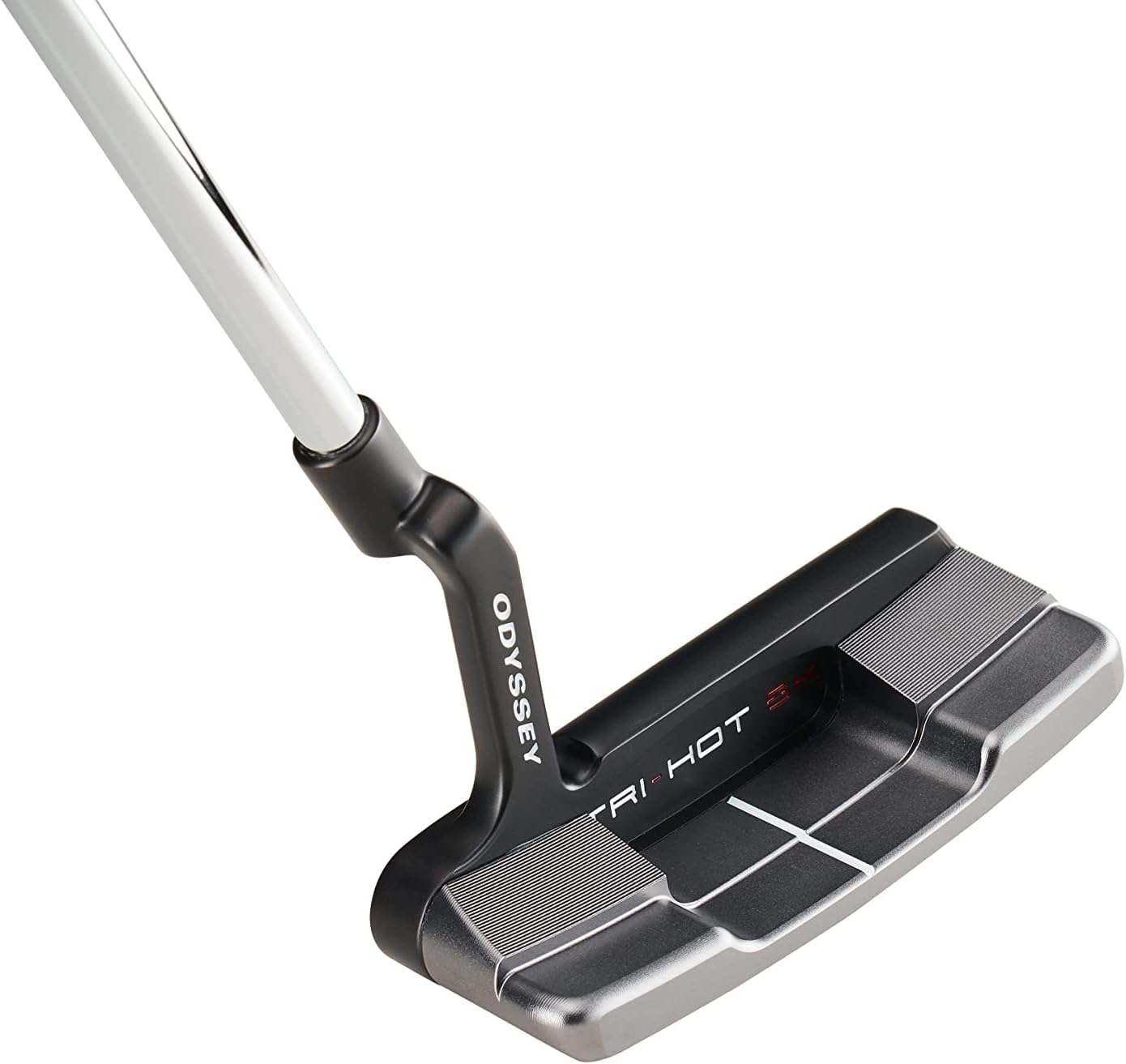
Odyssey
Odyssey Tri-Hot 5K Double Wide Putter
ifrothgolf earns a commission on purchases made through these links, at no extra cost to you. It never changes what I recommend. Full disclosure.
Wednesday evening, the practice green beside the first tee. Four golfers, four putters, and three of them are standing further from the ball than they should be, hands pushed out away from the body, eyes somewhere inside the ball line. None of them has a putting stroke problem. They have a length problem, and it costs the same number of shots as a stroke problem while being far cheaper to fix.
Putter length is the most commonly mis-fitted spec in golf. It is also the only one you can test for nothing, on the green you already play, in about five minutes.
Why almost every rack putter is the same length
Look along the wall in any pro shop and the putters sit in a very narrow band of lengths, overwhelmingly 34 inches with a few 35s for taller golfers. That is not a fitting recommendation. It is inventory. No shop can carry six lengths of every head, so it carries the middle of the distribution and quietly leaves the golfer to adjust their body to the club. That is the wrong way round, and it is also the only way round that a retail rack can work.
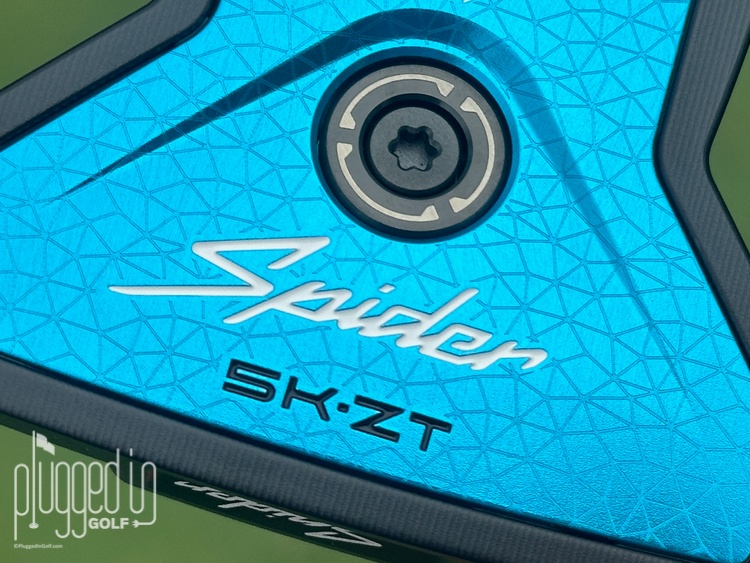
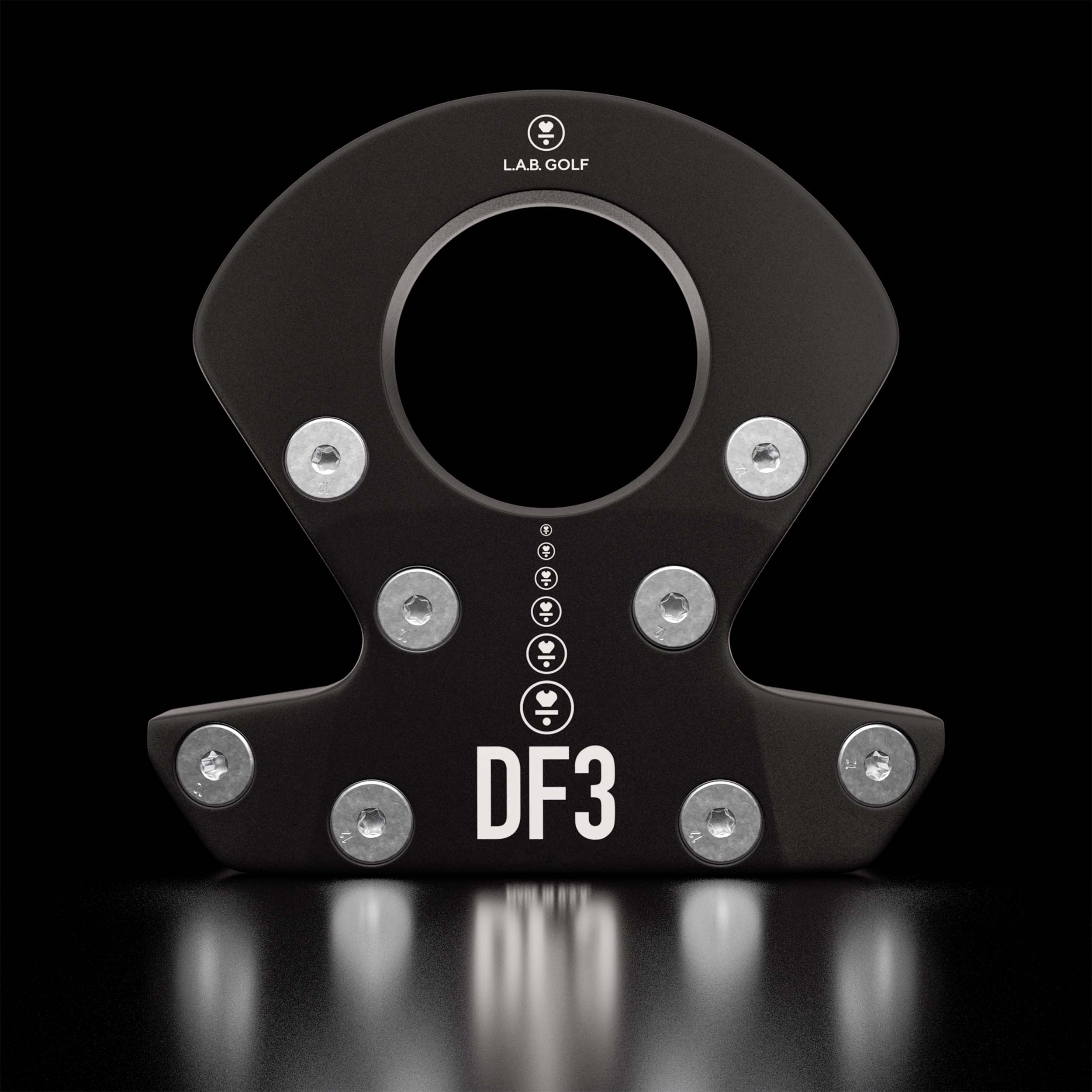
You can see the manufacturers acknowledging it in what they publish. TaylorMade lists the Spider ZT in 33, 34 and 35 inches, which is three lengths for a putter that already has a PGA Tour win on the board. L.A.B. does not stock lengths at all; the DF3 is built to order, because on that design the length and the lie angle are the mechanism rather than a preference.
What a putter that is too long actually does
Too long does not feel long, which is the whole problem. It feels like a posture you have got used to. The butt end of the club has to go somewhere, so one of three things happens: your hands push out away from your body, the grip rides up into your lead forearm, or you stand back from the ball to make room. Usually some of all three.
Each of those moves your eyes. Stand further back and your eyes end up inside the ball line, and from inside the line a straight putt looks like it starts right of the hole. So you aim left to make it look correct and then push it to compensate, or you aim correctly and never trust the picture. Either way the start line becomes a negotiation, and start line is the only thing in putting you genuinely control. Fitters see the same signature over and over: the toe of the putter sitting up off the turf at address, which for a right-hander points the face left of where the golfer believes it is pointing.
This is also why alignment features can flatter to deceive. The Odyssey Tri-Hot 5K Double Wide has one of the cleaner framing aids in the category, and framing aids work by showing you where the face is pointing relative to your eyes. If the eyes are in the wrong place, a better alignment line just gives you more confidence in the wrong picture.
Check it yourself in five minutes
Three tests, in this order. First, take your normal address position with a ball down, hold a second ball on the bridge of your nose and drop it. If it lands on the ball or a fraction inside it, your eye position is fine. If it lands well inside, either the putter is too long or you are standing too far away, and those two are usually the same fault.
Second, grip down an inch on the shaft and hit ten putts. If your stroke immediately feels tidier and the ball starts on line more often, you have just tested a shorter putter for free. Third, put your phone on the ground behind the ball and film ten strokes down the line. You are looking for whether the shaft and your forearms are roughly in one plane, and whether the butt of the club points at your belt or somewhere above it.
None of that replaces a fitting. It does tell you whether a fitting is going to find something, which is the useful part.
Cutting it down is not free
Shortening a putter removes weight from the club, but more importantly it changes how much of the head weight you can feel. Swing weight drops, the head goes light in your hands, and a light head is the textbook cause of losing pace control on longer putts. You decelerate because there is nothing to swing.
The fixes, in order of how well they work: heavier head weights if the head accepts them, a heavier grip, or a counterweight in the butt end. This is one reason the Spider ZT is a friendly head to shorten. It ships with three movable weights, so the head weight lost to a shorter shaft can be put back where it belongs rather than approximated with a counterweight at the other end. Do it in the same session as the cut, with the person who cut it, so you are comparing rather than guessing.
Two heads deserve a specific warning. The L.A.B. DF3 should not be shortened in a vice at home under any circumstances. Lie angle balance depends on the relationship between length, lie and the head, so cutting it undoes the exact property you paid for. It is built to your specs for a reason; buy it built.
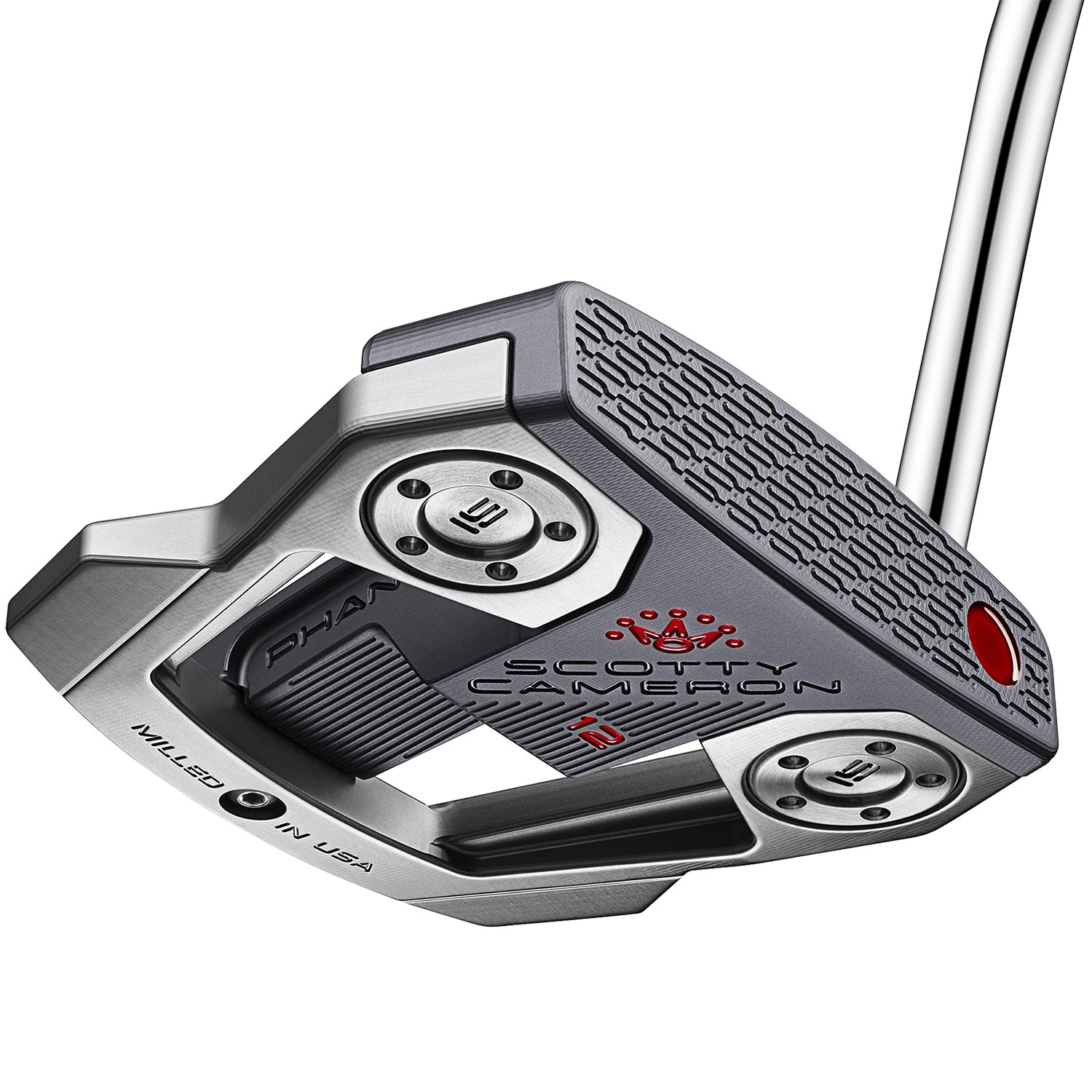
And the Scotty Cameron Phantom 12 is worth naming for the opposite reason. It buys its forgiveness with the deepest and lowest centre of gravity in the Phantom line, which is a real benefit that you only collect if the ball is under your eyes and the face is square at address. A more forgiving head does not fix a length error; it just makes the mis-started putt finish slightly closer to the hole.
Long on purpose is a completely different thing
The counter-case is real and it deserves saying plainly, because the golfers who go long deliberately are not making a mistake. Bryson DeChambeau armlocks a SIK Pro C-Series with a JumboMax grip. Adam Scott plays a long L.A.B. Mezz.1 Max. Minjee Lee moved to a 42-inch Odyssey broomstick over an off-season. In the tour bags we maintain and re-verify, those builds are outliers rather than a trend, but every one of them is a system.
An armlock putter uses the lead forearm as a brace so the wrists cannot break down. A broomstick anchors the top hand high on the chest and hands the stroke to the big muscles. In both cases the extra length is doing a job you chose, at a lie angle and a head weight built around it. That is length as a fitting decision. A 34-inch putter you bought off a rack because it was there is length as an accident.
What to do about it
Length is the first putter decision, not one of the later ones. It is also the argument for getting a putter fitting before a driver fitting, because the change costs a fraction of a driver and turns up on the card every single round. Once length and eye position are right, the head shape conversation becomes worth having, and mallet versus blade is the sensible next question rather than the first one.
Products mentioned in this article
Odyssey
Odyssey Tri-Hot 5K Double Wide Putter
Strong alignment framing, which only pays out once your eyes are actually over the ball.
Scotty Cameron
Scotty Cameron Phantom 12 Putter
Maximum forgiveness in the Phantom line, and the range that most needs fitting before badge.
TaylorMade
TaylorMade Spider ZT Zero-Torque Putter
Three movable weights and three stock lengths make it one of the friendlier heads to shorten.
L.A.B. Golf
L.A.B. Golf DF3 Putter
Built to order, because on a lie-angle-balanced putter length and lie are the mechanism.
ifrothgolf earns a commission on purchases made through these links, at no extra cost to you. It never changes what I recommend. Full disclosure.
Frequently asked
- What length putter should I use?
- There is no single answer by height, because posture and arm length matter more than height does. The test that matters is eye position: at address your eyes should be over the ball or a fraction inside it. Most golfers who check this find they need something shorter than the 34 inches they are playing.
- How do I check my eye position without a fitting?
- Take your normal address position with a ball on the ground, hold a second ball on the bridge of your nose, and let it drop. Landing on the ball or just inside it is fine. Landing well inside it means your putter is too long, you are standing too far away, or both.
- Does cutting a putter down change how it feels?
- Yes. A shorter shaft lowers swing weight, so the head feels lighter and pace control on long putts usually suffers. Add head weight if the putter takes movable weights, or fit a heavier grip or a butt counterweight, and do it at the same time as the cut so you can compare.
- Can I shorten a zero-torque or lie-angle-balanced putter?
- Not at home. Designs like the L.A.B. DF3 balance the head around a specific combination of length and lie angle, so changing the length changes the behaviour the design exists to deliver. Order it built to your specification, or have the work done by the maker.
Read next
Review
8.7/10Zero-torque putters: golf's fastest-spreading idea
Tour bags are quietly being rebuilt around a putter that won't twist. Here's why — and where it started.
Review
8.8/10L.A.B. DF3 review: the putter the tour keeps switching to
The zero-torque putter that won a US Open and rewrote the category. We score the most talked-about flat stick in golf — and tell you who should skip it.
Versus
Spider ZT vs Odyssey Jailbird: two routes into zero-torque
The big brands' answers to the zero-torque craze, head to head — and which one suits how you actually putt.