
70% of golfers used a simulator last year. 6% own one — and the reason isn't money
A survey of 391 golfers found the number one barrier to owning a home setup is space, not cost. I've been writing about this category the wrong way round, and so has everyone else.
By Marcus Bell · Simulator & Indoor Golf Writer
Garmin
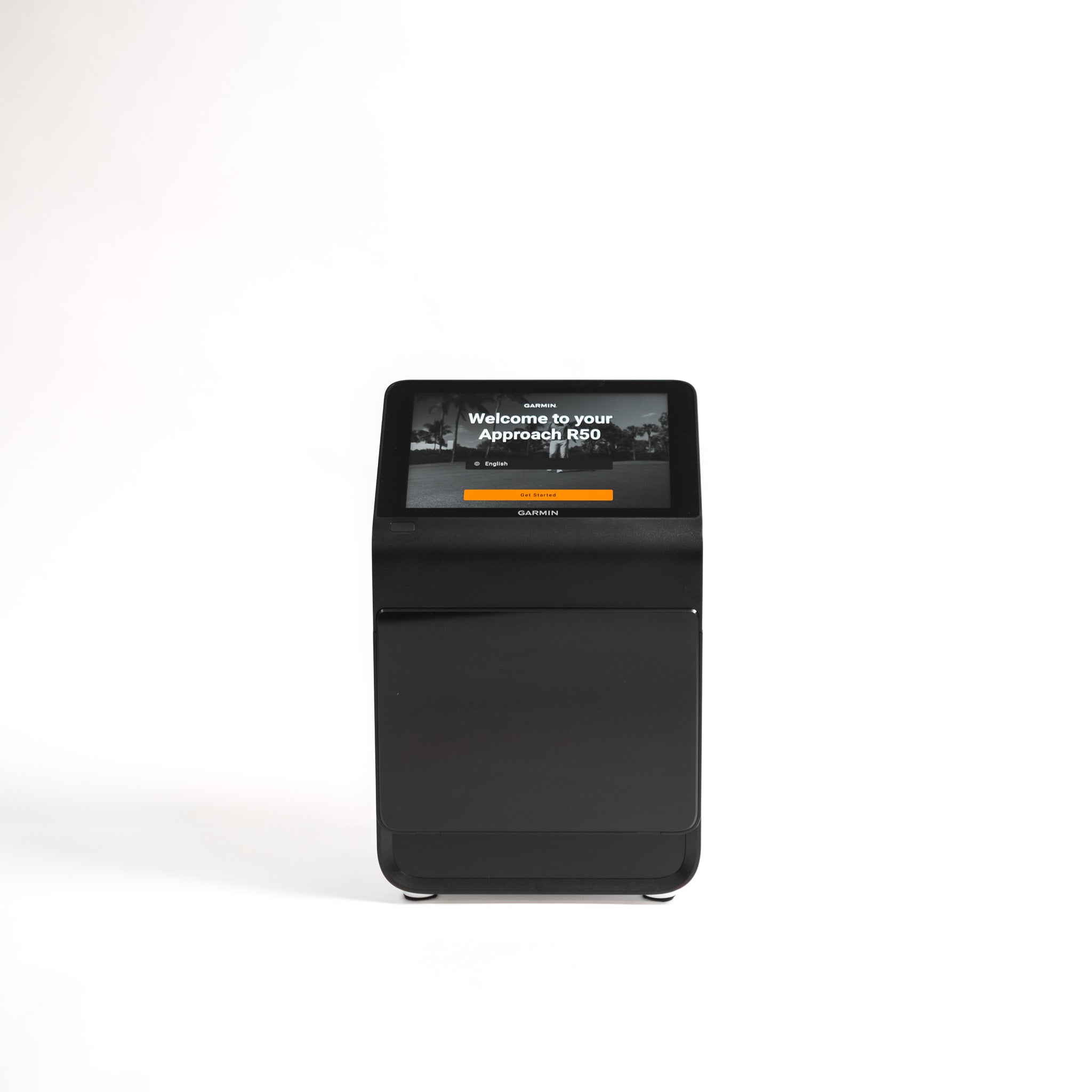
Garmin Approach R50 Launch Monitor
ifrothgolf earns a commission on purchases made through these links, at no extra cost to you. It never changes what I recommend. Full disclosure.
The Buffalo Groupe marketplace study run in May this year contains one finding that should reorganise how this entire category is covered. Over 70% of golfers used a simulator in the past year. Only 6% own one. And the primary barrier separating those two numbers is not cost. It's space.
I've written a lot of words about what to buy. Price ladders, subscription maths, overhead versus floor units, projector lumens. Almost all of it answers a question that, for the overwhelming majority of the 64% caught in that gap, is the second question.
The gap is enormous and nobody is serving it
Sit with those numbers. Seven in ten golfers have hit balls into a screen and enjoyed it enough to do it again. Barely one in twenty has one at home. That is one of the widest want-to-own gaps in any consumer category I can think of, and it exists in a segment where the products are excellent and getting cheaper every year.
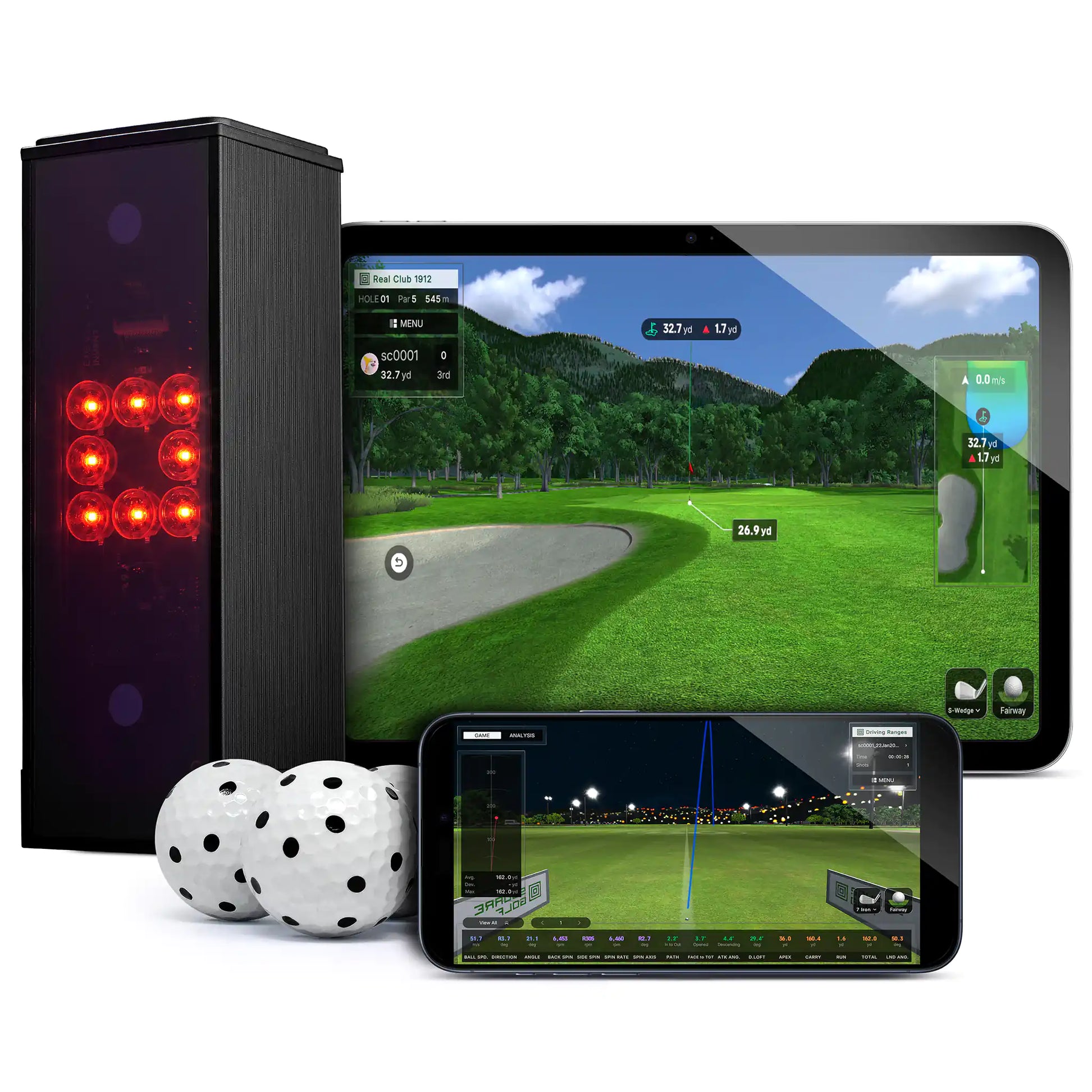
The industry's answer to that gap has been to keep making the entry price lower. Camera-based tracking under a thousand pounds was a genuine breakthrough — the Square Golf unit does things that cost five figures a decade ago. But if the barrier was never primarily money, then every one of those price drops has been solving the wrong problem with impressive engineering.
Why space is a harder problem than money
Money is a single number you can save up for. Space is four constraints that all have to be true at once, and most people fail at least one:
Ceiling height. The binding constraint, and the one nobody measures before getting excited. A driver swing needs meaningfully more headroom than people assume, and a standard room is marginal for a tall player.
Depth. You need distance behind the ball for the swing and in front for the ball to travel far enough to be tracked, and radar units need considerably more of the latter than camera units.
Width. Enough for a full swing plus safety margin, and if anyone else uses the room, enough that a shanked wedge doesn't find the wall.
Permanence. This is the real killer and it barely gets discussed. Most houses do not have a spare room that can become a golf bay forever. A setup that has to be assembled and put away gets used twice.
What this changes about what to buy
If space rather than budget is your constraint, the buying logic inverts. The most expensive setup is not the best one; the one that fits the room you actually have is.
Stop specifying the launch monitor first. Measure the room first, then buy the unit that works in it. A radar unit that needs eight feet of ball flight is simply the wrong product in a garage, regardless of how well it's reviewed or how much it costs. This ordering error is the single most common way people waste money in this category, and I've watched it happen repeatedly.
Take the permanence problem seriously. An all-in-one like the Approach R50 — cameras, screen and simulation in one unit, no laptop, no projector, nothing to wire — is not the best measuring device at its price. Foresight and Uneekor units will out-measure it on club data. What it is, is a device that survives contact with a room you can't dedicate, because setup friction is what actually kills home practice. Something you use twice a week beats something better that you assemble monthly.
Consider that a net is a legitimate destination, not a stepping stone. A KIT and a net in a garage gets you real data and real practice in a fraction of the space a screen bay needs. The industry frames nets as what you buy before you can afford a screen. For a lot of people they're the correct final answer.
**Buy the screen last, if at all.** It's the component that forces every other constraint. Deciding you want one and then discovering the room can't hold it is the standard path to an expensive cupboard.
The tool we already built for this
We built the [Sim Room Architect](/tools/sim-build-planner) to start from your room dimensions rather than your budget — it takes the space you have and works out what will genuinely fit before it costs anything. At the time, that felt like a reasonable design choice. This survey suggests it was addressing the actual constraint the whole time, and that we've since spent a lot of words on the constraint that isn't binding.
The one number worth working out first
If you take a single action from this, make it this one: work out your usable ceiling height, which is not the same as your ceiling height. Stand where the ball would sit, take a normal driver swing, and have someone watch the clubhead at the top rather than measuring the room with a tape. Most rooms lose several inches to a light fitting, a beam, a garage door mechanism or a sloping section you'd forgotten about, and the clubhead finds all of them.
Then do it in socks, because you'll be wearing golf shoes, and on the mat you intend to use, because a thick mat raises you and lowers your clearance at the same time. A surprising number of abandoned home setups failed on an inch that a tape measure said was there.
What I'd tell someone in the 64%
Go and measure your room before you read another review, including ours. Ceiling height, then depth, then width, then ask honestly whether the space can stay a golf space. Four numbers and one honest answer.
If it fits, the market is in great shape and you have genuinely good options at every price. If it doesn't, no amount of budget fixes it — and the useful move is a net, a portable unit and lowered expectations, rather than a five-figure plan you'll abandon. The most expensive simulator is the one that doesn't fit the room, and the industry has spent five years telling you the opposite.
Products mentioned in this article
Garmin
Garmin Approach R50 Launch Monitor
The all-in-one case — no laptop, no projector, no permanent bay
Square Golf
Square Golf Home Launch Monitor
Camera-based data under a grand, if the room is the constraint not the budget
GoSports
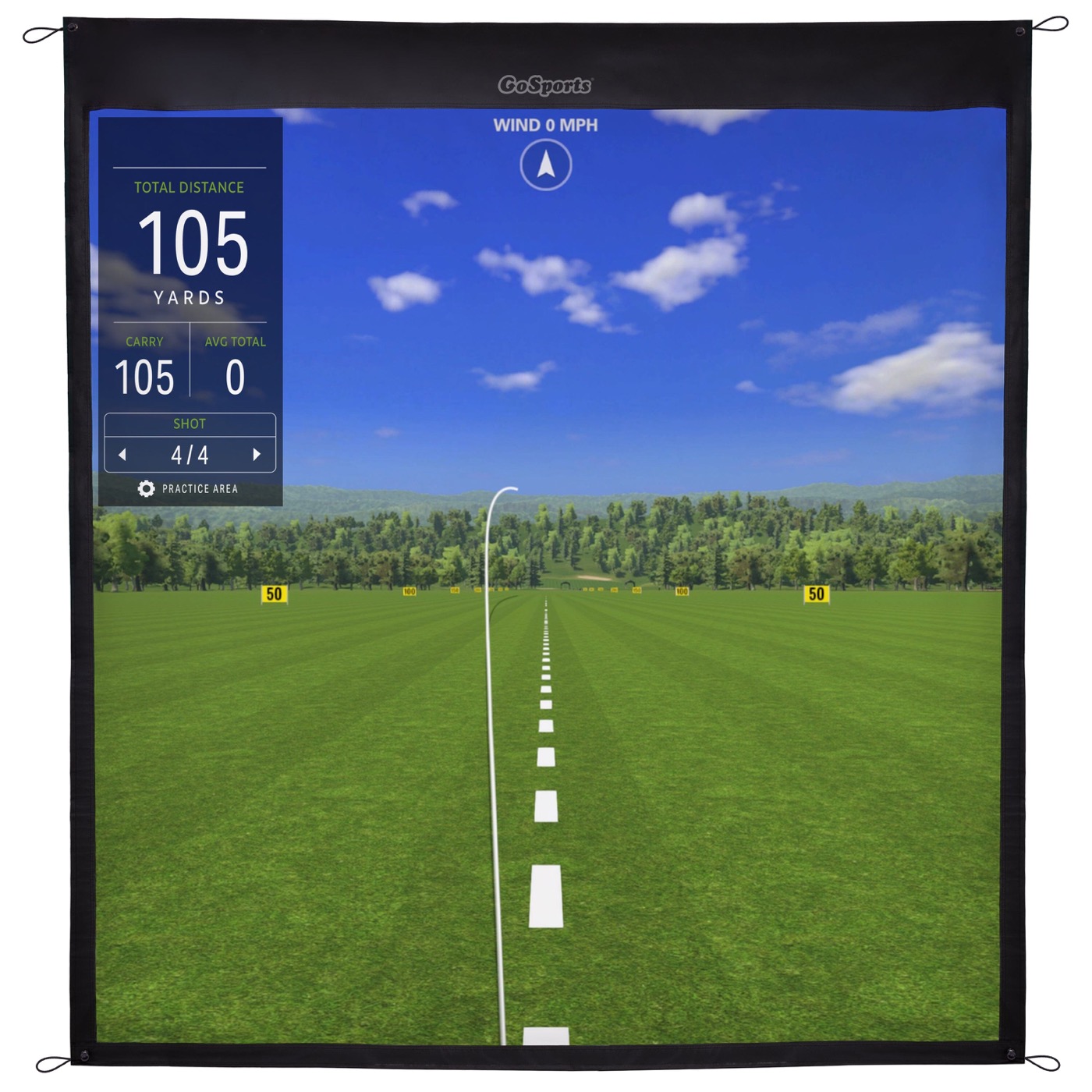
GoSports Golf Simulator Impact Screen
Only worth buying once you've measured the room, not before
ifrothgolf earns a commission on purchases made through these links, at no extra cost to you. It never changes what I recommend. Full disclosure.
Frequently asked
- What ceiling height do I need for a golf simulator?
- More than most people assume, and it's the constraint that most often rules a room out. A full driver swing needs meaningful clearance above your raised hands, and taller players need more again. Measure it and swing a club in the space before committing to any purchase.
- Is it cheaper to build a simulator than people think?
- Entry costs have fallen a long way — camera-based tracking is now available under a thousand pounds. But a 2026 survey of 391 golfers found cost isn't the main barrier to ownership anyway; space is. A cheaper unit doesn't help if the room can't hold a swing.
- Do I need a screen or is a net enough?
- A net plus a portable launch monitor delivers real data and real practice in far less space than a screen bay, and for many golfers it's the right permanent setup rather than a compromise. A screen forces every other space constraint, so decide on it last.
- What's the most common mistake when building a home setup?
- Choosing the launch monitor before measuring the room. Radar units need substantially more ball flight than camera units, so a well-reviewed monitor can be simply the wrong product for a garage. Measure first, then shortlist only what fits.
Read next
Review
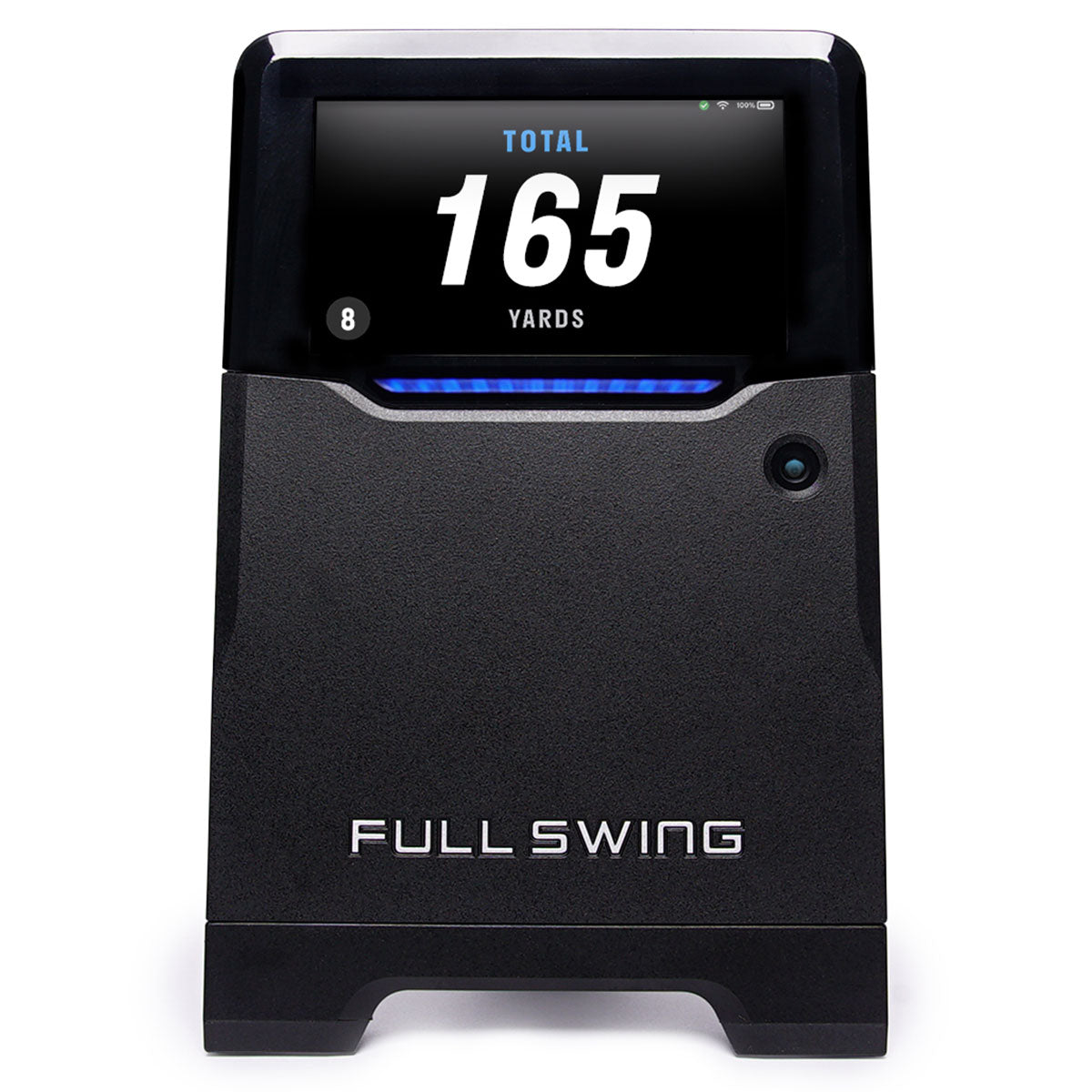
7.9/10Full Swing KIT review: the tape measure decides this, not Tiger
Tour pedigree, TGL on ESPN, and radar good enough to be checked against a Trackman outdoors. It also wants eighteen to twenty feet of room, which rules out most of the garages people buy it for.
Versus
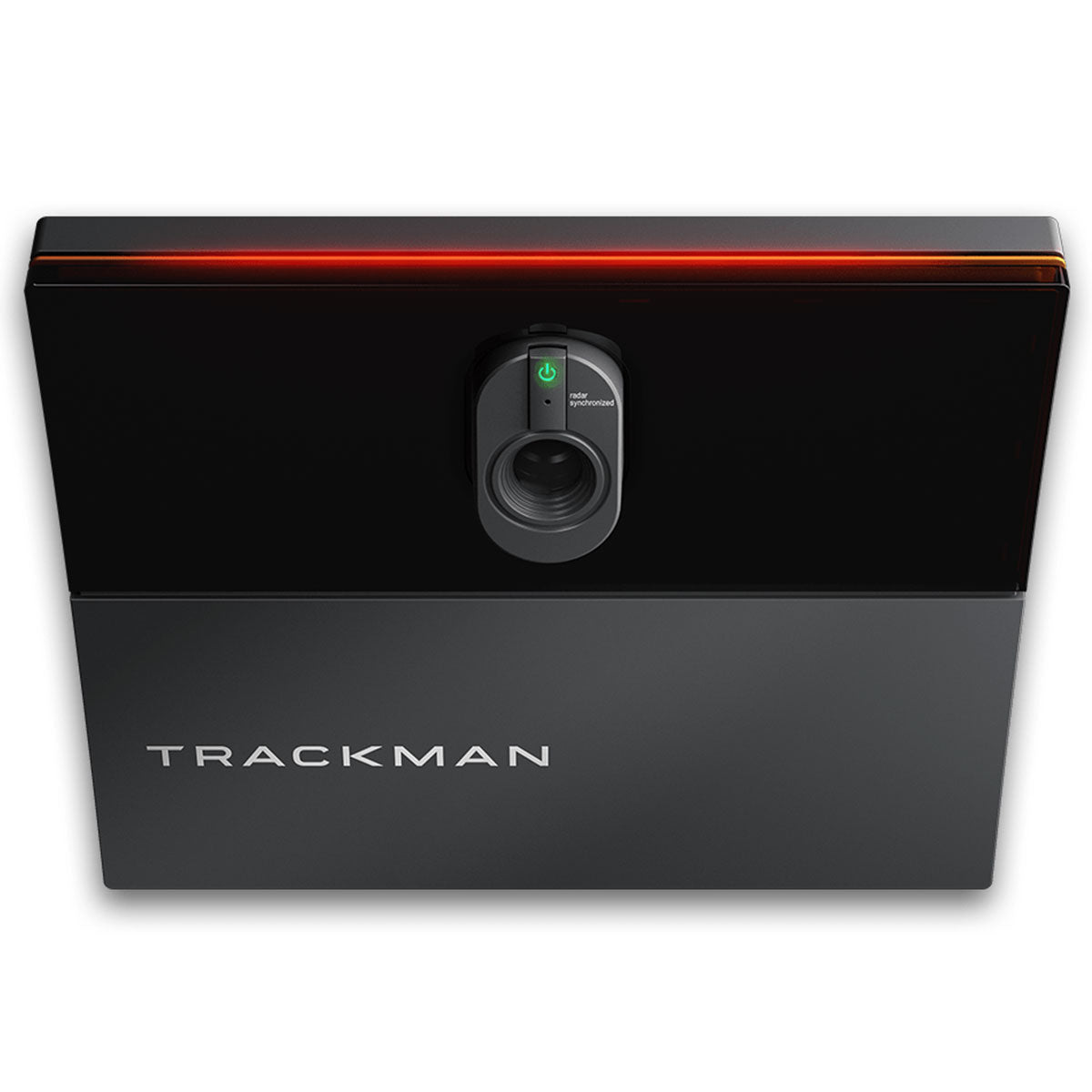
Trackman iO vs Uneekor EYE XO2: the year-one trap
Both mount overhead, both want ten feet of ceiling, and about $3,000 separates them on the shelf. Then Trackman's included first year runs out, and the gap starts growing by $1,100 a year.
Versus
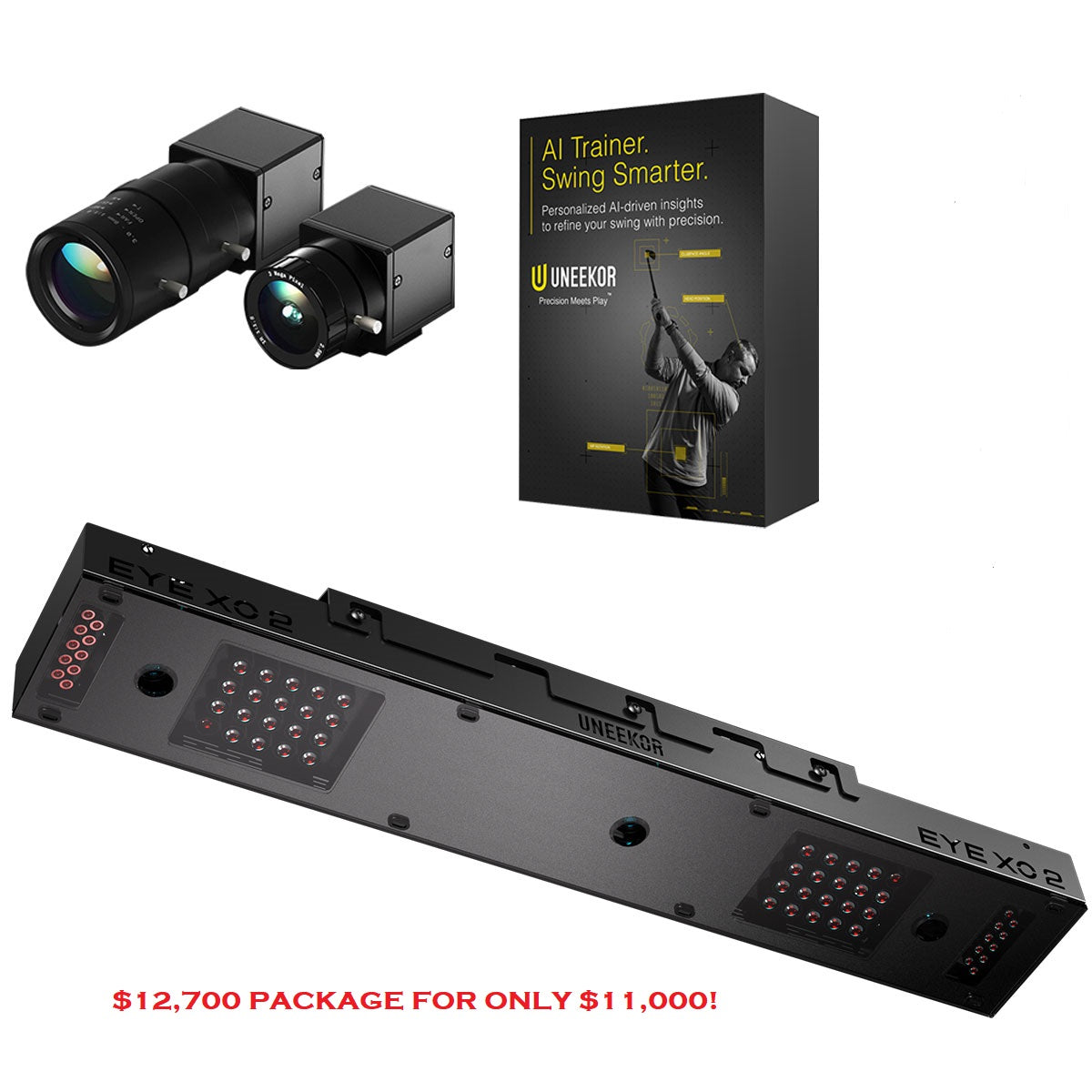
Uneekor EYE XO2 vs Foresight GC3: ceiling or floor?
About $4,000 separates them, but they're not really rivals — one lives in your ceiling forever, the other sits on the floor and travels. The cheaper one is also the one with no subscription.