
Takomo Ignis D2 review: three weight ports became one, and the driver got better
The R&A took the original Ignis off the conforming list over one arrangement of its sole weights. Takomo's answer was to delete the arrangement — a single rear port instead of three — and the mass that freed up went to the perimeter, where it does more good anyway.
By Ben Marsden · Reviews Editor
The verdict
Excellent
What's great
- A cast one-piece HST160C titanium head with a carbon crown and real Fujikura Ventus shafts, at a price the big four do not compete at
- Deleting the movable toe and heel weights pushed mass to the perimeter instead of taking it away — the fix improved the club
- Eight-position hosel, headcover, wrench and the spare 8g weight all included rather than sold back to you
Watch out
- Nine and 10.5 degrees only, so anyone who needs genuine high launch out of the head is not being catered for
- Online-only: there is no bay to hit it in, and no fitter to tell you which of the seven shaft options is yours
- The headline MOI gain is Takomo's own figure, not an independent measurement
Bottom line — The most interesting driver under four figures right now, and the rare second-generation club with a real reason to exist. Buy it if you already know your loft and shaft; skip it if you need more than 10.5 degrees or you buy clubs by feel in a shop.
Takomo
Takomo Ignis D2 Driver
Most second-generation drivers exist because it has been a year. The Takomo Ignis D2 exists because the R&A took the first one off the conforming list, which is a considerably better reason, and a considerably more interesting story. It went on sale on 15 September at $325, and the fix Takomo landed on is the sort of thing you almost never see a club company do: they did not re-engineer the face or chase back the lost performance. They removed the feature that caused the problem, and the driver came out better.
Here is what happened. The original Ignis D1 shipped with three sole weight ports and a set of weights to move between them. Submitted for conformance, some of the heads — with the heavy weights out at the toe and the heel rather than gathered in the rear — came back over the Characteristic Time limit, the rule that governs how much a driver face may flex at impact. Not all of the heads. Some. Takomo's own bench testing had never run that particular arrangement, which is the part that tells you what this really was: a small company's internal process not being calibrated to the standard it was about to be measured against. Sean McCullum, Takomo's chief marketing officer, described it to MyGolfSpy as "a huge amateur-hour, growing-pain issue for us", and, more memorably, "Yeah, the R&A slapped us on the wrist." MyGolfSpy also reported that replacements went out to people who already owned a D1, which is the correct thing to do and not a given at this end of the market.
The fix is a deletion
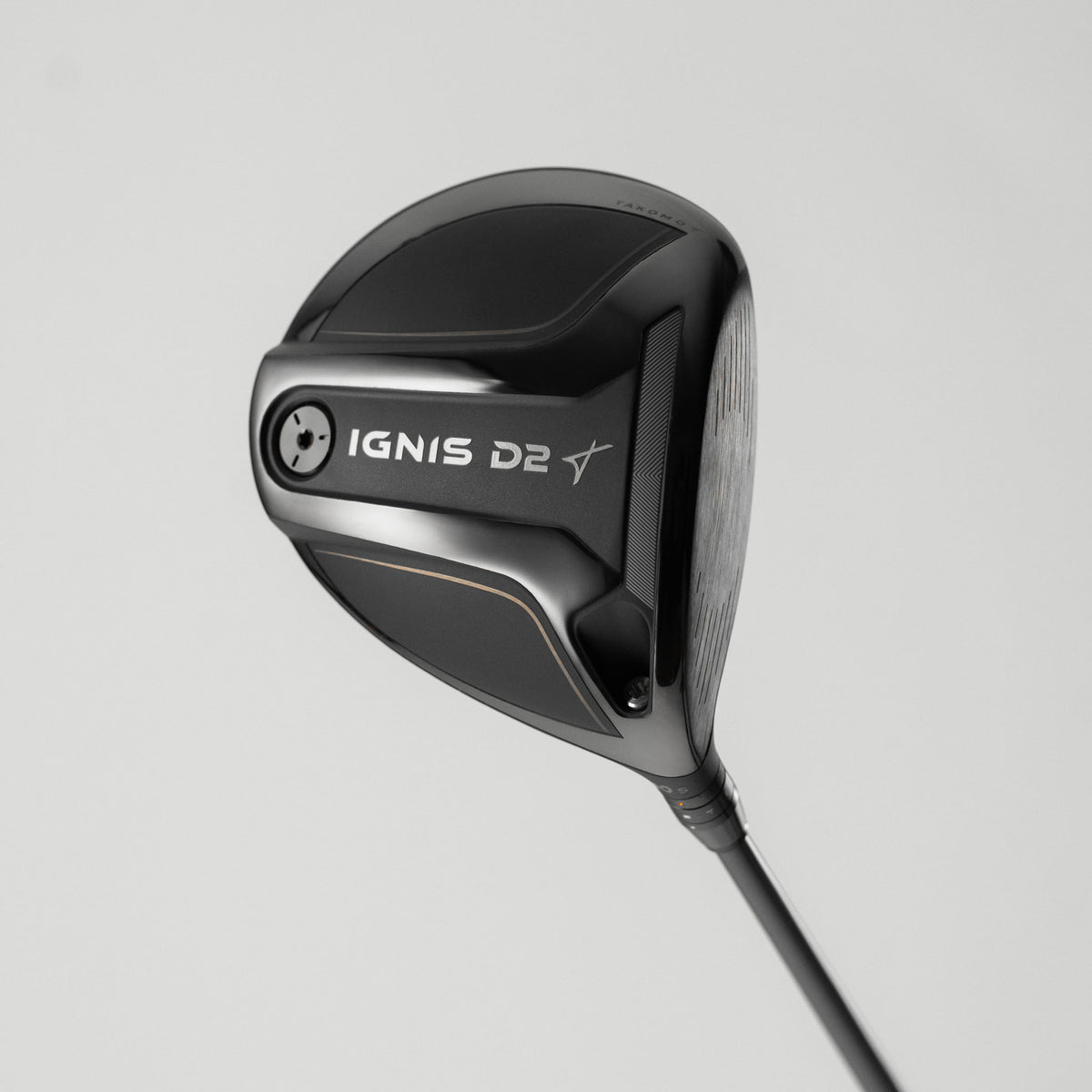
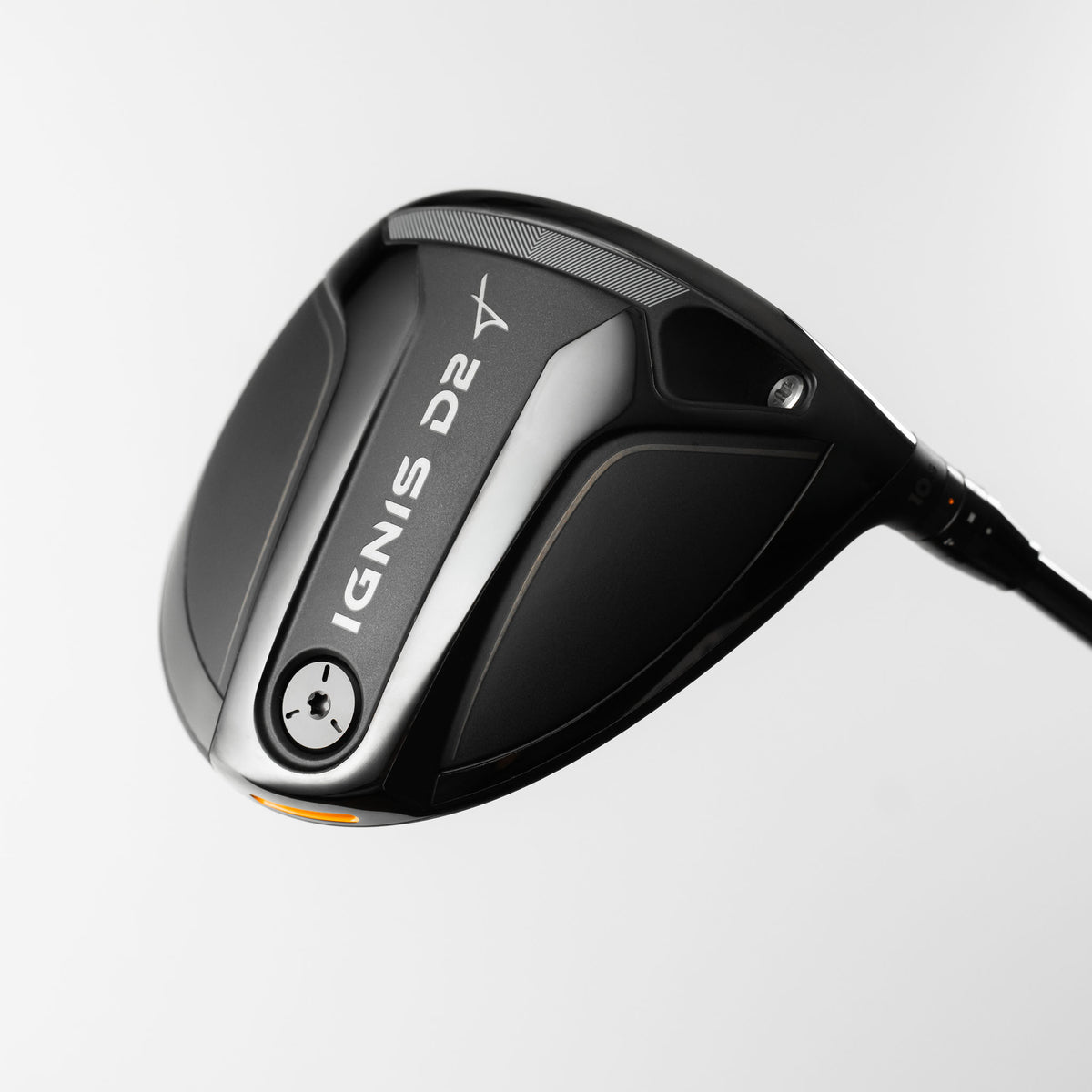
The D2 has one weight port, in the very back of the head. A 3-gram weight arrives installed and an 8-gram weight comes in the box. There is nothing to move to the toe and nothing to move to the heel, so the configuration that failed cannot be built.
That sounds like a club being made worse to satisfy a rule, and it is the opposite. Movable weights cost mass twice: once for the weight itself and once for the ports, screws and reinforcing structure that let it slide around. Take the toe and heel ports out and all of that material is freed up to go where a forgiving driver wants it, which is the perimeter. Takomo's own description of the head says the single-port design redistributes weight toward the toe, heel and rear — permanently, in the casting, rather than adjustably, in a rail. McCullum's number for the gain is a 10 per cent increase in MOI over the D1. Treat that as the brand's claim rather than a measured result, because it is one: it reached the world through an interview, not a test bench that published its method.
What I'd say is that the direction is not in doubt even if the decimal is. And it lands on the right side of a thing this site has argued before — that the adjustability sold on a modern driver is bought as insurance and then left on the factory setting by almost everybody who owns one. The D1's sliding weights were a feature most of its buyers would never have touched. Swapping them for permanent forgiveness is a straight upgrade for that golfer, and Takomo only did it because they were made to.
The rest of the club is not an afterthought
Strip the story out and there is still a serious driver here. The body is HST160C titanium under a carbon crown, and it is cast as one piece — no separate face insert, no weld line where the face meets the body. That matters more than it sounds: a one-piece casting is a harder thing to do well and it removes the joint that cheap drivers tend to fail at. The face itself is variable-thickness, with more material through the middle and thinner zones toward the edges and corners, which is the standard way of holding ball speed on a strike you did not mean.
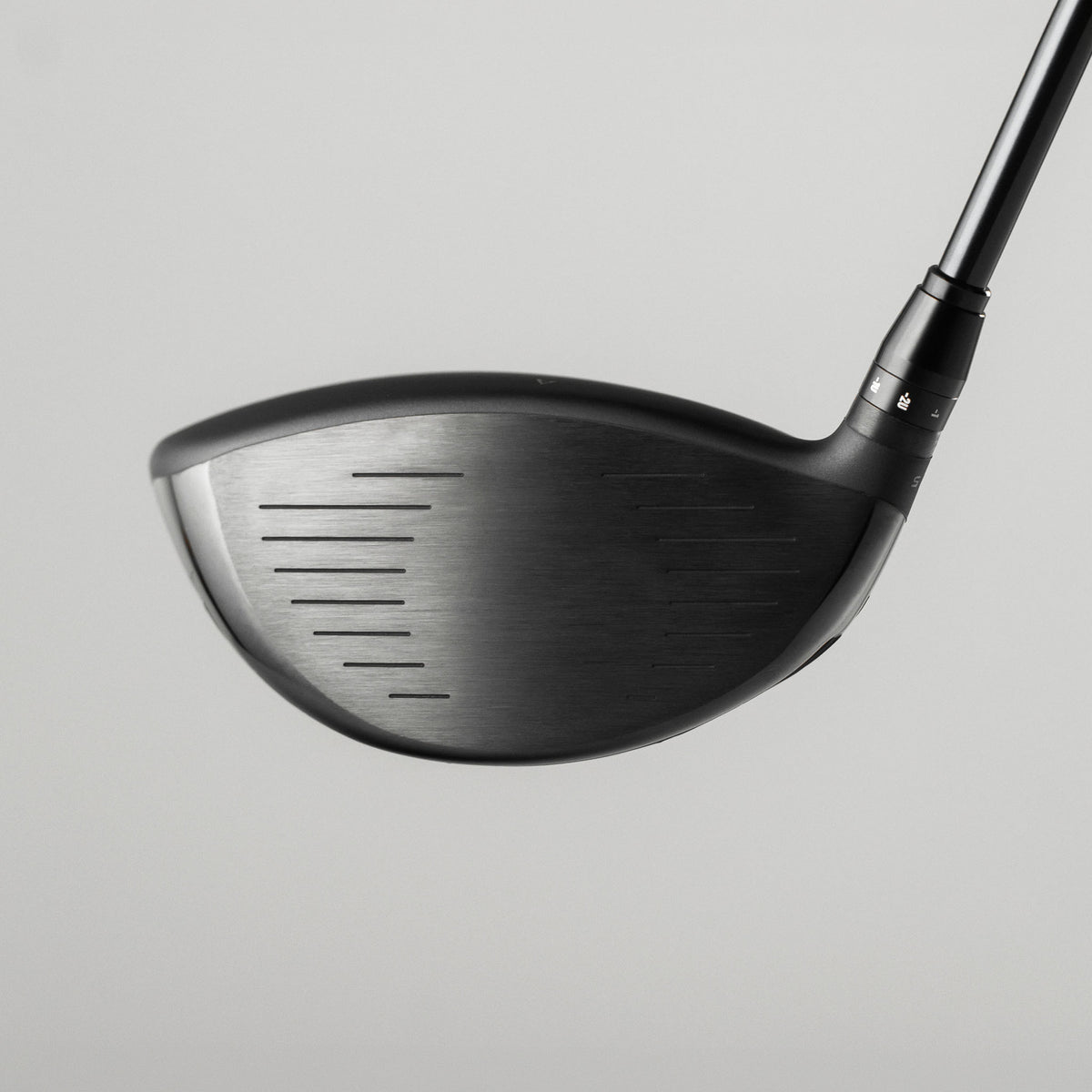
The hosel is an eight-position sleeve covering loft, lie and face angle, and the stock shaft list is the giveaway that Takomo is not playing the usual direct-to-consumer game. You get real Fujikura Ventus — Red in 5-R or 5-S, Blue in 5-R, 5-S, 6-R, 6-S or 6-X — rather than a made-for shaft wearing a famous name on a sticker. Headcover, adjustment wrench and the spare 8-gram weight are in the box. Nothing is held back to be sold to you in six weeks.
For context on the money: a Titleist GTS2 is comfortably more than twice this, and the gap is not two times the driver. It is a fitting bay, a tour van, a shaft matrix and a marketing budget, all of which are real things you might want and none of which are in the head.
Who should skip it
Anyone who needs more than 10.5 degrees. There are two lofts and that is the whole range, so if your fitting has ever ended with a 12-degree head or a strong upright lie to help the ball up, this is not a club that has been designed with you in mind. The eight-position hosel will bend the numbers a little, but it will not turn a 10.5 into a 12.
And anyone who buys clubs by hitting them. This is online-only. There is no bay, no fitter, and no one to tell you whether you are a Ventus Blue 6-S or a Ventus Red 5-R — and with seven shaft options on the drop-down, that is a real decision to be making from your sofa. If you already know your spec from a recent fitting, the risk is close to zero. If you are guessing, you are the person for whom a big-brand driver bought through a fitter is worth the extra money, and you should spend it.
Skip it too if the rules story bothers you on principle. It shouldn't — the D2 is a conforming club and the process worked exactly as it is meant to — but if you want a driver with no asterisk in its family history, the shelves are full of them.
The bottom line
This is the one I'd buy at the money, and I'd buy it for a reason that has nothing to do with the headline. A brand at this end of the market had a bad month in public, took the club off sale, and came back with a head that is more forgiving than the one that got it in trouble. That is a company behaving well under pressure, and it is a better signal about what happens when something goes wrong with your order than any amount of marketing copy.
Know your loft and your shaft before you click, accept that 10.5 degrees is as high as this goes, and it is the most driver you can get for $325 right now. The best drivers guide has the alternatives if a bay and a fitter are part of what you are buying.
Where to buy
8.1/10Takomo
Takomo Ignis D2 Driver
The direct-to-consumer driver that went back to one weight port, and gained forgiveness doing it.
Frequently asked
- Why was the Takomo Ignis D1 ruled non-conforming?
- The original Ignis D1 had three sole weight ports. When the heavy weights were placed out at the toe and heel rather than in the rear, some heads exceeded the Characteristic Time limit, which governs how much a driver face may flex at impact. It was specific to that arrangement and it did not affect every head, which points at manufacturing tolerance rather than a flawed design. Takomo's chief marketing officer has said the company's own testing had not been calibrated to catch it.
- Is the Takomo Ignis D2 legal to use in competition?
- Yes. The D2 is a conforming driver. The configuration that caused the problem on the D1 has been removed entirely: there is a single weight port in the rear of the head, so the toe and heel weight positions that failed no longer exist.
- What lofts and shafts does the Takomo Ignis D2 come in?
- Nine degrees and 10.5 degrees only, with an eight-position adjustable hosel covering loft, lie and face angle. Stock shafts are genuine Fujikura Ventus rather than made-for versions: Ventus Red in 50-gram regular or stiff, and Ventus Blue in 50-gram regular or stiff and 60-gram regular, stiff or X-stiff. A headcover, an adjustment wrench and a spare 8-gram weight are included.
- Did the single weight port make the Ignis D2 less adjustable or less forgiving?
- Less adjustable, yes — there is one weight in the back and nothing to slide. Less forgiving, no. Removing the toe and heel ports frees up the mass those ports and their fixings used to consume, and that mass goes to the perimeter of the head permanently. Takomo claims a 10 per cent MOI gain over the D1 as a result; that figure is the brand's own and has not been independently measured.
Read next
Versus
TaylorMade Qi4D vs PING G440 Max: the 2026 driver decision most golfers get backwards
Two of the year's biggest drivers, cross-shopped in every fitting bay — and most players walk in chasing the wrong thing. One wins the robot test outright; the other quietly saves more rounds. Here's which head actually belongs in your bag, and why the answer probably isn't the one you'd guess.
Opinion
What the 'longest driver of 2026' number won't tell you
Every year a chart crowns one driver the longest, and every year thousands of golfers buy the wrong club because of it.
Opinion
The most overrated gear in golf (and what to buy instead)
Golf is spectacularly good at selling you the wrong thing. Here's where the money quietly leaks out of your bag — and the unglamorous stuff that actually drops shots.